
Flooring Professionals To The Leisure Industry
Courtship Flooring is a commercial sports flooring contractor working in Aberdeen and across the UK. Scottish projects are planned as complete residencies, fully surveyed, agreed and priced before we travel.
Nearly four decades of specialist work sits behind every project: installation, refurbishment, sanding and sealing, court marking, slip testing and planned maintenance, all delivered in-house. Our clients are institutions and operators rather than households, and private homes are handled by Ryan’s Restorations.
Aberdeen is one of many areas covered by our national sports hall flooring service, with the same crews and the same standards wherever we work.
Overnight/Weekend Installations
Professional Cleaning Demonstrations
Squash Court Maintenance
Recommended Cleaning Products
Professional Pendulum Slip Testing
Deep Clean & Reseal Service

Distance changes logistics rather than standards. Everything is established in advance: scope, specification, programme, access, power and the handover date, so the crew arrives able to work rather than to investigate.
All machinery and materials travel with them, contingency stock included. Nothing is left part-finished pending a return trip, and the price quoted is the price paid.
Higher education sport combines demanding performance requirements with heavy timetabled use, and vacation windows that cannot be extended.
We plan against the academic calendar, phase larger facilities so part remains available, and provide the documented handover, testing results and maintenance schedule that estates departments need for their records.
Buildings in colder, wetter regions face two specific issues: heating cycles that move timber more than usual, and entrance areas taking a constant load of water and grit.
We set expansion allowances with that movement in mind, advise on humidity control where a hall swings widely between seasons, and pay particular attention to entrance zones during specification and slip testing.
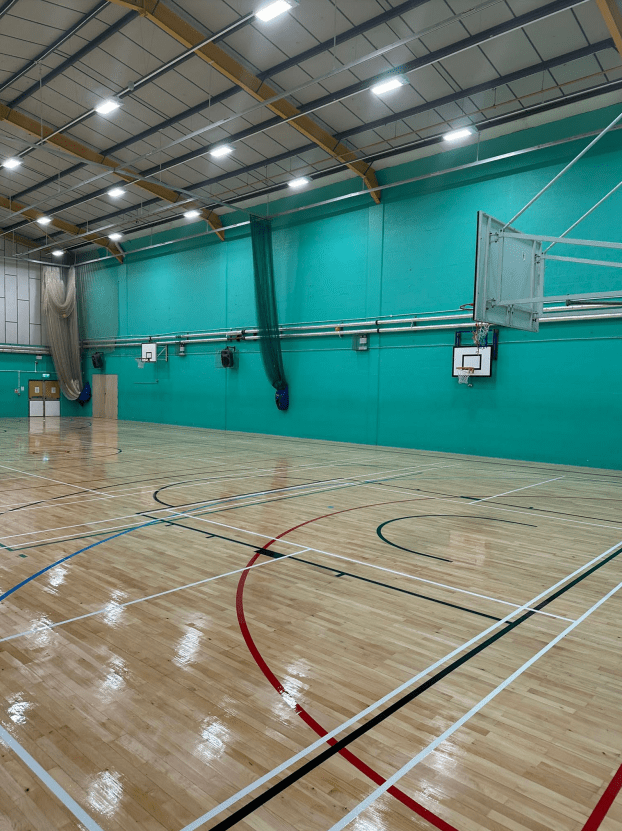
The main sports hall at Liskeard Leisure Centre had taken years of public sessions, club blocks and league nights. We delivered a complete programme of sanding, re-lining and resealing, returning the hall to service looking like a new installation.
It is a fair illustration of how we handle leisure work: one tight programme, agreed dates, and a centre back in action on schedule.
~ Matthew Evans
An outstanding company to deal with and they couldn’t have been better to work with. St George’s Ascot now has a stunning new sports hall floor and we are delighted. From quote, support, delivery and after sales, the Team has been brilliant. Thank you. 
~ James Anderson







A share of the school and community halls we see around Aberdeen have Granwood floors, laid from the middle of the last century, and they are regularly condemned by people who mistake them for timber.
Granwood is a composite block of wood flour and cement, pressed and laid in a bitumen bed. It has no grain and no wear layer in the timber sense. Sanded aggressively it is damaged for good, and a machine held too long in one place warms the bitumen and draws it up through the joints. Some older beds contain asbestos, so we test before anything else happens.
Restoration means rebedding loose blocks, replacing broken ones, preparing the surface with the right abrasives and coating it with a modified epoxy system with the markings applied inside it.
Where the blocks are sound and the bed is intact, that costs a fraction of replacement and gives the hall decades more use.
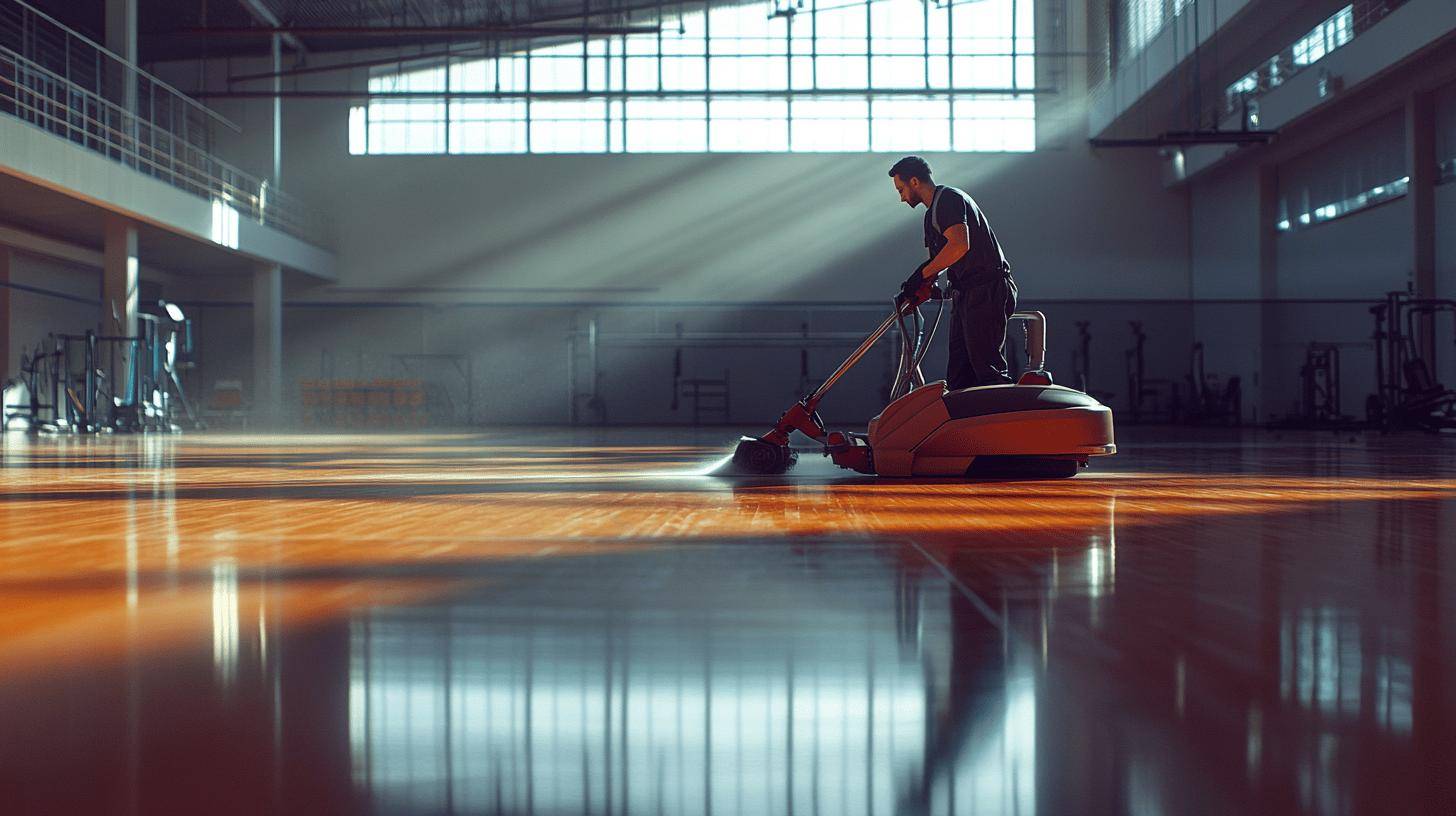
University sports centres and council facilities in Aberdeen increasingly run a fitness suite beside the main hall, and the two rooms need different floors.
A cardio area with treadmills and bikes can sit on a point elastic vinyl or a rubber sheet, both of which shrug off sweat, castors and dropped water bottles. A free weights zone is a different matter. Plates, dumbbells and loaded bars dent and split timber and shatter a seal, so the zone wants a thick rubber tile or roll, laid over a level base with a bonded or interlocking edge.
Where a fitness area shares a timber hall, we lay the rubber over the boards with a proper edge detail, so it protects the floor beneath and can be lifted later without damage.
We specify the thickness and density to the equipment in use, and we detail the junction with the sports floor so nobody trips on it.
A hall in Aberdeen serving a university, a club and a school timetable can easily need six sets of markings, and the difference between a floor that works and one that confuses everybody is planning.
The first question is what is played most. That sport takes the strongest colour and the widest line, usually the full size court that fills the hall. Secondary sports step back in weight and colour, and anything nobody plays comes off during the sand. Removing two redundant sets does more for clarity than any clever colour scheme.
The conflicts are predictable. Netball goal circles land on the basketball key, badminton tramlines cross both, and five a side runs through everything. We resolve them by colour weight and by putting the busiest sport on top.
Colours are chosen in the hall under its own lighting, because shades that look distinct on a chart can merge under LED fittings.
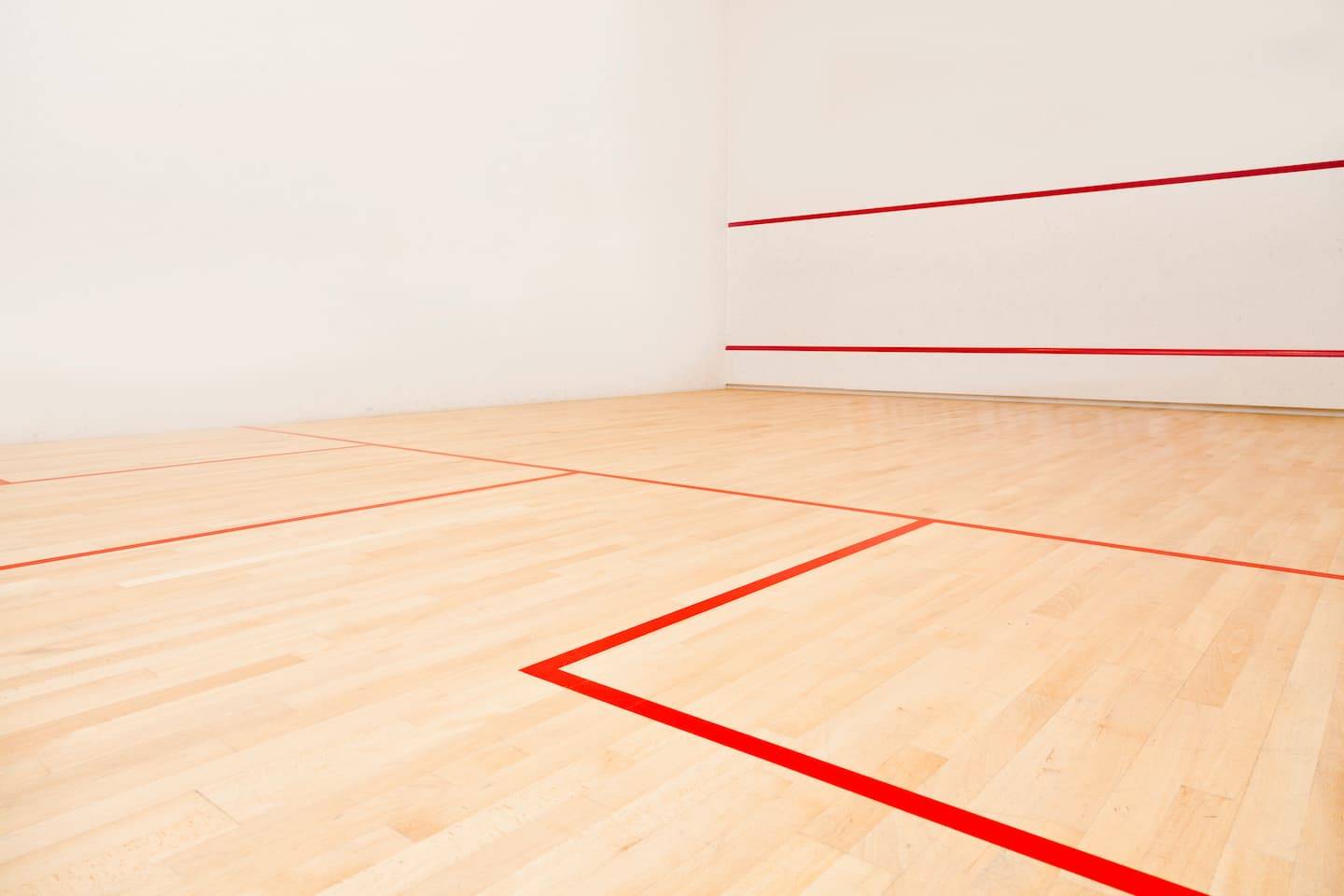
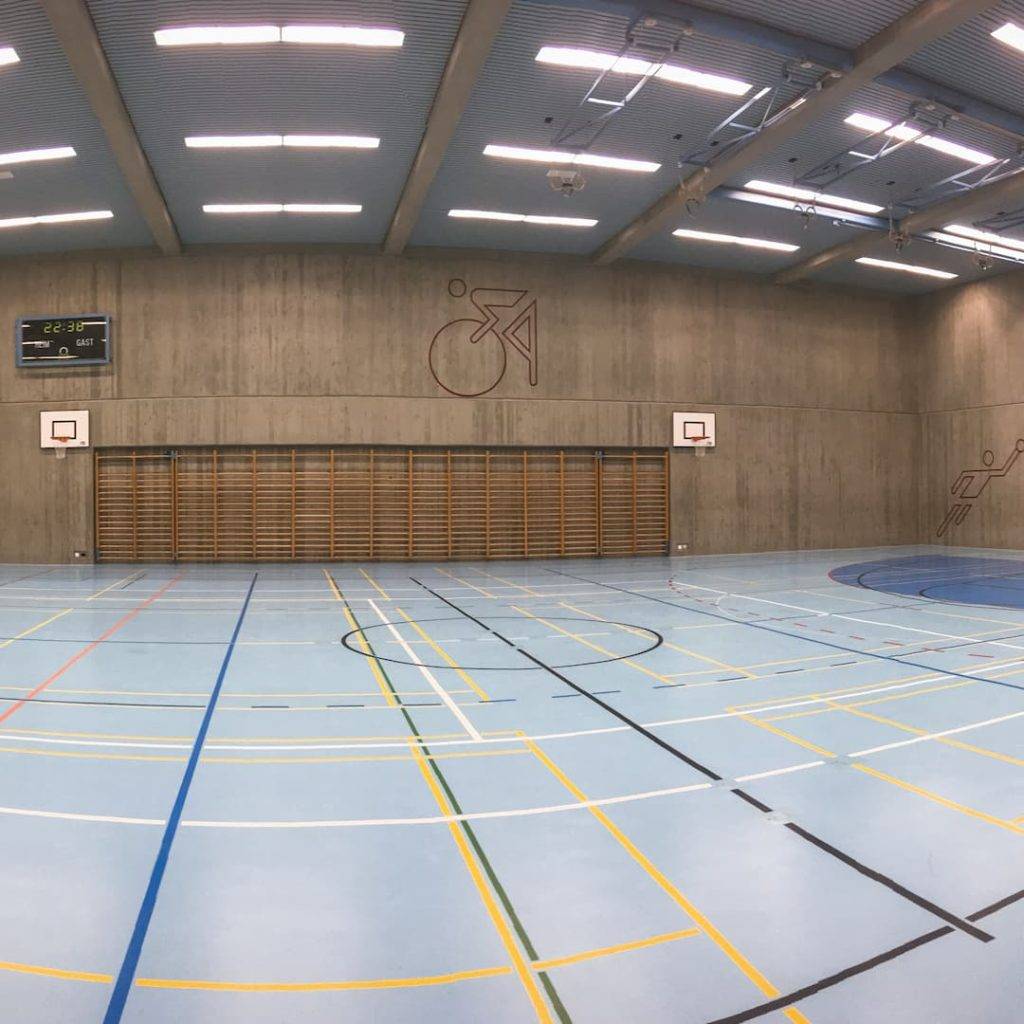
The sports floors we are asked to look at in Aberdeen fall into three broad groups, and each brings its own constraints.
The first is university and college facilities, where the buildings are busy year round and the summer is filled with conferences and external hire rather than standing empty. That narrows the window and makes accurate programming essential.
The second is the council leisure estate and the community sports centres attached to it, where booking income makes a two week closure expensive. Most of that work happens overnight or across a quiet fortnight agreed months in advance.
The third is school sports halls, where the calendar is fixed and the hall has to be back for the first day of term whatever else happens.
Because we are travelling a distance to reach Aberdeen, we plan the work in solid blocks rather than short visits, bring everything we need with us, and staff the job so it finishes inside the window rather than stretching. In practice that makes distant projects more tightly planned than local ones, not less. It also means it is worth talking to us early if you have more than one floor, because two or three jobs booked together are considerably better value than one at a time.
When a facility in Aberdeen asks what we have done that resembles their building, the closest comparisons are usually our university and leisure projects rather than anything defined by geography.
The sports hall refinish at Aston University is the one we point to most for campus facilities. A heavily booked hall, no long summer shutdown because conference and external hire fill the gap, a narrow fixed window, and the floor handed back on the agreed date with markings set out fresh from governing body dimensions rather than copied from the faded originals.
For leisure operators, Medina Leisure Centre is the closer parallel. There the constraint was booking income, so the programme was built around the centre timetable and the noisy operations were sequenced for the quietest hours, with sealed dust extraction keeping the rest of the building usable throughout.
Both illustrate the same point. On a distant project the technical work is routine; what earns the job is planning the window properly and holding the date.
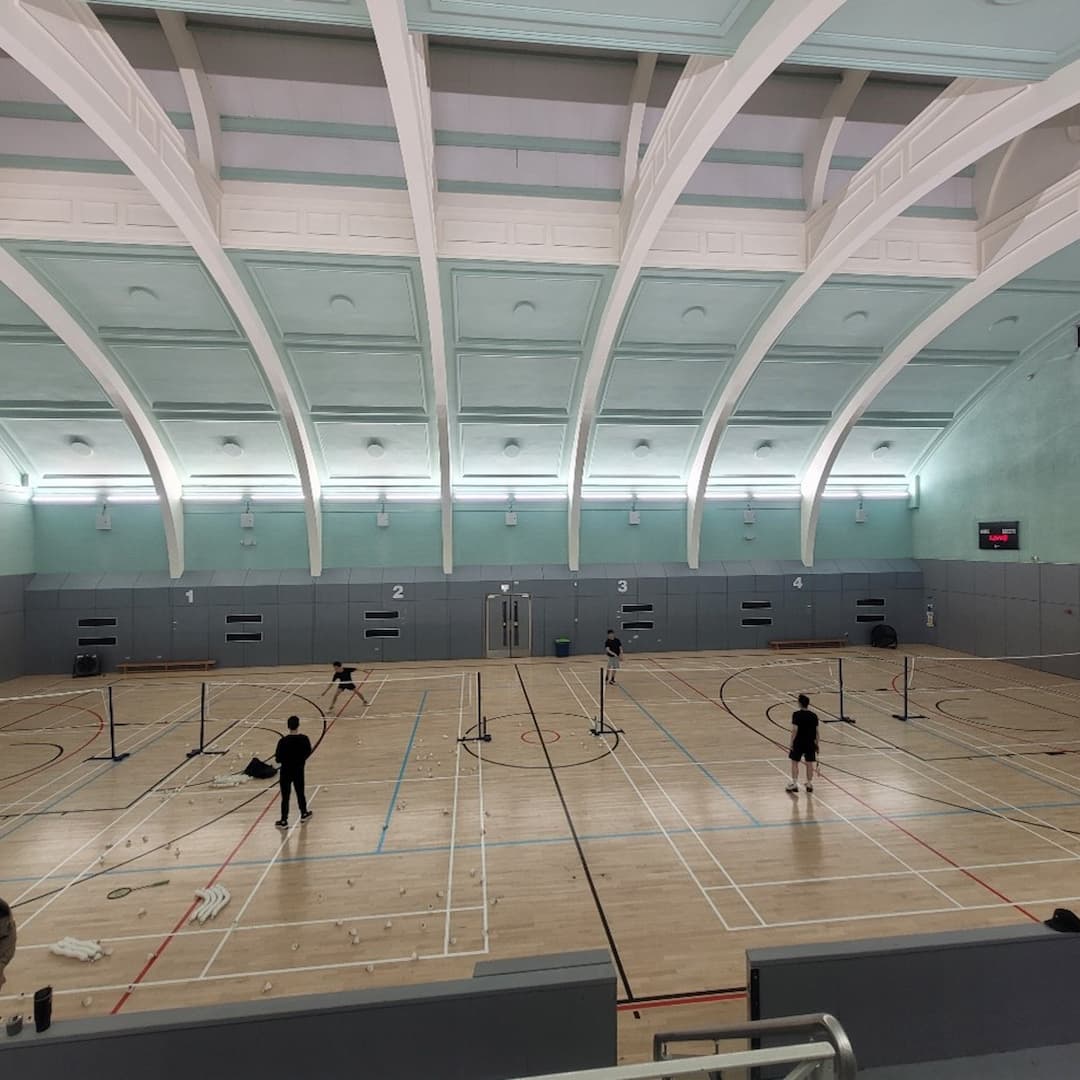
Sanding a hall inside a busy campus building or a council centre in Aberdeen means working while the gym, the pool and the offices carry on around us, and dust is the first thing an operations manager asks about.
Every machine we bring, including the edge sanders, is connected to sealed vacuum extraction. The dust is collected at source, bagged and taken away, not swept into a corner. The hall doors are sealed with sheeting, the air handling for the room is isolated by agreement with your building manager, and fire exits stay clear and usable throughout.
Odour from the seal is real but brief, and we time the coats for the end of the shift so the room airs overnight.
At the end of each day the corridor outside the hall is as clean as we found it, which is the standard members and staff will judge us by.
Light foot traffic in clean soft shoes is fine after twenty four hours. Equipment, mats, posts and staging stay out for seventy two hours or more, because the two pack polyurethane is still curing beneath the surface. We agree the reopening date before we travel and confirm timings for your system in writing.
Yes. Pendulum slip resistance testing is offered as a standalone visit. We take readings at several points across the hall and issue a certificate with the recorded values, which insurers, governing bodies and audit teams accept as evidence. If the result is low, it tells you why before money is spent.
A dry mop every day to remove grit, and a damp mop each week with a neutral pH cleaner at the dilution on the label. Nothing else. Polish, wax and shine products leave a slippery film and stop the next seal coat from bonding. We brief your cleaning team at handover.
The rough hall size or the number of badminton courts, photographs of the whole room and of any damage, the sports played, and the dates the hall could be free. That gets you a budget range quickly, and a free site survey turns it into a fixed written price.
Yes. Repairs, sanding, sealing and marking carry a written guarantee against defects in workmanship and materials, with the terms shown on the quotation. It depends on the cleaning guidance being followed. If something is not right, we come back and correct it, whatever the distance.
Yes. A dead patch means a pad, batten or cradle beneath that spot has failed, and refinishing the surface will not change how it feels. We lift the boards over the area, replace the failed components, relay the timber and refinish, leaving the rest of the floor alone.
Yes, and we recommend it. Stage boards are usually in worse condition than the hall because of scenery, screwed down flats and stacked seating. Doing both in one visit shares the travel and set up, gives a consistent look and lets us choose a matt sheen that suits stage lighting.
Yes, and it is worth doing. Exam desks and stacking chairs cause most of the scoring we sand out of school and university halls. A purpose made roll out covering laid before the furniture arrives takes that damage instead of the seal. We advise on the right product and its handling.
Book a free survey of your sports hall in Aberdeen and we will plan the visit, take the readings and give you a written report, a fixed price and a programme that holds its dates. Call 01823 674562 or send us a message.