
Badminton is the fastest racquet sport in the world, and the floor has to keep up: lunges, split-steps and dives all demand consistent friction and forgiving shock absorption. Courtship Flooring installs badminton court flooring across the UK in sprung timber, PU and vinyl systems, matched to how your hall is actually used.
Most badminton courts share their hall with other sports, so we mark each court to Badminton England specifications in colours that stand clear of the netball and basketball lines around them, something we explored in our guide to badminton court flooring for community halls. Existing courts can be sanded, resealed and re-marked through our refurbishment service.
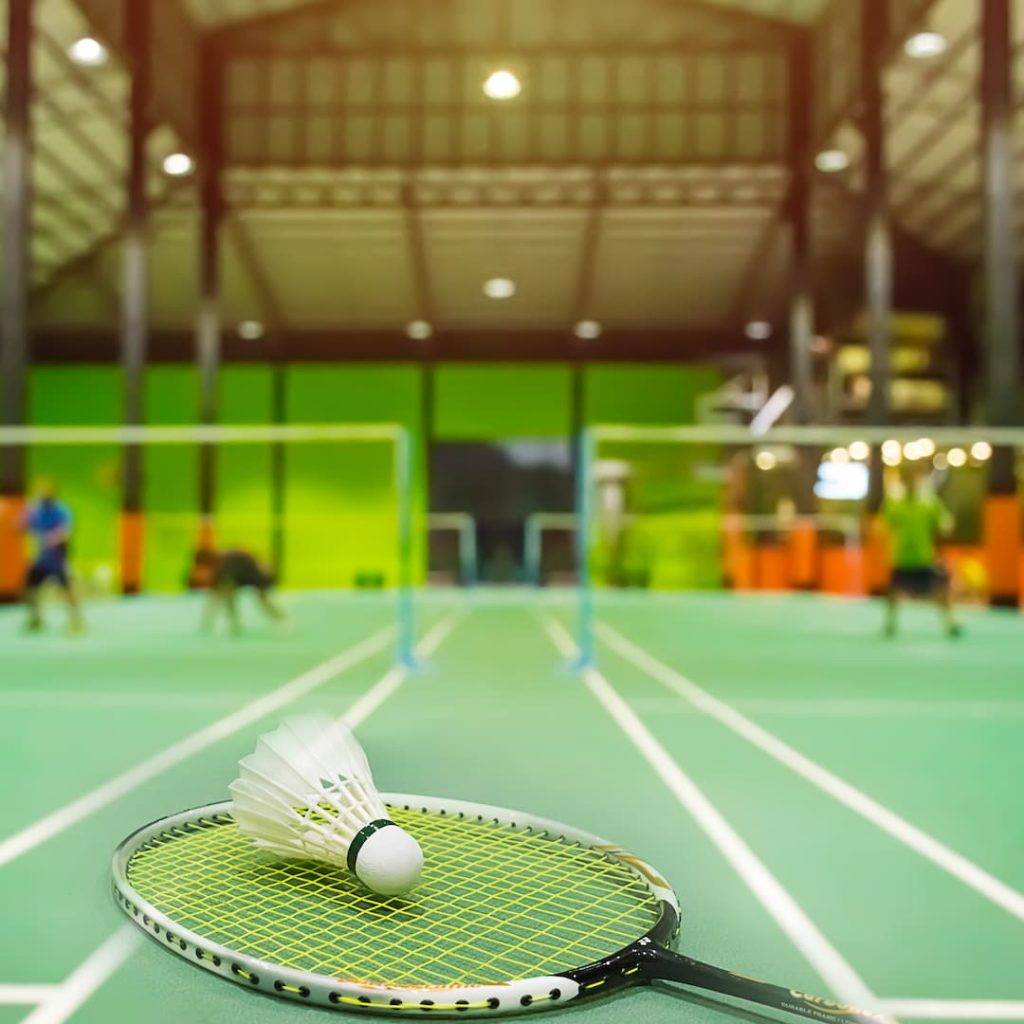
Depending on the sub-flooring system you have, synthetic and hardwood installation come with their own benefits and drawbacks. Hardwood offers a traditional aesthetic and unbeatable shock absorption, however it also requires more frequent maintenance and is often more costly. Alternatively, synthetic options such as PU, vinyl or lino can provide greater durability and are very low-maintenance. However, over time they can lose their sprung capacity and need re-covering. Talk to our team about the best option for your court today.
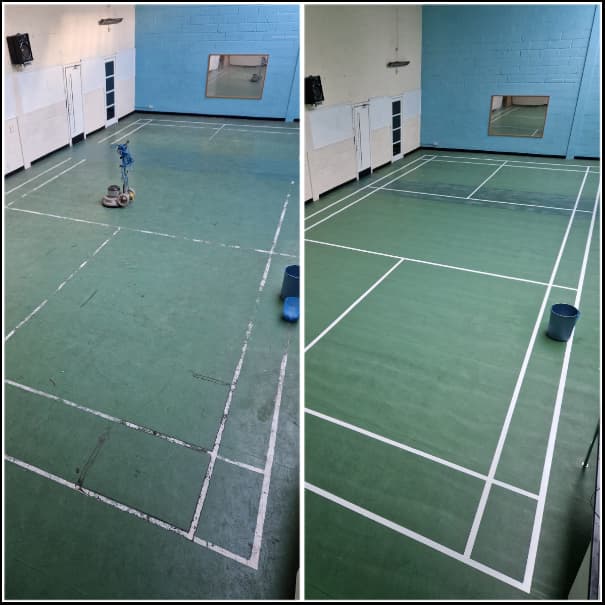
Maintaining proper upkeep of your badminton flooring is essential to the safety of your players, as well as the longevity of the floor itself. Light routine cleaning should be carried out weekly as a minimum. However, it is important to establish regular inspections and deep cleans as well. We offer comprehensive inspection and maintenance services, identifying any flaws that may be emerging, and taking preventative measures so they cannot develop. We can also re-mark court lines to provide a new look to the floor.
Badminton demands something contradictory from a floor: enough grip for a player to plant and change direction at full stretch, but not so much that a foot catches and an ankle turns. That balance is measured as friction, and both extremes cause injuries.
It is also why badminton players notice a dirty floor faster than anyone else. Dust and cleaning residue reduce grip in exactly the moments that matter, which is why our maintenance service and a documented slip test are worth as much to a badminton club as the original installation was.
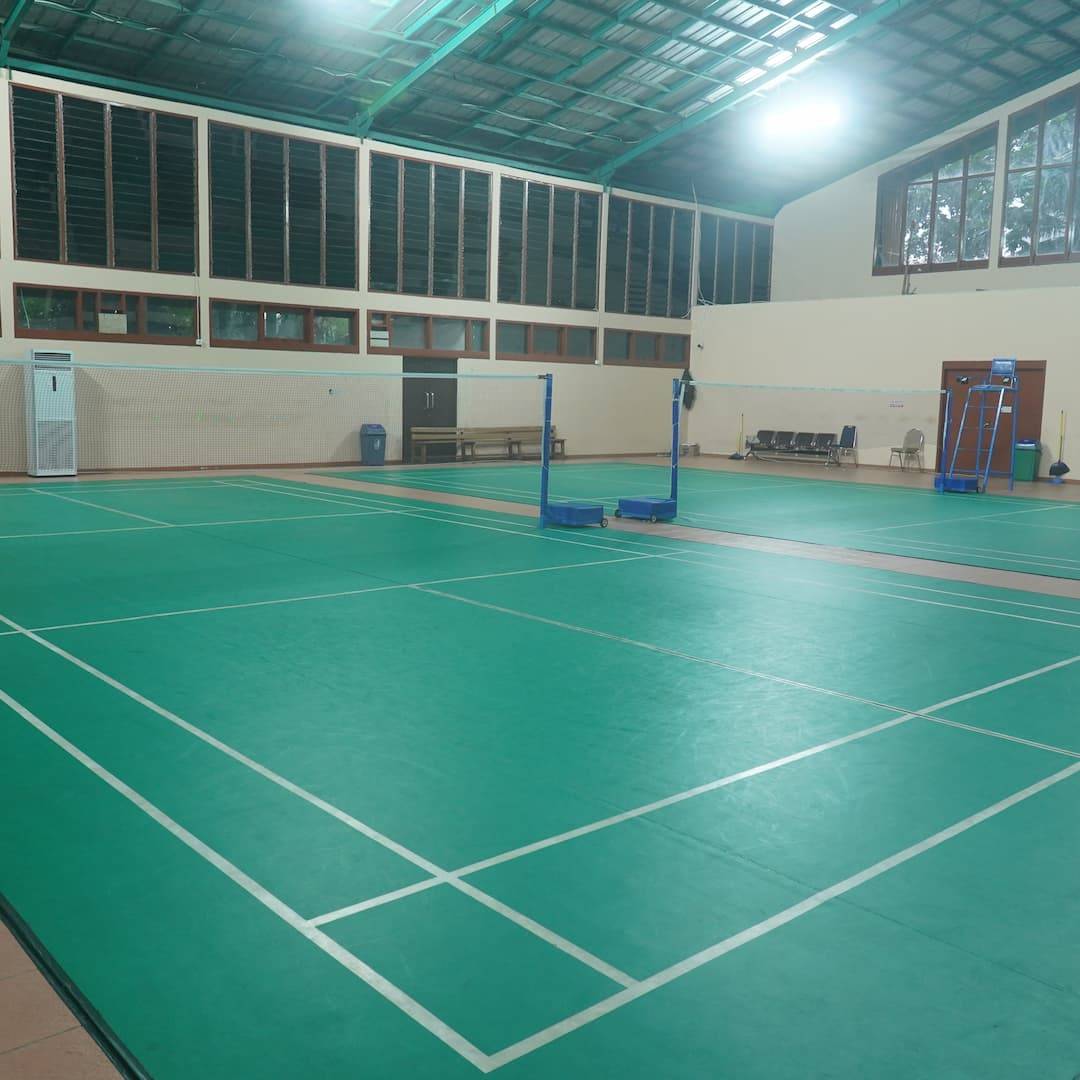
Most badminton in this country is played on courts sharing a floor with three or four other sports, so the marking plan matters. Badminton lines are narrow and closely spaced, which makes them the easiest set to lose in a busy layout if colours are chosen carelessly.
We mark to Badminton England specifications in a colour that separates clearly from the netball and basketball lines around them, and plan run-off and net post positions so the courts work in practice as well as on paper. Halls running leagues get particular attention to consistency across every court.
Absolutely. We provide high-quality, precise line markings for a variety of sports and will carefully draw yours on. We can also repaint any lines after a reseal or re-lacquer service, enhancing the court’s look.
You should sweep and clean your court at least weekly, helping to target any particulates or elements that could tarnish the floor, and its seal. We also offer routine deeper cleans, which, depending on the clean, are recommended from every six months, to every decade.
Yes, you should have your floors slip tested annually as a legal responsibility. As well as this, routine inspections should be carried out to identify any faults. We can offer both of these services, in-keeping with HSE and legal requirements.
It depends on the clear floor area and the run-off needed around each court, and ceiling height matters as much as floor space. Send us the hall dimensions and we will set out the realistic options, including how the courts sit alongside the other sports you mark.
Usually dust or cleaning residue rather than the floor itself. Badminton exposes reduced grip faster than any other indoor sport because of the lunging involved. A professional deep clean normally restores it, and a pendulum slip test tells you objectively whether it worked.
See badminton court marking and setting out, pickleball courts on the same footprint and the areas we cover for your area.