
Fitness suites punish floors in ways sports halls never do: dropped dumbbells, sliding racks, treadmill vibration and hundreds of trainers a day. Courtship Flooring installs fitness suite flooring across the UK that takes all of it in its stride, from heavy-duty rubber for free-weights zones to sprung and cushioned surfaces for studio spaces.
We plan the floor around your layout, protecting the slab under the lifting platforms, controlling noise into the rooms below and keeping the finish smart in the areas members see first. Tired gym floors can be repaired, deep cleaned or replaced zone by zone through our maintenance service, and if you are planning a full refit we will survey free of charge.
Commercial gyms only. We fit out leisure centre fitness suites, university and school gyms, workplace facilities and club training rooms. We do not supply or install home or garage gym flooring.

Depending on the intended use of your new fitness suite, different flooring may be better suited to your needs. Most commercial and private gyms prefer rubber flooring for their durability and ease to clean. Rubber floors are also quicker to install, requiring less down-time for your business. However, there are many advantages to wooden flooring too. Not only is wood more environmentally friendly, but it can also enhance the aesthetics of your room. As well as this, it can provide greater shock absorption when laid over a sprung sub-floor.
Commercial gym flooring has to do more than look the part. It protects an expensive slab and expensive equipment, keeps members safe underfoot, stops noise reaching the rest of the building and stands up to cleaning every day of the year. That is a different brief from a home gym, and it is the only kind of gym floor we install.
Our clients are the organisations that run fitness spaces as part of something larger: leisure centres and leisure trusts, universities and colleges, schools adding a fitness suite to a sports centre, workplace and public sector gyms, and sports clubs with their own training rooms. Many of them also have a sports hall, a dance studio or a squash court on the same site, which we look after too, so one contractor can plan the whole building.
Whether you are fitting out a new suite, extending one or replacing a worn floor zone by zone, we start from your equipment layout and the structure underneath, not from a product brochure.
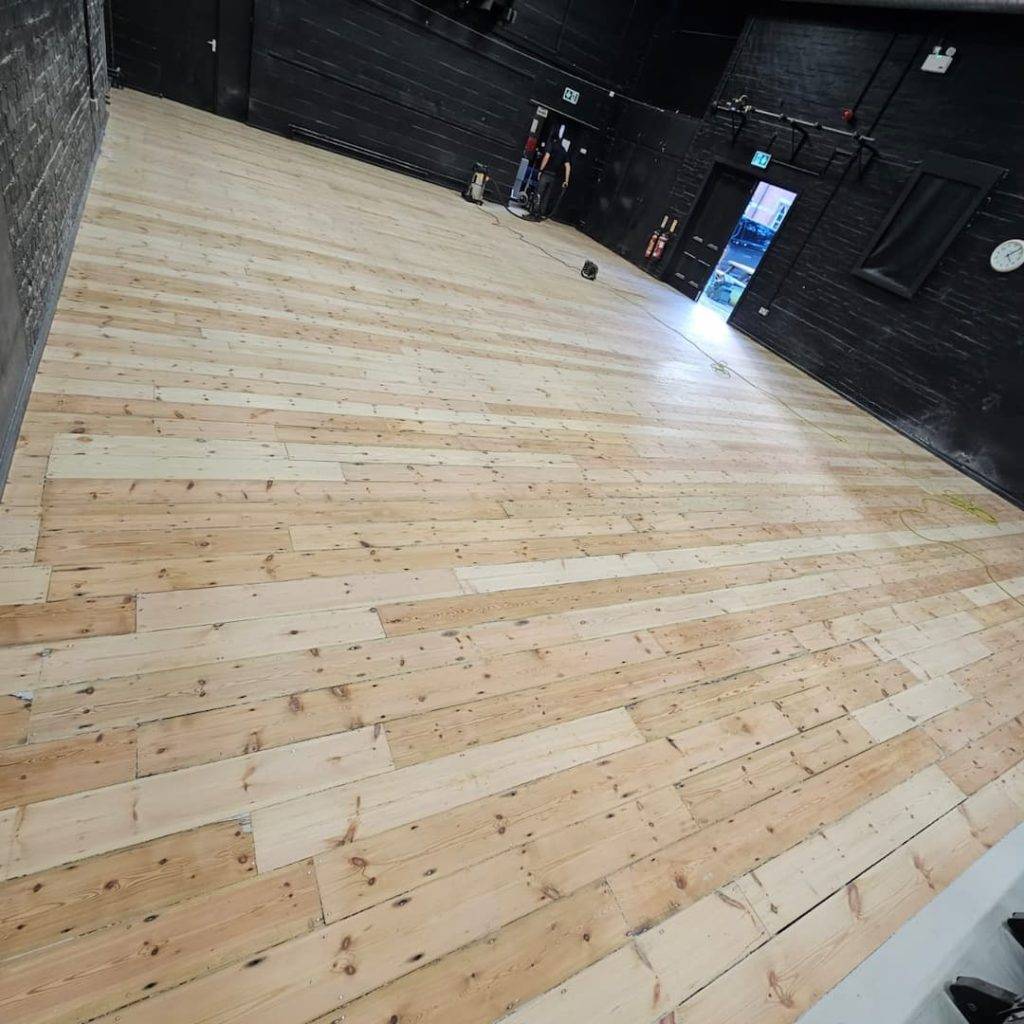
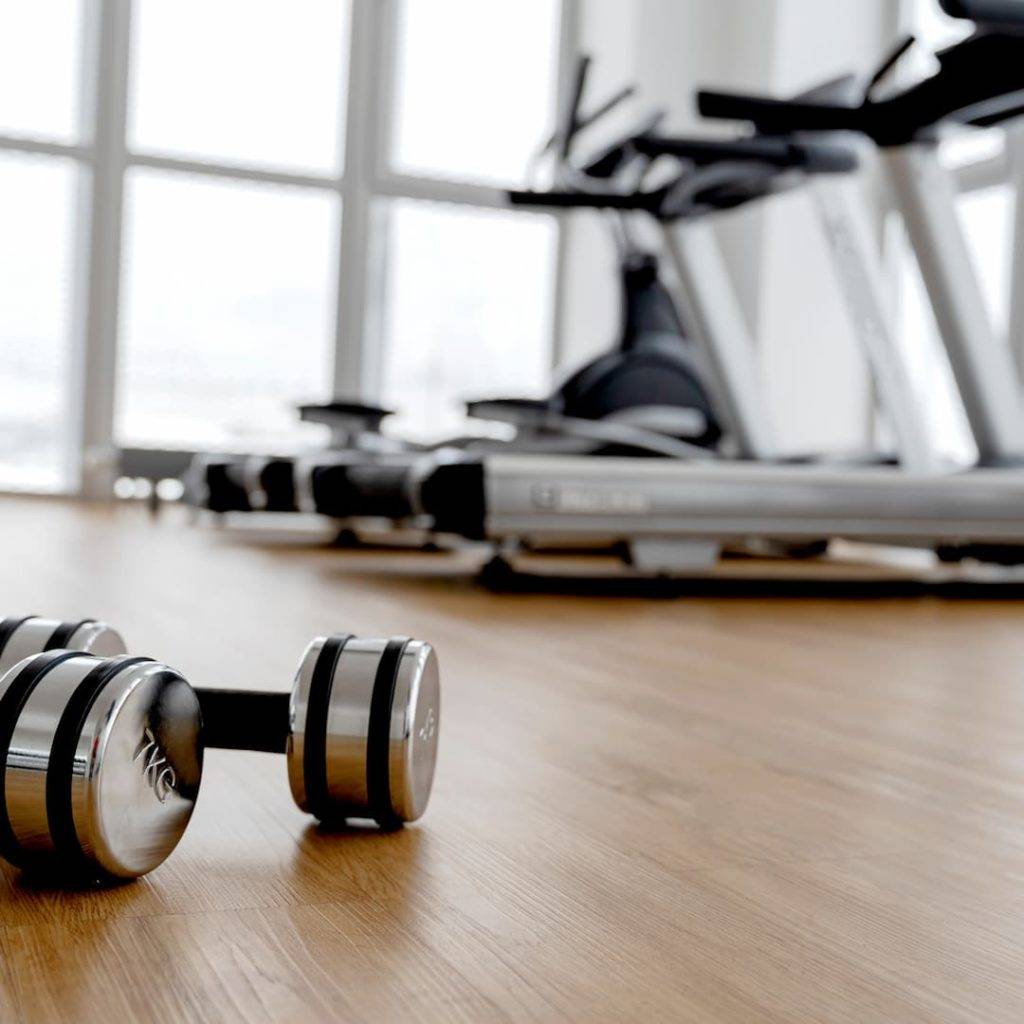
Over time, a studio floor can look worn and tired. We offer comprehensive maintenance services, so you can get it looking as good as new. As well as this, our expert team can provide both refurbishment and replacement operations to suit your requirements. If your floor has lost its bounce, or scuffs and scratches have started to appear, then we can perform repairs to further its lifespan. Alternatively, if it’s in need of complete replacement, we can provide prompt solutions to fit your new flooring quickly and accurately.
A gym is not one floor, it is three or four different problems sharing a room. The free weights area needs heavy-duty rubber thick enough to survive dropped loads and protect the slab beneath. Cardio zones need something that damps machine vibration and noise. Studio and functional areas want cushioning underfoot without the sponginess that makes lifting unstable.
Specifying one surface across the whole suite means overpaying in some zones and under-protecting in others. We zone the floor to the equipment plan, which usually costs less overall and always performs better.
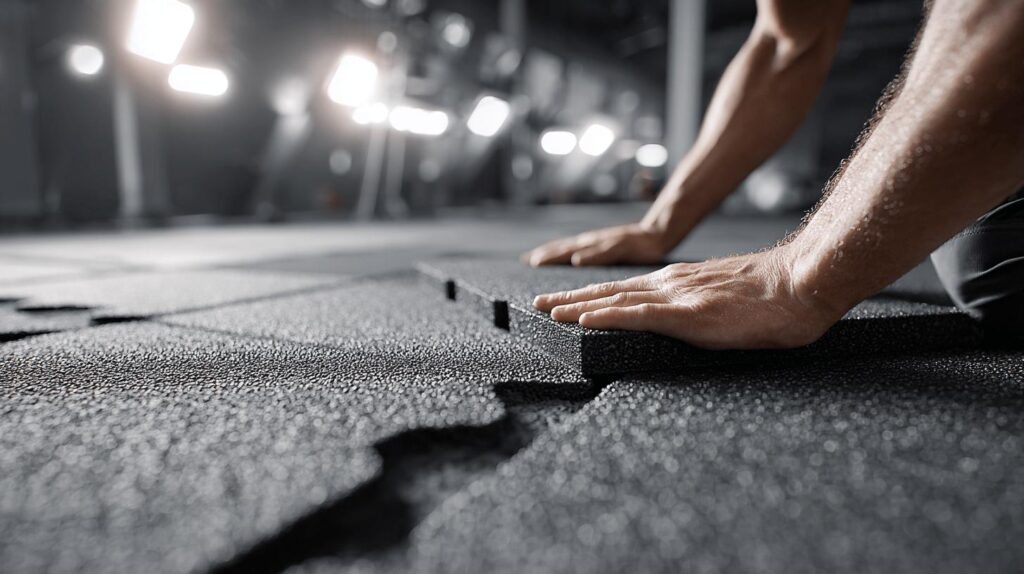
Rubber is the standard surface for most of a commercial fitness suite, because it absorbs impact, resists dents from equipment and is quick to clean. The main decisions are format and thickness.
Thickness follows the load. As a guide, many commercial gyms use around 10 to 15 mm in cardio and general areas, 15 to 20 mm for resistance machines and dumbbells, and 30 mm or more where heavy weights are dropped. The density of the rubber and what sits underneath matter as much as the headline thickness, so we specify each zone from the equipment plan and the condition of the slab.
Rubber can be fully bonded with adhesive, which stops tiles creeping and edges lifting, or loose laid where the floor may need to come up again. We recommend the method that suits how long the layout is likely to stay fixed.
The free weights area takes the heaviest punishment in any gym, and it is where a poor floor fails first. A dropped dumbbell or loaded bar concentrates a large force on a small area, which can split tiles, dent the slab beneath and send impact noise through the structure.
We protect these zones with thicker, denser rubber, with extra protection beneath any lifting platforms or drop zones in the layout. The edges of these areas are detailed so the change in level is clear and does not create a trip hazard, and the layout is agreed with you so that racks, benches and platforms land where the protection is.
If the suite sits above occupied rooms, the free weights area is also where acoustic measures do the most good, and we plan the two together. Our acoustic flooring page explains how impact noise is controlled in the floor build-up.
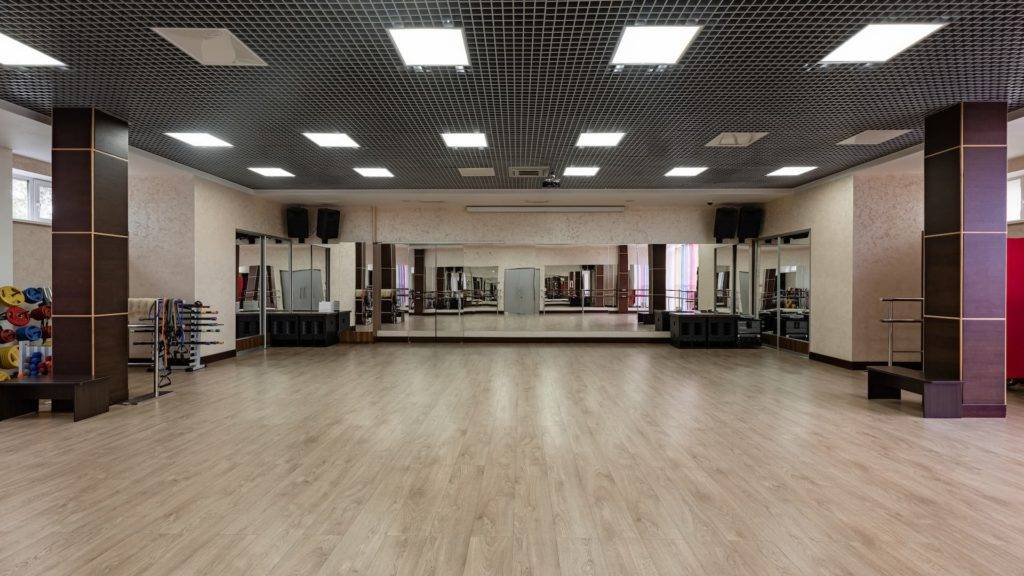
Group exercise studios need a different floor from the gym next door. Classes involve jumping, landing and floor work, often in light shoes or bare feet, so the surface needs controlled grip, a degree of give and a finish that is comfortable to lie on.
For aerobics, dance-based classes and circuits we usually recommend a sprung or cushioned sub-floor with a sports vinyl or timber surface, the same principle as our dance studio flooring. Pilates, yoga and stretching areas can work on a softer, cushioned surface. Functional training zones, where people lunge, crawl and throw, are usually better on rubber, which stands up to kettlebells and medicine balls.
If you are weighing up a sprung floor for a studio, our guide to sprung floors explains how the build-up absorbs impact.
The commonest complaint about a gym is not from its members, it is from whoever is underneath it. Dropped weights and treadmill impact transmit straight through a structure, and in a multi-storey leisure centre or a converted building that becomes a serious problem very quickly.
The fix belongs in the floor build-up rather than the ceiling below: acoustic underlays and heavy-duty shock pads absorb impact energy at source, before it enters the structure. It is far cheaper to specify at fit-out than to retrofit after the complaints start, and we will tell you plainly what a flooring solution can and cannot achieve.

A gym floor is only as good as what it sits on. Before installing we check the slab for level, cracks and moisture, because rubber and adhesives laid over a damp or uneven base can lift, bubble or fail at the joints. Where needed we level the base and deal with moisture before the new floor goes down.
The details members notice are usually at the edges. Transitions between rubber, vinyl and timber zones need trims that are level and firmly fixed, thresholds into corridors and changing rooms need to be smooth for wheelchairs and trolleys, and cut edges around fixed equipment need to be tight so they do not curl. We plan these junctions at survey so the finished suite has no trip points.
Most fitness suites cannot close for long, so the installation is planned around your timetable. Floors can be replaced zone by zone, with part of the gym staying open, or completed over closures, evenings and weekends. Rubber tiles lend themselves to phased work, because one area can be finished and handed back before the next is started.
Equipment has to be moved out and back in, so we agree the sequence with you and your equipment supplier before work starts, along with access, waste removal and any adhesive curing time before heavy kit returns. You get a clear programme in advance, so everyone knows when each zone will be back in use.


Rubber is low maintenance, not no maintenance. Daily vacuuming or dry mopping lifts grit and chalk before it is ground in, and damp mopping with a pH-neutral cleaner made for rubber removes sweat and residue. Solvent, oil-based and bleach products should be avoided, because they can dry out and discolour the surface.
Check tile edges and roll seams regularly, especially around heavy equipment, and replace any damaged tile before it becomes a trip hazard. Timber and vinyl studio floors follow the same cycle as a sports floor: a deep clean from £2 per square metre, a deep clean with two protective seal coats at £12 per square metre, and a screen and recoat every 18 months to three years. Our commercial gym floor sanding and sports hall floor maintenance services cover the periodic work.
Every fitness suite is priced from a survey, because the cost depends on far more than floor area. The main factors are:
Send us your equipment layout and floor area, with any photos of the existing floor, and we will price the options so you can compare them.
Yes. We check the slab and any existing floor at survey and specify a build-up for the loads in each zone, from static machine weights to the rolling loads when equipment is moved. Free weights and lifting areas get thicker, denser protection.
Rubber areas need daily vacuuming or dry mopping and regular damp mopping with a neutral cleaner, with seams and tile edges checked as part of routine checks. Timber and vinyl studio floors need a deep clean once or twice a year and a screen and recoat every 18 months to three years, with a full sand and seal on timber when the finish has worn through.
Depending on the size of your gym and the type of flooring you desire, the length of time it takes to install a new floor can vary. Please get in touch with a member of the team for further guidance.
It depends on what is being dropped and what is beneath. Platforms and heavy lifting areas need substantially thicker protection than a general weights floor, and the slab below dictates a lot of it. We specify by zone after looking at your equipment plan rather than applying one thickness throughout.
Yes, where the problem is impact noise, and in a gym it almost always is. Acoustic underlays and shock pads absorb that energy in the floor build-up before it reaches the structure. It is most cost-effective during a refit, but retrofit options exist for problem zones.
Yes. We install rubber tiles and rolls in leisure centre fitness suites, university, college and school gyms, workplace gyms and club training rooms, along with acoustic underlays and studio surfaces. We do not supply or install home or garage gym flooring.
Rolls give fewer joints and suit large open areas. Tiles are easier to fit around fixed equipment and can be replaced one at a time, which makes them a common choice for heavy zones and phased replacements. Many suites use both.
Often, if the existing floor is sound, flat, dry and firmly bonded. Carpet, loose or damaged tiles and anything that moves underfoot need to come up first. We check at survey and tell you whether an overlay will last.
Fitness suites wear differently from sports halls. See commercial gym floor sanding, gym floor refurbishment and acoustic flooring where the suite sits above occupied rooms.