
At Courtship Flooring, we understand the importance of professional squash court installation and refurbishment to ensure optimal playing conditions and compliance with international standards. Squash courts must not only provide a suitable surface for competitive play but also ensure player safety and longevity of the court’s structure. Both installation and refurbishment require specialist knowledge, high-quality materials, and careful attention to detail. This guide explores the key aspects of squash court installation and refurbishment, providing insights into the processes and benefits of professional services.

Over time, squash courts experience wear and tear due to frequent use, resulting in issues such as damaged floors, cracked walls, or faded line markings. Squash court refurbishment aims to restore or enhance the court’s condition, ensuring it continues to meet safety and performance standards. Refurbishment can involve targeted repairs or a complete overhaul, depending on the state of the court.
The first step in the squash court refurbishment process is assessing the current condition of the court. This evaluation covers all aspects of the court, including the walls, floor, ceiling, and any installed fixtures such as lighting or ventilation covers. Common problems found in older courts include cracks in the plaster, scuffed or worn flooring, faded line markings, and damaged fittings. Identifying these issues allows for a comprehensive refurbishment plan to be developed.
Wall refurbishment typically involves repairing any cracks and applying a fresh layer of plaster to restore the surface to its optimal condition. In cases where the court features prefabricated wall panels, any damaged sections may need to be replaced. After the wall surface is restored, the lines are repainted to comply with squash regulations, ensuring the court is suitable for competitive play. Upgrading to a higher-quality wall system during refurbishment can improve the court’s durability and ball rebound characteristics, offering players a superior experience.
Floor restoration is another key aspect of squash court refurbishment. Wooden squash court floors can become worn or damaged over time, requiring sanding and sealing to restore their original quality. Sanding the floor removes any scuff marks or imperfections, while sealing protects the wood from future wear. In cases where sections of the floor are heavily damaged, replacing individual boards or the entire floor may be necessary. Applying a new finish ensures that the surface provides the correct level of traction, preventing players from slipping during play.
Refurbishing the ceiling can involve repairing any cracks, upgrading to better acoustic materials, or installing new ceiling panels that meet modern standards. Improvements to the ceiling may also include enhancing the lighting system, so that illumination stays consistent throughout the court. Upgrading to energy-efficient lighting solutions can enhance visibility while reducing energy consumption.
Addressing safety and compliance during refurbishment is essential to ensure the court meets the latest health and safety standards. This may involve adding or upgrading wall padding, improving ventilation, or ensuring emergency exits are properly marked and accessible. Refurbishing ventilation systems can improve air circulation within the court, especially in facilities with multiple courts where maintaining air quality is important.
The final stage of squash court refurbishment involves inspecting the court to confirm that it meets international squash standards. The accuracy of line markings, floor bounce characteristics, and lighting evenness are checked, and any necessary adjustments are made to ensure the court is in optimal condition for players. A professionally refurbished squash court not only looks new but also provides an improved playing experience, extending the court’s lifespan and enhancing its overall value.
The World Squash court specifications set a singles court at 9,750 mm long by 6,400 mm wide, with doubles courts 7,620 mm wide. They describe the floor as hard, smooth and level, with limited spring, a firm footing, a matt finish and a light colour. It must absorb small amounts of moisture without becoming slippery, and a ball bouncing on it should keep its line.
In the UK that almost always means a hardwood strip floor. Beech and maple are the usual species, as solid tongue and groove boards or engineered boards with a hardwood wear layer. The boards run from the front wall to the back wall and are secret fixed to battens, keeping the surface flat and the joints tight. Solid boards carry more timber above the tongue, so the court can be sanded more times over its life. We match the board, sub-floor and finish to how your court is used.
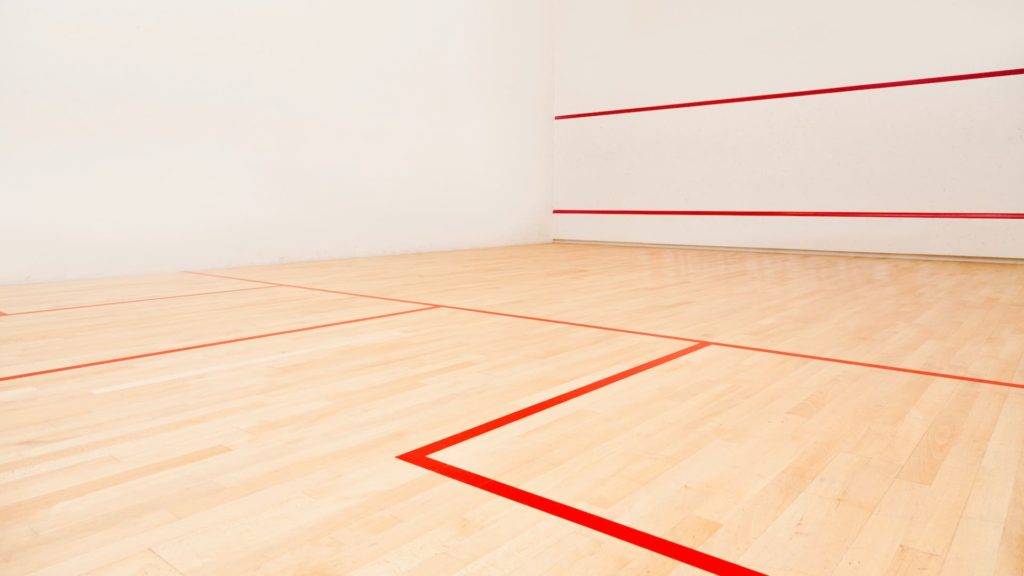
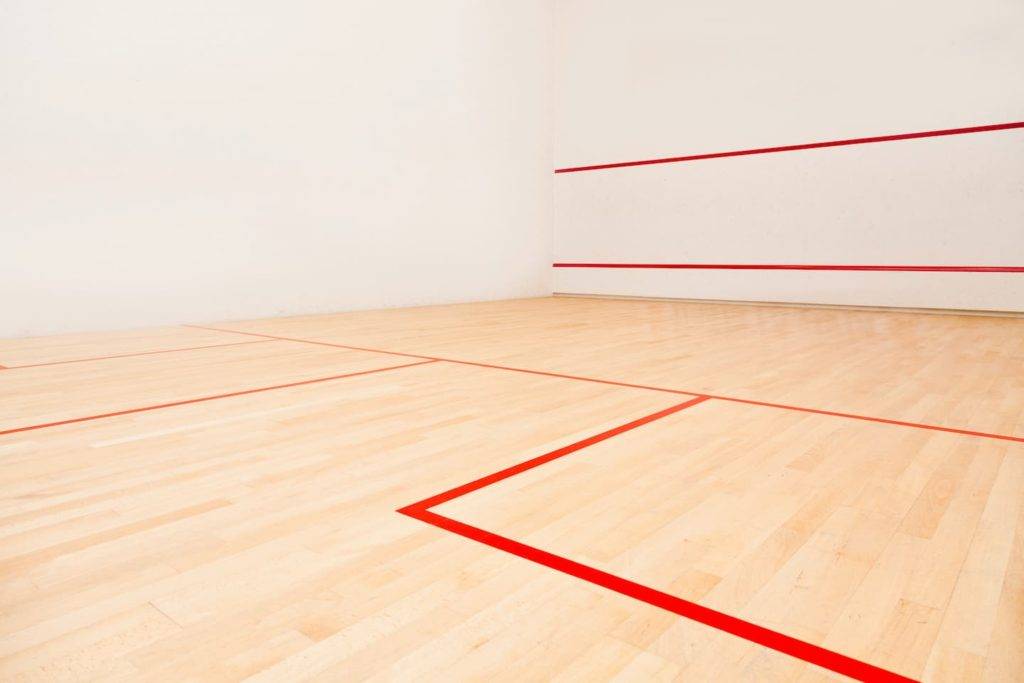
The boards are only the top layer of a squash court floor. Beneath them, timber battens sit on resilient pads or cradles, levelled over a vapour control layer on the concrete slab.
For players, this layer does three jobs. It provides the limited spring the court specifications call for, taking some of the jar out of lunges, turns and sudden stops. It keeps ball bounce consistent across the court, with no dead patches near the front wall or in the back corners. It also lifts the timber off the slab, leaving an air space that works with the open perimeter gap to let the floor breathe.
Sub-floors fail gradually. Pads compress and battens loosen, and the first signs are a hollow sound, a soft area underfoot or a ball that dies in one spot. Our guide to what a sprung floor is and how it works explains the main systems.
Timber moves with moisture, and a squash court is a small enclosed box in which players sweat hard. The World Squash specifications require the walls and floor to stay free of condensation during play, with ventilation giving at least four complete air changes per hour and a court temperature between 15 and 25°C. The usual causes of trouble are:
The symptoms are a greasy feel or white bloom, boards that cup or crown, seasonal gaps and, at worst, rot in the battens. Sanding a damp floor treats the surface and leaves the cause, so we check moisture in the boards and the slab before any work.

Regular maintenance is what keeps a squash court floor fast, safe and true. Court floors are unusual: they are traditionally left unsealed so the timber can absorb sweat and keep grip, which means dust control, board condition and the right cleaning regime matter even more than in a sports hall.
We provide squash court floor maintenance, sanding and repairs for clubs across the UK, from a light surface refresh to a full programme that returns a tired court to tournament condition. Our guide on caring for your squash court floor covers the routine between our visits, and our maintenance plans take care of the rest.
Most worn squash floors can be brought back by sanding, and that should be the first option assessed. It keeps the existing boards and sub-floor, costs far less and closes the court for less time. Our page on squash court floor sanding and restoration covers that process.
Replacement becomes the better answer when the problem sits below the surface or the timber has run out. The signs are:
A professional floor inspection settles the question with clear evidence. A new floor laid over a damp slab will fail like the old one, so the cause has to be fixed first.
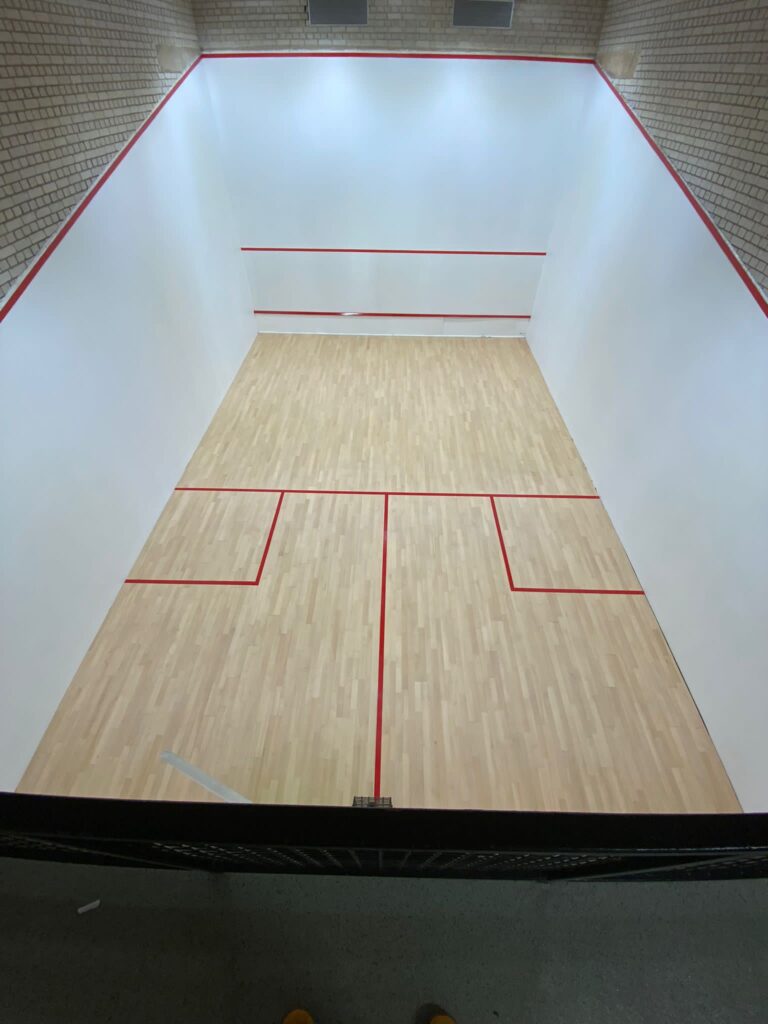
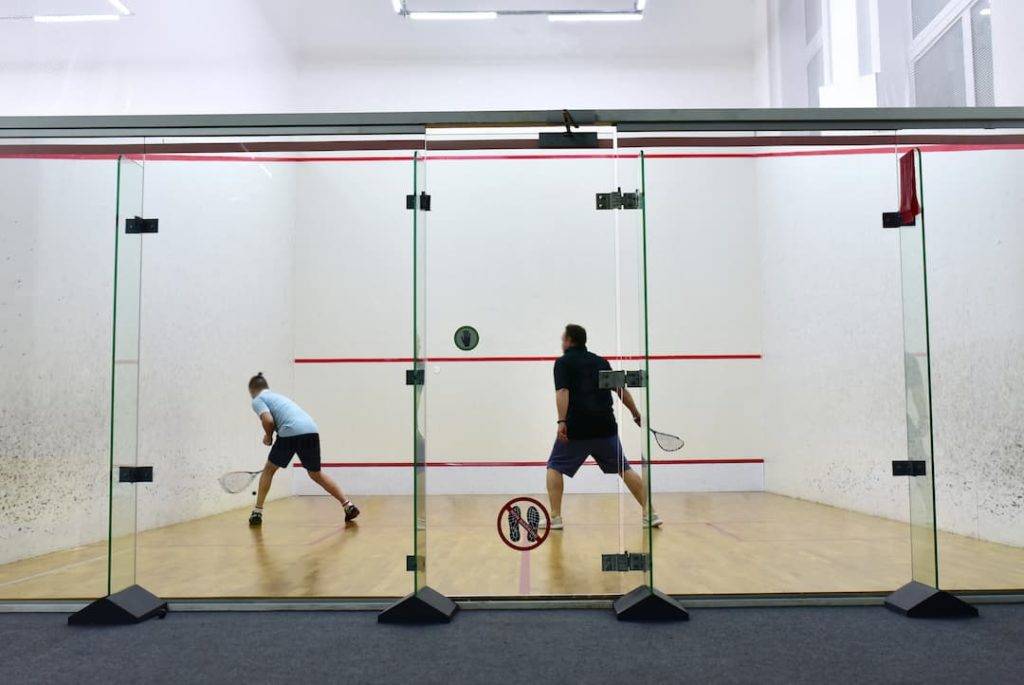
Replacing a floor inside a finished court is a different job from building a new one. The walls, tin and any glass back wall stay in place, and every board passes through the narrow court door. The work usually runs in this order:
The old lines go with the old boards. The short line, half-court line and service boxes are set out again from the walls to the World Squash dimensions, 50 mm wide in one contrasting colour, traditionally red, which corrects any drift in the old markings. Our court line marking team handles this.
Singles courts are built to fixed dimensions, so the cost of a new floor depends less on size and more on what sits around and beneath it. The main factors are:
Each quotation is based on a site survey. Contact our team with the number of courts, the age of the current floor and any known damp problems, and we will arrange a visit.

At Courtship Flooring, we provide expert services for squash court installation and refurbishment, offering tailored solutions that meet the needs of sports facilities, squash clubs, schools and universities. Our team has extensive experience in the construction and maintenance of squash courts, ensuring every project is completed to the highest standards. We use high-quality materials and the latest techniques to deliver courts that meet regulation specifications and offer a superior playing experience.
Our installation services include a full site assessment, material selection, and the construction of walls, floors, and ceilings to international squash standards. We handle every aspect of the installation process, from initial site preparation to the final inspection, ensuring the court is ready for use. For refurbishment projects, we provide a comprehensive assessment of the court’s condition and develop a customised plan to restore or upgrade the facility. Our refurbishment services cover wall repairs, floor restoration, ceiling upgrades, and safety enhancements, helping to revitalise existing courts and extend their lifespan.
Whether you are installing a new squash court or refurbishing an existing one, investing in professional services ensures the court meets the highest standards for safety and playability. The quality of the installation or refurbishment work significantly impacts the court’s performance, durability, and value. At Courtship Flooring, we are committed to delivering exceptional squash court solutions that meet the needs of our clients and provide optimal conditions for players. By choosing our services, you can create or revitalise a squash court that not only meets regulation standards but also enhances the playing experience, ensuring a long-lasting and high-quality facility
Depending on the materials selected and the space it is being fitted to, the price of installation can vary. Please get in touch with our team today to talk through which options suit your budget best.
We source floors from established manufacturers and suppliers, including Junckers, Boen, Havwoods and Granwood. For a squash court the choice narrows to hardwood systems made for squash, usually solid or engineered beech or maple boards. We will recommend the product that suits your court, its sub-floor and your budget.
Yes, we offer precise and accurate line markings as part of the installation for a number of sports courts, including squash.
A hardwood strip floor on a resilient battened sub-floor remains the standard. Beech and maple are the usual species, laid front to back with a light, matt surface. Solid boards allow more future sanding, while engineered boards are more dimensionally stable. Court conditions, use and budget decide which suits.
Squash floors were traditionally left unsealed with a lightly textured surface, so bare timber could take up small amounts of sweat and keep its grip, though it stains more easily. Many courts now use a light, matt, high-grip seal made for squash, which is easier to keep clean. The World Squash specifications allow a sealed finish where slip resistance is shown, which our pendulum slip testing can record.
There is no fixed life. A hardwood floor kept dry, cleaned correctly and sanded only when needed gives many years of play. Its life usually ends when the timber above the tongue runs out, or earlier if moisture or the sub-floor fails. Junckers states that its solid floors can be sanded eight to ten times.
In most traditional plastered courts, yes. The floor sits inside the walls with a small perimeter gap, so it can be lifted and relaid with the walls protected. Some panel-system courts run the floor beneath the wall panels, so we confirm the construction at survey.
Yes. The glass stays in place under protection. The floor should be fully supported across the court and fitted tight to the glass, leaving no gap to deflect the ball. Glass back walls are often stabilised by fins fixed at floor level, so we check those fixings first.
Most existing courts can be restored without replacing the floor. See squash court floor sanding and refinishing, and the areas we cover for your area.