
Flooring Professionals To The Leisure Industry
Courtship Flooring is a commercial sports flooring contractor working in Ayrshire and across the UK. We work with schools, community facilities and clubs across the region, planning each project as a single visit.
Trading since 1987 and family-owned throughout, we handle indoor sports and commercial timber floors from first survey to long-term aftercare, with our own crew and equipment on site at every stage. Domestic and residential projects are the province of our sister company, Ryan’s Restorations.
Whatever the size of the building, work in Ayrshire follows the same survey-first approach as every sports hall flooring project we take on.
Overnight/Weekend Installations
Professional Cleaning Demonstrations
Squash Court Maintenance
Recommended Cleaning Products
Professional Pendulum Slip Testing
Deep Clean & Reseal Service
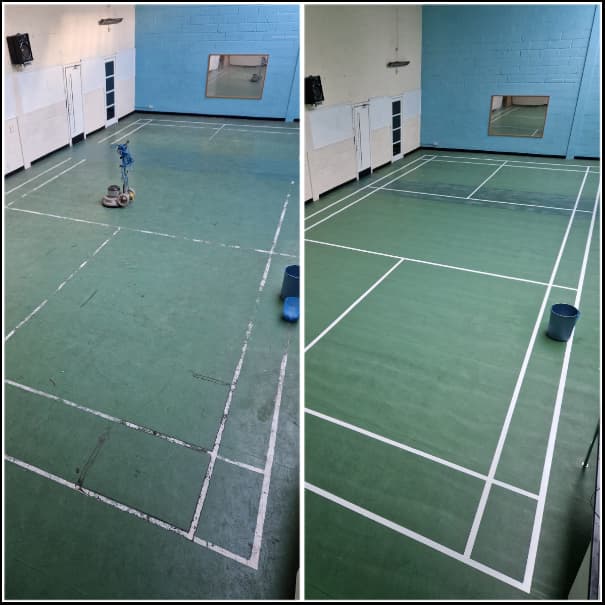
In many towns a single hall is the sports centre, the theatre and the function room, and it is expected to perform all three roles on a budget that leaves no room for waste.
We specify for the actual pattern of use rather than for sport alone, recommend protective covering for events, and are explicit about the compromise involved rather than overselling a surface that excels at everything.
Where a building is run by volunteers rather than a facilities team, the daily routine determines the life of a finish more than any specification decision. Over-strength cleaning product applied with the best intentions is the usual culprit.
We provide a simple written routine, recommend suitable products and demonstrate the method to whoever maintains the hall. It takes an hour and regularly adds years.
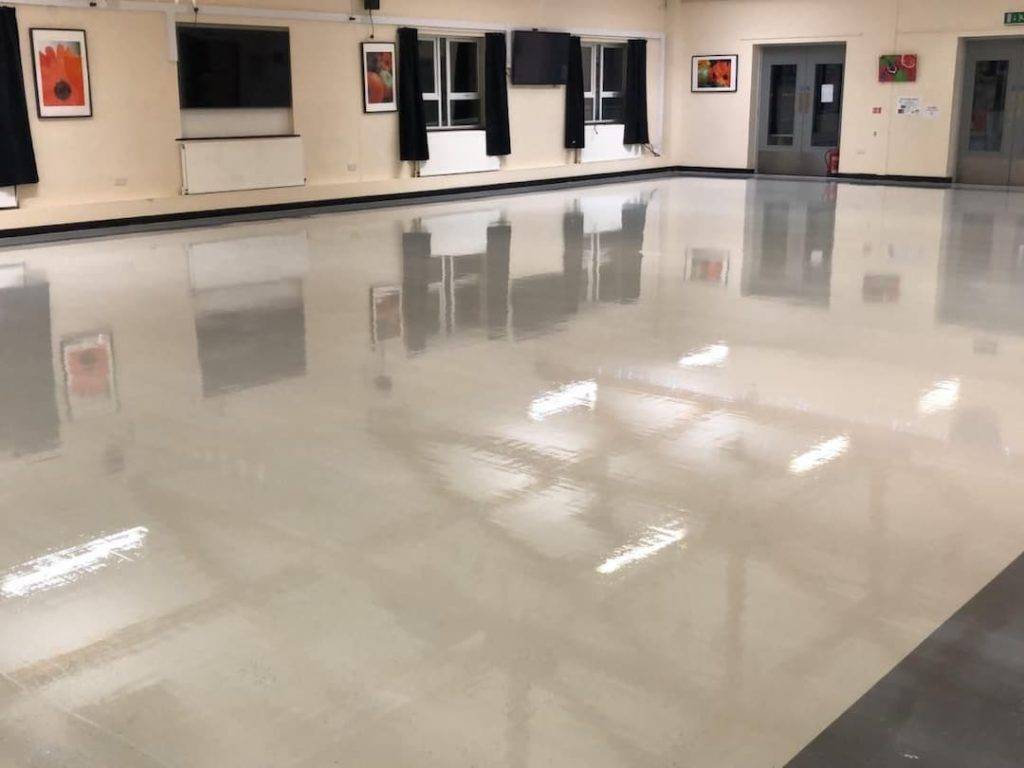
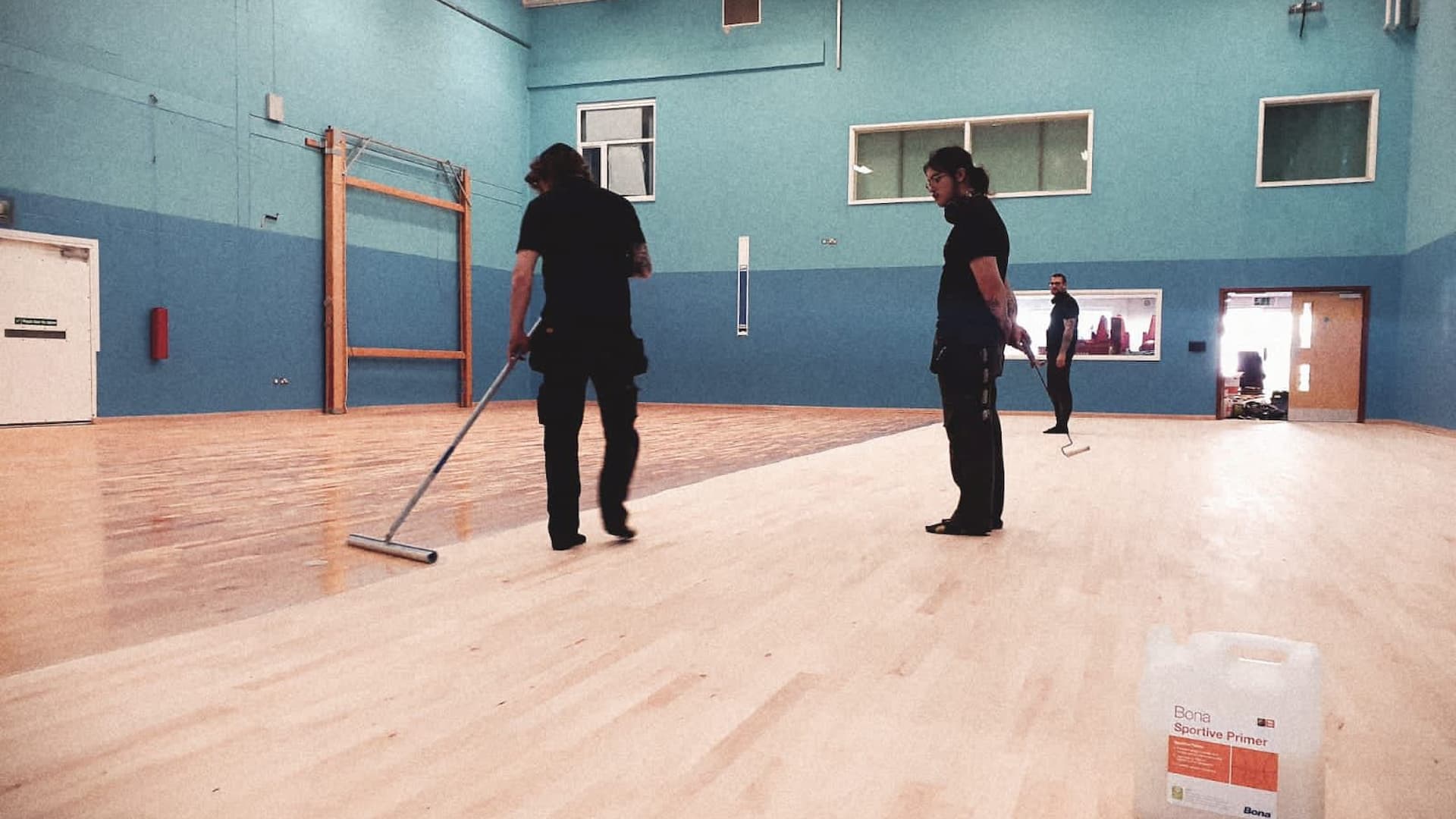
Buildings near the coast experience higher and more variable humidity, which affects how timber moves and how finishes cure. A specification that performs well inland can fail early in that environment.
We take moisture and humidity readings at survey and set expansion allowances and seal choice accordingly. It is a small adjustment that decides whether a floor reaches its expected life.
Not every floor we save sits in a sports centre. St Katherine’s had the kind of well-loved, well-worn hall floor that carries badminton one evening and a community event the next, and the committee wanted it rescued rather than replaced.
We restored it completely. The hall is now set for another few decades of everything it is asked to do.
~ Matthew Evans
An outstanding company to deal with and they couldn’t have been better to work with. St George’s Ascot now has a stunning new sports hall floor and we are delighted. From quote, support, delivery and after sales, the Team has been brilliant. Thank you. 
~ James Anderson







Most of the halls we work in across Ayrshire have a stage at one end, and it is usually in worse condition than the floor in front of it. Scenery is dragged across it, staging is bolted through it, and it gets painted black for a production and never quite recovered.
A stage is often a different timber and a different construction from the hall, sometimes softwood over a hollow void, so it has to be sanded with more care and cannot always take the same finish. A matt or dead matt seal suits it best, because it kills reflections from stage lighting and hides the scuffs that scenery leaves.
We recommend doing the stage in the same visit as the hall. It adds a day, it costs far less than a separate mobilisation, and it means the whole room reads as one finished space when the curtain is open.
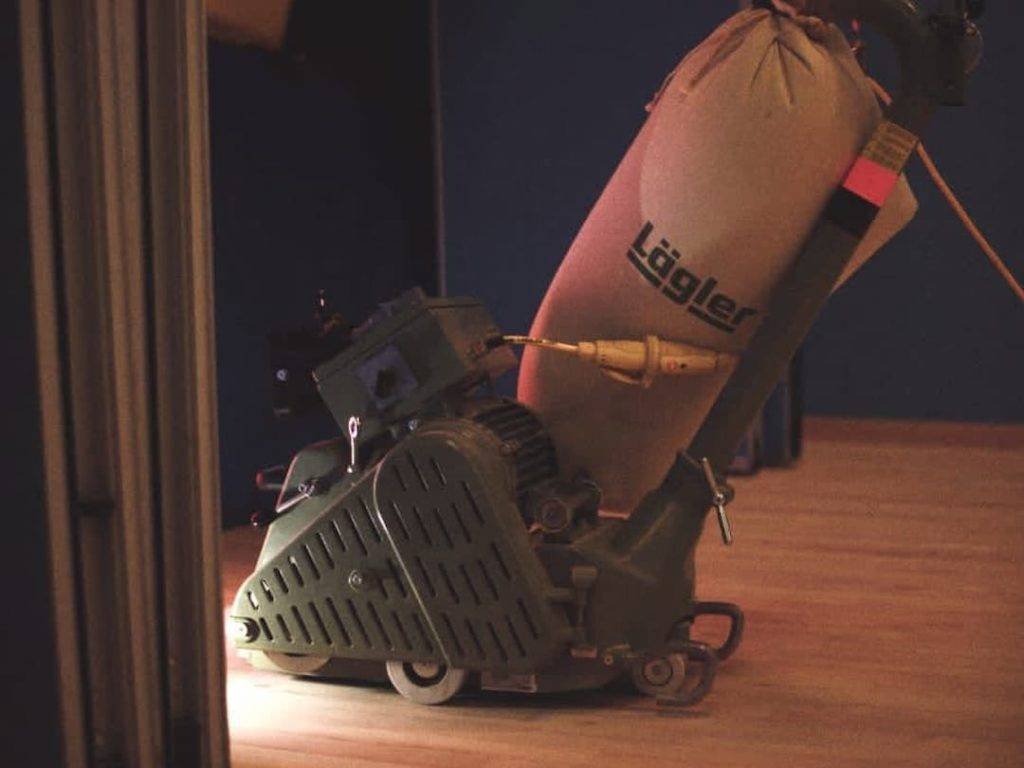
The question behind most refurbishment enquiries is which of two processes the floor needs, and the answer depends on whether the old seal is still doing its job.
If the lacquer is dull, scratched and tired but still covering the timber, a screen and recoat is enough. We abrade the surface with a fine mesh, clean it and apply fresh coats of two pack polyurethane. It takes two or three days and the floor keeps every millimetre of its wear layer.
If the seal has worn through in the traffic lanes, or dirt has got into open grain, or the markings need moving, a full sand is the only route. The floor goes back to bare wood, repairs are made, and three coats of seal go on with new lines between them. Halls in Ayrshire that catch the recoat every two to three years often go a decade or more between full sands.
An inspection is a short structured visit that ends in a document you can act on. We assess the seal, measure the wear layer left in the boards, take moisture readings, check the sub-structure for movement and soft spots, look at the perimeter, and compare the markings against current dimensions.
The report sets each finding against a photograph, a recommendation and a rough cost, ranked by urgency. The distinction it draws is between what is deteriorating and what is merely unattractive, because those need different decisions and different budgets.
For a council or leisure trust with several halls across Ayrshire, the same format on every building gives a comparable picture of the estate and a forward programme that finance can plan against. For a single school hall it is simply the cheapest way to avoid discovering in August that the floor will not last the year.
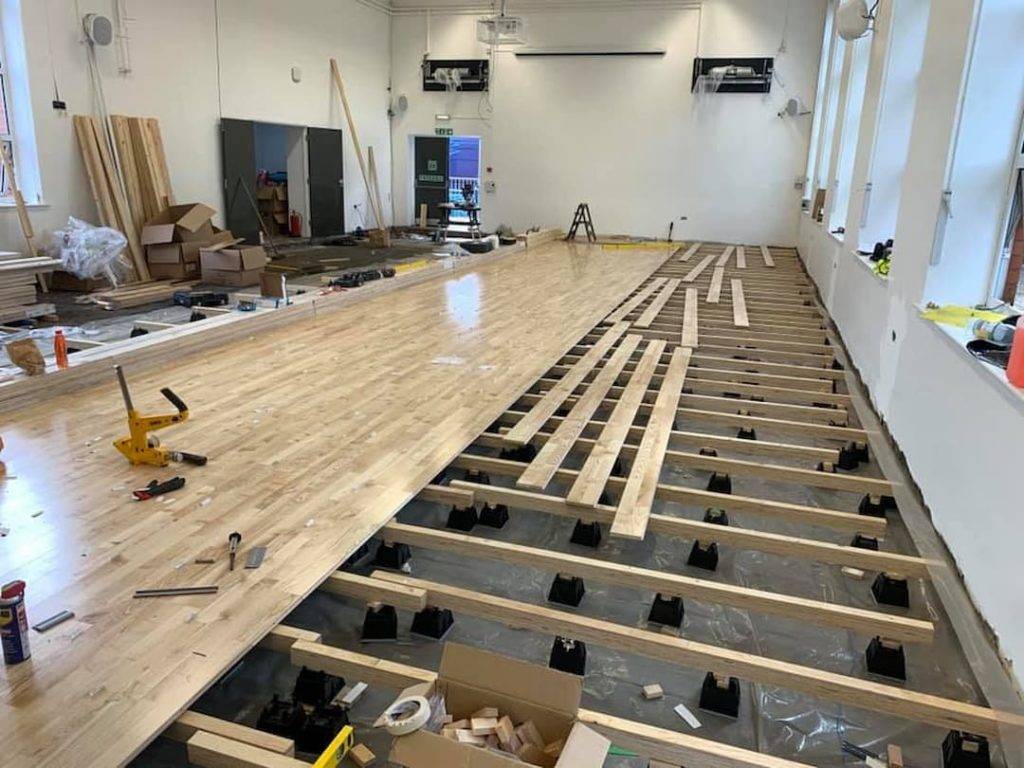
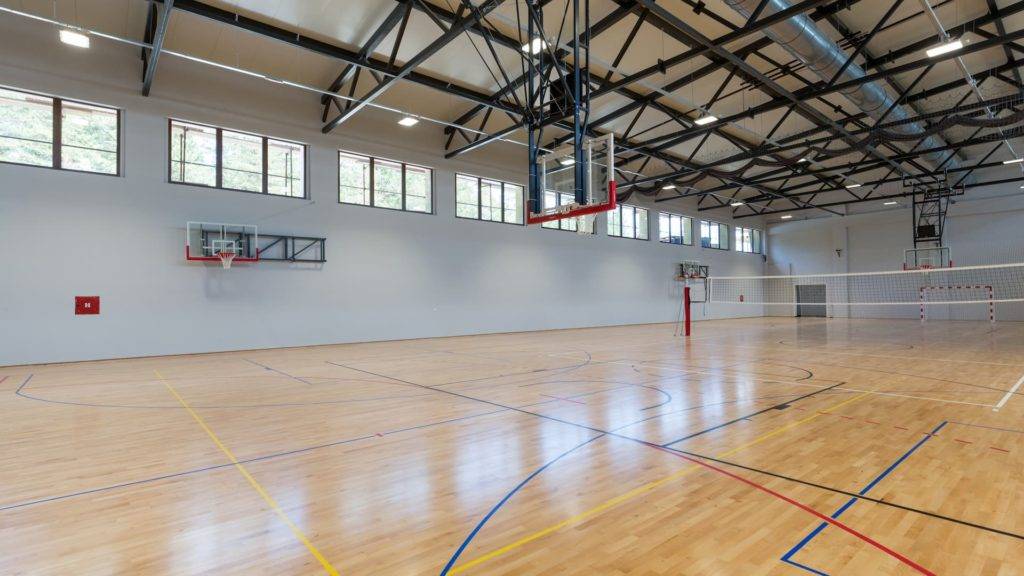
Ayrshire brings us a mix of council leisure facilities, secondary school sports halls and a good number of community and club buildings, and the flooring issues differ noticeably between them.
The leisure centre halls tend to be the busiest and the best maintained, and what they usually need is a screen and recoat on a sensible cycle rather than a full refinish. Catching those before the seal wears through is what keeps them off the replacement list.
School halls are more often overdue. A hall running a full curriculum plus community lettings takes a great deal of traffic, and where the last refinish was more than a decade ago the finish has usually gone in the traffic lanes and the markings are tired.
Club and community buildings are the third group, and they are often the most rewarding. Old timber floors with plenty of depth left, decades of accumulated polish, and chair and table scoring across the whole area. Those transform completely for a modest sum.
We work across all three, and because we travel to the area we will usually try to sequence several jobs together, which brings the cost down for everybody involved.
Facilities in Ayrshire often ask what comparable work looks like, and two of our projects usually answer the question.
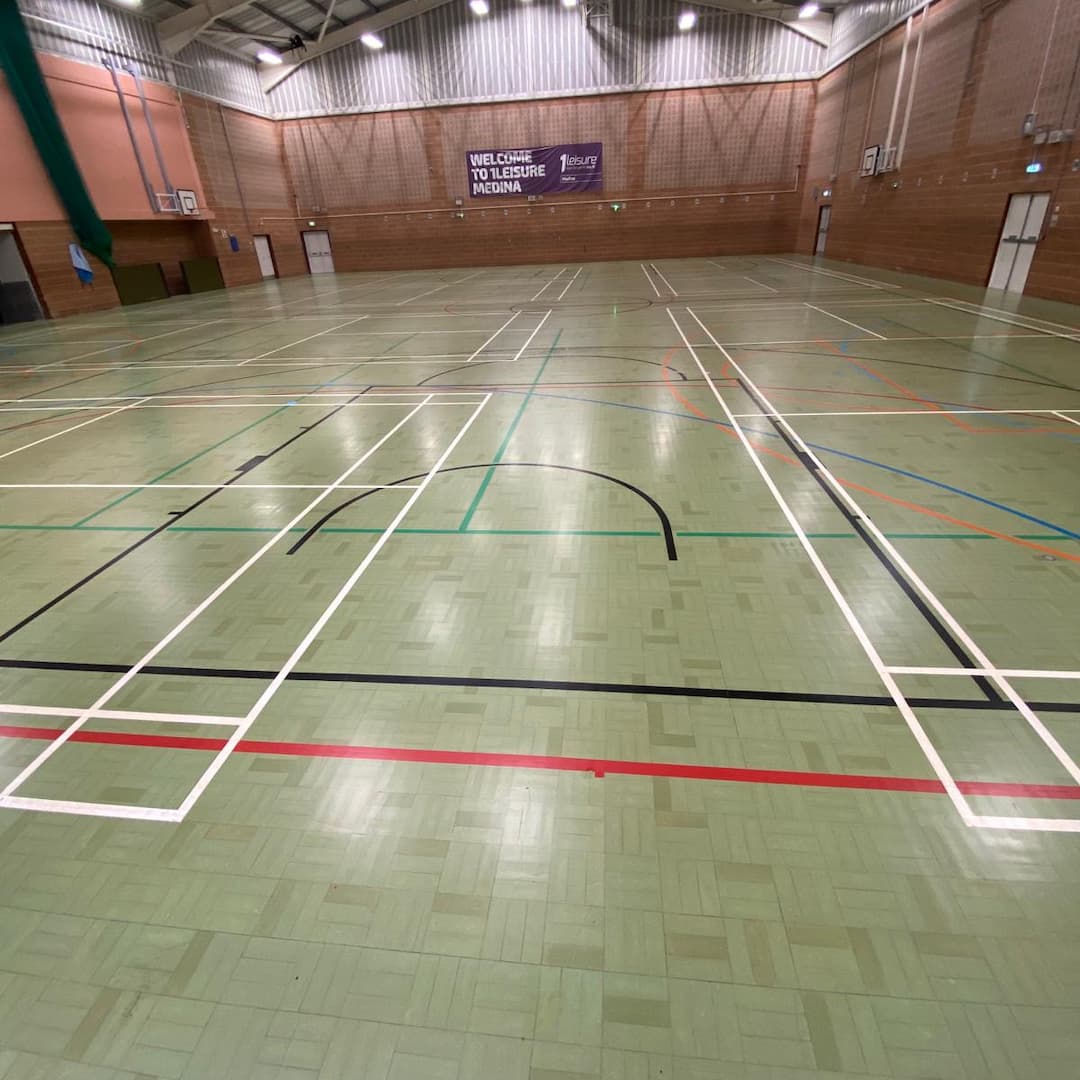
Medina Leisure Centre is the closest parallel for a council or operator run sports hall. The centre could not afford a fortnight of lost bookings, so the work was programmed around its own timetable, sealed at the end of shifts, with dust extraction and screening arranged so the rest of the building carried on. For an operator the measure of a job like that is how few complaints reach the front desk while it is running.
For school halls, Hornbury Academy in Wakefield is the better comparison: a hall in constant curriculum use, a finish that had gone well past its proper cycle, and a fixed date to be back for the first day of term.
Neither was complicated technically. Both were won on surveying properly beforehand so nothing unexpected appeared once the old finish came off.
We guarantee our workmanship and the materials we apply, and the terms go out in writing with the quotation so a committee or a bursar can read them before committing. If a seal fails, a marking lifts or a repair opens up through a fault of ours, we come back and put it right at our cost.
The boundary is stated just as plainly. A floor cleaned with polish against the written guidance, water from a roof leak, furniture dragged across a hall with no covering down, or a slab we advised was too wet to seal are not workmanship failures.
Because our own employed team carries out every stage from survey to final coat, there is no subcontractor to point at and no gap between the people who quoted the job and the people who answer for it. That is the guarantee behind the paperwork.
It is the European standard for indoor sports surfaces. It defines how shock absorption, vertical deformation, ball rebound and friction are measured and the ranges an indoor floor should meet. We specify systems against it and can show you the test figures for any floor we propose.
We can give an indicative range from good photographs and the hall dimensions, which is usually enough for a committee to decide whether to go further. The fixed price that goes on paper follows a free site survey, because the numbers depend on what we measure there.
Satin for nearly every sports hall. Gloss looks striking on handover day, then shows every scuff and throws glare under LED lighting. Matt suits stages and studios. Satin holds its appearance, keeps its slip resistance and hides the marks a busy hall collects between cleans.
Yes. We start after the last session, seal at the end of each shift and hand the hall back walkable by opening. Heavy equipment returns once the finish has hardened. It costs more than daytime work, but for a busy centre it usually saves more in income than it adds.
It can be. Granwood and block floors laid before the mid 1980s sometimes sit in a bitumen bed that contains asbestos. We treat every one as suspect until a sample test says otherwise, and we plan the refurbishment so the bed stays undisturbed under the blocks.
Foot traffic in clean shoes after 24 hours, play and equipment after 72 hours or more. In a cold hall the seal cures more slowly, so keep the heating on at a background level through those days. Posts and nets are the last things to go back in.
Yes. We scale your artwork to the centre circle, agree a layout with you and paint it between coats of seal so it wears at the same rate as the lines. Done during a refinish it adds very little. Done as a separate visit it costs considerably more.
Yes. Job specific risk assessments and method statements, COSHH data for every product, our insurance certificates and enhanced DBS details for the crew all go to the school office in advance. We sign in daily, wear identification and keep to the area agreed with your staff.
Book a free survey of your hall floor in Ayrshire and we will tell you what it needs, what it will cost and the earliest dates we can be there. Call 01823 674562 or send us a message.