
Flooring Professionals To The Leisure Industry
Courtship Flooring is a commercial sports flooring contractor working in Berkshire and across the UK. We have completed a number of specialist restorations in the county, including composite block floors that most contractors decline.
This is all we do, and we have been doing it since 1987. Installation, restoration, sanding, sealing, line marking, slip testing and maintenance for commercial and institutional buildings, delivered without subcontractors. Residential projects go to our sister company, Ryan’s Restorations.
Everything set out on our main sports hall flooring page is available to schools, leisure centres and clubs in Berkshire.
Overnight/Weekend Installations
Professional Cleaning Demonstrations
Squash Court Maintenance
Recommended Cleaning Products
Professional Pendulum Slip Testing
Deep Clean & Reseal Service
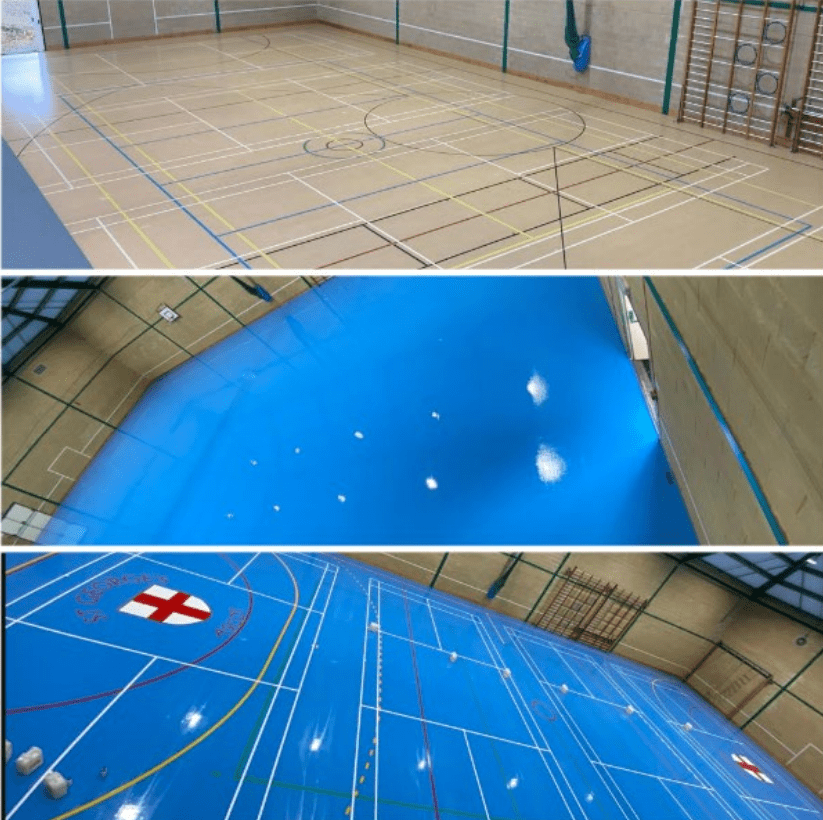
Granwood appears as small rectangular blocks laid in a brick-like pattern and feels noticeably harder underfoot than boards. It was fitted extensively between the 1950s and 1980s and remains in service in a great many halls.
Critically, it holds almost no surface material. Sanding one as you would sand timber destroys it permanently, which is why identifying the floor correctly before quoting is not a formality. Send a photograph and we will confirm it free of charge.
The correct treatment for a sound composite block floor is careful preparation followed by a modified epoxy coating system. It restores an even, consistent surface with the colour returned to it, and provides a durable finish suited to heavy multi-sport use.
New markings are applied as part of the same programme. The result is frequently assumed to be a new floor, at a fraction of what replacement would have cost and without the disruption.
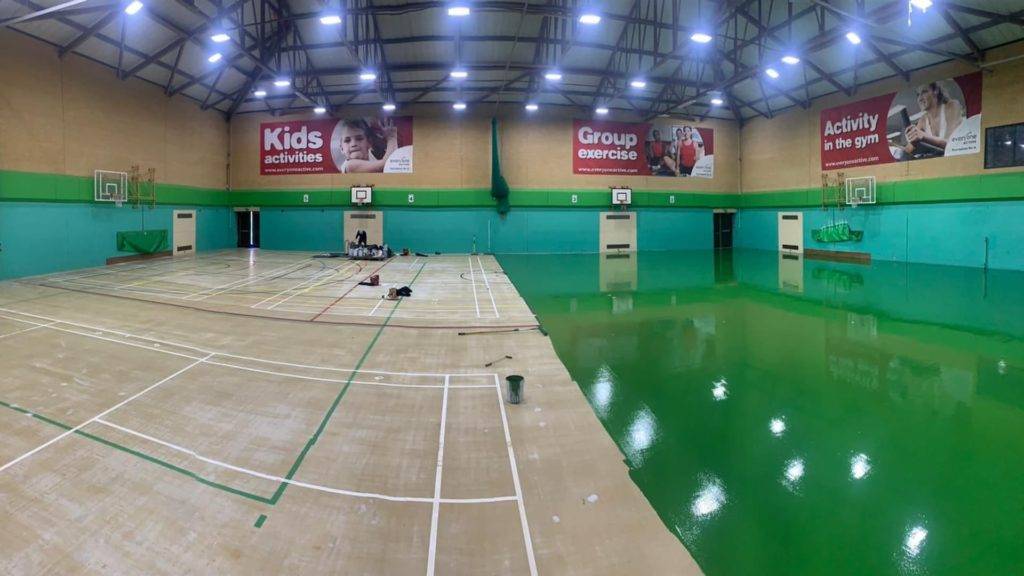
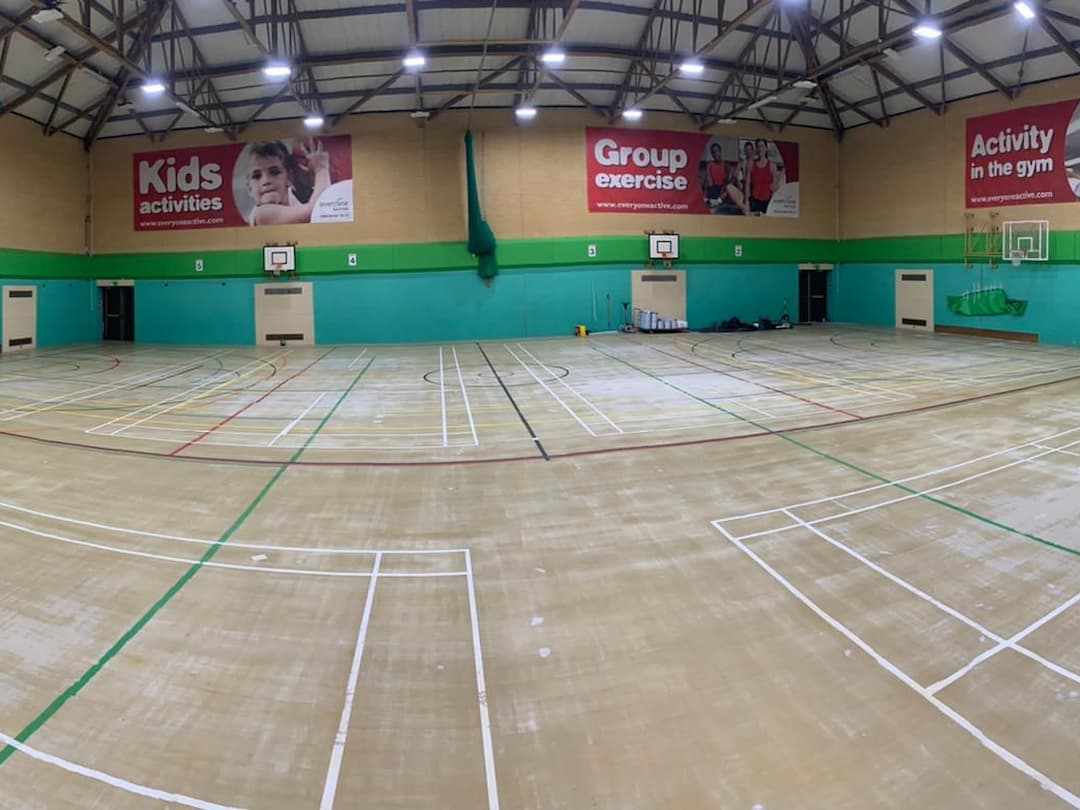
Not every composite floor is recoverable. Where blocks have lifted extensively, where moisture has broken down the bond across large areas, or where previous sanding has already removed the working surface, coating over it simply postpones the problem.
We will say so plainly and price the replacement rather than taking payment for a treatment that will fail. That judgement is the main value of having someone who works with these floors regularly.
Our installation at Hornbury Academy shows the full process from bare sub-floor through to a finished, fully line-marked hall, delivered to a fixed programme while the school carried on around us.
For anyone weighing a new floor against another patch-up, it is a useful illustration of what the complete journey involves and what it produces.
~ Matthew Evans
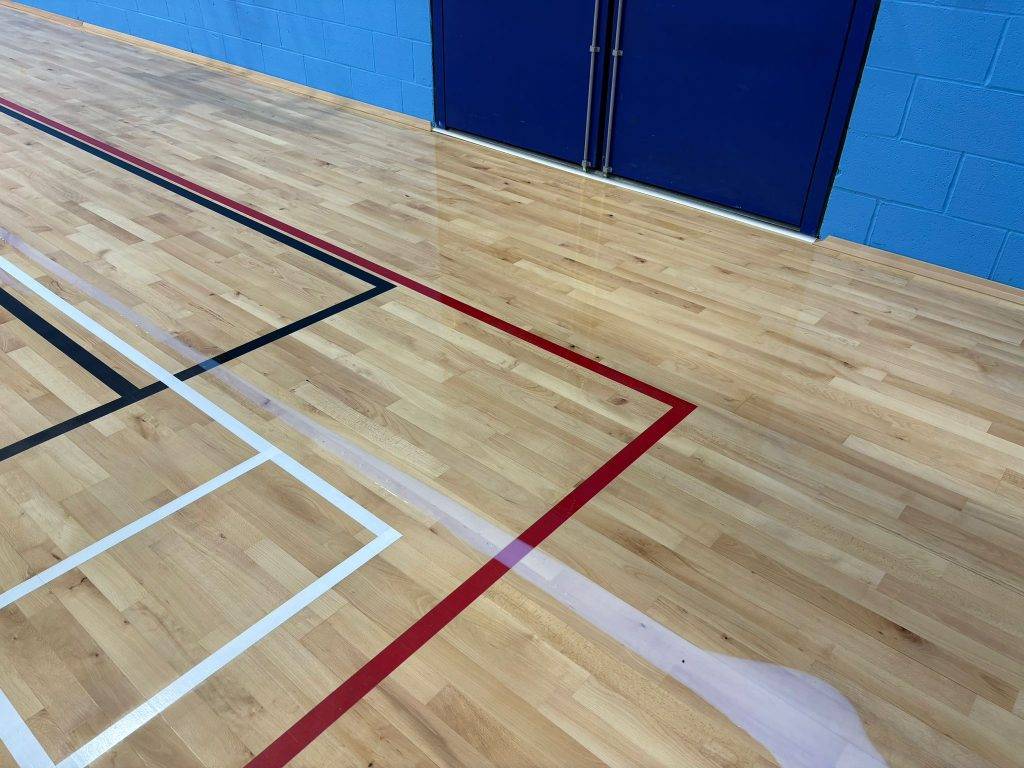
An outstanding company to deal with and they couldn’t have been better to work with. St George’s Ascot now has a stunning new sports hall floor and we are delighted. From quote, support, delivery and after sales, the Team has been brilliant. Thank you. 
~ James Anderson







Independent schools across Berkshire increasingly have a dance or drama studio next to the sports hall, and the two rooms want different floors. A finish chosen for basketball grip is too grabby for a dancer’s turn, and a foot that stops when the body does not is how ankles go.
Resilience is the second difference. Dance is repeated jumping and landing on the same spot, so a sprung base is a requirement, not a luxury, and where the studio sits above classrooms it also has to work acoustically.
Surface follows discipline. Ballet and contemporary want a vinyl performance surface over a sprung base. Tap and musical theatre want timber with a controlled slide. A studio that has to do both is a compromise, and we would sooner agree which discipline leads than pretend one floor serves everything equally well.
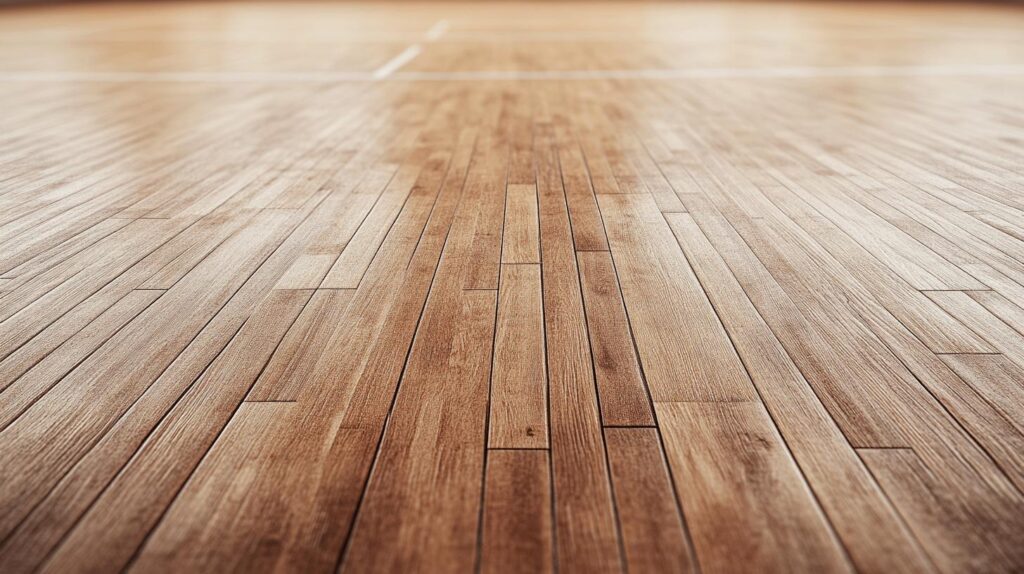

The date you get the hall back includes the curing, not just the last coat. Two pack polyurethane seals harden in stages: light foot traffic after around 24 hours, equipment and trolleys after 72 hours or more, and full hardness over the following week.
Temperature moves those figures. A warm, ventilated hall cures on schedule. A cold one over a holiday shutdown can add a day, so we ask that heating runs at its normal level throughout the job and after it.
We sign the doors, agree who holds the key and put the release times into the handover in writing. Footprints or castor marks in a soft seal do not buff out, and a day of patience at the end is the difference between a clean handover and a return visit nobody wanted.
A bursar or estates manager needs a file before anyone unloads a machine, and we send it without being asked. Risk assessments and method statements are written for your building and the work planned in it, not lifted from a template.
COSHH data sheets cover every seal, filler and cleaner we bring on site. Insurance certificates for public and employer’s liability come with the quotation, and we add named sites where a trust or landlord asks for it. Waste leaves site with us and is disposed of under the correct codes.
On school sites every member of the crew holds an enhanced DBS check. We sign in, wear identification, and work within your safeguarding arrangements while summer schools or lettings carry on elsewhere in the building. Berkshire’s boarding schools, where the site is rarely empty, are used to that from us.
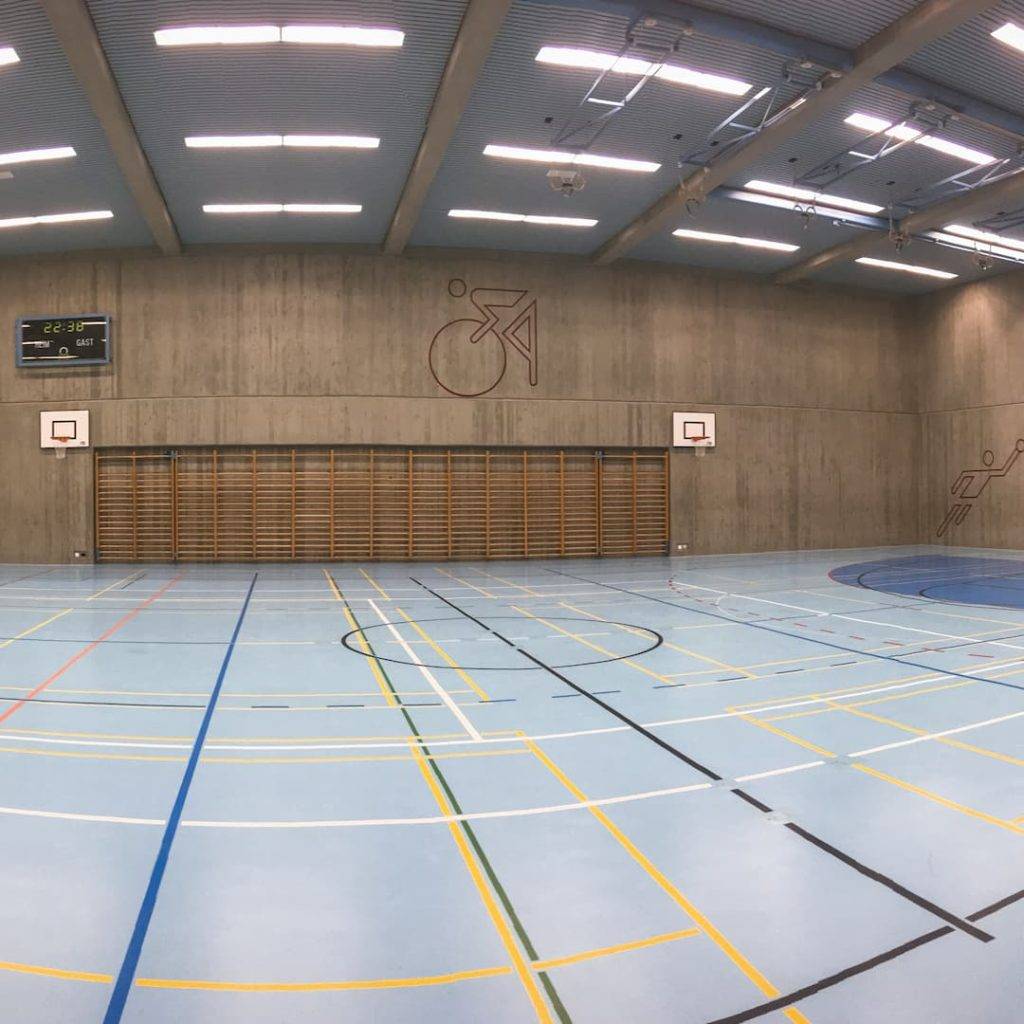
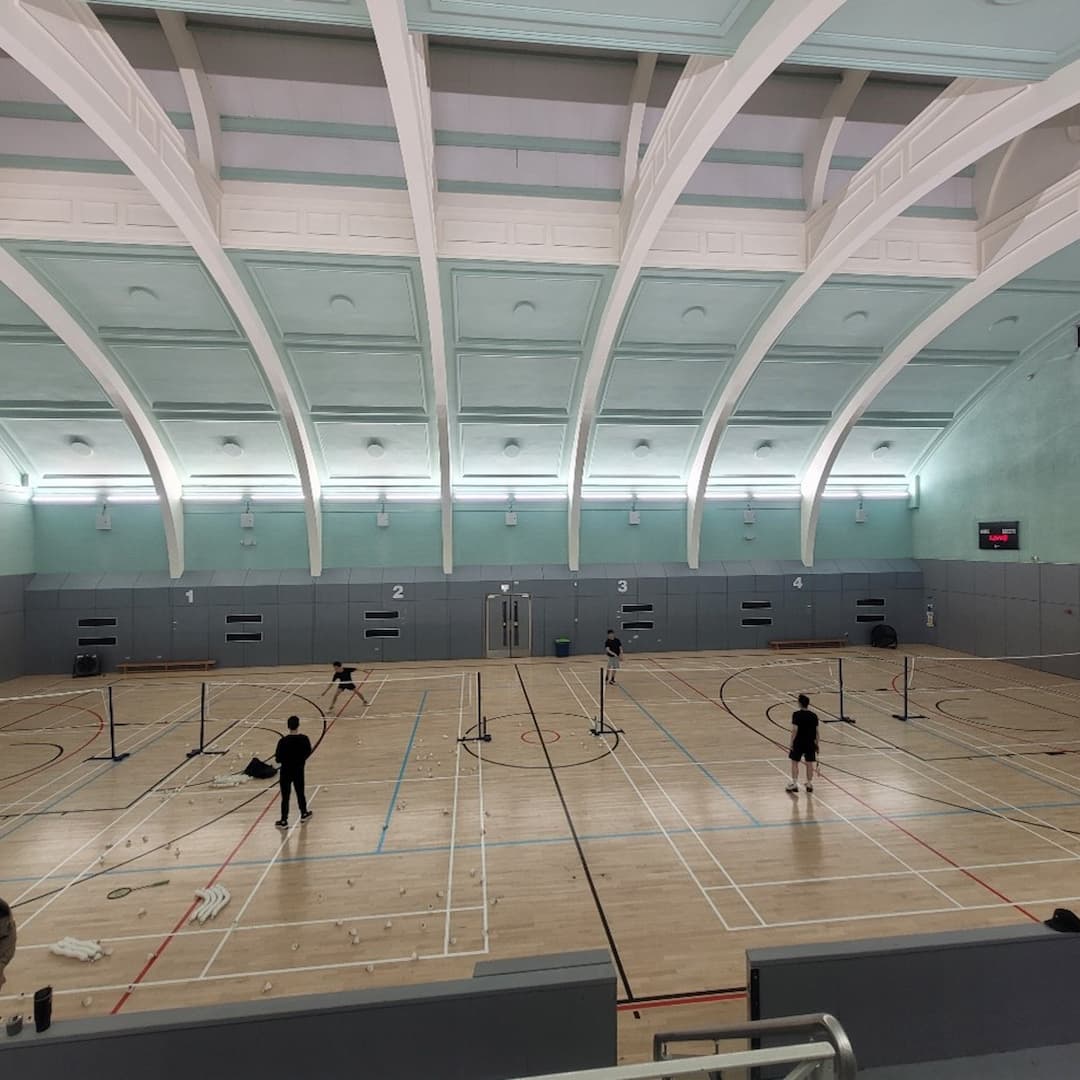
What you see is the board. What you feel is the system under it. An area elastic floor carries the boards on battens over pads or cradles and spreads a landing across a wide zone, which is what BS EN 14904 measures in shock absorption, vertical deformation and ball rebound.
A point elastic floor gives only under the foot and suits fitness and studio use better than ball sports. Combined systems do both at a higher build height and a higher price.
Solid strip beech or maple carries a deep wear layer and can be refinished many times. Engineered board over a stable core copes better with variable humidity but has less timber to sand. The perimeter is the detail that decides longevity: a ventilated expansion gap all the way round is what lets a floor move without lifting in the middle.
Berkshire gives us a heavy weighting towards independent schools and well funded academy sport, and that shapes the kind of work we are asked to do.
Independent school sports halls, gymnasia and squash courts are a significant part of it. Expectations of finish quality are high, the buildings are usually in good order, and the work is planned well ahead into fixed holiday windows. A good deal of it is preventative rather than remedial, which is exactly how it should be: screen and recoat on a sensible cycle rather than waiting for the seal to fail.
Squash courts feature more here than in many parts of the country, and they are a genuine specialism. A court polished smooth through the middle needs the right matt high grip finish, not a general sports lacquer.
State school and leisure centre work makes up the rest, along with a steady stream of village and church halls whose timber floors are often far better than they look under decades of polish.
We have worked at St George Ascot and at The Bradfield Club, and both were the kind of project where a proper survey changed what was actually needed.
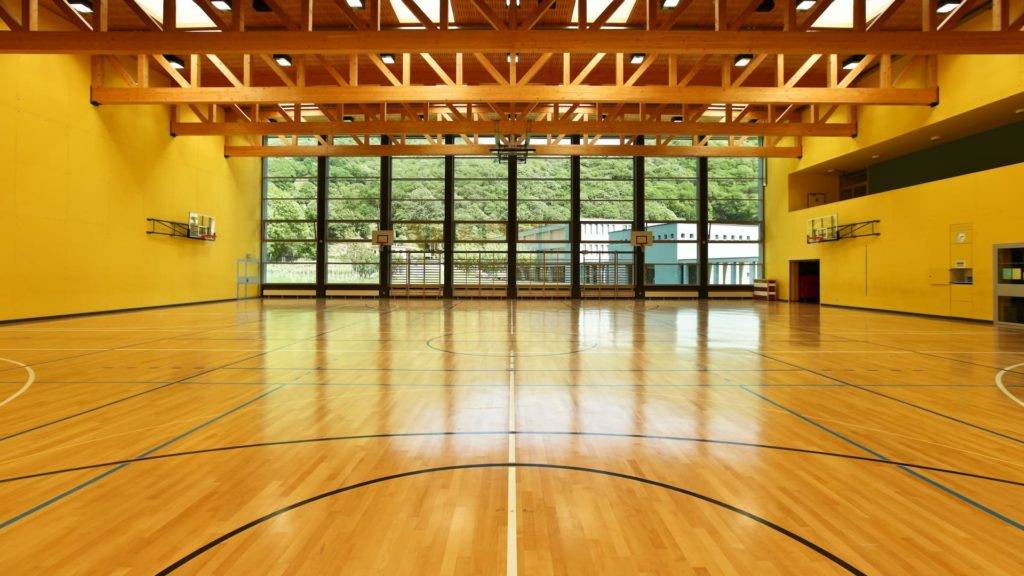
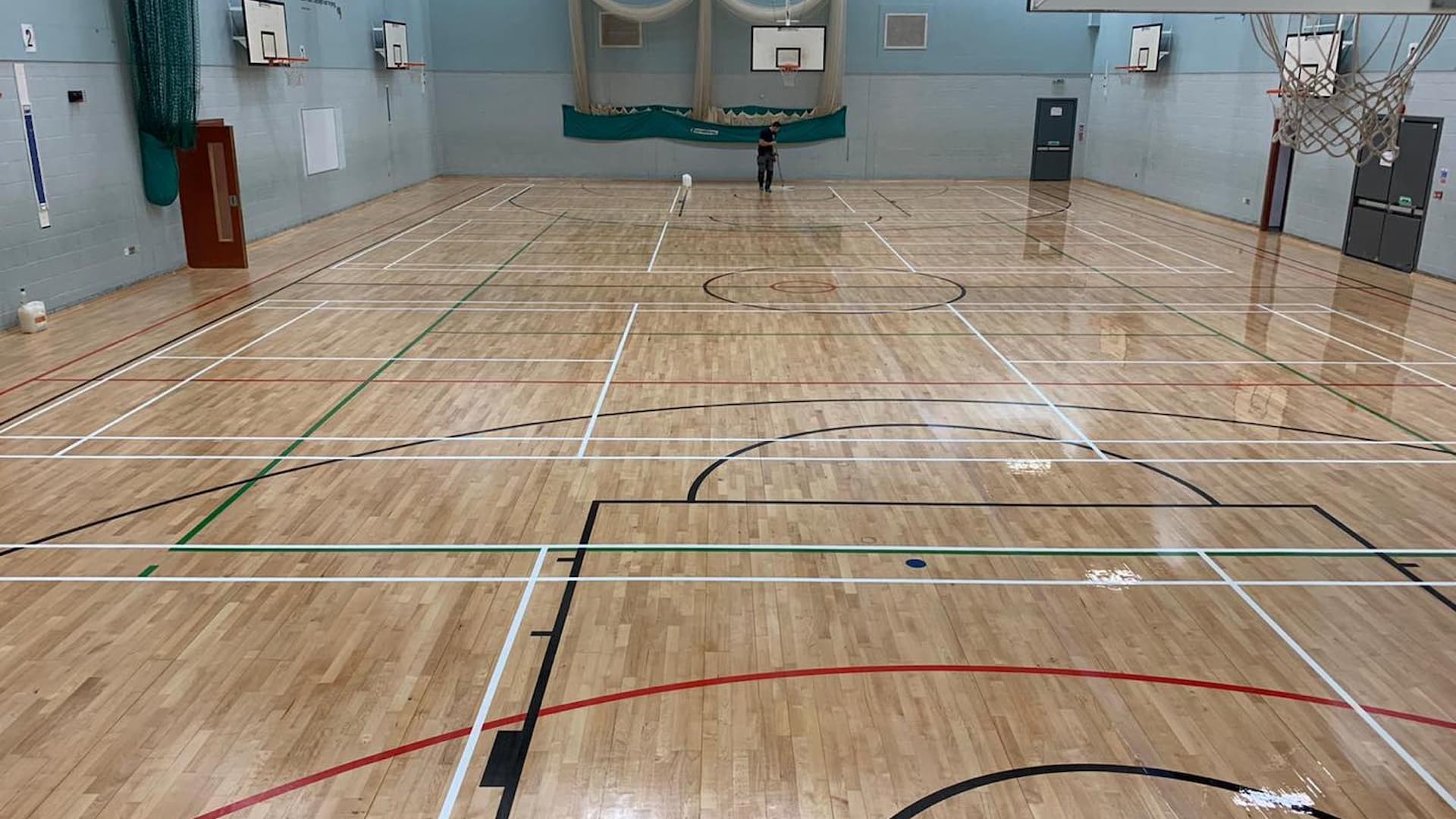
Berkshire enquiries divide fairly neatly, and the pattern says something about how well maintained the building stock here is.
A good proportion are preventative: a facilities manager who knows the floor is coming up for its screen and recoat and wants it booked before it becomes urgent. That is the cheapest way to run a sports floor and we wish more places worked that way.
The remainder are remedial, and the most common is a squash court that has gone slick through the middle. It happens because players return to the same spot after every shot and polish the finish smooth. A matt high grip reseal restores it, and it is a genuine safety issue rather than a comfort one.
The third group is halls where the markings have drifted. Courts remarked by tracing the previous set gradually move, and a hall that has been done three or four times that way can be noticeably out. We set out from measured dimensions, which is often the first time in decades that has happened.
Yes. Your artwork is scaled to the circle, shown to you as a layout, and painted between coats of seal so it lives under the lacquer and wears with the floor. Adding it during a refinish costs very little.
Yes. Leisure and club facilities usually cannot close for a fortnight, so we sand and seal outside opening hours and time the final coat so the floor is usable by the next session. The extra labour is stated in the quotation.
Yes, and we recommend it. Stages are often a different timber and are usually worse worn from scenery and stacked staging. One mobilisation costs less than two, and a matt seal stops lighting reflecting into the audience.
A pad, batten or cradle beneath it has failed, so that patch no longer springs back. We lift the boards locally, replace the failed parts and refit the boards, normally as part of a refinish. Surface work alone will not change how it feels.
One to two weeks for a typical hall, from the first machine to the final coat, with cure time on top. Bigger halls or those needing board repairs take longer. A day by day programme comes with the quotation.
Yes. Everything is itemised, so the sanding and sealing can go in one year and relining or the stage in the next. Our survey report ranks the work by urgency and says what should not wait.
Far less than a new floor. Price follows the hall size, the condition of the existing finish and the specification, not the postcode. We survey free of charge and quote a fixed, itemised sum, and if a cheaper approach will work we say so.
The heating dries the air, the boards give up moisture and shrink a fraction, then swell again in spring. It is seasonal movement, not a defect, and a steadier temperature and humidity through the year keeps it small.
Book a free survey of your sports floor in Berkshire. We will identify what is under the finish, tell you plainly what it needs and give you a fixed price and a firm date. Call 01823 674562 or send us a message.