
Flooring Professionals To The Leisure Industry
Courtship Flooring is a commercial sports flooring contractor working in Buckinghamshire and across the UK. Much of our work is for schools and academy trusts planning capital work across several financial years.
A family business established in 1987, working exclusively on commercial indoor sports and timber floors. We survey, install, restore, mark, test and maintain, keeping every stage in our own hands so one warranty covers the whole system. Domestic work is handled separately by Ryan’s Restorations.
For halls in Buckinghamshire that are worn but structurally sound, our sports hall floor refurbishment service restores grip, appearance and line markings, usually within a school holiday.
Overnight/Weekend Installations
Professional Cleaning Demonstrations
Squash Court Maintenance
Recommended Cleaning Products
Professional Pendulum Slip Testing
Deep Clean & Reseal Service

Few organisations can address every floor at once, and the useful question is which work cannot wait. That is a technical judgement rather than a financial one, and it should be made with evidence.
Our survey reports rank findings by urgency with firm costs attached, so work can be phased across financial years deliberately. We will say plainly what is deteriorating and what is merely unattractive, because those are very different priorities.
Three factors move a flooring quotation more than anything else: the condition of the sub-floor, how much preparation the existing surface requires, and how tightly the programme is compressed.
The first two are established at survey. The third is within your control, and it is where money is most often wasted: an urgent job squeezed into a fortnight costs materially more than the same work with a sensible window. We will always tell you where patience saves money.
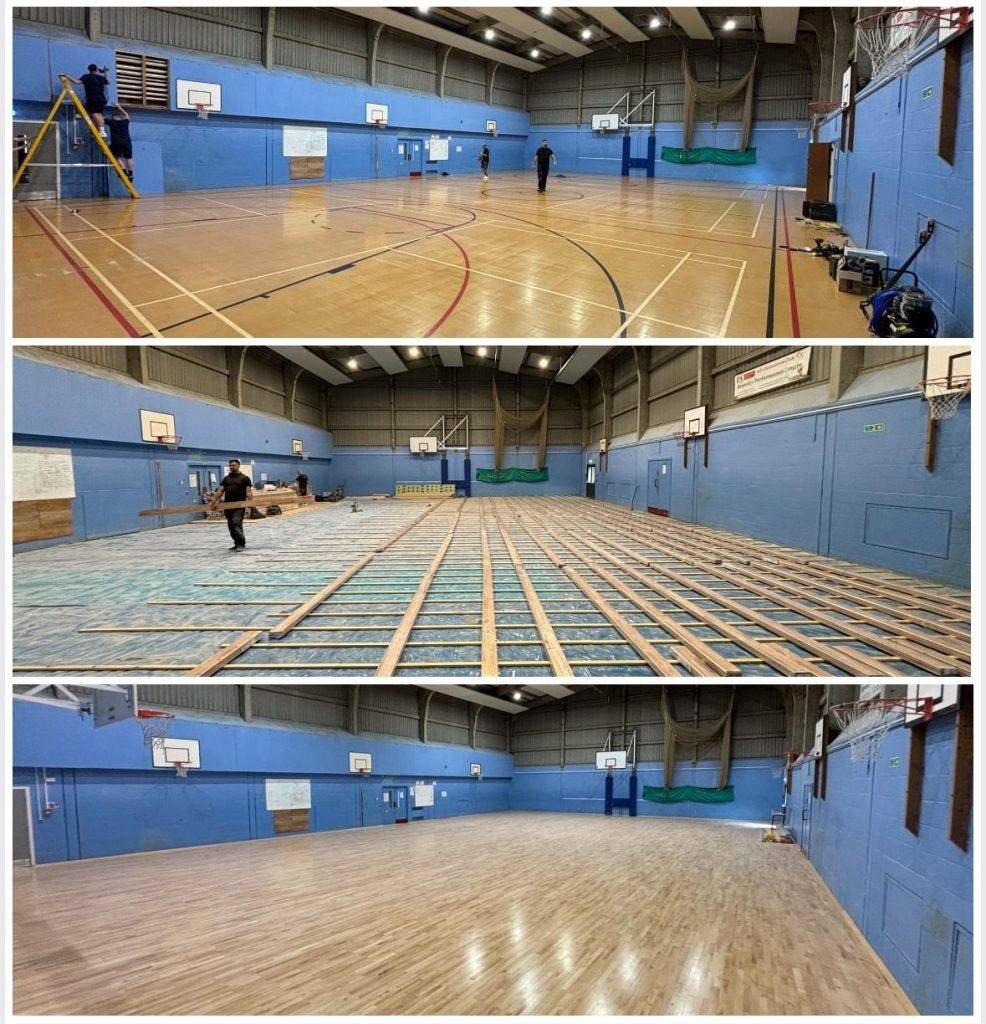
Flooring quotations are notoriously difficult to compare because they frequently describe different scopes. One includes sub-floor preparation and another assumes it; one specifies three coats and another two; one includes markings and another treats them as an extra.
Our quotations itemise scope, specification, coat numbers, marking and testing explicitly so you can compare like with like. If a competing quote is markedly cheaper, that itemisation usually explains why.
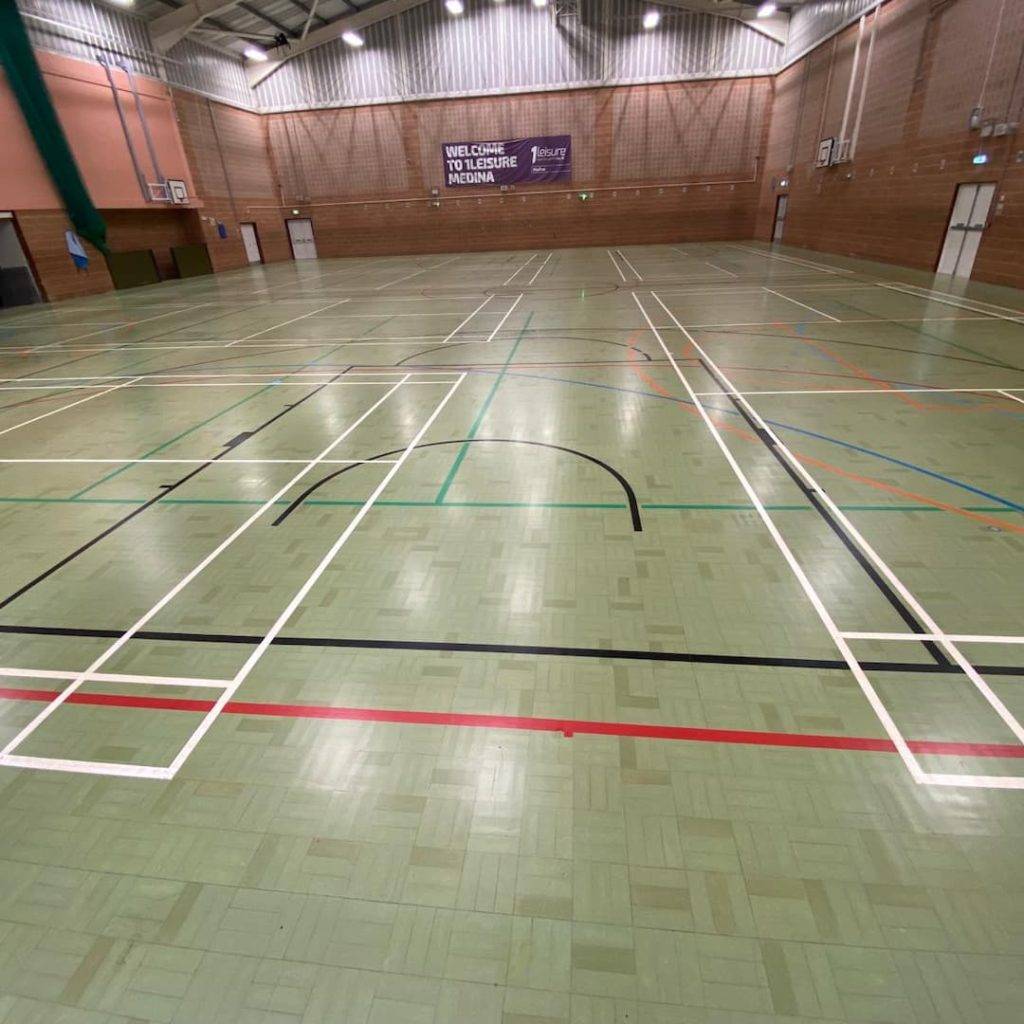
At Medina Leisure Centre we refurbished the main sports hall floor completely: sanding, repairs, resealing and a full set of new markings, with the logistics planned down to the last detail so the centre lost as little bookable time as possible.
The after photographs show a hall transformed, and the programme finished on the date agreed at the outset.
~ Matthew Evans
An outstanding company to deal with and they couldn’t have been better to work with. St George’s Ascot now has a stunning new sports hall floor and we are delighted. From quote, support, delivery and after sales, the Team has been brilliant. Thank you. 
~ James Anderson







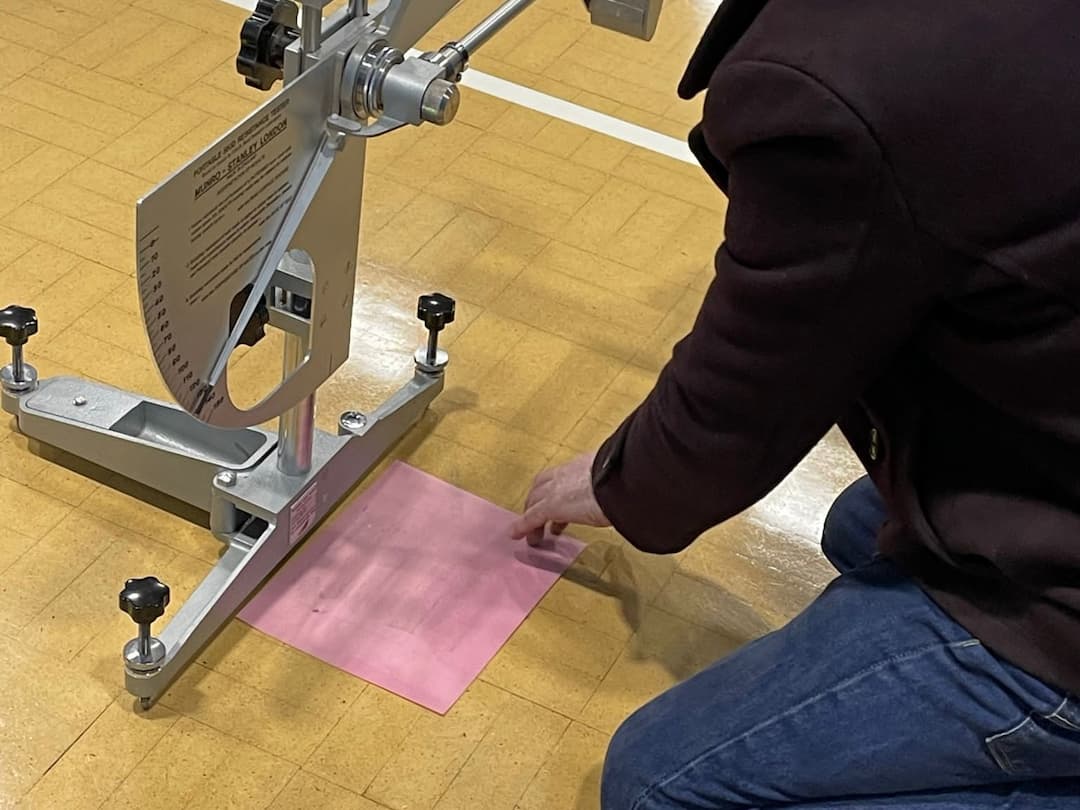
A pendulum test measures the slip resistance of a floor in the way a heel actually meets it, with a weighted rubber slider swung across the surface. The reading is a pendulum test value, and the Health and Safety Executive treats it as the reliable measure for floors in use.
We test sports halls wet and dry, at several points including the traffic lanes and the areas under the baskets, because a floor is rarely uniform. A hall that reads well at the edges and poorly in the centre third tells us exactly where the seal has gone.
The certificate goes into your facilities file as evidence. For a Buckinghamshire school answering a governor, an insurer or a parent after a fall, a dated reading taken by an independent contractor is worth a great deal more than an assurance that the floor felt fine.
Sanding a sports hall produces fine timber dust, and in a building that stays open around the work it travels further than most people expect. Every machine we run, including the edge sanders, is connected to sealed extraction so the dust is captured at the source.
We screen the working area, tape doorways and agree with your site team which ventilation routes need isolating before the first machine starts. Air handling that links the hall to classrooms or a dining room is the usual weak point, and it is checked on the survey visit.
Many Buckinghamshire schools run summer schools and lettings while we are in, so the corridor outside the hall stays clean and the fire escape routes stay open throughout. At the end of each shift the area is vacuumed down, so there is nothing to walk through the building.
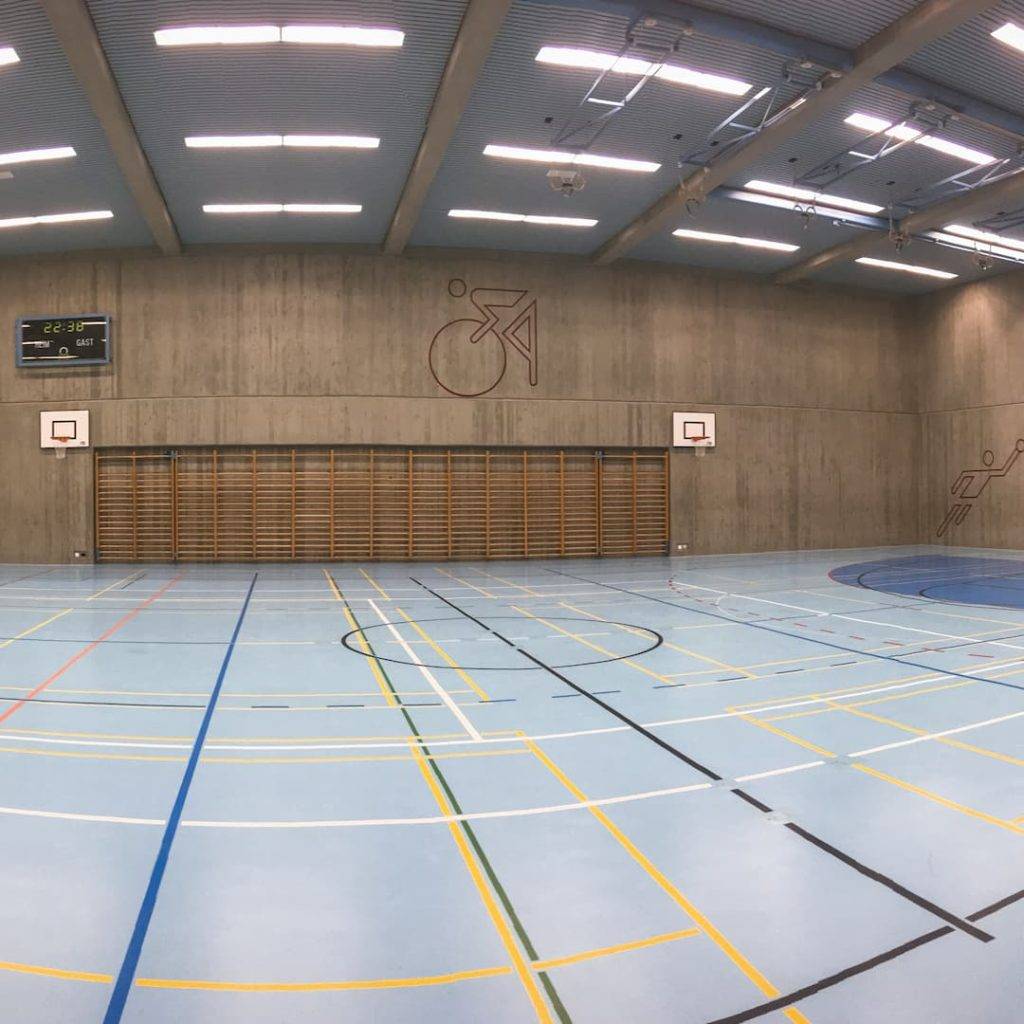
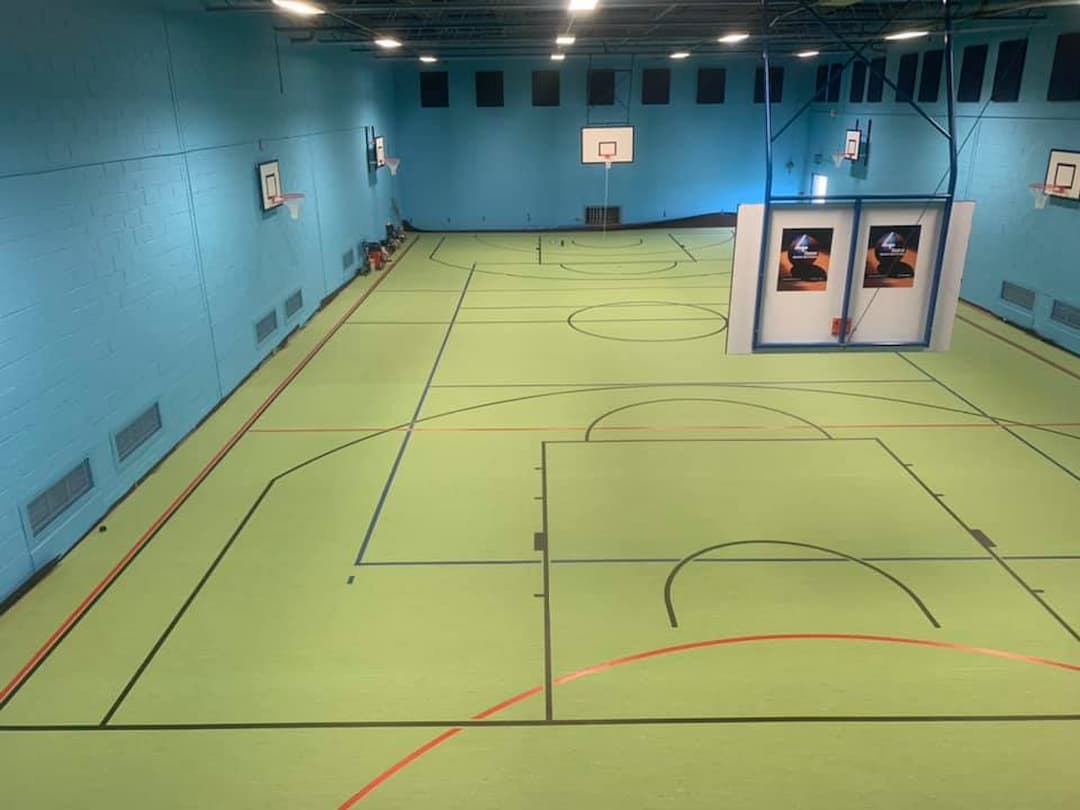
A seal applied over a damp floor fails, however well it is applied, so moisture is the first thing we measure and the last thing we check before the finish goes on. Readings are taken in the boards and in the slab beneath at several points across the hall.
The sources are usually familiar. A slab laid without an effective membrane, a leaking radiator pipe under the boards, or cleaning that leaves water standing in the joints. Older halls in the county, including a good deal of pre war stock, often have solid floors with limited damp proofing.
Where readings are high we find the cause before quoting. That may mean a surface damp proof membrane over the slab before a new floor goes down, or fixing the building first. We put the readings in the report so you can see the evidence for yourself.
Buckinghamshire brings a mix of grammar and independent school sport, academy trust estates and a large number of community buildings, and the work divides fairly evenly between them.
School halls are the bulk of it. Grammar and independent schools tend to maintain their floors on a proper cycle and come to us for screen and recoat work before the finish fails, which is the cheapest way to run a floor. Academy halls more often arrive overdue, with the seal gone in the traffic lanes and markings that have been copied rather than set out for several remarks running.
The second group is village and church halls, of which the county has a great many. These are almost always old timber floors with plenty of depth left, buried under decades of polish and scored by chair and table legs. They restore beautifully and for far less than committees expect.
The third is leisure and club facilities, including squash courts, where the finish specification matters more than anywhere else in the building.
We quote by element throughout, so a school business manager or a hall committee can see exactly what each part costs and phase it if the budget requires.
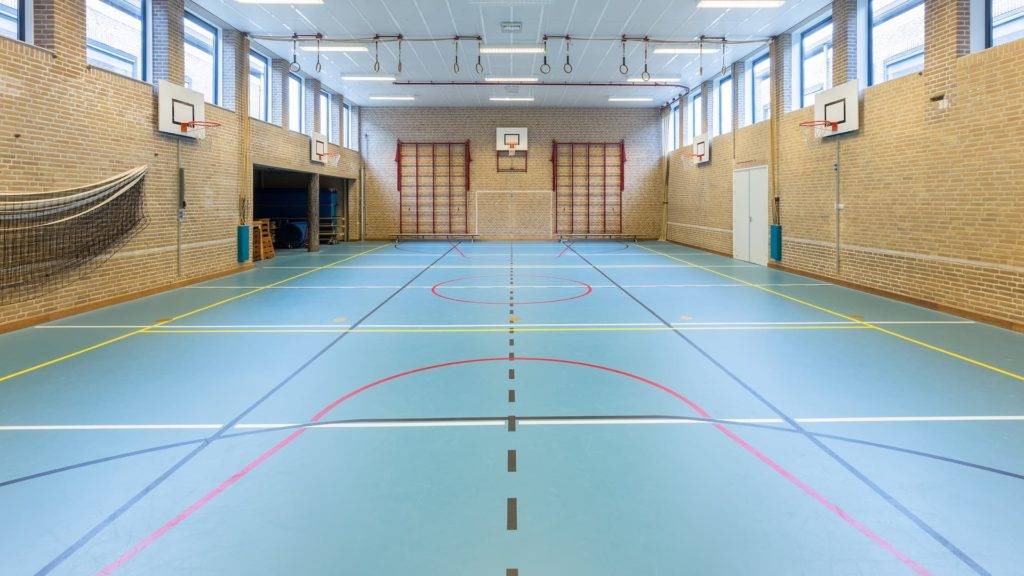
Buckinghamshire enquiries usually resemble one of two projects we are asked about most.
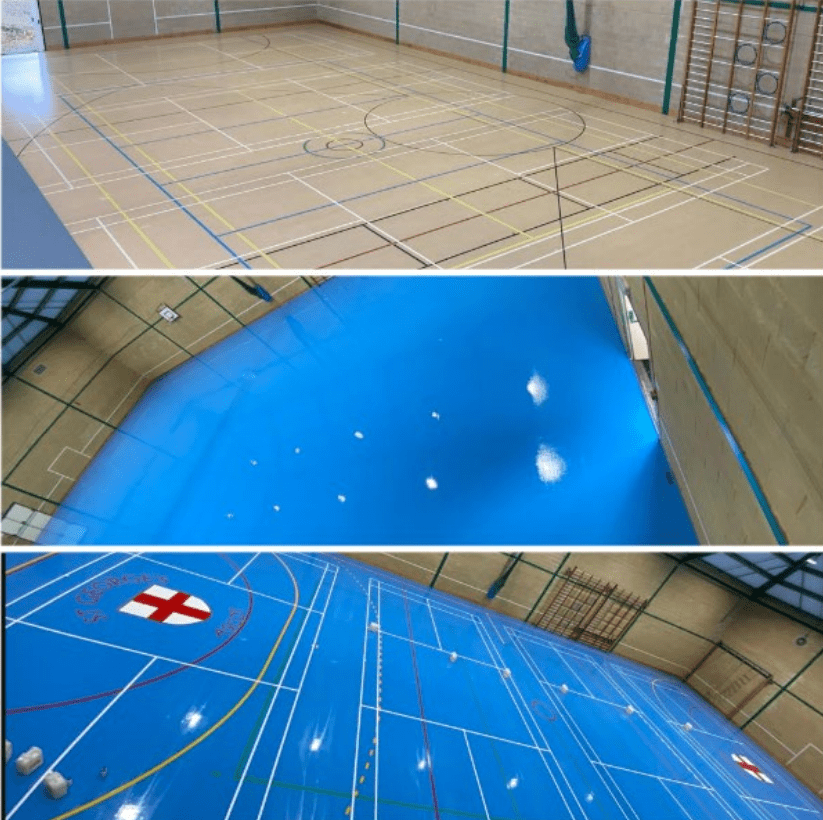
For independent and grammar school halls, St George School in Ascot is the closest. That hall had a Granwood floor which more than one contractor had written off as due for replacement. Granwood is a composite block laid in bitumen rather than timber, and treated as timber it is destroyed. We rebedded the loose blocks, replaced those that had broken up, prepared the surface with appropriate abrasives and coated it with a modified epoxy system with the markings sealed within it. The hall has years of life left, at a fraction of the cost of replacement.
For community buildings, St Katherine Hall is the better comparison: a well loved, well worn floor carrying badminton one evening and a community event the next, restored rather than replaced.
The common thread is that a proper survey changed the recommendation in both cases.
The cleaning routine decides how long a finish lasts more than anything we do on site. The rules are short. Dust mop daily to lift grit before it acts as sandpaper under trainers. Damp mop with a neutral cleaner made for sealed sports timber. Deal with spills as they happen.
Polish and wax are the enemy. Both build up on a two pack polyurethane seal, reduce grip and eventually have to be stripped chemically at real cost. They cause most of the slippery halls we are asked to look at, often applied by a contractor who meant well.
We hand over a one page written routine with every job and, where a Buckinghamshire school uses an outside cleaning company, we will speak to them directly so the same product and method are used from the first week.
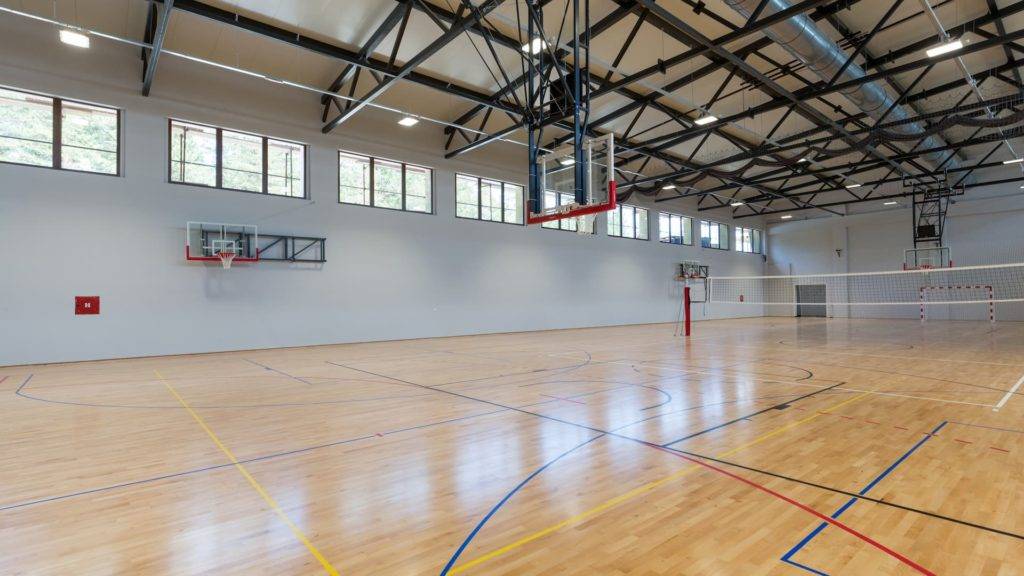
Light foot traffic is usually possible after twenty four hours, and full use with posts, mats and trolleys back after seventy two hours or more. Cold or humid weather stretches both. We put the exact times for your system in writing and sign the door so nobody walks on it early.
Yes, and the summer is when most of our school work happens. A full sand and seal of a typical hall fits inside the break with room for cure time. Summer dates go early, so a school that wants August should be talking to us at the start of the year.
Job specific method statements and risk assessments, COSHH data sheets for every product we bring, copies of our public and employers liability insurance, and DBS details for the team attending. Our staff sign in, wear identification and stay in the agreed area for the length of the job.
It can when the system runs too hot or is switched on at full output in the autumn. The boards dry, gaps open and in bad cases they cup. The timber must be specified for use over heating, the surface temperature limited, and the system warmed up gradually each season.
It depends on the depth of timber left above the tongue, which we measure at survey. A solid strip floor sanded sparingly may have six or more cycles left in it. One machined every few years may have none, which is why we push screen and recoat work between full sands.
Lay a proper protective covering before the desks go in. Chair and desk legs mark a seal faster than any sport, and a hall that has hosted a month of exams can look years older. Covering costs a fraction of the repairs and lifts quickly once the last paper is finished.
Repair it, in almost every case. A dead spot means a failed pad, batten or cradle beneath the boards, so we lift the boards locally, replace the failed components and refit the same timber. Sanding the surface would not change how the floor feels, whatever a general contractor suggests.
Yes. We check the slab for level and moisture first, choose a batten, cradle or pad system to suit the ceiling height and the sports played, and specify the timber to BS EN 14904. Older halls often need the perimeter and door thresholds reworked so the new floor can move.
Book a free survey of your sports hall floor anywhere in Buckinghamshire. We measure it, take the readings and give you a fixed written price with the work itemised so you can phase it. Call 01823 674562 or send us a message.