
Flooring Professionals To The Leisure Industry
Courtship Flooring is a commercial sports flooring contractor working in Cheshire and across the UK. A substantial share of our work is for independent schools and private clubs where the finish is part of the offering.
Since 1987 we have worked on indoor sports floors the length of the country and internationally. We remain family-run and deliberately specialist, covering installation through to long-term aftercare with our own team and machinery. We take no domestic work; Ryan’s Restorations covers that.
Before replacing a floor in Cheshire, it is worth asking whether a sports hall floor refurbishment would do the job; on sound timber it usually will.
Overnight/Weekend Installations
Professional Cleaning Demonstrations
Squash Court Maintenance
Recommended Cleaning Products
Professional Pendulum Slip Testing
Deep Clean & Reseal Service
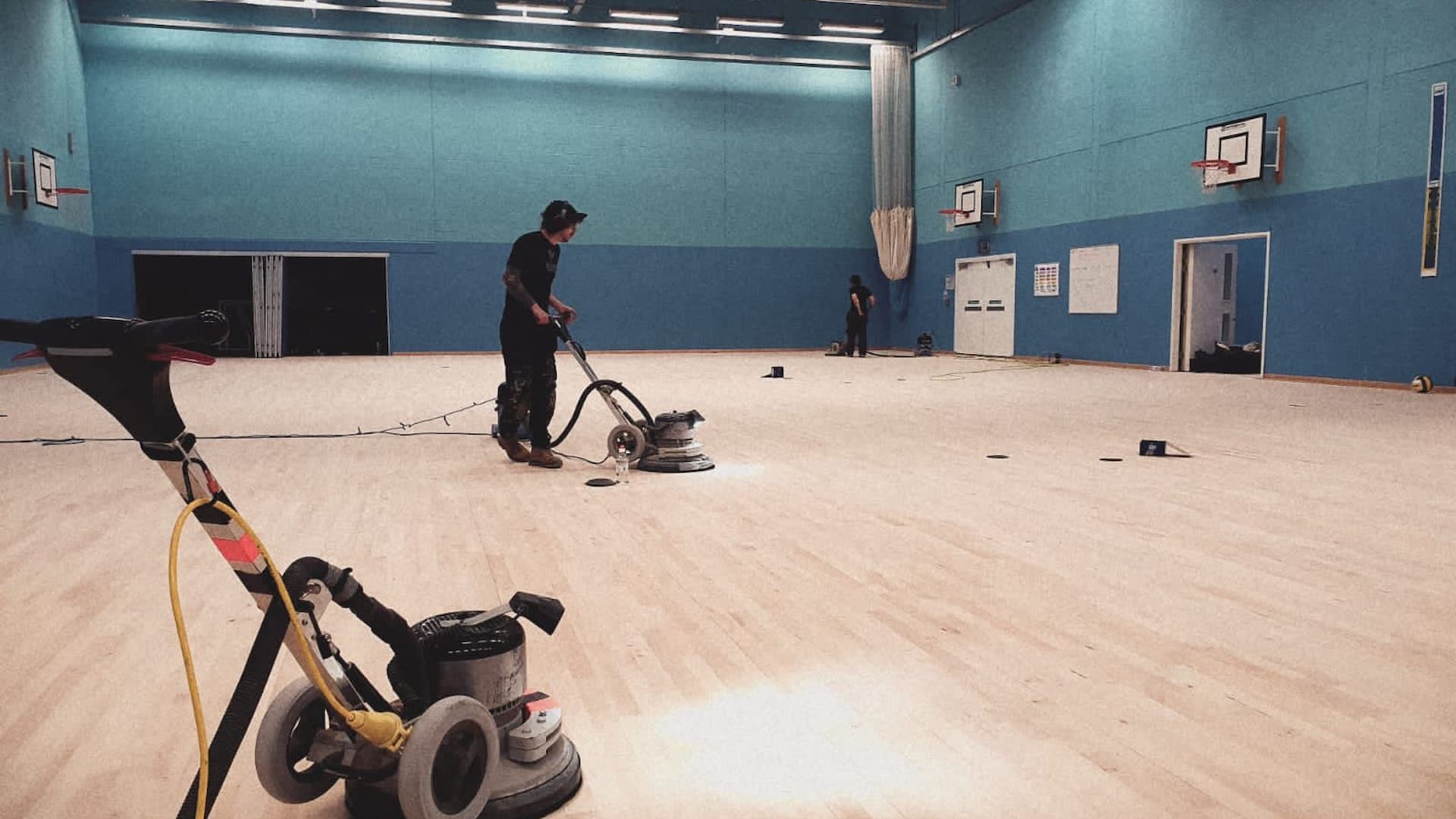
The visible quality of a finished floor is decided almost entirely before any seal is applied. Sanding taken to a even surface, repairs matched properly, dust fully removed between stages and the correct abrasive sequence followed.
Cutting time from preparation is invisible on the quotation and highly visible in the result, usually within a year as the finish wears unevenly. We would rather quote for the preparation the floor needs than win work and disappoint.
Independent schools and clubs run calendars that are fixed a year ahead: fixtures, open days, examinations and events that cannot move for a contractor.
We plan into the gaps rather than asking for exceptions, and fix the handover date in writing before starting so nothing collides with something already advertised. Overnight, weekend and holiday working is routine rather than a premium extra.
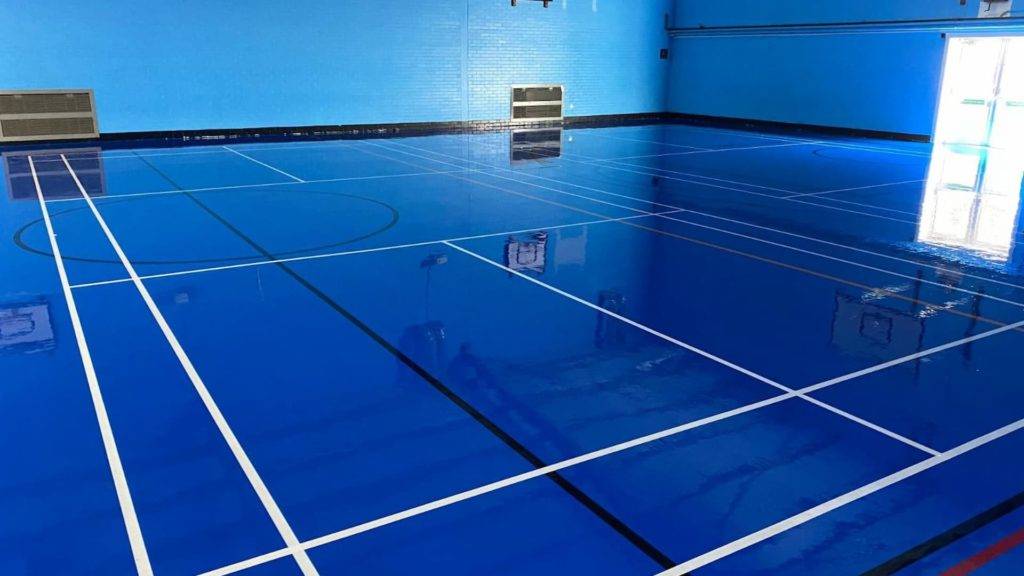
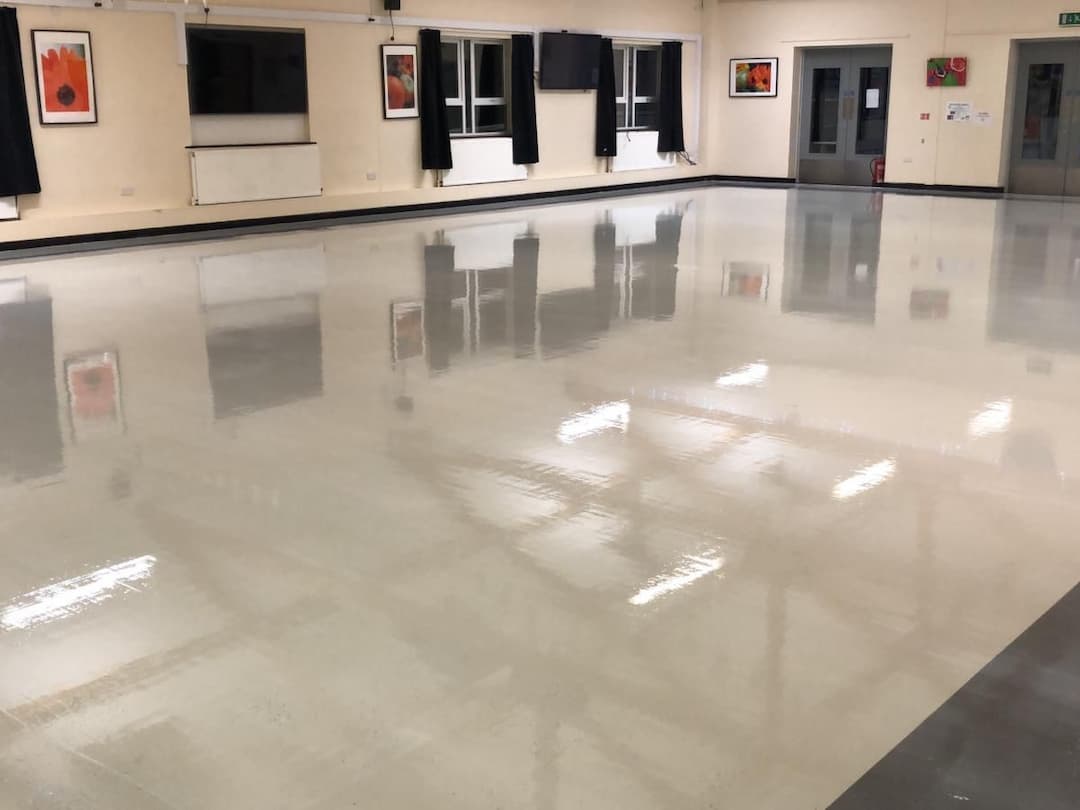
A premium finish is only premium until it is cleaned badly. The most common cause of a dull, slippery floor within a year of refurbishment is over-strength cleaning product leaving a residue that reduces grip.
We demonstrate the correct routine to whoever maintains the building, recommend products suited to the finish and the local water, and provide written guidance. It is the cheapest protection available on the investment.
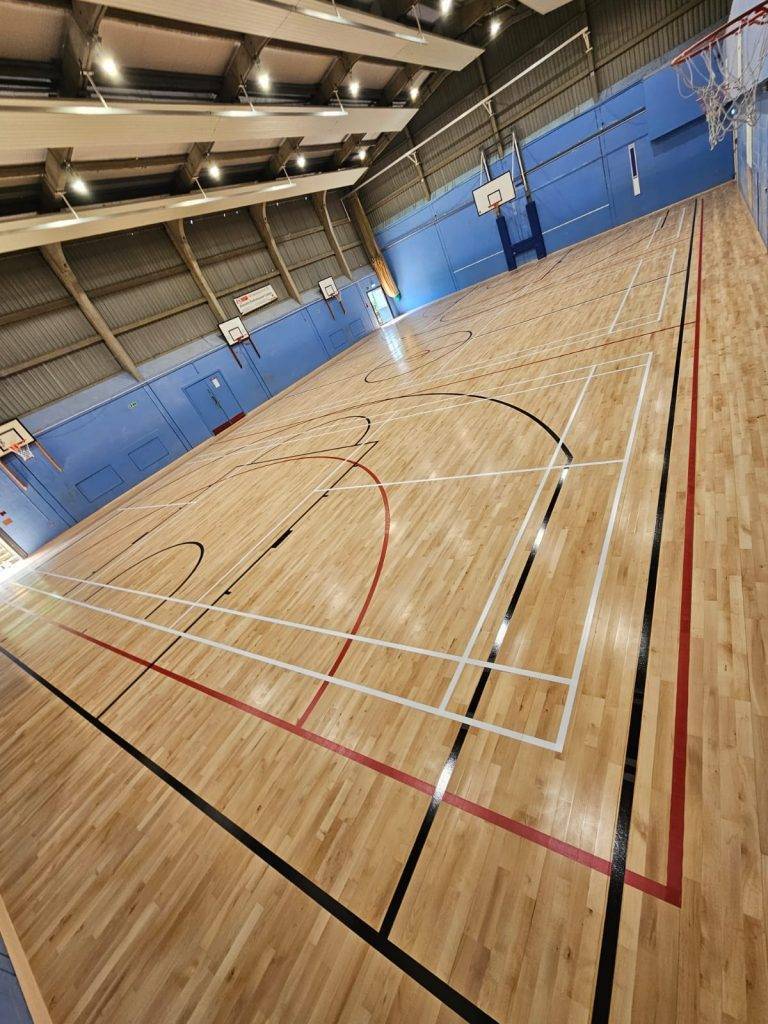
The sports hall floor at Treguib had given years of service and looked it. Our team took it back to clean timber, repaired the wear, then resealed and re-marked the full hall.
The result is a floor that plays and looks like new for a fraction of replacement cost, delivered a long way from our base and still on the date we promised.
~ Matthew Evans
An outstanding company to deal with and they couldn’t have been better to work with. St George’s Ascot now has a stunning new sports hall floor and we are delighted. From quote, support, delivery and after sales, the Team has been brilliant. Thank you. 
~ James Anderson







When a Cheshire school or club is choosing a new hall floor, the question of solid against engineered timber comes up early, and the answer depends on the building more than on taste.
Solid strip, usually beech or maple, is the traditional sports floor. It has the deepest wear layer, so it can be sanded many times over fifty years, and it has the feel players expect. It also moves the most with humidity and needs a stable, dry building. Engineered boards put a thinner hardwood layer over a plywood or softwood core. They move far less, suit halls with heating in the slab or wide seasonal swings, and still take several full sands over their life.
Both are laid on the same sprung battens and pads, both meet BS EN 14904, and both come with one warranty from us because we install every layer ourselves.


Every timber floor breathes with the building. In winter the heating dries the air, the boards give up moisture and fine gaps open between them. In summer the moisture returns and they close again. That cycle is normal, and a floor that shows it is not faulty.
Problems appear at the extremes. A long, hard heating season with no humidity control can shrink boards until they split or work loose from their fixings. A damp, unheated hall that is suddenly used hard in summer can swell until the floor, with its perimeter gaps lost behind later skirting, lifts in the middle.
We size expansion gaps for the species and board width, check them at every survey, and advise Cheshire estates teams on ventilation after use, which does more for a moving floor than any repair we could sell.
A multi academy trust or a leisure operator with six or eight halls has a different problem from a single school. Nobody has a clear picture of the whole estate, so the floor that fails loudest gets the money and the others wait until they fail too.
We start those relationships with a survey of every floor, producing one document that ranks them: what each needs, when, and roughly what it costs. That turns a run of emergencies into a phased programme across budget years, with recoats grouped into the same weeks so mobilisation is shared and the price per hall falls.
For Cheshire trusts it also gives a board something they can approve in one sitting, and it means no head of estates finds out in July that a hall will not open in September.
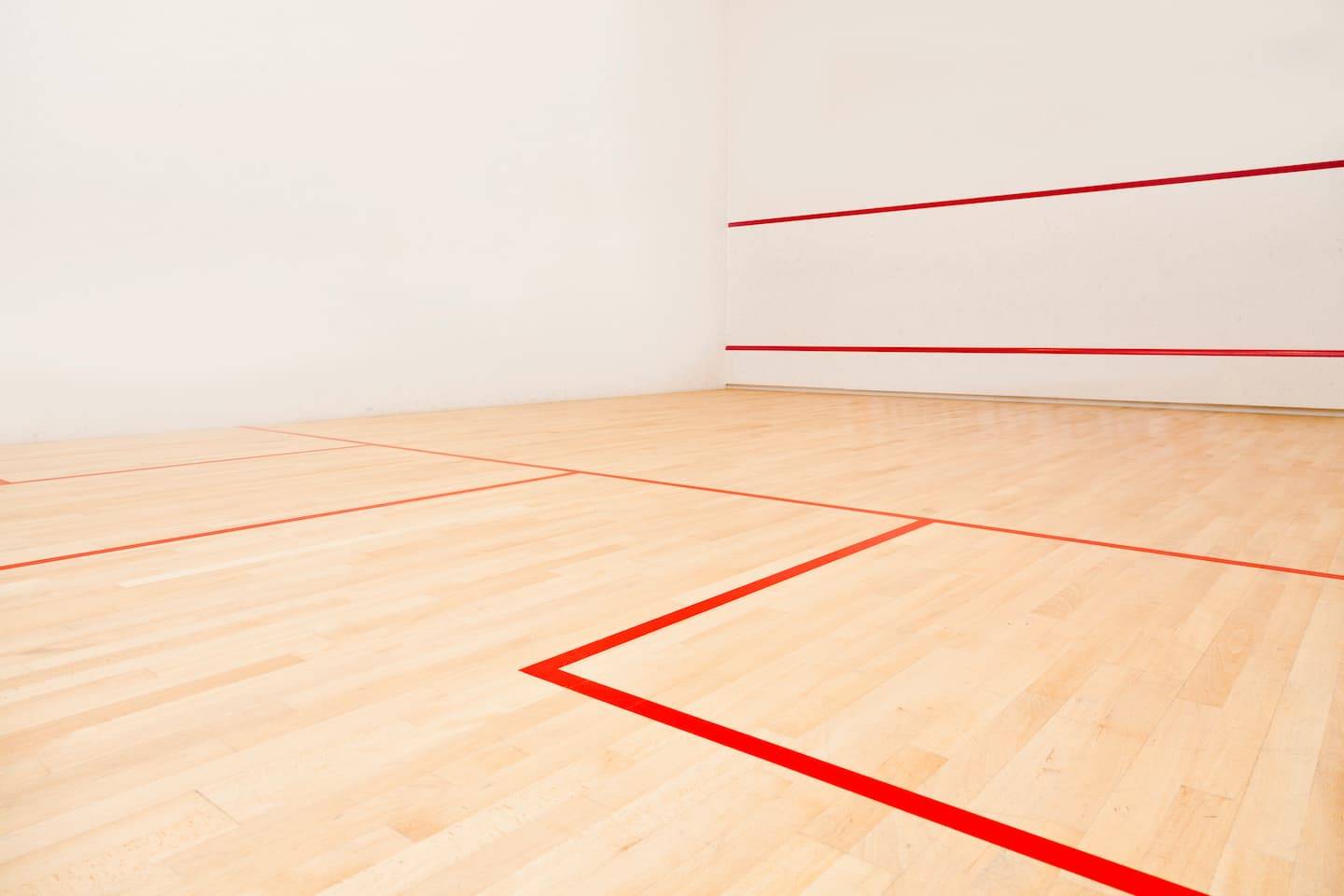
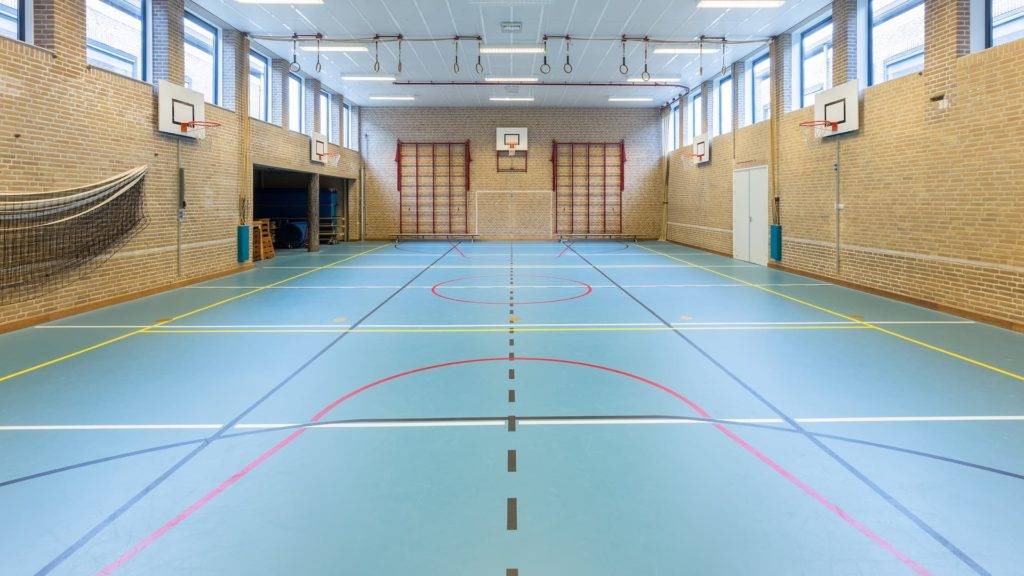
Cheshire brings us a broad mix, with independent and grammar school sport, academy trust estates and a substantial number of club and community facilities.
Independent school halls, gymnasia and squash courts are a significant strand. These tend to be well maintained buildings where the work is planned ahead into fixed holiday windows and the expectation of finish quality is high. Much of it is preventative screen and recoat work rather than full refinishing, which is the cheapest way to run a sports floor.
Academy and state school halls are the larger group by number, and they more often arrive overdue: seal worn through in the traffic lanes, markings faded, and a hall that has become slippery enough to be an insurance concern.
Sports clubs and community buildings make up the rest, including a good number of squash courts, which need a matt high grip specification rather than a general sports lacquer.
We have completed work at Hornbury Academy in the wider region, and the pattern there is typical: survey properly, plan to the holiday window, and hand back on the agreed date.
Enquiries from Cheshire tend to arrive in three recognisable forms.
The first is an independent school hall where the finish is still sound but the appearance has gone, usually scuffing and dulling rather than genuine wear. That is a screen and recoat rather than a full sand, and telling the difference saves a great deal of money and preserves the boards.
The second is squash courts. The county has a good number, and the recurring complaint is a court that has become slippery at the T. A matt high grip system restores it, and we would always rather do that than have somebody go over during a game.
The third is halls that have become slippery generally, and the cause is almost always polish. Products that promise shine build up, reduce slip resistance and eventually have to be stripped chemically. If your cleaning contractor is using something that makes the floor gleam, that is worth checking before anything else.
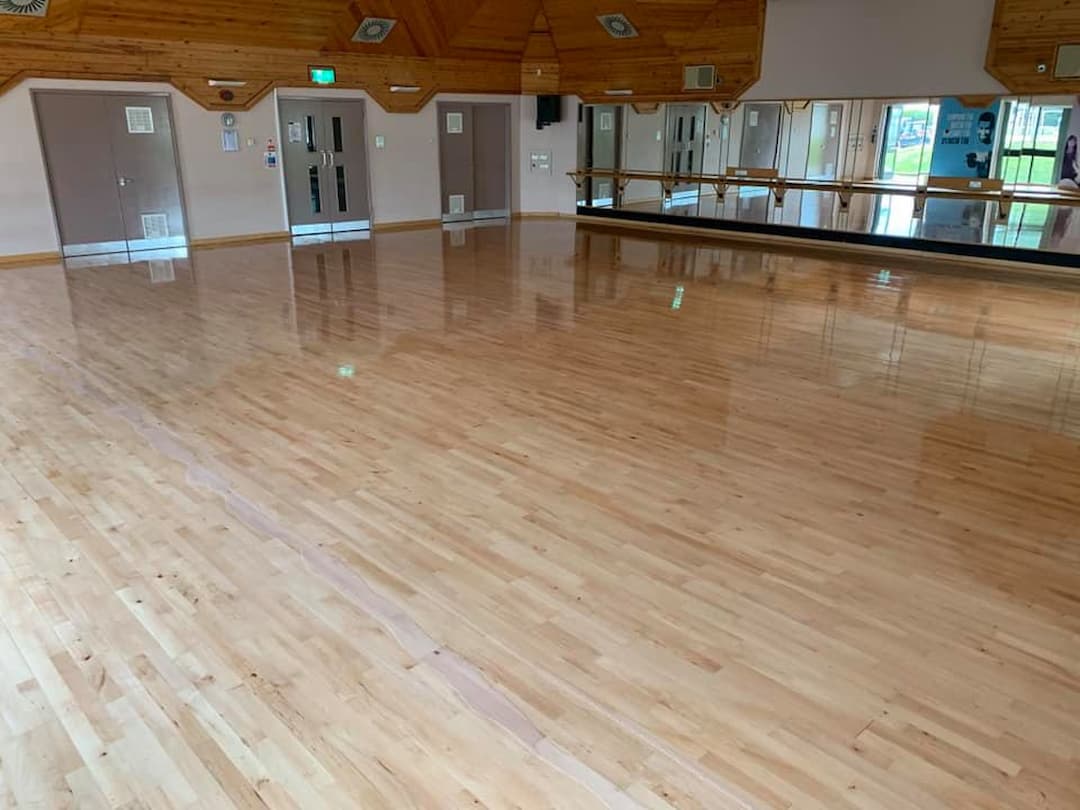
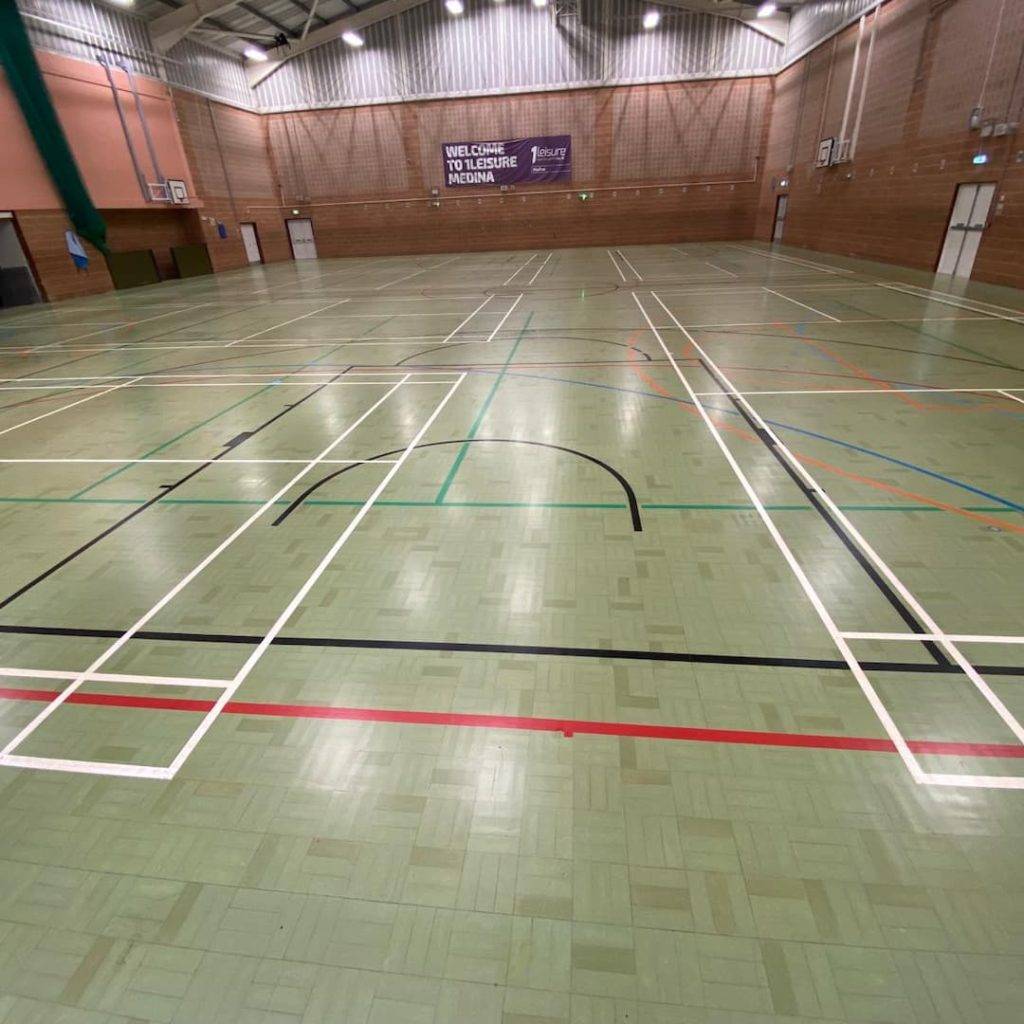
Sanding produces fine dust in quantity, and in a school that stays open around us the standard is simple: the hall is a working area, and the rest of the building should not know we are there.
Our machines run on sealed vacuum extraction, including the edge sanders where dust escapes on a poorly run job. Doorways are screened, ventilation grilles serving other rooms are taped off, and we agree with your site manager which air handling to isolate before the first pass. Between stages we vacuum the whole floor, because a seal applied over dust fails early and looks wrong immediately.
Independent schools in Cheshire often have a hall alongside a library, a chapel or boarding accommodation, so we walk the route with your team beforehand and write the containment plan into the method statement.
No two halls arrive in the same state, so the starting point is always a free survey. From it we price the cheapest treatment that solves the problem alongside the fuller options, each as a fixed figure with every element listed, so a bursar can see what each part buys.
Yes, and the wider north west with it. The county sits close to the motorway network, so we can often pair a hall with another job nearby and share the mobilisation. Travel is inside the quotation and does not reappear on the invoice.
Yes. We use the pendulum method at several positions across the hall in dry and wet conditions, and issue a certificate with the values recorded. It either reassures you or gives you evidence that the floor needs work, and it sits well in an audit file.
Public and employer liability at the levels institutional clients ask for, health and safety accreditation, and the quality and safeguarding documentation trusts and procurement teams expect. We work under CDM where it applies and supply the certificates before we arrive on site.
We stop and tell you the same day, with the options and a cost for each. Nothing is sealed over and no extra work proceeds without your written agreement. Because we survey before quoting, such finds are rare and usually already allowed for.
Yes. Synthetic sports surfaces are deep cleaned, repaired, recoated in a fresh base colour and remarked, which makes a tired PU hall look newly installed for a fraction of the replacement cost. The programme is shorter than a timber refinish.
For a summer slot, talk to us the previous winter. Independent schools with fixed calendars usually book a year out. Half terms suit a screen and recoat, Easter a smaller hall, and summer the full sand. The earlier we know, the more choice you have.
Light foot traffic after twenty four hours. Leave seventy two hours or more before equipment, staging or wheeled trolleys return, since two pack polyurethane keeps hardening after it feels dry. Exact timings for the product used go on the handover sheet.
Book a free survey of your hall or court floor anywhere in Cheshire. We tell you what it needs, what it costs and when it can be done, in writing and around your calendar. Call 01823 674562 or send us a message.