
Parquet and block floors are among the finest surfaces ever laid in British public buildings, and among the most frequently ruined by well-meaning treatment. Under decades of polish, paint and wear there is usually a floor worth saving.
Courtship Flooring restores commercial parquet, herringbone and block floors in school halls, church and civic buildings, sports halls and heritage properties across the UK. Commercial and institutional work only; domestic parquet is handled by our sister company Ryan’s Restorations.
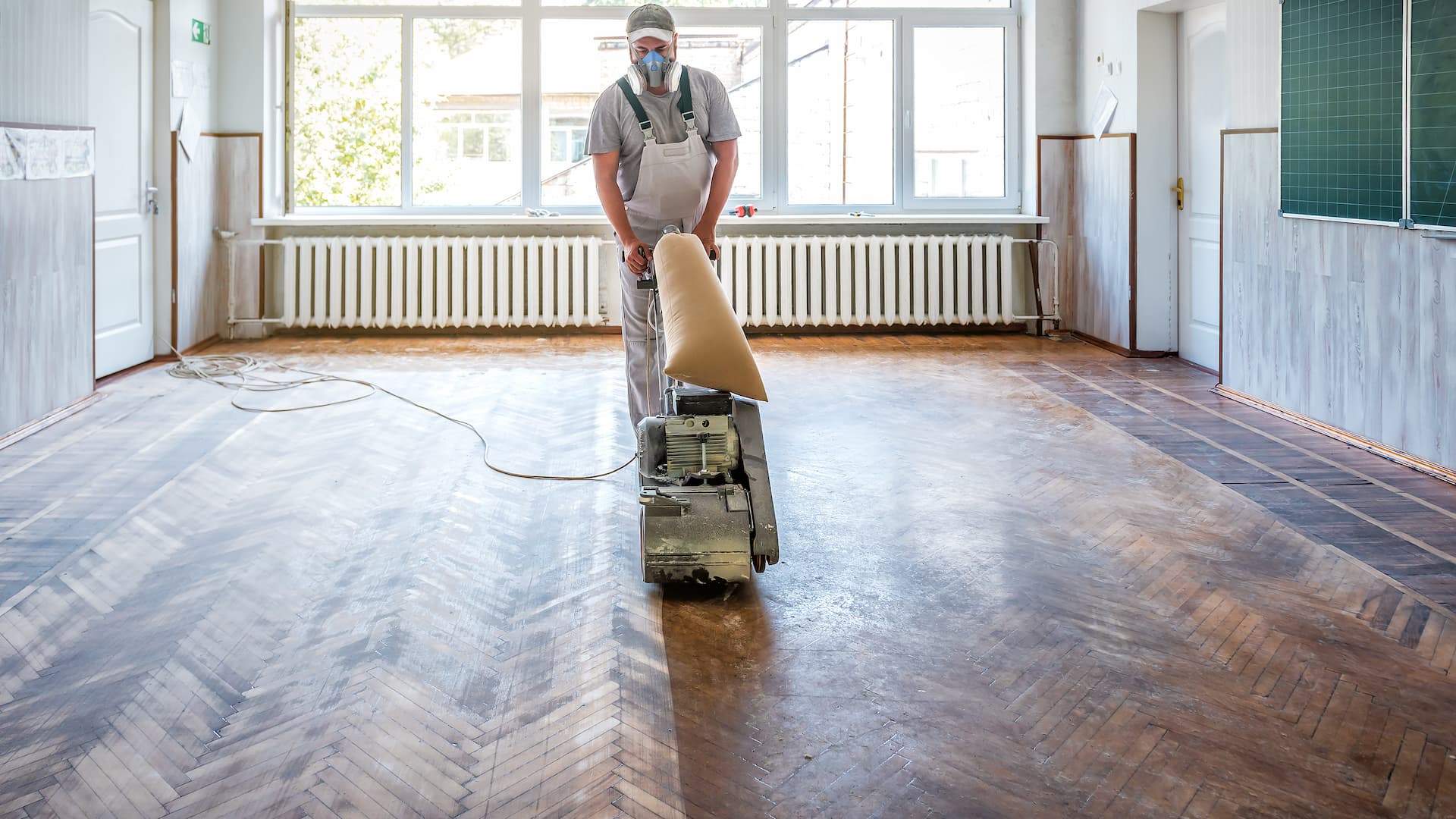
Blocks are thinner than boards and laid in patterns that run in several directions at once, which means aggressive sanding removes far more than people expect and can tear the grain where directions meet. There is rarely much material to spare.
We assess block thickness and adhesion before starting, sand progressively rather than heavily, and re-lay or replace loose and missing blocks with matched timber. Done properly a parquet floor comes back looking remarkable; done carelessly it is destroyed permanently.
A great many British parquet floors from the 1930s to the 1970s were laid in bitumen. As those floors age, bitumen can bleed up through the joints and stain a new finish from below, which is why a beautifully sanded floor sometimes goes patchy within weeks of being sealed.
It is entirely manageable if it is anticipated. We identify the adhesive at survey and specify a barrier or a compatible seal system accordingly, rather than discovering the problem after the lacquer has been applied.
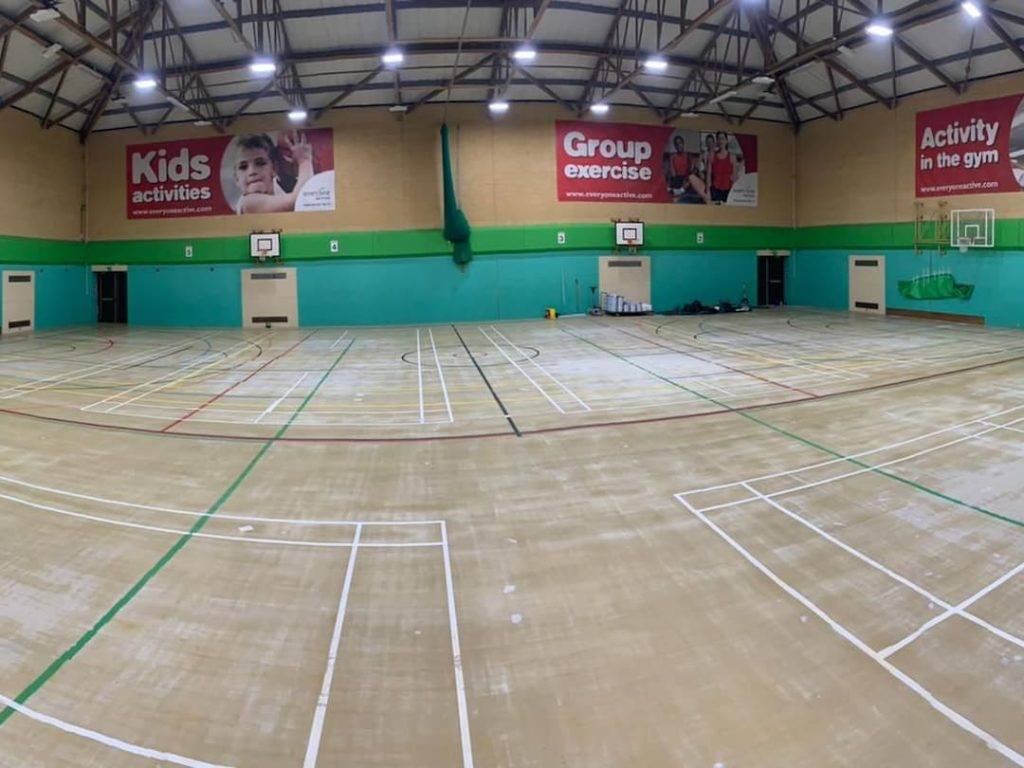
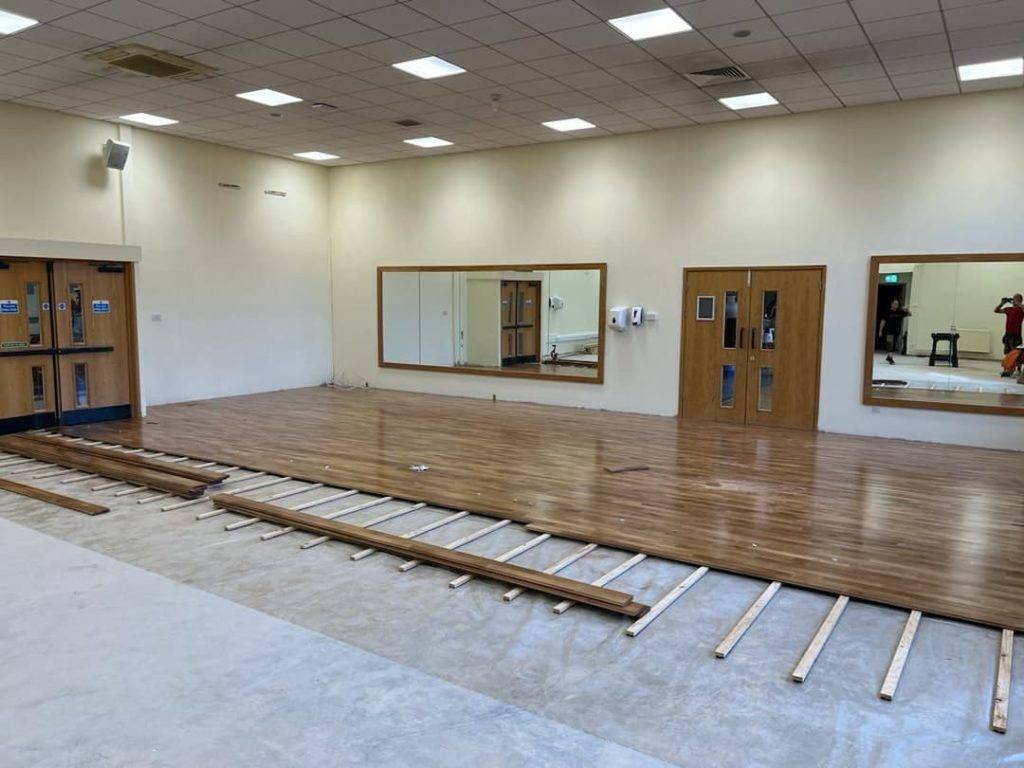
Lifting and drumming blocks almost always mean moisture rather than failed glue. Where a slab lacks an effective damp barrier, water vapour pushes up, the adhesive lets go and the blocks move underfoot.
We take moisture readings in and beneath the floor as a matter of course. Where readings are high, the source has to be dealt with before restoration, otherwise the work will fail again. That is the honest sequence, even when it is not the answer anyone wants.
In listed and heritage buildings the original floor is frequently part of what is protected, and replacement may not be permitted at all. Restoration keeps the material, the patina and the character while making the surface safe and serviceable again.
We work sympathetically, keep interventions reversible where a listing requires it, and can advise on what conservation officers are likely to accept. Where the floor also hosts sport or performance, we specify a finish that serves both.
Parquet looks like a timber floor and sands like nothing else, which is why so many are ruined by contractors who treat it as strip flooring with a pattern.
The defining problem is grain direction. In herringbone, basketweave or block patterns the grain changes direction every few centimetres, sometimes within the same machine pass. A drum or belt sander driven along the boards, as it would be on a strip floor, cuts with the grain in one block and against it in the next, tearing the surface. The damage is permanent and no amount of finer sanding removes it.
The answer is to work with a rotary or planetary machine and to sand diagonally across the pattern in multiple directions, which cuts all the grain orientations evenly. It is slower, it requires the right equipment, and it is the difference between a parquet floor that looks superb and one that is scarred for the rest of its life.
Block thickness is the other constraint. Many parquet blocks are thin, and some have already been sanded several times. We measure before we start rather than discovering the limit halfway across the room.
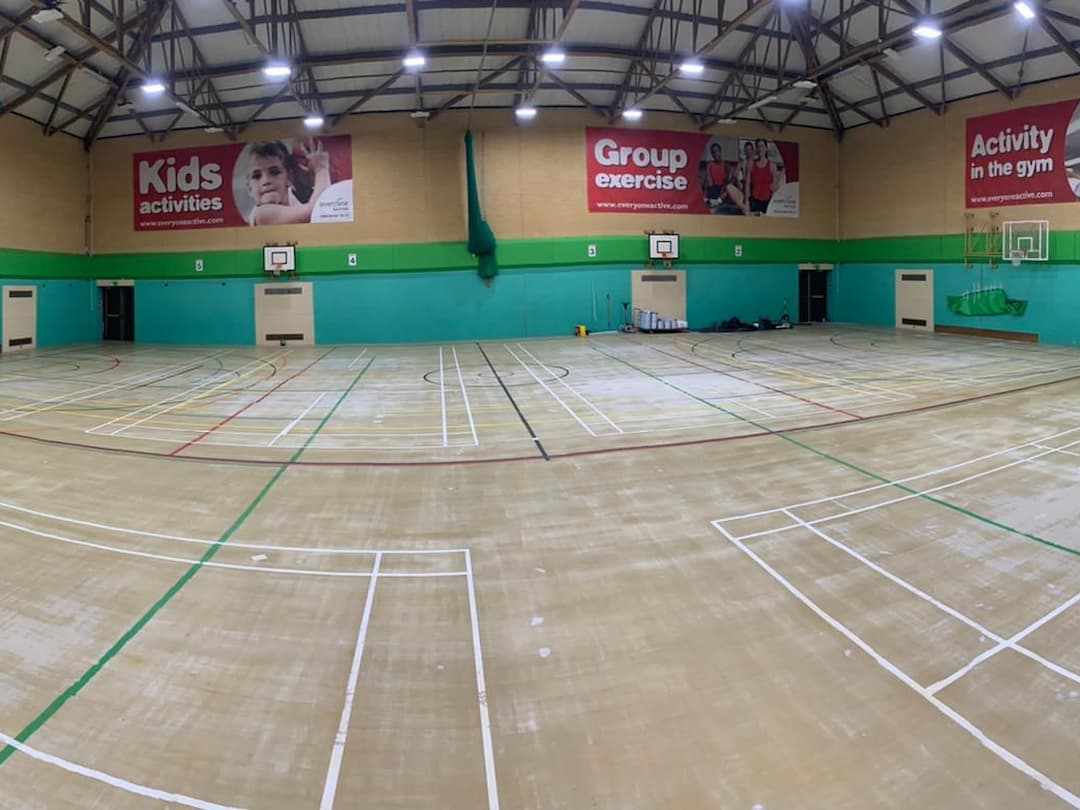
Most older parquet in British public buildings is bedded in bitumen, and that bed governs a great deal of what can and cannot be done.
Bitumen softens with heat. Aggressive sanding generates heat, and a machine held too long in one place can draw the adhesive up through the joints, which contaminates the abrasive and stains the timber. Working at the right speed with the right machine avoids it.
Loose and lifting blocks are routine in floors of this age, usually where a leak has softened the bed or where the subfloor has moved. Blocks are lifted, cleaned back, and rebedded with a compatible adhesive before any sanding takes place. Sanding a floor with loose blocks in it simply drives them further down and creates a permanent depression.
Some bitumen adhesives used before the mid nineteen eighties contain asbestos. We treat every bitumen bedded floor as suspect until testing says otherwise, and where blocks need lifting we plan the work accordingly. It is not a reason to avoid restoring a parquet floor, but it is a reason to use a contractor who knows to ask the question.
Parquet restoration usually involves some replacement, and the quality of that work is what people notice afterwards.
Blocks go missing for all sorts of reasons: radiator removals, cable runs cut through the floor, water damage, and decades of small repairs done badly. Our approach is to source matching blocks in the same species and dimension wherever possible, and where they cannot be sourced new, to lift blocks from a concealed area such as under a stage or inside a store cupboard and use those for the visible repair, filling the concealed area with new.
Grain direction is set to match the pattern exactly. A block laid the wrong way round in a herringbone is invisible until the floor is finished and the light catches it, at which point it is obvious forever.
Gaps between blocks are dealt with by filling with a resin mixed with sanding dust from the floor itself, which matches the colour far better than any proprietary filler. Large gaps get a slip of matching timber rather than filler, because filler in a wide gap will always crack out.
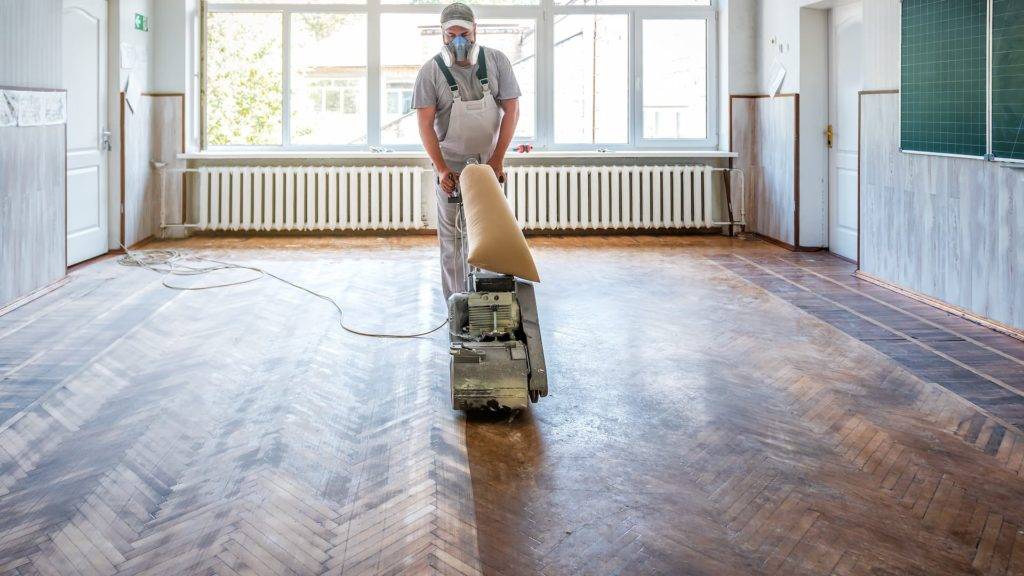
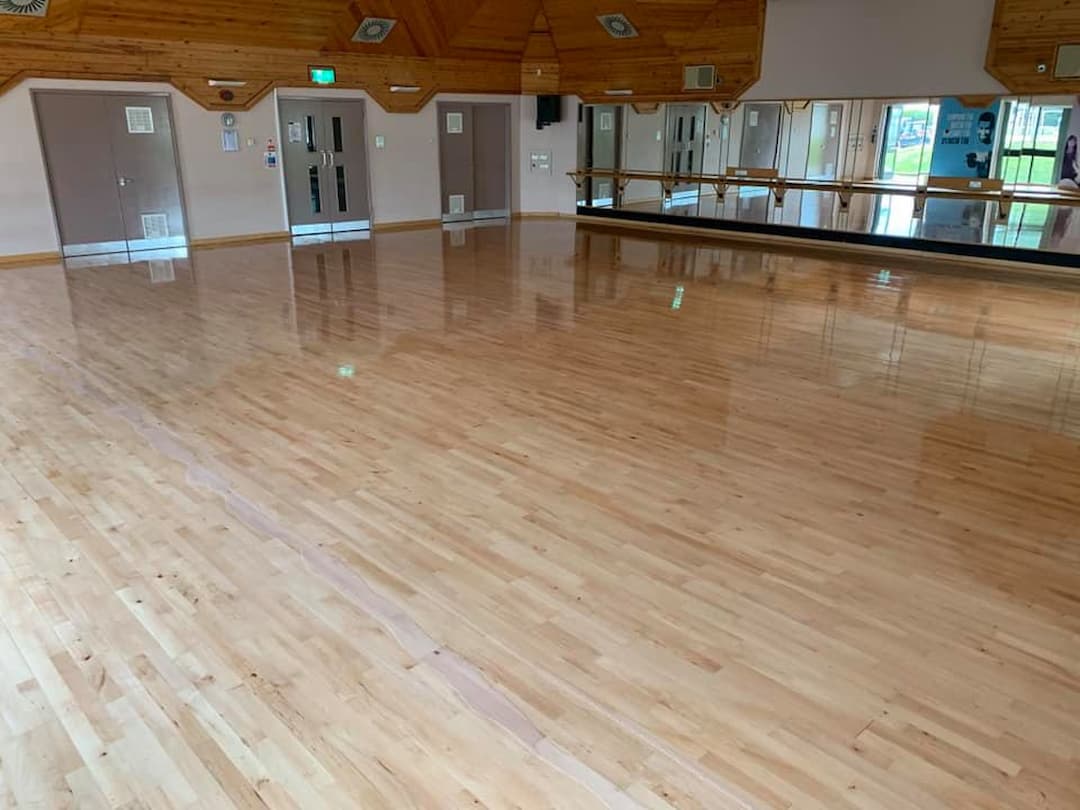
The finish on a commercial parquet floor has to survive the building it is in, which is usually a hall, corridor or civic space taking constant footfall.
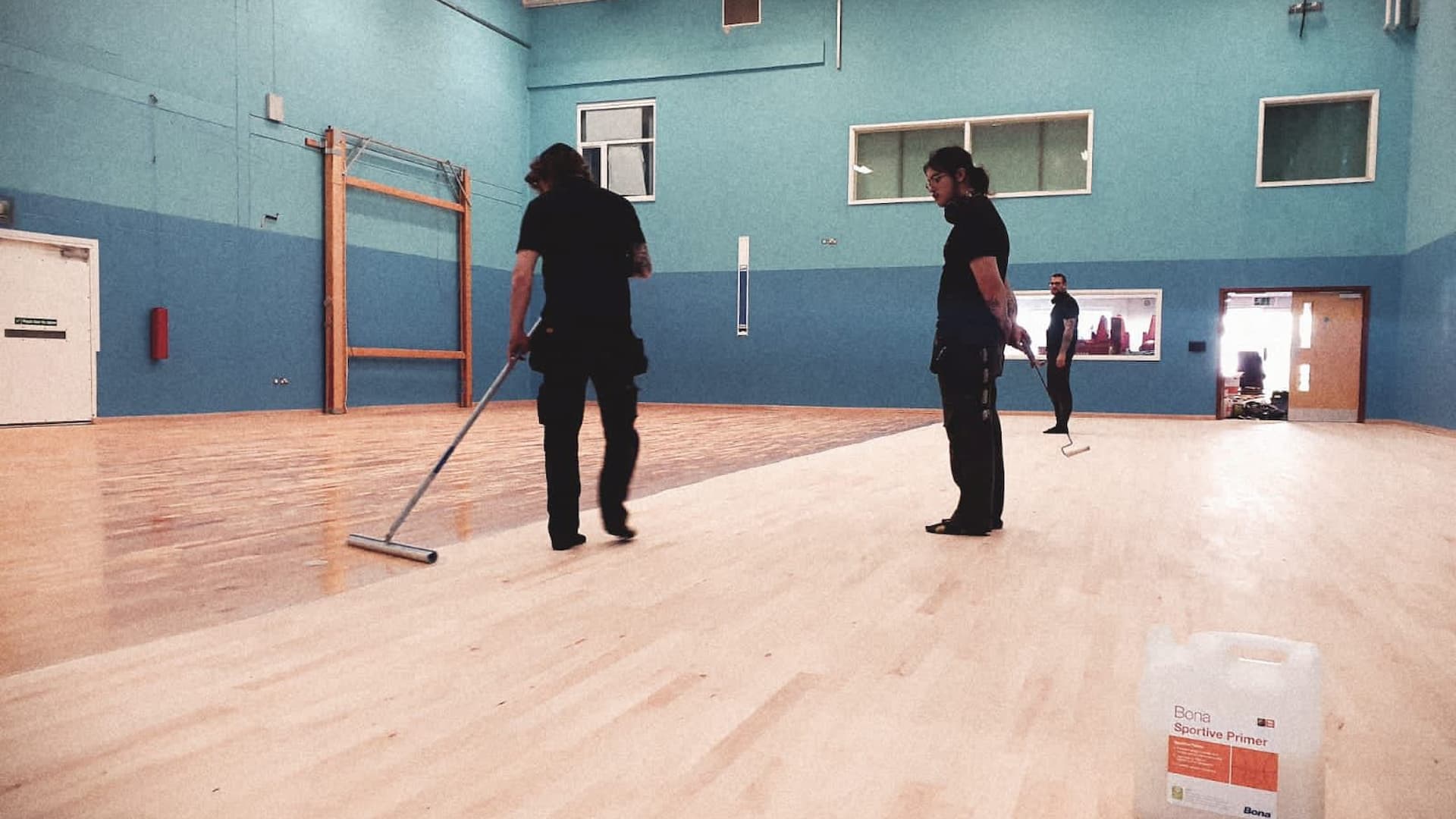
For most commercial parquet we specify a two pack polyurethane, built up in coats. It is considerably tougher than an oil or a single pack lacquer, and it copes with the cleaning regimes that public buildings actually use. Where a floor is in a heritage setting and appearance matters more than absolute durability, a hardwax oil is an alternative, with the caveat that it needs periodic maintenance rather than being left for a decade.
Sheen is worth a conversation. Parquet in a fine building often looks best in a satin or matt finish, which shows the pattern and the grain rather than reflecting the ceiling. Gloss on a large parquet floor tends to look municipal and shows every scuff.
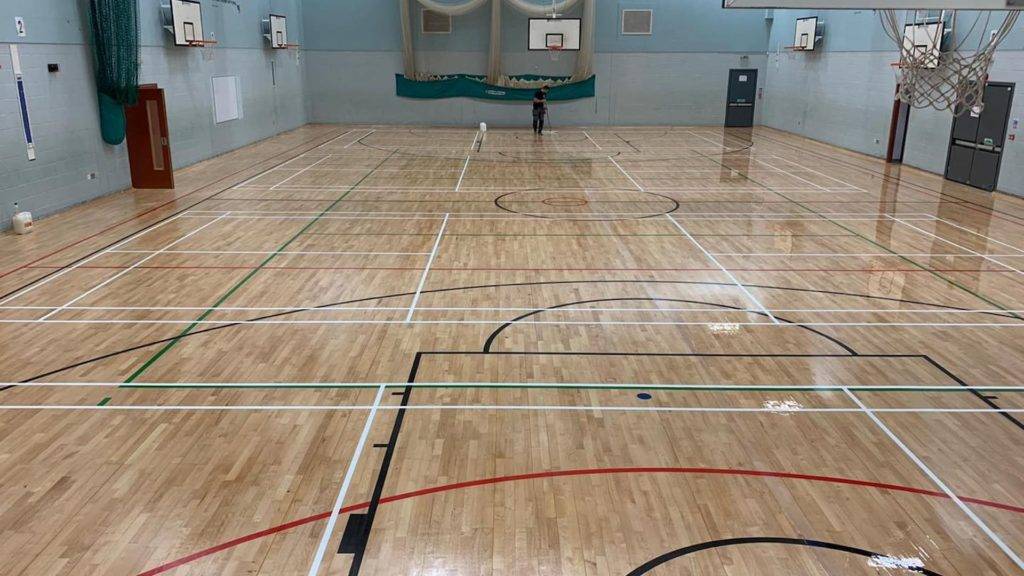
Where the floor is in a sports or assembly hall we can apply line markings between coats in the usual way, and pendulum slip test on completion so you have documented evidence for the facilities file.
Parquet costs more per square metre than strip flooring to restore, and it is worth understanding why before comparing quotations.
The sanding takes longer because it is done in multiple directions with slower machines. Block replacement and rebedding is skilled hand work. Gap filling on a block floor is far more extensive than on strip. All of that is labour, and a quotation that comes in dramatically cheaper than the others usually means somebody is planning to sand it like a strip floor.
The variables that move the price are the proportion of blocks needing lifting or replacing, whether the bed needs attention, how many previous coatings have to come off, and the condition of the subfloor beneath.
A typical hall takes one to two weeks including cure time. Larger civic spaces take longer, and we phase them where the building has to stay partly open.
We quote by element rather than as a single figure, so you can see what the repairs cost separately from the sanding and finishing, and defer anything that is not urgent.
Sometimes, but blocks are thin and there is rarely much to spare. We measure thickness before recommending anything and sand progressively rather than heavily. Where little material remains we will say so rather than taking the last of it.
Very likely bitumen bleeding up through the joints from the original adhesive, common in floors laid between the 1930s and 1970s. It needs a barrier or a compatible seal system, which is why we identify the adhesive before any finish is applied.
Yes. Loose blocks are re-laid and missing ones replaced with matched timber. But if moisture caused the movement, the source must be addressed first or the same failure will return.
Regularly. We restore rather than replace wherever the material is sound, keep interventions sympathetic, and can advise on what a conservation officer is likely to approve.
Because the grain runs in several directions within the pattern. Sanding in one direction, as you would on a strip floor, cuts against the grain in half the blocks and tears the surface permanently. Parquet is sanded diagonally in multiple directions.
Yes. We source matching blocks where possible, or lift them from a concealed area such as under a stage and use those for the visible repair. Grain direction is matched to the pattern exactly.
Not in the blocks, but bitumen adhesives used before the mid nineteen eighties can contain it. We treat every bitumen bedded floor as suspect until testing confirms otherwise.
It depends on block thickness and how much has already been removed. Many commercial parquet floors have a generous thickness, but some have been sanded repeatedly. We measure before starting.
A two pack polyurethane for durability in a public building. Hardwax oil is an option in heritage settings where appearance matters most, but it needs periodic maintenance rather than being left alone.
Typically one to two weeks for a hall including cure time. Larger civic spaces take longer and can be phased so the building stays partly open.
Send photographs of the floor and any problem areas, and we will tell you what is achievable and what it will cost. Call 01823 674562.