
Flooring Professionals To The Leisure Industry
Courtship Flooring is a commercial sports flooring contractor working in the East Riding of Yorkshire and across the UK. We cover the area for schools, community buildings and leisure facilities, planning work as complete visits.
A family business established in 1987, working exclusively on commercial indoor sports and timber floors. We survey, install, restore, mark, test and maintain, keeping every stage in our own hands so one warranty covers the whole system. Domestic work is handled separately by Ryan’s Restorations.
For halls in East Riding of Yorkshire that are worn but structurally sound, our sports hall floor refurbishment service restores grip, appearance and line markings, usually within a school holiday.
Overnight/Weekend Installations
Professional Cleaning Demonstrations
Squash Court Maintenance
Recommended Cleaning Products
Professional Pendulum Slip Testing
Deep Clean & Reseal Service
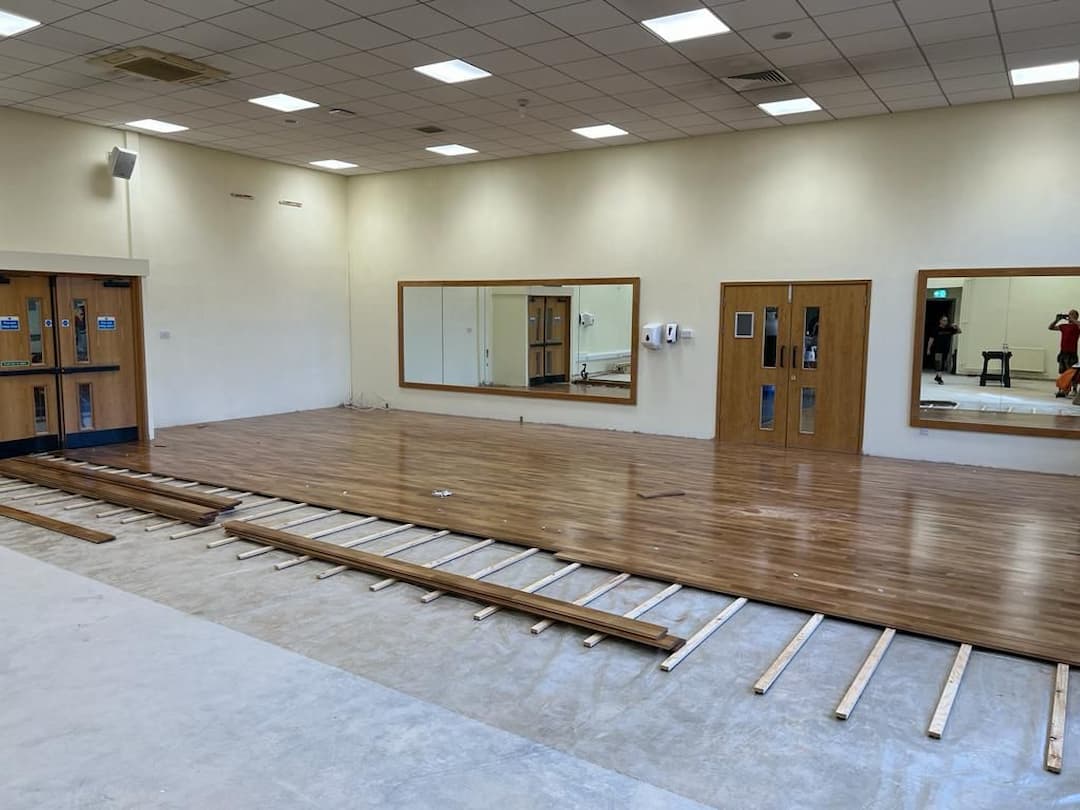
Facilities managers frequently inherit buildings with no records: nobody knows what the floor is, when it was laid, or what has been done to it since. That is a normal starting point rather than an obstacle.
We establish the surface type, measure what remains, take moisture readings and look for evidence of previous treatment. Within an hour you have a written picture of what you actually own and what it needs.
Where several areas need attention, the instinct is to start with whatever looks worst. That is frequently wrong: appearance and deterioration are not the same thing, and a shabby floor may be structurally fine while a presentable one is quietly failing.
We rank by condition rather than appearance, so money goes first to what is deteriorating and cosmetic work waits for a year it can be afforded.

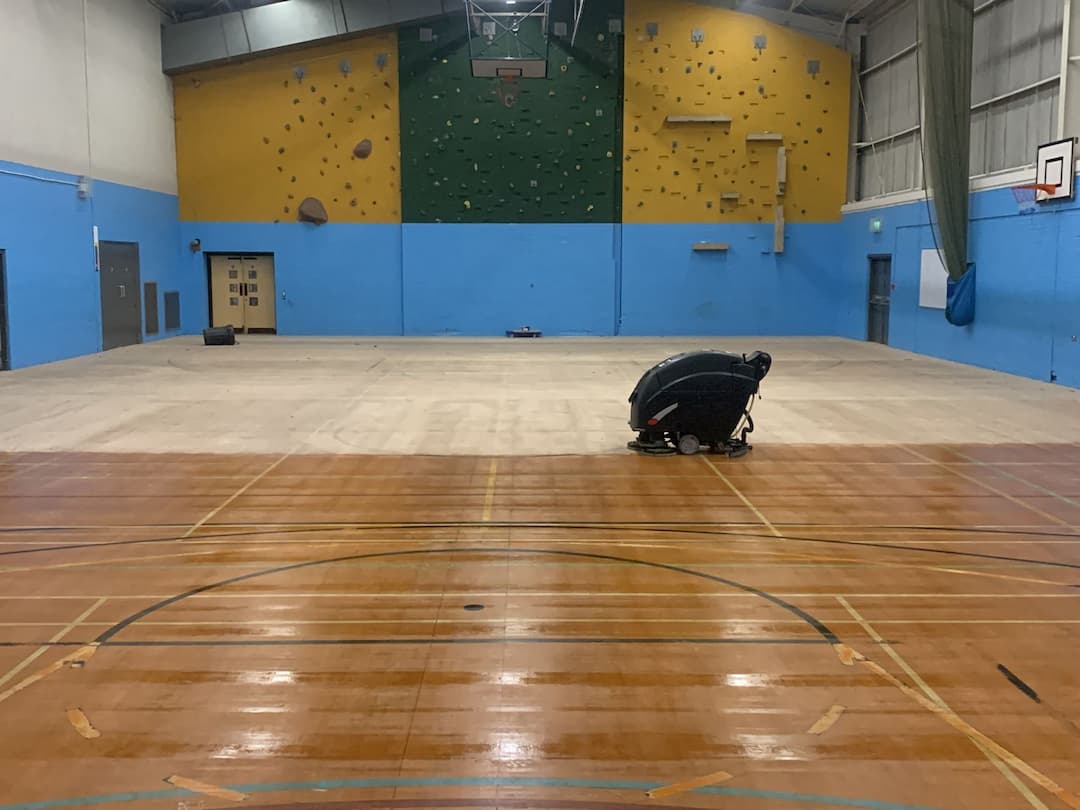
Where funds are limited the honest question is what delivers the most benefit for the money available. Frequently that is a deep clean and reline rather than a refurbishment, or a recoat rather than a full sand.
We will price the cheapest option that works and explain what it does and does not achieve, rather than offering a single expensive recommendation and waiting to be negotiated down.
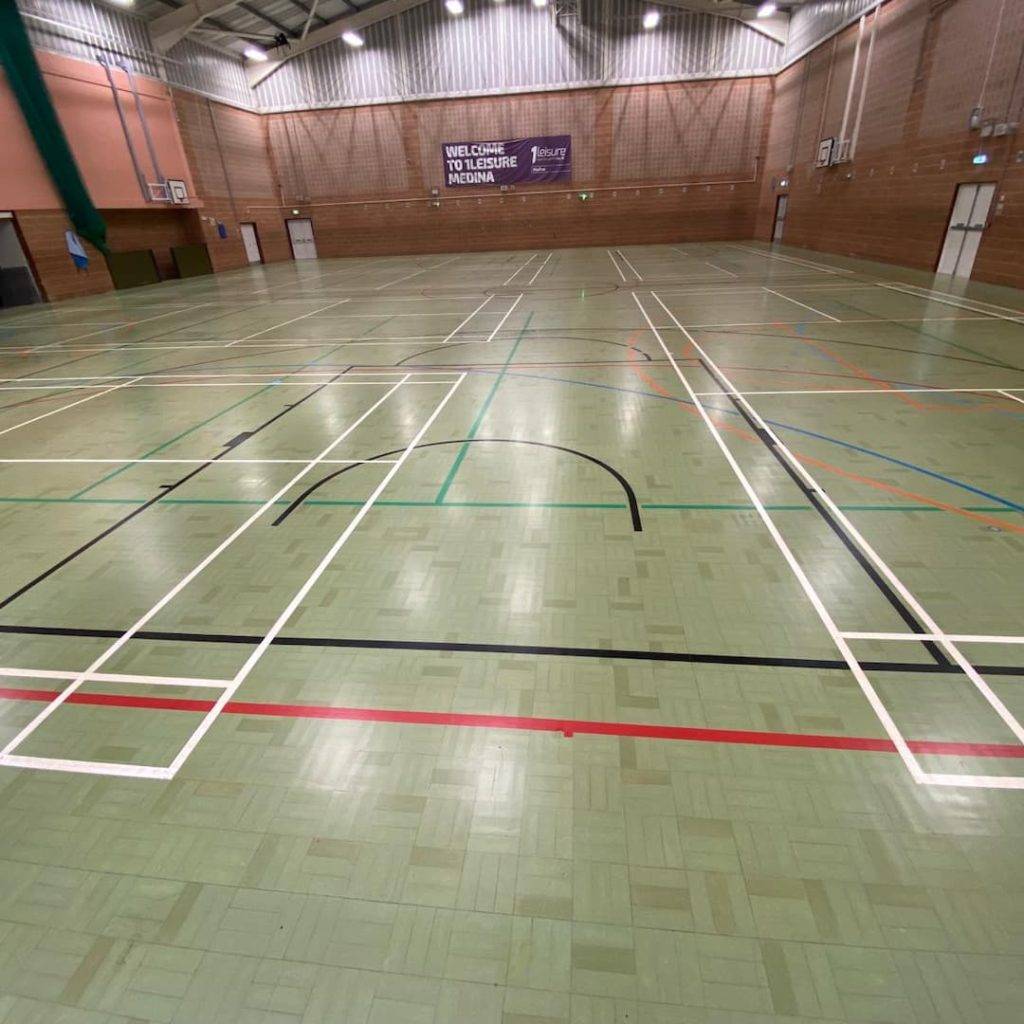
At Medina Leisure Centre we refurbished the main sports hall floor completely: sanding, repairs, resealing and a full set of new markings, with the logistics planned down to the last detail so the centre lost as little bookable time as possible.
The after photographs show a hall transformed, and the programme finished on the date agreed at the outset.
~ Matthew Evans
An outstanding company to deal with and they couldn’t have been better to work with. St George’s Ascot now has a stunning new sports hall floor and we are delighted. From quote, support, delivery and after sales, the Team has been brilliant. Thank you. 
~ James Anderson







Timber moves. A hall floor in the East Riding takes on moisture through a damp autumn and gives it back when the heating runs through winter, and the boards swell and shrink accordingly. Small gaps appearing in January and closing by June are normal and are not a defect.
Problems start when the movement is large or one sided. Coastal buildings and halls with poor ventilation hold humidity for longer, and a floor that is never allowed to dry out will cup, lift at the edges or push against the walls. A floor laid in a building that is then left unheated for months does the reverse.
We measure the moisture content of the timber and the relative humidity of the room at survey, and we specify expansion gaps, ventilation and heating advice to suit the building you have, not a textbook one.


When a hall in the East Riding is sanded back, the old lines disappear and the question of where the new ones go is open. We do not trace the faded originals, because those were often wrong in the first place.
Each court is set out from the current governing body dimensions. A netball court is 30.5 by 15.25 metres. A basketball court is 28 by 15 metres with the three point arc at 6.75 metres. A badminton court is 13.4 by 6.1 metres. Run off around each court has to be adequate, and where the hall cannot hold every sport at full size we tell you which ones fit and which will be marked as training courts.
Everything is measured from a fixed datum, squared with diagonals and checked before a single line is applied. Lines are then laid within the seal system so they wear with the floor.
The finish we apply is only half of what determines how long a floor lasts. The other half is what happens to it every day afterwards, and most premature failures we see across the East Riding come down to cleaning.
Grit walked in from playgrounds and car parks is the main enemy, because it acts as an abrasive under every trainer. A daily dry mop removes it. A weekly damp mop with a neutral pH cleaner, diluted as the label says, deals with sweat and scuffing. Nothing else is needed.
Polish, wax and silicone products are the things to keep out of the hall. They build up, they make the surface slippery, and they stop the next coat of seal from bonding, which turns a cheap recoat into a full sand.
We leave a one page cleaning guide with every floor and we will talk your cleaning team through it.

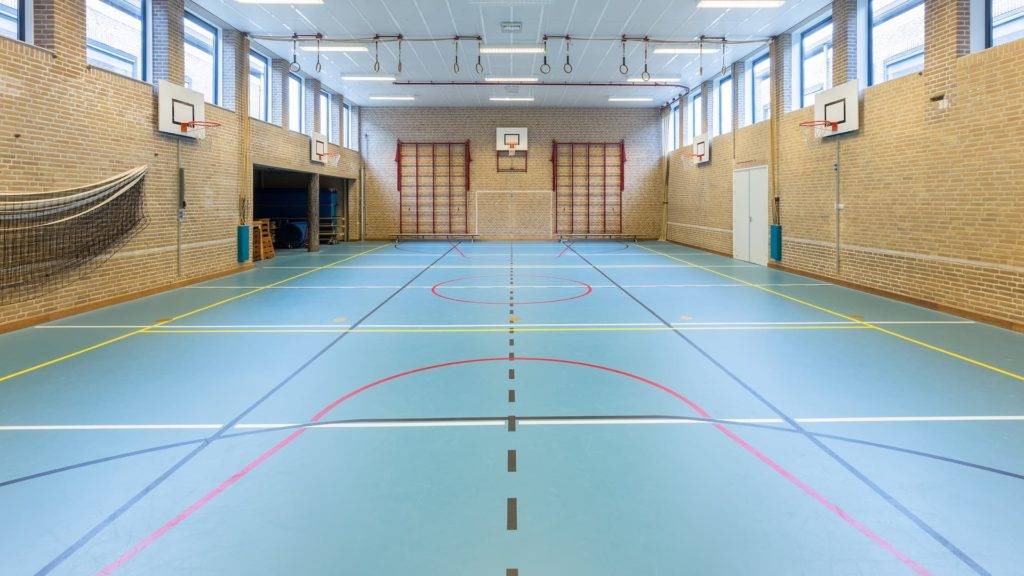
The East Riding brings us a mix of academy trust estates, leisure facilities and a large rural stock of village and church halls.
Trust work is the pattern we see most often. Where one organisation holds a dozen or more sports halls, the sensible approach is a condition survey across the whole estate followed by a phased programme, rather than dealing with each hall as it becomes urgent. It spreads the spend across budget years and avoids the situation where several floors need work in the same summer.
Individual school halls come to us for the familiar reasons: a worn finish, markings that cannot be read, or a floor that has become slippery and is now an insurance question.
The rural stock is the third group and often the most transformed by the work. Old timber floors under decades of polish, scored by chairs and tables, with plenty of board depth left underneath. Restoration is dramatically cheaper than replacement and gives a better floor.
Moisture readings matter in older buildings with solid floors, and we take them as a matter of course rather than a formality.
For East Riding enquiries the most relevant comparisons are our academy projects in the wider region.
Harris Academy and Hornbury Academy in Wakefield are both good illustrations. Halls in constant curriculum use, finishes that had gone well past their proper cycle, and fixed term dates with no flexibility at the end. In each case the floor was sanded back to bare timber, damaged boards were cut out and replaced, and the hall was resealed with markings set out fresh from measured governing body dimensions rather than traced from the faded originals.
Both also carried markings for sports no longer taught, which came off while the floor was open at no extra cost and made each hall considerably clearer to use.
For community buildings the closer comparison is St Katherine Hall: an old timber floor under decades of polish, restored rather than replaced, and now good for another few decades.
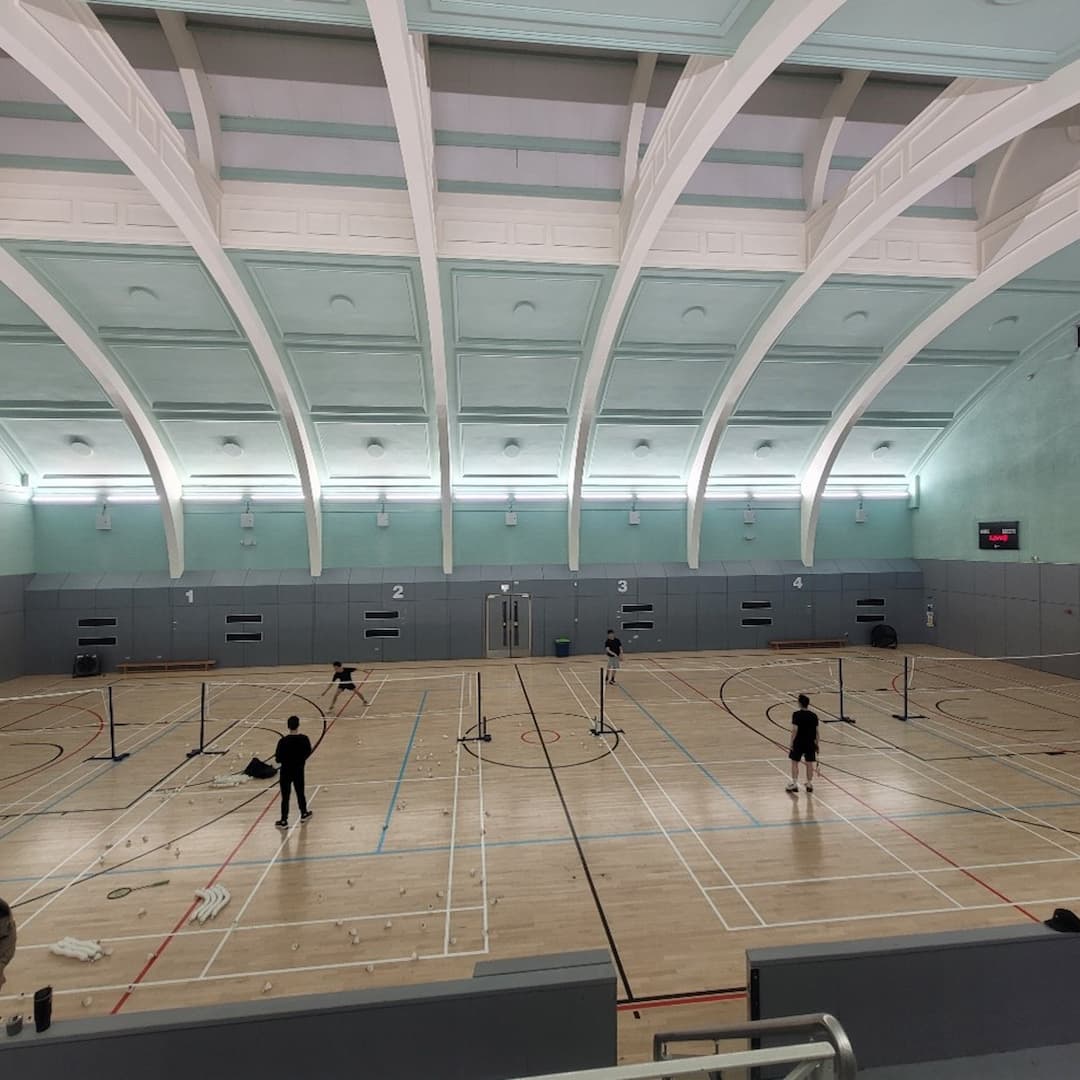
Yes. We regularly programme sanding and sealing in overnight shifts and at weekends, with the hall handed back before the first booking each morning where the coat schedule allows. Labour costs a little more, but the lost booking income it avoids is usually far larger.
Usually. Granwood is a composite block of wood flour and cement set in a bitumen bed, and most of it is far more durable than it looks. We rebed loose blocks, prepare the surface carefully and coat it with an epoxy system. We test older bitumen for asbestos before starting.
For a typical single hall, allow about a week for sanding, repairs and three coats, then twenty four hours before light foot traffic and seventy two hours or more before equipment returns. A screen and recoat is quicker, often two or three days plus the cure.
Our machines run on sealed vacuum extraction, including the edge sanders, and dust is bagged at source. We seal doors, isolate ventilation routes with your site team and screen openings where a hall connects to a dining area, so the rest of the school or centre carries on as normal.
Yes. We supply and advise on protective coverings for exam desks, seating and staging, which is the main cause of scoring on school hall floors. Getting the right covering and a simple laying routine in place costs far less than the sanding it prevents.
Rarely on cost or performance grounds. A timber floor with wear layer left can be sanded and resealed for a small fraction of a new vinyl installation and will outlast it. Vinyl earns its place in wet areas, multi purpose rooms and buildings where the timber has failed structurally.
Yes. Redundant markings come off during a full sand at no extra cost, and the hall is relined only for the sports you actually use. Fewer lines make the floor clearer for pupils and officials and reduce the marking cost at the same time.
Yes. Pendulum testing is offered as a standalone visit or as part of a refurbishment handover. We test at several positions across the hall and issue a certificate with the values recorded, which is the evidence insurers and governing bodies expect to see.
If your sports hall in the East Riding of Yorkshire needs assessing, we will visit, take the readings, and set out in writing what it needs and what it will cost. Call 01823 674562 or send us a message to book a free survey.