
Flooring Professionals To The Leisure Industry
Courtship Flooring is a commercial sports flooring contractor working in Exeter and across the UK. We cover the South West intensively, and much of the work involves diagnosing moisture problems properly before any surface work is quoted.
Nearly four decades of specialist work sits behind every project: installation, refurbishment, sanding and sealing, court marking, slip testing and planned maintenance, all delivered in-house. Our clients are institutions and operators rather than households, and private homes are handled by Ryan’s Restorations.
Exeter is one of many areas covered by our national sports hall flooring service, with the same crews and the same standards wherever we work.
Overnight/Weekend Installations
Professional Cleaning Demonstrations
Squash Court Maintenance
Recommended Cleaning Products
Professional Pendulum Slip Testing
Deep Clean & Reseal Service
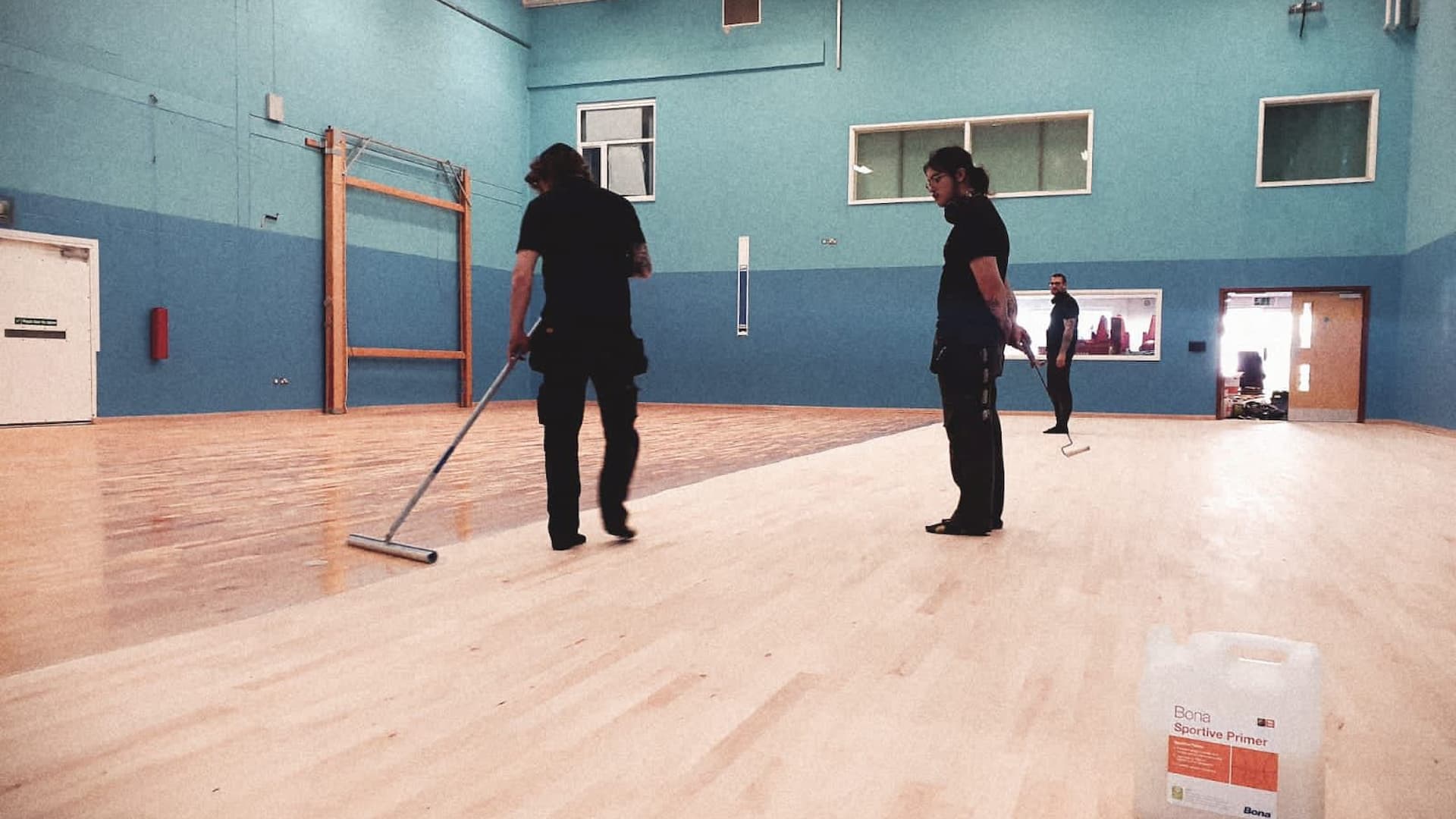
More sports floors are ruined by water than by wear. Older slabs and converted buildings often lack an effective damp barrier, and vapour rising from below will cup, lift and eventually rot a timber floor laid over it, regardless of how good the timber is.
Every survey we carry out includes moisture readings in and beneath the floor. Where they demand a barrier we specify one and explain why; where they do not, we leave it out rather than adding cost. Either way the readings are provided in writing.
Timber is not always the right answer. Where a hall doubles as a dining room, exam venue or events space, furniture does far more damage than sport, and a synthetic surface will frequently cost less to own across its life.
We install vinyl, polyurethane and lino systems alongside timber, weld vinyl seams properly so water cannot reach the sub-floor, and will set out the lifecycle cost of each option before you choose.
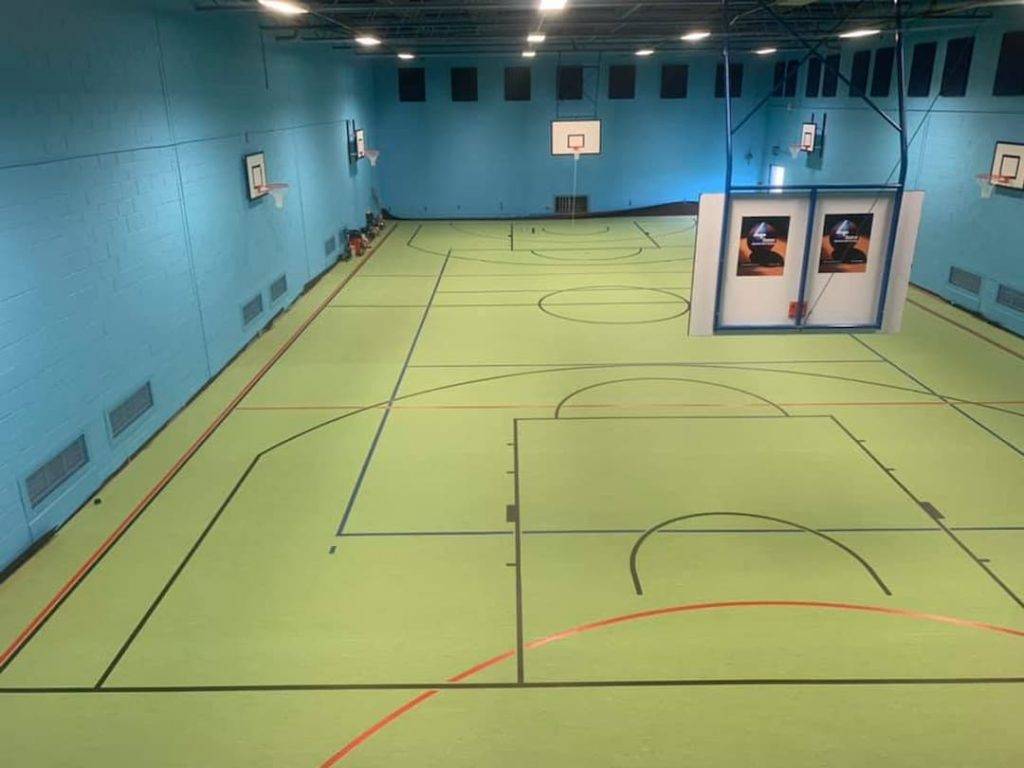
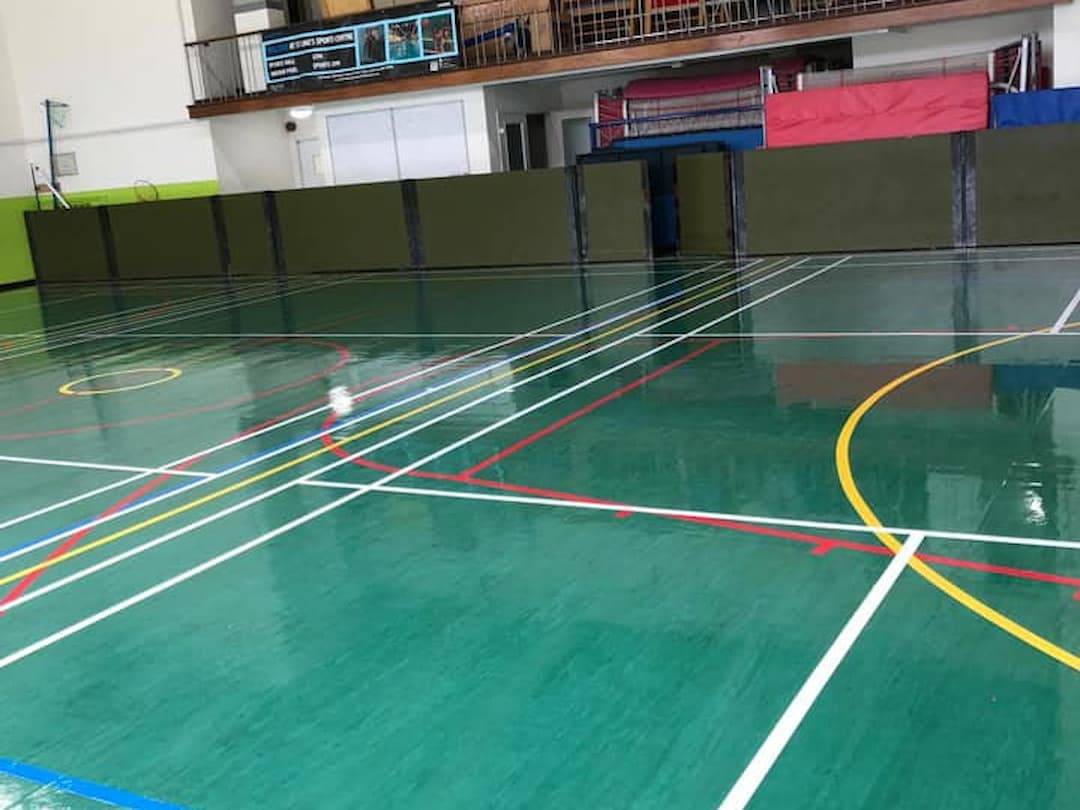
Synthetic floors cannot be sanded, but they are far from disposable. Deep cleaning lifts embedded residue, damaged areas can be cut out and patched, failed seams can be re-welded, and some systems can be resealed to restore appearance and grip.
Poor welding is the single most common defect we are called to repair on vinyl sports floors, and it is entirely avoidable with the right tools and temperature. We repair floors other contractors laid as readily as our own.
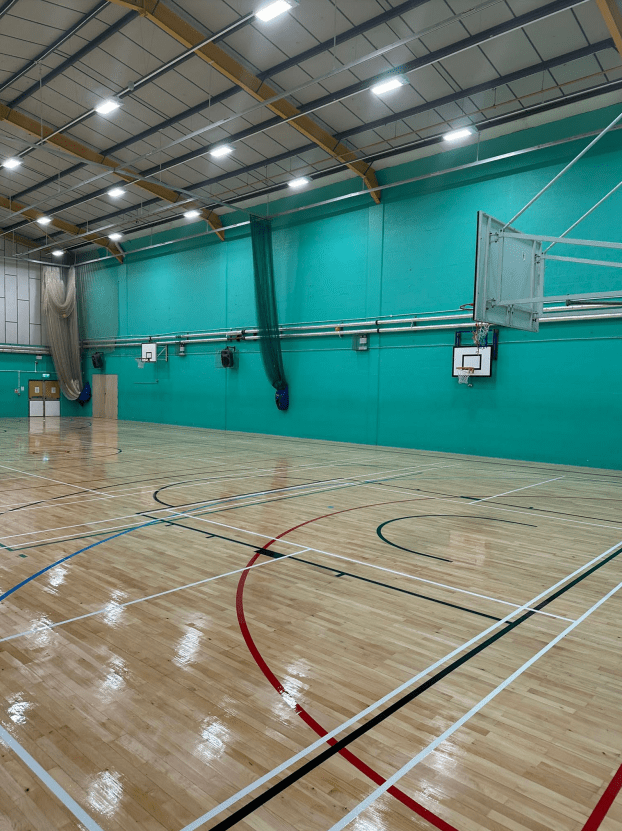
The main sports hall at Liskeard Leisure Centre had taken years of public sessions, club blocks and league nights. We delivered a complete programme of sanding, re-lining and resealing, returning the hall to service looking like a new installation.
It is a fair illustration of how we handle leisure work: one tight programme, agreed dates, and a centre back in action on schedule.
~ Matthew Evans
An outstanding company to deal with and they couldn’t have been better to work with. St George’s Ascot now has a stunning new sports hall floor and we are delighted. From quote, support, delivery and after sales, the Team has been brilliant. Thank you. 
~ James Anderson







Every floor we touch in Exeter is worked on by people employed by Courtship Flooring, using machines we own and maintain. There is no local subcontractor, no agency labour and no hire kit collected from a depot the night before.
That matters more than it sounds. A sanding machine that is set up and serviced by the person using it cuts flat and evenly. A team that has worked together for years knows without discussion who screens, who edges and who follows with the seal, and the finish shows it.
It also means the person who surveyed the hall and wrote the specification is on site when the old finish comes off, so if the boards tell a slightly different story from the one expected, the decision is made there and then with someone who has the authority to make it.

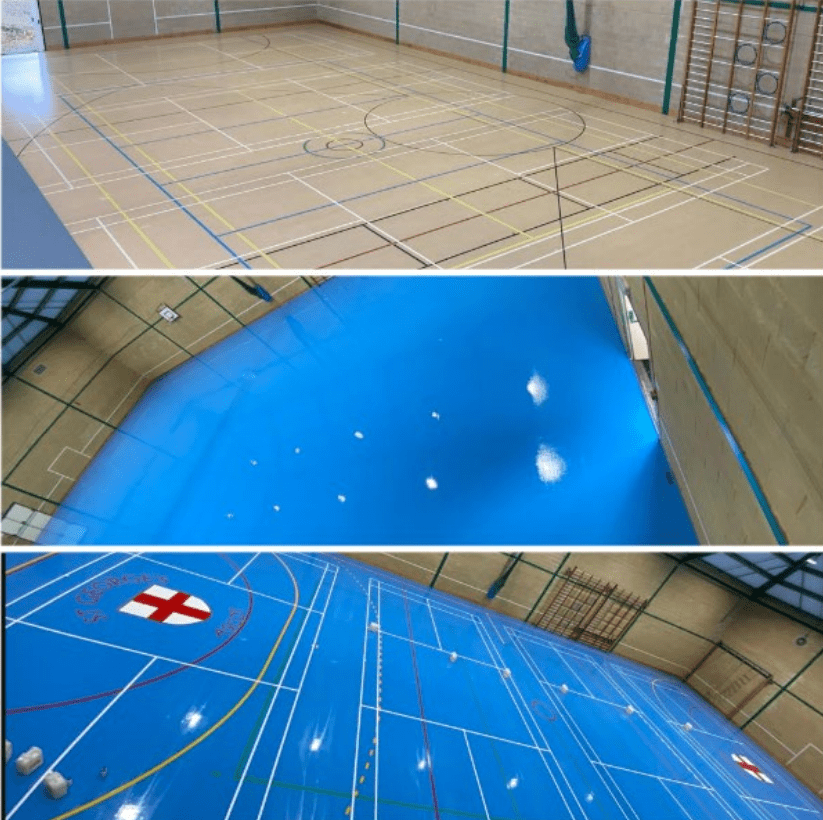
Most enquiries from Devon start with the assumption that the floor is finished. It rarely is. The decision between a repair, a full refurbishment and a new floor comes down to three measurements, and we take all of them before offering a view.
If the damage is local, a cluster of split boards near a door or a water affected bay under a leak, a repair is the answer and the rest of the floor is left alone. If the seal has gone across the traffic lanes but the boards have depth above the tongue, a refurbishment brings the whole surface back for a fraction of the cost of replacement. Only when the wear layer is exhausted or the structure beneath has failed across the hall does replacement earn its place.
We show you the readings alongside each option, so the choice is made on evidence, not on a sales pitch.
Colleges and schools around Exeter increasingly run dance and drama alongside sport, and those rooms need a different floor from the hall next door. A dancer landing from a jump needs a sprung construction with consistent give across the whole area, and a surface with controlled slide, not the grip of a badminton court.
For dance we usually specify a sprung base with a vinyl performance layer, or a sealed timber floor finished with a matt or semi matt product, depending on the styles taught. Drama studios often want a black painted floor, which needs a paint system that can be scuffed and repainted between productions without lifting.
Studios are usually small enough to fit into a half term, and we do them alongside the main hall so the college gets one programme and one handover.
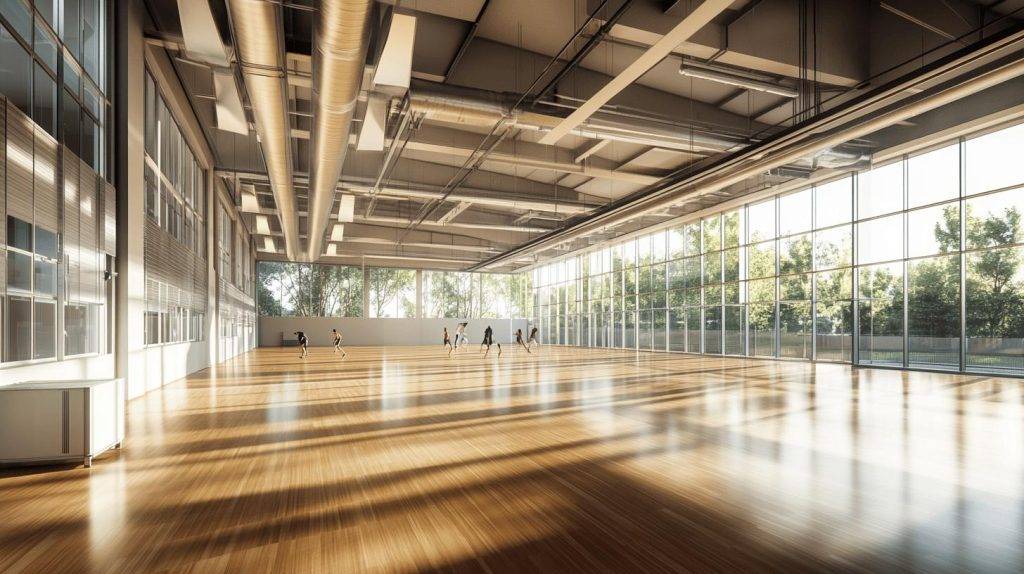
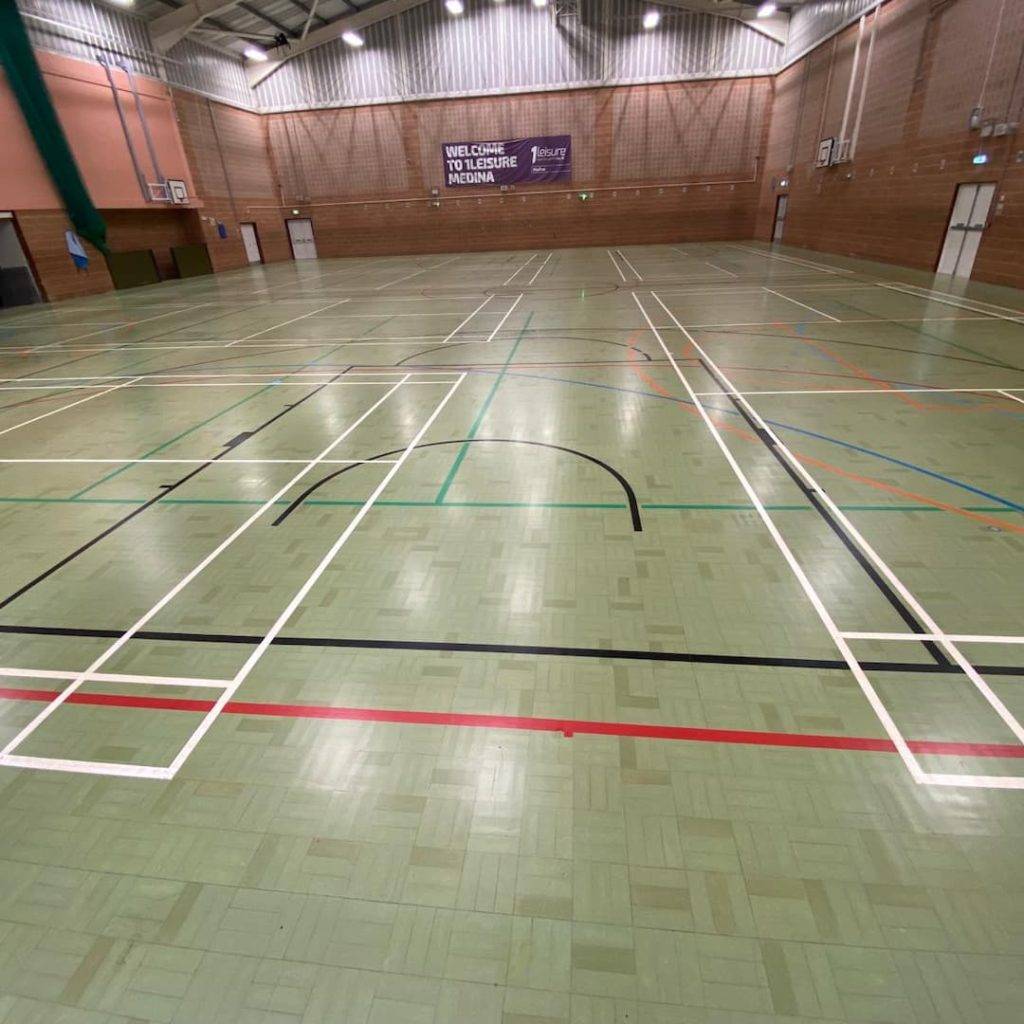
Exeter work comes to us from university sport, the city and district leisure facilities, and secondary school halls, with a steady flow of community buildings alongside.
University facilities are the most demanding to programme. They are busy year round, with conference and summer school use filling the period a school would be closed, so the working window is narrow and does not move. Those projects are planned well ahead and staffed to complete inside it.
Leisure centre halls are usually the busiest floors and the ones that most benefit from a proper maintenance cycle. Catching a floor with a screen and recoat before the seal wears through is what keeps it off the replacement list, and it costs a fraction of a full refinish.
School and academy halls follow the fixed term dates, and summer slots book up a long way ahead.
We are regularly in the south west and completed work at Liskeard Leisure Centre nearby, so travel to this part of the country is routine rather than exceptional. Where several facilities are considering work, sequencing them together is worth doing.
Two projects answer most of the questions we get from Exeter.
Liskeard Leisure Centre is the closest for operator run facilities in the south west. The centre could not afford lost bookings, so the programme was built around its timetable, with the noisiest work sequenced for the quietest hours and dust extraction arranged so the rest of the building stayed usable. It also demonstrates that we plan work in this region as continuous blocks with everything brought with us, which makes the dates more reliable rather than less.
Aston University is the better comparison for campus sport, where the constraint is a year round timetable with no genuine summer shutdown. That was solved by surveying early, ordering materials ahead and staffing the job to finish inside the window rather than hoping it would stretch.
In both cases the technical work was routine. The value was in the programming.
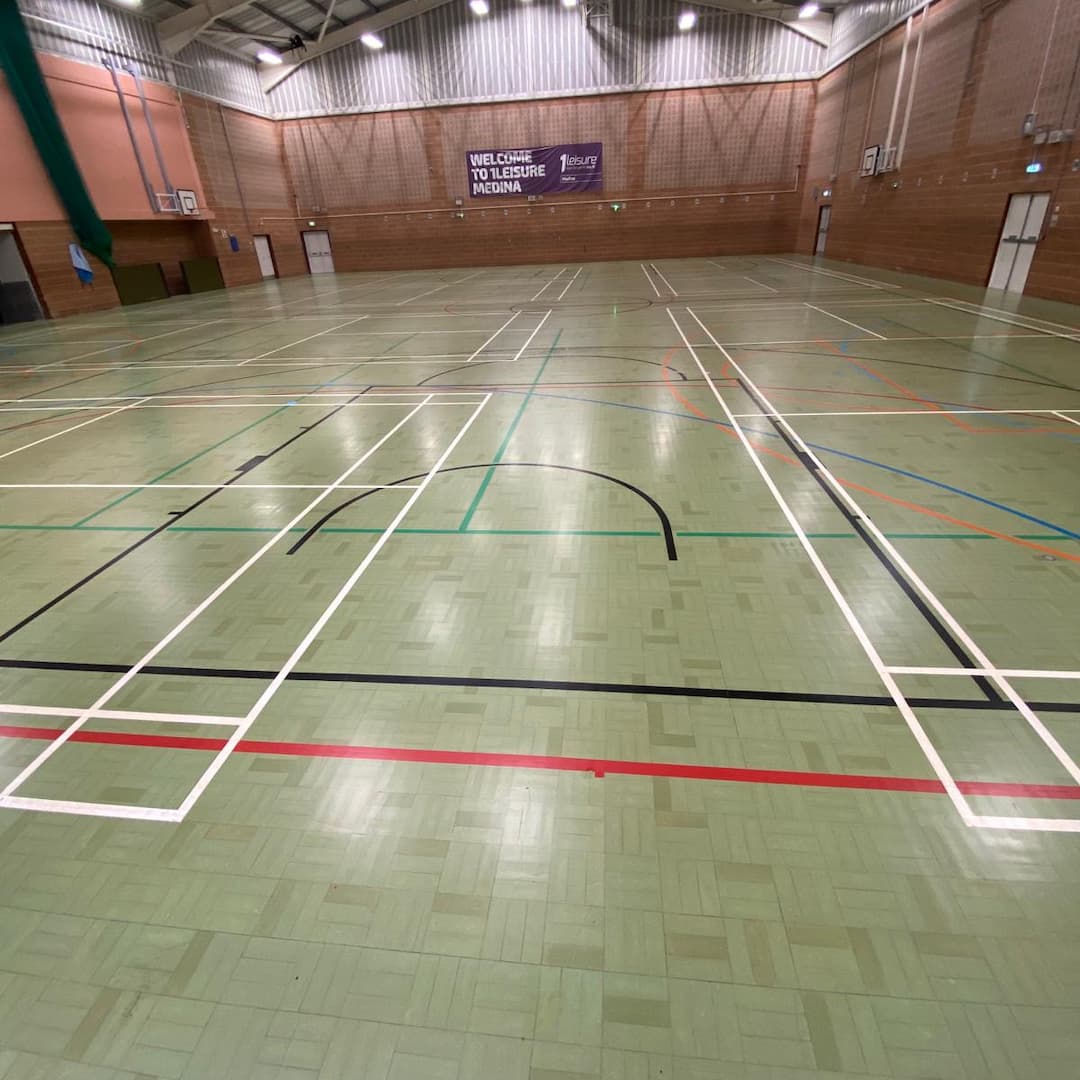

Devon has hundreds of village and church halls, and a great many have a timber floor that has carried badminton, short mat bowls, a playgroup and a hundred years of dances. The committees who look after them usually assume the floor is beyond help. Under the polish it seldom is.
The typical hall floor is a solid softwood or hardwood strip, thick by modern standards, that has been polished rather than sealed for decades. The build up has to come off with a stripper before any abrasive touches it, or it clogs the paper within a metre. Underneath, the boards are generally sound and take a two pack seal beautifully.
We price these jobs to fit a hall budget, plan them around bookings and grant deadlines, and provide the paperwork that funders and the parish council ask for.
The figure is set by the size of the hall, the condition of the surface and whether anything under the boards needs attention. We survey free of charge, then quote a fixed price with every element shown separately. Travel across the south west is included, not added afterwards.
Yes. We are in the south west constantly and treat the whole peninsula as home ground, from Exeter down to the far end of Cornwall. Work is planned as a single continuous visit with everything brought with us, so remote sites get the same programme reliability as anywhere else.
Lay a protective covering over the whole playing area before the desks go in, tape the joints so grit cannot get underneath, and fit pads to desk and chair feet. It costs very little, lifts in an hour afterwards and saves a set of scratches that would otherwise need sanding out.
Yes, and we do so often. Original timber is kept and restored wherever it is sound, replacement boards are matched by species and profile, and we choose finishes that suit the age of the room. We can advise on what a conservation officer is likely to accept before you apply.
Satin in almost every hall. It holds slip resistance, hides the scuffing that gloss shows within weeks and avoids glare under LED lighting. Matt suits stages, studios and squash courts. Gloss looks striking on handover day and is the one we are most often asked to redo.
Usually a film of polish or the wrong cleaning product, or a seal worn smooth in the traffic lanes. A deep clean fixes the first and a recoat the second. A pendulum test tells us which before anything is done, and either way it wants sorting before somebody falls.
Yes. Courts are measured out from the current published dimensions with laser and tape, not traced from the old lines. Halls that have been relined by copying drift over the years, so we check the layout at survey and show you a drawing before the paint goes down.
No. We are a commercial contractor and our machinery, finishes and insurance are set up for schools, leisure centres, universities, clubs and community halls. Domestic timber floors are looked after by our sister company Ryan’s Restorations, who take those enquiries directly.
Book a free survey of your floor in Exeter and we will tell you what it needs, whether it is worth saving and what the work will cost, with no obligation. Call 01823 674562 or send us a message.