
Flooring Professionals To The Leisure Industry
Courtship Flooring is a commercial sports flooring contractor working in Gloucestershire and across the UK. An easy run from our base, covering independent colleges, city schools and the community buildings between them.
Trading since 1987 and family-owned throughout, we handle indoor sports and commercial timber floors from first survey to long-term aftercare, with our own crew and equipment on site at every stage. Domestic and residential projects are the province of our sister company, Ryan’s Restorations.
Whatever the size of the building, work in Gloucestershire follows the same survey-first approach as every sports hall flooring project we take on.
Overnight/Weekend Installations
Professional Cleaning Demonstrations
Squash Court Maintenance
Recommended Cleaning Products
Professional Pendulum Slip Testing
Deep Clean & Reseal Service
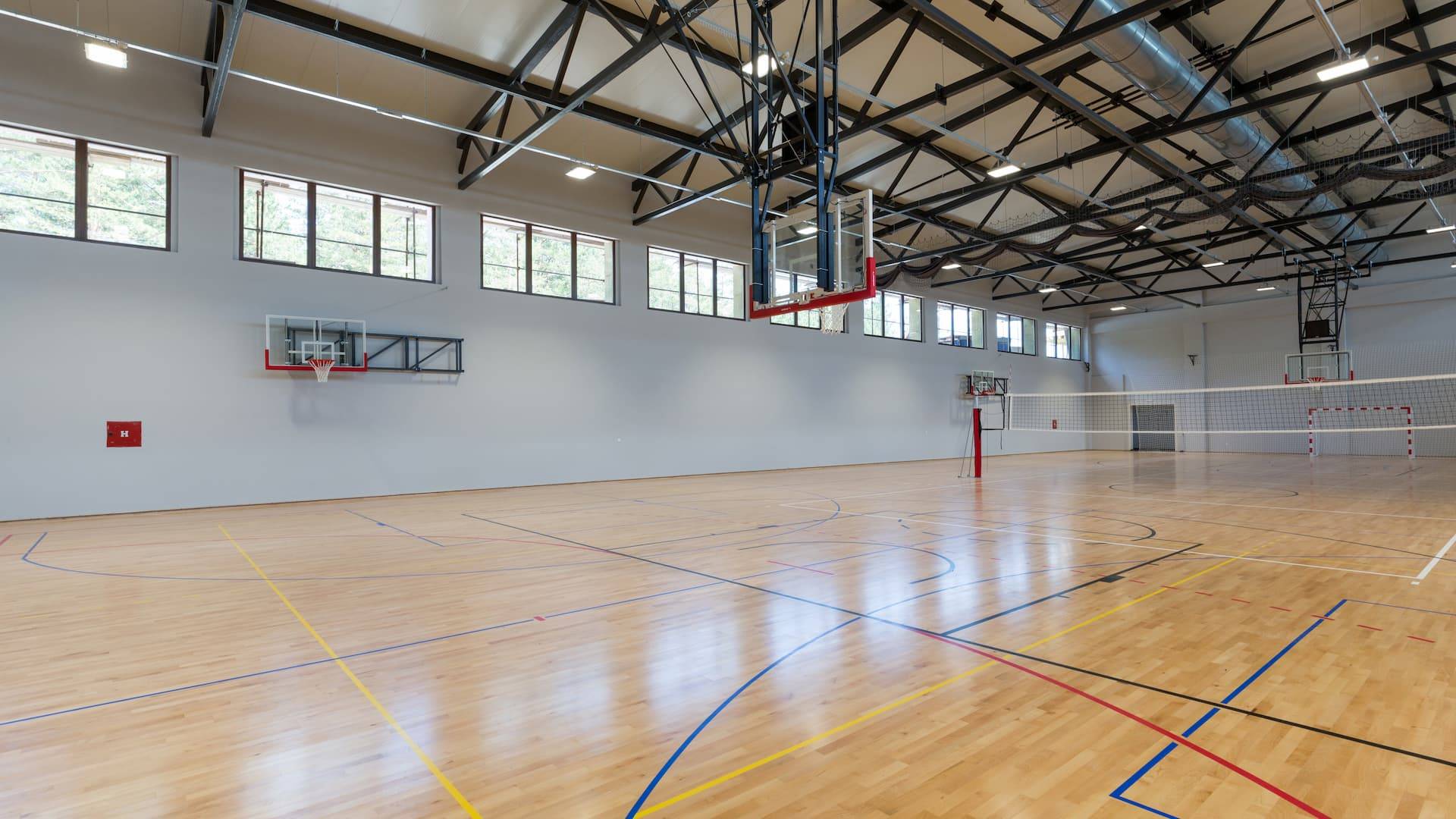
Buildings serving a whole community rarely have the luxury of a single-purpose floor. Sport, markets, meetings, performances and social events all land on the same surface, and furniture rather than activity does most of the damage.
We specify for the actual pattern of use, recommend protective covering for non-sporting events, and are explicit about the compromise involved rather than pretending a single surface excels at everything.
Stage floors have requirements of their own: a surface that tolerates scenery, staging and equipment without permanent marking, and frequently a matt finish so lighting does not reflect into the audience.
We restore stage and performance areas alongside main halls, and where a space serves both drama and sport we specify accordingly rather than compromising one for the other. Sprung construction is available where dance or gymnastics is involved.
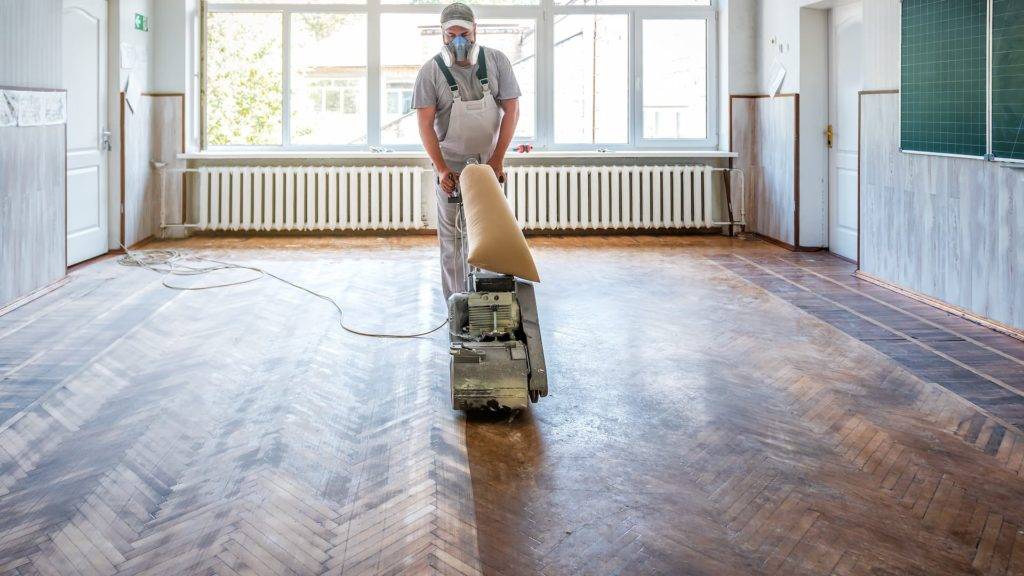
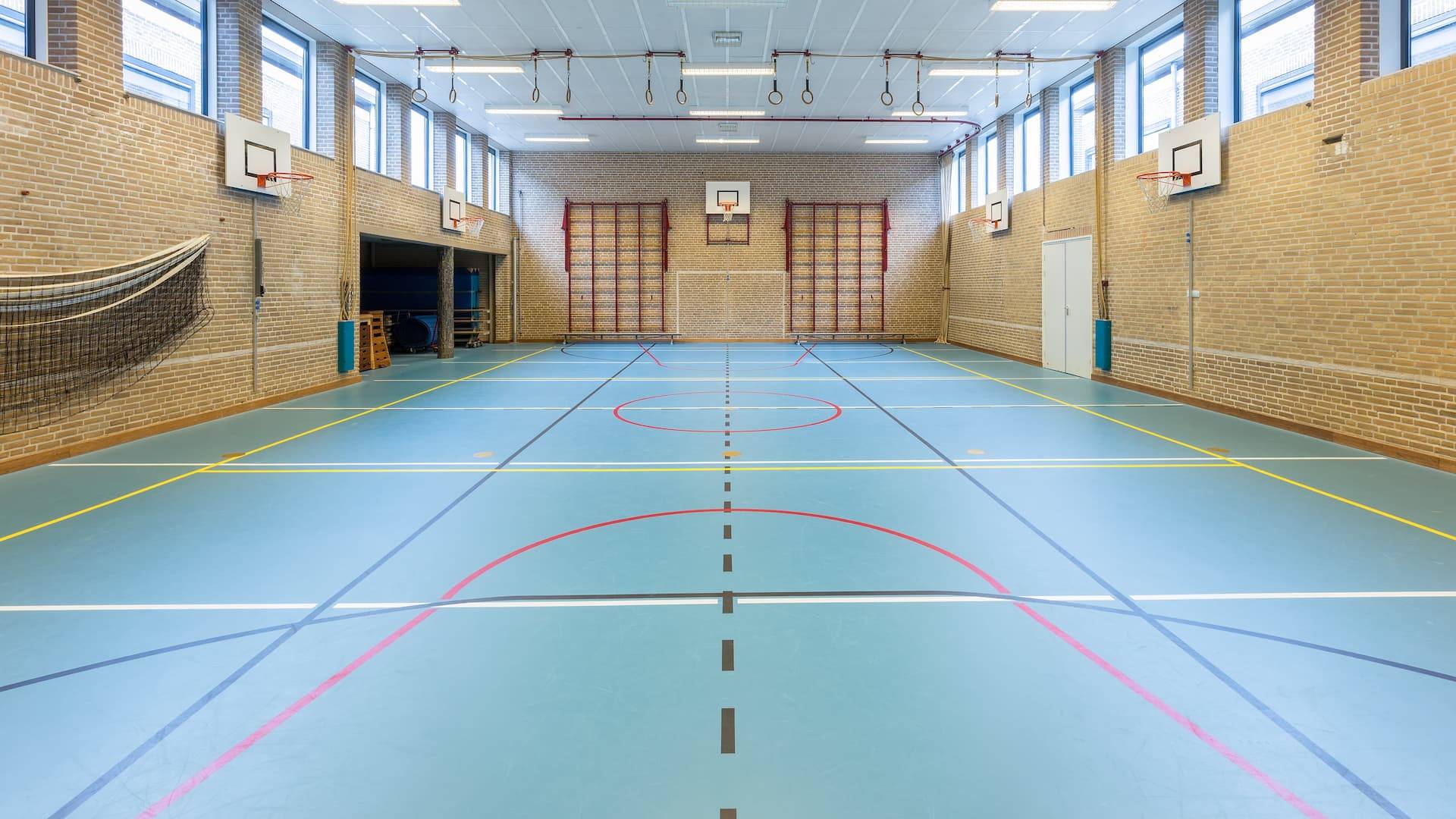
Further education facilities combine school-style constraints with something closer to commercial usage: long days, external lettings and heavy sporting programmes.
We plan around academic calendars and lettings income, phase work where a facility cannot close entirely, and provide the documented handover and testing records that estates teams need for their files. The reopening date is fixed in writing before work begins.
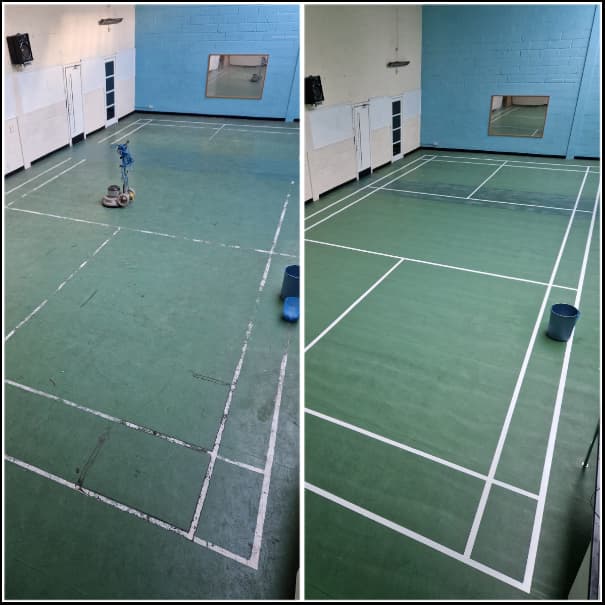
Not every floor we save sits in a sports centre. St Katherine’s had the kind of well-loved, well-worn hall floor that carries badminton one evening and a community event the next, and the committee wanted it rescued rather than replaced.
We restored it completely. The hall is now set for another few decades of everything it is asked to do.
~ Matthew Evans
An outstanding company to deal with and they couldn’t have been better to work with. St George’s Ascot now has a stunning new sports hall floor and we are delighted. From quote, support, delivery and after sales, the Team has been brilliant. Thank you. 
~ James Anderson








Three measurements decide the answer, and none of them is an opinion. The first is the wear layer. Every full sand removes timber, and once the sander reaches the tongue the board is done. We measure what is left before recommending anything.
The second is the structure. A few failed pads or a cracked batten are routine repairs. A system that has failed across the hall, or one that never suited the use, is a different conversation.
The third is moisture in the slab. An active damp problem will wreck a new floor as surely as an old one until the cause is dealt with. Where the wear layer is adequate, the structure is mostly sound and the slab is dry, refurbishment wins on cost and disruption every time. Where it is not, we say so and price the replacement, because a refinish on a failing floor is money spent twice.
Most of the wear on a sports floor walks in on the soles of trainers. Grit from a car park or a playground acts as an abrasive under every foot, and the seal in the first few metres inside the door goes long before the centre court.
A good run of matting, long enough for several strides, removes most of it. Barrier matting at the external door, a second run at the hall door and a rule about outdoor shoes do more for the life of a finish than any product we can apply.
Gloucestershire’s rural schools and halls, with gravel approaches and muddy fields, feel this more than town buildings. We look at the entrances at survey, tell you where the wear pattern shows grit coming in, and suggest matting sized to the traffic rather than to the doormat that came with the building.
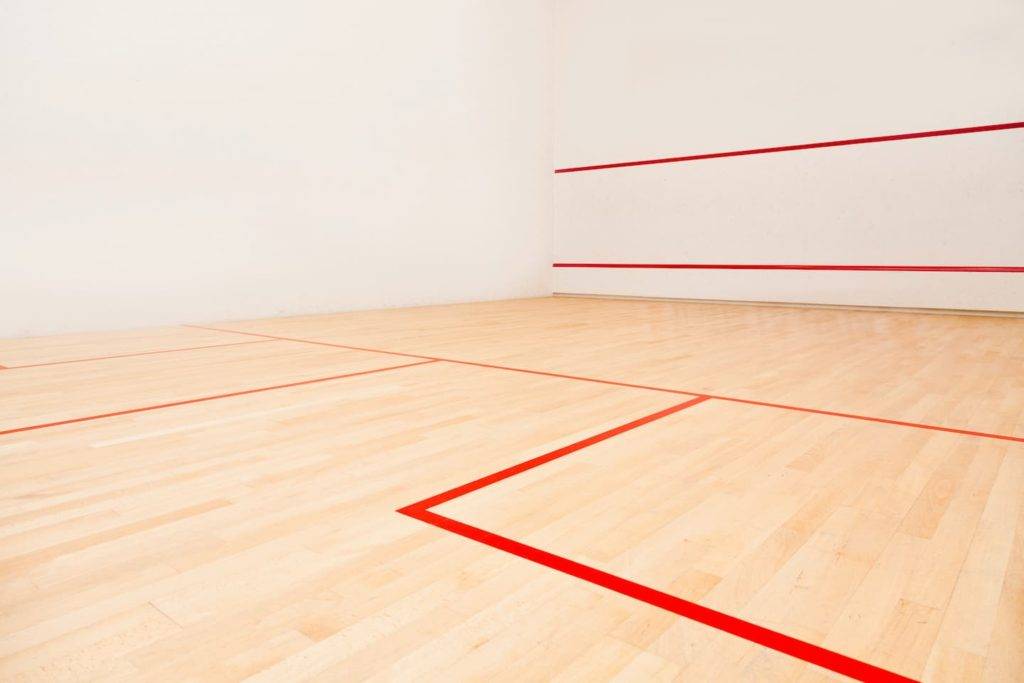
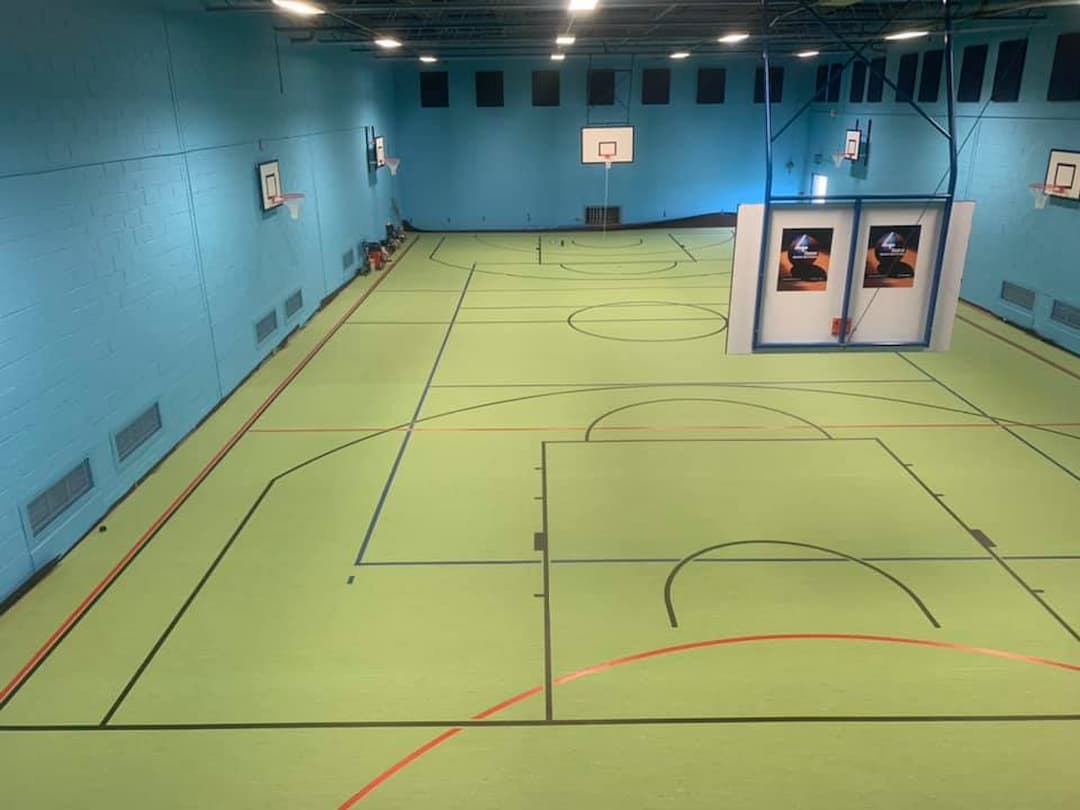
A floor that feels fine to a PE teacher may still read badly under a pendulum, and the reverse is also true. The only way to know is to test, and the pendulum method to BS 7976-2 is what an insurer or an HSE inspector will expect to see.
The instrument sweeps a rubber slider across the surface and the reading gives a Pendulum Test Value. A PTV of 36 or more means low slip potential. We test several positions, in dry and wet conditions, because one corner does not speak for the whole hall.
Colleges and leisure operators in the county tend to book a test with their annual inspection so the result sits in the file next to the cleaning records. If a reading is low, the usual cause is residue from cleaning products, and a deep clean followed by a retest normally settles it without a refurbishment.
Gloucestershire is within easy reach of our base, and the work divides between school sport, leisure facilities and a very large number of village and church halls.
School and academy halls are the largest group. Independent schools in the county tend to maintain their floors on a proper cycle and come to us for preventative screen and recoat work, which is the cheapest way to run a sports floor. State and academy halls more often arrive overdue, with the finish worn through in the traffic lanes and markings that have been copied rather than set out.
Leisure and community sports centres follow, where booking income means the work usually happens overnight or across a quiet week.
The rural stock is the third group and often the most rewarding. The county has a great many village halls and church halls with timber floors laid a century ago, buried under decades of polish and scored by chairs and tables. Those restore for a fraction of what committees expect, and a good deal of the work reaches us by recommendation from one hall to the next.
Being local, we can usually survey quickly and fit smaller jobs around larger programmes.
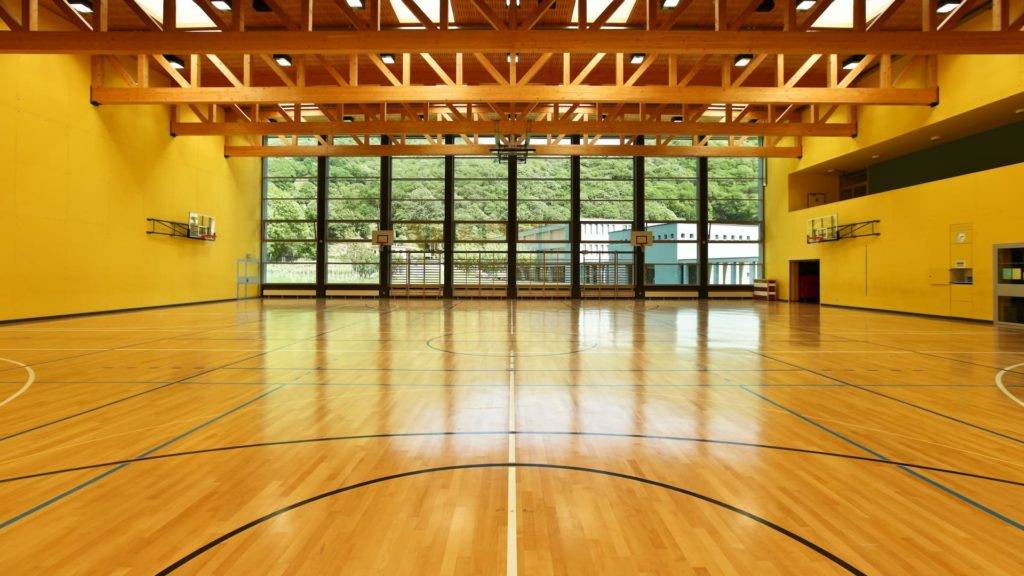
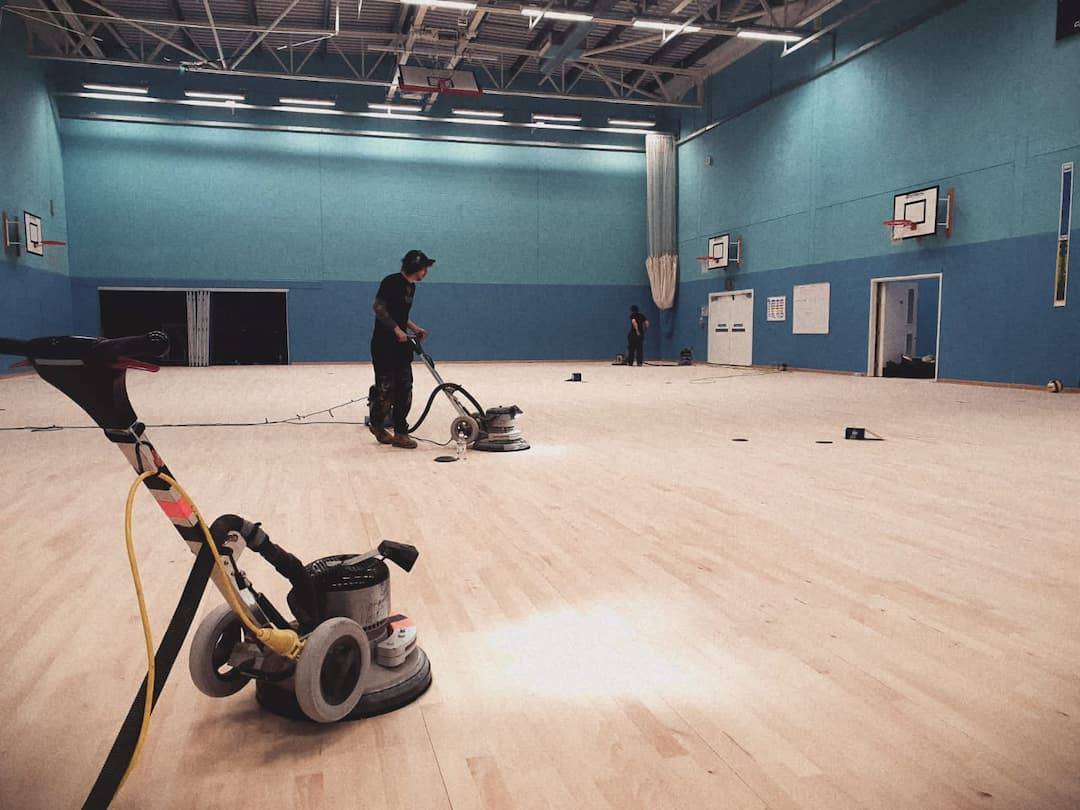
Enquiries from Gloucestershire divide between school sport and a very large stock of community buildings, and the two present quite differently.
School halls generally arrive with wear: the finish gone in the traffic lanes, markings faded, and a hall that has been asked to do too much for too long without attention. Those are straightforward refinishes provided the boards have depth left, which they usually do.
Community and church halls arrive with a different problem entirely. The damage there is fine scoring from chairs and tables rather than concentrated wear, sitting under decades of accumulated polish. That polish has to be removed chemically before sanding or it clogs every abrasive, and it is the item most commonly missed by contractors who do not do this work regularly.
The third recurring issue is moisture in older buildings with solid floors. We take readings as a diagnostic step rather than a formality, because sealing over a damp floor guarantees failure.
Larger clients buy flooring work through procurement rather than a phone call, and we are set up for it. We price against schedules of rates, respond to tenders from academy trusts, councils and leisure trusts, and hold the documentation a procurement team will ask for.
That means insurance certificates, health and safety policy, quality procedures, environmental statements, safeguarding arrangements and references from comparable work, supplied in the format the portal wants, not as an afterthought.
Where a framework already exists we can usually be added as a specialist supplier, because sports floor restoration is a narrow trade that general contractors subcontract. Buying it direct removes a layer of margin. For a trust with several halls across Gloucestershire, a single tendered programme with one specification and phased dates is normally the most economical route.
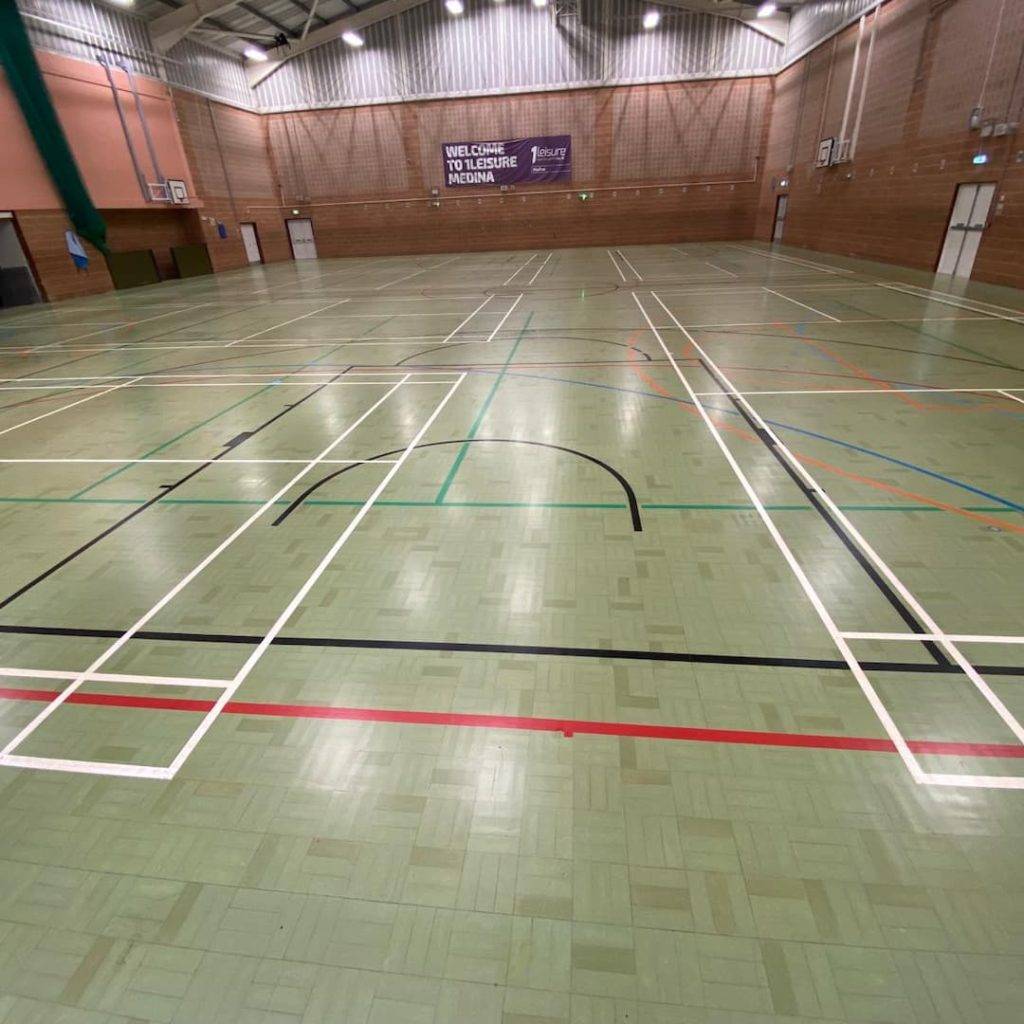
Yes. Granwood is a composite block laid in a bitumen bed, and it needs careful preparation and a modified epoxy coating system, not sanding. Restored correctly with new markings it looks new and costs far less than lifting it out and starting again.
About 24 hours after the final coat for light foot traffic, and at least 72 hours before equipment and posts go back. A cold hall needs longer. We put the exact times for the system used into the handover.
Yes. Your artwork is scaled to the centre circle and painted between coats of seal, so it sits under the final lacquer and wears with the floor. It costs least while the floor is already open.
If the seal is worn but still intact across the floor, a screen and recoat restores grip and appearance in a few days. If the lacquer has gone through to bare timber in the traffic lanes, the floor needs a full sand. We tell you which at survey.
Heating dries the air and the boards shrink slightly as they give up moisture. The gaps close again in spring. It is normal seasonal movement, and keeping the hall at a steadier temperature and humidity through the year reduces it.
Yes. We sand and seal between the last session and the first, timing the final coat so the hall is walkable by opening, and we isolate air routes so dust does not reach the pool or the gym.
In the winter term before. The summer weeks are the ones every school wants and they fill early. Schools that call in June are usually placed into the following year, though half terms suit shorter jobs such as a recoat.
Yes. We lift a vent or edge trim at survey and look at the battens and pads. Dead spots and squeaks start beneath the boards, so we repair the failed components locally before refinishing. Sanding alone will not change how the floor feels.
Book a free survey of your sports floor in Gloucestershire. We are an easy run from base, so we can be there quickly with a clear written assessment, a fixed price and a firm date. Call 01823 674562 or send us a message.