
If your school or leisure centre was built between the 1950s and the 1980s, there is a fair chance the hall floor under all those scuffs is Granwood: compressed wood-composite blocks that were fitted in their thousands across the UK. Granwood is remarkably hard-wearing, but after decades of PE lessons, dinner tables and badminton it goes dull, patchy and slippery, and it cannot be brought back the way a timber floor can.
That is where we come in. Courtship Flooring has been restoring sports floors since 1987, and Granwood is one of our specialisms. Rather than ripping out a sound floor, we restore it in place with a specialist coating system, fresh line markings and a finish that looks the part again.
We are family-run, based in Somerset, and we work UK-wide. Nothing is subcontracted, and we plan every project around your term dates or opening hours. You can read more about our wider sports hall floor refurbishment service, or get in touch for a straight answer about your floor.
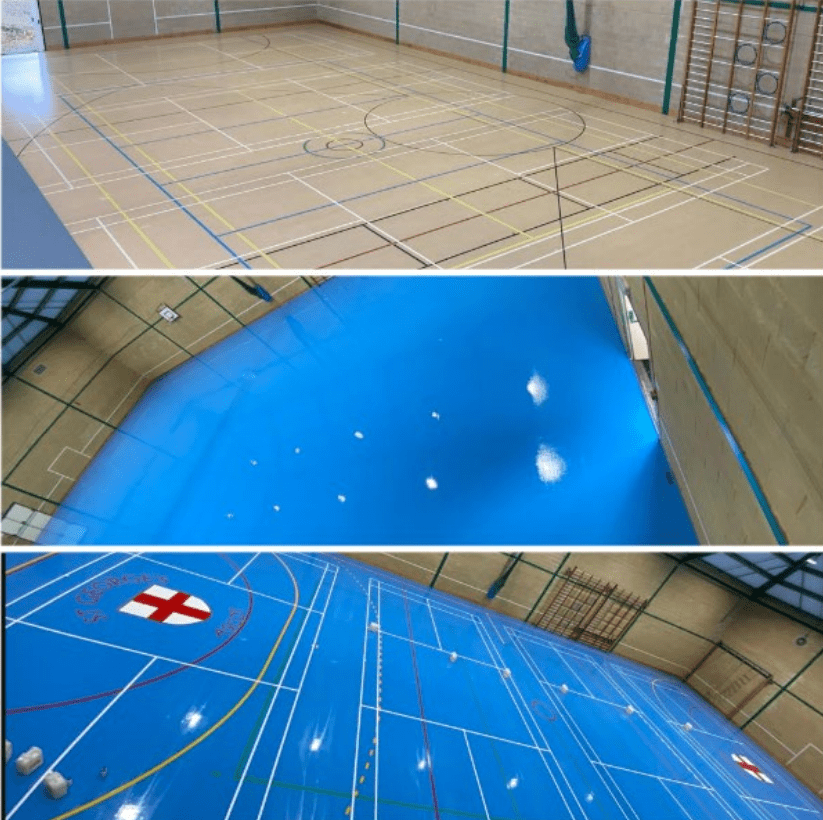
Granwood blocks are denser than timber and hold far less surface material, so the deep sanding you would give a hardwood floor is the wrong tool for the job. Our approach is different. We prepare the surface with careful abrasion, make good any damaged or loose blocks, then build up a modified epoxy coating system designed for exactly this type of floor.
The result is a tough, even surface with the colour back in it, finished with precise line markings for every sport the hall hosts. You can see the system in action on our epoxy modifications page, including work like the Granwood hall we restored at St George’s in Ascot.
A serviceable Granwood floor is worth keeping. Replacement means weeks of disruption, skips full of perfectly good material and a bill several times the size of a restoration. Restoring the floor you already own keeps the hall open longer, costs less and, done properly, gives you a surface that performs for many more years.
There are cases where replacement is the right call, usually where the sub-floor has failed or moisture has got in, and we will tell you honestly if yours is one of them. Our guides on Granwood versus modern polyurethane and refurbishment versus replacement are a good place to start if you are weighing it up.
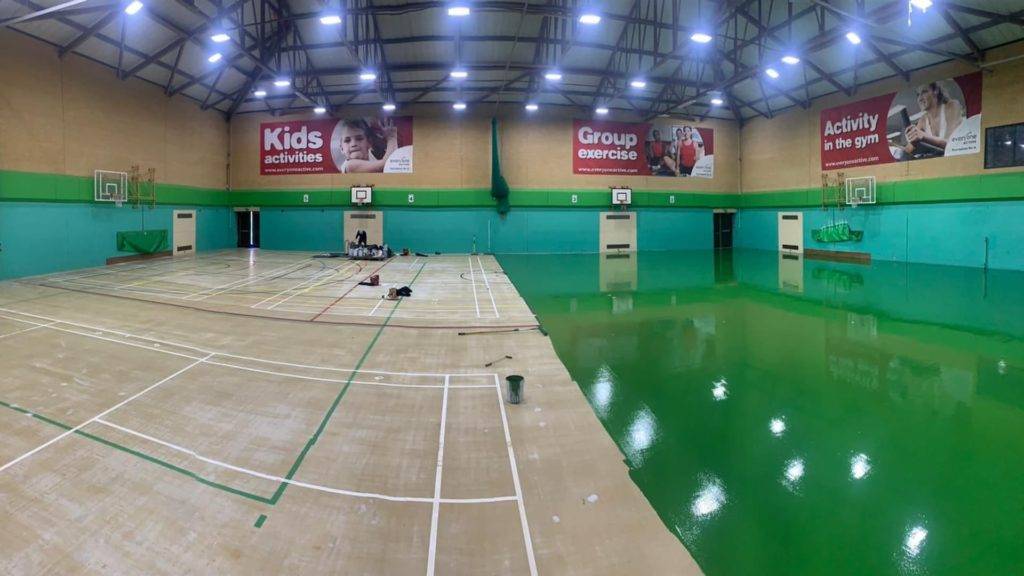
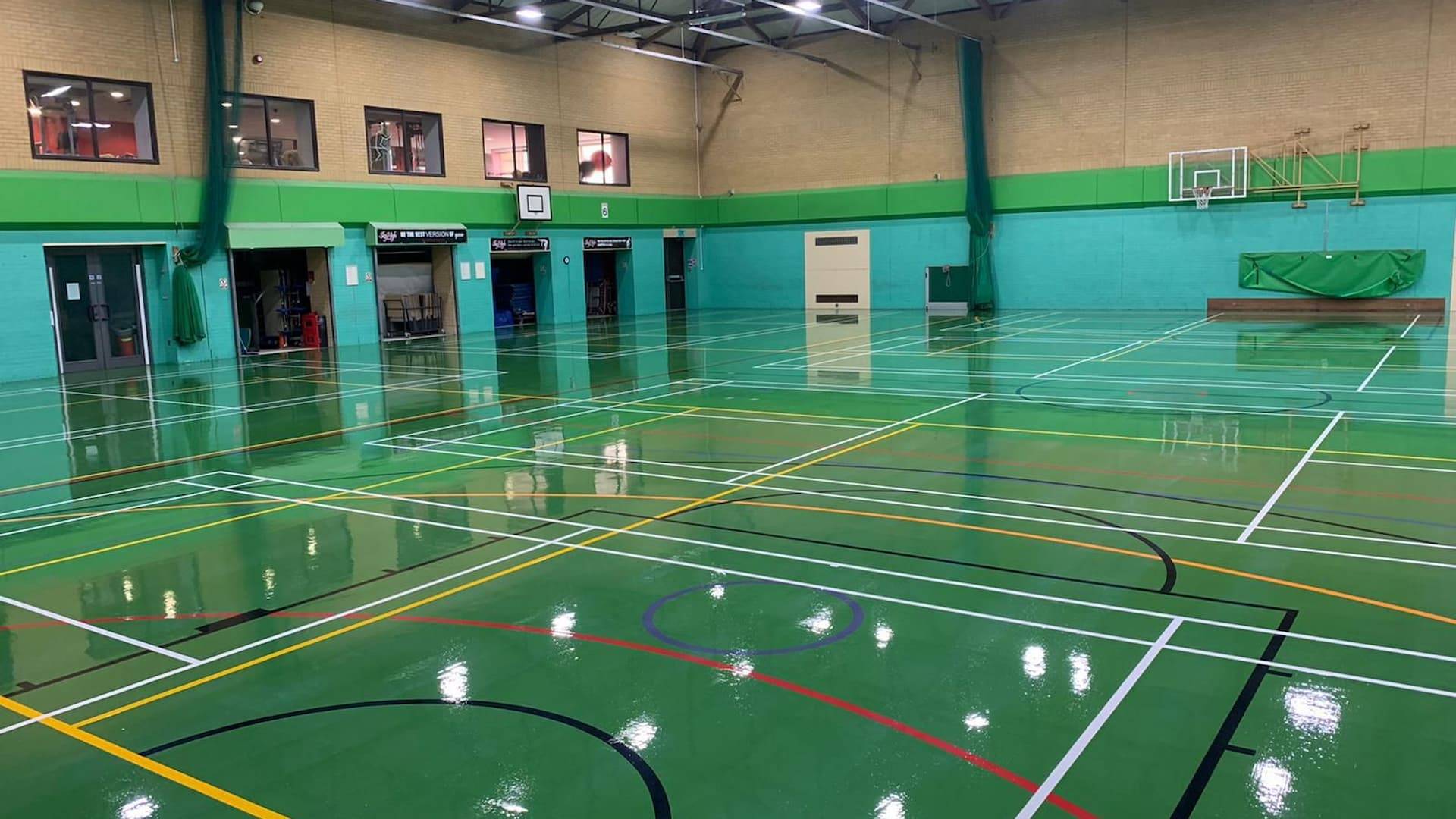
Most of the Granwood we restore lives in school halls, village halls and older leisure centres, which are exactly the buildings that can least afford to close. So we work the way you need us to: through half term, over the summer, at weekends or overnight. A typical hall is back in use within days, not weeks.
Once the floor is restored, a little care goes a long way. Our maintenance and aftercare service includes deep cleaning, recoating when the time comes, and pendulum slip testing so you can evidence a safe surface for insurers and governing bodies.
Not sure whether your floor is Granwood, timber or something else entirely? You are not alone, and it changes what the floor needs. Send us a couple of photos or book a free survey and we will identify the surface, tell you what condition it is in and set out your options with honest pricing. No obligation, no hard sell.
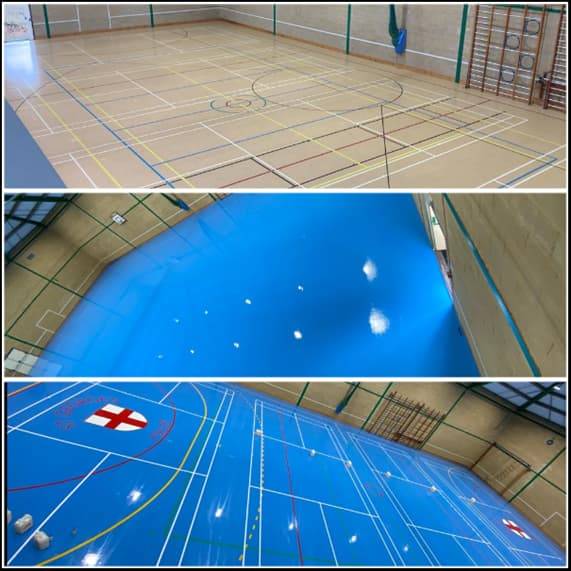
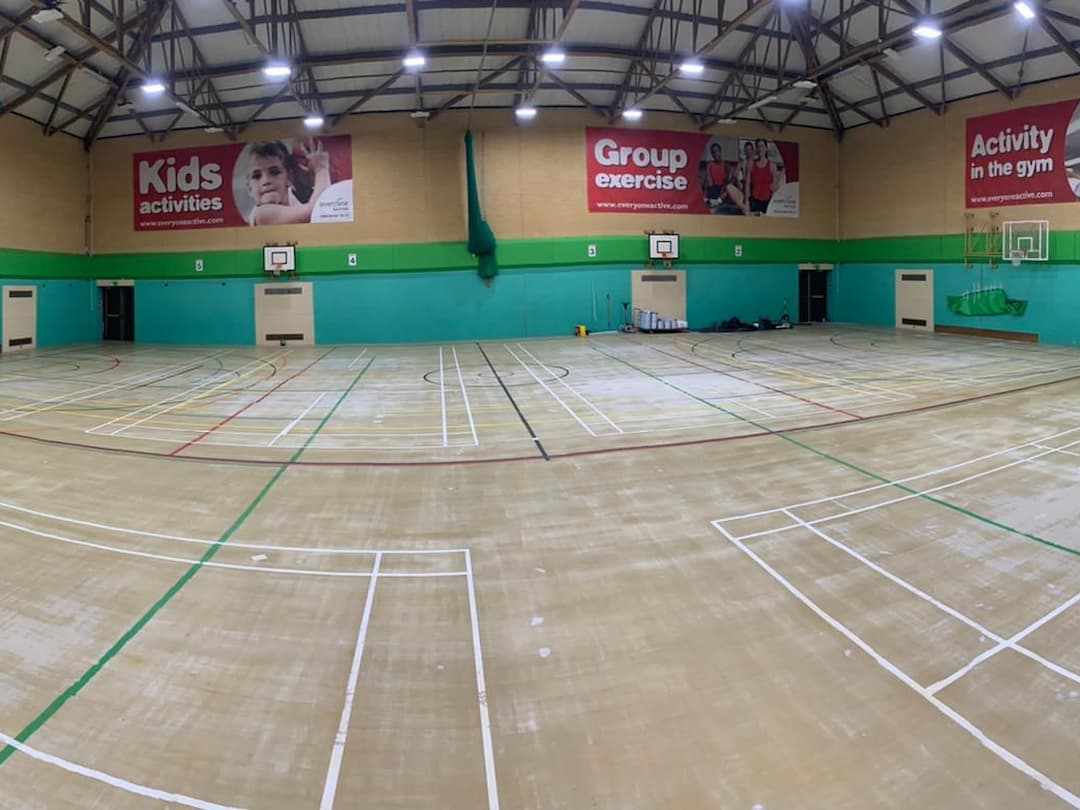
The Granwood floor in the sports hall at St George’s in Ascot had gone the way most Granwood eventually goes: sound underneath, but dull, patchy and slippery on top. We prepared the blocks carefully, applied our modified epoxy coating system and finished with new line markings.
The photographs show the transformation: colour and consistency back across the whole hall, on a floor many contractors would have condemned. It is the clearest demonstration we have of why restoration, done with the right system, beats replacement for a serviceable Granwood floor.
Granwood is not timber, and treating it as though it were is the single most common reason these floors get ruined.
It is a composite block, made from wood flour, cement and pigment, pressed into small blocks and laid in a bitumen bed. It was installed in thousands of British schools, church halls and drill halls from the nineteen thirties onwards, and a great many of those floors are still down and still perfectly serviceable, which tells you something about how well made they were.
Because it is a composite rather than a plank, Granwood does not have a wear layer in the way timber does. There is no tongue to sand down to and no grain to open up, but there is a finite amount of block, and aggressive sanding takes material that cannot be replaced. The blocks are also laid in bitumen, which softens with heat and can be disturbed by the wrong machinery.
The other thing to know is that some older bitumen adhesives contain asbestos. We treat every Granwood floor as suspect until it is confirmed otherwise, and we will not disturb a bed without knowing what is in it.
Restoring Granwood is a different process from refinishing timber, and it is a genuine specialism rather than a variation on the usual job.
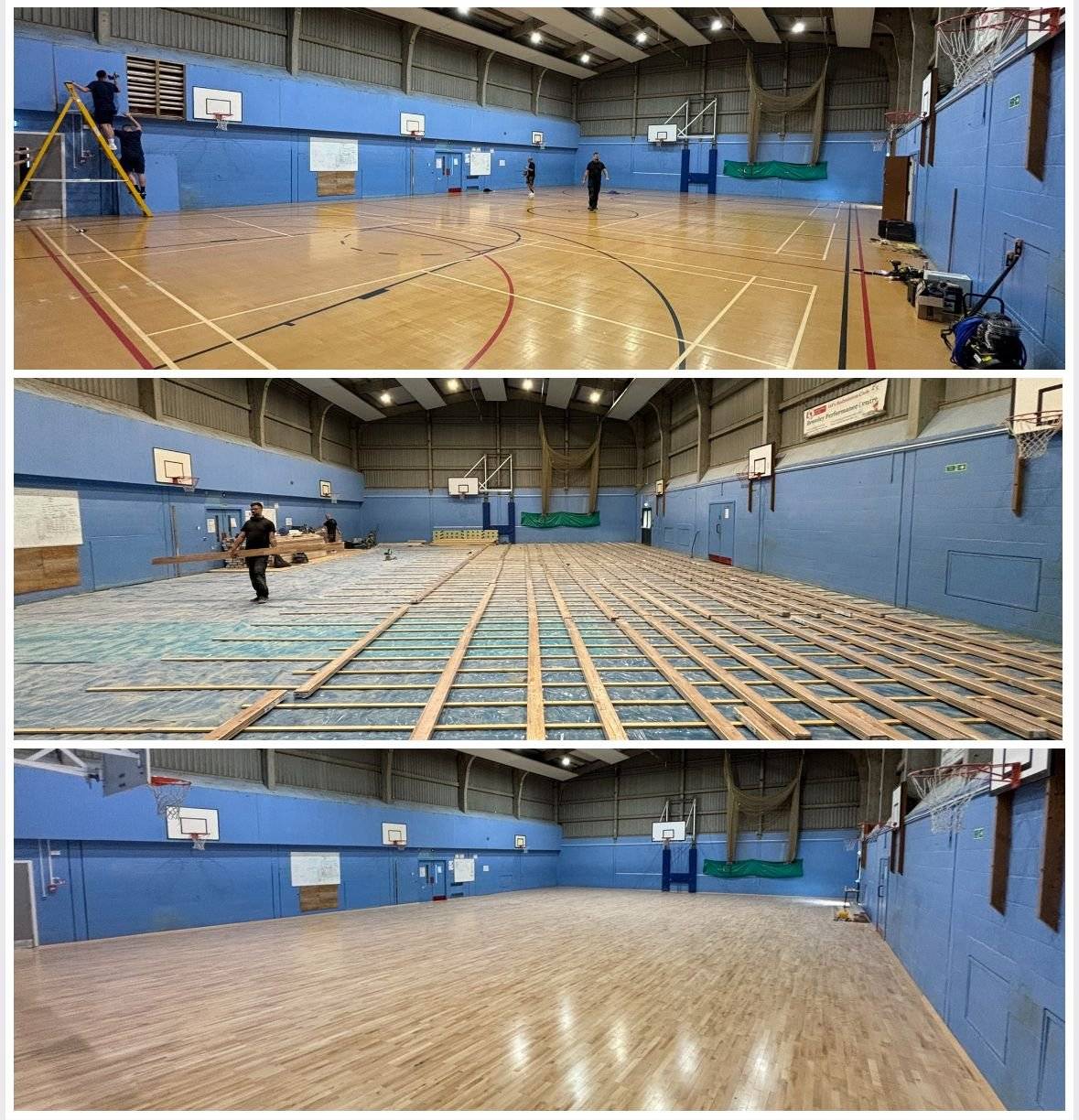
We begin by assessing the blocks themselves. Loose, lifting or missing blocks are lifted and rebedded, and where blocks have broken up we replace them. Sourcing matching Granwood is harder than it used to be, and part of what we bring is knowing where to get it and how to blend a repair so it does not read as a patch.
The surface is then prepared rather than sanded in the timber sense. We take off the old finish, polish build up and decades of accumulated sealer with the appropriate abrasive, working to open the surface enough to accept a new coating without cutting into the block any more than necessary. This is the stage where inexperience does permanent damage.
Where the floor is uneven, and many are after eighty years of movement, we deal with the high spots and the failed areas rather than attempting to grind the whole floor flat, which would simply consume the blocks.
The finish is where a Granwood restoration is won or lost, and it is not the same product we would put on a timber sports floor.
Granwood is porous and alkaline, and it sits on bitumen. Ordinary sports floor lacquers do not cope well with any of that. What works is a modified epoxy coating system designed for cementitious and composite substrates, built up in coats with the line markings applied within the system rather than on top of it.
The result is a floor that looks genuinely renewed, with a consistent colour, proper slip resistance and markings that are sealed in. It is also far more resistant to the water and cleaning chemicals that finish off a poorly coated Granwood floor.
Colour is worth thinking about. Original Granwood was often a red brown or a green, and while we can restore close to the original appearance, many schools take the opportunity to move to a lighter, more modern colour that lifts the whole hall. We bring samples and look at them under your own lighting before anything is ordered.
We can pendulum slip test the finished floor and provide the certificate for your records.
A Granwood restoration is priced by condition rather than by area alone, and it is worth understanding what moves the figure.
The proportion of blocks needing lifting, rebedding or replacing is the main variable. A floor with a handful of loose blocks around a doorway is straightforward. One where a historic leak has softened the bed across a quarter of the hall is a different job, and we will identify that at survey rather than discovering it midway.
Sourcing replacement block is the second factor. Matching Granwood is harder to obtain than it once was, and part of what we bring is knowing where to get it and how to blend a repair so it does not read as a patch.
The coating system is the third. The number of coats and the colour both affect the cost, and a full recolour of the hall costs a little more than restoring close to the original.
A typical school hall runs one to two weeks including cure time, and we routinely work through school holidays so the hall is back for the first day of term.
No, and this catches a lot of facilities out. Granwood blocks hold very little surface material, so aggressive sanding does permanent damage. The right approach is careful preparation followed by a specialist coating system built for composite block floors, which is exactly what our restoration service provides.
Yes. The coating system restores an even, consistent surface with the right level of grip, and we can carry out a pendulum slip resistance test on completion so you have documented evidence the floor meets safety expectations. Line markings for badminton, netball, basketball and more are applied as part of the job.
The blocks themselves do not, but the bitumen adhesive bed used under some older installations can. We treat every Granwood floor as suspect until testing confirms otherwise and we will not disturb a bed without knowing.
A modified epoxy system designed for composite and cementitious substrates, built up in coats with line markings applied within the system. Standard timber sports lacquers are not suitable.
Both. We can restore close to the original red brown or green, or move the hall to a lighter modern colour. We bring samples and view them under your own lighting first.
Substantially, in most cases. Replacement also means removing a bitumen bed that may need specialist handling, which adds cost that is not always obvious in a comparison quote.
A typical school hall takes one to two weeks depending on how much block repair is needed and how many coats the system requires. We routinely work through school holidays.
Speak to the team that schools and leisure centres across the UK trust with their Granwood floors. Call 01823 674562 or send us a message with a photo of your hall, and we will take it from there.