
Flooring Professionals To The Leisure Industry
Courtship Flooring is a commercial sports flooring contractor working in Greater Manchester and across the UK. A high concentration of universities, leisure trusts and clubs makes this a region where performance standards matter.
Nearly four decades of specialist work sits behind every project: installation, refurbishment, sanding and sealing, court marking, slip testing and planned maintenance, all delivered in-house. Our clients are institutions and operators rather than households, and private homes are handled by Ryan’s Restorations.
Greater Manchester is one of many areas covered by our national sports hall flooring service, with the same crews and the same standards wherever we work.
Overnight/Weekend Installations
Professional Cleaning Demonstrations
Squash Court Maintenance
Recommended Cleaning Products
Professional Pendulum Slip Testing
Deep Clean & Reseal Service
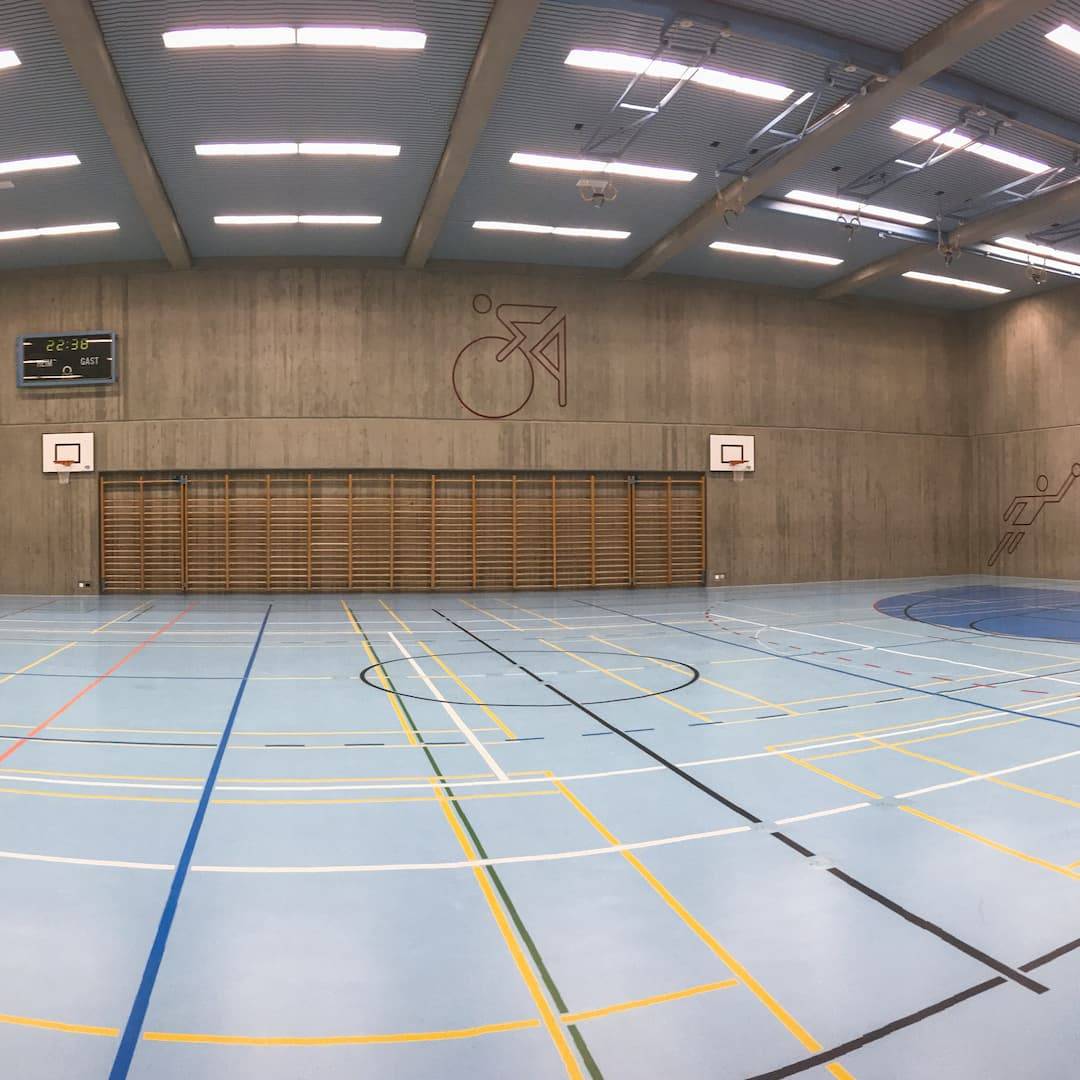
Shock absorption is the proportion of impact energy the floor takes rather than the player. Landings, sprints and stops all generate force that has to go somewhere, and a compliant floor absorbs a meaningful share before it reaches ankles, knees and hips.
BS EN 14904 defines how it is measured and what indoor sports floors should achieve. It matters most for the youngest and oldest users, who are least able to absorb that load themselves.
Floors deflect in different ways. An area-elastic system spreads deflection across a wide zone, which is what a basketball player experiences as a consistent, forgiving surface. A point-elastic system deflects locally beneath the foot, typical of synthetic constructions.
Combined and mixed-elastic systems attempt to capture both. Which is right depends on the sports involved and the level of play, and we will explain the practical difference rather than the marketing one.
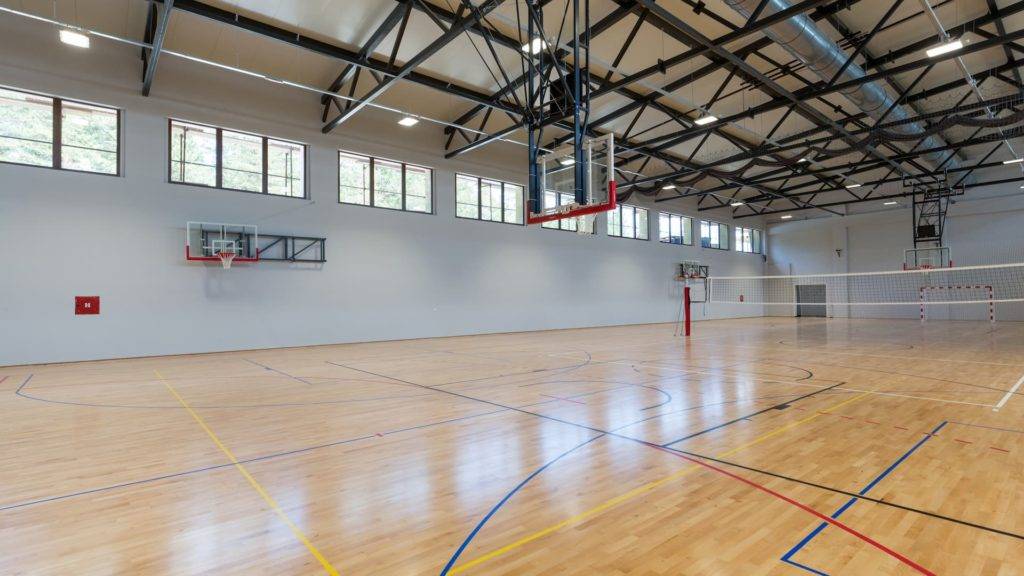
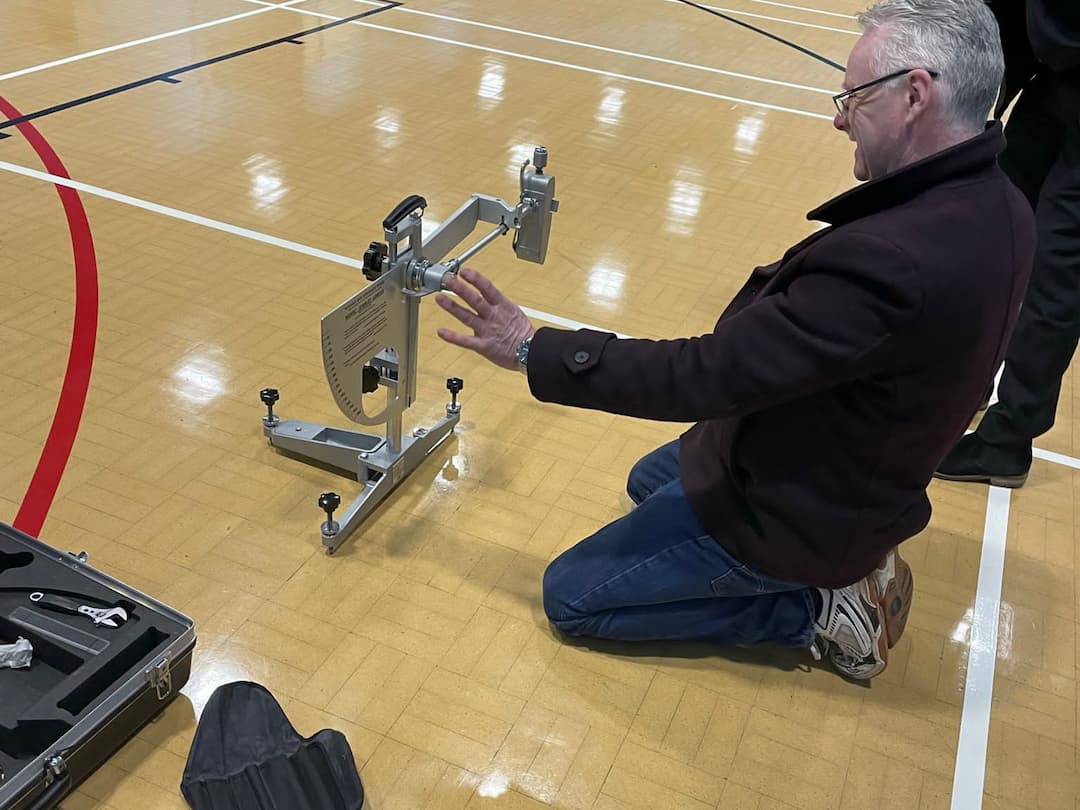
Specification is a promise; testing is evidence. On completion we can arrange performance testing against BS EN 14904 alongside pendulum slip testing to BS 7976-2, producing documentation you can hold on file.
For facilities hosting competitive fixtures or answering to a governing body, that paperwork converts an awkward enquiry into a straightforward one.
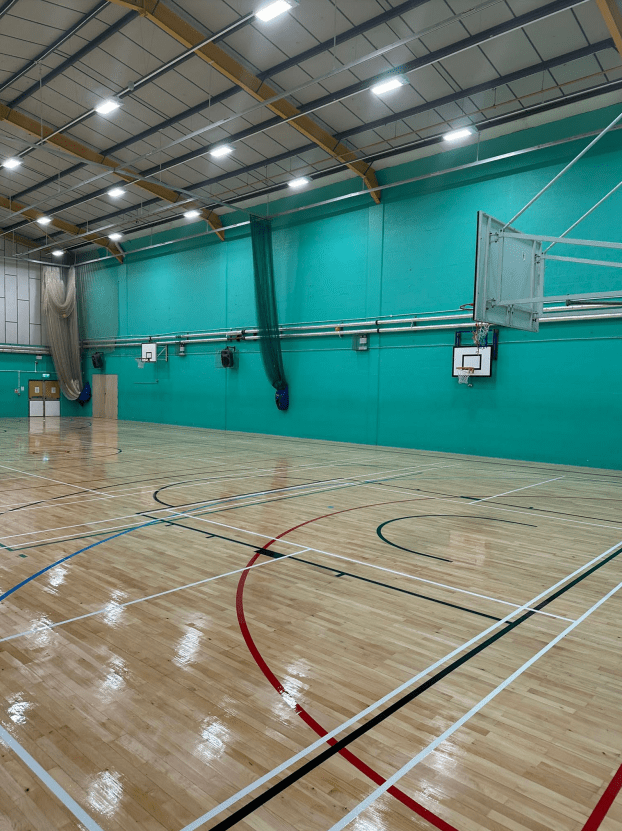
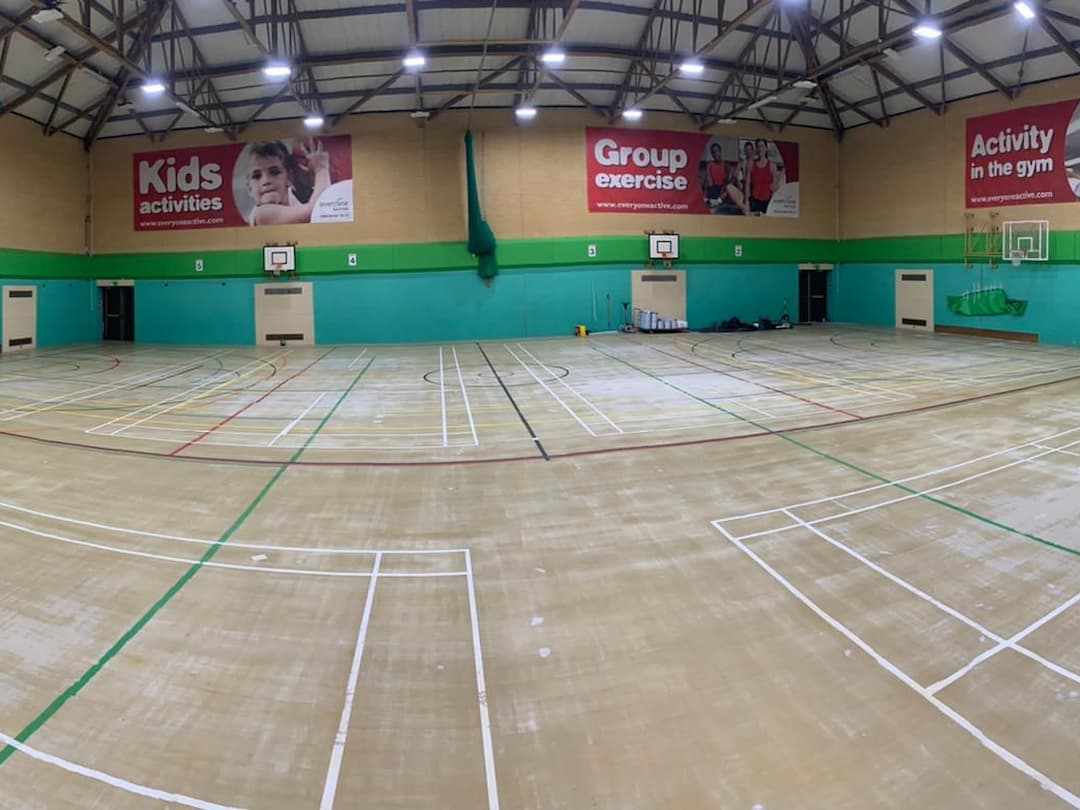
The main sports hall at Liskeard Leisure Centre had taken years of public sessions, club blocks and league nights. We delivered a complete programme of sanding, re-lining and resealing, returning the hall to service looking like a new installation.
It is a fair illustration of how we handle leisure work: one tight programme, agreed dates, and a centre back in action on schedule.
~ Matthew Evans
An outstanding company to deal with and they couldn’t have been better to work with. St George’s Ascot now has a stunning new sports hall floor and we are delighted. From quote, support, delivery and after sales, the Team has been brilliant. Thank you. 
~ James Anderson







The fine dust from a sanding machine will travel through a whole building given the chance, and Greater Manchester has a great many Victorian school halls with corridors that carry it well. Every sander we run, including the edging machines, is coupled to sealed extraction.
The hall is screened and doorways taped before the first pass. We walk the building with your site team to find where the air handling links the hall to teaching rooms, kitchens or a pool, and those routes are isolated for the duration.
Where a university or a leisure trust keeps the building open around us, the corridors stay clean and the fire exits stay clear. Each shift ends with the area vacuumed down, so nothing is walked into the rest of the site. It is standard on every job, not a priced extra.

For a leisure trust, floor work is a revenue question before it is a maintenance one. Every night the hall is closed is a block of court bookings and a class that does not run, and members who are turned away do not always return.
So we programme to the bookings sheet. The sanding goes into the emptiest hours, the seal goes on last so the surface is walkable by opening, and heavy equipment returns once the finish has hardened. A recoat and reline can often be done across two quiet nights.
Greater Manchester has several large trusts running many sites, and for those a rolling programme across the estate is far better value than reacting site by site. We also supply the condition and slip test paperwork that a management contract usually requires.
A squash court floor is not a small sports hall. Players plant and turn hard at the T, and a standard satin lacquer polishes to glass under that load inside a season. Courts are sealed with a matt, high grip finish made for the sport, applied thin so it does not fill the board joints.
We check the tin, the wall junction and the board fixings at the same visit, because a court board that has lifted is dangerous and a loose one is heard on every rally. Boards are conventionally left unsealed underneath so they can breathe.
Club and university courts in the region run hard through the winter leagues, so the work goes into the summer lull and two courts can be turned round back to back in a week.

A sports hall floor is full of holes on purpose. Net post sockets for volleyball and badminton, anchor points for gymnastics equipment, and floor boxes for power and data all interrupt the surface, and each one is a place where a finish can fail or a foot can catch.
During a refinish we lift every cover, clear out the debris that has collected beneath it and reset the fitting flush to the new floor level. Sealing round a socket and leaving a raised ring is a trip hazard and a mark of a rushed job.
On a new installation the positions are coordinated with the court setting out so a socket sits on the line it serves, and with the sprung structure so the fixing goes through a batten and not through fresh air.
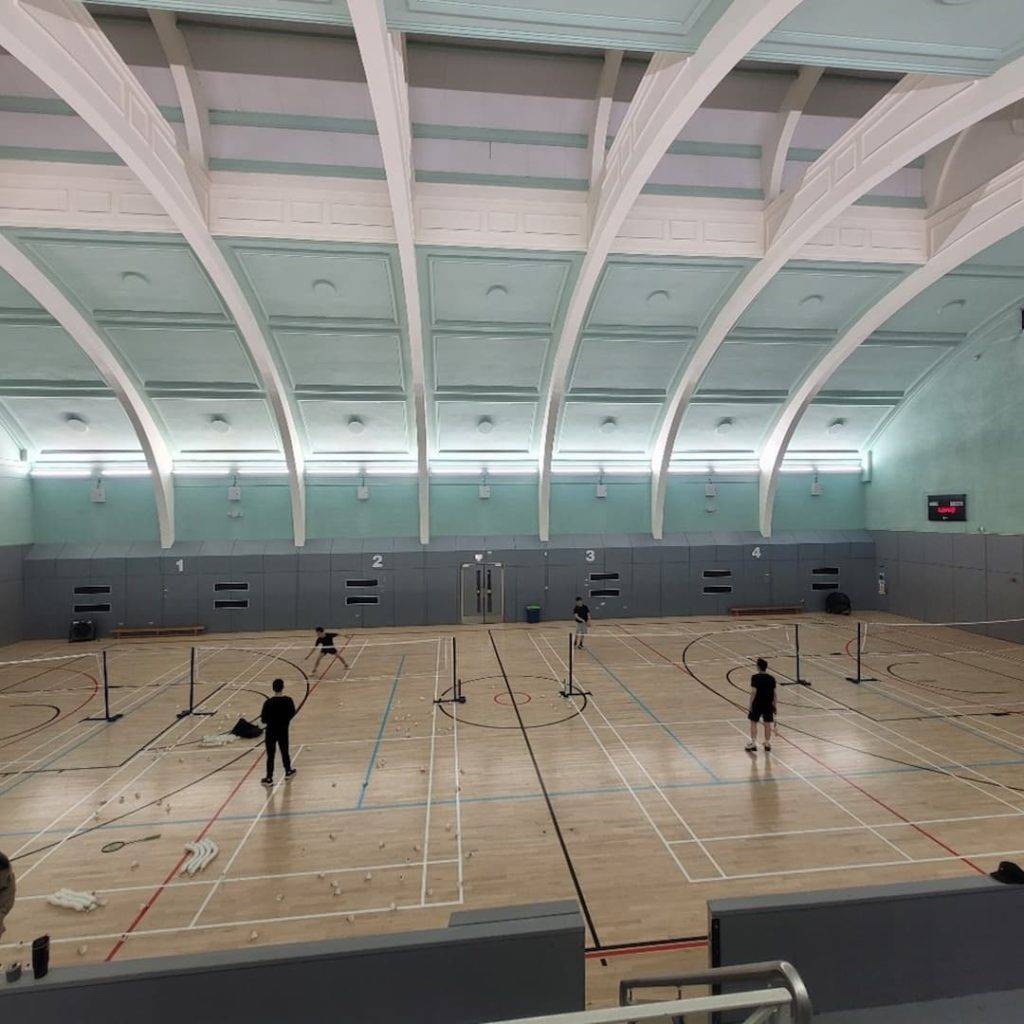
Greater Manchester gives us one of the widest ranges of building stock we work in, from Victorian school halls to modern university sports centres.
University and college sport is a significant part of it, with the year round pressure on the timetable that every campus has. Summer conference and external use fills what would otherwise be a shutdown, so the working windows are narrow, fixed and planned well ahead.
Academy and school halls are the largest group by number. A great many are from the nineteen sixties and seventies with sprung timber floors that are structurally sound but have gone too long between refinishes. Those are usually excellent restoration candidates, and a survey often finds far more life left than the school expects.
Leisure centres and community sports facilities follow, where the priority is keeping the doors open and most work happens overnight.
Granwood turns up regularly in the older halls, and it needs a specialist approach rather than timber sanding. We have restored Granwood floors that others had written off entirely.
The building stock here spans well over a century, and the problems reflect that range.
In the Victorian and Edwardian school halls, the recurring find is a floor that has been coated repeatedly without ever being taken back. Those layers eventually go cloudy, peel at the edges and lift in sheets, and the answer is to strip properly rather than add another coat.
In the post war stock, dead spots are the common complaint. A sprung floor that has lost its response in patches has a failed pad or batten underneath, and refinishing the surface will not change how it feels. We lift the boards locally and replace the components.
Granwood appears regularly across the region and is frequently condemned when it should not be. It needs specialist preparation and a modified epoxy coating rather than timber sanding, and restoration costs a fraction of replacement.
Modern facilities mostly want catching on a maintenance cycle rather than rescuing.
When a hall carries five or six sports the markings have to be designed, not just added. The sport played most gets the strongest colour and the full line weight, so a player looking down at speed finds it first. The others sit back behind it.
Sports that share a footprint are kept apart by colour, and we lay sample lines under the hall lighting before committing, because a blue and a green that look distinct in daylight can merge under LED fittings. Line weight does the rest of the work, with the lead sport full width and the rest narrower.
The first question we ask is what is actually played now. Most halls carry lines for a sport nobody has taught in years, and removing those while the floor is open costs nothing and does more for clarity than any colour choice.
Light foot traffic after roughly twenty four hours and full use with equipment after seventy two hours or more, longer in winter. We put the exact times for the product used in writing and ask for the doors to stay locked until then, because footprints in curing seal do not polish out.
Dust mop every day to lift grit, damp mop with a neutral cleaner intended for sealed sports timber, and keep polish, wax and anything promising shine away from the floor. They build up, kill grip and have to be stripped. A written one page routine comes with every job.
That is when most of our school work happens. A full sand and seal fits inside a summer break with cure time in hand, while recoats and relining go into half terms. Summer dates are taken by spring, so early conversations get the choice of weeks.
Only when it is run badly. The boards must be specified for heating, the surface temperature kept within limits and the system brought up slowly each autumn. Run hot from a cold start it dries the timber, opens gaps and can cup boards beyond repair.
Method statements and risk assessments specific to your hall, COSHH sheets for every product, copies of public and employers liability insurance, and DBS details for the crew on school sites. At handover you receive product data, cure times in writing and the aftercare routine for your records.
Yes. Reports set out condition, photographs, moisture readings, remaining wear layer, recommended work and firm costs, which is the evidence Condition Improvement Fund and sports funding bids need. We can add a specification where the application calls for one.
Lay a protective covering before the desks arrive. Steel desk and chair legs score a seal faster than any sport, and a hall under exam furniture for a month without cover can need a recoat years early. The covering rolls up and stores between sittings.
Always. Readings are taken in the boards and the slab at several points across the hall, because a seal over a damp floor fails whatever the workmanship. If readings are high we trace the source and price the remedy before quoting any finish.
Book a free survey of your sports floor in Greater Manchester. We measure performance, condition and wear layer, then give you a fixed written price with the options priced separately so you can choose on evidence. Call 01823 674562 or send us a message.