
Flooring Professionals To The Leisure Industry
Courtship Flooring is a commercial sports flooring contractor working in Herefordshire and across the UK. We work throughout the county on school halls, village facilities and sports clubs, much of it restoration rather than replacement.
We are specialists rather than generalists, which after nearly forty years means a depth of knowledge on sports and commercial timber floors that a general contractor cannot match. Every stage is completed in-house. We do not quote for domestic work; Ryan’s Restorations handles that side.
If you are comparing contractors, our sports hall flooring overview explains how we approach installation, refurbishment and aftercare in Herefordshire and nationwide.
Overnight/Weekend Installations
Professional Cleaning Demonstrations
Squash Court Maintenance
Recommended Cleaning Products
Professional Pendulum Slip Testing
Deep Clean & Reseal Service

Most floors presented to us as replacement candidates do not need replacing. Timber is the only sports surface that can be renewed repeatedly, and a full sand and seal costs a fraction of a new installation while taking days rather than weeks.
The honest test is measurable: depth remaining above the tongue, sub-floor stability and moisture readings. Where those are satisfactory, restoration wins on cost, disruption and waste every time.
A poorly matched repair is visible for the life of the floor. Species, grade, grain direction and board width all have to correspond, and the repair has to be levelled precisely into the surrounding surface before sanding.
Because we carry out repairs in-house rather than subcontracting them, we control that matching. Once the whole floor is sanded and sealed, a properly executed repair disappears entirely.
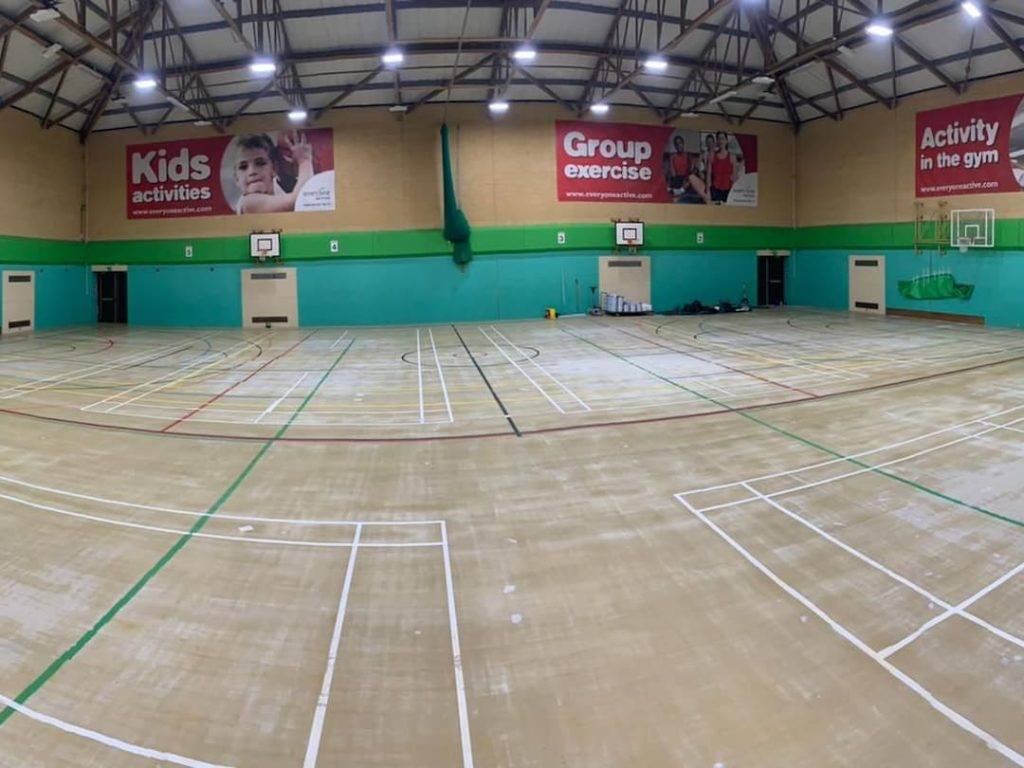
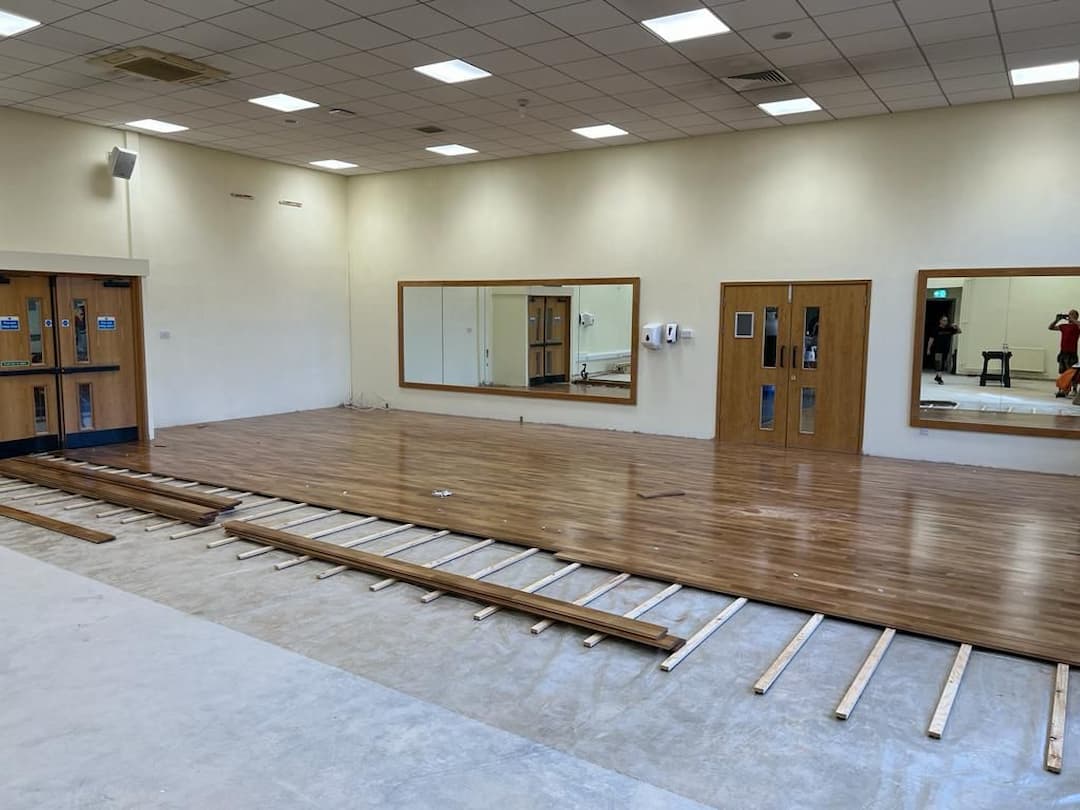
Every timber floor eventually reaches the end. The indicators are specific: insufficient depth above the tongue for another sand, widespread fixing failure, sub-floor movement that cannot be economically corrected, or moisture damage beyond localised repair.
We will tell you when a floor has reached that point, with the measurements to support it. Recommending restoration on a floor that cannot support it would simply be selling you a failure.
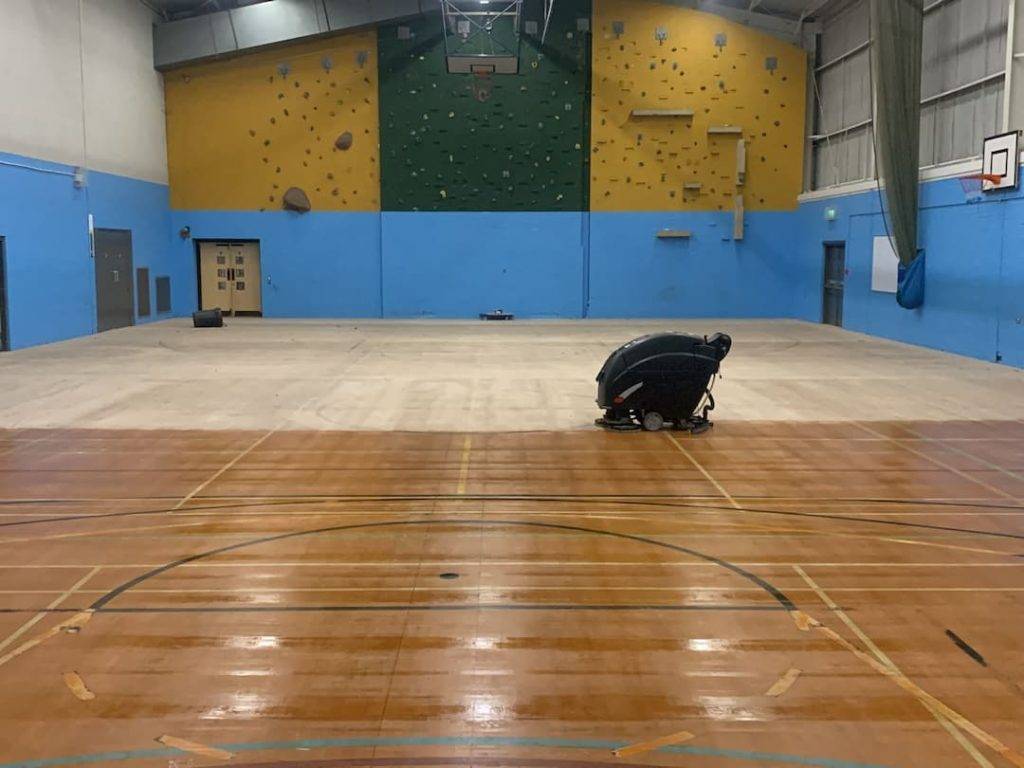
The sports hall floor at De Wint School had reached the end of its seal: grey through the middle, markings closer to guesswork than instruction, and a surface that felt slippery however often it was cleaned.
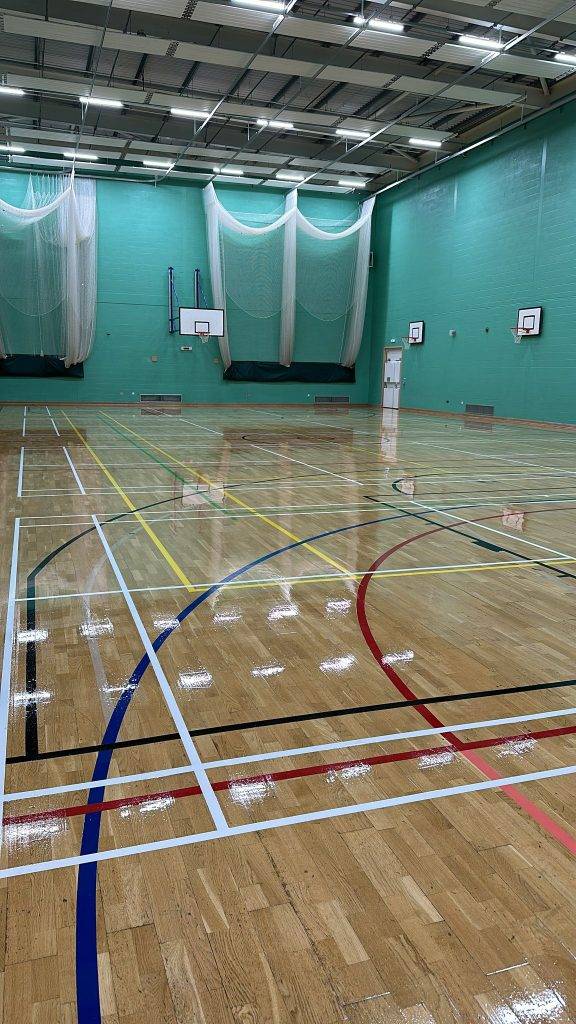
We sanded it back to clean timber, repaired what needed repairing, resealed and re-marked. The hall reopened with a deep, glossy finish that reads as newly installed, delivered inside a planned holiday window.
~ Matthew Evans
An outstanding company to deal with and they couldn’t have been better to work with. St George’s Ascot now has a stunning new sports hall floor and we are delighted. From quote, support, delivery and after sales, the Team has been brilliant. Thank you. 
~ James Anderson







A hall that carries five sports has to be read at speed by a player looking down for a line, and that only works when the markings are layered on purpose. The sport played most gets the strongest colour and full line weight. The rest sit back behind it.
Sports with similar footprints are separated by colour so a badminton sideline is never confused with a volleyball one. We check the palette under your own lighting, because colours that separate in daylight can merge under LED fittings. Netball, basketball and badminton are usually the three that need the clearest separation.
Before setting out we ask what is actually taught and hired for. Many Herefordshire school halls carry lines for sports nobody has played in years, and taking those off during a refinish costs nothing and makes the hall read far more clearly.

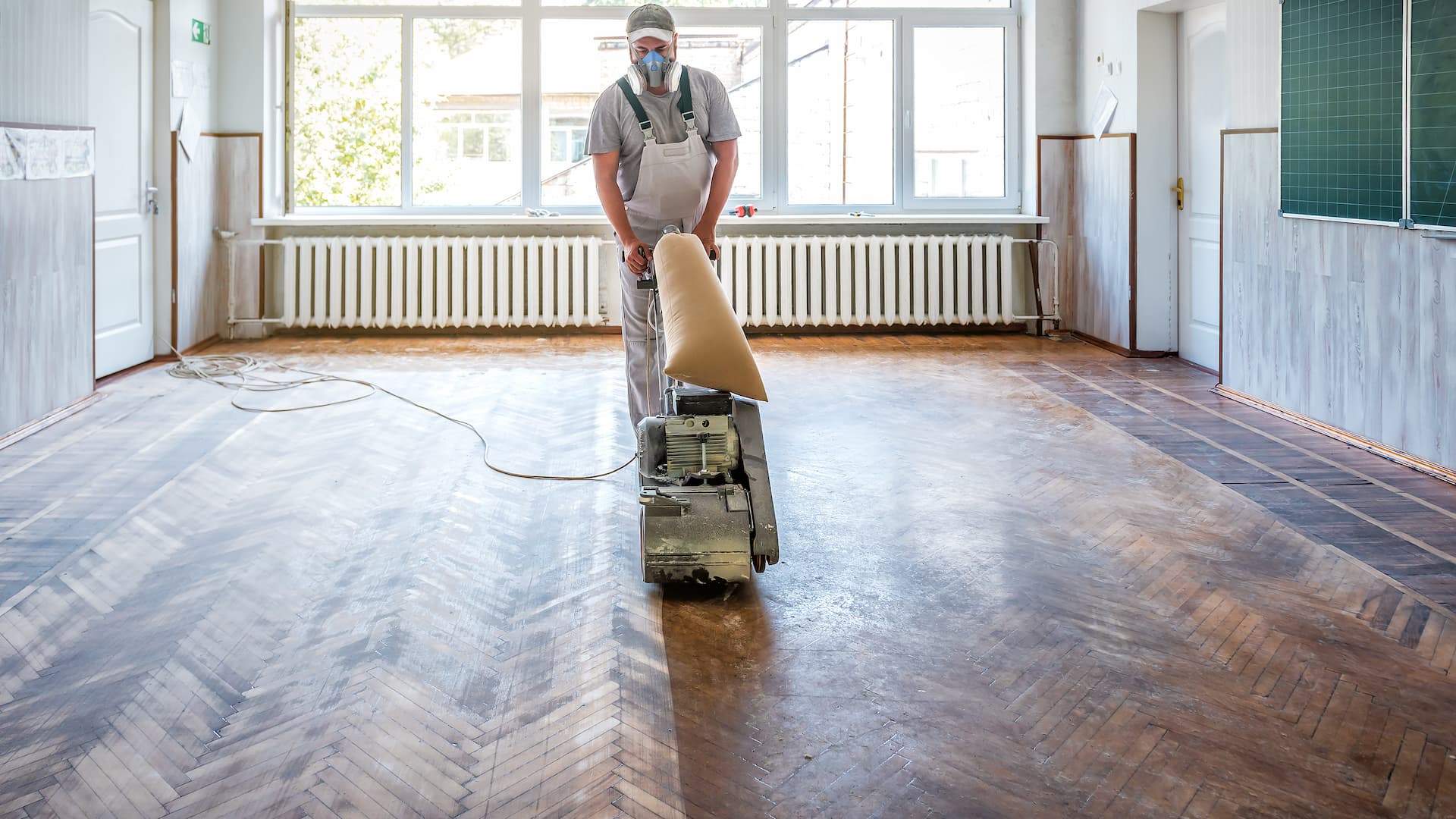
Timber dust from a sanding machine is fine enough to find its way through a whole building if it is allowed to. Every sander we run, down to the edging machines, is coupled to sealed extraction so it is captured as it is made.
The hall is screened, doorways are taped and the ventilation routes are agreed with your caretaker or site manager before the first machine starts. Shared air handling between a hall and a dining room is the usual escape route.
In a rural school or a village hall where the building stays in use around us, the corridor stays clean and the fire exits stay open. We vacuum the area down at the end of every shift. That is the standard on every job, not an extra to be priced.
A sports floor lasts longest when it is never allowed to fail. The cycle is simple. A machine deep clean each year, a screen and recoat every two to three years while the seal is still intact, and a full sand only when the lacquer has worn through, roughly every ten years.
Stick to that and a solid timber floor runs for decades, because each recoat removes no timber while each full sand spends some permanently. A hall that waits until it looks bad needs the big machines back twice as often and loses wear layer it can never get back.
For Herefordshire schools and clubs we set the dates into a written plan with a condition check each year, so the floor appears in the budget on a known year and never as an emergency.
Public buildings need documentation, and we send it before we are asked. You receive method statements and risk assessments written for your hall, not a generic template, along with COSHH data sheets for every product coming through the door.
Copies of our public liability and employers liability insurance go across with the quotation. For a school we provide DBS details for the team attending and follow whatever signing in and safeguarding routine the site runs. On a main contractor site we attend inductions and work to the site rules.
At handover you get the product data sheets, cure times in writing, the aftercare routine and the slip test certificate where one was ordered. For a small Herefordshire trust or hall committee that file is often the only complete record the building has of its floor.
Herefordshire brings us a rural mix, weighted towards school sports halls, community buildings and club facilities rather than large leisure estates.
School halls are the largest group, and many of them serve as the only significant indoor sports space for miles, which means they take curriculum sport, club training and community lettings on the same floor. That volume of mixed use wears a finish faster than sport alone, and it is why these halls often arrive overdue.
Village and church halls are the second group and the county has a great many. These are almost always old timber floors with plenty of depth left, buried under decades of polish and scored by chair and table legs. Restoration transforms them for a modest sum, and we quote by element so a committee can phase the work across two years if the funds require.
Moisture readings matter in older rural buildings with solid floors and limited damp proofing, and we take them as a matter of course rather than a formality. Sealing over a floor still giving off moisture guarantees the finish will fail.
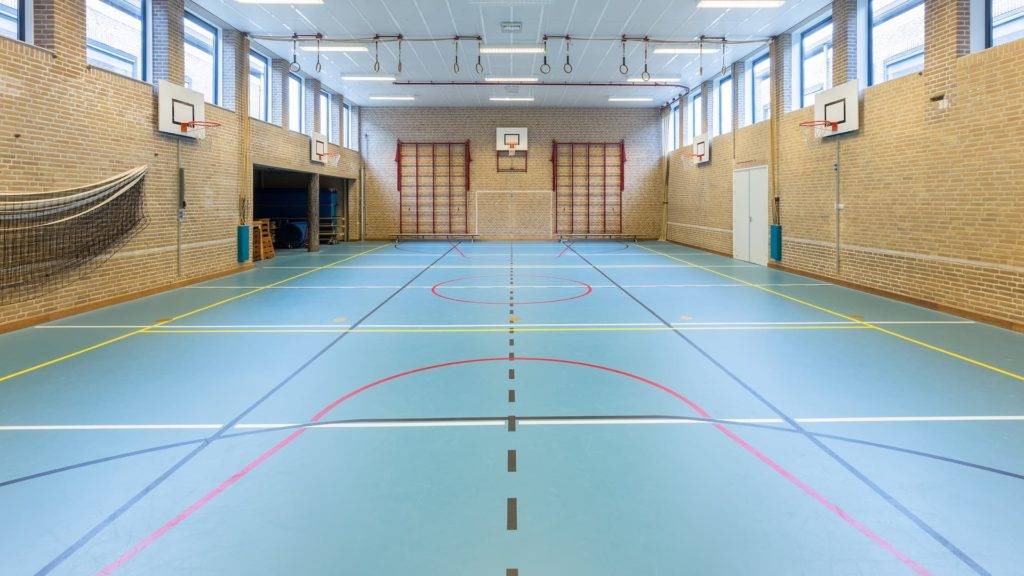
Herefordshire enquiries reflect a rural building stock where each hall works harder than its timetable suggests.
The most common issue is a school hall that is also the community sports facility, taking curriculum use, club training and evening lettings on the same floor. That volume wears a finish faster than anyone budgets for, and those halls frequently arrive overdue with the seal gone in the traffic lanes.
The second is village and church halls where decades of polish sit over a perfectly good timber floor. Removing that build up chemically before sanding is essential, and it is the step most often omitted from cheaper quotations.
The third is moisture. Older rural buildings with solid floors and limited damp proofing need proper readings before anything is sealed, because a finish applied over a damp floor will fail regardless of how well it is applied.
We quote by element so committees can phase the work when the funds require it.
Light foot traffic after about twenty four hours and full use, with goals and mats back, after seventy two hours or more. A cold, damp hall in winter needs longer. We confirm the exact figures for the system used and ask that the door stays locked until then.
Yes, overnight and over quiet weekends. The noisy sanding falls in the emptiest hours and the seal goes on last so the surface is walkable by opening time. We quote a daytime closure alongside so the manager can weigh lost bookings against the extra labour.
We do. A pendulum test to BS 7976-2 is carried out wet and dry at several points across the hall, and you receive a dated certificate. Insurers and governors ask for it after a fall, and a yearly repeat shows whether the surface is holding up.
Almost always, if the blocks are sound. Granwood is a composite of wood flour and cement in a bitumen bed and is ruined by timber sanding, but rebedded, repaired and coated with a modified epoxy system it gives many more years. Older bitumen is tested for asbestos first.
Yes, when the timber is specified for it and the system is run with a limited surface temperature and a gradual warm up each season. Run too hot or switched on suddenly it dries the boards, opens gaps and can cup them, and refinishing will not fix that.
Yes. During a refinish we lift the socket covers, clear the debris that has collected in them and reset them flush to the new floor level. Sealing over a socket and leaving a raised ring is a trip hazard and a sign of a rushed job.
One to two weeks for a typical hall from first machine to final coat, depending on size, board repairs and the number of coats, plus the cure period. You get a day by day programme with a fixed reopening date before we start.
A failed pad, a split batten or a cracked cradle beneath the boards. It is structural, so sanding the surface does nothing for it. We lift the boards locally, replace the failed component and refit the original timber so the repair vanishes under the new finish.
Book a free survey of your hall floor in Herefordshire. We measure the wear layer, take moisture readings and tell you plainly whether the floor should be restored, repaired or left alone, with a fixed price for each. Call 01823 674562 or send us a message.