
Flooring Professionals To The Leisure Industry
Courtship Flooring is a commercial sports flooring contractor working in Lanarkshire and across the UK. We work across the area with schools, councils and leisure operators on both refurbishment and installation.
We are specialists rather than generalists, which after nearly forty years means a depth of knowledge on sports and commercial timber floors that a general contractor cannot match. Every stage is completed in-house. We do not quote for domestic work; Ryan’s Restorations handles that side.
If you are comparing contractors, our sports hall flooring overview explains how we approach installation, refurbishment and aftercare in Lanarkshire and nationwide.
Overnight/Weekend Installations
Professional Cleaning Demonstrations
Squash Court Maintenance
Recommended Cleaning Products
Professional Pendulum Slip Testing
Deep Clean & Reseal Service

Public sector work carries specific requirements, and we treat them as routine: method statements, risk assessments, insurance documentation, CDM compliance where applicable, and the safeguarding considerations that apply on school and community sites.
Quotations are itemised so they can be compared properly and evidenced internally, and each project closes with a documented handover for the estates file.
Authorities managing multiple buildings frequently find each floor has been treated differently over the years by whoever was available, leaving an estate with no common standard and no reliable records.
Surveying the portfolio together establishes a baseline, and a single specification applied across it produces consistent quality, predictable budgeting and one set of records rather than a dozen.
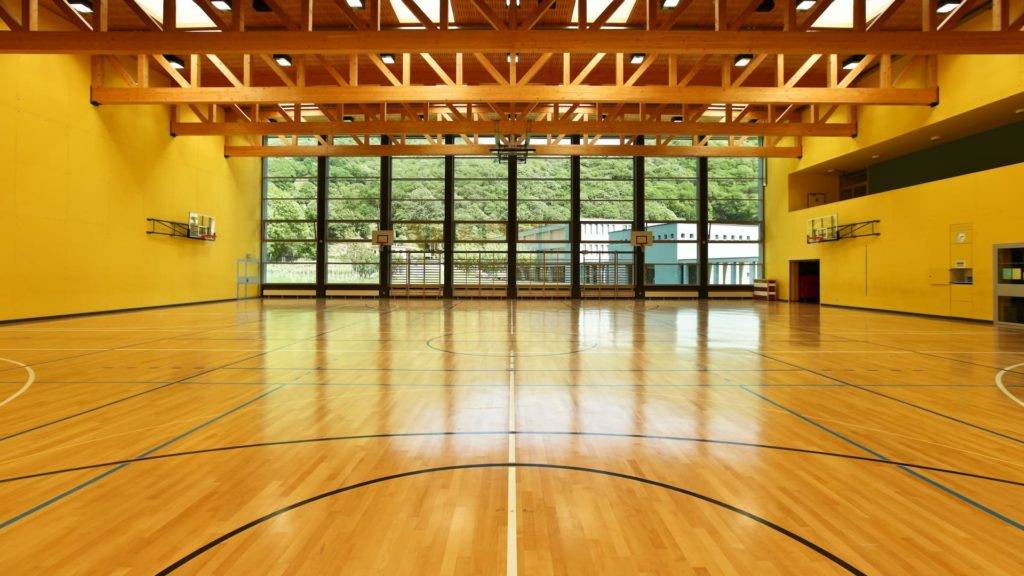
Few authorities can fund an entire portfolio in one year, so the useful output of a survey is a ranked programme rather than a single figure.
Our reports separate what is deteriorating from what is merely unattractive, with firm costs against each, so spending can be phased deliberately and defended internally.
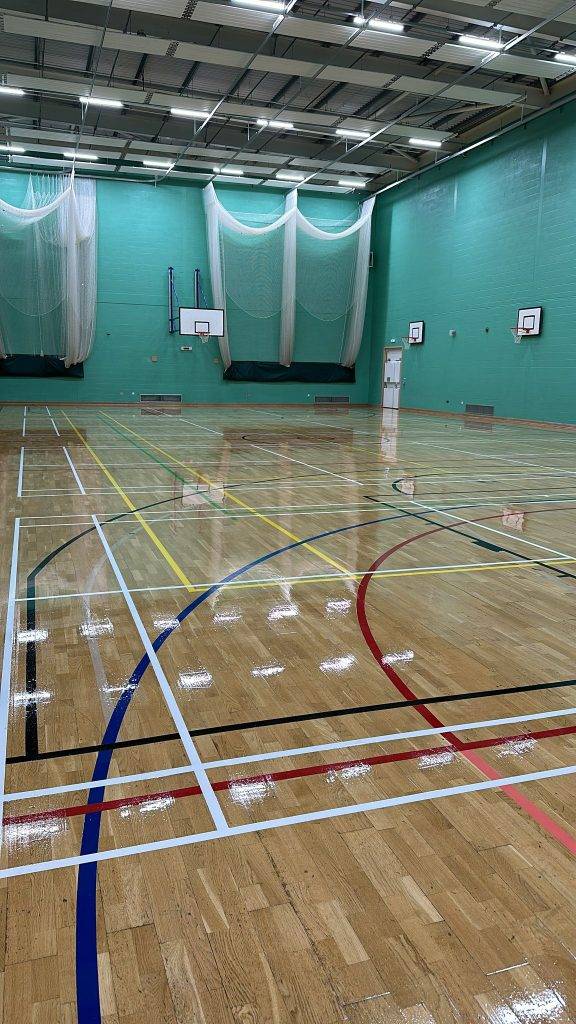
The sports hall floor at De Wint School had reached the end of its seal: grey through the middle, markings closer to guesswork than instruction, and a surface that felt slippery however often it was cleaned.
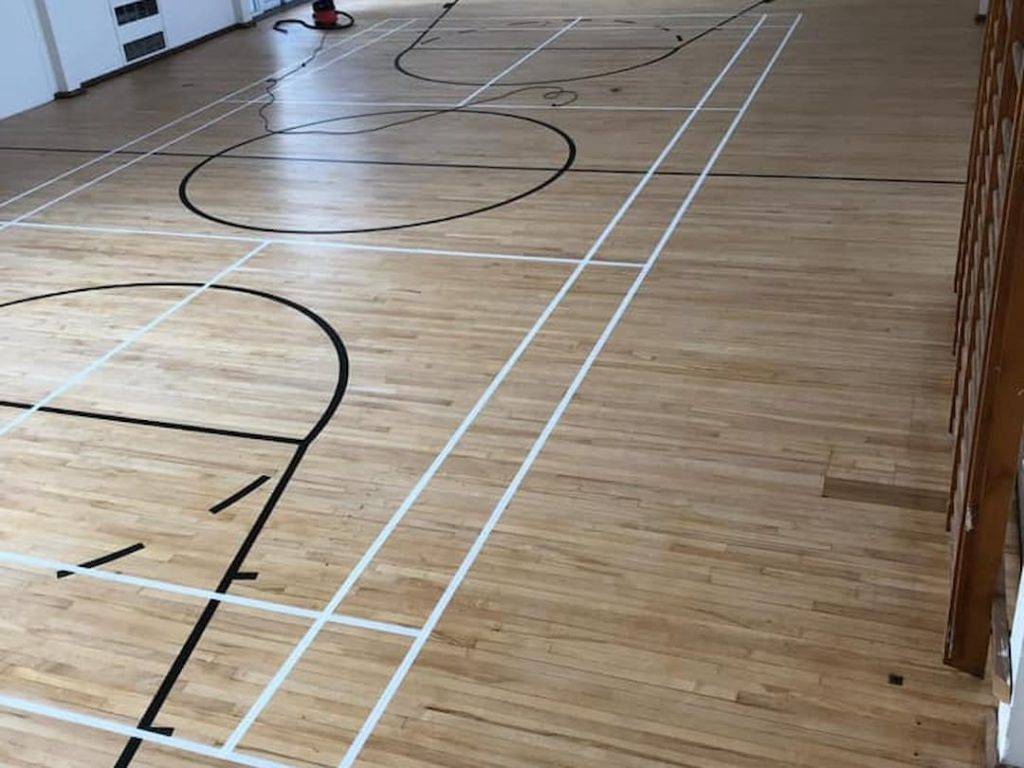
We sanded it back to clean timber, repaired what needed repairing, resealed and re-marked. The hall reopened with a deep, glossy finish that reads as newly installed, delivered inside a planned holiday window.
~ Matthew Evans
An outstanding company to deal with and they couldn’t have been better to work with. St George’s Ascot now has a stunning new sports hall floor and we are delighted. From quote, support, delivery and after sales, the Team has been brilliant. Thank you. 
~ James Anderson







The last coat of seal is not the end of the job. Two pack polyurethane hardens by chemical reaction, and it needs time to reach the point where it will take a trainer, a bench leg or a trampoline wheel without marking.
Our programme allows 24 hours after the final coat before anyone walks on the floor, and 72 hours or more before sport, equipment and post sockets come back into use. Cold halls cure more slowly, so in a Lanarkshire winter we ask for the heating to stay on at a steady background level through the curing period.
The most common reason a new finish needs touching up is a caretaker wheeling a stack of chairs across it on day two. We put the dates in writing at handover, on one page, so there is no doubt about when the room is yours again.

A gym floor fails in a different way from a sports hall. Wear on a hall is spread across thousands of footsteps. Damage in a fitness suite is concentrated where a dumbbell lands, where a bench is shuffled or where a rack was bolted down and later moved.
Sanding takes a scratched surface back, but a deep dent in the timber stays a dent, and part of our survey is showing you which marks will lift and which will not. Chalk and sweat soak into open grain wherever the seal has worn, and rubber matting left down for years can bond to the lacquer and pull it away when lifted.
For leisure centres across Lanarkshire the usual answer is a harder finish with an extra coat in the lifting zone, and a purpose made platform where the heavy weights actually land.
A refinished floor is handed over with a cleaning sheet, and following it is the difference between a seal that lasts three years and one that lasts eight.
Dry mop every day to lift grit before it grinds into the finish. Damp mop, never wet, with a neutral cleaner made for sealed sports floors, and pick the water up. Deal with spills as they happen. That is the whole routine and it takes a caretaker twenty minutes.
What to avoid matters more. No polish, no wax, no spray buff, nothing sold as a restorer or a shine. These products build up, turn the surface slippery and eventually have to be stripped off with chemicals at real cost. They are behind most of the slippery hall complaints we take from schools and community centres in the region. We will check your scrubber drier settings while we are on site.
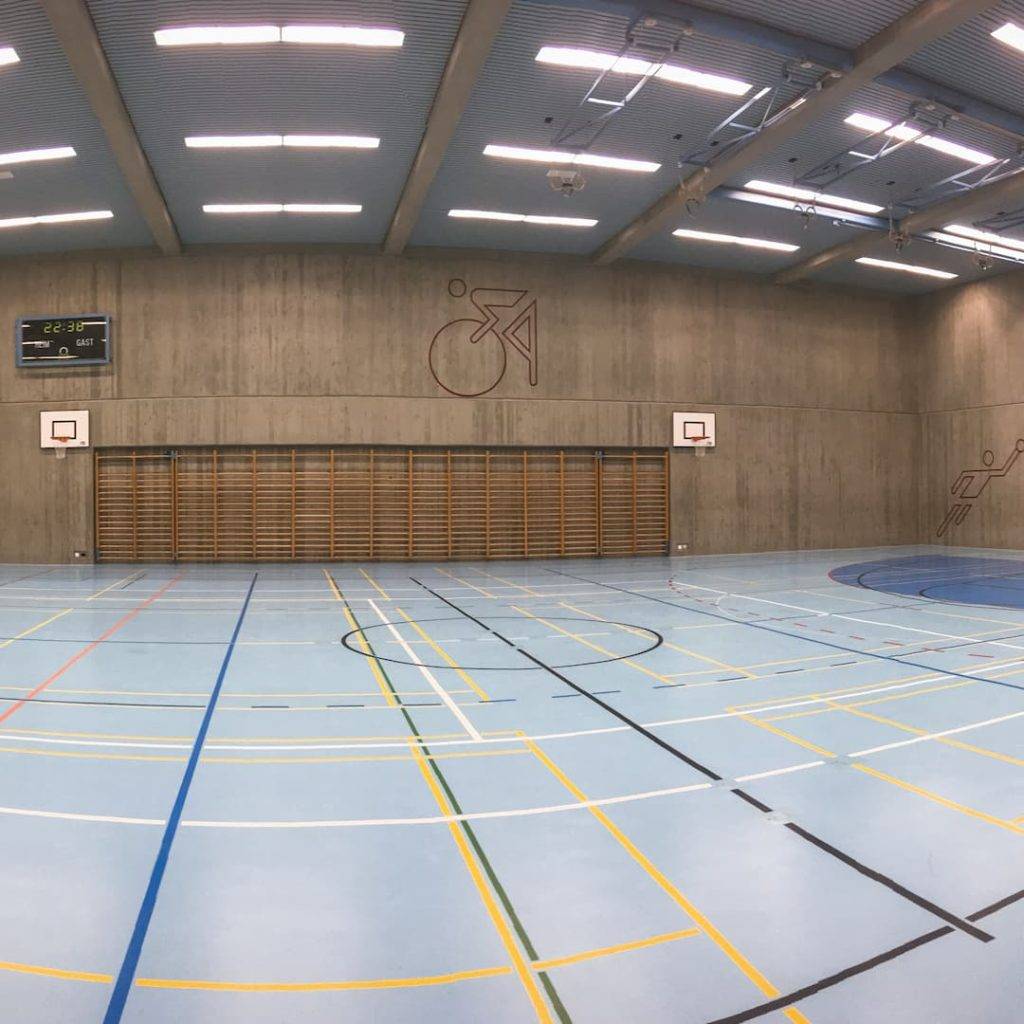
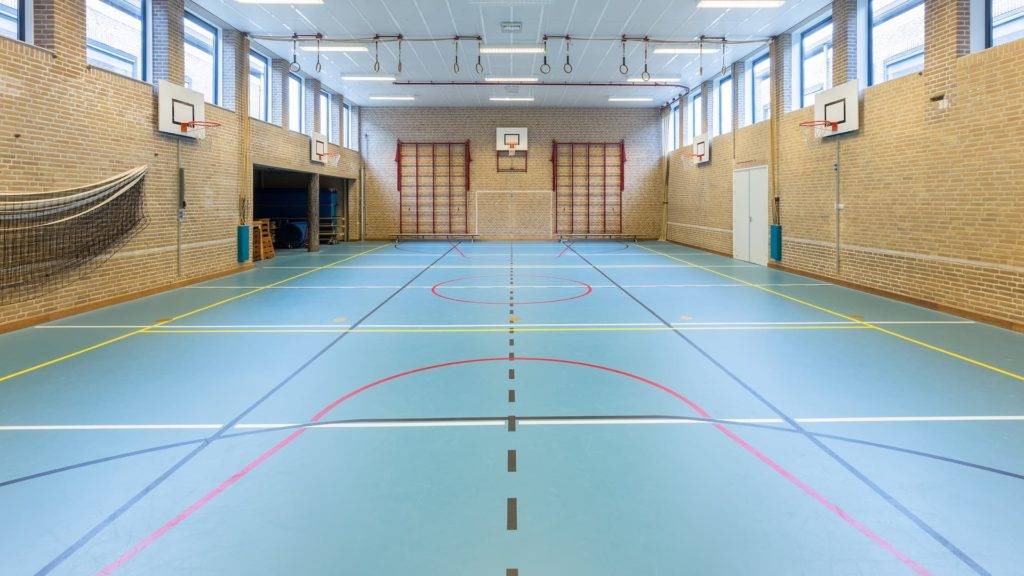
Lanarkshire brings us council leisure facilities, secondary school sports halls and a good number of community and club buildings.
The leisure estate is a significant part of it. Booking income means a two week closure is expensive, so most of that work is carried out overnight, with the floor sealed at the end of a shift so it is walkable by opening time and heavy equipment going back once the finish has hardened properly.
School halls follow the fixed term calendar, and many in the region date from the nineteen sixties and seventies with sprung timber floors that are structurally sound but overdue. Those are usually better restored than replaced, and a survey often finds more life left than expected.
Granwood appears in the older school and church halls, and it needs a specialist approach rather than timber sanding. Most Granwood described as beyond saving simply needs rebedding, proper preparation and the right coating system.
We plan work in the region as continuous blocks, and sequencing several projects into one trip brings the cost down for everybody.
Lanarkshire has a good deal of older building stock, so the project most worth knowing about is St George School in Ascot.
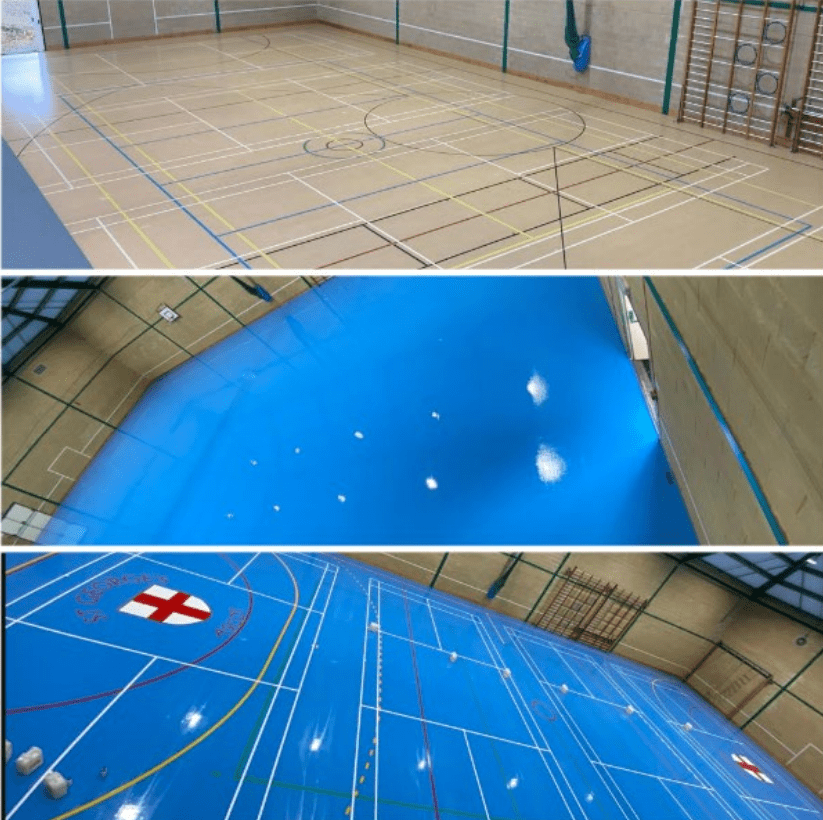
The hall there had a Granwood floor written off by others as due for replacement. Granwood is a composite block laid in bitumen rather than timber, and it needs a completely different approach. We rebedded loose blocks, replaced those that had broken up, prepared the surface with appropriate abrasives instead of aggressive sanding, and applied a modified epoxy coating system with the markings sealed within it. The floor looks renewed and has years left, at a fraction of the cost of replacement.
For council leisure halls the closer comparison is Medina Leisure Centre, where booking income ruled out a long closure and the work was programmed around the centre timetable.
For schools, Hornbury Academy in Wakefield is the parallel: constant curriculum use, an overdue finish, and a fixed term date.
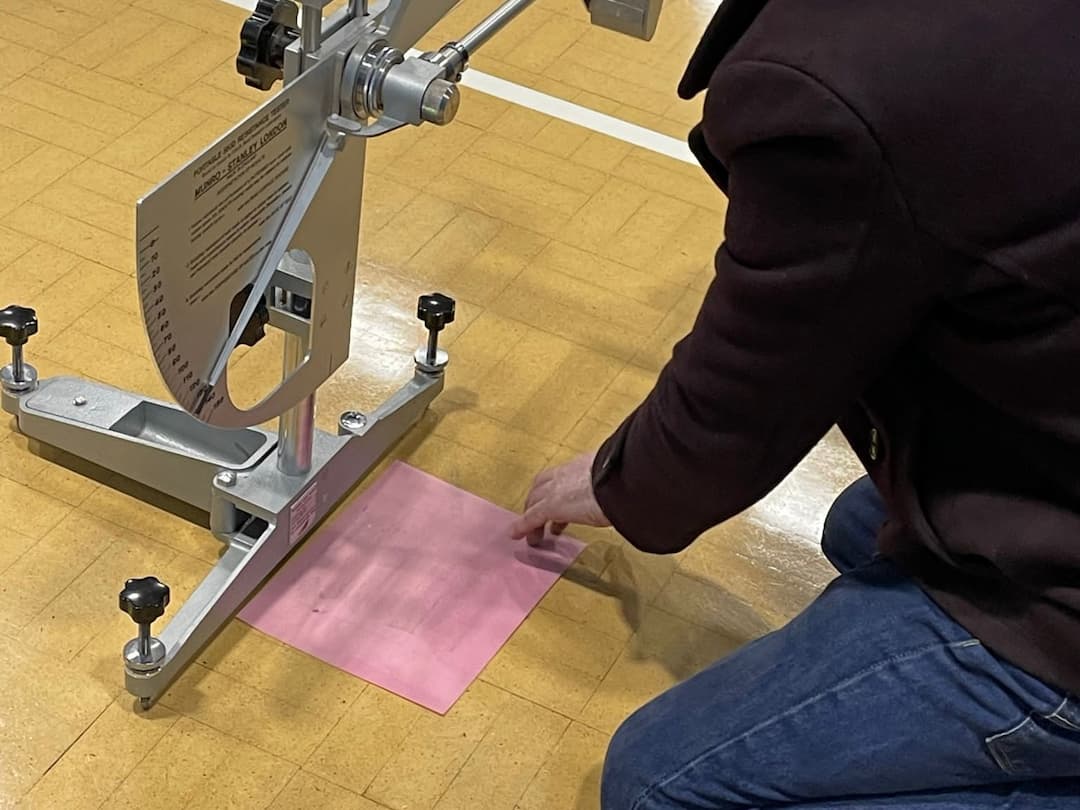
A leisure manager who is told the hall is slippery needs a number, not an opinion. The pendulum test provides one. A weighted rubber slider swings across the surface and the loss of energy gives a pendulum test value, and readings above the accepted threshold indicate a low slip risk.
We test at the doorways, along the busiest routes, at the centre of each court and anywhere staff have reported a problem, in dry and wet conditions where relevant. The pattern across the hall tells us the cause. Low values at the entrance mean grit and contamination, low values everywhere mean polish or a seal worn smooth.
You receive a dated certificate with the values and locations. For a council with several leisure halls across Lanarkshire, an annual test on each floor builds a record that shows the estate being managed and supports any claim that arises.
Around one to two weeks from the first machine to the room being usable, depending on size, repairs and the number of coats. A single court hall usually fits inside an October or Easter break. You get a day by day programme and a reopening date in writing before we start.
It is rare, because the survey lifts a board and measures the timber before we quote. Where a hidden fault does appear we stop, show you, price it separately and let you decide. Nothing is added to the invoice that you have not agreed in advance.
Yes. A PU or vinyl hall that has faded or gone patchy is deep cleaned, keyed and recoated in a new base colour, with fresh court markings applied over it. The hall looks newly installed at a fraction of the cost of a new surface.
Yes. Our survey reports and quotations are written with funding applications in mind, so they carry the specification detail, itemised costs and condition evidence a panel expects. If a bid is phased over more than one year, we structure the programme to match.
Something beneath the boards has failed: a compressed pad, a cracked batten or a cradle that has lost contact. Sanding will not change the feel. We lift the boards over that area, replace the failed components and re-lay the original timber before the floor is refinished.
Yes, and we recommend it. We set out with laser and tape from governing body dimensions rather than tracing the old lines, because courts copied at every remark drift over the years. The new lines go down between coats of seal so they last as long as the finish.
Yes. Loose or corroded sockets are lifted, the surrounding timber made good and new fittings set flush with the finished surface before sanding. It is far cheaper to do this while the floor is open than to return for it, so tell us at survey which ones move.
Yes. Studio floors want a different finish, usually a matt seal with controlled slide rather than sports grip, and sometimes a sprung construction of their own. Doing it alongside the hall saves a second mobilisation, and we specify each room for what it is used for.
Book a free survey of your sports hall floor in Lanarkshire. We measure, report and quote a fixed price with a programme that fits your calendar. Call 01823 674562 or send us a message to arrange a visit.