
Flooring Professionals To The Leisure Industry
Courtship Flooring is a commercial sports flooring contractor working in Lincolnshire and across the UK. We work across a large geography here, which makes efficient programming and honest reporting central to how we operate.
Nearly four decades of specialist work sits behind every project: installation, refurbishment, sanding and sealing, court marking, slip testing and planned maintenance, all delivered in-house. Our clients are institutions and operators rather than households, and private homes are handled by Ryan’s Restorations.
Lincolnshire is one of many areas covered by our national sports hall flooring service, with the same crews and the same standards wherever we work.
Overnight/Weekend Installations
Professional Cleaning Demonstrations
Squash Court Maintenance
Recommended Cleaning Products
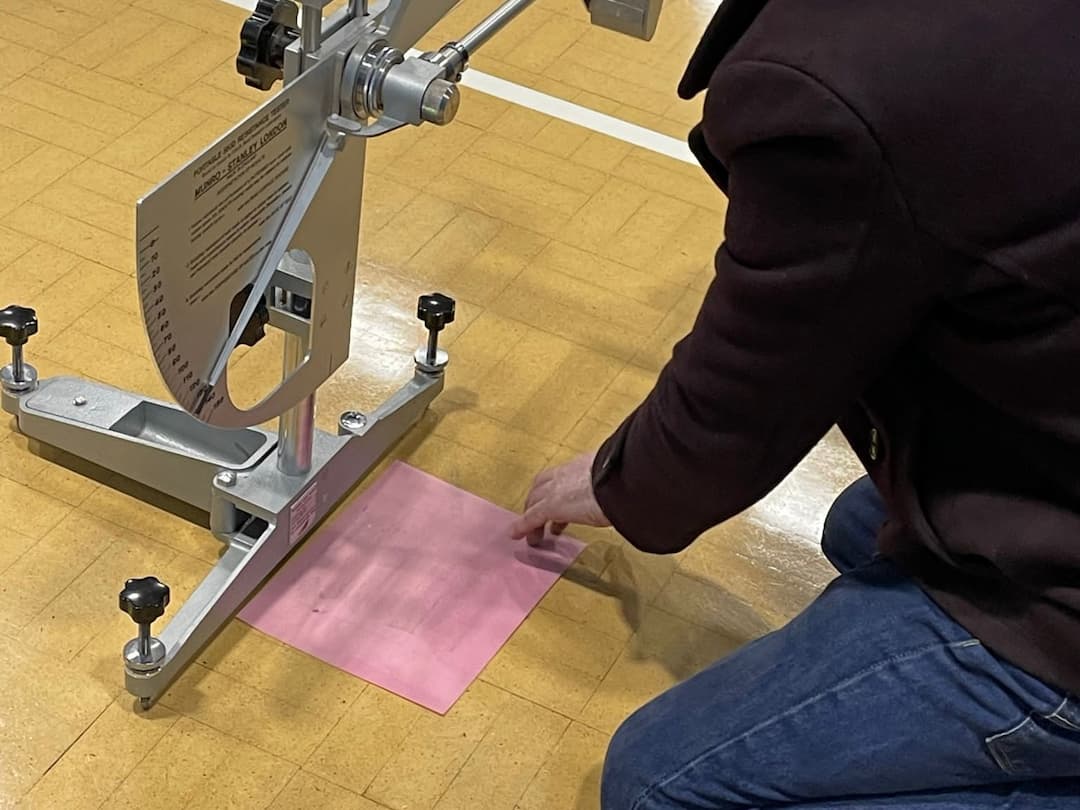
Professional Pendulum Slip Testing
Deep Clean & Reseal Service
Every survey produces a document rather than a verbal impression: moisture readings taken at multiple points, the condition of the boards and the depth remaining above the tongue, sub-floor observations, the state of the markings against current specifications, and entrance-zone assessment.
Against each finding sits a recommendation and a firm cost, ranked by urgency. It is written to be used, whether that means securing a budget, supporting a funding bid or simply deciding what can wait.
A great deal of school and community flooring work depends on grant funding, and applications are frequently weakened by vague specifications and estimated costs.
We provide the technical detail and firm costings such applications require, including the condition evidence that demonstrates need. We cannot influence the outcome, but we can make sure the flooring element of a bid is properly evidenced rather than a placeholder figure.
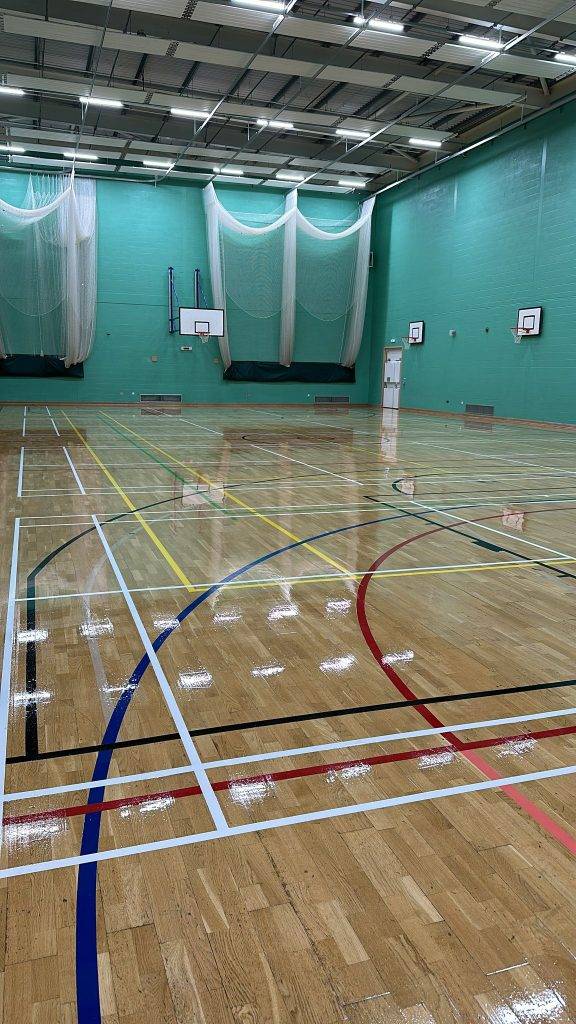

Where several facilities in an area need work, booking together is materially cheaper than each arranging separately. Mobilisation is shared, machinery moves a short distance rather than returning to base, and the programme runs continuously.
We are happy to coordinate that between separate organisations, and to quote each individually so nobody is committed to anybody else. It is simply a better use of everyone’s money.
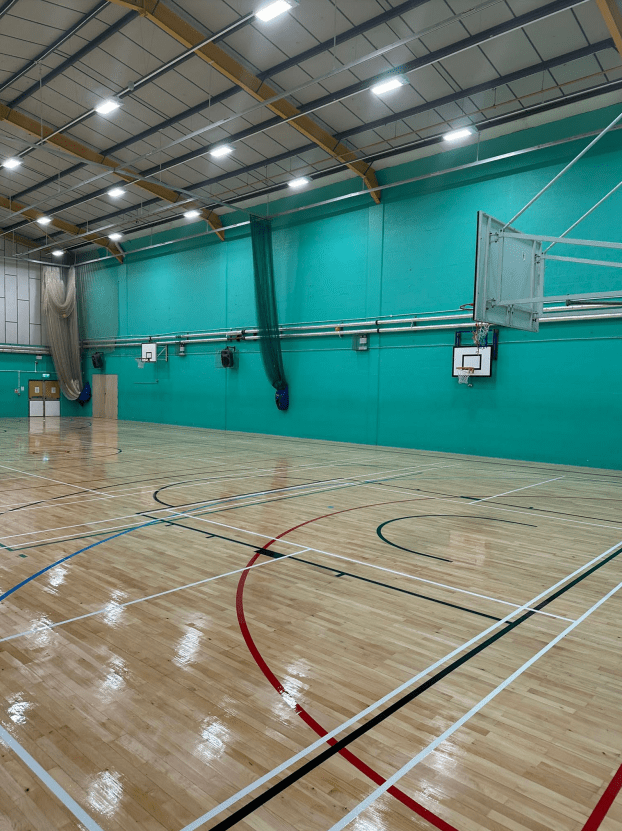
The main sports hall at Liskeard Leisure Centre had taken years of public sessions, club blocks and league nights. We delivered a complete programme of sanding, re-lining and resealing, returning the hall to service looking like a new installation.
It is a fair illustration of how we handle leisure work: one tight programme, agreed dates, and a centre back in action on schedule.
~ Matthew Evans
An outstanding company to deal with and they couldn’t have been better to work with. St George’s Ascot now has a stunning new sports hall floor and we are delighted. From quote, support, delivery and after sales, the Team has been brilliant. Thank you. 
~ James Anderson







Most tired floors do not need taking back to bare timber, and the two treatments differ in time and cost by a wide margin.
A screen and recoat abrades the existing seal with a fine mesh and applies fresh coats of two pack polyurethane on top. Nothing is removed from the boards. It suits a floor whose finish is dull, scuffed or losing grip but still intact across the traffic lanes. A full sand strips everything to clean timber and rebuilds the finish, and it is the answer when the lacquer has worn through, boards need replacing or the markings must be set out afresh.
We look at Lincolnshire halls with a simple rule: recoat every two to three years and the full sand comes round only once a decade, which is how a floor keeps its wear layer for fifty years.
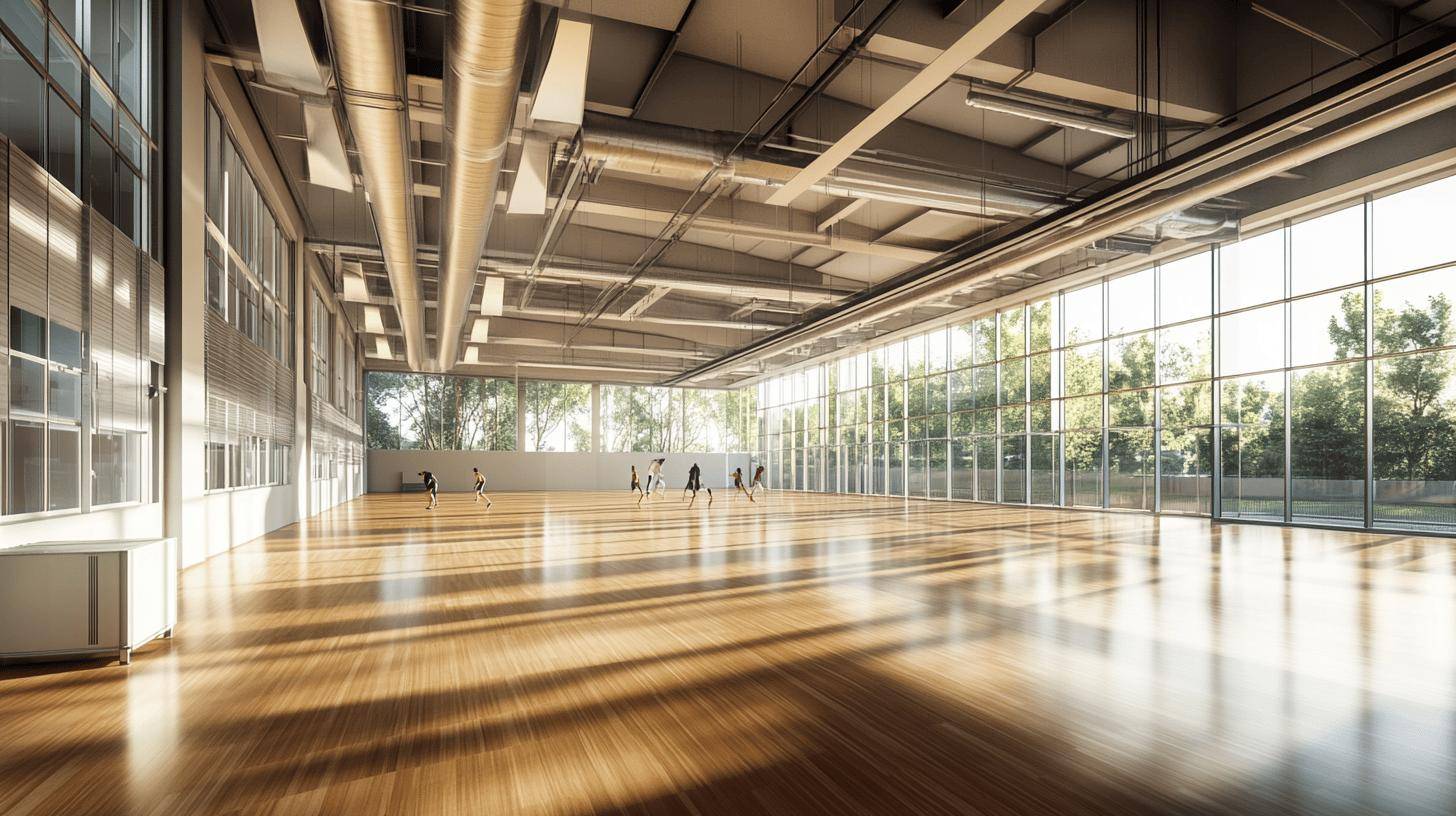
A large share of Lincolnshire halls sit on solid ground floor slabs, in low lying country where the water table is never far away, and moisture from below is the fault we find most often at survey.
It shows as boards cupping at the edges, a musty smell when the hall has been shut, or a seal that goes milky in patches. By then the timber has been wet for some time. We test with in situ probes to read relative humidity inside the slab, at several points and depths, and we do it before quoting, because the answer changes the job.
A dry slab needs nothing. A damp one needs a surface applied moisture barrier before any new floor goes down, and an active leak or a missing damp proof membrane needs the building fixed first. Sealing over the problem only hides it for a season.
A sports floor on a planned cycle costs a fraction of one managed by crisis, and the cycle is not complicated.
Each year, a deep clean and a short inspection with a written note of the finish, the markings and any soft spots. Every two to three years, a screen and recoat with the lines refreshed under the new seal. Roughly every ten years, a full sand, repairs and reseal. Pendulum testing sits wherever your insurer or governing body wants it, usually annually.
For an academy trust or leisure operator with several Lincolnshire sites, we put the whole estate on one calendar so visits are grouped, budgets are predictable and no hall reaches the point where September opening is in doubt. The alternative is discovering in July that a floor has run out of seal, and that is the expensive version.

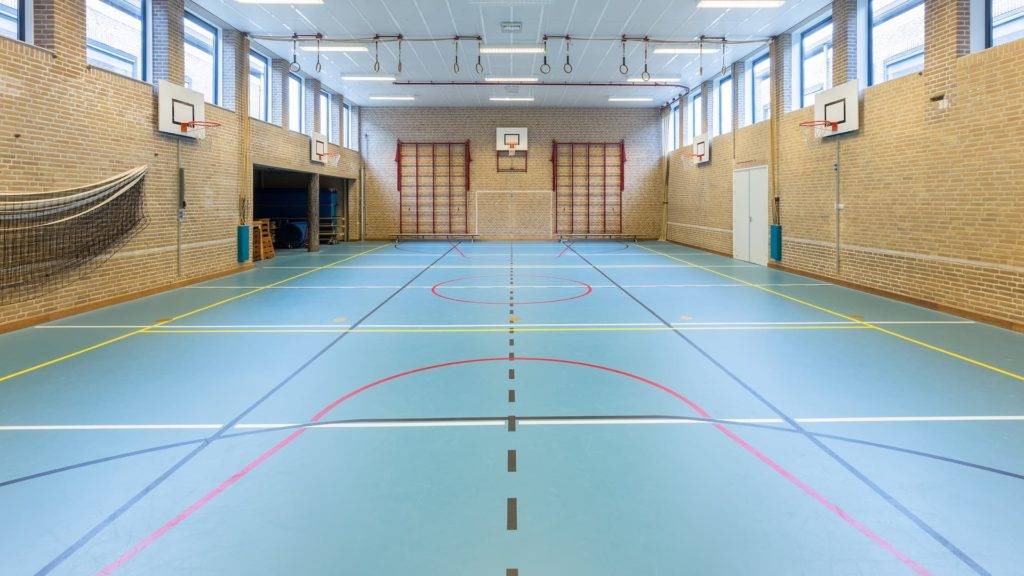
Lincolnshire is a large, largely rural county, and the work comes to us predominantly from school sports halls and community buildings rather than big leisure estates.
School halls are the biggest group, and in many communities the school hall doubles as the main indoor sports space for the surrounding area. That means curriculum sport, club training and community lettings all on the same floor, which wears a finish considerably faster than the timetable alone suggests.
We completed work at De Wint School in the county, and it is a fair example of the type: a hall in constant use, a finish that had gone too long between refurbishments, and a fixed window in which to work.
Village halls and church halls are the second group and the county has a great many. Those timber floors are usually a century old with plenty of depth left, buried under decades of polish.
Because journeys within the county take a while, we plan work here as continuous blocks and bring everything with us rather than expecting to collect materials locally.
De Wint School is our in county project and it illustrates the type of hall we are most often asked to look at in Lincolnshire.
It is a hall that does everything: curriculum sport, club training and community lettings, all on the same floor. That volume of mixed use wears a finish considerably faster than a timetable suggests, and by the time we saw it the seal had worn through where the traffic runs and dirt had begun working into open timber.
The floor was sanded back to bare timber, damaged boards were cut out and replaced with matching timber laid to the same grain direction, and the hall was resealed. The markings were set out fresh from measured governing body dimensions rather than traced from the faded originals, and redundant sets came off while the floor was open at no extra cost.
The constraint was the term date, as it always is. The hall was back for the first day because the programme was built to that date from the start.
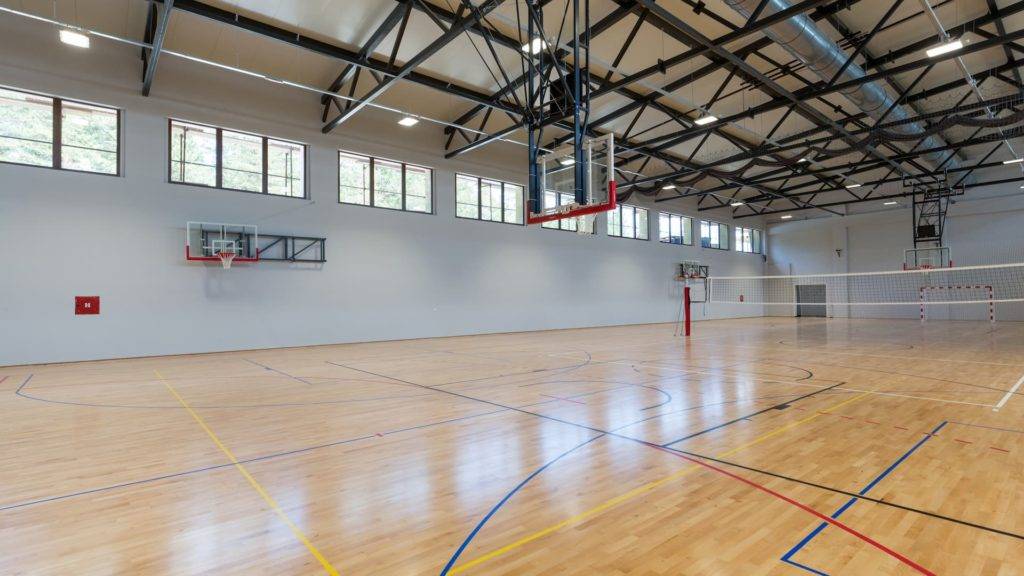
When a hall is described as slippery, the useful next step is a number. The pendulum test swings a rubber slider across the floor and records the friction it meets as a pendulum test value, in dry and wet conditions, at positions around the hall.
Readings of 36 and above indicate a low slip risk, 25 to 35 a moderate one, and anything below 24 is high risk and needs action. Entrances, the centre third and the route to the equipment store usually give the lowest values, so we always test there.
The result is a certificate you can hand to an insurer, a governing body or an auditor, and a record to compare against next year. For Lincolnshire schools and leisure trusts, we usually test at handover and then at each annual visit, so the file shows the floor holding its grip.
Hall size, how much the surface needs doing to it, and whether anything beneath the boards needs attention set the price. All three are established at a free survey, and the quotation that follows is fixed. We do not price from the road and revise once the machines are in.
Yes, from the coast to the Wolds and the fens, and beyond the county line. A Lincolnshire hall is planned as a single continuous visit with every machine and material brought in, and the travel sits inside the quoted figure.
Anything from a single village hall floor to a full estate programme across a dozen academy halls, plus multi court leisure halls, squash courts and new installations. If a job is too small or too specialised for us, we say so on the first call.
Yes. Overnight shifts, weekend blocks, phased halves of a hall and school holiday programmes are all routine. We agree which sessions are lost before anything is booked out, and seal at the end of each shift so the floor is walkable by morning.
A composite block of wood flour and cement laid in a bitumen bed, common in halls built between the thirties and the eighties. It cannot be sanded like timber. We rebed loose blocks, prepare the surface and apply a modified epoxy system, testing old bitumen for asbestos first.
Regularly. We tender on frameworks, price against schedules of rates, and carry the insurances, quality procedures, safeguarding arrangements and accreditations a procurement team asks for. A trust with several halls usually starts with a costed survey of the whole estate.
Dry mop every day to lift grit, damp mop with a neutral cleaner made for sealed timber, and keep polish, wax and anything sold on shine away from the floor entirely. We leave a written care sheet and will talk your cleaning contractor through it.
Yes, set up correctly: a soft pad, a neutral cleaner, low water flow and a squeegee that picks everything up so nothing stands on the boards. Run wrongly it floods the joints. We check your machine settings while we are on site.
Book a free survey of your hall floor anywhere in Lincolnshire. One visit, a written report with readings and photographs, and a fixed price you can take to a governing body or funder. Call 01823 674562 or send us a message.