
Flooring Professionals To The Leisure Industry
Courtship Flooring is a commercial sports flooring contractor working in London and across the UK. Our work here is dominated by buildings that never stop: facilities running from six in the morning to eleven at night, where a floor closure is a revenue decision rather than an inconvenience.
A family business established in 1987, working exclusively on commercial indoor sports and timber floors. We survey, install, restore, mark, test and maintain, keeping every stage in our own hands so one warranty covers the whole system. Domestic work is handled separately by Ryan’s Restorations.
For halls in London that are worn but structurally sound, our sports hall floor refurbishment service restores grip, appearance and line markings, usually within a school holiday.
Overnight/Weekend Installations
Professional Cleaning Demonstrations
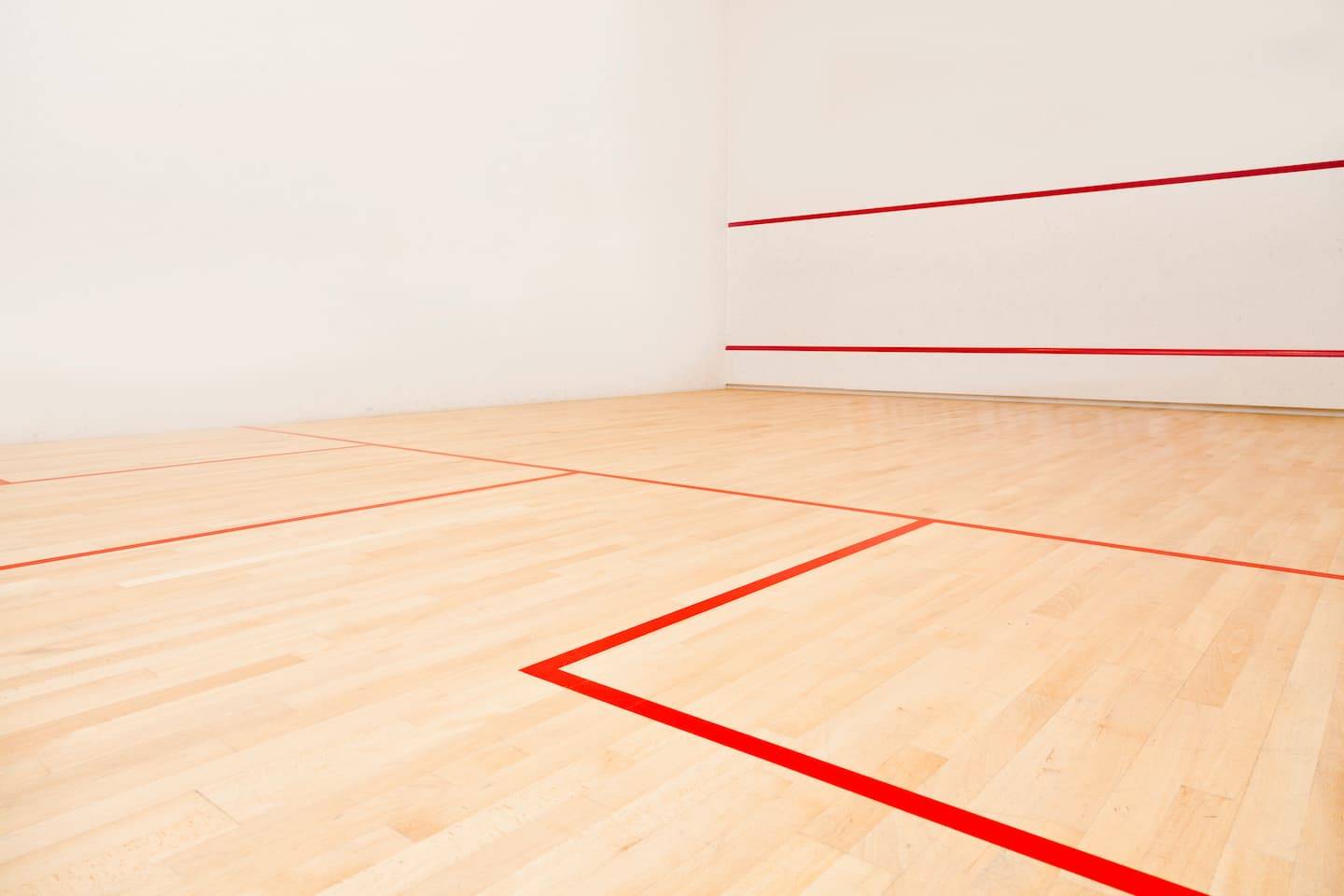
Squash Court Maintenance
Recommended Cleaning Products
Professional Pendulum Slip Testing
Deep Clean & Reseal Service
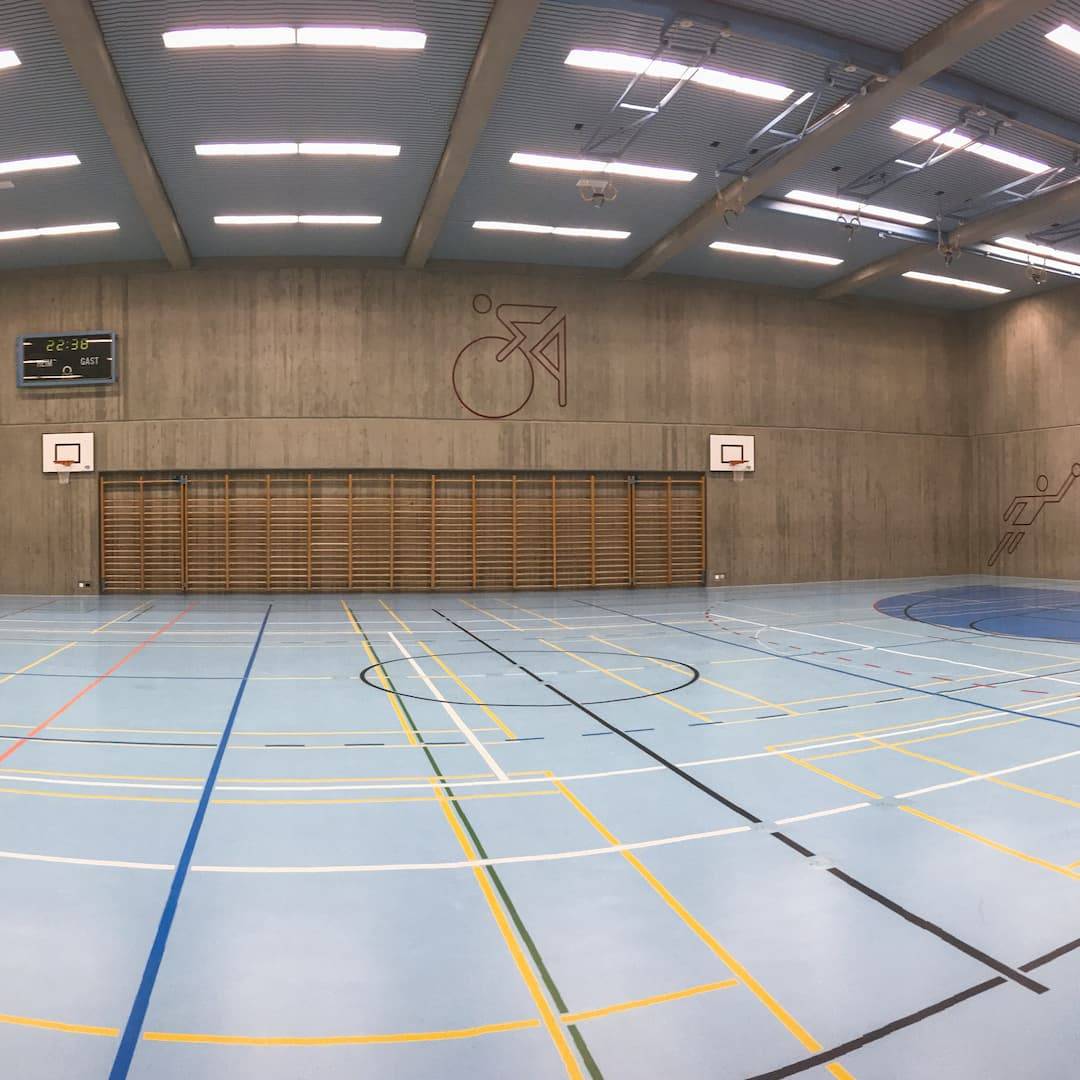
A floor used sixteen hours a day ages differently from one used six. Wear concentrates in predictable places, seals break down faster, and the maintenance interval that suits a village hall is meaningless in a facility running back-to-back sessions.
We specify against actual usage hours rather than building type. That usually means a harder-wearing seal system, a build-up chosen for durability as much as performance, and a maintenance schedule set to the real timetable rather than an annual default. It costs slightly more at installation and considerably less across the life of the floor.
Getting machinery and materials into a first-floor sports hall in a constrained building is a genuine part of the job, and it is where inexperienced contractors lose days. Lift dimensions, stair access, delivery windows, parking restrictions and out-of-hours building access all have to be established before a programme is agreed rather than discovered on the first morning.
We survey all of it up front. It is unglamorous, and it is the main reason our programmes tend to hold when others slip.
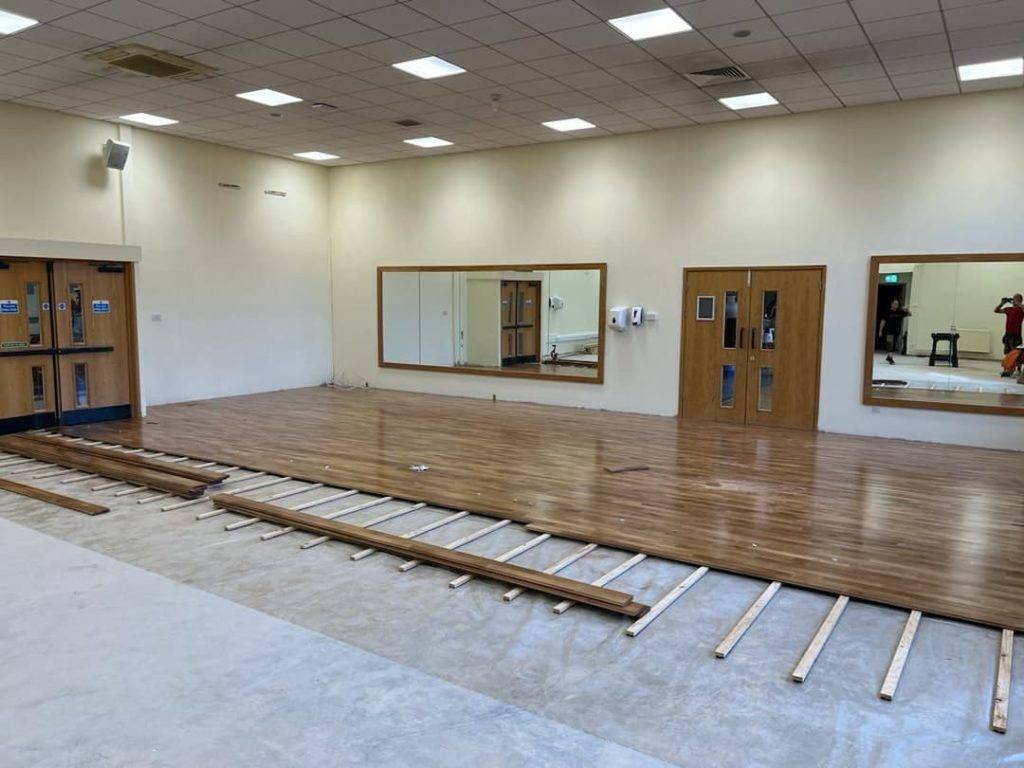
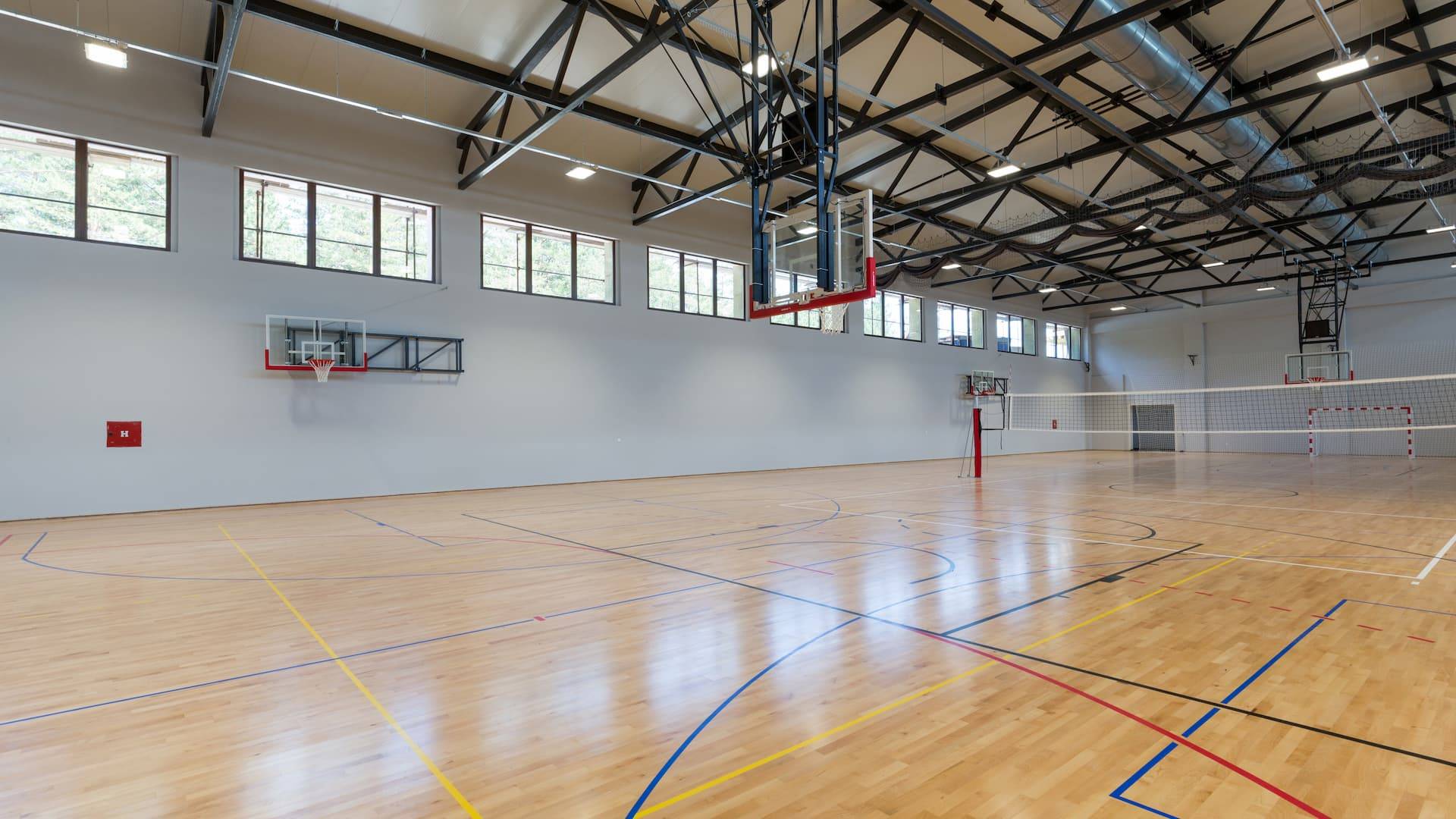
Multi-storey and converted buildings frequently cannot accommodate a conventional sprung build-up. Doors, thresholds, existing levels and structural loading all limit what can go down, and simply laying a thinner floor sacrifices the shock absorption that protects users.
Low-profile sprung and point-elastic systems solve this properly, delivering genuine compliance within a much shallower construction. We measure the available height at survey and specify accordingly, rather than discovering the problem when the doors will not close.
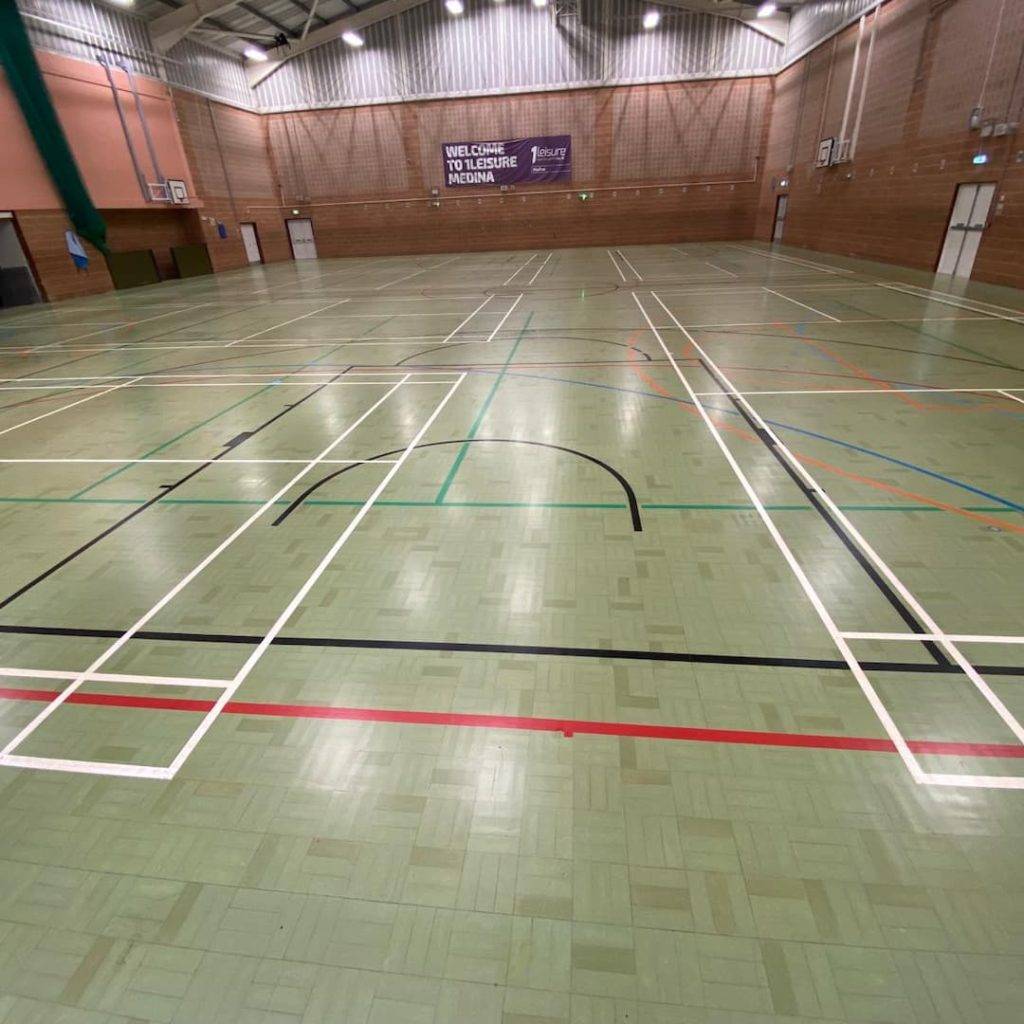
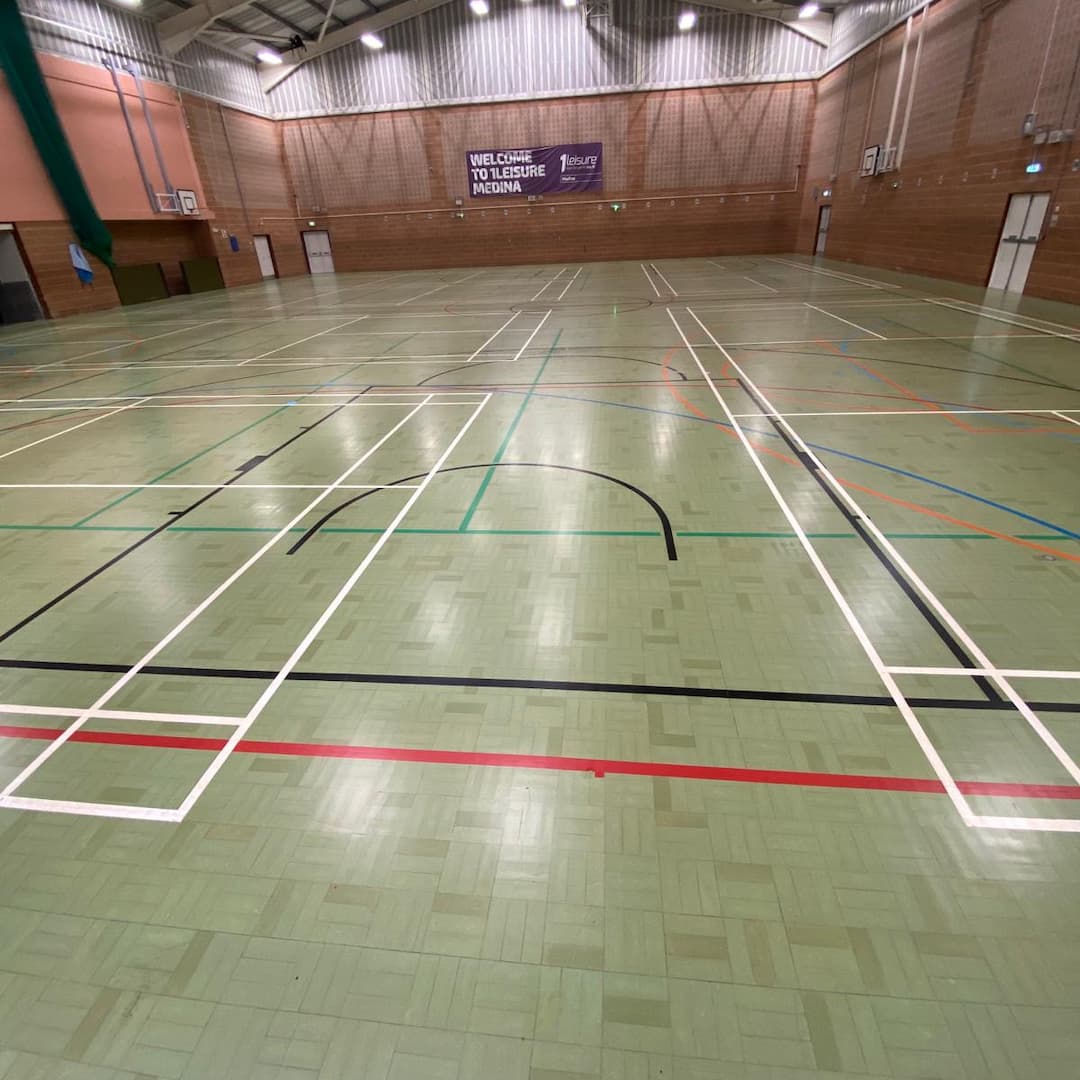
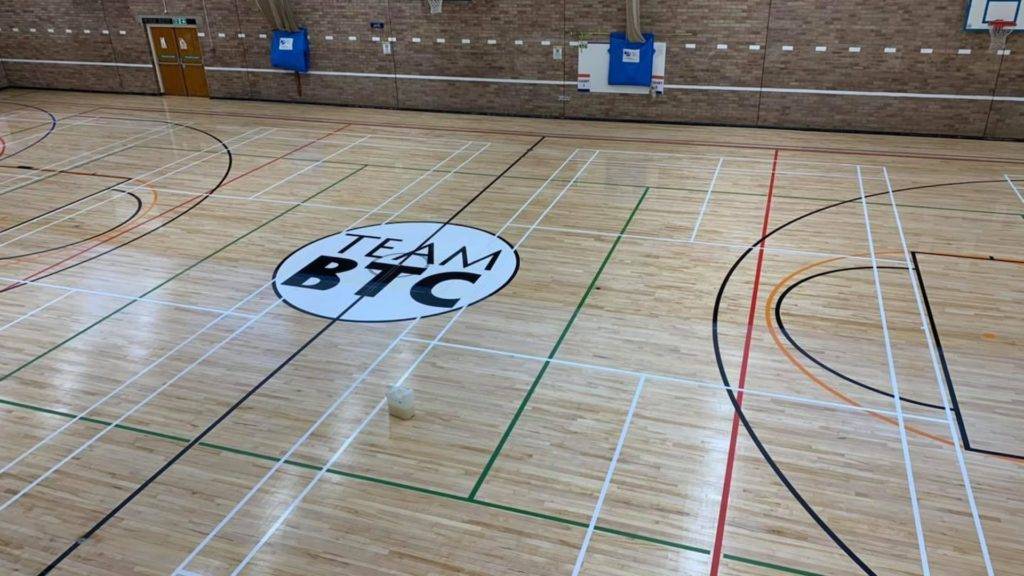
At Medina Leisure Centre we refurbished the main sports hall floor completely: sanding, repairs, resealing and a full set of new markings, with the logistics planned down to the last detail so the centre lost as little bookable time as possible.
The after photographs show a hall transformed, and the programme finished on the date agreed at the outset.
~ Matthew Evans
An outstanding company to deal with and they couldn’t have been better to work with. St George’s Ascot now has a stunning new sports hall floor and we are delighted. From quote, support, delivery and after sales, the Team has been brilliant. Thank you. 
~ James Anderson







A floor that feels slippery under a lunchtime five a side session may be fine under badminton shoes at seven in the evening. Feel is not evidence. The pendulum test gives you a number, and in a London facility where users, insurers and governing bodies all ask questions, the number settles the argument.
We run the test to the British standard method, with the rubber slider swung across the surface in several directions at several points in the hall. High traffic zones, thresholds and the area under the basketball key are checked separately, because a hall can pass on average and still fail where it matters.
You receive a certificate with the readings, the locations and the date. If a value sits low, we tell you whether the cause is worn seal, residue from the wrong cleaning product or contamination from an entrance, and what will bring it back into range.

A good number of school halls across the capital built between the 1930s and the 1970s have Granwood floors, and many are still in service. The block is made from wood flour, cement and a filler, pressed and laid into a bitumen bed, which gives it a hardness and stability that plain timber cannot match.
Granwood does not sand like timber. It needs a controlled abrasion to remove the failed coating without scoring the block, then an epoxy or polyurethane system designed for the material. Treat it as a timber floor and the result is a patchy, dusty finish that fails within a term.
Where a floor of that age has been disturbed before, we test the bitumen bed for asbestos content before any block is lifted, because some older adhesives contained it. Sound blocks are kept, loose ones re-bedded, and the whole floor coated as one surface.
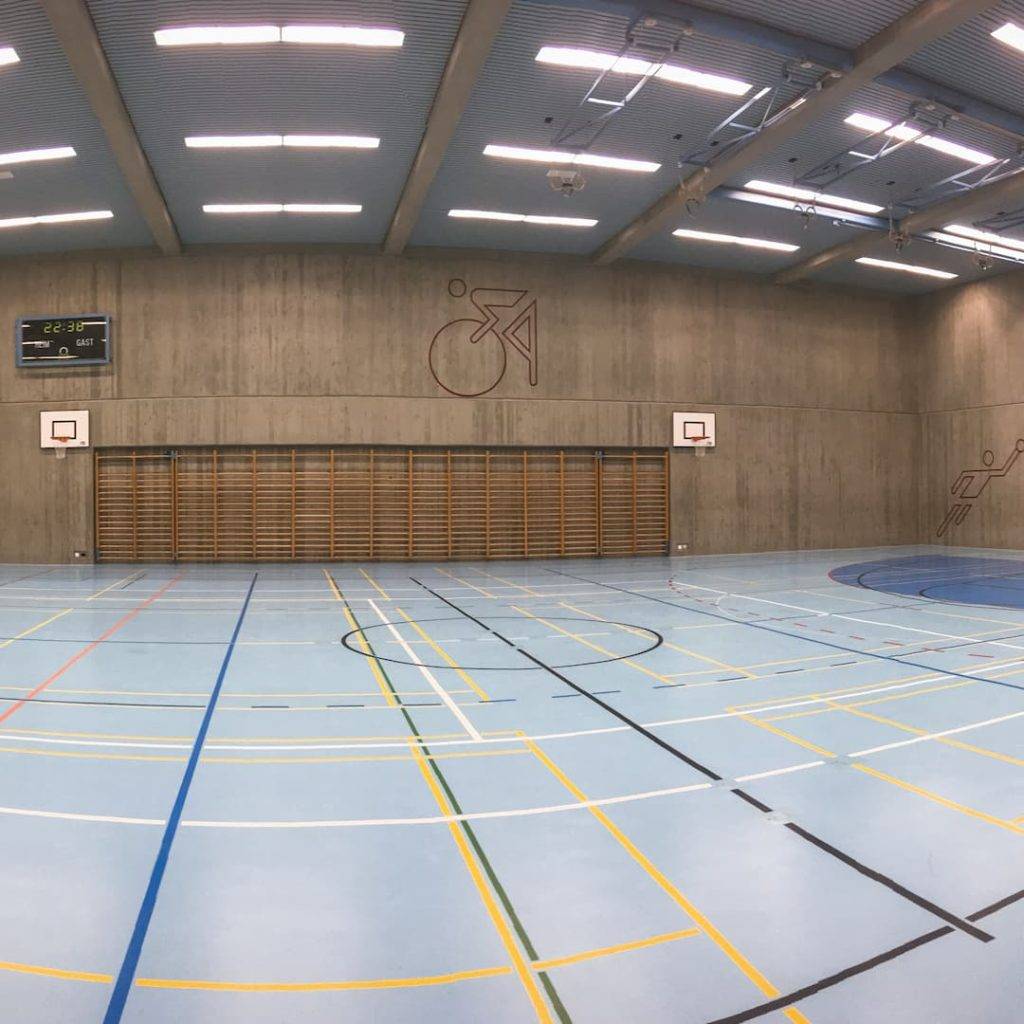
Every marking we apply is measured from the current governing body drawing, not traced from the old lines. Old lines drift. Each time a hall is relined by eye the error compounds, until a netball court is a metre short and nobody can say when it happened.
Netball is set out at 30.5 by 15.25 metres, basketball at 28 by 15 metres with the 6.75 metre three point arc, badminton at 13.4 by 6.1 metres. In a London hall that is rarely a generous size, we work out what fits with the required run off before anything is painted, and show you the drawing.
Where several sports share the floor, the colour order follows a recognised hierarchy so that the primary sport reads first and the rest sit behind it. Lines go down between coats of seal so they are locked into the finish.
Trusts and operators running several buildings across the city rarely have a clear picture of every floor at once. One hall gets attention because a complaint landed; another quietly loses its wear layer because nobody has looked under the dust.
A condition inspection puts all of them on one page. We visit each site, record the construction, measure the remaining thickness of the boards where we can, take moisture readings, photograph defects and note the state of the seal, the markings and the perimeter detail.
The written report ranks the floors by urgency and gives an indicative cost for each recommended action, so a head of estates can phase the spend across financial years instead of reacting to whichever site shouts loudest. It also gives you evidence when a budget holder asks why a floor needs money now.
London gives us the widest range of building types anywhere we work, and the practical challenges are as much about access as about the floors themselves.
Independent schools, academy trusts, universities, leisure operators and private clubs all feature. The building stock runs from Victorian school halls with original timber to modern purpose built sports centres, and the specification varies accordingly.
Access is the recurring constraint. Sports halls in tight urban sites often have no vehicle access to the door, restricted delivery windows, controlled parking and limited storage for materials and displaced equipment. We survey the access route before quoting so that the programme reflects reality rather than an assumption, because getting large sanding machinery into a first floor hall in a constrained site is a genuine planning exercise.
Out of hours working is more common here than anywhere. Many facilities simply cannot close during the day, so evening, overnight and weekend programmes are the norm rather than the exception.
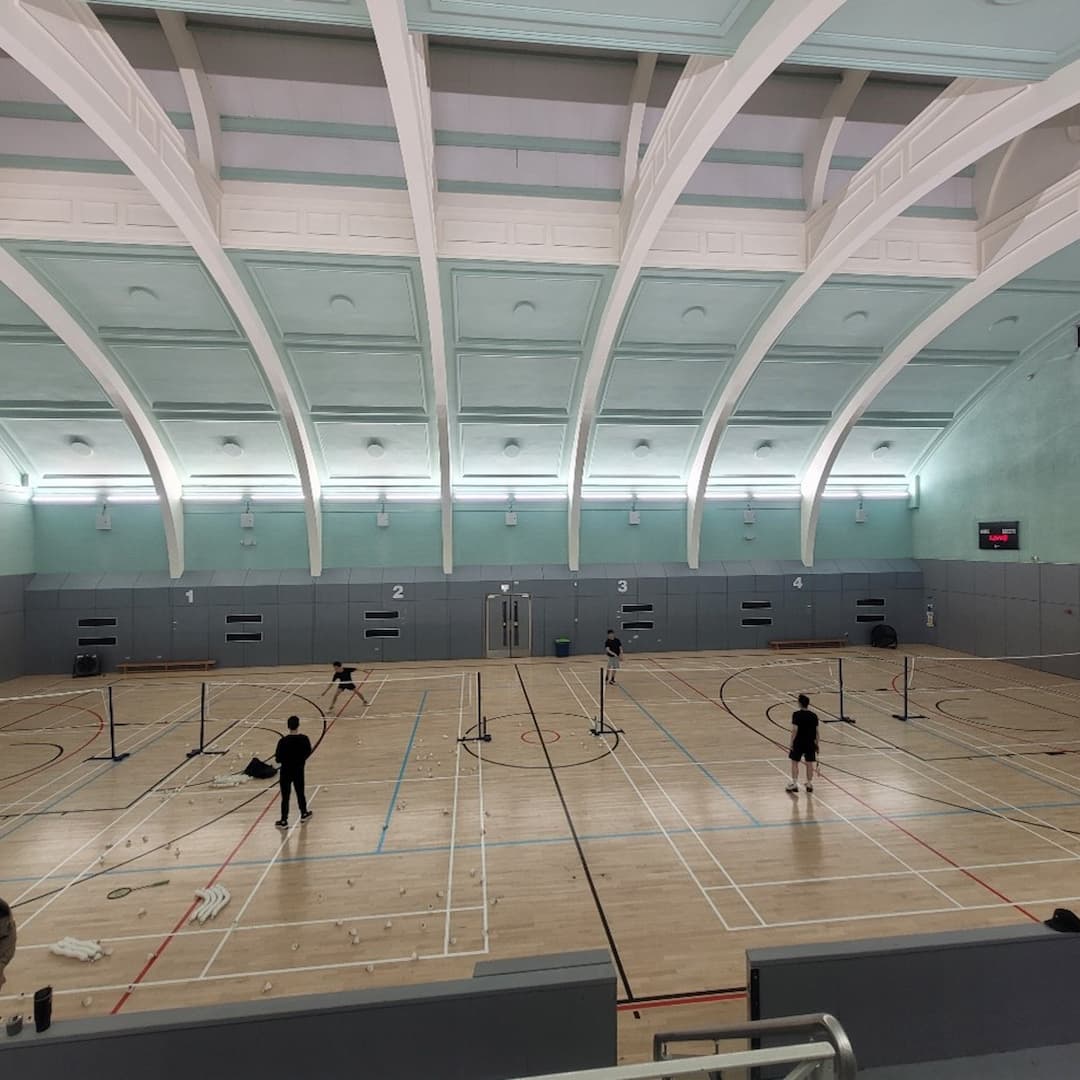
We have worked at The Bradfield Club among others, and access planning was as significant as the flooring specification.
The Bradfield Club is the project we point to most often for London enquiries, because access was as significant as the flooring itself.
Urban sites frequently have no vehicle access to the door, restricted delivery windows, controlled parking and nowhere to store materials or displaced equipment. Getting large sanding machinery into a hall in those conditions is a genuine planning exercise, and we survey the access route before quoting so the programme reflects what is actually possible rather than an assumption made from a floor plan.
The floor itself was the familiar story: an old timber hall floor with plenty of depth left under decades of accumulated finish, restored rather than replaced at a fraction of the cost.
For campus facilities the closer comparison is Aston University, where the constraint was a year round timetable with no real summer shutdown, and for operator run buildings it is Medina Leisure Centre, where booking income ruled out any long closure.
London sports halls double as exam rooms, polling stations, conference spaces and hire venues, and every one of those uses puts chairs, tables and street shoes onto a surface designed for trainers. The damage is slow and cumulative: scratches from unprotected chair feet, grit ground in from the pavement, and tape residue that eats into the seal.
The answer is a proper protective covering system laid before the furniture arrives, with sealed joints so grit cannot migrate underneath. We advise on covering types, on chair and table feet, and on the tape that can be used without lifting the finish.
If the floor has already taken a season of events, a screen and recoat restores it before the marks work through into the timber. Left another year, the same damage needs a full sand.
It depends on the area, what the floor is made of and how much work the boards need before sealing. We quote from a survey, itemised so you can see labour, materials, markings and access costs separately. Working out of hours adds a modest labour premium that is shown on its own line.
Usually, yes. Our machines break down into components that two people can carry, and we plan the route at survey. Where a stair is too narrow or a doorway too low we use smaller plant and adjust the programme, and we tell you before quoting rather than on the day.
No. We work only on commercial and institutional buildings: schools, universities, leisure centres, clubs and community facilities. Private houses and flats are handled by our sister company Ryan’s Restorations, who can be contacted directly for that work.
Allow 24 hours after the final coat before anyone walks on the floor in clean shoes, and at least 72 hours before equipment, chairs or mats go back. The sanding and coating itself takes a few days depending on size, so a typical hall is closed for about a week.
A neutral pH cleaner diluted as the label directs, applied with a damp flat mop or a scrubber dryer set to low water. No polish, no wax, no bleach and no products sold for domestic laminate. Polish is the single most common reason a sports floor becomes slippery.
No. The people who survey your floor are the people who sand, seal and mark it, using our own machinery. That keeps one company responsible for the whole job and one guarantee covering everything from the boards up.
Yes, and we do it often. Dust is contained with sealed screens and extraction, noise is scheduled around your timetable, and we agree a route for materials that keeps our team away from students or members. Adjoining studios and changing rooms usually stay in use.
You receive risk assessments and method statements specific to your building, COSHH data for every product we use, our insurance certificates and DBS details for the team where the site requires them. Send us your induction requirements and we complete them before the first day.
Book a free survey of your sports hall floor in London and we will tell you what it needs, what it will cost and how quickly we can fit the work around your timetable. Call 01823 674562 or send us a message today.