
Flooring Professionals To The Leisure Industry
Courtship Flooring is a commercial sports flooring contractor working in Merseyside and across the UK. We work across the county on school, community and leisure facilities, much of it multi-use halls.
We have been specialising in indoor sports and commercial timber floors since 1987. The business is family-run, nothing is subcontracted, and the crew who survey a building are the crew who work on it. Domestic and residential projects fall outside what we do and are looked after by our sister company, Ryan’s Restorations.
In Merseyside, as elsewhere, a sports hall floor refurbishment is often the most cost-effective option: a full sand, reseal and reline that brings an existing floor back for a fraction of the cost of replacement.
Overnight/Weekend Installations
Professional Cleaning Demonstrations
Squash Court Maintenance
Recommended Cleaning Products
Professional Pendulum Slip Testing
Deep Clean & Reseal Service

A sheet vinyl sports floor is only as good as its joints. Sheets are laid in runs and the seams heat welded with a matching rod, then trimmed flush so the surface becomes effectively continuous and watertight.
Poorly executed welding is the commonest defect we are called to repair on vinyl floors: seams lift, dirt tracks in, and eventually water reaches the sub-floor. It is entirely avoidable with correct tooling and temperature control.
Synthetic floors cannot be sanded, but they are far from disposable. Damaged areas can be cut out and patched with matching material, failed seams re-welded, and deep cleaning will lift the residue that makes a surface look tired and feel slippery.
Some systems also accept a resealing treatment that restores appearance and grip. We assess what you have and what it will accept before recommending anything.
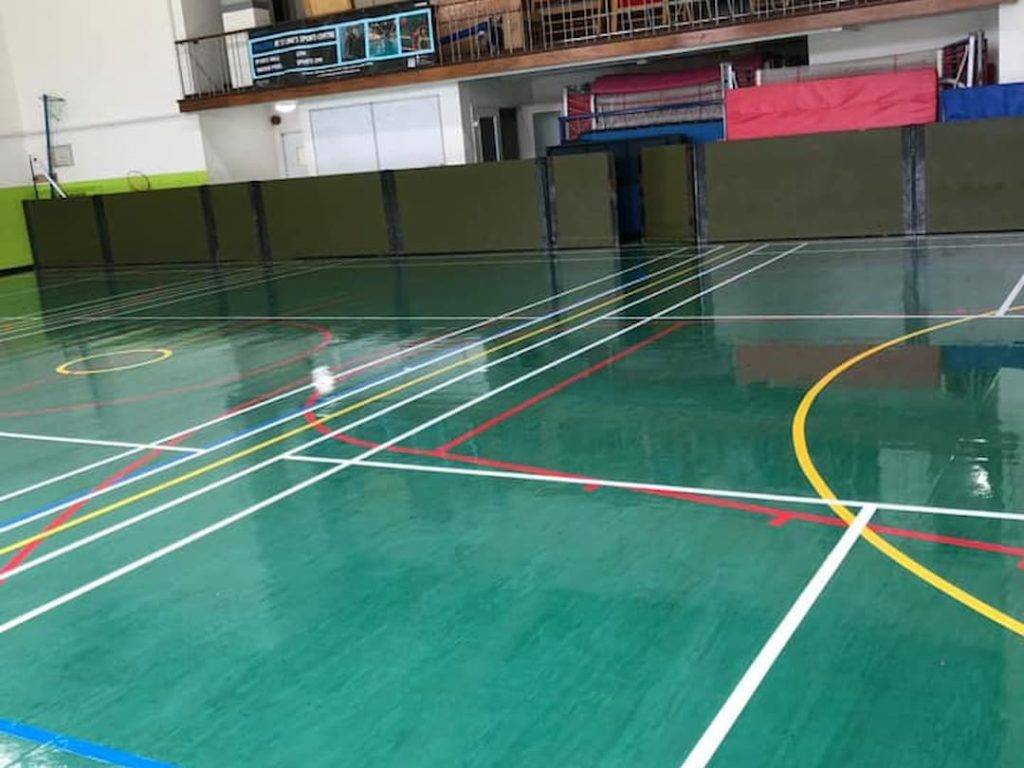
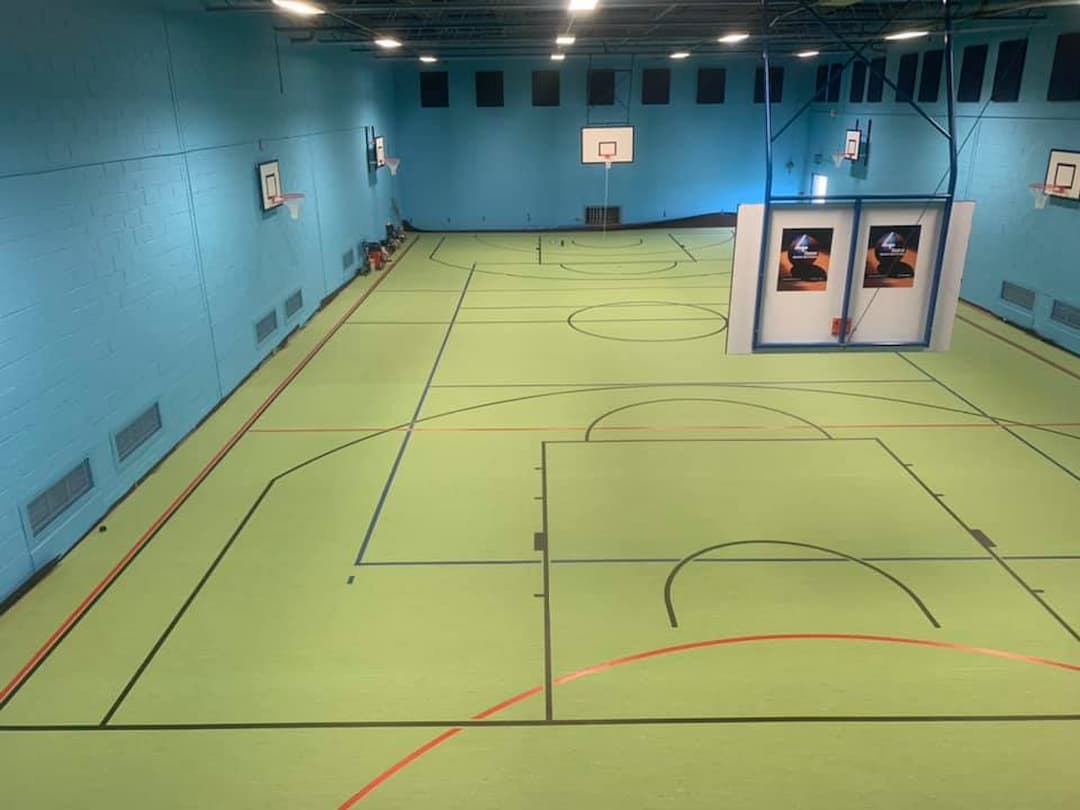
Unlike timber, a synthetic surface has a finite life and cannot be renewed indefinitely. The indicators are clear enough: wear through to the backing, widespread seam failure, or a surface that no longer holds a clean.
We will tell you when a floor has reached that point rather than selling maintenance that merely postpones the inevitable, and we will quote replacement including strip-out and sub-floor preparation.
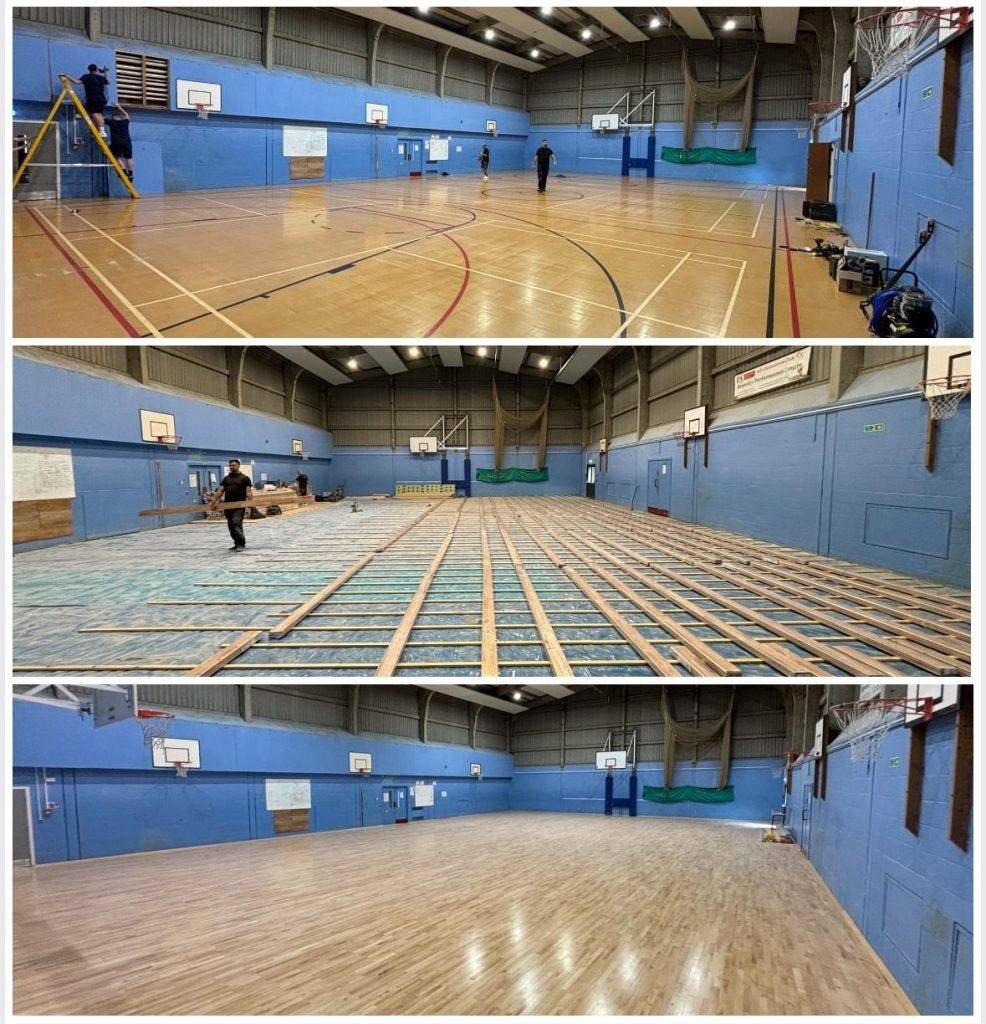
Harris Academy wanted a sports floor to match its ambitions, so we fitted a complete Junckers solid-beech sports system, the same Danish flooring specified in elite competition venues, finished with full multi-sport line markings.
An installation like that is a long-term statement: properly maintained, it will outlast every pupil currently on the roll. The project ran to programme from bare sub-floor to handover.
~ Matthew Evans
An outstanding company to deal with and they couldn’t have been better to work with. St George’s Ascot now has a stunning new sports hall floor and we are delighted. From quote, support, delivery and after sales, the Team has been brilliant. Thank you. 
~ James Anderson








Most of the wear on a sports floor walks in on trainers. Grit carried from the car park acts as sandpaper under every foot, and it is the reason the lane from the door to the centre of the hall always goes first.
A run of proper entrance matting, long enough for several strides and cleaned often enough to keep working, takes more life out of a floor than any product we can apply. Near the Merseyside coast, wind blown sand adds to the problem and mats need emptying more often.
Inside the hall the daily dust mop does the same job, lifting grit before it is ground in. Where a facility has a changing room between the entrance and the hall, a second mat at that door is worth having. It is the cheapest maintenance advice we give.
Timber is still the reference surface for indoor sport because it performs to BS EN 14904, it can be refinished again and again, and players prefer it. What makes it work is the structure beneath the boards, which is where most of the cost and the performance sit.
An area elastic system uses pads, foam blocks or engineered cradles under battens so a landing is spread across a wide zone. A semi sprung system uses a shallower build up where ceiling height is tight. Boards fixed straight to the slab have no give and are hard on joints.
The surface is solid strip or engineered board, most often maple or beech. Solid strip carries the deepest wear layer. The detail that decides longevity is the perimeter: timber moves with humidity, and a hall without a proper expansion gap will lift in the middle.
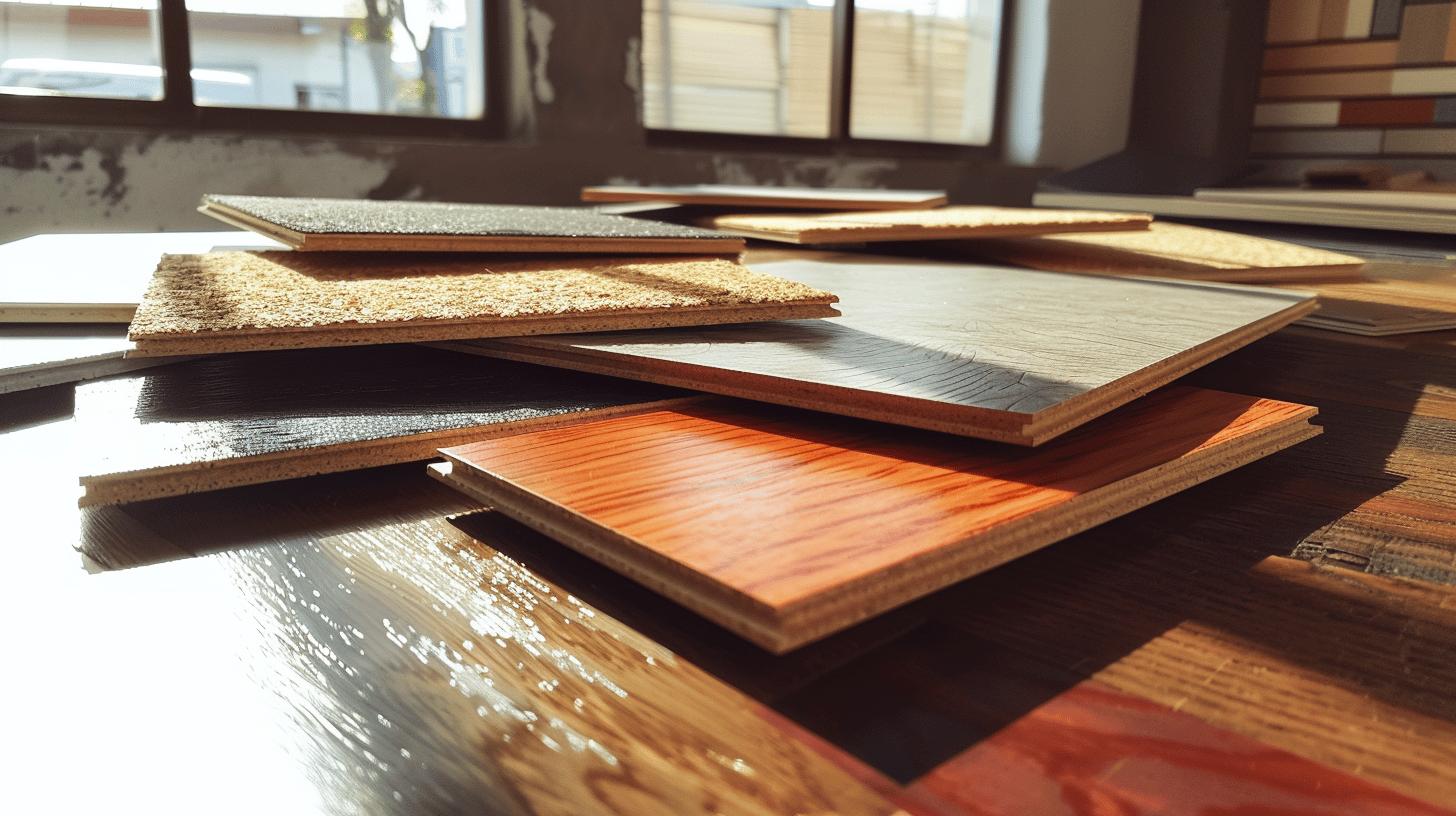
Most facilities cannot fund everything a floor needs in one financial year, and the useful question is therefore not what the whole job costs but what has to happen first.
We split every quotation into the work that protects the asset and the work that improves it. Structural repair, moisture remediation and sealing protect the floor: leave those and the problem compounds, and next year the job is bigger. Markings, logos and cosmetic improvements can wait a year without any consequence beyond appearance.
That distinction lets a business manager fund the essential element now and schedule the rest, rather than deferring the whole scheme because the total was too large. It is also far easier to defend to a board or a governing body, because the reasoning is visible.
Where a facility holds several floors, the same logic applies across the estate. We will tell you which building needs money this year and which can safely wait three, so the spend is spread rather than arriving all at once.
Merseyside brings us a mix of academy trust work, council leisure facilities, university sport and a good number of club and community buildings.
Trust estates are the pattern we see most often. Where a trust holds a dozen or more sports halls of differing ages, surveying the whole estate and producing a costed priority order is far more useful than dealing with each hall as it becomes urgent, and it lets the spend be phased across budget years.
Leisure centre work follows, where booking income makes long closures expensive and most of the work is done overnight, sealed at the end of a shift so the floor is walkable by opening.
Older school and church halls in the region frequently have Granwood floors. It is a composite block in a bitumen bed rather than timber, it needs a specialist approach, and most of the Granwood we are asked to look at is worth restoring rather than replacing.
Squash courts and club facilities make up the rest, and squash in particular needs a matt high grip specification rather than a general sports lacquer.
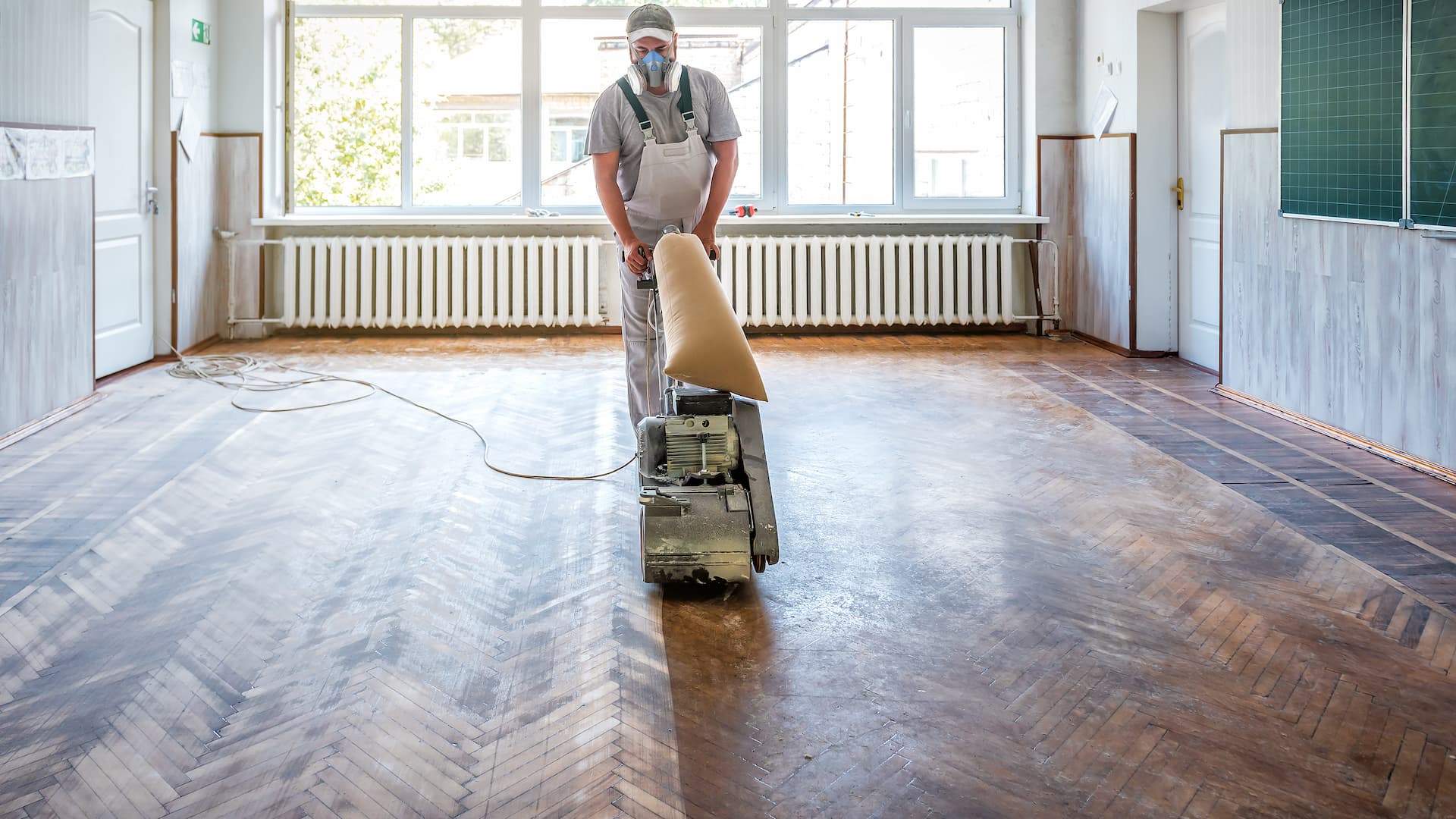
Merseyside enquiries reflect a mix of ages and uses, and three problems come up repeatedly.
The first is a school or academy hall where the seal has gone in the traffic lanes and dirt has worked into open timber. Caught reasonably early those floors restore completely. Left too long, the staining goes deeper than sanding will reach, and the finished result is compromised through no fault of the work.
The second is Granwood in the older school and church halls. It is a composite block in a bitumen bed rather than timber, it needs specialist preparation and a modified epoxy coating, and most of what we are asked to look at is worth restoring rather than replacing.
The third is squash courts that have polished smooth at the T. That is a safety issue rather than a comfort one, and a matt high grip reseal restores it properly rather than masking it.
A pendulum slip test measures how a heel meets the floor, with a weighted rubber slider swung across the surface to give a reading. It is the method the Health and Safety Executive relies on, and it replaces opinion with a number.
We test the hall wet and dry at several points, because slip resistance is rarely uniform. The lanes under the baskets and the centre third wear first, and a floor that reads well by the door can be dangerous in the middle. Results are reported point by point.
For a Merseyside leisure operator running a facility under contract, the dated certificate satisfies the standards clause and the insurer. For a school it answers the question a parent asks after a fall. Repeated yearly, it shows when a reseal is due before anyone is hurt.
Light foot traffic at around twenty four hours, full use with equipment back at seventy two hours or more, and longer in cold or damp conditions. We confirm the figures for the system used in writing and sign the room so nobody walks the finish early.
Yes. Most of our leisure work is done overnight, with the sanding in the quietest hours and the seal going on last so the hall is walkable by opening. It costs a little more in labour and usually saves far more in bookings kept.
Every machine runs on sealed extraction, the hall is screened and doors taped, and we agree with your team which air handling to isolate before we start. Damp pool air carries dust well, so that route gets particular attention. We vacuum down at the end of each shift.
Yes, and that is when most school work happens. A full sand and seal fits a summer break with cure time to spare, while recoats and relining suit a half term. Summer dates go early, so it pays to talk to us in the spring.
Yes, from governing body dimensions with laser and tape, diagonals checked, and never by tracing what is already there. Copied courts drift a little more at every remark, which is why so many halls turn out to have a short arc or thirds that do not match.
No. The crew who survey your hall do the preparation, repairs, sealing, marking and testing with our own machinery, and come back for the maintenance. That continuity is why our dates hold and why one warranty covers the entire floor.
Method statements and risk assessments written for your building, COSHH data for every product, copies of our public and employers liability insurance and DBS details for the team where the site is a school. Handover adds product data, cure times in writing and the cleaning routine.
Always. Readings are taken in the boards and in the slab at several points, because sealing over a damp floor guarantees failure however good the work. High readings mean we trace the source, which near the coast is often the slab, and price the remedy before quoting the finish.
Book a free survey of your sports floor in Merseyside. Timber, vinyl or Granwood, we inspect it, tell you what it needs and what can wait, and give you a fixed price for each option. Call 01823 674562 or send us a message.