
Flooring Professionals To The Leisure Industry
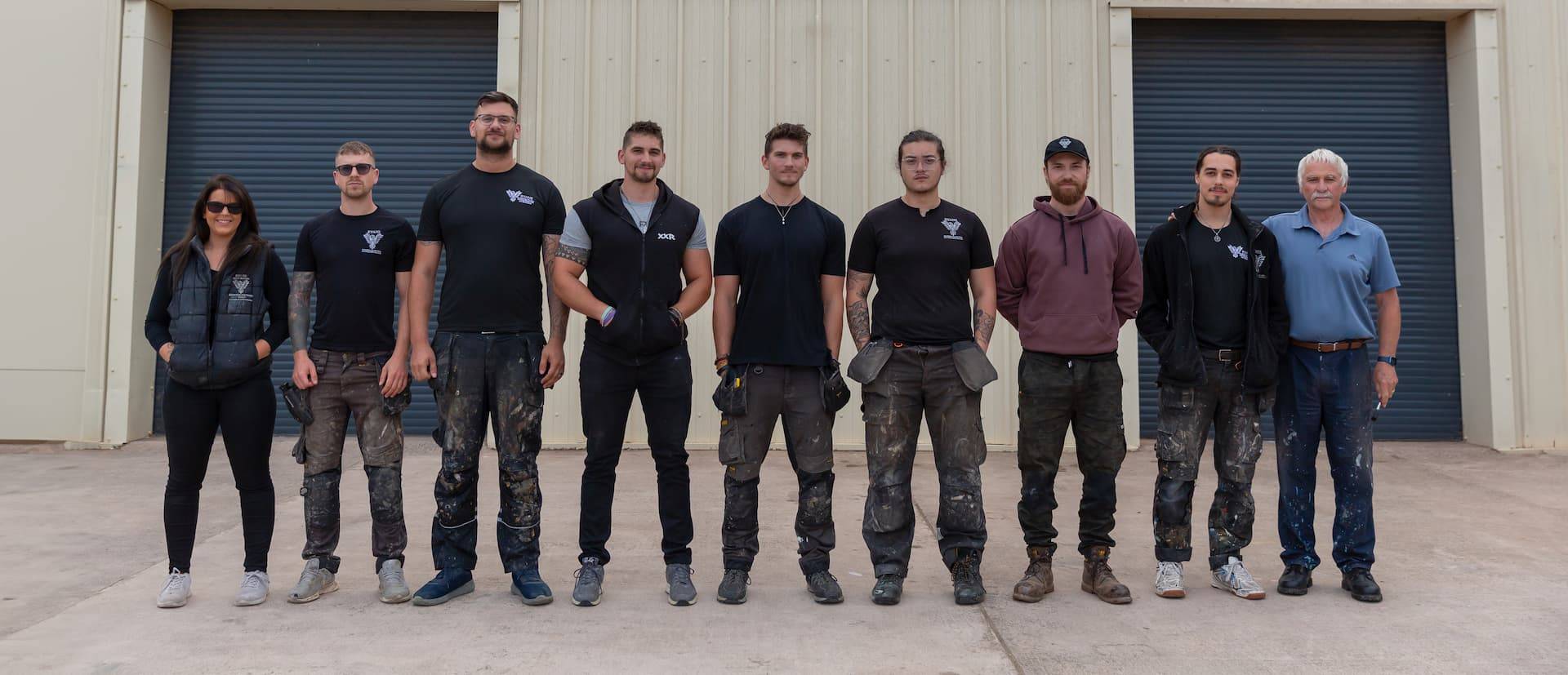
Courtship Flooring is a commercial sports flooring contractor working in North Yorkshire and across the UK. We cover a very large geography here, from historic buildings in the towns to isolated rural halls.
Founded in 1987 and still run by the same family, we specialise in commercial sports and timber flooring: new installations, full refurbishments, sanding and resealing, court markings, pendulum testing and maintenance contracts. Domestic enquiries are passed to Ryan’s Restorations.
Our sports hall floor refurbishment work in North Yorkshire covers timber, Granwood, vinyl and PU, each with the method that suits the surface.
Overnight/Weekend Installations
Professional Cleaning Demonstrations
Squash Court Maintenance
Recommended Cleaning Products
Professional Pendulum Slip Testing
Deep Clean & Reseal Service
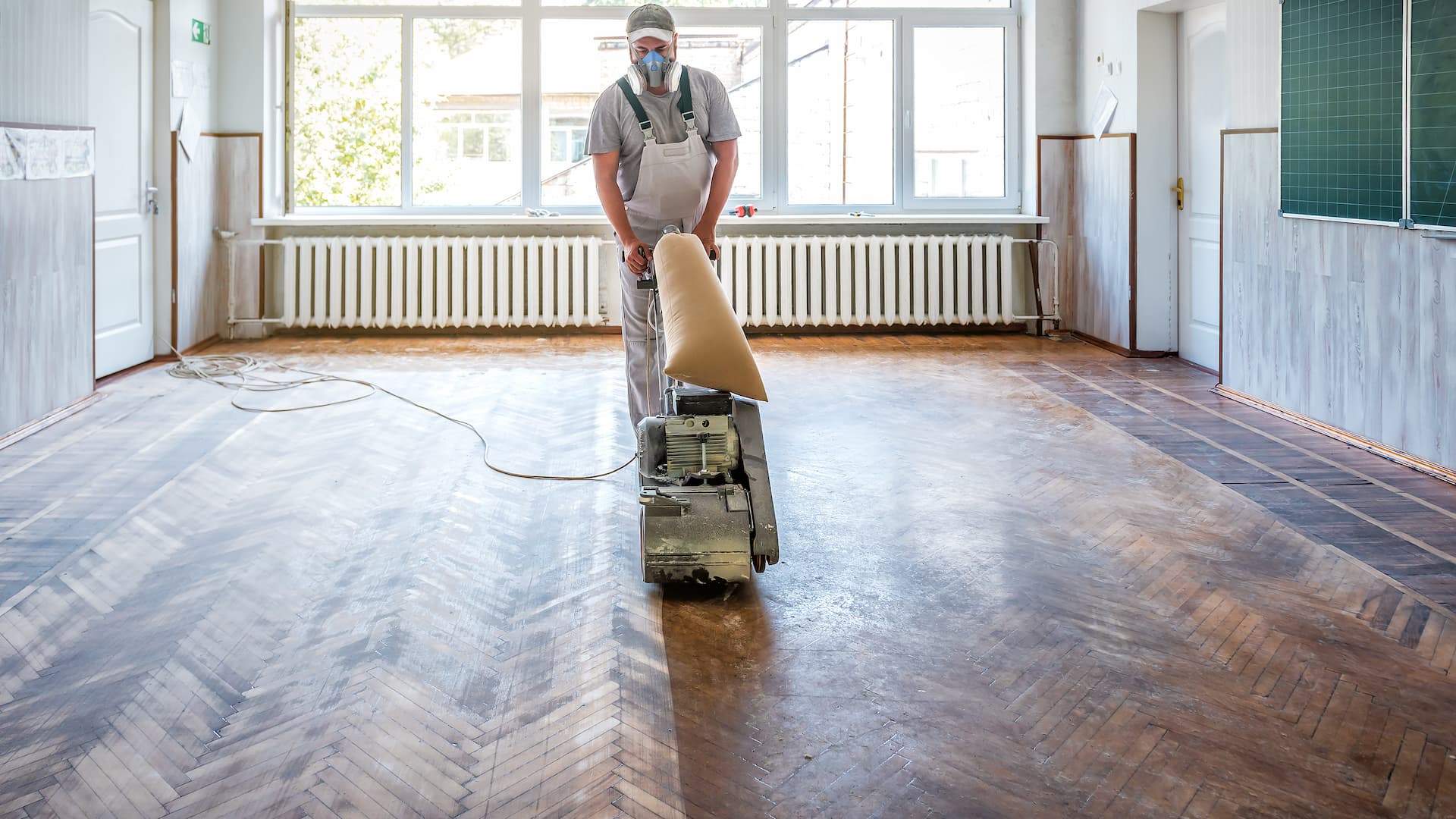
Older buildings frequently hold floors of a quality that would be prohibitively expensive to replicate, and the first job is establishing whether previous treatment has left anything to work with.
We measure remaining thickness above the tongue, check fixings and sub-floor stability, and take moisture readings before recommending anything. Where the floor has been over-sanded in the past we will say so plainly, because that changes what is possible.
Heritage and older floors are damaged more often by over-enthusiastic sanding than by neglect. Aggressive machining removes character, exposes fixings and spends material that cannot be replaced.
We sand progressively with the correct abrasive sequence, taking only what is necessary to produce an even, serviceable surface. Repairs are matched by species and grade so they blend rather than announce themselves, and the finish is chosen to suit both the building and its use.
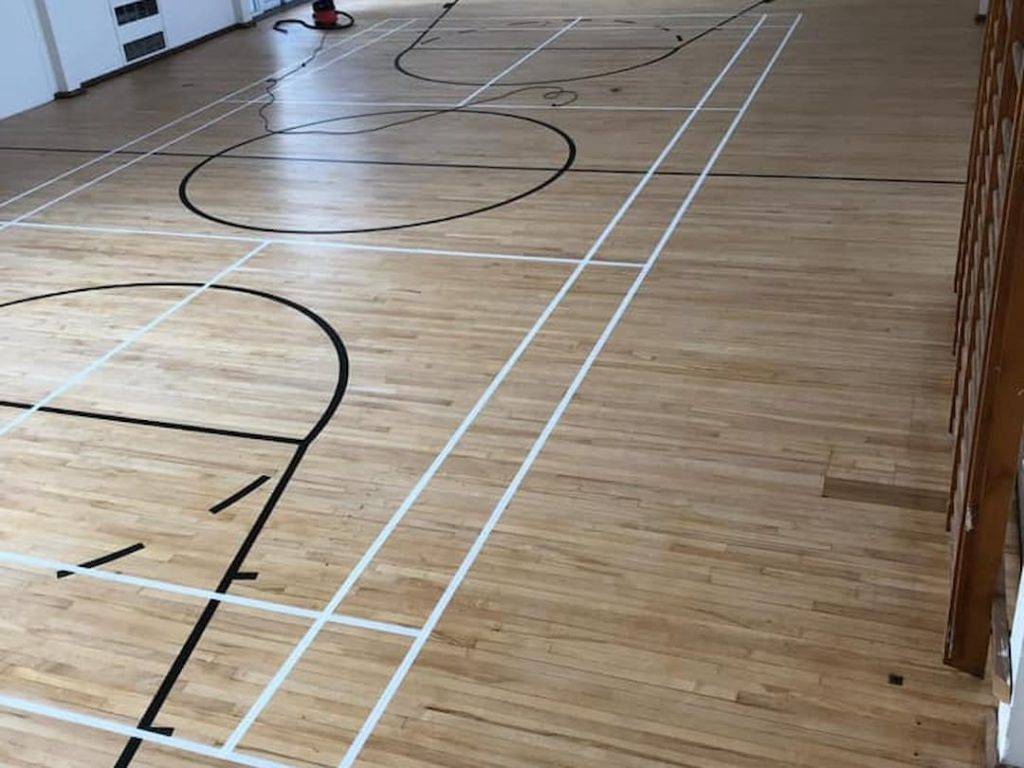
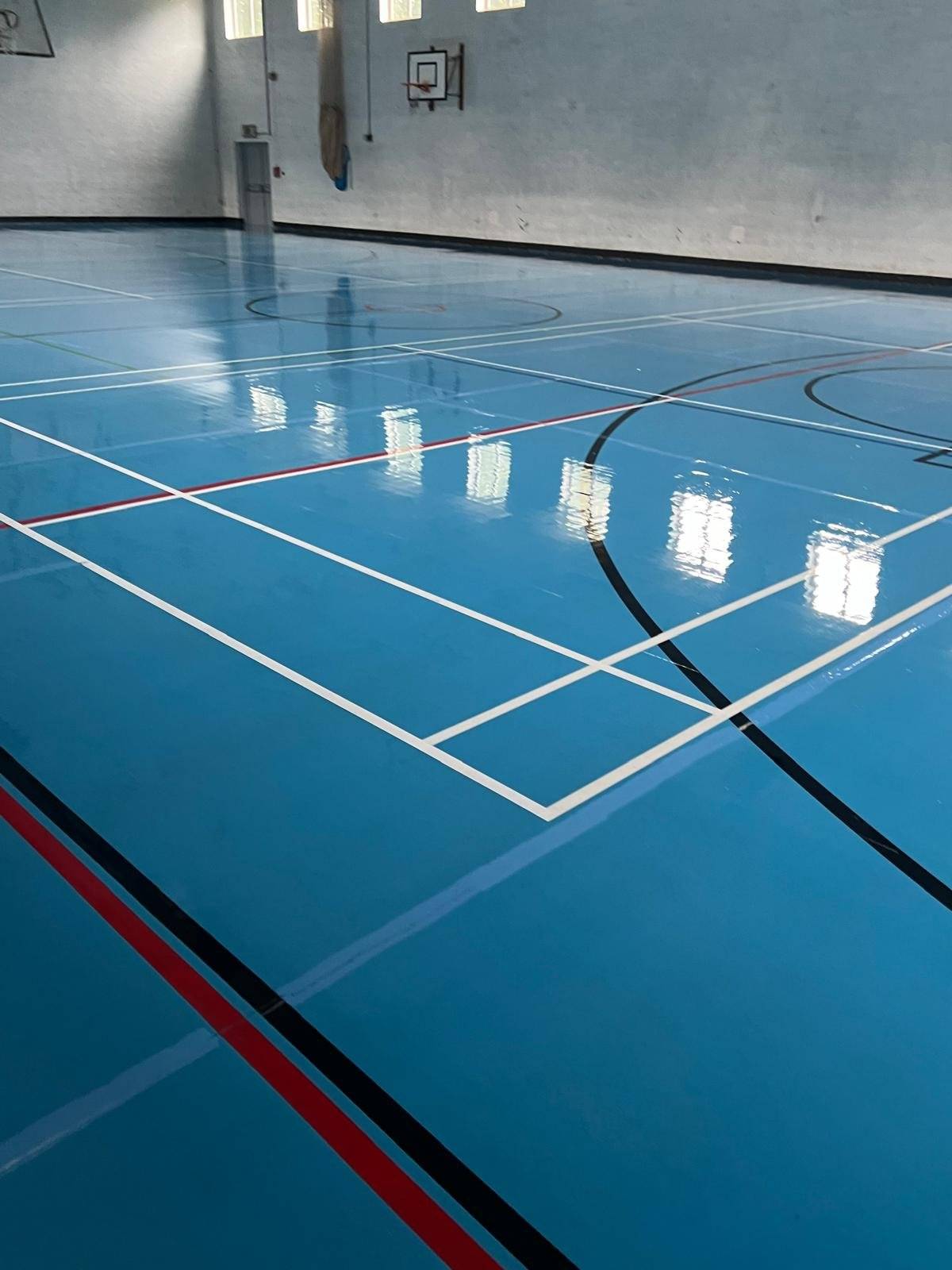
A hall at the end of a single-track road is not a candidate for a contractor who works in stages. Everything has to be completed in one visit: survey, repairs, sanding, sealing, marking and testing.
We plan rural work exactly that way, with all materials and machinery brought in at the outset and the full programme priced before we set off. Neighbouring facilities booking together share the mobilisation and reduce the cost for both.
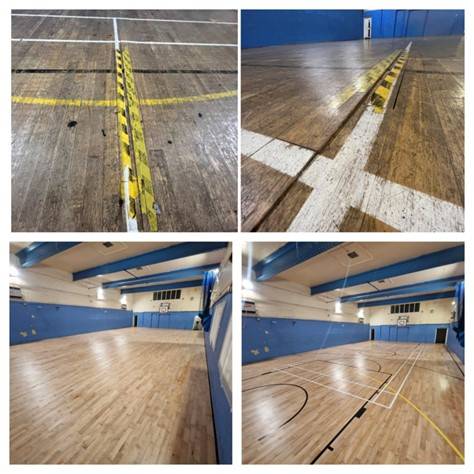
The gymnasium at The Bradfield Club had served generations and its floor wore every year of it. We sanded the original timber back to life, made the repairs it needed, then resealed and re-marked the space.
Community facilities work to tight budgets and cannot lose their halls for long, so the programme was planned accordingly and finished on the date agreed.
~ Matthew Evans
An outstanding company to deal with and they couldn’t have been better to work with. St George’s Ascot now has a stunning new sports hall floor and we are delighted. From quote, support, delivery and after sales, the Team has been brilliant. Thank you. 
~ James Anderson







A sports hall spends a surprising amount of its year as something else. Exam desks in May and June, a craft fair in December, a school production with staging and a hundred stacked chairs. Each of those events does more damage to a finish than a term of badminton.
The answer is a purpose made protective covering laid before the furniture arrives. Interlocking floor tiles or heavy duty roll covering keep chair feet, table legs and dropped equipment off the seal, and they pay for themselves the first time a caretaker does not have to explain a gouge to the head.
We advise on what to buy for the way your hall is used, how to store it and how to lay it without trapping grit underneath. Across North Yorkshire we see plenty of halls where the only real wear is from exam desks, and that is entirely avoidable.
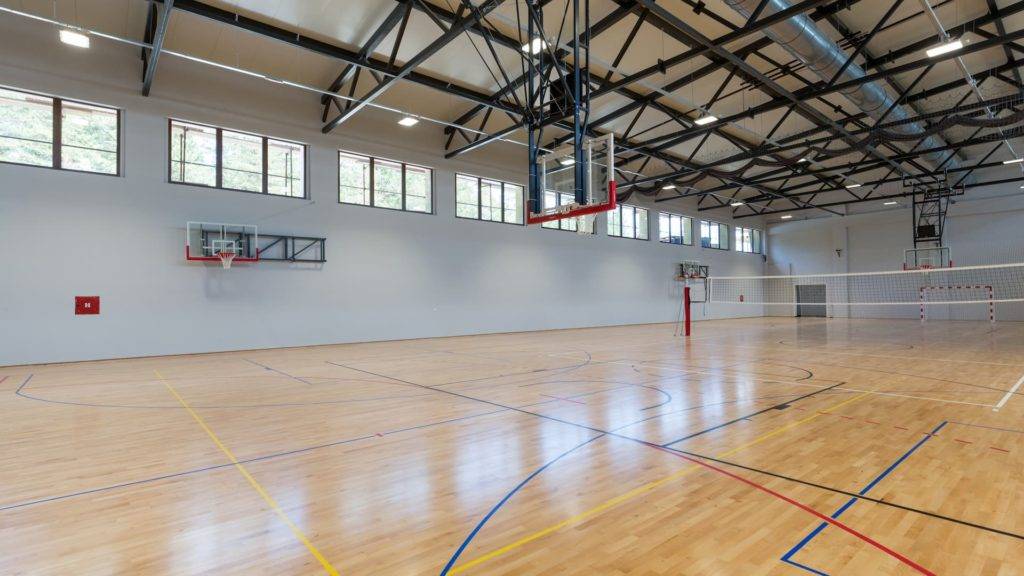

A guarantee is only worth anything if the company behind it is still trading and still doing the same work. We have been sanding, sealing and installing sports floors since 1987, under the same family, and we expect to be answering the phone when your floor is next due.
Because we survey, prepare, sand, seal, mark and test with our own team, one guarantee covers the whole job. There is no gap between the installer’s warranty and the finisher’s warranty for a fault to fall through. If a seal fails, a board lifts or a line peels within the guarantee period, we come back and put it right.
What we do not cover is damage from polish, wrong cleaning products, standing water or furniture dragged across the floor without protection, and we say so in writing at handover so nobody is surprised later.
Timber breathes. Boards take on moisture from the air in a damp autumn and give it back once the heating comes on, and every one of them changes width slightly as it does. Across a whole hall that adds up to visible movement twice a year.
Fine gaps opening between boards in January and closing by May are normal and need no action. Movement becomes a problem when it is extreme: an unheated hall left damp over the summer, or heating run hard and fast in October, can leave boards cupped or split.
The remedy is steadiness. Keep the hall within a sensible temperature and humidity range through the year, avoid long cold shutdowns and bring heating up gradually. Many of the older halls we see in North Yorkshire villages sit empty for weeks at a time, and a little background heat costs far less than the repair it prevents.
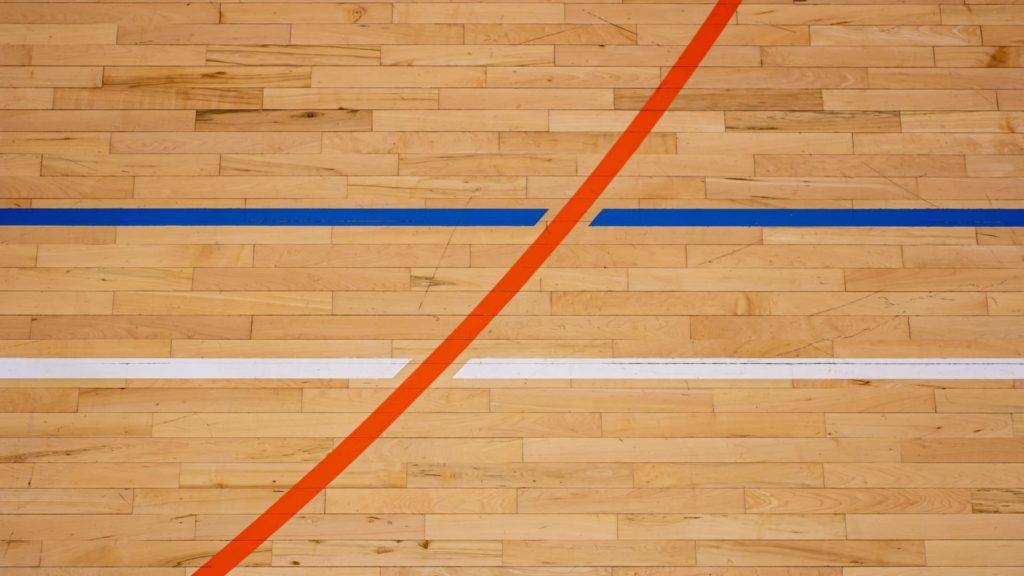
Grip on a sports floor is measurable, and measuring it is what protects the people responsible for the building. We use the pendulum method to BS 7976-2, which is the test insurers, governing bodies and the HSE all recognise.
A weighted rubber slider is swung across the surface and the loss of energy gives a Pendulum Test Value. Anything of 36 or above is classed as low slip potential. We record readings at several points across the hall, dry and then wet, and issue a certificate you can file.
The most useful time to test is before and after a deep clean or recoat, because it shows objectively what changed. An annual test on each floor, booked alongside a condition inspection, turns a vague worry about a slippery hall into a documented record that a governing body or trustee board can act on.
North Yorkshire is a very large county and the work divides between school sports halls, independent school sport, leisure facilities and a substantial rural stock.
School and academy halls are the largest group. We have completed work at Harris Academy in the wider region, and the constraints are consistent: a hall in constant curriculum use, a finish that had gone too long, and a fixed date to be back for the first day of term.
Independent school sport is a significant strand here, with well maintained buildings, high expectations of finish quality and work planned a long way ahead into fixed holiday windows. Much of that is preventative rather than remedial, which is the cheapest way to run a floor.
Village halls, church halls and club buildings make up the rest, and the county has a great many. Those old timber floors usually have plenty of life left.
Given the distances involved within the county, we plan work as continuous blocks and sequence several projects into one visit where we can.
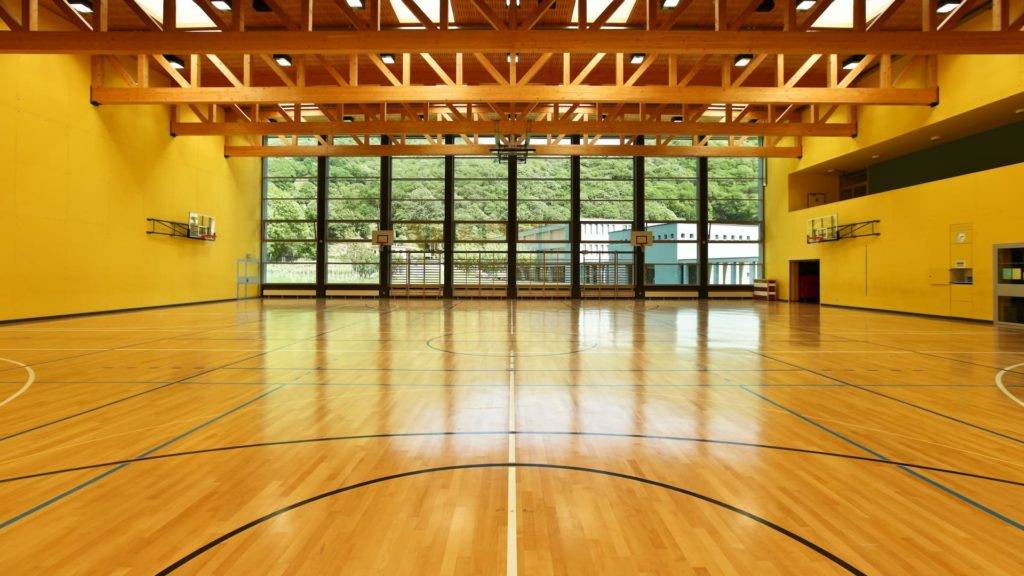
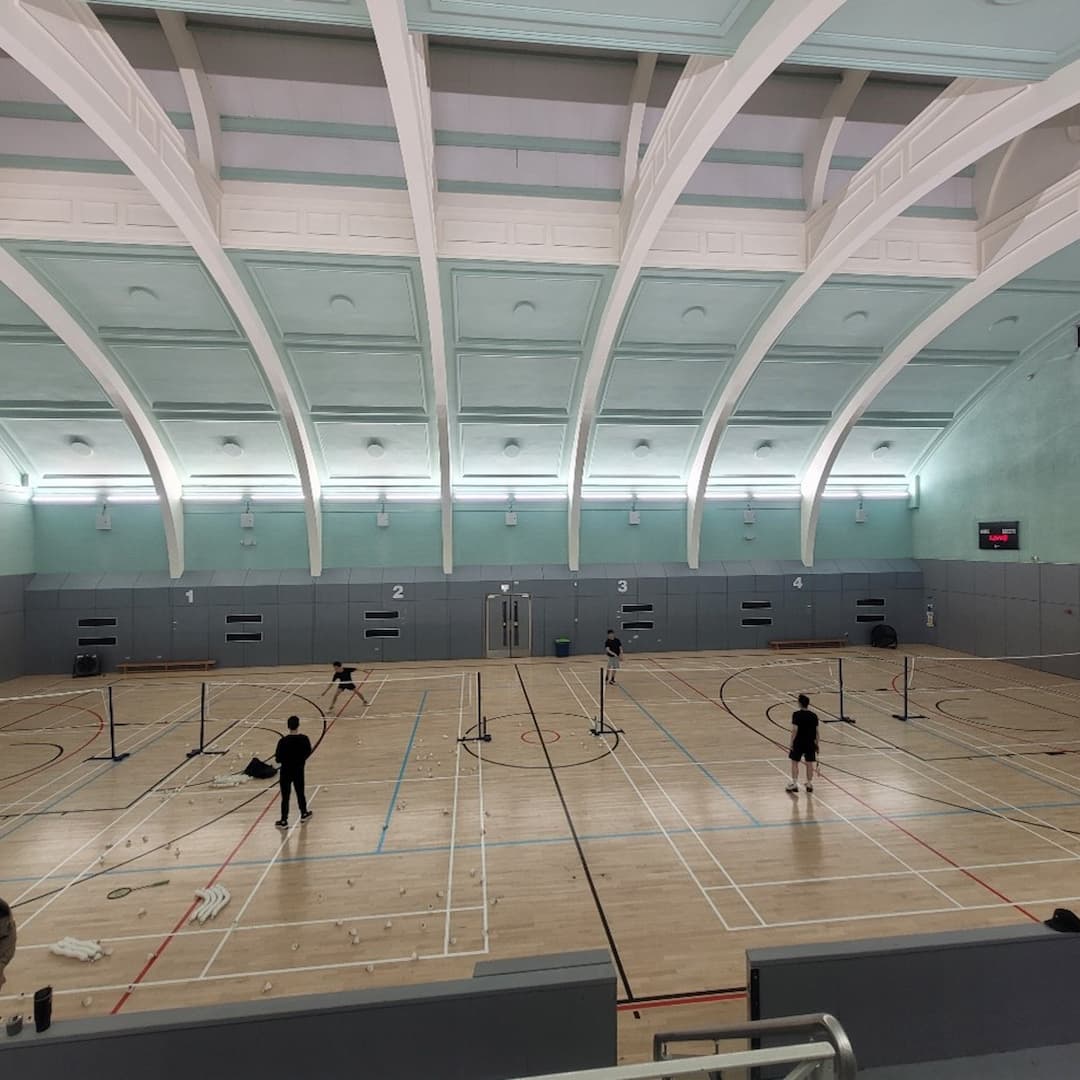
For North Yorkshire the most relevant comparisons are our academy work in the wider region and our community hall projects.
Harris Academy and Hornbury Academy in Wakefield are both good illustrations of the school type: halls in constant curriculum use, finishes that had gone well past their proper cycle, and fixed term dates with no flexibility. In each case the floor was taken back to bare timber, damaged boards were cut out and replaced, and markings were set out fresh from measured governing body dimensions rather than traced from faded originals.
For the county large stock of village halls, St Katherine Hall is the closer parallel: an old timber floor under decades of accumulated polish, chair and table scoring across the whole area, and a restoration that cost a fraction of replacement.
Given the distances involved within the county, sequencing several halls into one visit is well worth doing.
Trolleys, posts and mats wait at least 72 hours after the final coat, and people can walk on it after about 24. A cold village hall stretches both. We write the release times into the handover and suggest locking the room until they pass.
Yes. We plan leisure work around the booking diary, sanding and sealing between the last session and the first and timing the final coat so the hall is usable by morning. The extra labour cost is usually small next to the income a closure would lose.
Yes, and it is specialist work. Granwood is a composite block in a bitumen bed and must not be sanded like timber. We prepare it carefully and apply a modified epoxy coating system with new markings, which brings a tired block floor back at a fraction of replacement cost.
It can. We paint it from your artwork between coats of seal so the final lacquer protects it and it wears with the floor. Adding it during a refinish is the cheapest moment, and we show you the layout at scale before painting.
A failed pad, a cracked batten or a loose cradle under that patch. It is a structural fault, so refinishing the surface will not change the feel. We lift the boards locally, replace the failed parts and refit the boards, usually as part of a wider refinish.
Yes, and we recommend it. Stages are often a different timber and construction from the hall and are usually in worse condition. One visit costs far less than two, and a matt seal on the stage keeps lighting from reflecting into the audience.
Ideally the January before. Every school wants the same summer weeks and they go early. A call in June usually means the following year. Half terms and Easter work well for shorter jobs such as a screen and recoat.
Yes. The quotation is itemised, so you can take the sanding and sealing this year and relining or stage work the next. Our survey report ranks each item by urgency, and we tell you plainly what should not wait.
Book a free survey anywhere in North Yorkshire and we will give you a clear written assessment of your sports floor, a fixed price and a date that holds. Call 01823 674562 or send us a message through the site.