
Pickleball has gone from curiosity to fixture in British sports halls in a remarkably short time, and most facilities are adding it to floors that were never planned with it in mind. The good news is that a well-specified multi-use surface handles pickleball extremely well, and adding courts to a sound floor is usually a single visit.
Courtship Flooring installs and marks indoor pickleball courts across the UK for leisure trusts, schools, universities and clubs. Commercial and institutional facilities only.
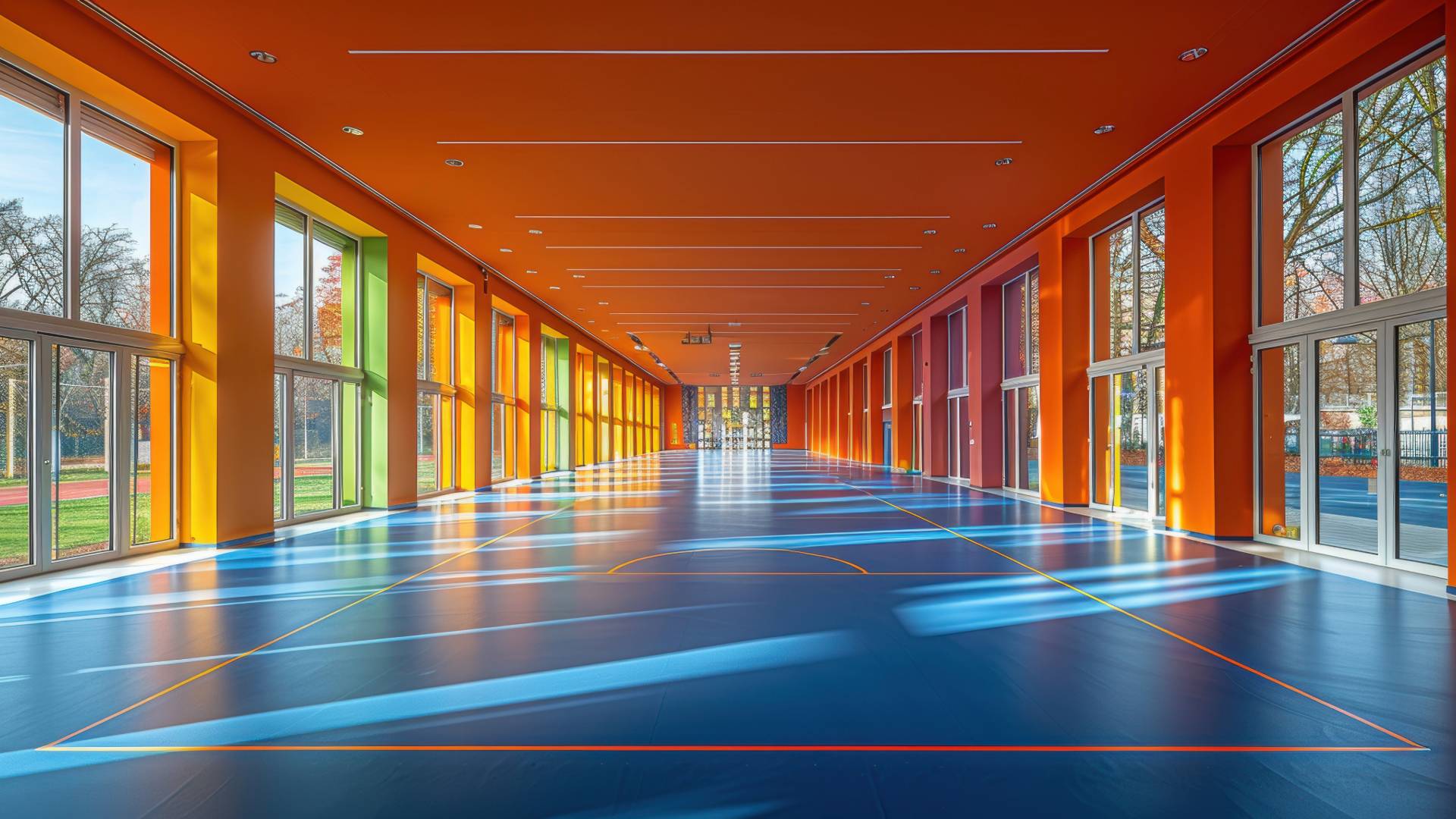
Pickleball is played on a smaller court than badminton with a hard paddle and a plastic ball, and the movement is short, sharp and lateral. That puts a premium on consistent friction: enough grip to change direction confidently, not so much that a foot catches.
Because the participant base skews older than most court sports, shock absorption matters more than people assume. A compliant sprung or point-elastic surface is considerably kinder to knees and hips over a two-hour session than a floor laid straight onto concrete.
Most facilities do not need a new floor for pickleball; they need the courts marked properly on the one they have. A standard hall will usually take two to four courts depending on clear area and run-off.
We plan the layout so the new courts sit clearly against the existing badminton, netball and basketball lines without turning the floor into a puzzle, mark them to specification, and seal the lines within the finish. Full detail on our line marking page.
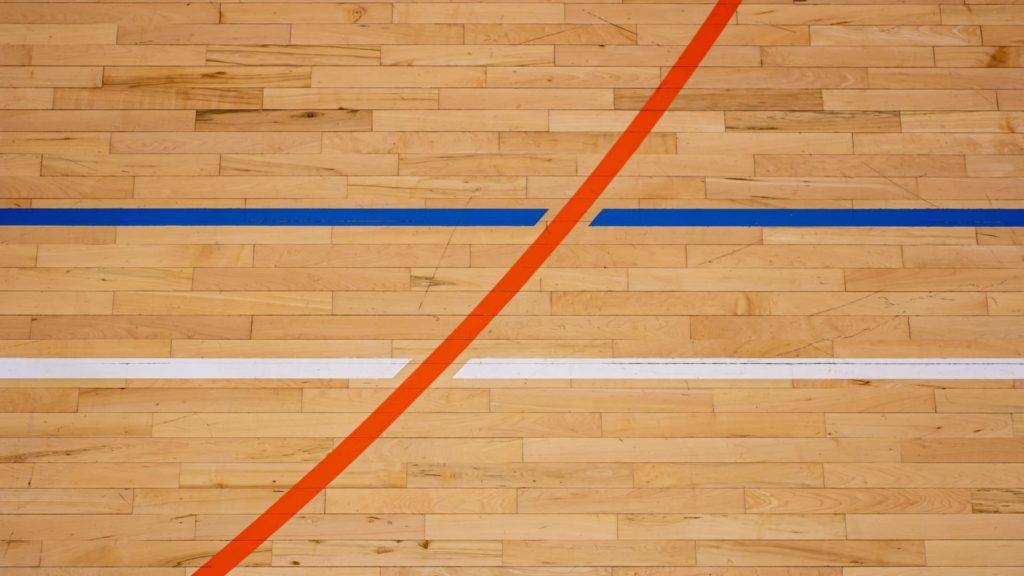

Dedicated venues are starting to appear, and they can be specified properly rather than compromised. Sprung timber gives the best feel and can be renewed repeatedly. Polyurethane offers excellent consistency and very low maintenance for a venue running sessions all day. Vinyl systems provide good value where budget leads.
We install all three and will recommend against the timetable and the budget rather than a product range. Where a venue also hosts other sports, we specify for the whole picture.
Pickleball is a noisy sport. The paddle strike is sharp and repetitive, and in a hard-surfaced hall it carries, which becomes a genuine problem where the space adjoins classrooms, studios or neighbouring properties.
Flooring can only address part of it, but acoustic underlays reduce impact transmission into the structure, and our refurbishment and installation work can incorporate them. We will be honest about what a flooring solution can and cannot achieve on airborne noise.
A pickleball court is 13.41 metres by 6.1 metres, which is exactly the same footprint as a badminton doubles court. That coincidence is the single most useful fact in planning indoor pickleball in this country, because almost every British sports hall is already set out for badminton.
Within that rectangle the non volley zone, universally called the kitchen, extends 2.13 metres from the net on each side. The service courts occupy the remaining area behind it, divided by a centre line. The net is 0.914 metres at the posts and 0.86 metres at the centre.
Run off is where indoor pickleball differs from badminton in practice. The game involves more lateral movement at the baseline, and while the governing bodies recommend a total playing area of around 18.29 by 9.14 metres, most halls will not offer that. A minimum of 1.5 metres behind each baseline is a sensible working figure for recreational play.
We set out from measured dimensions rather than assuming the badminton lines are correct, because a great many are slightly out and pickleball will inherit the error.
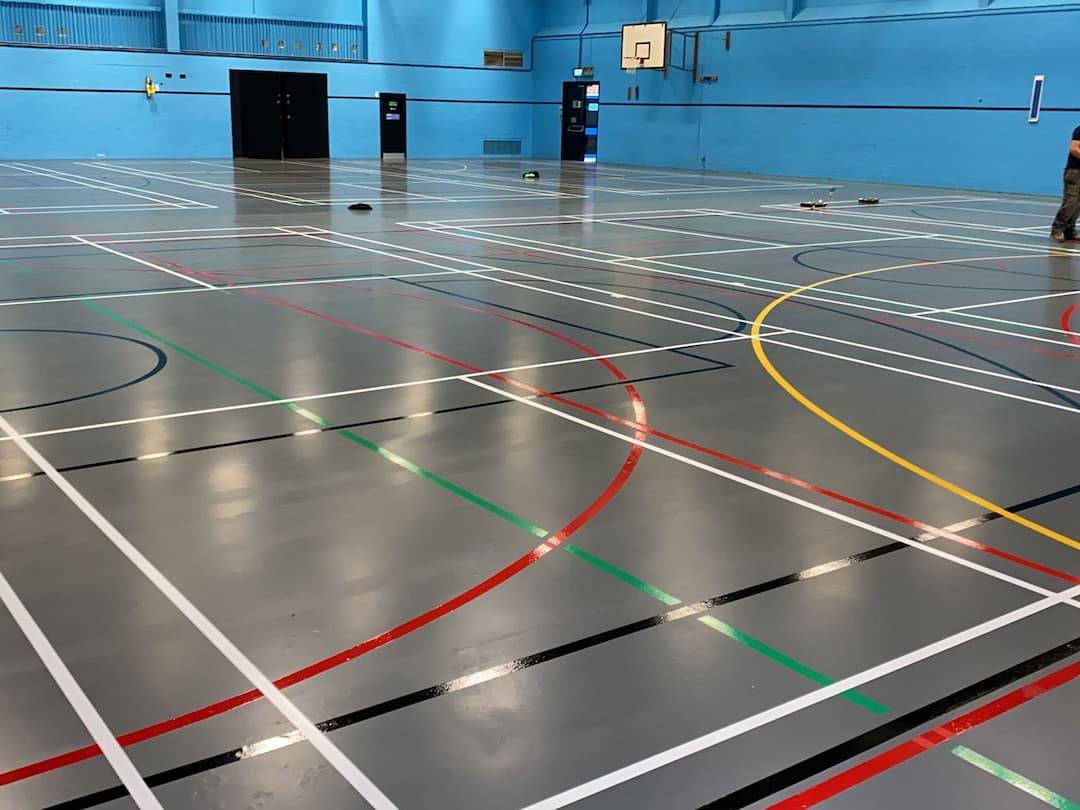
The overwhelming majority of pickleball enquiries we get are about adding courts to an existing sports hall, not building a dedicated facility, and that is a marking job rather than a flooring job.
Because the court shares its footprint with badminton, the additional lines needed are the kitchen lines and the centre service line. That is a modest amount of paint, and it can usually be added during a scheduled reseal at very little extra cost.
Colour choice is the real decision. A hall that already carries badminton, netball, basketball and five a side markings is close to visually saturated, and adding another sport badly makes the whole floor harder to use. We choose a colour with genuine separation from what is already down, and we will often suggest removing a redundant set at the same time to make room.
Where a club is growing quickly and pickleball is becoming a primary use, it is worth reconsidering the whole marking scheme rather than adding to it. Halls look and play far better with four sports marked well than seven marked on top of each other.
Pickleball is played on a hard ball with a solid paddle, and the surface affects both the bounce and the players.
Sprung timber, the standard British sports hall floor, works well. The ball bounces consistently, the surface gives predictable grip for the lateral movement the game demands, and the resilience underneath is welcome given that a large proportion of the playing population is over fifty. If you have a good timber hall floor, you have a good pickleball surface.
Point elastic vinyl and polyurethane also work, and are common in the leisure centres where a lot of indoor pickleball is played. The ball behaves slightly differently, a little lower and quicker, but it is entirely playable and the surfaces are forgiving underfoot.
What matters more than the material is the condition. A worn, polished floor is the main complaint we hear from pickleball groups, because the sport involves frequent quick stops and a slick surface is unpleasant and unsafe. Restoring grip through a screen and recoat usually solves it.
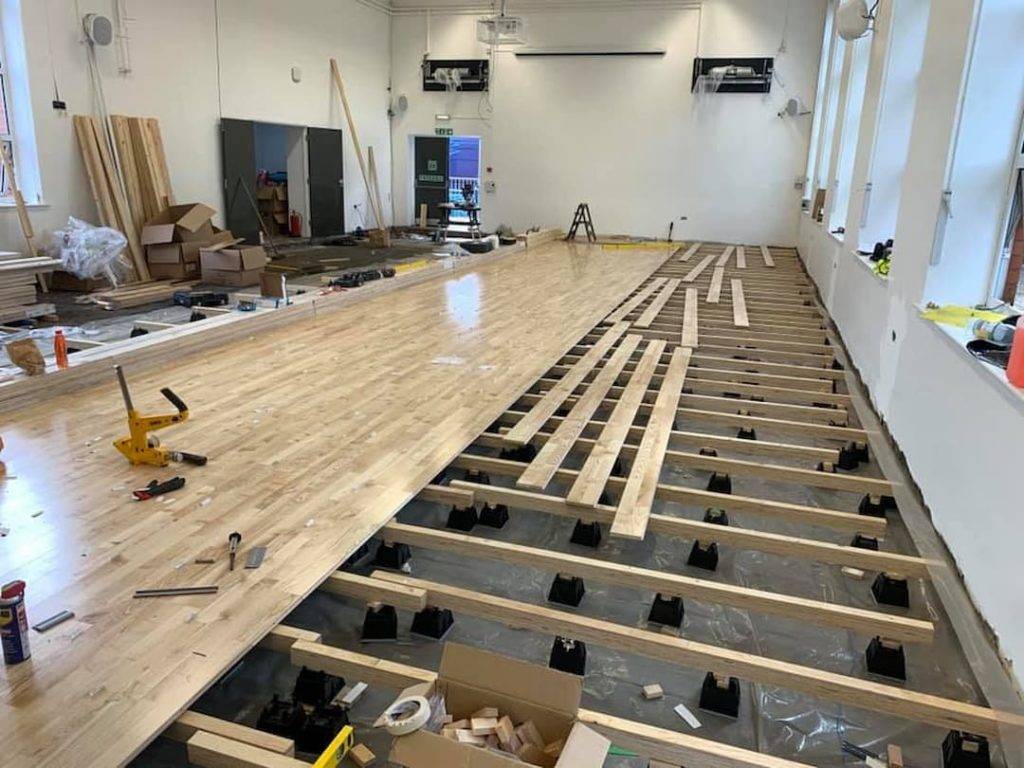
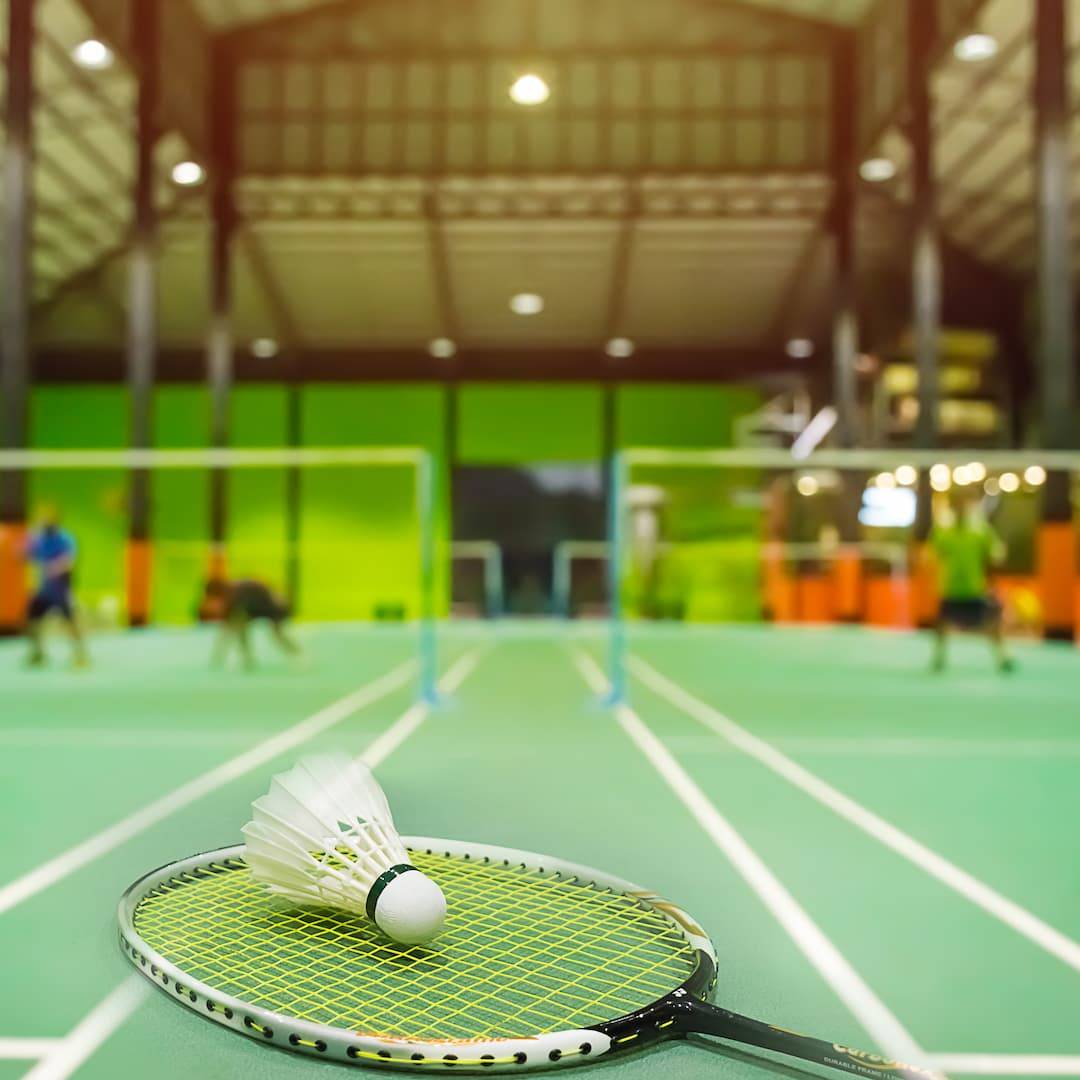
Pickleball has grown faster in the last few years than any other indoor sport in Britain, and facilities are having to make decisions without much history to draw on.
The practical advice we give is not to over commit early. Adding lines to an existing hall is inexpensive and reversible at the next refinish. Converting a facility to dedicated pickleball is expensive and difficult to undo. Start with markings, see how the demand develops over a couple of seasons, and make the bigger decisions from evidence.
Where demand is already established, the questions become about capacity. A standard four badminton court hall will take four pickleball courts, and the limiting factor is usually the gap between them rather than the courts themselves, because the game generates a lot of lateral movement.
Noise is worth mentioning, because it surprises people. The paddle and ball combination is loud, and a hall running four courts of pickleball is considerably noisier than the same hall running badminton. If the hall adjoins teaching or office space, that is worth knowing before the timetable is set.
Adding pickleball to an existing hall is one of the cheapest ways to open a facility to a new user group, which is why so many are doing it.
The cost is driven by the number of courts, whether the lines are going down during a scheduled reseal or as a standalone visit, and whether any existing markings need dealing with first. Adding pickleball during a sand and seal is far and away the best value, because the setting out sits inside a programme already underway and there is no second closure.
As a standalone visit, marking pickleball courts in an otherwise finished hall is typically a one to two day job including cure time. On timber we abrade, apply the lines and seal over the top so the markings sit under the lacquer rather than exposed on it, which is what makes them last.
We confirm the layout, the colours and the number of courts in writing before starting, and we set out and check every court before painting. If the hall cannot take the number of courts you want with safe separation, we will tell you at survey.
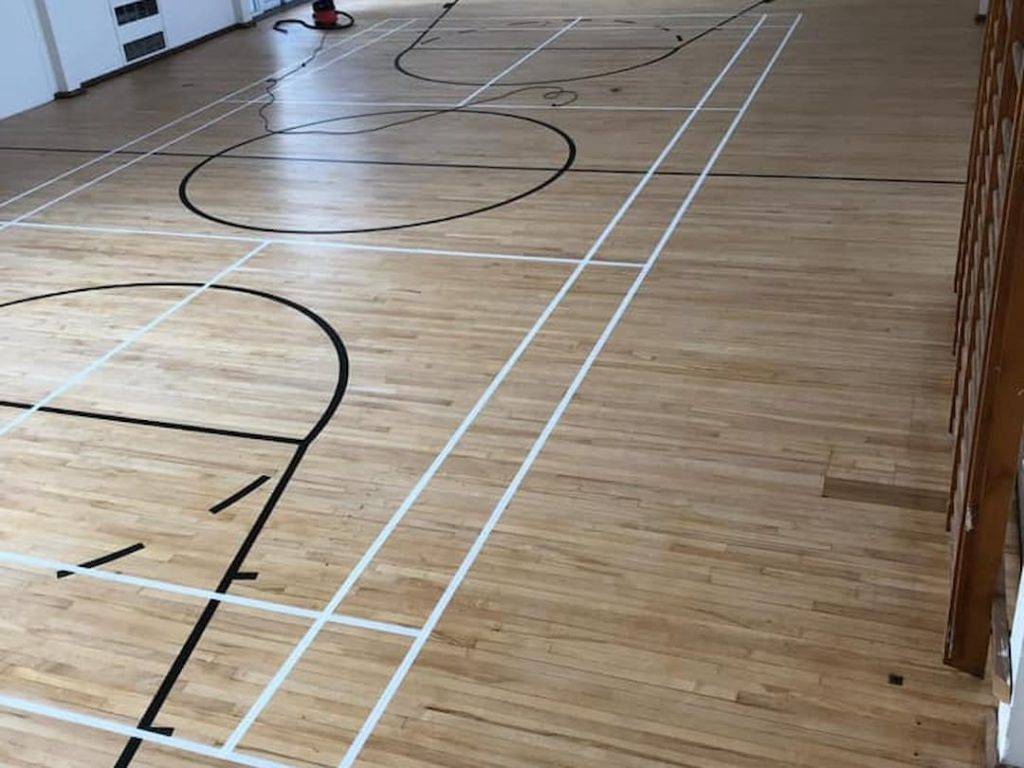
Marking a court is only part of making a hall playable, and the fittings are the part that gets overlooked until the first session.
Pickleball nets are lower than badminton nets and are usually freestanding rather than socketed, which is convenient but means the posts sit on the playing surface. Portable net systems with hard, narrow feet will mark a sealed floor over time, and it is worth checking that the feet are padded before a club starts using the hall weekly.
Where a facility is committing to pickleball properly, floor sockets can be installed to the correct positions during a refinish. They finish flush, they stay watertight, and they remove the freestanding post problem entirely. Fitting them while the floor is already open costs a fraction of doing it as a separate job later.
Whatever route you take, we reset every socket and cover to the finished floor level rather than sealing over them and leaving a raised ring for somebody to catch a foot on.
Usually two to four, depending on the clear floor area and the run-off needed around each court. Send us the hall dimensions and we will set out the realistic options alongside your existing sports.
In most cases yes, provided the floor is sound. It is a marking job rather than a resurfacing one, and we plan the layout so the new courts read clearly against the lines already there.
Sprung timber for feel and longevity, polyurethane for consistency and low maintenance in high-volume venues, vinyl for value. The right answer depends on how much the venue is used and what else it hosts.
It can be, particularly next to classrooms or studios. Acoustic underlays reduce impact transmission into the structure and can be built into a new installation, though airborne paddle noise needs treatment beyond the floor.
13.41 metres by 6.1 metres, identical to a badminton doubles court. The non volley zone, or kitchen, extends 2.13 metres from the net on each side.
Yes, and this is by far the most common request. The court footprint is the same, so only the kitchen lines and centre service line need adding. It is inexpensive, particularly during a scheduled reseal.
Both work well. Timber gives a consistent bounce and welcome resilience underfoot. Vinyl and PU play slightly lower and quicker. Condition matters far more than material, as a polished floor is unsafe for the sport.
A screen and recoat restores grip without a full refinish, provided the seal has not worn through to bare timber. It is a short visit and usually solves the complaint entirely.
Typically one to two days including cure time as a standalone visit. Added during a sand and seal it adds very little to the overall programme.
Tell us your hall dimensions and what else it hosts, and we will advise on court numbers, layout and surface. Call 01823 674562.