
Flooring Professionals To The Leisure Industry
Courtship Flooring is a commercial sports flooring contractor working in the Scottish Borders and across the UK. A rural region where single-visit programmes and honest prioritisation matter most.
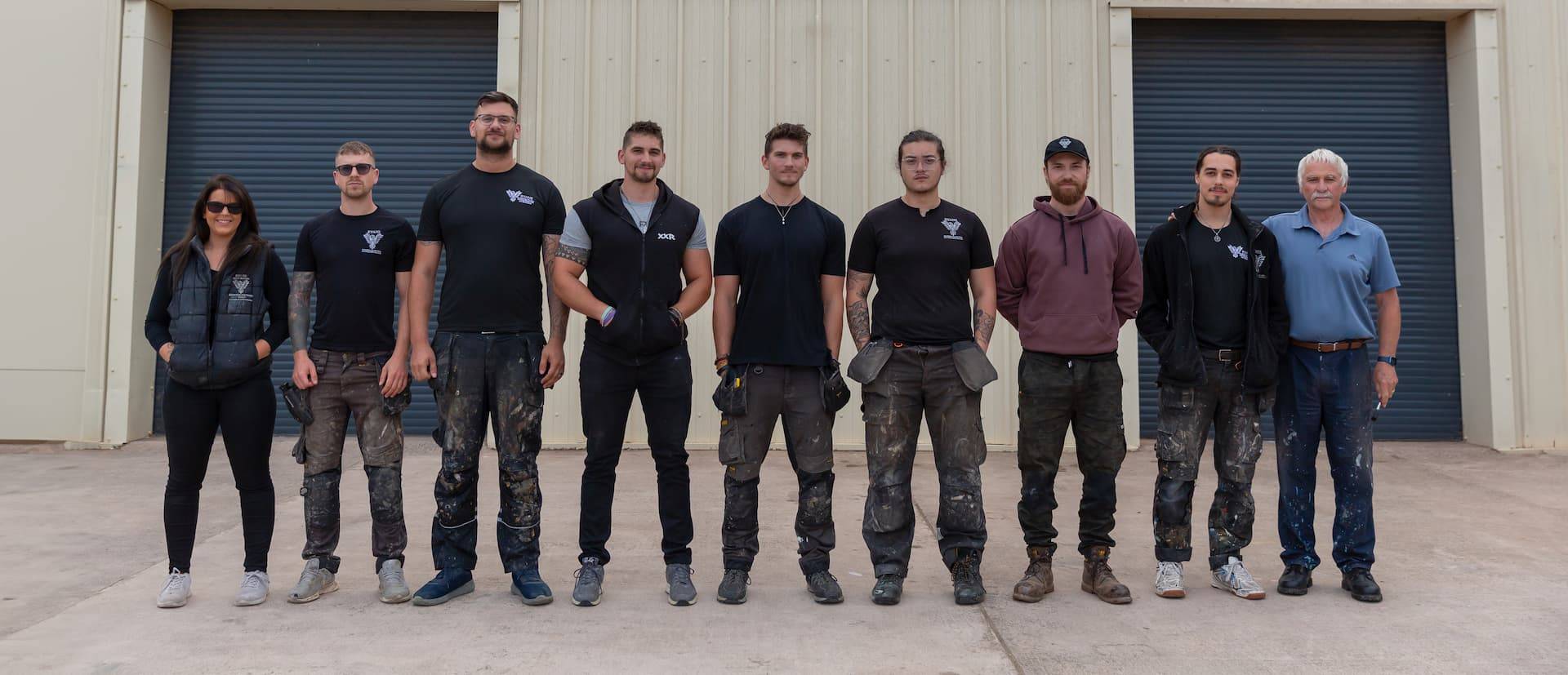
We have been specialising in indoor sports and commercial timber floors since 1987. The business is family-run, nothing is subcontracted, and the crew who survey a building are the crew who work on it. Domestic and residential projects fall outside what we do and are looked after by our sister company, Ryan’s Restorations.
In Scottish Borders, as elsewhere, a sports hall floor refurbishment is often the most cost-effective option: a full sand, reseal and reline that brings an existing floor back for a fraction of the cost of replacement.
Overnight/Weekend Installations
Professional Cleaning Demonstrations
Squash Court Maintenance
Recommended Cleaning Products
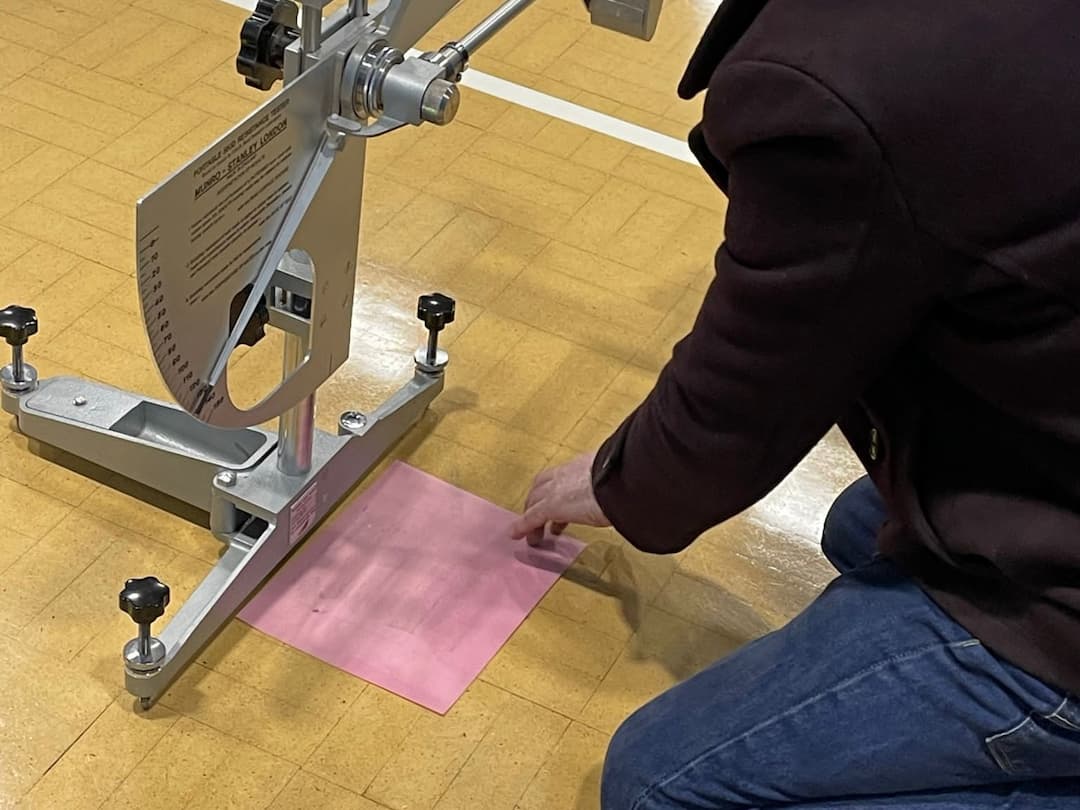
Professional Pendulum Slip Testing
Deep Clean & Reseal Service
Where buildings are scattered and budgets constrained, the useful output of a survey is a ranked programme rather than a single price. Which floor is deteriorating, which is merely unattractive, and which needs only a clean.
Our reports separate those clearly with firm costs attached, so spending goes where it prevents deterioration rather than where the complaints are loudest.
Travel is a real cost, and paying it repeatedly for separate small jobs is the most common avoidable expense in rural facility management.
Grouping work into a single visit, whether across one organisation or between neighbouring facilities, spreads that cost and reduces it for everyone. We will actively propose it where we can see the opportunity.
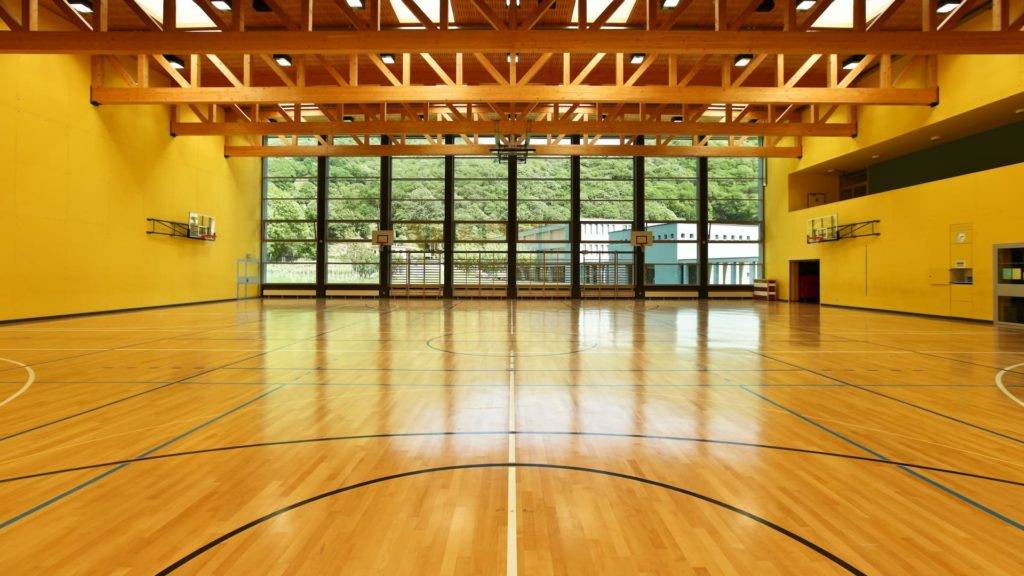
Most of our work comes from facilities we have looked after before, and that continuity has practical value. We know what is beneath the floor, what was done last time, which products were used and when the next intervention is due.
It removes guesswork, makes quotations more accurate, and means recommendations reflect the floor’s actual history rather than a single visit.
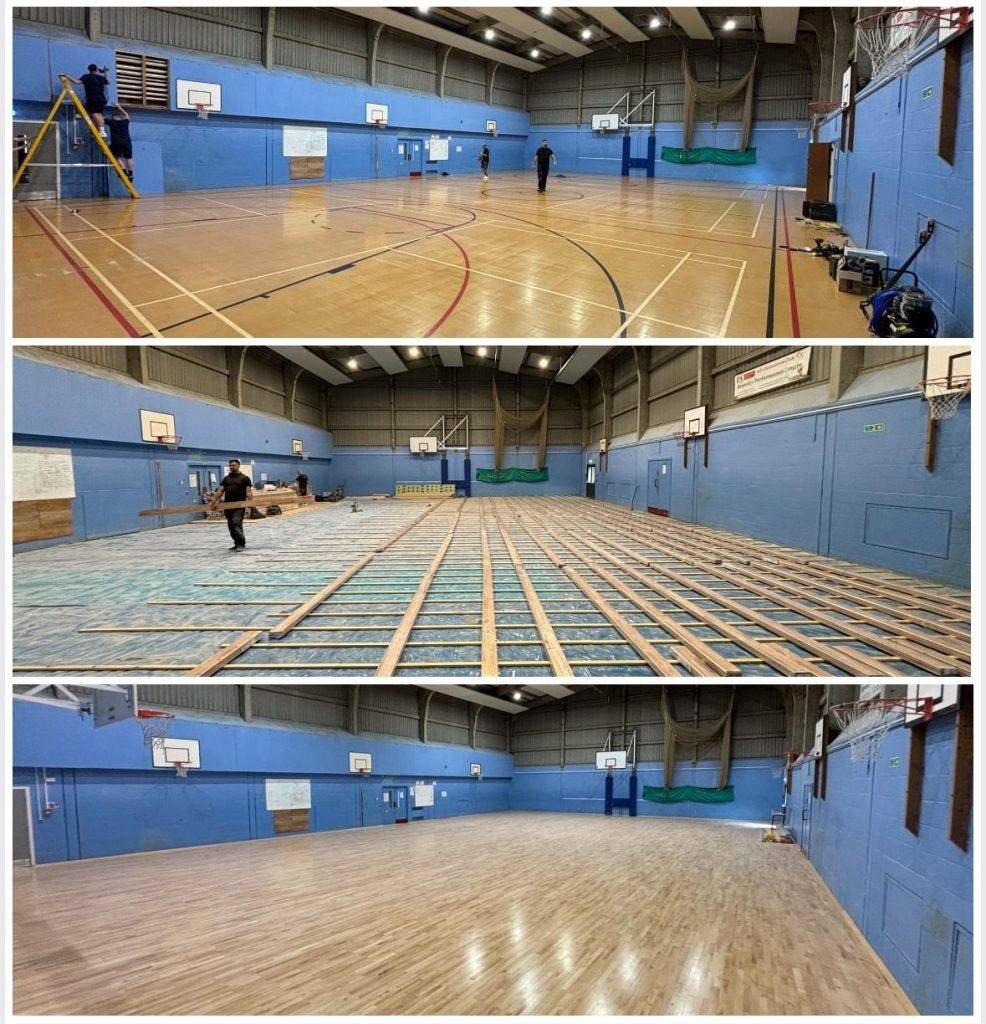
Harris Academy wanted a sports floor to match its ambitions, so we fitted a complete Junckers solid-beech sports system, the same Danish flooring specified in elite competition venues, finished with full multi-sport line markings.
An installation like that is a long-term statement: properly maintained, it will outlast every pupil currently on the roll. The project ran to programme from bare sub-floor to handover.
~ Matthew Evans
An outstanding company to deal with and they couldn’t have been better to work with. St George’s Ascot now has a stunning new sports hall floor and we are delighted. From quote, support, delivery and after sales, the Team has been brilliant. Thank you. 
~ James Anderson







A basketball that comes up short in one corner, or a patch of hall that feels flat under a landing, is the clearest sign that something beneath the boards has failed. The surface can look perfect and still play badly.
Sprung floors rely on pads, battens or cradles to give and return energy evenly. A pad that has perished, a batten that has split or a cradle that has dropped away from the boards leaves a dead zone directly above it. Squeaks and boards that click underfoot usually mean fixings have loosened over decades of use.
We find these at survey by walking the hall and bouncing a ball across it, then lift the boards over the affected area, replace the failed parts and re-lay the original timber. On a rural Borders site we carry the components with us, because a second visit for a handful of pads makes no sense.
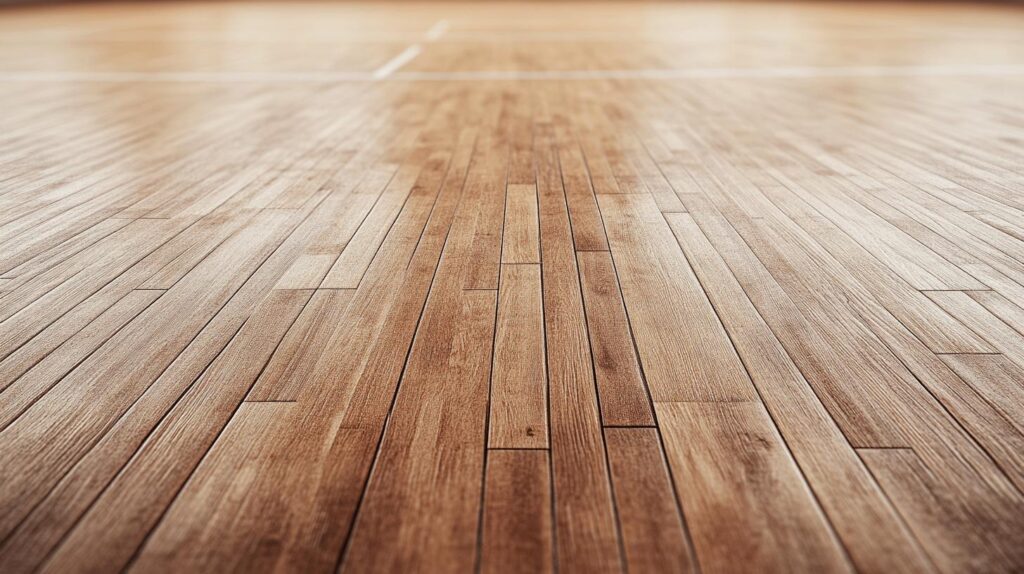

Some halls cannot close for a week, and for those we work while the building is empty. Leisure facilities lose bookings the moment the doors shut, and a community hall with a full weekday programme cannot simply cancel it.
Overnight working means starting after the last session, sealing at the end of each shift and handing the floor back walkable by opening time. Heavy equipment stays off until the finish has hardened. Weekend working suits schools in term and halls that are quiet on Saturdays, and a bank holiday weekend gives an extra day of cure for nothing.
It costs more in labour than the same job in a clear week, and we quote both ways so a manager in the Borders can set the extra against the income that would otherwise be lost. Key holding, alarm codes and access are agreed in writing before the first night.
Several of the older school and church halls across the Borders have Granwood floors, and they are routinely written off as worn out timber. They are not timber. The blocks are compressed wood flour and cement, laid in a hot bitumen bed, and they are harder and denser than any board.
A grey, dull Granwood floor has usually lost nothing but its coating. We prepare the blocks with the right abrasives, rebed any that have lifted, replace the few that have broken up, then apply a specialist epoxy system with the markings sealed into it. The result is a bright, grippy surface with decades left in it, for far less than replacement.
The one caution is the bitumen bed. On floors laid before the mid 1980s it may contain asbestos, so we test a sample before any block is lifted and keep that layer undisturbed wherever possible.
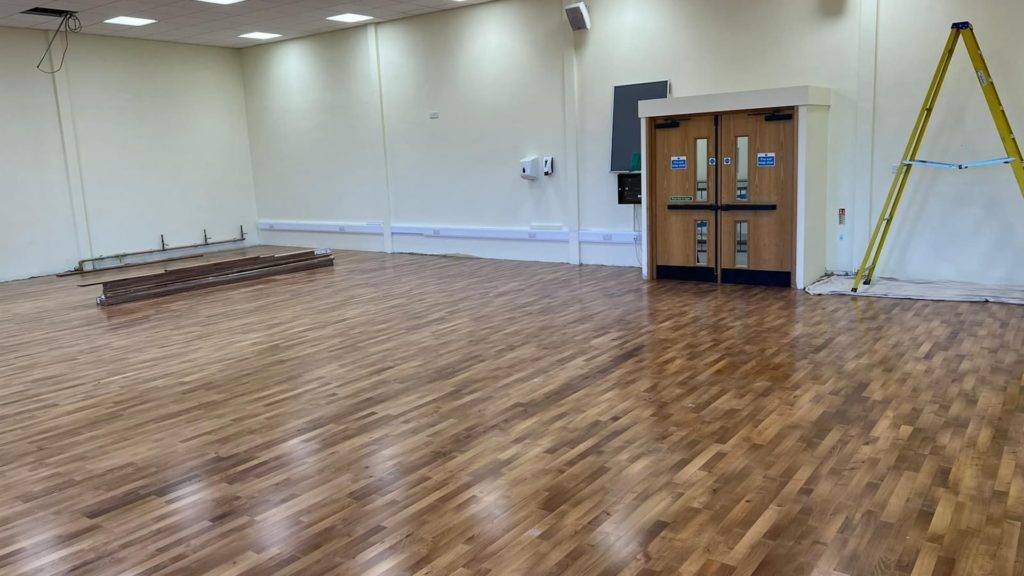

Most of the damage we repair on school and community hall floors was done by furniture, not sport. Exam desks, stacking chairs, staging and trestle tables scrape a finish in a single afternoon that a term of badminton would not touch.
A purpose made protective covering laid before the furniture goes in takes all of that. It rolls out in an hour, lifts afterwards just as quickly and costs a fraction of sanding out the scoring it prevents. The type depends on the surface, because a covering that suits sealed timber can mark a polyurethane floor, and we advise on the right grade at survey.
Storage matters as much as use. Rolled, dry and off the floor, a covering lasts years. Folded and left in a damp store, it cracks and then grinds grit into the finish it is meant to protect. For a Borders hall that hosts everything from exams to ceilidhs, it is the best money the committee will spend.
The Borders bring us school sports halls, community leisure facilities and a large number of village and club buildings, spread across a wide rural area.
Journeys across the region take longer than the map suggests, so we plan the work as continuous blocks and bring everything with us rather than expecting to collect materials locally. That makes these projects more thoroughly planned than a job close to base.
School halls are the largest group, and in many Borders communities the school hall is the principal indoor sports space for the surrounding area, taking club training and community lettings alongside curriculum use. That produces considerably more traffic than the timetable alone would suggest.
Village halls and club buildings follow, and those old timber floors are usually in far better condition than they look under decades of polish, with plenty of board depth left.
Where several facilities in the region are considering work, sequencing them into one trip is well worth doing and brings the cost down for everybody.
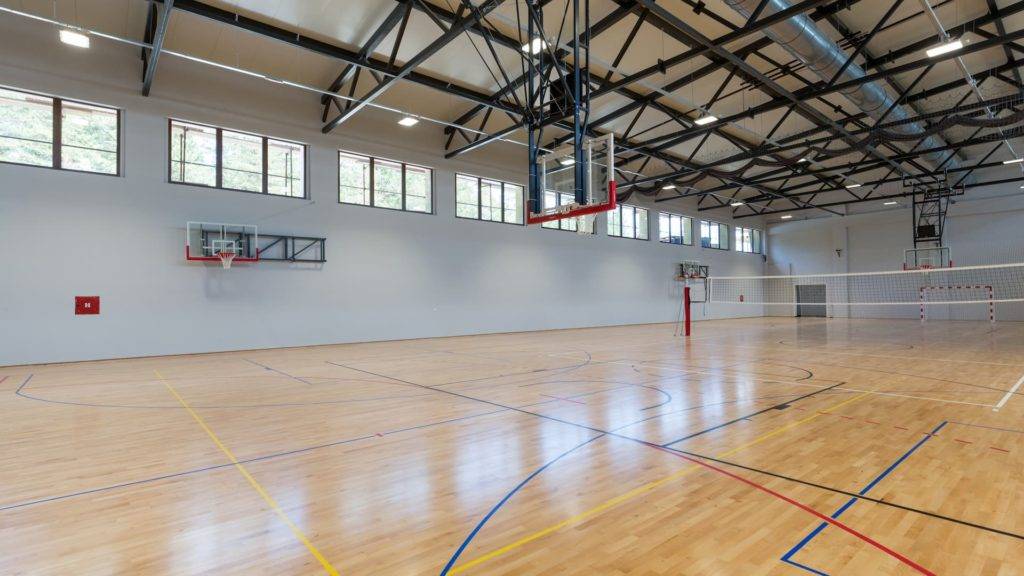
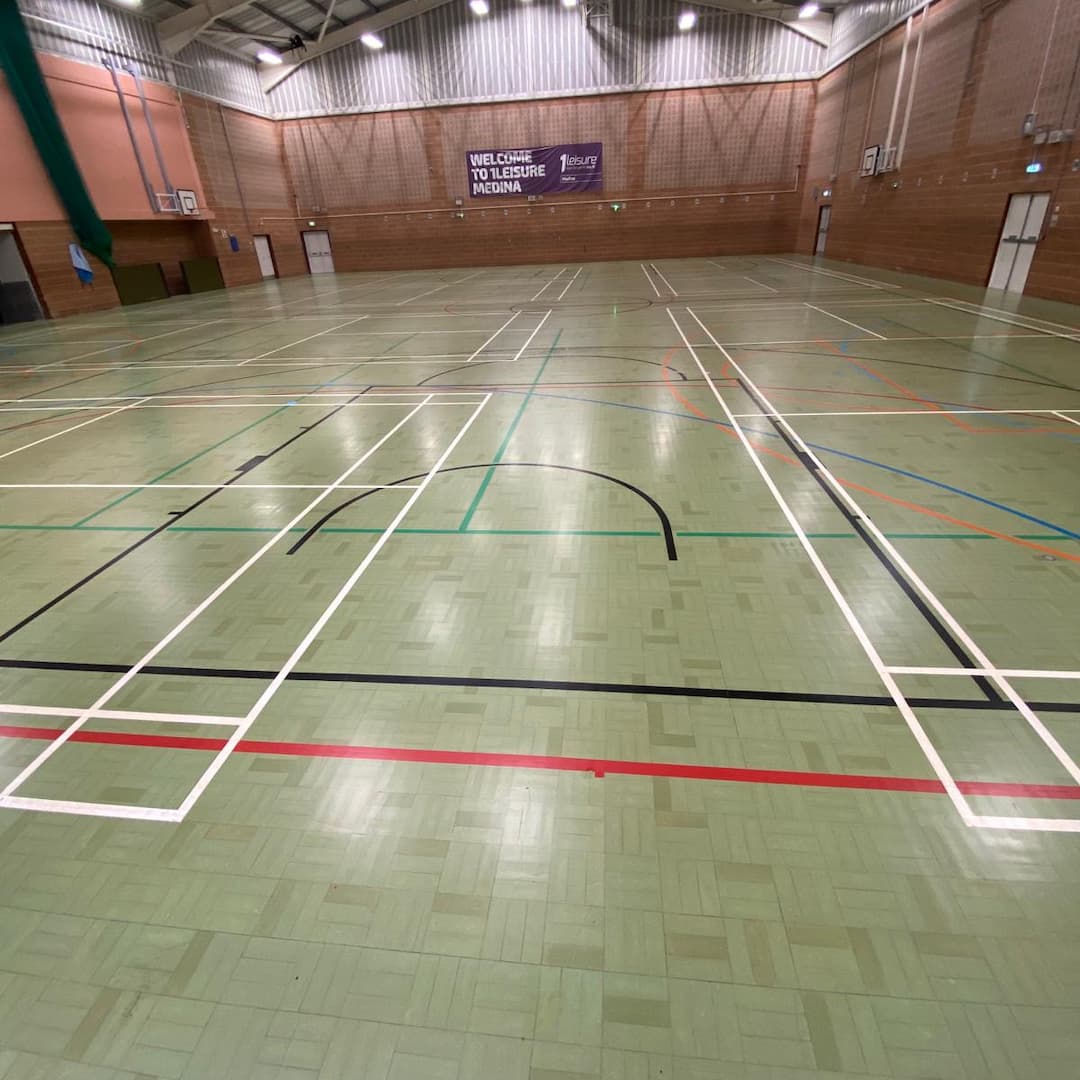
Borders enquiries usually resemble one of two projects we are asked about regularly.
For school halls doubling as the area sports facility, Hornbury Academy in Wakefield is the closest comparison. A hall in constant use that had gone well past its refinish cycle, taken back to bare timber, damaged boards replaced, resealed, and remarked from measured governing body dimensions rather than traced from what was there.
For community halls, St Katherine Hall is the better parallel: an old timber floor buried under decades of polish, scored by chairs and tables, with plenty of board depth left underneath. The polish was removed chemically before sanding, and the hall is now good for another few decades.
Both illustrate the point about distance. Work in the Borders is planned as a continuous block with everything brought with us, which makes the dates more reliable, and sequencing several halls into one visit brings the cost down for everybody.
A hall that carries basketball, netball, badminton, volleyball and five a side on one surface only works if somebody has decided which court is read first. Left to accumulate over the years, markings pile up until nobody can find their lines.
We start from the timetable. The sport played most gets the strongest colour and the full line width. Secondary sports step down in weight, and where two courts share a boundary the weaker line breaks so the stronger one runs clean. Anything nobody has played in years comes off, which is nearly always the biggest single improvement available.
Colours are chosen on the floor under the hall lights, because LED fittings change how shades separate. The test at the end is simple. A visiting team from across the Borders should walk in and find their court without asking, and no teacher should have to explain which blue is which.
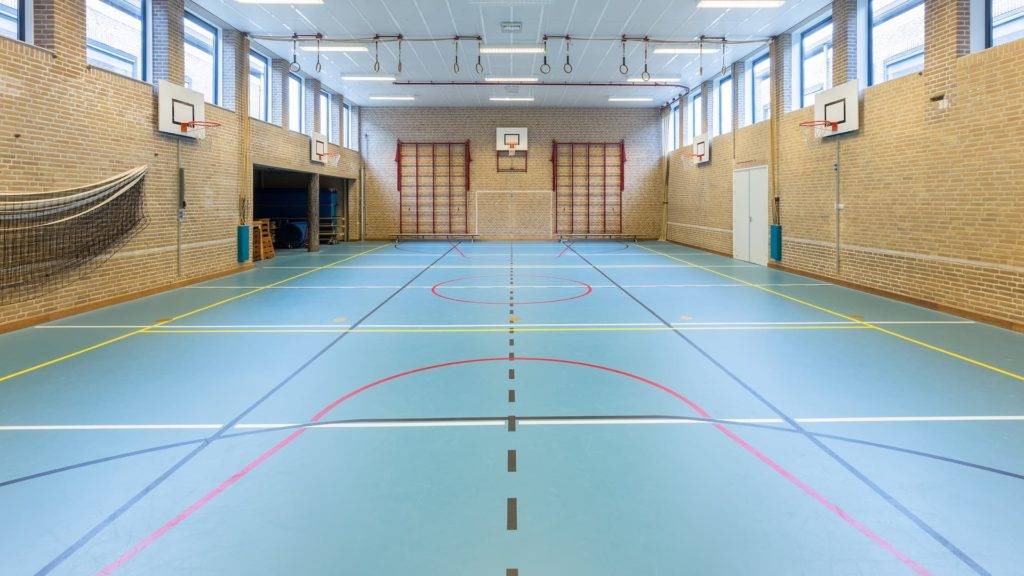
We lift a board at an edge or a socket and measure the timber remaining above the tongue. A solid strip floor sanded with care usually has several cycles left. We record the depth at each visit so you know how much life remains before replacement has to be considered.
Heating dries the air, the boards give up moisture and shrink, and the gaps close again in the damper months. It is normal seasonal movement, not a fault, and it does not need repairing. Keeping the hall at a steadier background temperature through the year reduces it.
An area elastic floor is timber on a sprung sub-structure that flexes as a panel, which suits ball sports and multi use halls. A point elastic floor, usually vinyl or polyurethane on foam, gives only where the foot lands, which suits fitness rooms and dance. BS EN 14904 sets the ranges for both.
Yes, and it makes sense to. Stages are often a different timber and usually in worse condition than the hall, and a matt seal suits them better under stage lighting. Doing both in one visit costs far less than two mobilisations to a rural site.
Allow 24 hours before anyone walks on the floor in soft clean shoes and 72 hours or more before sport, benches and equipment go back. In a cold hall the seal cures more slowly, so keep the heating on at a low level. The dates go in the handover note.
Yes, in advance. Enhanced DBS details for the crew, job specific risk assessments and method statements, COSHH sheets for every product and our insurance certificates are sent to the school office before we travel. On site we sign in, wear identification and keep to the agreed area.
Yes. We take pendulum readings at several points across the hall, including the entrance and the busiest lanes, and issue a dated certificate with the values and locations. It satisfies insurers and governing bodies and gives you a baseline to compare against at the next inspection.
Yes. A PU or vinyl hall that has gone patchy is deep cleaned, keyed and recoated in a new base colour with fresh markings over the top. The substrate stays where it is, the hall looks newly laid, and the cost is a small fraction of a new surface.
Book a free survey of your hall floor anywhere in the Scottish Borders and we will set out what it needs, what it costs and when we can do it. Call 01823 674562 or send us a message.