
Flooring Professionals To The Leisure Industry
Courtship Flooring is a commercial sports flooring contractor working in South Yorkshire and across the UK. Our work here spans competitive venues, school estates and community facilities.
This is all we do, and we have been doing it since 1987. Installation, restoration, sanding, sealing, line marking, slip testing and maintenance for commercial and institutional buildings, delivered without subcontractors. Residential projects go to our sister company, Ryan’s Restorations.
Everything set out on our main sports hall flooring page is available to schools, leisure centres and clubs in South Yorkshire.
Overnight/Weekend Installations
Professional Cleaning Demonstrations
Squash Court Maintenance
Recommended Cleaning Products
Professional Pendulum Slip Testing
Deep Clean & Reseal Service
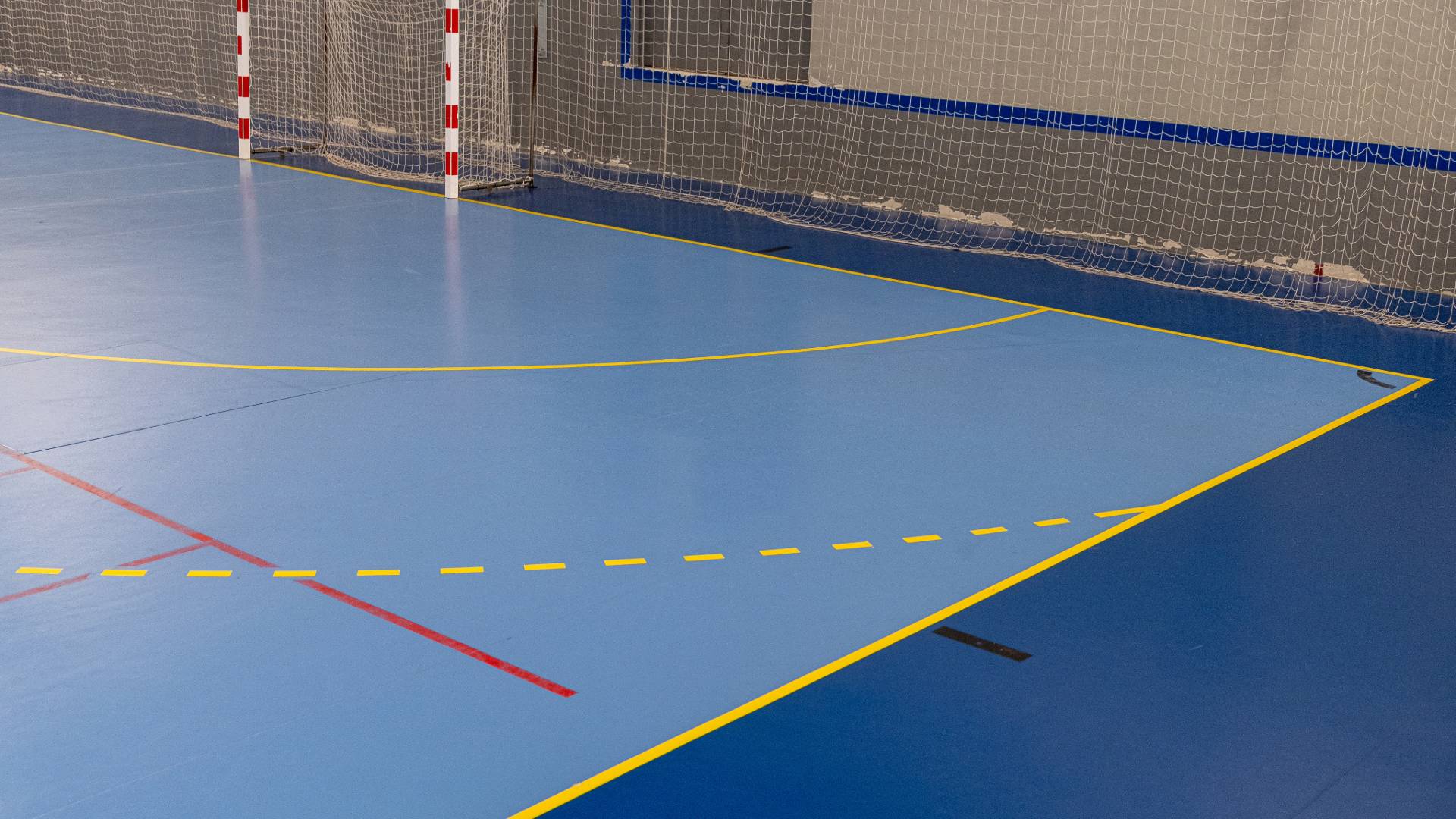
Hosting fixtures raises the bar. Court dimensions must match the current governing body specification, run-off has to be adequate and unobstructed, the surface has to perform consistently across the whole playing area, and the markings have to be unambiguous.
We check all of it against the relevant rulebook rather than the previous layout, and correct discrepancies during refurbishment when old lines come off during sanding.
A floor that performs well in the centre and poorly at one end has failed, whatever the average figure suggests. Inconsistency almost always originates beneath the surface: a compressed resilient layer, a batten that has lost contact, or localised sub-floor movement.
We assess across the full area rather than sampling conveniently, and repair the structure beneath before refinishing above. Resurfacing over a structural fault hides it for a season at most.
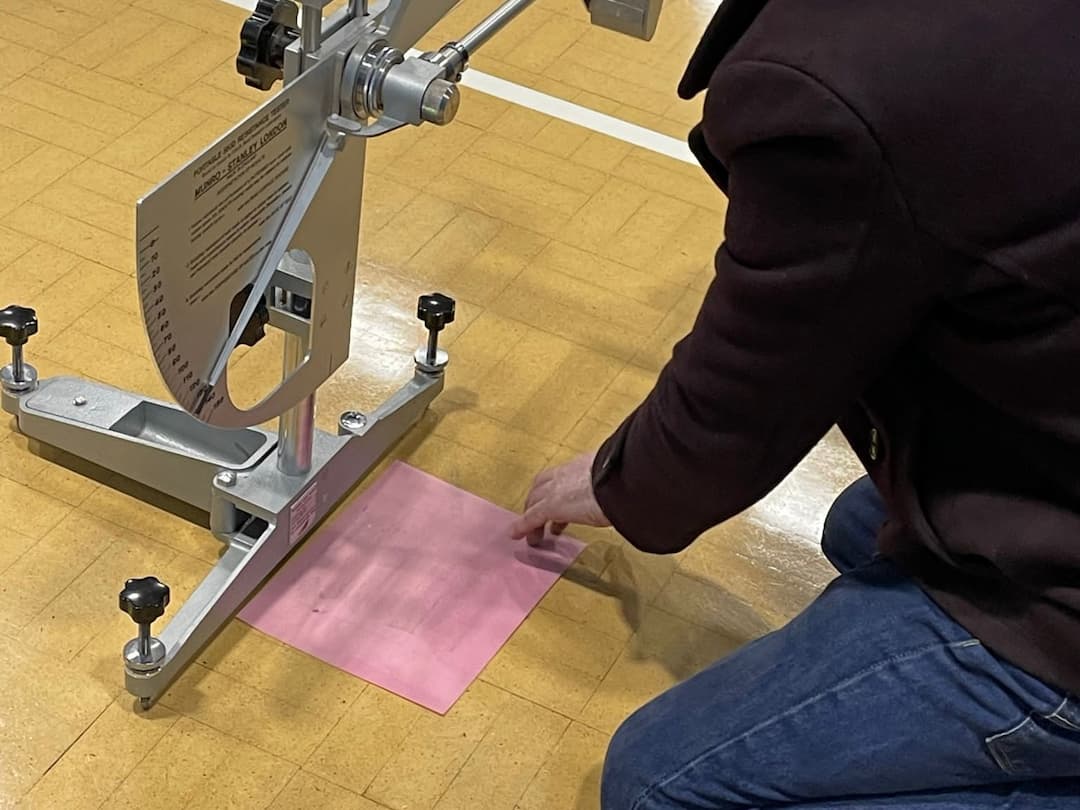
Venues are periodically asked to evidence that a surface is fit for purpose, and assurances are not evidence. We provide written documentation on completion covering the specification installed, the markings applied and the test results obtained.
Kept alongside maintenance records, it means a request for evidence is answered from a file rather than assembled retrospectively under pressure.
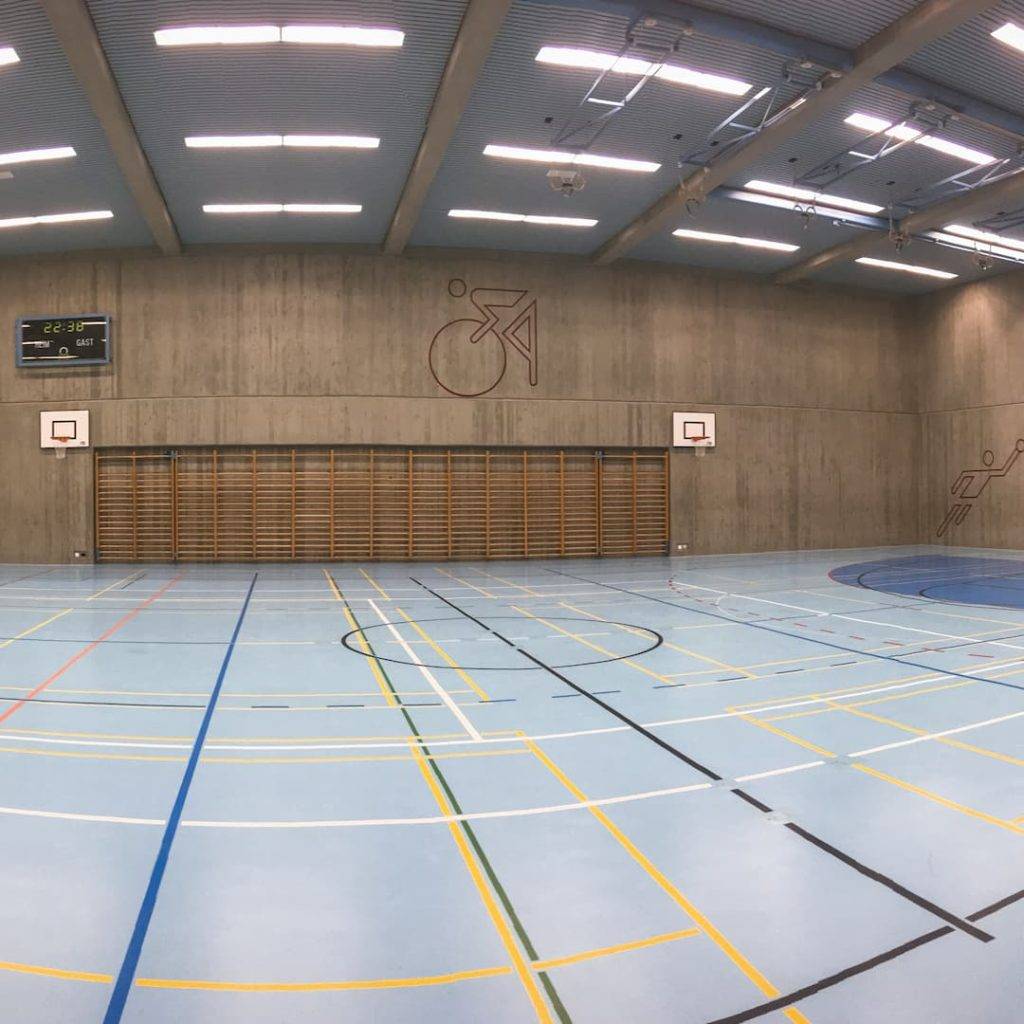
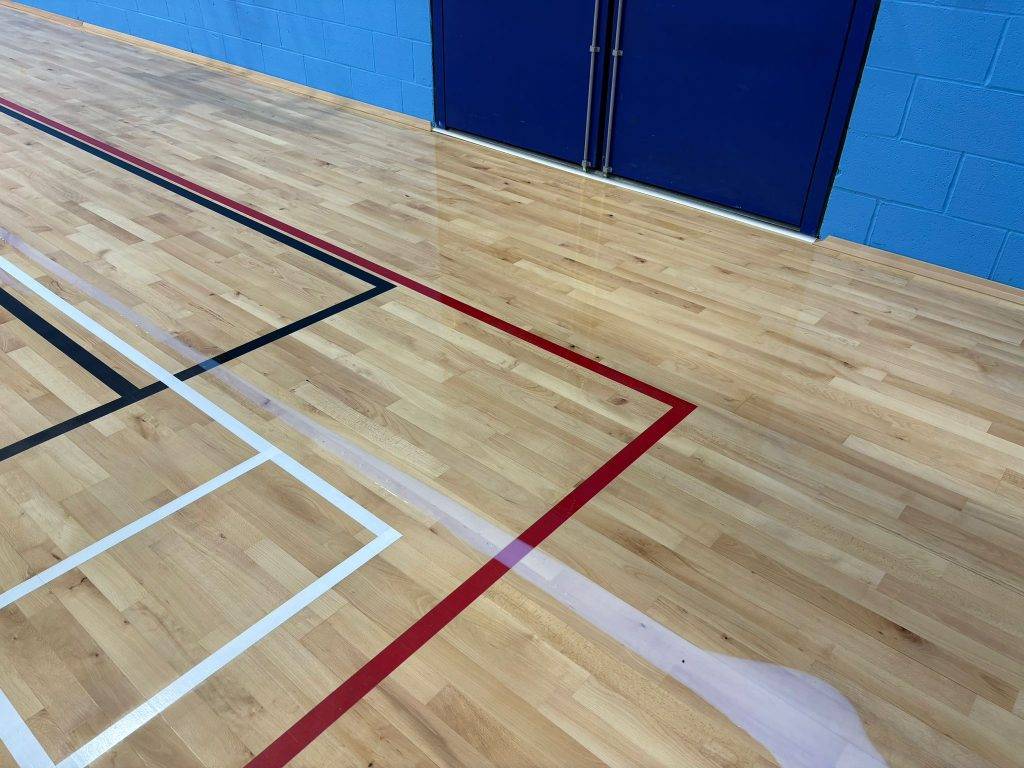
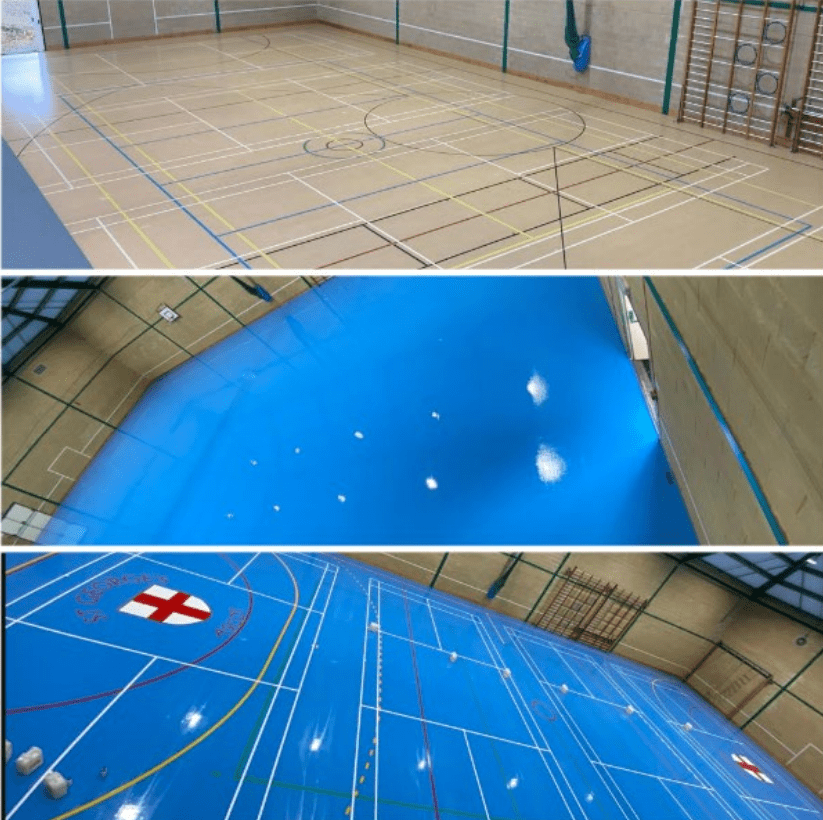
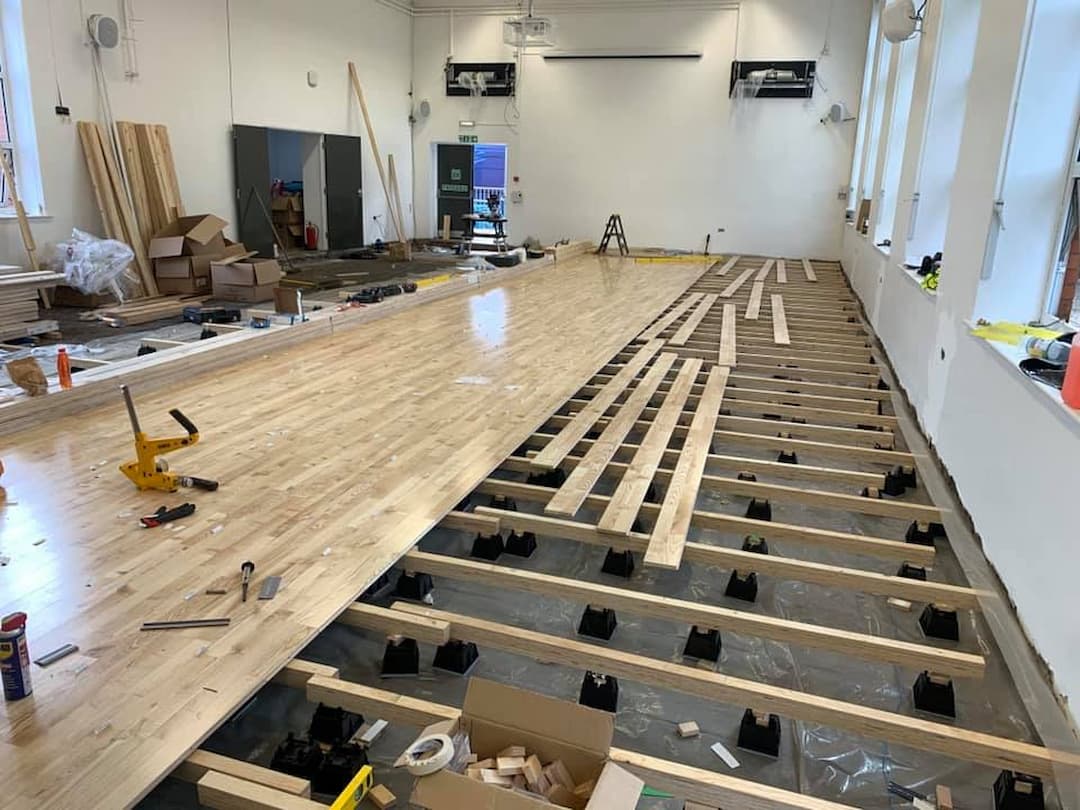
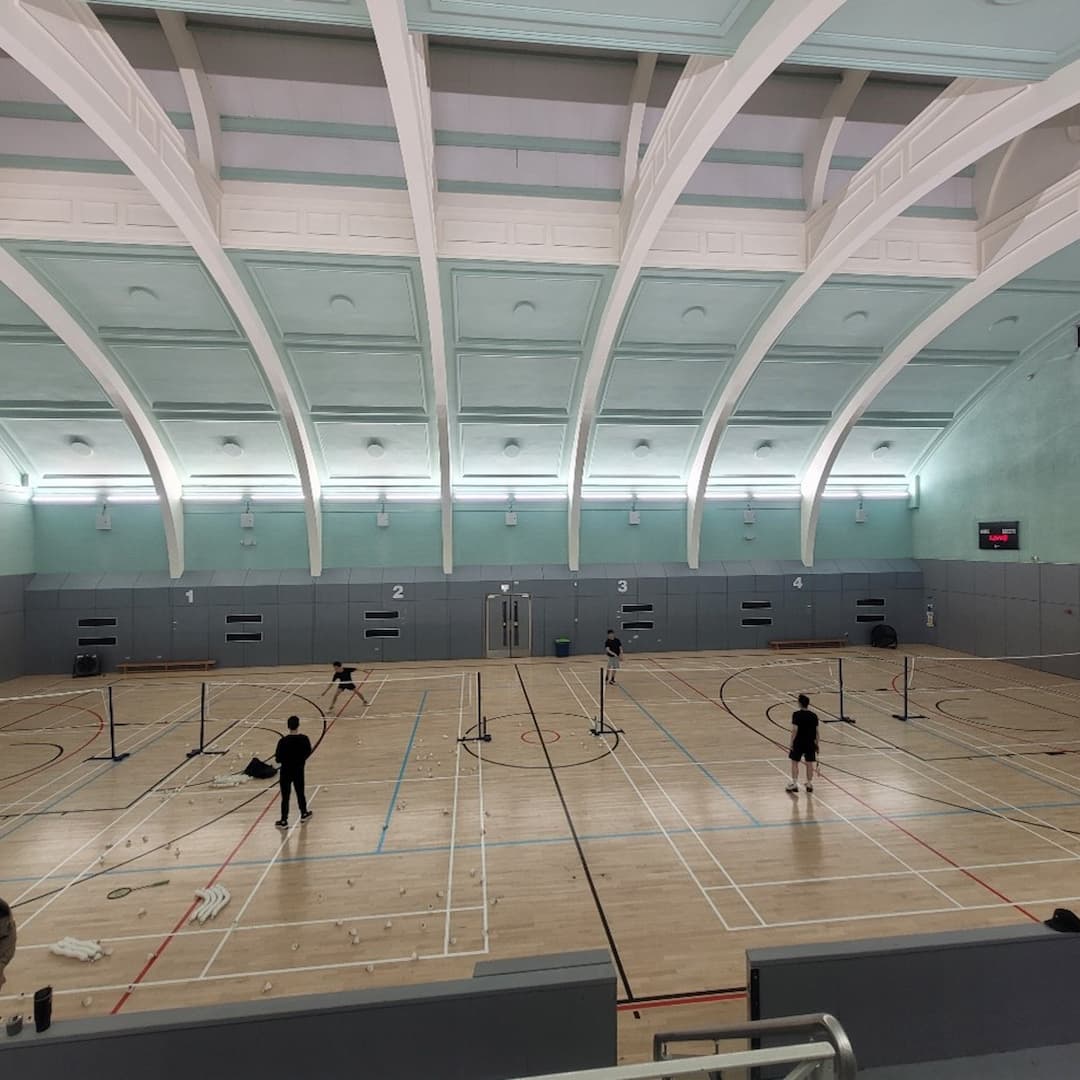
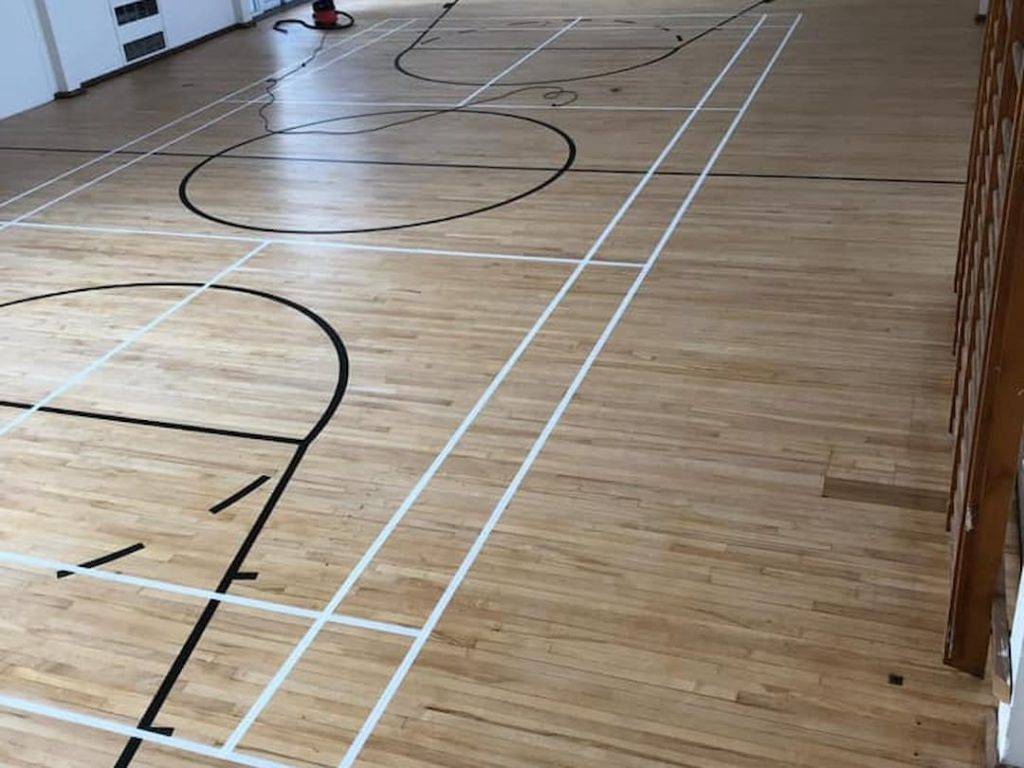
Our installation at Hornbury Academy shows the full process from bare sub-floor through to a finished, fully line-marked hall, delivered to a fixed programme while the school carried on around us.
For anyone weighing a new floor against another patch-up, it is a useful illustration of what the complete journey involves and what it produces.
~ Matthew Evans
An outstanding company to deal with and they couldn’t have been better to work with. St George’s Ascot now has a stunning new sports hall floor and we are delighted. From quote, support, delivery and after sales, the Team has been brilliant. Thank you. 
~ James Anderson







Most sports hall floors in South Yorkshire schools and leisure centres are area elastic timber systems: hardwood boards or engineered strips fixed over battens, with resilient pads or cradles beneath. The whole floor deflects together under load, which is what gives a well built hall its forgiving feel and its consistent ball bounce.
Point elastic surfaces, usually vinyl or polyurethane over a foam layer, deflect only where the foot lands. They suit multi use rooms and fitness areas, but they do not give the same protection for running and jumping sports.
BS EN 14904 sets the performance bands for shock absorption, vertical deformation, ball rebound and friction. We design and repair to those bands rather than to a rough idea of what feels right.
When you ask us to look at an existing floor, we identify the system first, because the correct repair for a cradle floor is not the correct repair for a batten floor.
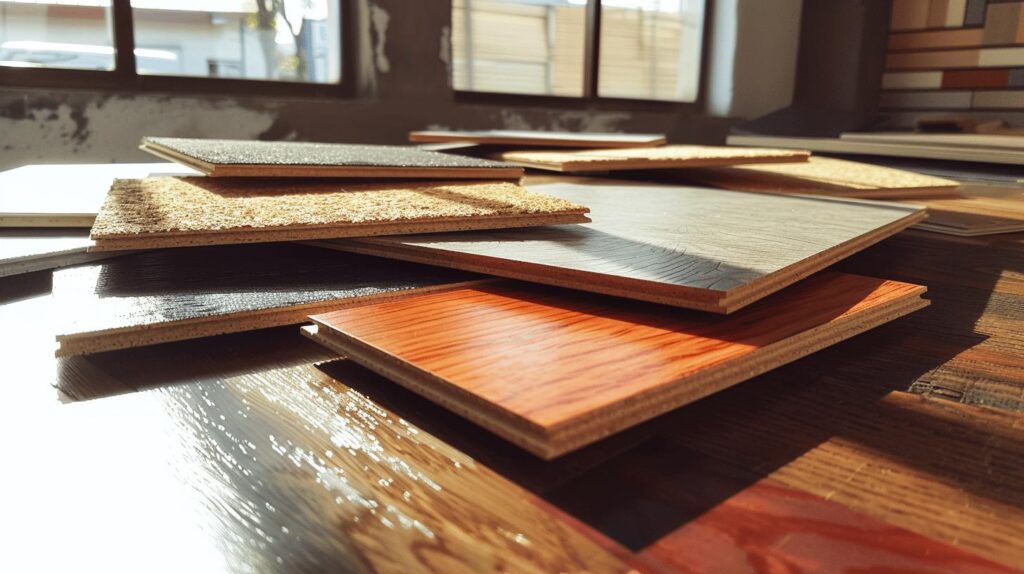
The biggest decision on an existing timber floor is whether it needs a full sand or a screen and recoat, and the difference in cost and disruption is large.
A screen and recoat abrades the existing seal, removes surface scratching and applies fresh two pack polyurethane. It takes days rather than weeks, it removes almost no timber, and repeated every two to three years it keeps a floor looking and performing well for decades.
A full sand takes the floor back to bare timber. It is the right choice when the seal has worn through to wood, when markings need moving, or when boards have been stained by water. Because it removes material, it should only be needed roughly every ten years.
Across South Yorkshire we see halls that have been fully sanded far too often, and halls that were never recoated at all. Both shorten the life of the floor.
Sanding a hall in a working school or leisure centre in South Yorkshire is normal for us, and the concern people raise most is dust.
Every machine we run, including edge sanders and buffers, is connected to sealed vacuum extraction. Dust is collected at source, bagged and removed from site, so it does not travel down corridors or settle in classrooms and changing rooms.
Before we start we agree with your site team which doors are sealed, which fire exits stay live and how the air handling for the hall is isolated for the duration. Where a hall opens directly onto a dining space or a reception, we screen the openings.
Solvent odour from seals is managed by ventilation and by timing coats for the end of the working day. You will notice the finish for a short while. You should not find dust anywhere outside the hall.
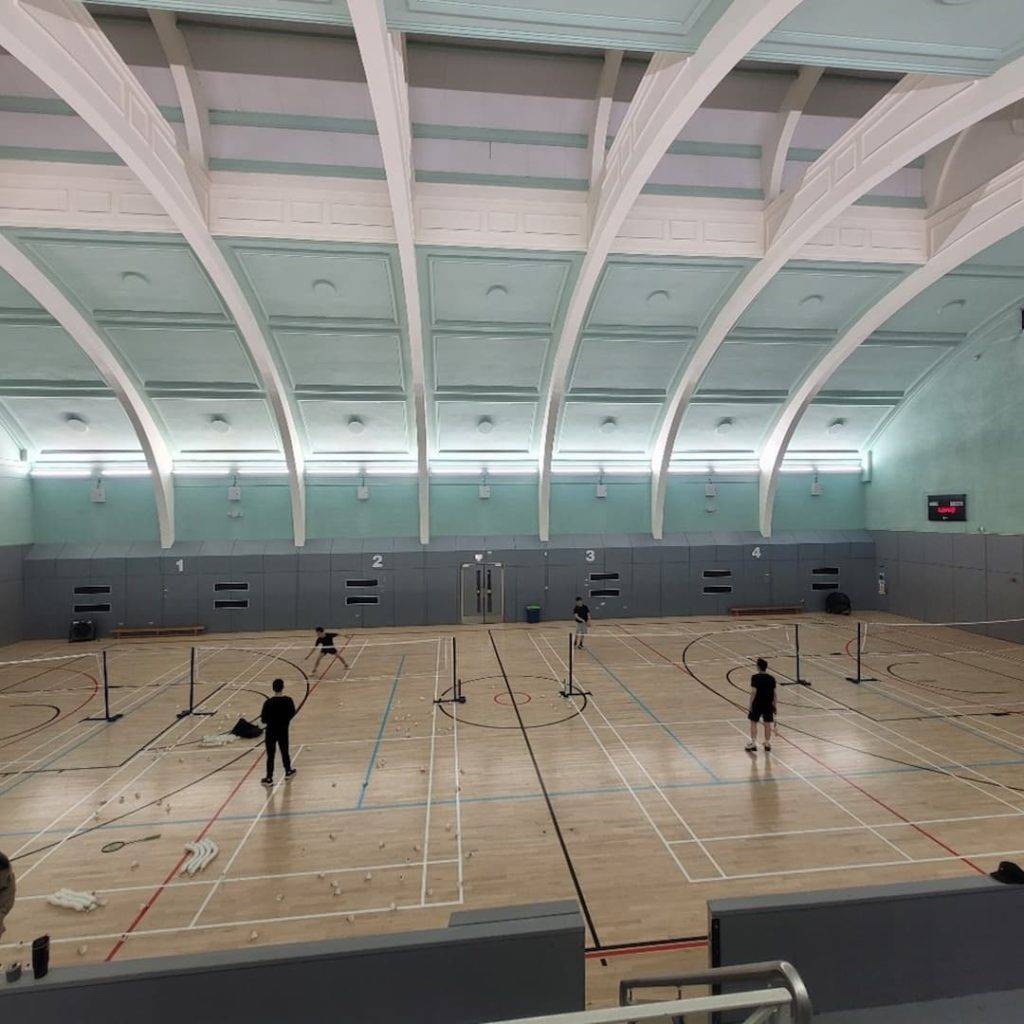
South Yorkshire brings us academy trust estates, council leisure facilities, university sport and a substantial amount of older building stock.
Trust work is the pattern we see most. A trust holding a dozen or more schools has that many sports halls, built decades apart and in widely differing condition. Surveying the whole estate and producing a costed priority order turns an unpredictable liability into a phased programme rather than a run of emergencies.
We have completed work at Hornbury Academy in Wakefield nearby, and the constraints were typical: a hall in constant use, a finish long overdue, and a fixed date to be back for the first day of term.
Leisure centres follow, where booking income means overnight and weekend working rather than a long closure.
The older school and church halls in the region frequently have Granwood floors. It is a composite block in a bitumen bed rather than timber, it needs a specialist approach, and most of the Granwood we are asked to look at is well worth restoring.
South Yorkshire enquiries are dominated by trusts and universities, and two projects cover most of what people want to know.
Hornbury Academy in Wakefield is the closest for school halls. Constant curriculum use, a finish that had gone well past its cycle, and a fixed term date. The floor went back to bare timber, damaged boards were replaced, and markings were reset from measured governing body dimensions with redundant sports removed while the floor was open.
Aston University is the comparison for campus sport, where the summer is filled by conferences and external hire rather than standing empty, so the working window is narrow and does not move. That was solved by surveying early, ordering materials ahead and staffing the job to finish inside the time available.
For a trust holding several halls, the more useful first step than any single quotation is a condition survey across the estate producing a costed priority order.
The programme for any refinishing job in South Yorkshire ends with a period when the floor looks finished but is not ready, and that period needs to be in your diary from the start.
Two pack polyurethane accepts light foot traffic in soft shoes after twenty four hours. Full curing takes longer. We ask for seventy two hours or more before equipment is wheeled back, mats are laid, or trampolines and goal posts are dragged into position. Anything heavy placed on a green seal leaves a mark that stays until the next sand.
We build the cure into the quoted programme so the hall is back in use on the date agreed, not the date the last coat went on. If a hall must be used sooner, we sequence the coats so the earliest possible return is achieved without compromising the finish.
A rough size of the hall, a few photographs of the surface in daylight, a picture of any damage, and a note of which sports are played. Tell us the dates the hall is free. From that we can give a budget range within a day and confirm it after a site visit.
No. A survey takes an hour or two and we work around lessons or bookings. We take moisture readings, check the structure through access points or by sounding the boards, photograph everything and measure the markings. You receive a written report with recommendations and costs.
Yes. Risk assessments and method statements are issued before we arrive, COSHH data sheets accompany every product, and our operatives hold DBS checks. Insurance certificates are supplied with the quotation so your bursar or estates team has a complete file before work begins.
Dry mop daily to lift grit, and damp mop with a neutral pH cleaner diluted as instructed. Never use polish, wax or a silicone based product, because they make the surface slippery and stop the next coat of seal from bonding. We leave written aftercare guidance with every floor.
Yes. Pendulum slip resistance testing is a standalone service. We test in several positions across the hall, in dry and where relevant damp conditions, and issue a certificate stating the results. Many facilities in South Yorkshire book it annually as part of their audit evidence.
Yes, provided the heating system is designed for it, surface temperature is limited and the moisture content of the timber is controlled at installation. Engineered boards are more stable than solid ones. We will advise whether your existing heating and the floor you want are compatible.
Sometimes. Paint lines applied on top of the seal can occasionally be screened off, but lines applied between coats or on bare timber are within the finish and only come out with a full sand. We assess how your lines were applied before recommending either route.
Yes. Installation and refurbishment work carries a written guarantee covering workmanship and materials, with the terms stated on the quotation. Guarantees depend on the aftercare regime being followed, so we set that out clearly and remain available for advice long after the hall is handed back.
Ask us to survey your sports hall in South Yorkshire and you will receive a clear written report, a fixed price and a realistic programme within days. Call 01823 674562 or send a message and we will arrange a convenient time.