
There comes a point in the life of every timber sports floor when a deep clean stops making the difference it used to. The lacquer turns grey along the busiest lanes, the line markings fade, and no amount of mopping brings the colour back. That is the moment a proper sand and seal earns its keep.
Courtship Flooring has been sanding and sealing sports hall floors since 1987. We are a family-run firm based in Somerset, and we look after schools, leisure centres, universities and clubs right across the UK. All of the work is carried out by our own team with our own machinery. Nothing is subcontracted, and we are just as happy working overnight or through the school holidays as we are on a weekday morning.
Alongside sanding and sealing we offer full sports hall floor refurbishment, line marking and ongoing maintenance, so your floor is looked after long after the new seal has cured.
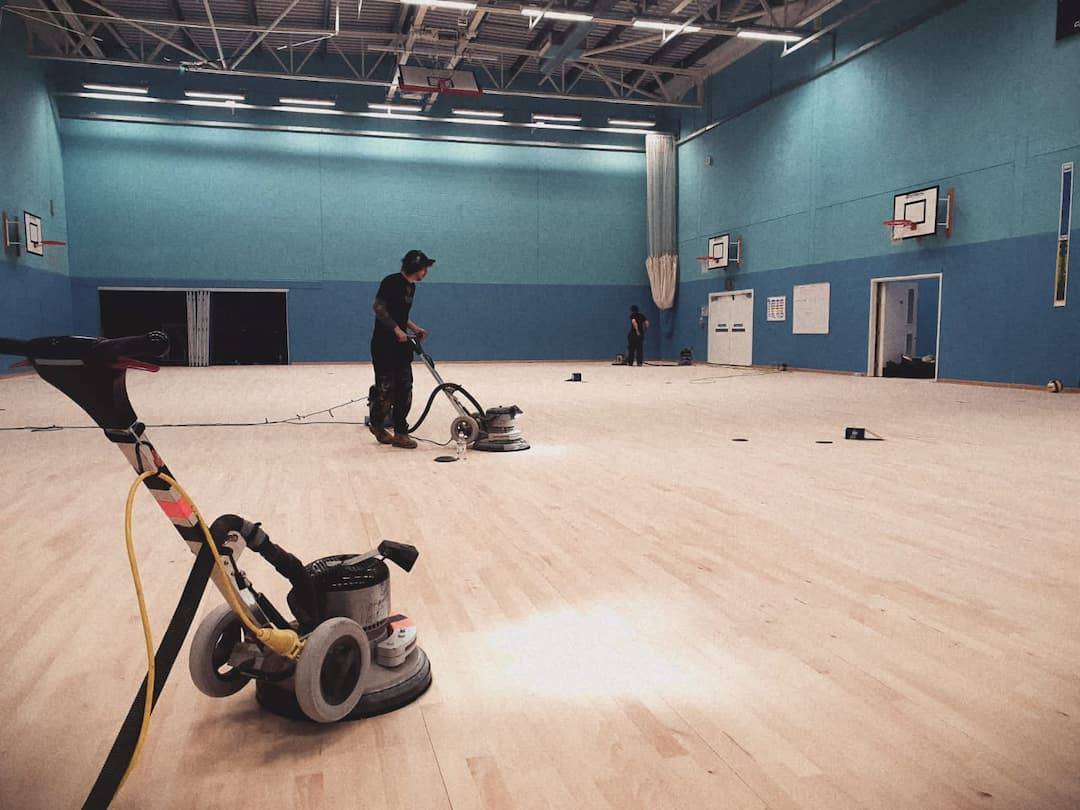
Every job starts with a survey. We check the boards, the sub-floor and the moisture levels before a single machine comes off the van, because a seal applied over a damp or damaged floor never lasts.
From there, we sand the floor back to clean, bare timber using dust-controlled machinery, so the hall stays usable and the mess stays in the bag rather than in your ventilation. Damaged boards are repaired or replaced, gaps are attended to, and the surface is fine-sanded ready for sealing.
You then choose the finish. We apply seal systems from trusted names such as Junckers and Bona, matched to how hard the hall works. New line markings go down between coats, along with club or school logos if you would like them, and we can carry out a pendulum slip resistance test on completion so you have the paperwork to show the floor is safe.
Honest answer: not every tired floor needs the full treatment. If the lacquer is worn but still intact, a screen and recoat, which is a light abrasion followed by a fresh top coat, can buy you several years at a fraction of the cost. We will always tell you which one your floor actually needs, because a full sand carried out too often shortens the life of the boards.
As a rule of thumb, a well-maintained hall wants a screen and recoat every two to three years and a full sand and seal roughly every ten. Our sports hall floor maintenance page explains how recoats fit into a planned programme, and the full refinishing process is set out step by step below.

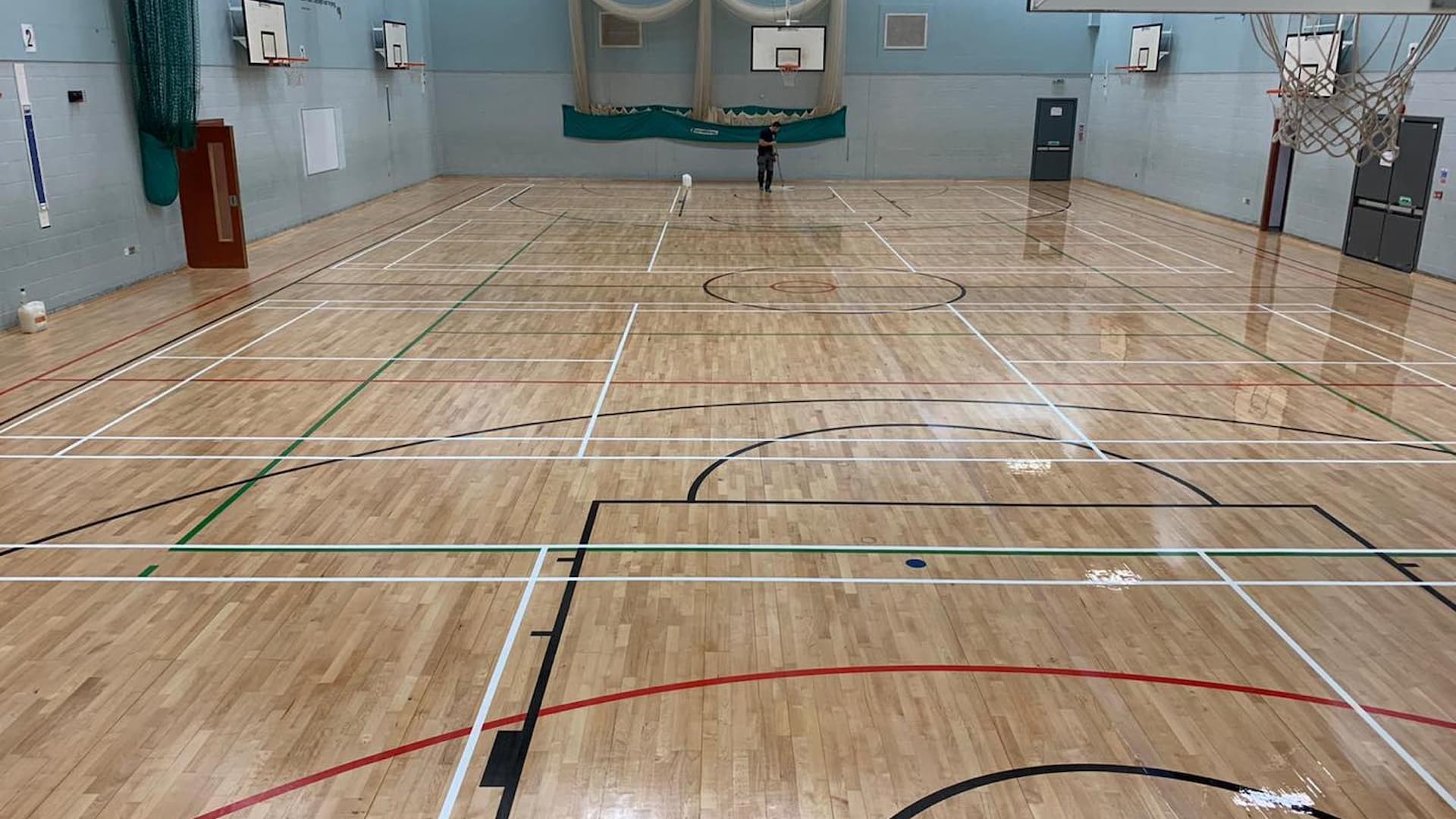
A sports hall is usually the hardest-working room in the building, which makes closing it the awkward part. So we plan the work around you, not the other way round. School floors are typically sanded and sealed during half term or the summer break. Leisure centres often prefer overnight shifts so the morning bookings can go ahead. Either way, we agree the programme before we start and we stick to it.
Curing time matters too. We will tell you exactly when the floor can take foot traffic, when the badminton posts can go back, and when the five-a-side league can return, so there are no surprises and no footprints in the fresh seal.
If you are planning wider works, our school sports hall installation team can advise on whether refinishing or a new floor makes better sense for your budget.
A freshly sanded and sealed floor is not just a cosmetic lift. The right seal restores grip, protects the timber underneath from moisture and wear, and keeps the surface within the slip resistance range that insurers and governing bodies expect. It is also the single most cost-effective way to extend the life of a timber sports floor. Compared with the cost of a replacement, which our cost per square metre guide breaks down, a well-timed sand and seal is a bargain.
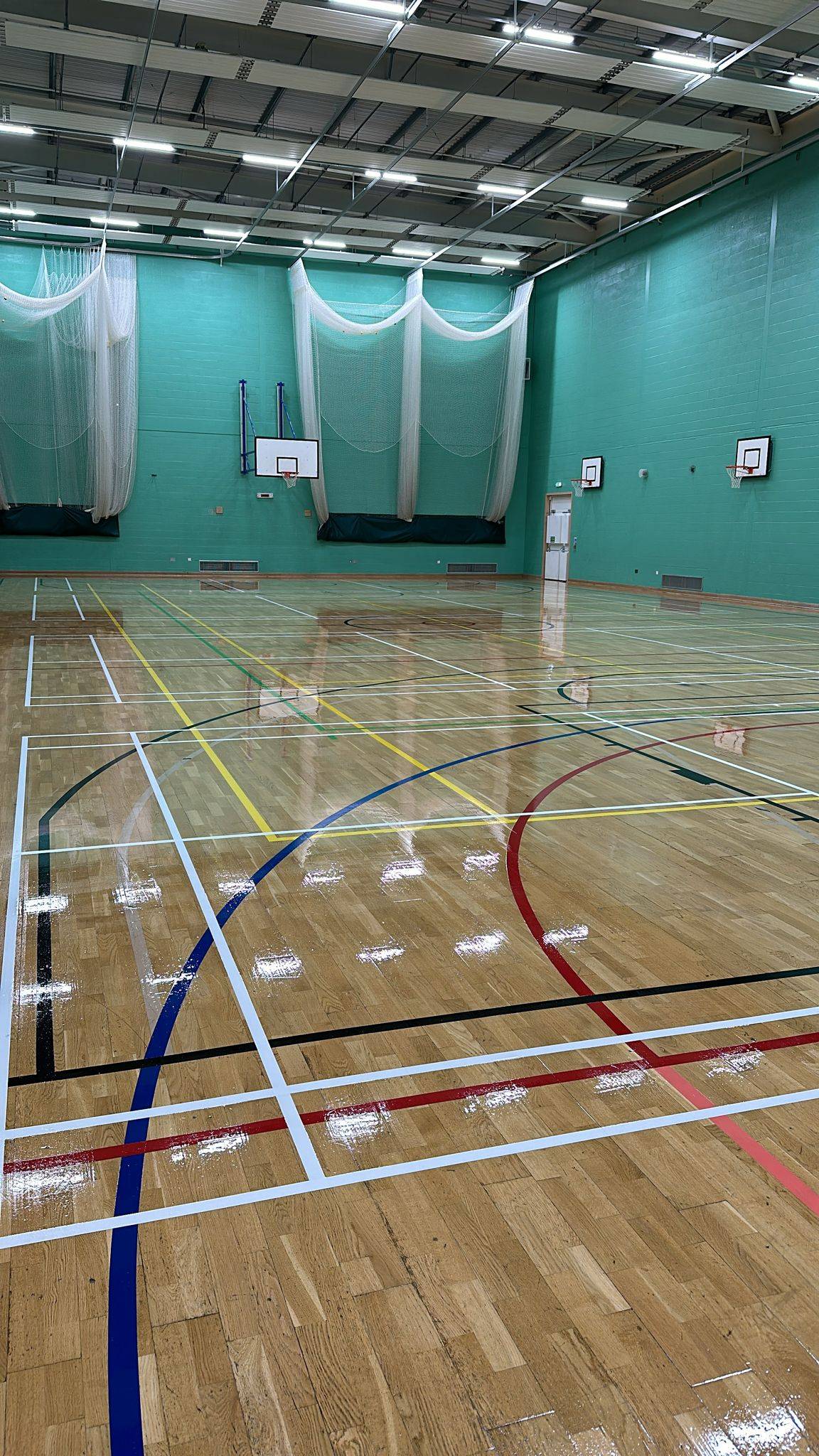
De Wint School’s hall shows what a full sand and seal delivers. The floor arrived at the end of its seal’s life: grey traffic lanes, faded courts and timber starting to take punishment the lacquer should have absorbed. We sanded it back to clean boards, resealed it and applied fresh line markings.
The result is the glossy, like-new finish in the photograph, achieved in a planned holiday window at a fraction of what a replacement floor would have cost. Most school halls we survey are candidates for exactly this transformation.
No two sports halls wear the same way, so we never quote a sand and seal off a photograph. The survey is where the money is either saved or wasted, and it takes about an hour.
The first thing we measure is moisture. A timber sports floor sitting above a slab that is still giving off water will lift, cup or bubble a brand new seal within months, so we take readings in the boards and, where there is any doubt, in the slab itself. If the numbers are wrong we say so before you have spent anything.
Next we check how much timber you have left to work with. Every full sand removes a small amount of board, and a strip floor that has already been through five or six cycles may be close to the tongue. Once a sander reaches the tongue the board is finished, so knowing where you stand tells you whether this is a floor to refinish or a floor to plan on replacing in a few years.
We also lift a vent or an edge trim to look underneath. Battens, cradles, pads and the void all tell us whether the floor is still performing as a sports surface or simply as a wooden floor that happens to be in a sports hall. Dead spots, hollow areas and squeaks nearly always start below the boards, and sanding the top does nothing to fix them.
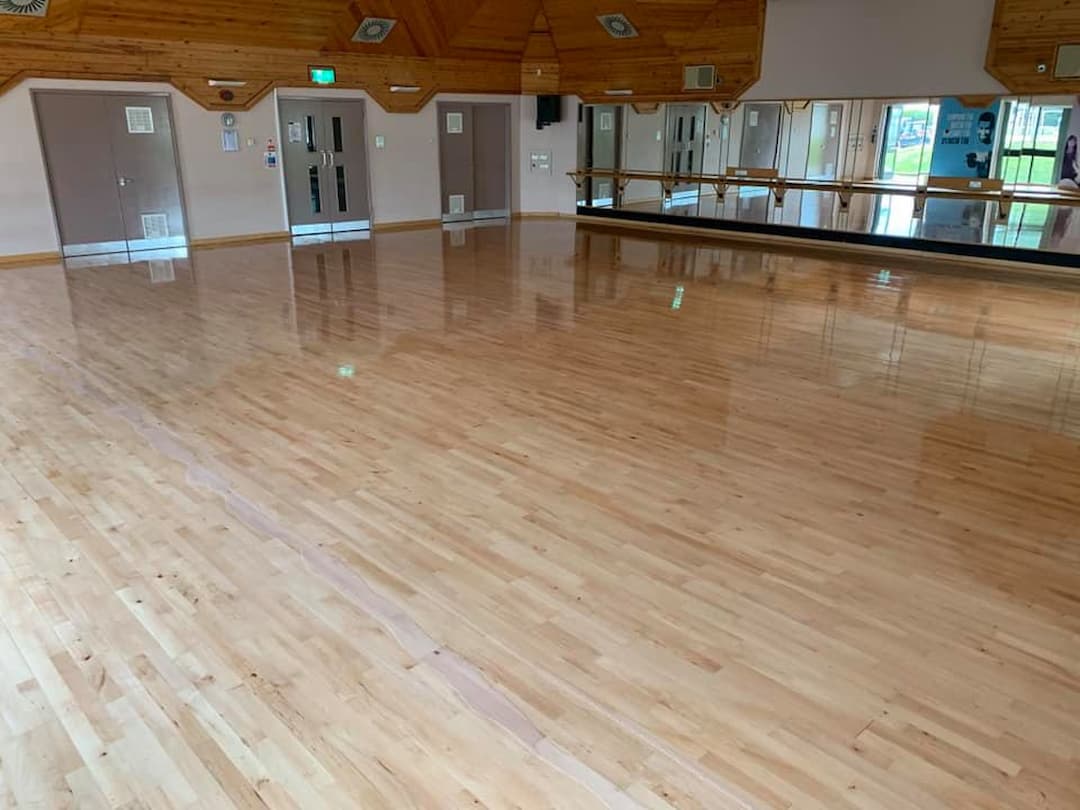
The seal is the part of the job everybody sees and the part most often specified badly. Get it right and the floor grips properly, cleans easily and lasts. Get it wrong and you have a hall that is either slippery or so matt it drags on the skin.
Most of the halls we look after are sealed with a two-pack polyurethane. It is tougher than a single-pack, it holds its sheen far longer under trolley wheels and staging, and it copes with the cleaning regimes that busy centres actually use rather than the ones the manual assumes. Where a floor is used heavily for indoor cricket or netball we will often specify a harder-wearing grade again on the traffic lanes.
Sheen level is a genuine decision, not a matter of taste. A high gloss looks impressive on handover day and shows every scuff by half term. A satin or matt finish hides marks, reduces glare under LED lighting, and is what most schools settle on once they have lived with both. We will bring samples and let you see them under your own lights before anything is ordered.
Whatever system we use, we finish to a slip resistance the governing bodies recognise, and we can pendulum test the floor on completion so you have the certificate on file rather than an assurance.
Facilities managers are usually working to a figure that was set before anyone looked at the floor, so it helps to know what actually drives the cost.
Area is the obvious one, and larger halls are cheaper per square metre because the mobilisation is spread further. A four-court hall almost always works out better value per metre than a single studio.
Condition matters more than size. A floor that only needs a screen and recoat is a fraction of the cost of a full sand, because we are abrading and topping rather than taking the surface back to bare timber. Board repairs, replacing damaged sections, easing gaps and re-fixing loose boards all add, and they are the items that most often appear once the old lacquer comes off and we can finally see what we are dealing with.
Line markings are priced by what you need rather than what is already there. Many halls carry markings for sports the school stopped playing years ago, and taking three redundant sets out makes the hall clearer and the job cheaper.
Access and hours are the last variable. A hall we can work in continuously during a school holiday costs less than the same hall done in overnight shifts around evening bookings. We will quote both if it helps you weigh the disruption against the money.
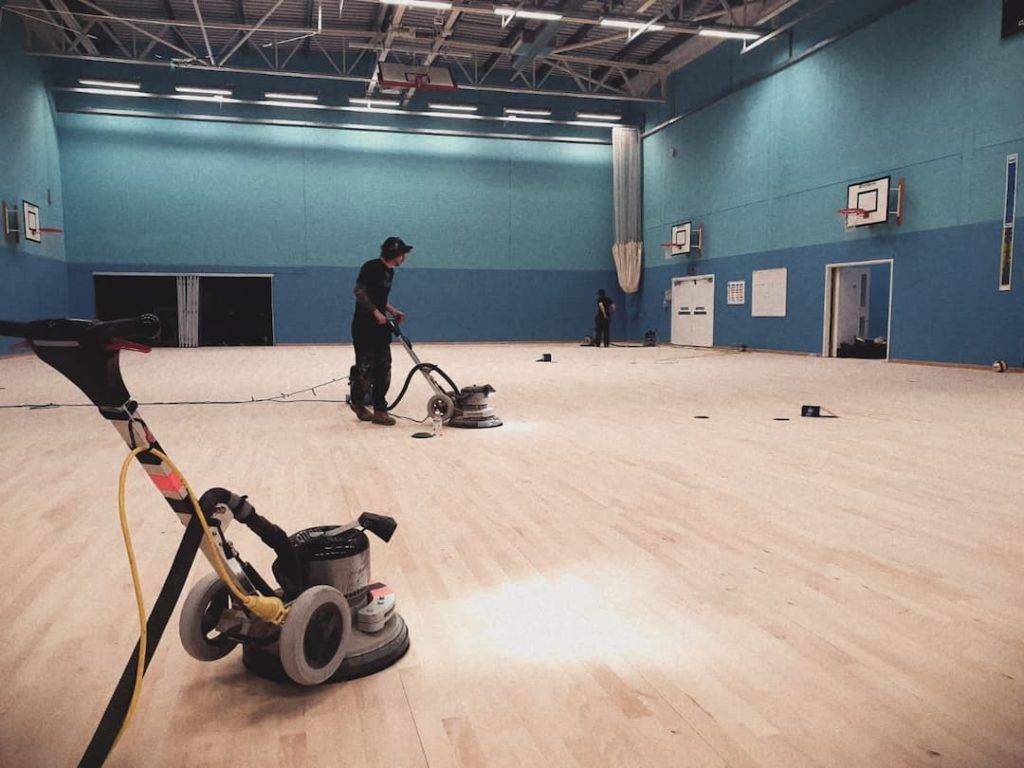
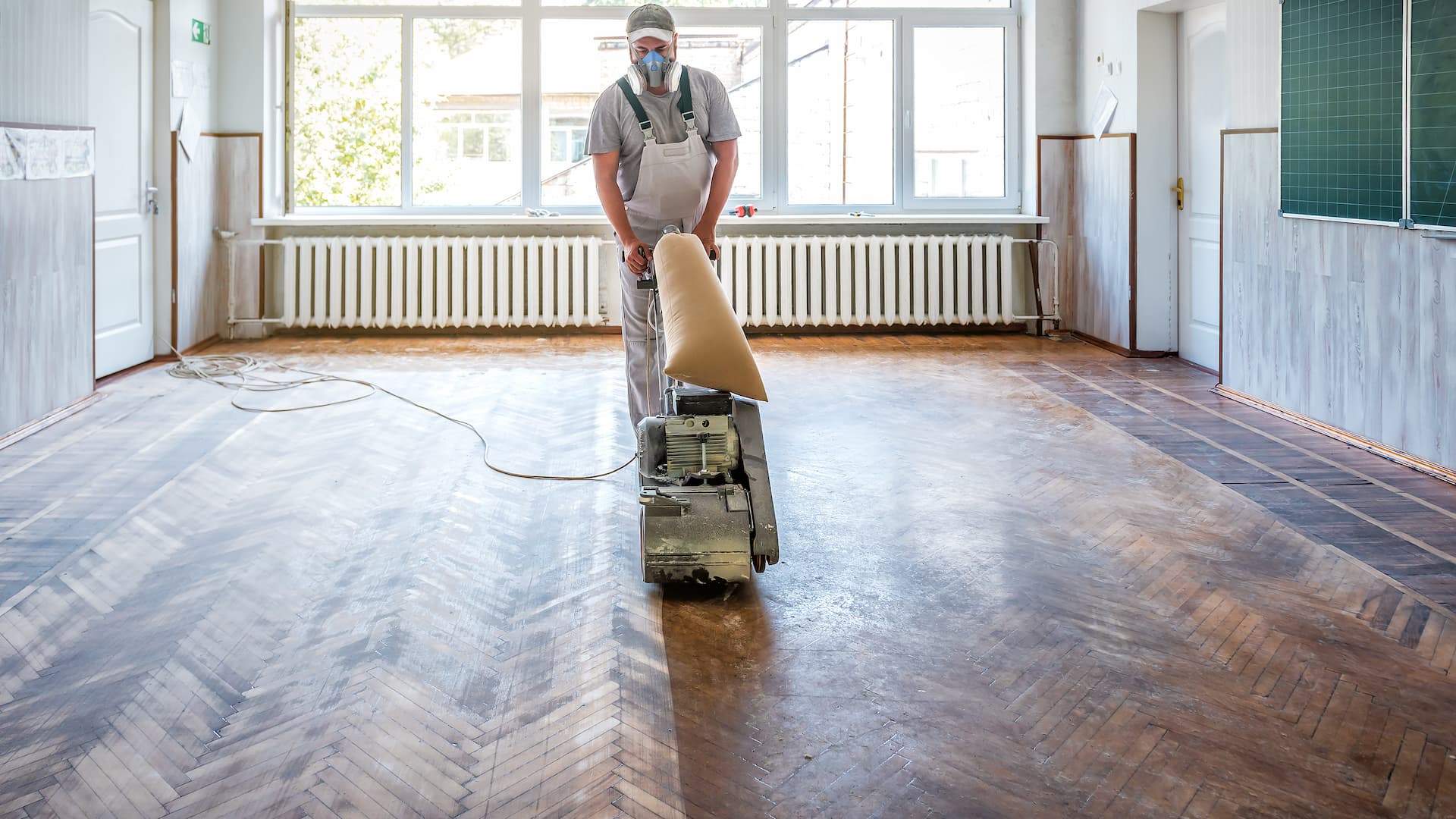
Most enquiries start with a symptom rather than a specification, so it may help to see whether yours is on this list.
Grey, worn traffic lanes are the most common. The lacquer has gone through in the busiest routes, dirt is now sitting in open timber, and mopping spreads it rather than lifting it. Left long enough the staining goes deep enough that sanding will not fully remove it.
Slippery patches are the ones that worry insurers. Usually the cause is either polish build up from the wrong cleaning product or a seal that has worn smooth. Both are fixable, and both are worth dealing with before somebody goes over.
Faded or wrong line markings turn up constantly, particularly where a hall has changed use and the netball lines are competing with five different sets of colours. Relining during a reseal is straightforward and costs far less than doing it as a separate visit.
Then there are the floors that have been sealed over the top too many times. Coat on coat on coat eventually goes cloudy, peels at the edges and lifts in sheets. That floor needs taking back properly, and no amount of extra top coat will rescue it.
A full refinish follows the same sequence on every timber sports floor, and each stage depends on the one before it.
Doing this in-house with hired equipment is rarely a saving. A drum sander removes timber quickly, every full sand uses up wear layer that never comes back, and a general-purpose floor lacquer will not give the grip a sports floor needs.
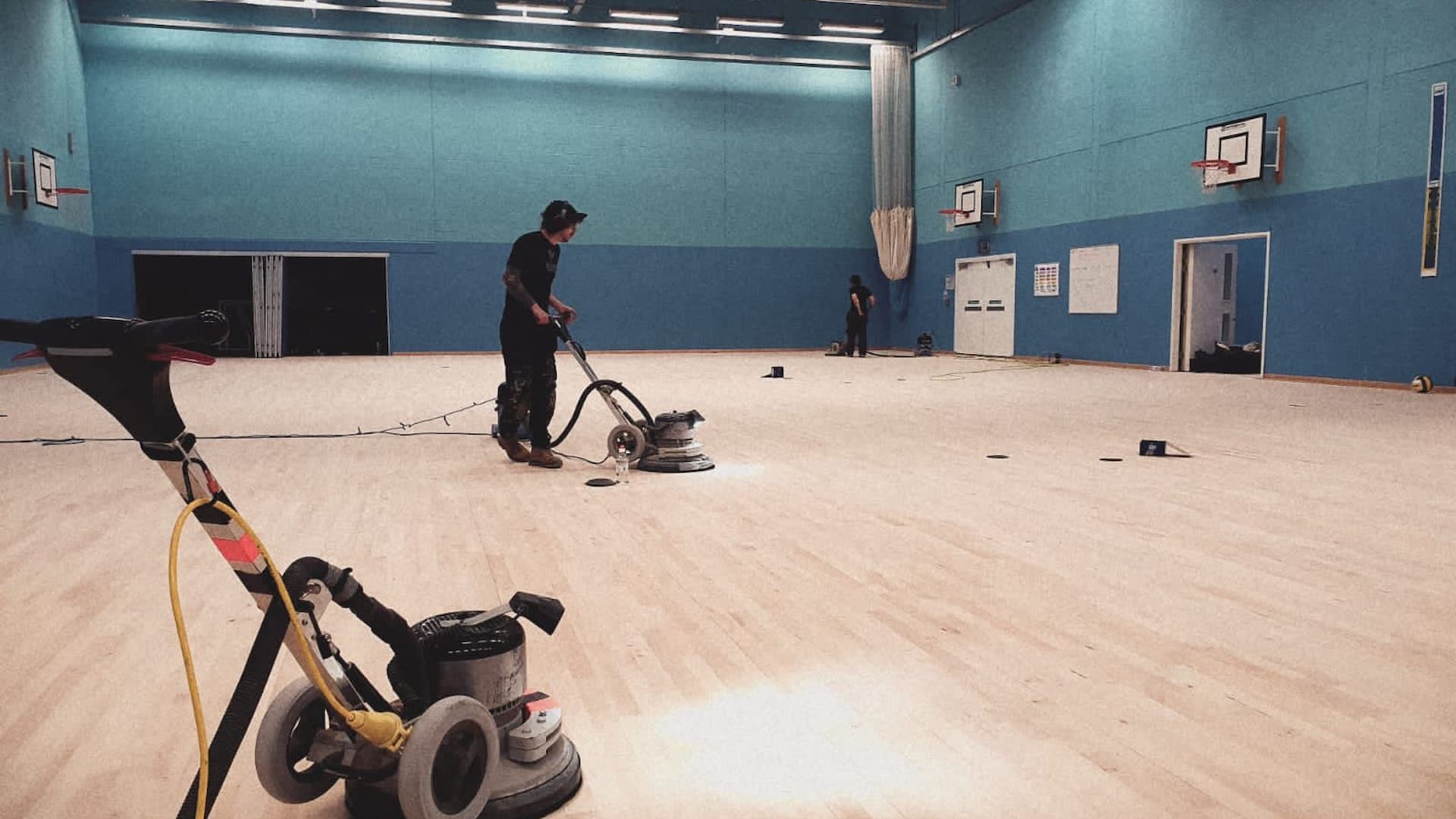
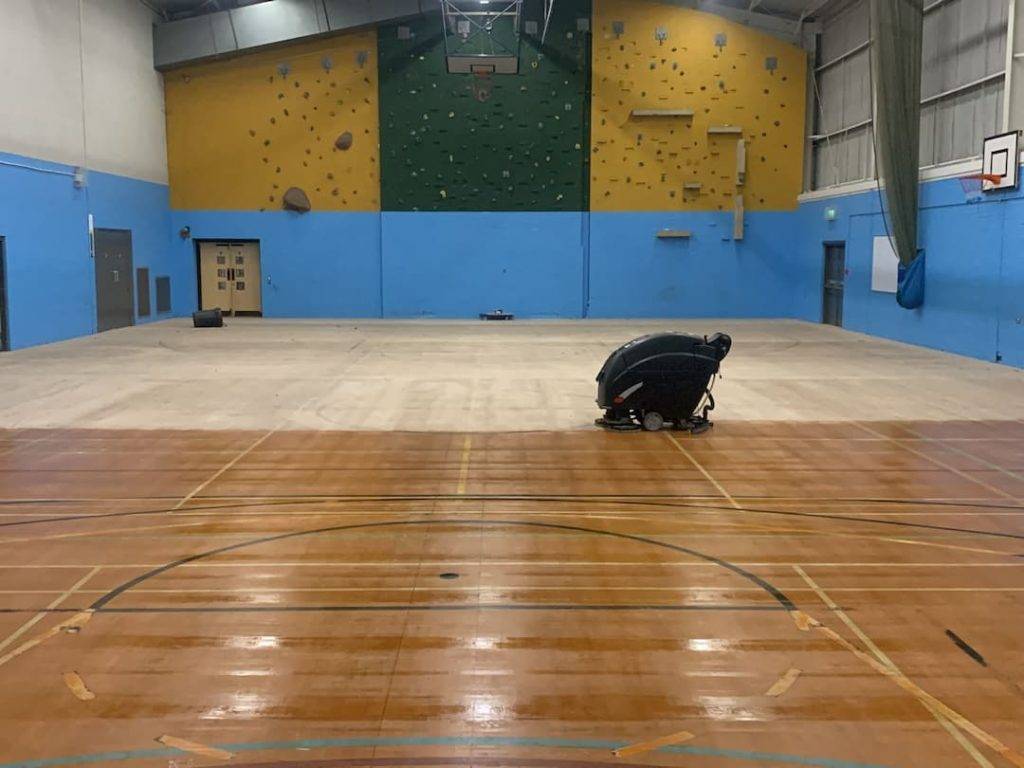
A new seal is only as good as the regime that follows it, and the fastest way to waste the money is to put the wrong mop on it in week one.
We hand over written guidance with every job, and it is deliberately short. Dust mop daily with a treated cloth to lift grit before it acts as sandpaper. Damp mop with a neutral cleaner recommended for sealed timber, never a polish, never a wax and never anything that promises shine. Deal with spills quickly, and keep a mat run at the entrances, because most of the grit that wears a floor walks in on trainers.
The bigger saving is planning. A hall that gets a light screen and recoat every two to three years may never need another full sand, which protects the boards and spreads the cost into manageable amounts rather than one large bill every decade. We are happy to put that on a schedule and remind you when it is due.
If you would rather hand the whole thing over, we also run planned maintenance visits that include deep cleaning, minor repairs and an annual condition report you can put in front of a budget holder.
A typical single-court school hall takes around four to five days from first sand to final coat, including new line markings and curing time between coats. Larger halls and floors needing board repairs take a little longer. We confirm the exact programme after the survey so you can plan bookings with confidence.
With sensible maintenance, a full sand and seal is usually needed every eight to twelve years. In between, a screen and recoat every two to three years keeps the seal healthy and puts off the day the big machines are needed. Regular deep cleaning stretches both intervals further.
Yes. We regularly work overnight, at weekends and in phased sections so a hall can stay partly in use. That said, half term and the summer holidays remain the most popular slots for schools, and they book up early, so it pays to plan a term ahead.
Light foot traffic is normally possible around twenty four hours after the final coat. Full use, including equipment being wheeled back in and posts being refitted, is usually seventy two hours. We confirm the exact times for the system we have used, because they vary.
Usually, but not always. Surface marks, scuffs and worn lacquer come out easily. Deep water staining, ink and anything that has soaked into open timber may still be faintly visible, and we will tell you honestly at survey what we expect to be left.
It depends entirely on the board thickness and how much has already been taken off. A solid strip floor might take six to eight full sands across its life. We measure the remaining wear layer at survey and tell you where yours sits.
We would not recommend it. A drum sander takes timber off quickly and unevenly in inexperienced hands, every full sand uses wear layer that cannot be replaced, and general-purpose floor lacquers do not give the controlled grip a sports floor needs. Line marking also has to be set out from measured court dimensions. A screen and recoat by a specialist is often cheaper than putting right a DIY sand.
Send us a photo of your floor or book a free survey and we will give you a straight answer on what it needs, whether that is a screen and recoat, a full sand and seal, or nothing at all for another year. Call 01823 674562 or drop us a message today.