
A sports hall inspection is the only reliable way to know what condition your floor is really in. Wear hides in plain sight: a seal can look intact while it fails underfoot, moisture can build beneath boards for months before anything shows, and markings drift out of regulation without anyone noticing. Our inspections catch all of it early, while the fix is still small and inexpensive.
We check the surface, seal condition, boards and sub-floor signs, moisture readings and markings, and we can add a pendulum slip resistance test for a documented safety record. You get a plain-English report with honest recommendations, from immediate repairs to a sensible maintenance plan. Established 1987, covering the whole of the UK.

Damages rarely occur in well installed and properly maintained floors. However, when they do, we provide expert solutions to return your sports flooring to proper working order. With regular inspections, damages are rectified before they develop, thus furthering the lifespan of your flooring. Our specialist team is adept at fixing any issues that appear for wood, vinyl, PU, and lino floors. Whether you require routine cleaning or believe a fault has appeared, our in-depth inspections allow us to identify the issues early, and keep your floors in excellent condition.
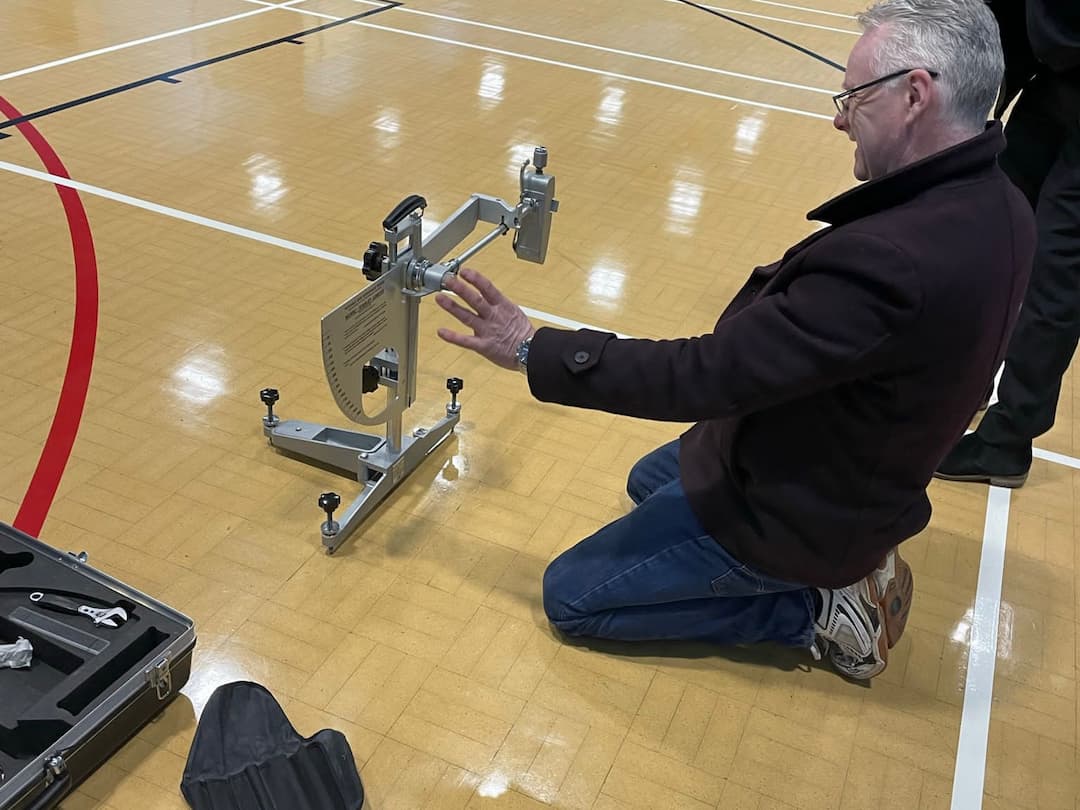
Workplace floors must be kept safe and free from slip and trip hazards, and operators owe a duty of care to everyone who uses the hall. Regular inspections are how you show that duty is being met. We can include a pendulum slip resistance test, the HSE’s preferred method of assessing slip potential, so your file holds an objective measure of grip alongside the condition report, and we provide risk assessments for your floor on request.
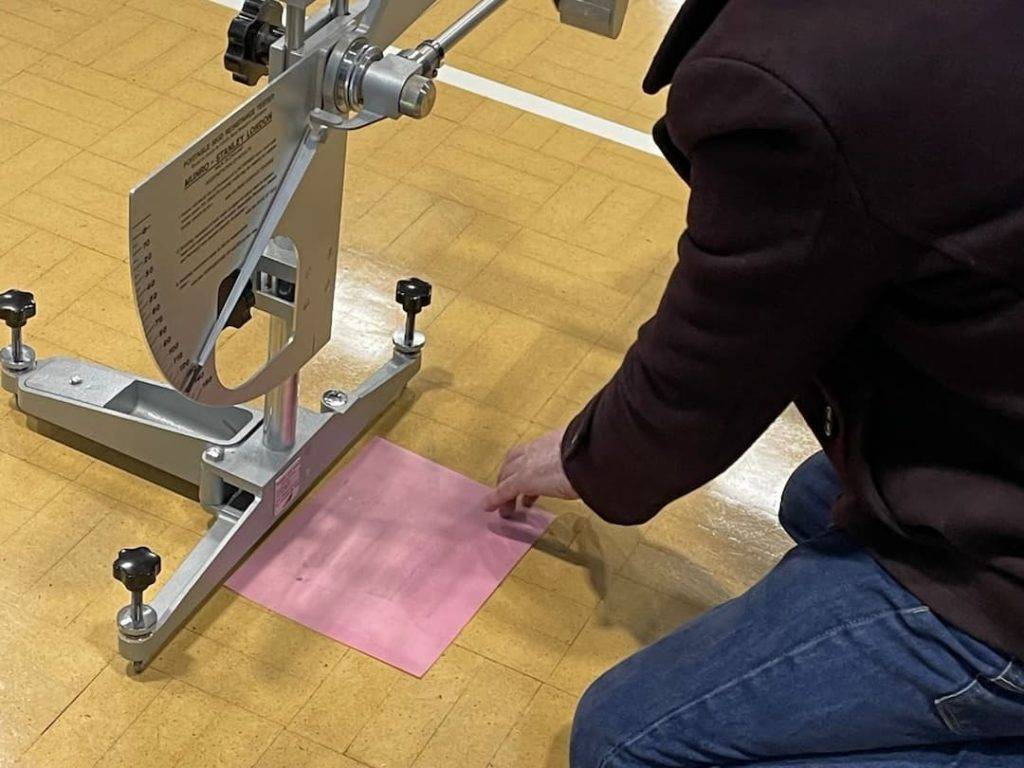
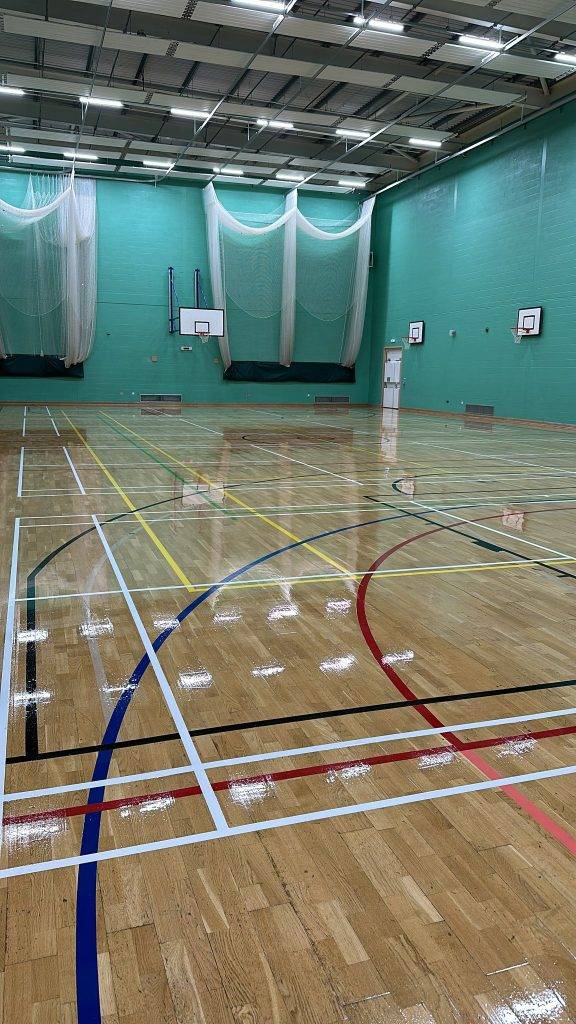
An inspection is not a glance across the hall. We check the condition of the seal and whether it has broken through, the boards themselves and how much depth remains for future sanding, signs of sub-floor movement or failure such as dead spots and squeaking, moisture readings in and beneath the floor, the accuracy and legibility of court markings against current specifications, and the state of entrance zones where slip risk is highest.
You get a plain-English written report setting out what is fine, what needs attention now and what can reasonably wait, with indicative costs so you can plan a budget rather than react to a crisis.
An annual inspection suits most halls, but some moments make one especially worthwhile:
Almost every expensive floor failure we attend was inexpensive at some earlier point. A seal that has broken through costs a recoat today and a full sand in two years. A slow leak caught early is a board repair; ignored, it is a section replacement. Markings that have drifted out of specification are a re-line during the next reseal, or a standalone job if nobody notices until a fixture is challenged.
An annual inspection, ideally paired with a slip test and a deep clean in one visit, is the cheapest insurance available on a floor worth tens of thousands of pounds.
Each surface fails in its own way, so the inspection follows the floor. On timber we measure how much wear layer remains above the tongue, which tells you how many more full sands the floor can take, and we look for cupping, gaps and movement that point to moisture or failed fixings. On vinyl and PU we check welds, seams, indentations and the condition of the finish. Granwood and composite blocks are checked for loose, cracked or missing blocks and for signs that the bitumen bed is failing.
Where the floor needs work, the report links each finding to the right next step, whether that is sports hall floor maintenance, sports hall floor repairs or a full sports hall floor refurbishment.
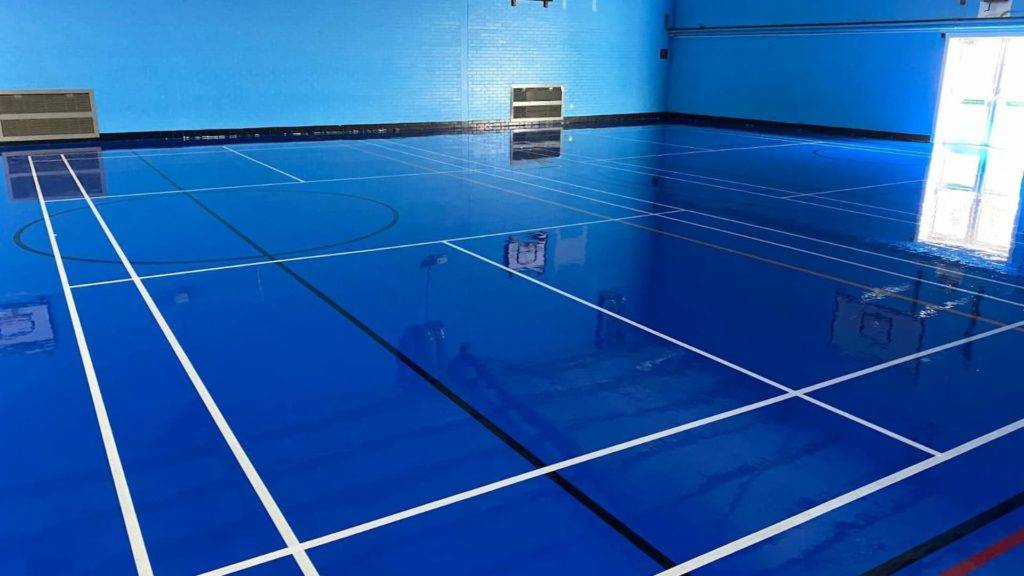
Sports flooring requires light cleaning, such as sweeping and mopping, at least weekly to avoid dust and sweat build up damaging its seal and finish. Depending on the material it’s made from, though, more intensive cleaning varies. Contact us today for guidance on the proper maintenance of your sports flooring.
No law sets an inspection interval for sports floors. Operators do have to keep floors safe and manage slip and trip risks, and a dated inspection report, ideally with a slip test, is the simplest way to show that is being done.
Of course, we offer comprehensive refurbishments for a range of courts and sports flooring, with a selection of materials to choose from.
Annually for most facilities, and always after any water ingress or if users start reporting the surface feels different. Pairing the inspection with a deep clean and slip test in a single visit keeps the cost down and the paperwork current.
Yes, in plain English rather than jargon: what is sound, what needs attention now, what can wait, and indicative costs for each. It is designed to be usable as budget evidence and to sit on file as part of your duty-of-care record.
Yes. Adding a pendulum slip test to the same visit gives you an objective grip measurement alongside the condition report, and saves a second trip to site.
We explain it on the day and set it out in the report, with the options and indicative costs. Minor issues such as a lifted vinyl weld or a loose threshold can often be fixed during the visit; larger faults are quoted as sports hall floor repairs or folded into your maintenance programme.
Academy trusts, local authorities and leisure operators with several halls get the most from inspections when every site is assessed the same way. We inspect each floor against the same checklist and report in the same format, so you can compare halls side by side and see which needs money first.
The result is a rolling plan: which floors need a recoat this year, which can wait, and which are heading for a full sand or replacement in the next few years, with indicative costs for each. For estates, see our multi-site and framework contracts and our sports flooring case studies.