
A sprung floor is built over a flexible sub-structure that compresses under impact and recovers, absorbing a large share of the force from every jump, landing and stride before it reaches the player. It is the difference between a hall that protects the people using it and one that quietly injures them.
Courtship Flooring installs and restores commercial sprung floors across the UK: sports halls, gymnasiums, dance and performance studios, and multi-use spaces that have to serve both. We build the sub-structure, lay the surface, apply the seal and mark the courts, all with our own team. Established 1987, commercial and institutional work only.
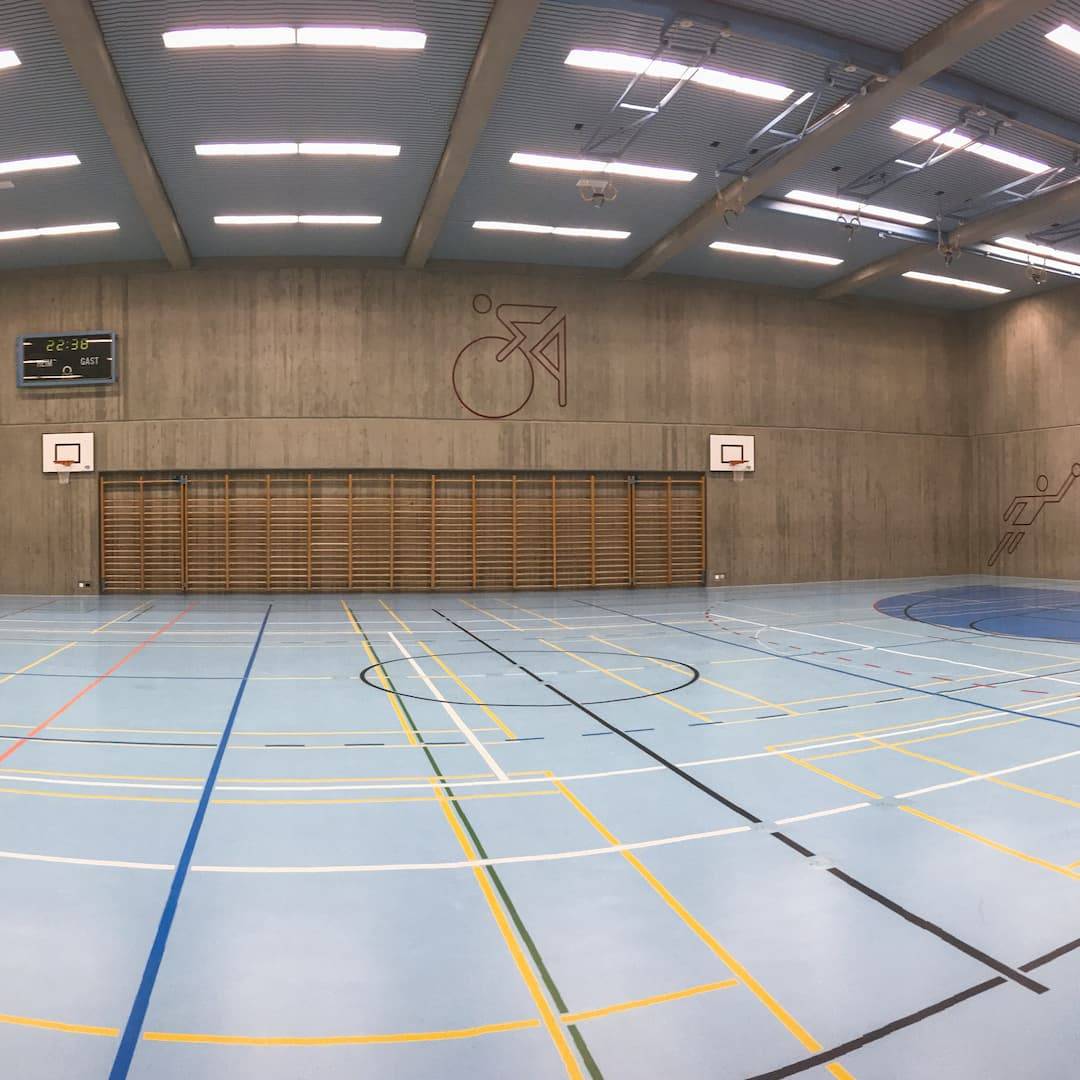
What sits under the boards decides how a sprung floor performs, and the choice is not cosmetic. A cradle system suspends the floor on resilient pads for high shock absorption, suited to serious sport. A standard sports batten build-up is the dependable all-rounder for school and community halls. Pad and board is shallower, useful where build height is limited by doors and thresholds. A duo batten system doubles up for greater resilience and consistency across the whole area.
Get it wrong and the consequences are real: too little give and the user takes the full impact; too much and the floor becomes unstable to turn, balance and lift on. We specify against the actual sports and the level of play, not a catalogue default.
Sprung floors deflect in different ways. An area-elastic floor spreads the deflection over a wide zone, which is what a basketball player feels as a consistent, forgiving surface. A point-elastic floor deflects locally under the foot, common in synthetic systems. Combined and mixed-elastic systems aim to take the best of both. Our guide to what a sprung floor is and how it works covers the construction in more depth.
These behaviours are measured, not claimed. BS EN 14904 sets out how shock absorption, vertical deformation, ball bounce and friction are tested for indoor sports surfaces, and a properly specified sprung floor is built to hit those figures. We will explain the trade-offs in plain English and can arrange testing on handover.
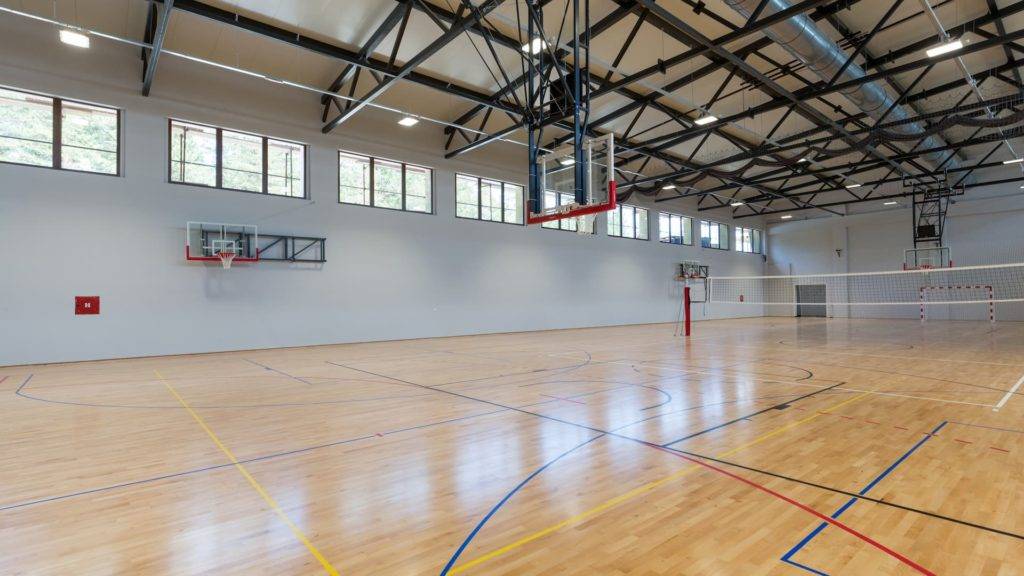
Most sprung floors that feel dead do not need replacing. Dead spots almost always mean the resilient layer beneath has failed in that area or a batten has lost contact, and that is a repair to the build-up rather than a reason to rip out a sound floor.
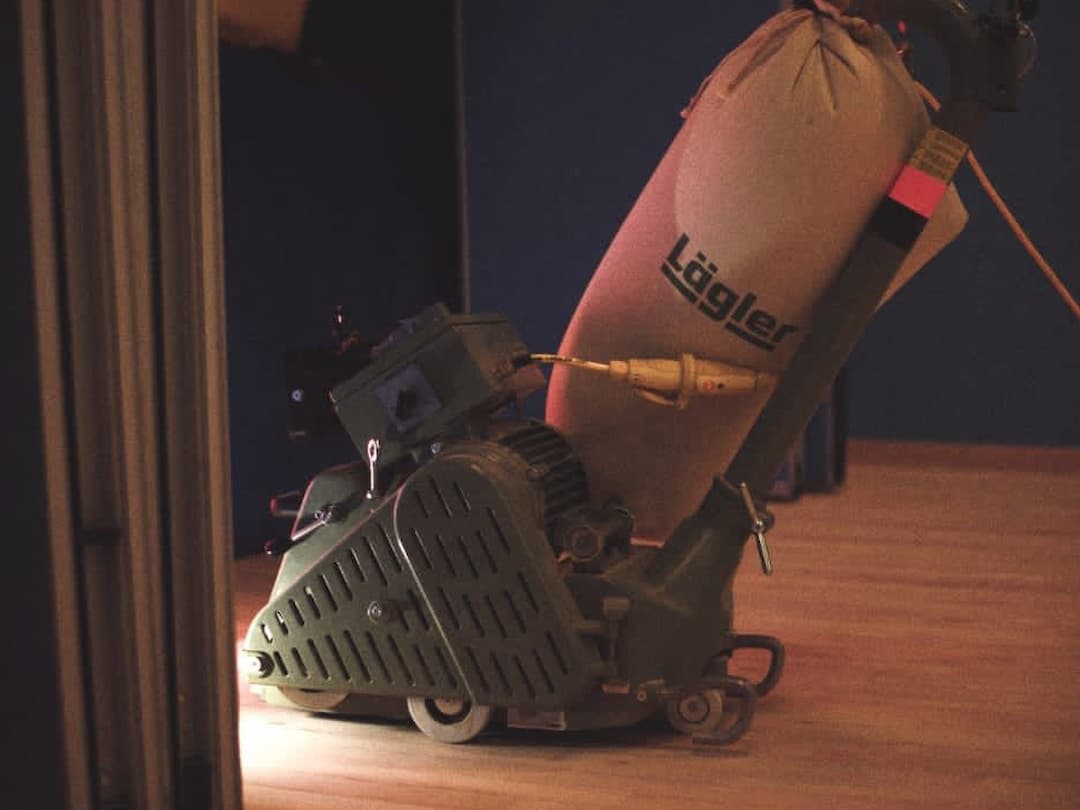
We diagnose it properly during survey, repair the structure underneath, then sand, reseal and re-mark the surface above through our refurbishment service. A restored sprung floor performs like new for a fraction of replacement cost, and the timber can be renewed several times across its life.
Dance asks more of a sprung floor than sport does. Every landing sends force through ankles, knees and hips, and the top surface has to balance grip against the controlled slide that turns and floor work require. Ballet and contemporary generally want a vinyl performance surface over the sprung build-up; tap needs a harder, more responsive top layer; street and commercial work is hardest on the floor.
We install and refurbish sprung dance studio floors for commercial studios, performing arts schools and colleges, and specify honestly where a room has to serve both dance and sport.
Sprung floor is a phrase that covers several genuinely different constructions, and the one you choose changes how the hall plays and what it costs to maintain over thirty years.
An area elastic floor deflects across a wide area when it is loaded, so a player landing produces a shallow dish of movement extending well beyond the point of impact. These are the traditional battened or cradled timber systems, and they suit multi sport halls running basketball, badminton and netball.
A point elastic floor deflects only where it is loaded. These are typically resilient synthetic surfaces over a foam or rubber backing, common in fitness suites, dance spaces and multi use rooms where underfoot comfort matters more than ball response.
A combined system layers a point elastic surface over an area elastic structure, giving both, and is specified where a facility wants serious sports performance and cushioning together.
Which is right depends entirely on the actual timetable of the room. We will ask what is genuinely played in it before recommending anything.
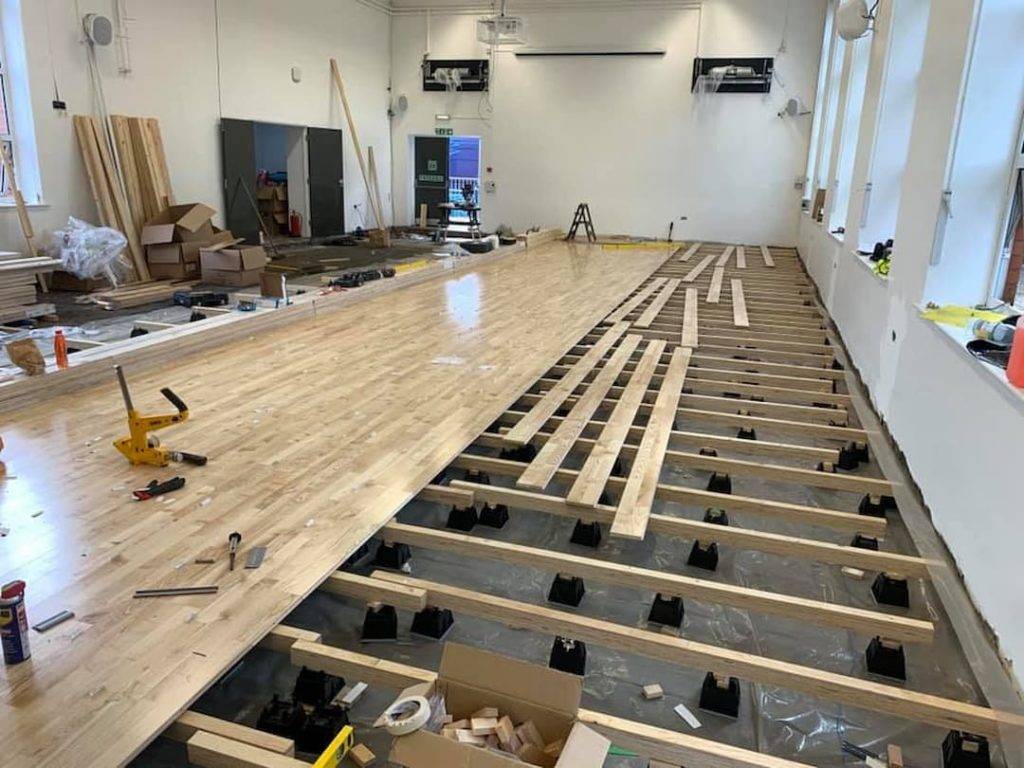
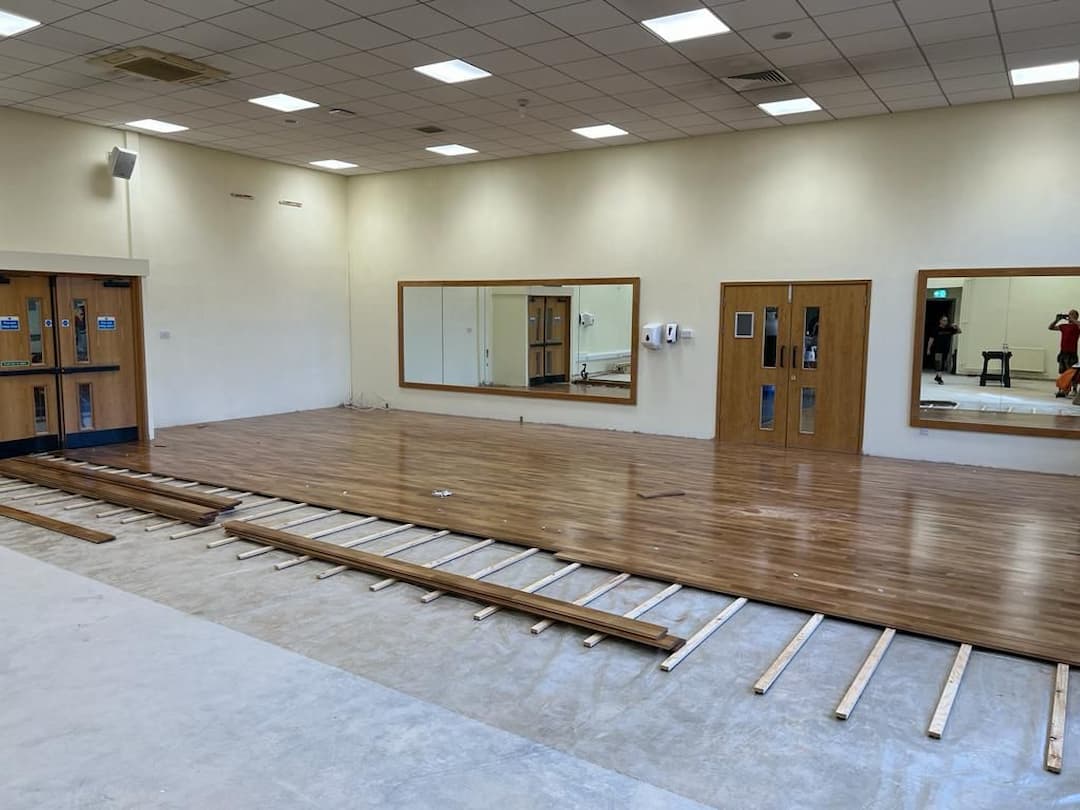
The performance of a sprung floor comes almost entirely from what is underneath the boards, which is why a system should never be judged on the surface alone.
Starting at the bottom, the slab has to be sound, level within tolerance and dry. Moisture is the most common reason a new sports floor fails early, so the slab is tested rather than assumed, and where readings are high we install a moisture mitigation membrane before anything else goes down.
Above that sit the resilient elements. Depending on the system these are rubber pads, foam blocks or engineered cradles, spaced to a pattern that produces the deflection the specification calls for. Battens run across them, and the playing surface is fixed to the battens.
The surface itself is usually solid strip timber or an engineered board. Maple, beech and oak all appear, with maple the traditional choice for its hardness and pale colour. The perimeter is left with an expansion gap and ventilated skirting, because timber moves with humidity and a floor with nowhere to expand will lift in the middle. That detail is skipped surprisingly often, and it is the cause of a great many domed floors.
An old sprung floor is often in better shape than it looks, because the parts that fail are usually accessible and repairable.
Dead spots are the classic complaint. A section of hall that feels lifeless underfoot almost always means a failed pad, a cracked batten or a cradle that has lost its resilience. We lift the boards in that area, replace the failed components and relay, which restores the response without touching the rest of the floor.
Squeaks and movement generally come from loose fixings or battens that have shifted, and again the fix is local rather than wholesale. Doming and cupping usually mean the expansion gaps have closed or been blocked, or there is moisture coming from below, and both need diagnosing properly before anything is refinished.
Once the structure is sound, the boards are sanded and resealed and the floor is effectively renewed. A sprung floor that has had its subfloor put right and its surface refinished will often outlast a cheap replacement, at a fraction of the cost and with none of the disruption of a full strip out.
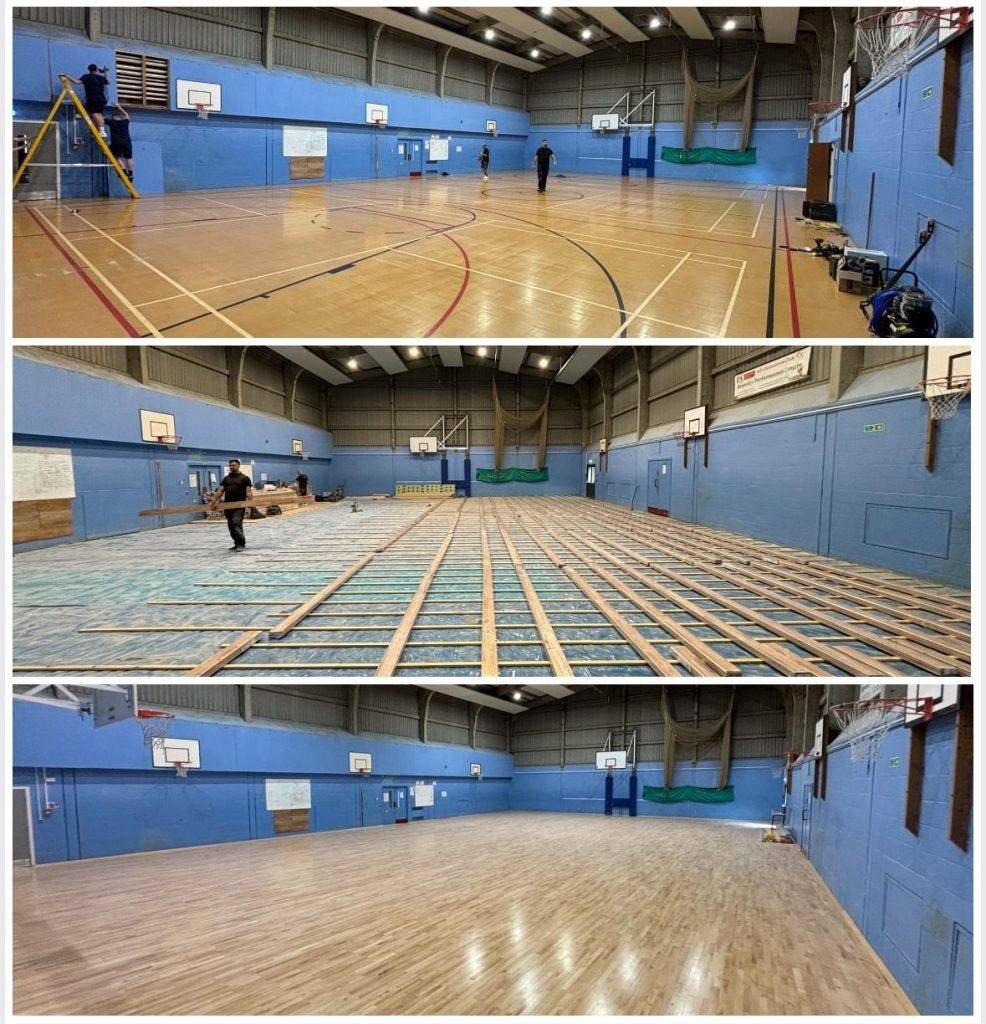
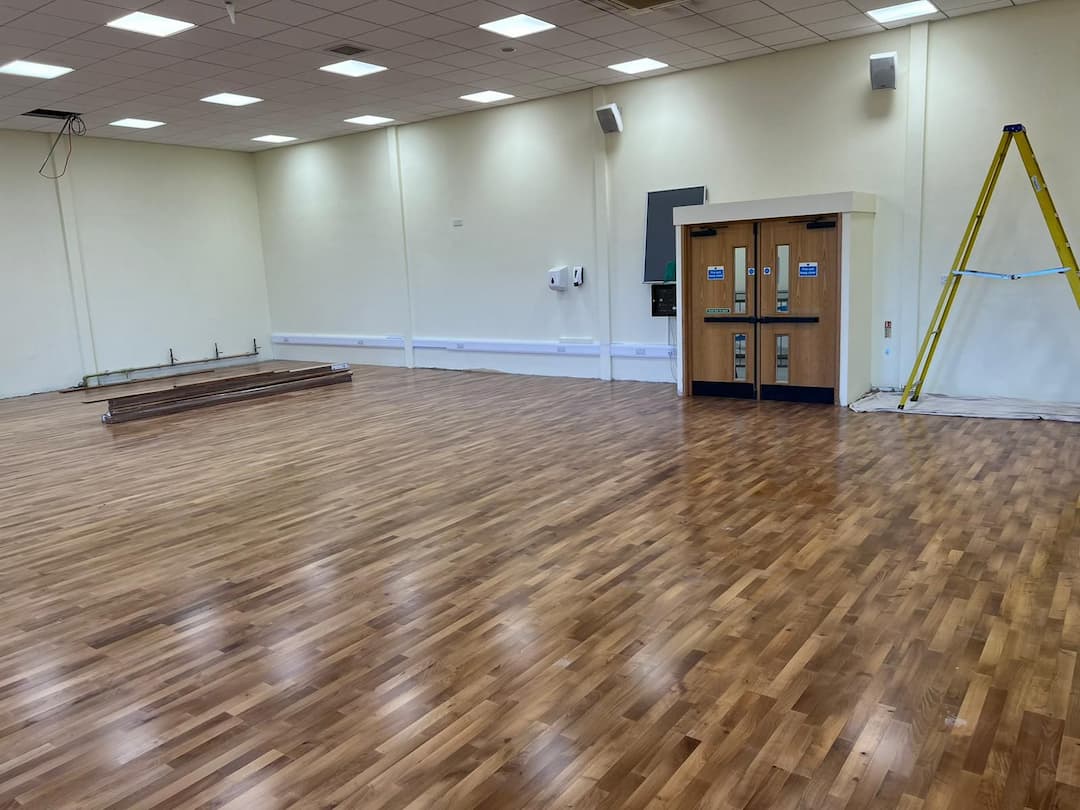
Where a floor genuinely is beyond restoring, a new sprung system is a significant investment and worth specifying carefully.
We start with the slab, because everything depends on it. Levels are surveyed, moisture is tested, and any remediation is priced honestly rather than discovered halfway through. A floor laid onto a slab that is out of tolerance will telegraph every dip, and no amount of good workmanship above will hide it.
System selection follows the use of the hall. A school sports hall running a full curriculum plus community hire wants a robust area elastic system with a replaceable wear layer. A performance space wants something different again. We will talk through the options with the actual timetable in front of us.
Installation takes several weeks for a full hall, and timber needs conditioning in the building before it is laid, which is a stage that cannot be rushed without consequences. We build that into the programme rather than treating it as optional, and we give you a date for handover that accounts for it.
Sprung floors are durable but they are not indifferent to how they are treated, and most of the damage we are called to repair was avoidable.
Humidity is the main one. Timber moves, and a hall that swings between damp and dry will see gaps open in winter and boards tighten in summer. Keeping the building at a reasonably stable humidity does more for a sprung floor than anything else, and it costs nothing.
Water is the enemy. Leaks from roofs, radiators and cleaning machines cause cupping and, if left, permanent damage to the boards and the structure below. Any leak onto a sprung floor should be dealt with as an emergency rather than mopped and forgotten.
Loads matter too. Staging, seating and scissor lifts wheeled across a sprung floor without protection will damage both the surface and the system beneath. We can advise on the correct protection for events, which is a lot cheaper than repairing a floor afterwards.
Beyond that, a screen and recoat every two to three years and a proper inspection annually will keep a sprung floor performing for decades.
A floor built over a flexible sub-structure of resilient pads, battens or a cradle system, which compresses under impact and springs back. That movement absorbs a meaningful share of the force from every landing, protecting joints while still returning enough energy for the surface to feel fast and responsive.
Usually. The main constraint is build height, since a sprung system adds depth and must work with existing door thresholds and access. We measure that at survey and, where height is tight, specify a lower-profile system that still delivers genuine shock absorption.
Almost certainly not. Dead spots point to a failed resilient layer or a batten that has lost contact beneath that area, not to worn-out boards. We locate them during survey and repair the build-up underneath rather than resurfacing over the symptom.
No. Courtship Flooring is a commercial contractor working on large-scale sports and institutional floors. Private homes are handled by our sister company Ryan’s Restorations.
An area elastic floor deflects across a wide area when loaded, which suits ball sports and multi sport halls. A point elastic floor deflects only where it is loaded, which suits fitness and dance spaces. Combined systems layer one over the other.
Yes, almost always. Dead spots come from failed pads, cracked battens or tired cradles, and we lift the boards locally, replace the failed components and relay. It does not require replacing the whole floor.
A well built and properly maintained sprung timber floor will last thirty years or more, with the surface refinished several times across that life. The structure usually outlasts the wear layer by a wide margin.
Usually because the expansion gaps at the perimeter have closed or been blocked, or because moisture is coming up through the slab. Both need diagnosing before any refinishing, because the cause will simply repeat.
Several weeks for a full sports hall, including time for the timber to condition in the building before laying. That conditioning stage cannot be rushed without risking movement later.
Usually yes, provided the slab is sound, within level tolerance and dry. We test moisture and survey levels first, and install a mitigation membrane where readings require it.
Whether you are specifying a new sprung floor or trying to work out why an existing one feels wrong, we will give you a straight answer. Call 01823 674562 for free advice or a survey anywhere in the UK.