
Flooring Professionals To The Leisure Industry
Courtship Flooring is a commercial sports flooring contractor working in Stirling and across the UK. We work with university, school and community facilities, planning each project as a complete visit.
A family business established in 1987, working exclusively on commercial indoor sports and timber floors. We survey, install, restore, mark, test and maintain, keeping every stage in our own hands so one warranty covers the whole system. Domestic work is handled separately by Ryan’s Restorations.
For halls in Stirling that are worn but structurally sound, our sports hall floor refurbishment service restores grip, appearance and line markings, usually within a school holiday.
Overnight/Weekend Installations
Professional Cleaning Demonstrations
Squash Court Maintenance
Recommended Cleaning Products
Professional Pendulum Slip Testing
Deep Clean & Reseal Service
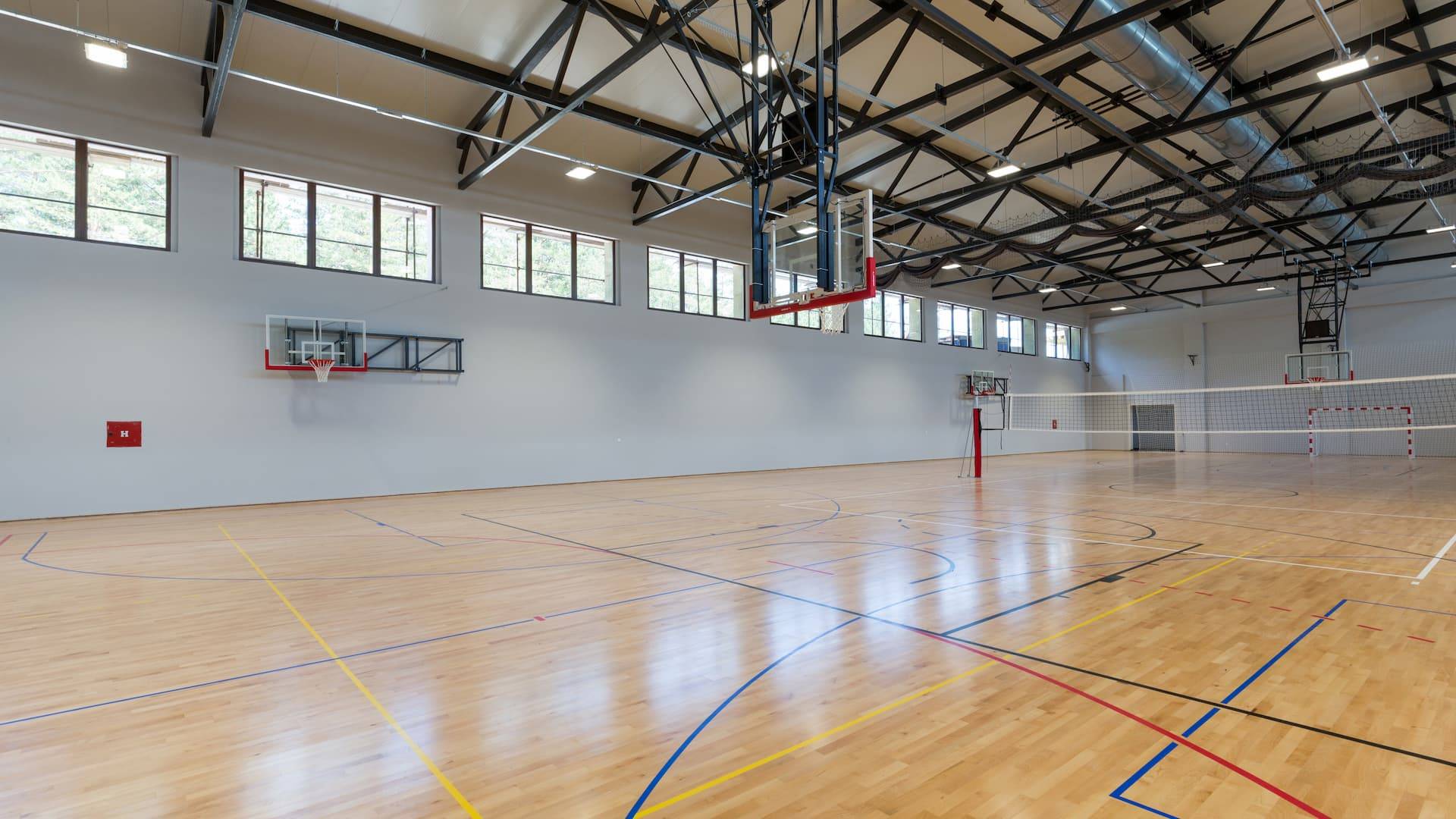
The build-up beneath the surface decides how a floor behaves. A cradle system suspends the floor on resilient pads for high shock absorption. A sports batten construction is the reliable all-rounder. Pad and board suits restricted heights. A duo batten system doubles up for greater resilience across the area.
Each produces a measurably different feel, and the right one depends on the sports played and the level of play rather than on price alone.
Available height frequently dictates what is possible. Door thresholds, existing levels, fixed equipment and access all limit the depth a new floor can occupy, and simply laying something thinner sacrifices the compliance that protects users.
Low-profile sprung and point-elastic systems resolve this properly, delivering genuine performance within a shallower construction. We measure at survey rather than discovering the constraint on installation day.
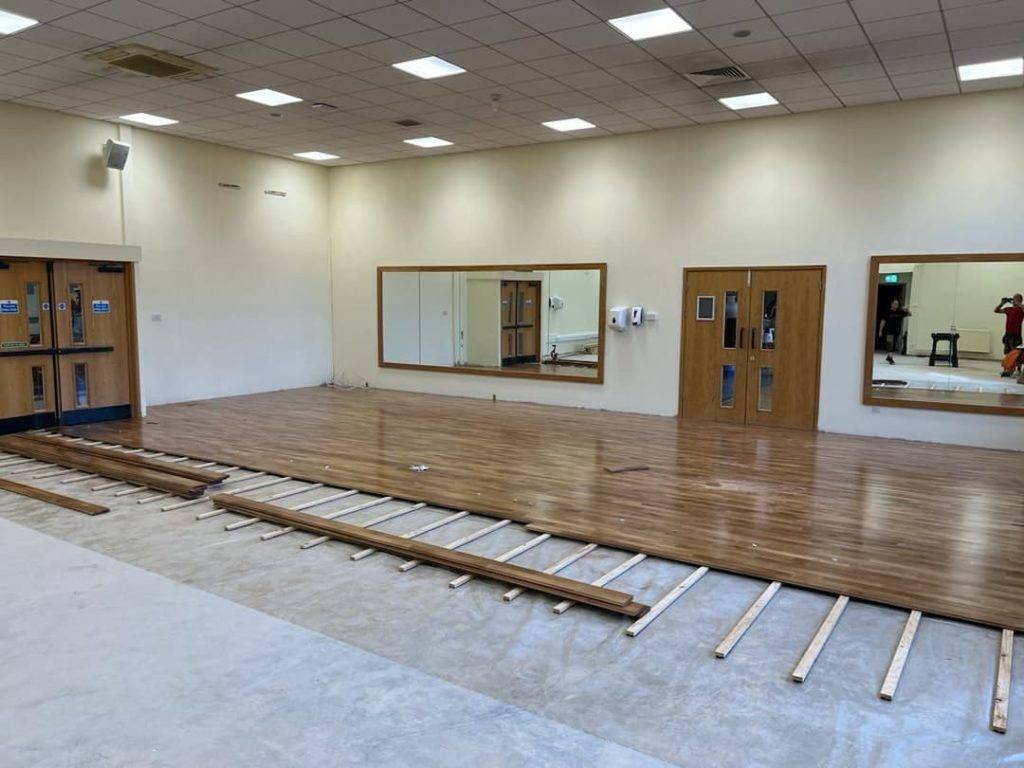
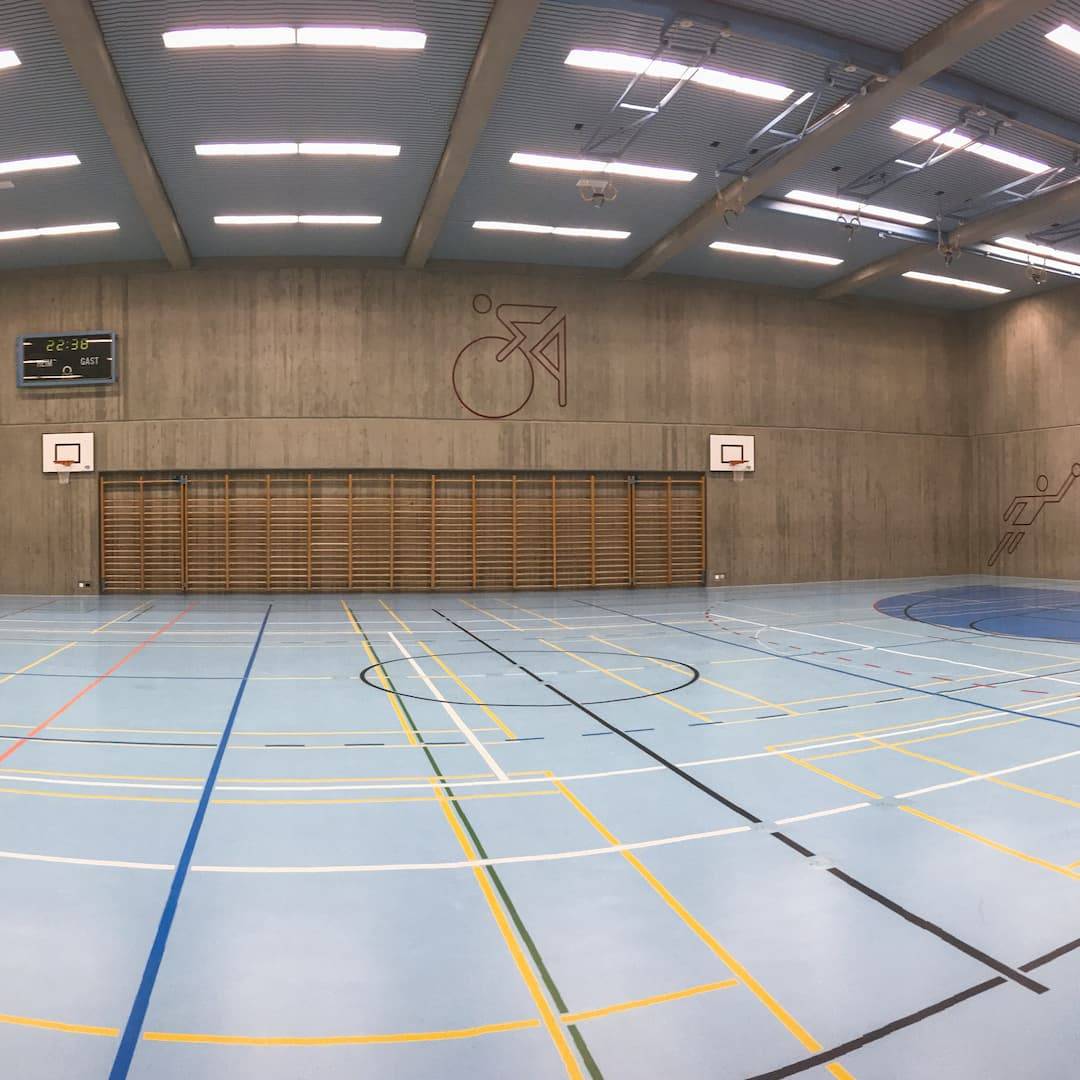
Basketball wants consistent ball rebound and a forgiving landing. Badminton wants dependable friction for lunging. Netball generates severe one-footed landings. Dance wants controlled slide. Each pulls the specification in a slightly different direction.
Where a hall hosts all of them, the job is to find the specification that serves the primary sport well and the others acceptably, and to be explicit about which is which.
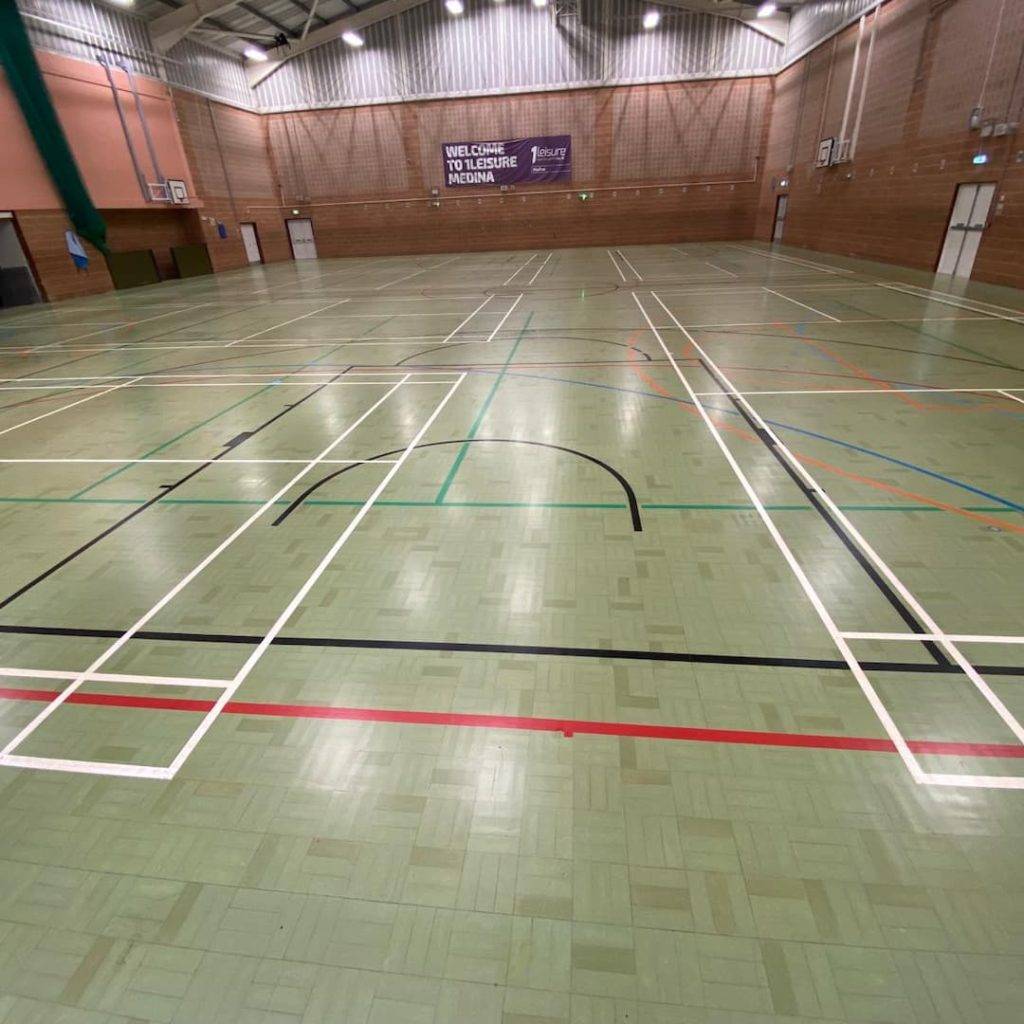
At Medina Leisure Centre we refurbished the main sports hall floor completely: sanding, repairs, resealing and a full set of new markings, with the logistics planned down to the last detail so the centre lost as little bookable time as possible.
The after photographs show a hall transformed, and the programme finished on the date agreed at the outset.
~ Matthew Evans
An outstanding company to deal with and they couldn’t have been better to work with. St George’s Ascot now has a stunning new sports hall floor and we are delighted. From quote, support, delivery and after sales, the Team has been brilliant. Thank you. 
~ James Anderson







Before any timber goes down on a concrete slab we test it. A hygrometer reading taken over several days tells us the relative humidity inside the slab, and a new floor laid over a slab that is still giving off moisture will cup, lift or rot from underneath within a few seasons.
Older halls in Stirling and the surrounding towns often sit on slabs poured long before damp proof membranes were standard, and a hall that has been dry for decades can still read wet after a change to drainage or heating.
Where readings are high we install a surface damp proof membrane, either a liquid epoxy system or a sheet membrane beneath the sub-structure, and we retest before laying. It adds a little to the programme and a modest amount to the cost. Finding damp after the floor is finished costs the whole floor.

A good number of mid century school and community halls have Granwood floors, and they are often mistaken for tired timber. The blocks are a compressed mix of wood flour and cement, laid in a hot bitumen bed, and they are far denser and harder wearing than the boards they resemble.
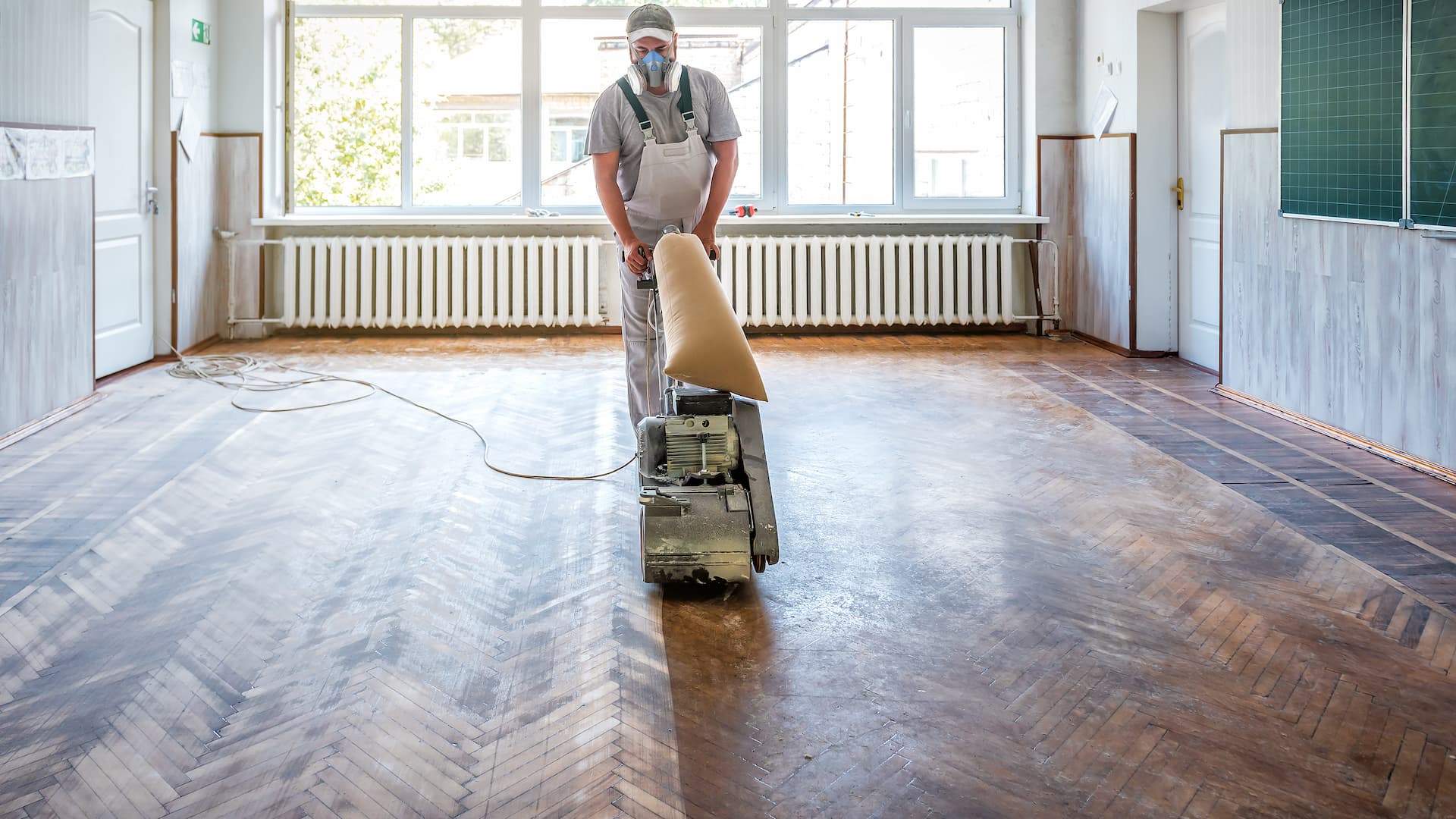
A Granwood floor that has gone grey and patchy is usually suffering from nothing worse than lost coating. We sand the blocks back, replace any that have cracked or lifted, then apply a specialist epoxy coating and new court markings. The result is a bright, grippy surface with decades of life left in it.
One caution applies. The bitumen bed in floors laid before the 1980s can contain asbestos, so we test a sample before any block is lifted and we plan the work so that layer stays undisturbed wherever possible.
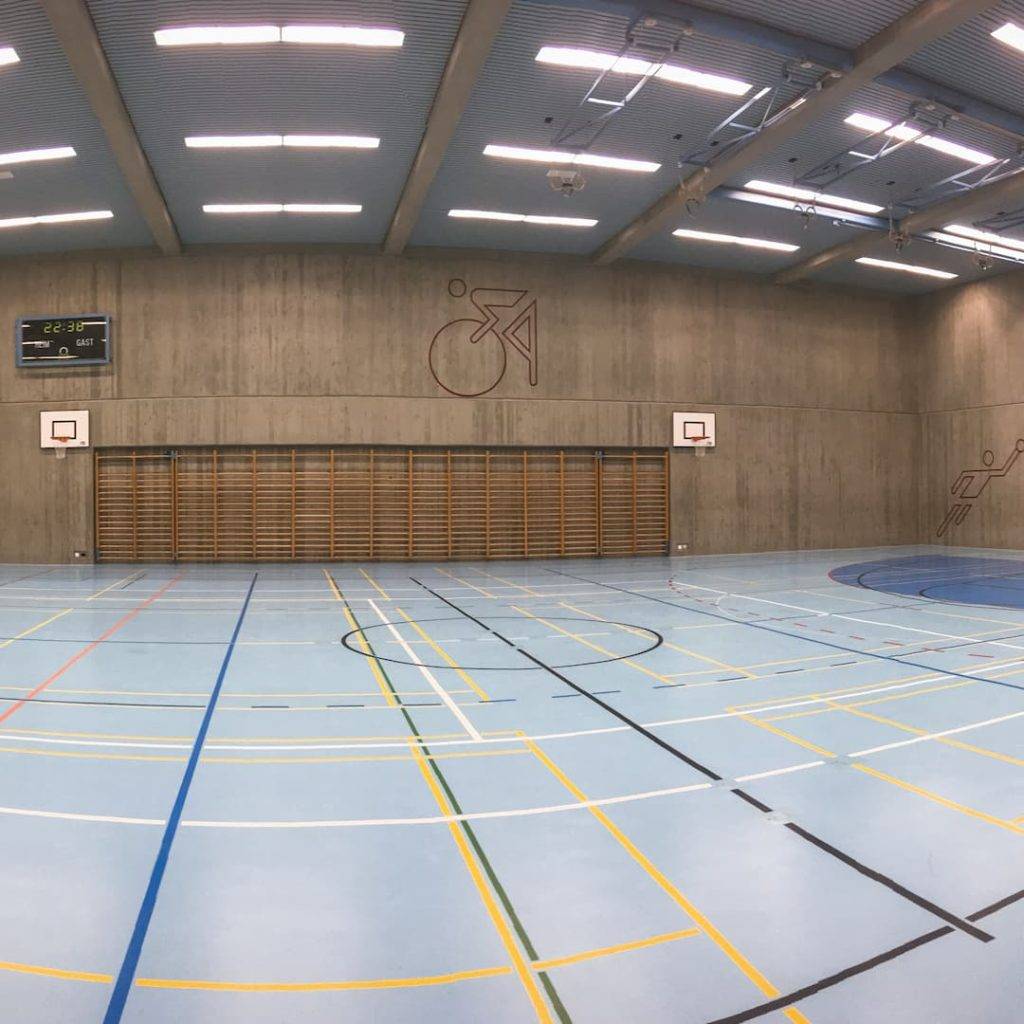
A hall that hosts basketball, netball, badminton, volleyball and five a side cannot give every sport the same visual weight. Somebody has to decide which court is read first, and that decision should follow what the timetable shows, not the order the sports were added.
We set out the primary sport in the strongest colour and the full line width, usually white or a deep contrasting shade, then step down through the secondary sports in lighter or narrower lines. Badminton courts are commonly the busiest set in a school hall and the easiest to lose, so they often earn a colour of their own.
Where two courts share a boundary we break the weaker line so the stronger one runs continuously. The test is simple. A visiting team should be able to find their court from the door without asking, and a teacher should never have to explain which blue is which.
Most enquiries from Stirling facilities start with the assumption that a poor looking floor needs replacing. In our experience fewer than one in ten does, and the survey exists to work out which category yours falls into.
A repair deals with a local fault: a run of damaged boards, a loose socket, a section of failed sub-structure. A refurbishment addresses the whole surface, taking it back to bare timber, correcting repairs, then sealing and marking afresh, and it is the right answer whenever the structure beneath is sound. Replacement is reserved for floors where the boards have been sanded to the tongue, where the sub-structure has failed across the room, or where damp has got into the framework.
We price the option we recommend and the alternatives alongside it. A floor that can be refurbished for a fraction of replacement cost should not be replaced because nobody checked.
Stirling brings us university sport, council leisure facilities, secondary school halls and a number of club and community buildings.
University and college facilities are busy across the full year, with summer conference and external hire filling what would be a shutdown elsewhere. The working windows are narrow and fixed, so those projects are planned months ahead and staffed to finish inside them rather than stretched across a longer period.
Leisure centres follow, where booking income makes long closures expensive and most of the work is carried out overnight, with the floor sealed at the end of a shift so it is walkable by opening time.
School halls follow the fixed term calendar, and the hall has to be back for the first day whatever else happens.
Because we travel to reach the area, projects here are planned as continuous blocks with everything brought with us rather than collected locally. Sequencing two or three jobs into one trip brings the cost down for all of them.
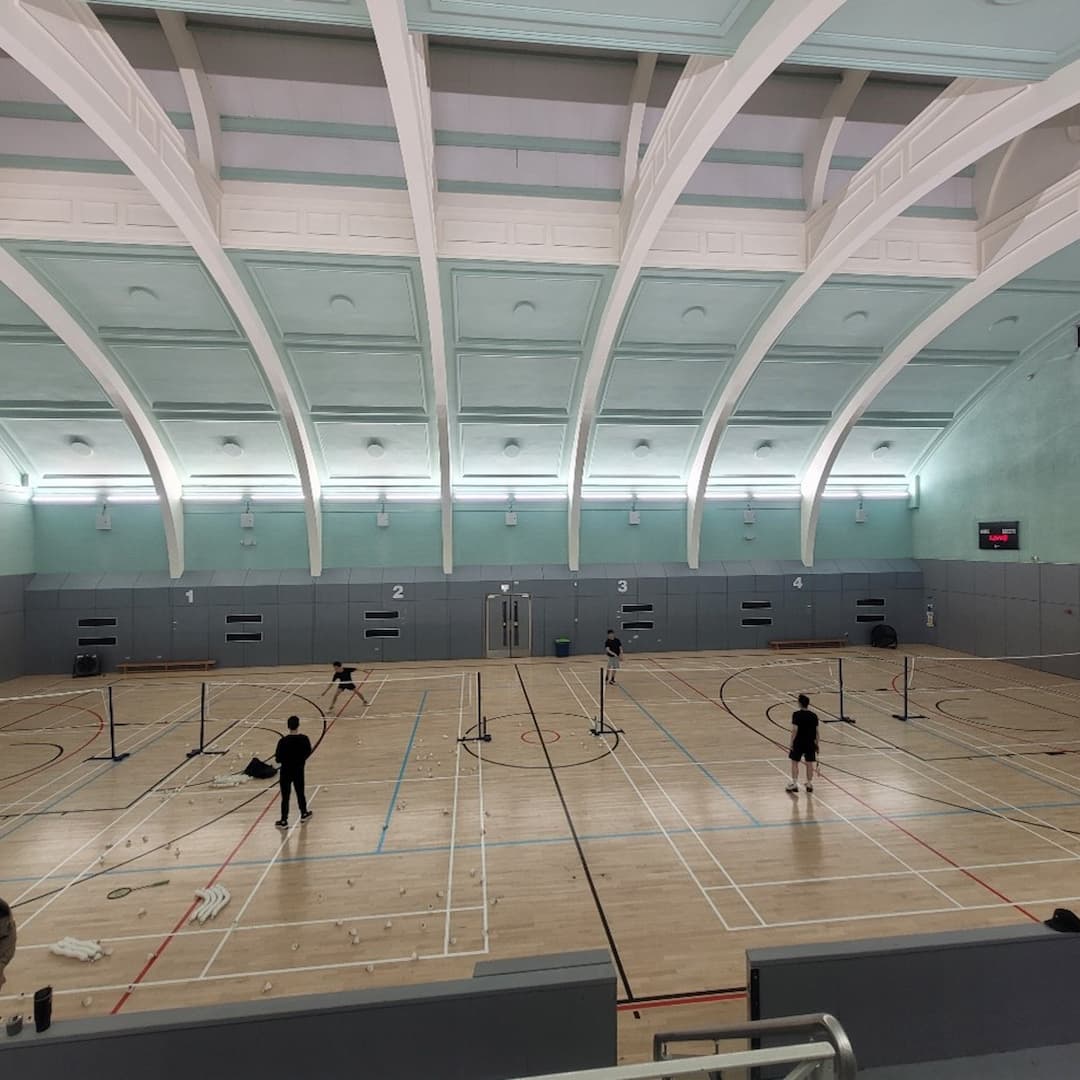
Two projects answer most of what Stirling facilities ask about.
Aston University is the closest for campus sport. The hall was heavily booked, the finish had worn through in the traffic lanes, and there was no genuine summer shutdown because conference and external hire filled it. We surveyed early, ordered materials ahead, staffed the job to the window and handed the floor back on the agreed date with markings set out fresh from measured dimensions.
Medina Leisure Centre is the better comparison for council and operator run halls, where booking income made a long closure impossible. The work was sequenced around the centre timetable, with the noisiest operations falling when the building was quietest and sealed dust extraction keeping the surrounding areas usable.
Both were routine technically. The value in each was in the survey and the programming, which is what allows a fixed price and a date that holds.
A sports floor on a cycle costs a fraction of one managed by crisis. The cycle is not complicated. A screen and recoat every two to three years refreshes the seal before it wears through to timber. A full sand roughly every ten years resets the surface and the markings. In between, an annual inspection catches loose boards, lifting lines and any change in slip resistance early.
For a university or leisure trust with several halls across the Stirling area, we set the whole estate on a rolling programme, so one or two floors are done each year and no single year carries the cost of all of them.
The saving is real. A floor that misses its recoat and wears to bare wood in the traffic lanes needs a full sand years early, and that is the most common avoidable cost we see.
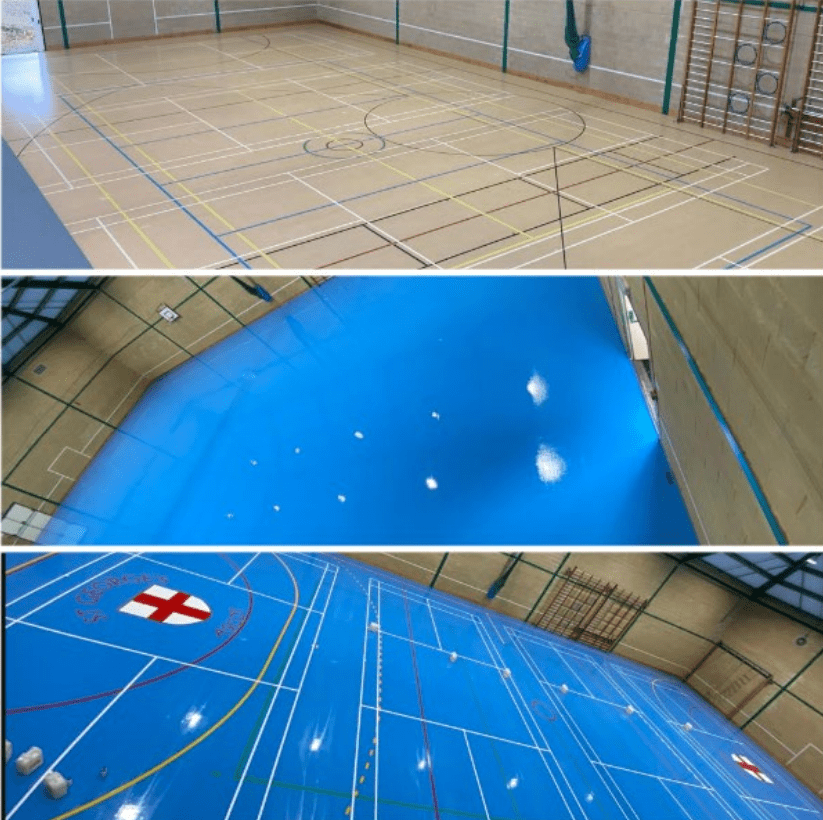
Allow 24 hours before anyone walks on the floor in clean trainers and 72 hours or more before benches, trampolines, posts and full team sport. The seal continues curing for around a week, so the first few days are the time to keep heavy kit off it.
Yes. Our sanding machines run on sealed extraction, the room is screened and we agree with your caretaker which vents and doors to isolate. The hall itself will be dusty during the work, but the corridors, changing rooms and classrooms around it carry on as normal.
Always. Job specific risk assessments and method statements, COSHH sheets for every product, insurance certificates and DBS details for the crew attending are sent ahead so your business manager has them on file. We sign in, wear identification and stay within the agreed working area.
Yes. We take pendulum readings at points across the hall, including the doorways and the busiest lanes, and give you a certificate with the values. The pattern tells us whether the cause is contamination, worn seal or polish, and the certificate satisfies insurers and governing bodies.
Yes. We work after the final booking, seal at the end of each shift and the floor is walkable by opening time. It carries a premium over daytime working, but for a centre that would otherwise lose a week of bookings it is nearly always cheaper overall.
A purpose made protective floor covering, laid before the desks and chairs go in and lifted straight after. It takes the scrapes that would otherwise need sanding out. We advise on the right grade for your surface and on storing it rolled so it does not mark the finish.
Polish, wax, bleach and anything sold as a shine or restorer. They build up, turn the surface slippery and eventually have to be stripped off chemically. Stick to a neutral cleaner made for sealed sports floors, used with a damp mop after the grit has been dry mopped away.
We guarantee our workmanship and the materials we apply, in writing, with the quotation. If a seal or a marking fails through our error we return and put it right. Furniture damage, water, wrong cleaning products and dropped weights sit outside it, and we explain that before you sign.
Book a free survey of your hall floor in Stirling and we will give you a straight answer on what it needs, a fixed price and a date that holds. Call 01823 674562 or send us a message.