
Flooring Professionals To The Leisure Industry
Courtship Flooring is a commercial sports flooring contractor working in Sussex and across the UK. We work extensively with performance spaces as well as sports halls, and a good deal of our work involves sprung construction.
Nearly four decades of specialist work sits behind every project: installation, refurbishment, sanding and sealing, court marking, slip testing and planned maintenance, all delivered in-house. Our clients are institutions and operators rather than households, and private homes are handled by Ryan’s Restorations.
Sussex is one of many areas covered by our national sports hall flooring service, with the same crews and the same standards wherever we work.
Overnight/Weekend Installations
Professional Cleaning Demonstrations
Squash Court Maintenance
Recommended Cleaning Products
Professional Pendulum Slip Testing
Deep Clean & Reseal Service
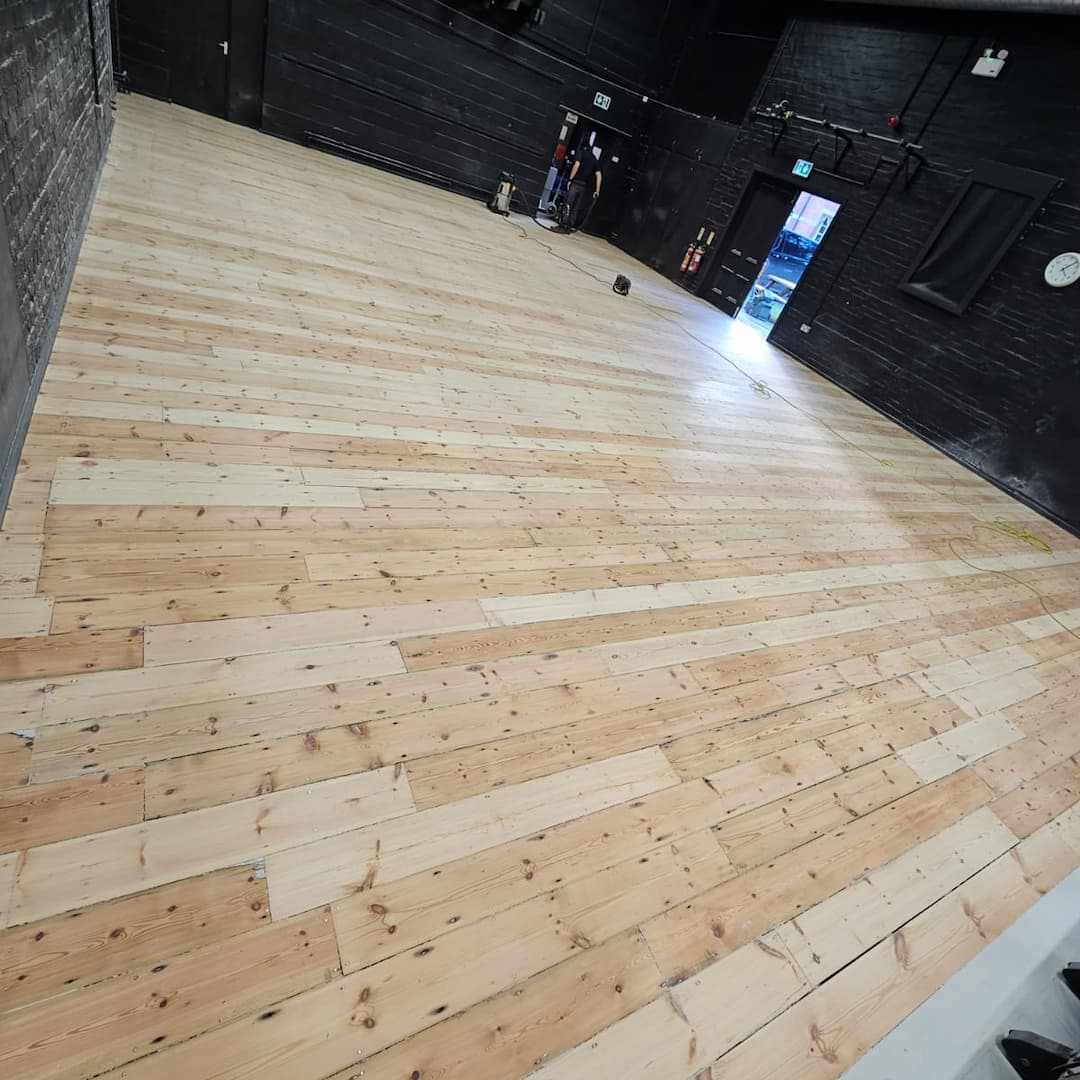
The phrase gets used loosely. A floor that simply feels bouncy is not the same as one engineered to protect its users. A genuine sprung floor is built over a resilient sub-structure that compresses under impact and recovers, absorbing a measurable share of the force from every landing.
Too little give and the user takes the full impact; too much and the floor becomes unstable to turn and balance on. Both extremes cause injuries, which is why the build-up is specified against the discipline rather than chosen for feel.
The sub-structure protects the body; the surface determines how the work feels. Ballet and contemporary generally want a vinyl performance layer offering controlled slide for turns and floor work. Tap needs a harder, more responsive top for sound and articulation. Street and commercial classes are hardest on the surface and prioritise durability.
Studios teaching several disciplines in one room need a considered compromise rather than a default, and we will explain exactly where that compromise falls.

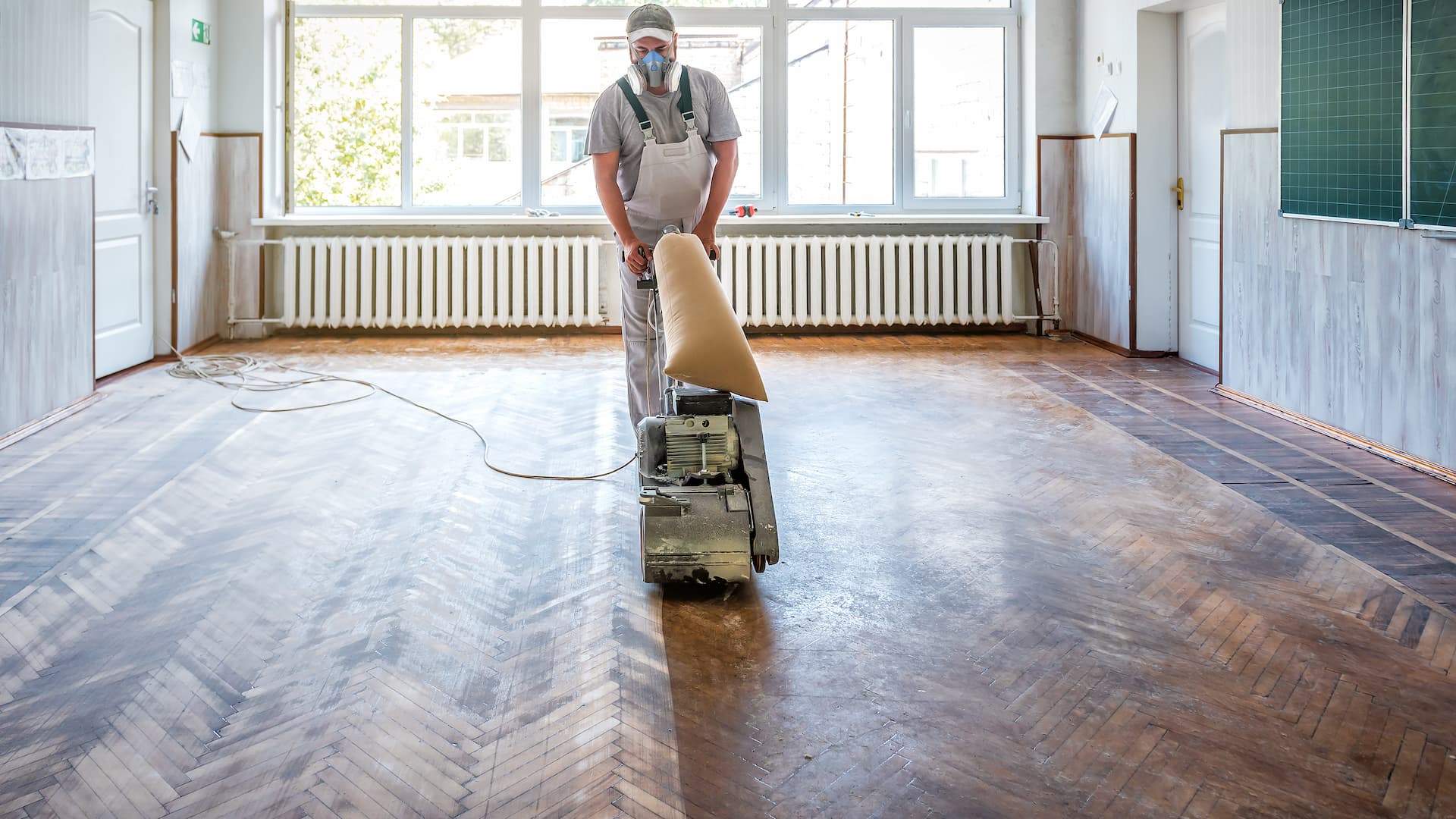
Performance floors lose consistency before they look worn, and inconsistent slide is what causes falls. Users notice it long before anyone spots a visual problem.
Refinishing restores an even surface across the whole area: sanding and resealing where the floor is timber, deep cleaning and appropriate treatment where it is a vinyl performance layer. We assess what you actually have before recommending either, since treating one as the other causes real damage.
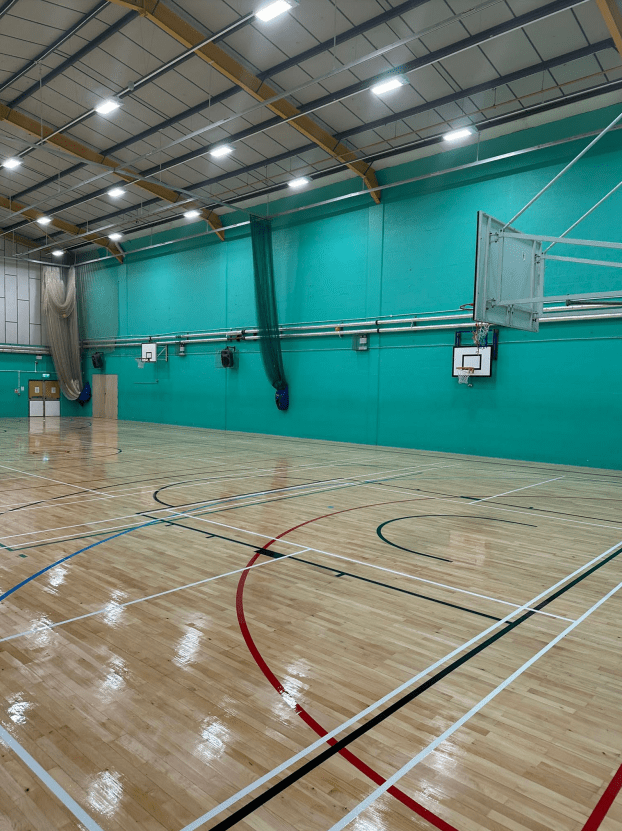
The main sports hall at Liskeard Leisure Centre had taken years of public sessions, club blocks and league nights. We delivered a complete programme of sanding, re-lining and resealing, returning the hall to service looking like a new installation.
It is a fair illustration of how we handle leisure work: one tight programme, agreed dates, and a centre back in action on schedule.
~ Matthew Evans
An outstanding company to deal with and they couldn’t have been better to work with. St George’s Ascot now has a stunning new sports hall floor and we are delighted. From quote, support, delivery and after sales, the Team has been brilliant. Thank you. 
~ James Anderson







For a leisure centre the expensive part of a floor project is the hall being closed, so we programme around trading rather than around the flooring. Most of our operator work runs overnight, with the floor walkable by opening time and heavy equipment held back until the seal has hardened. Large halls are split by area where the layout allows so some courts stay bookable.
The marking and final coat go on the quietest night of the week, and the cure runs across the slowest day.
Operators also need a date they can publish, because block bookings are cancelled weeks ahead and a programme that slips costs far more than the days lost. Our dates are fixed in writing and the job is staffed to hold them. Coastal centres in Sussex, with summer visitor demand on top of the regular clubs, tend to prefer the autumn for anything longer than a recoat.

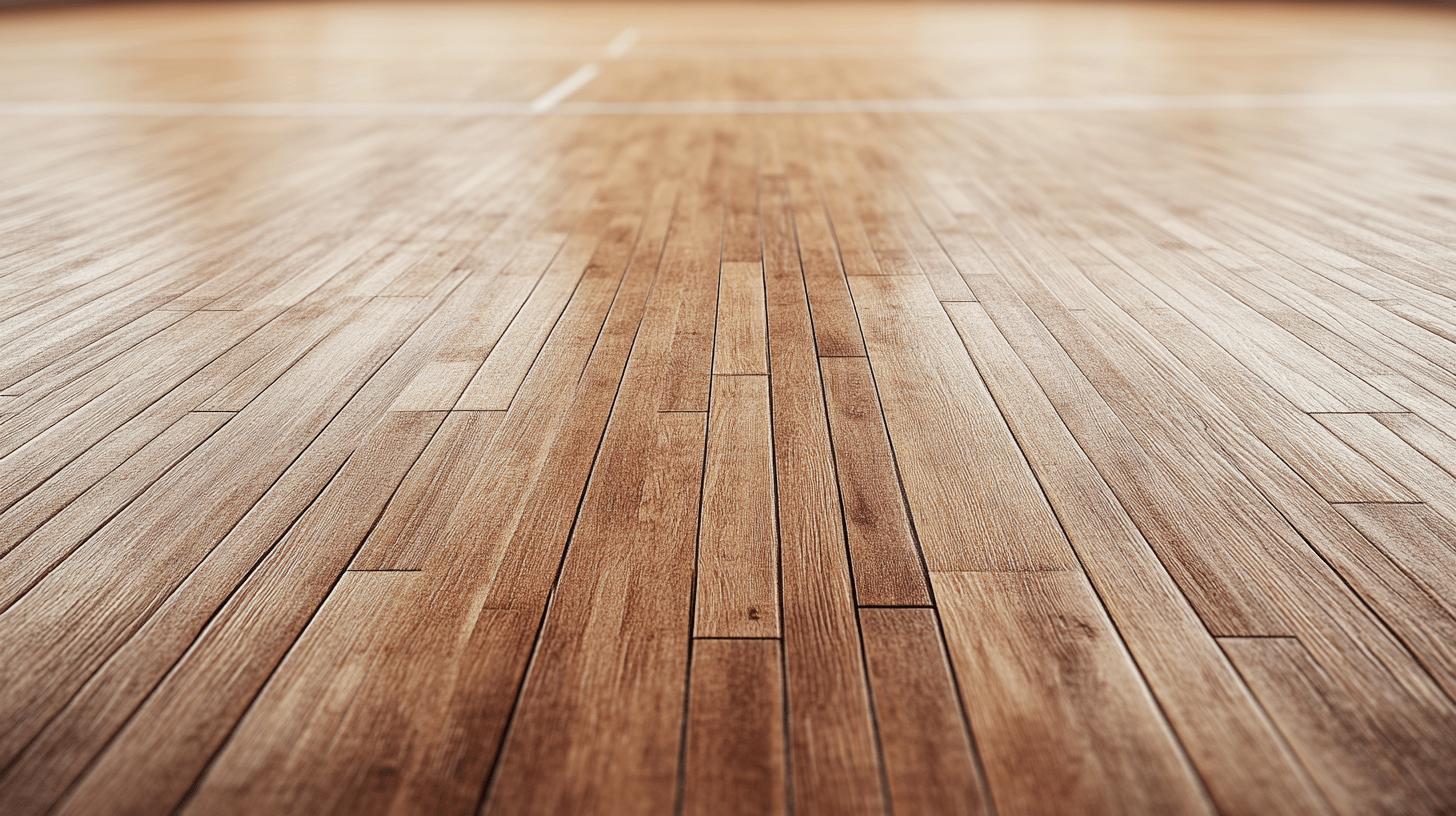
The damage that brings us back to a hall is frequently done in a single weekend rather than over years of sport, and it is almost always avoidable.
Exams are the most common culprit in schools. Several hundred desk feet placed on a sports floor and dragged into position will score it comprehensively. Proper protection sheeting, laid before the desks arrive rather than after, prevents all of it.
Events are the other. Staging, seating, scissor lifts and catering equipment wheeled across a sprung floor without protection damage both the surface and, where the loads are high enough, the structure beneath. Small hard wheels concentrate an enormous amount of weight into a tiny contact patch.
We can advise on the right protection for the loads involved, and it is worth having that conversation before an event rather than after. Sheeting costs very little compared with bringing a hall floor back from a weekend of being treated as a warehouse.
Timber moves with the moisture in the air around it. Boards take up humidity and swell in a damp summer, then dry and shrink when the heating comes on, which is why small gaps open in winter and close again by spring. That is normal, and a floor with no seasonal movement at all usually has no expansion allowance, which is the greater risk.
Sussex halls near the coast see wider swings than inland buildings. Salt laden air holds moisture, halls left unheated over a holiday take it on, and a fast heat up in September shrinks the boards quickly enough to split them.
The remedy is management rather than product. Keep the hall between roughly forty and sixty per cent humidity, warm it gradually, and make sure the expansion gap at the perimeter has not been filled by a well meaning decorator. We check all three at survey.
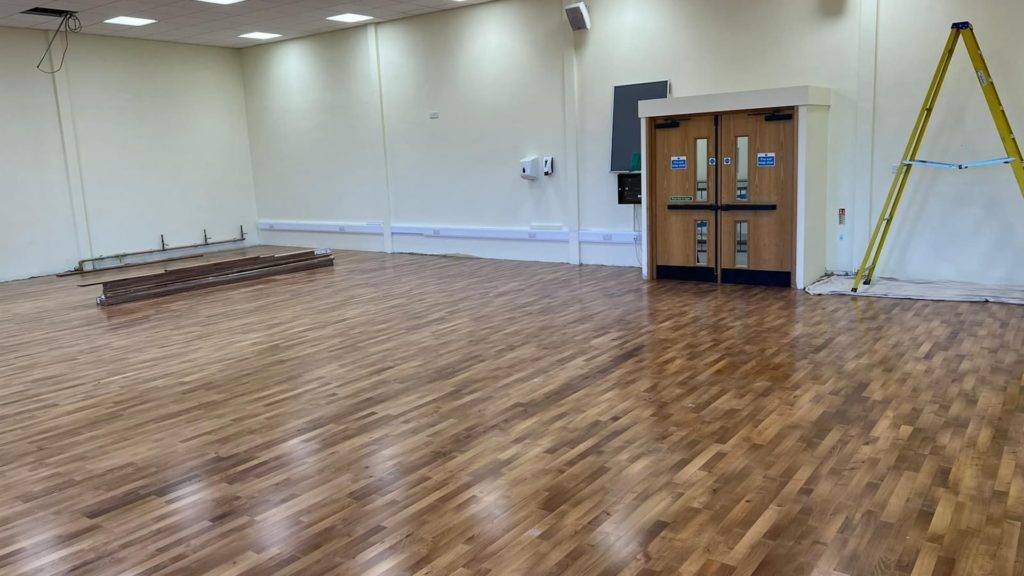

Our quotation is a list of measured parts, and every line is visible. The area sets the sanding and sealing figure. The condition of the surface sets the preparation. Each sport being marked is its own line, as is any set coming off. Board replacement, structural repairs beneath the floor, floor boxes and fittings are priced separately.
Working hours change the total, because nights and weekends cost more per hour than a daytime closure, and a compressed programme costs more than a sensible one. We show both options where they exist.
Because the work is done by our own team, no subcontractor margin sits on top. A bursar or estates manager in Sussex can compare our figure line by line against any other and see where the differences fall. If an item is optional, it is marked as such and the choice is yours.
Sussex, east and west, brings us independent school sport, academy trust estates, leisure operator facilities and a large number of community buildings.
Independent school halls, gymnasia and squash courts are a significant strand, with well maintained buildings, high expectations of finish quality and work planned well ahead into fixed holiday windows. Much of it is preventative rather than remedial.
Academy and state school halls are the larger group by number and more often arrive overdue, with the seal worn through in the traffic lanes and markings that have been copied rather than set out for several remarks running.
Leisure centres follow, where booking income means overnight and weekend working.
Village halls, church halls and club buildings make up the rest, and the county has a great many. We have worked at The Bradfield Club, and that project is a fair illustration of the type: an old timber floor with plenty of depth left, decades of accumulated finish, and a result that cost a fraction of replacement.
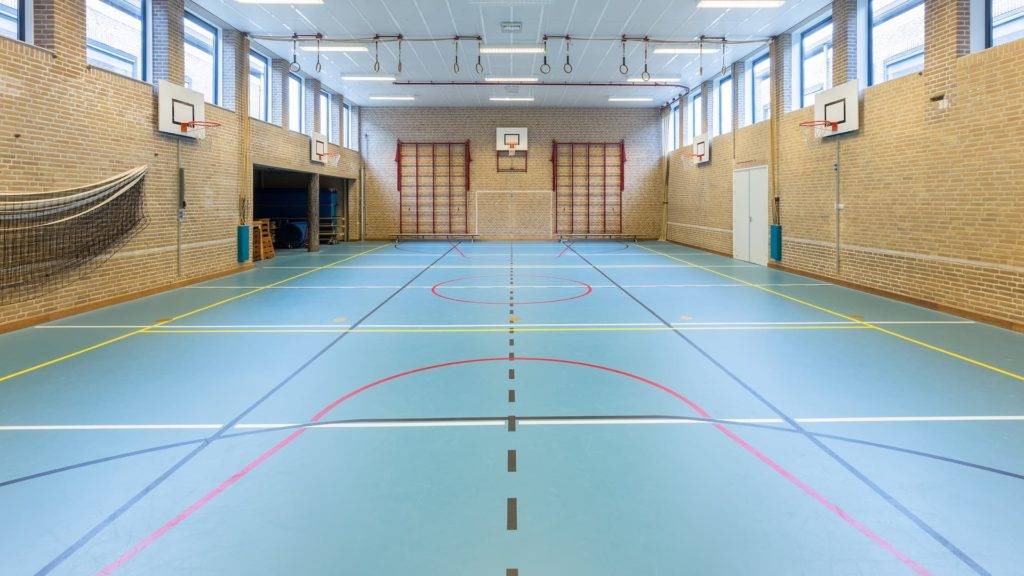
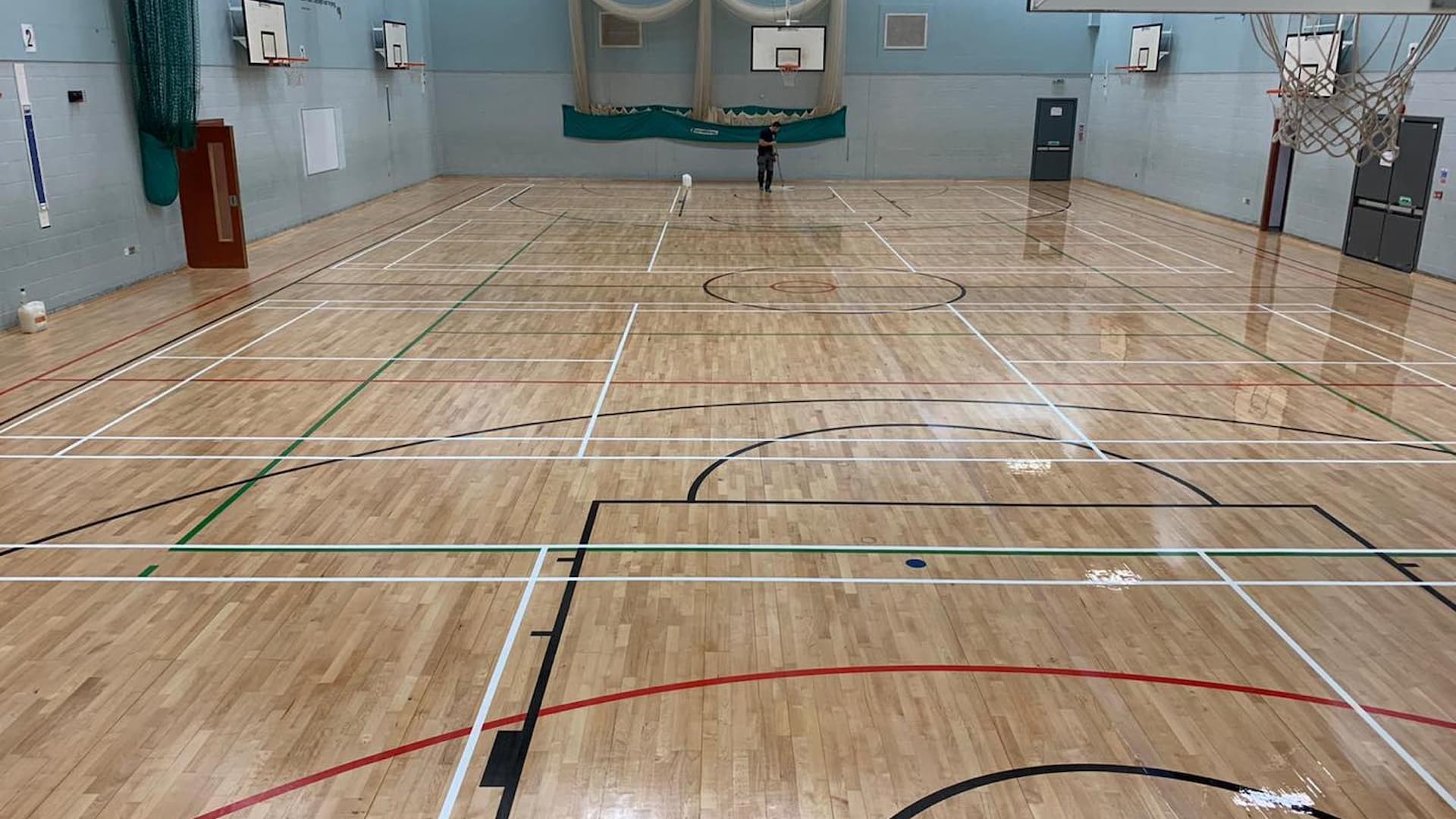
Sussex enquiries divide between well maintained independent school sport and halls that have been left rather longer.
Independent schools generally come to us preventatively, wanting the screen and recoat booked while the seal is still intact. That is the cheapest way to run a floor, and those halls go decades without needing a full sand.
Academy and community halls more often arrive remedial. The commonest presentation is a finish worn through in the traffic lanes with markings faded past the point of easy officiating, on a floor that is otherwise structurally sound and has plenty of board depth left.
The third recurring item is halls that have become slippery. Almost always the cause is polish build up from a cleaning product that promises shine, or a seal worn smooth where the traffic is heaviest. Both are correctable, and both are worth dealing with before an incident rather than after.
Granwood turns up in a good number of older school and church halls across Sussex, and it is misidentified more often than any other floor. It is a block of wood flour and cement pressed under heat, laid in a bitumen bed in a brick pattern. It has no grain and almost no depth above the bed, so a Granwood floor sanded as though it were timber is destroyed.
Restored correctly it has decades of life. We prepare the surface with the right abrasives, rebed loose blocks, replace broken ones and coat the whole floor with a modified epoxy system made for composite substrates, with the markings applied into the coating.
Bitumen beds of that age can contain asbestos, so we test before lifting a single block. Replacement means removing the bed as well, which is why a new floor quotation on Granwood is usually far higher than the restoration that most of these halls actually need.

Yes. We work across both counties, from Chichester to Hastings and inland across the Downs and the Weald, and nationally beyond. Our own team travels with its own machinery, and any travel or accommodation is shown openly as a line in the quotation.
Public and employer’s liability insurance, supplied with every quotation, along with site specific method statements and risk assessments, COSHH data for the products used and enhanced DBS certificates for the team on school sites. Where CDM applies we take on the relevant duties.
We stop, show you what we have found, and give you a priced option before doing anything about it. Because we measure timber depth, moisture and the structure at survey, mid project surprises are rare, and the quotation already covers the things a survey can reveal.
Yes. On handover we run through the cleaning routine with your team, leave written guidance and recommend a neutral cleaner suited to the floor and your water supply. We can supply the products, and we are happy to repeat the session when cleaning contractors change.
A pad, batten or cradle beneath the boards has failed, so that area no longer flexes with the rest of the floor. We lift the boards locally, replace the components and relay, then blend the finish. Sanding alone will not change how the floor feels.
Yes. Overnight and weekend working is routine for leisure centres and clubs, with the floor walkable by opening time and equipment held off until the seal has cured. The rates are shown separately so you can weigh them against a daytime closure.
Yes, with the water set low, soft pads fitted and a neutral cleaner in the tank. Never leave water standing on the boards and never use polish or a shine product through the machine. We show your cleaning team the settings on handover.
A screen and recoat every two to three years while the seal is still intact, and a full sand roughly every ten years. Halls run on that cycle rarely need anything more. Leave the recoat too long and the seal wears through, bringing the full sand forward.
Book a free survey of your sports hall, studio or stage floor anywhere in Sussex. We will assess it, tell you plainly what it needs and fix the price and dates in writing. Call 01823 674562 or send us a message.