
Flooring Professionals To The Leisure Industry
Courtship Flooring is a commercial sports flooring contractor working in Swansea and across the UK. We have delivered sports hall refurbishments across Wales and plan Welsh projects as complete programmes.
Nearly four decades of specialist work sits behind every project: installation, refurbishment, sanding and sealing, court marking, slip testing and planned maintenance, all delivered in-house. Our clients are institutions and operators rather than households, and private homes are handled by Ryan’s Restorations.
Swansea is one of many areas covered by our national sports hall flooring service, with the same crews and the same standards wherever we work.
Overnight/Weekend Installations
Professional Cleaning Demonstrations
Squash Court Maintenance
Recommended Cleaning Products
Professional Pendulum Slip Testing
Deep Clean & Reseal Service

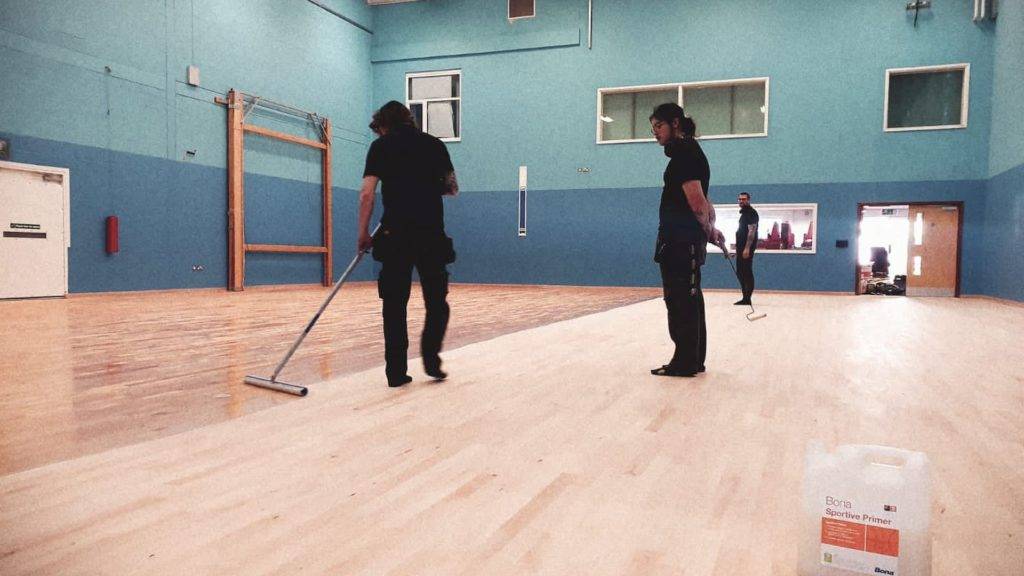
The sequence is fixed and skipping stages is where results go wrong. Survey and moisture readings, dust-controlled sanding to clean timber, matched board repairs, fine sanding to an even surface.
Then seal in the correct number of coats with proper curing, markings laid between coats so they sit within the finish, and a documented handover stating exactly when the floor takes traffic, equipment and full play.
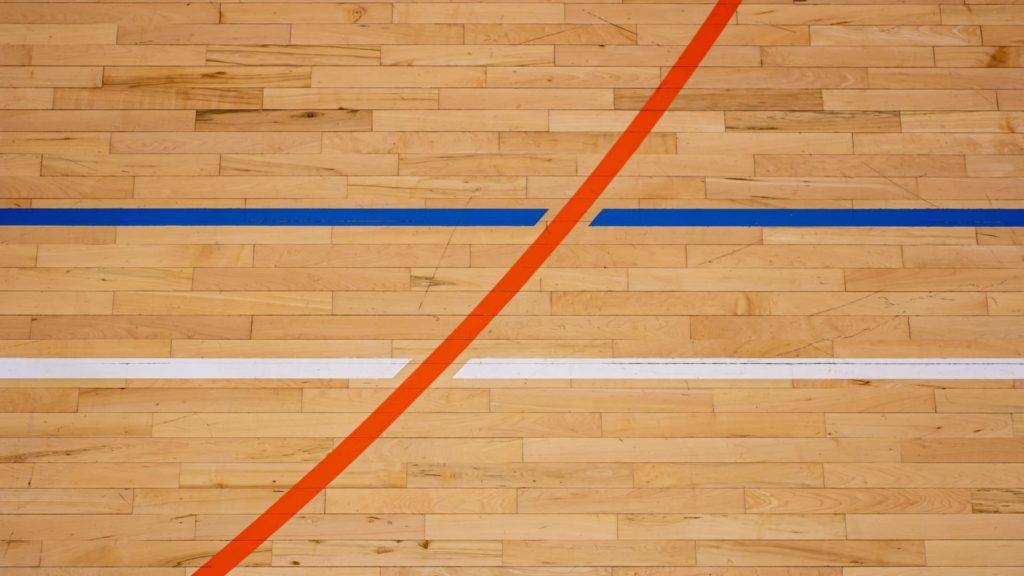
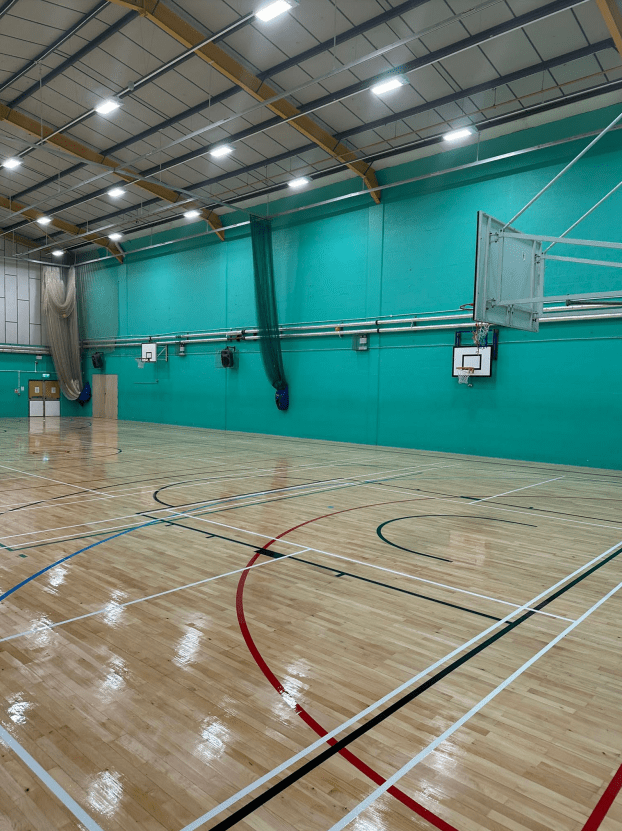
Halls here typically carry netball, basketball, badminton, futsal and five-a-side markings simultaneously, and legibility depends on planning rather than paint.
We establish which sport leads, mark it so it reads instantly, then work the others in behind using colour and line weight. Each court follows its current governing body specification, and crests can be sealed beneath the final coats.

School and club calendars are fixed well in advance and cannot move for a contractor. The programme therefore has to fit the gaps rather than the reverse.
We work holidays, quiet weeks, overnight shifts and weekends, phase larger projects so part of the space stays usable, and confirm the reopening date in writing before anything begins.
The main sports hall at Liskeard Leisure Centre had taken years of public sessions, club blocks and league nights. We delivered a complete programme of sanding, re-lining and resealing, returning the hall to service looking like a new installation.
It is a fair illustration of how we handle leisure work: one tight programme, agreed dates, and a centre back in action on schedule.
~ Matthew Evans
An outstanding company to deal with and they couldn’t have been better to work with. St George’s Ascot now has a stunning new sports hall floor and we are delighted. From quote, support, delivery and after sales, the Team has been brilliant. Thank you. 
~ James Anderson







A slip on a sports floor is rarely reported as a flooring fault, yet the surface is usually the cause. We test with the pendulum, the method the HSE recognises, which swings a rubber slider across the floor and records a value that relates directly to the chance of a fall.
We test wet and dry, in the busy routes and the quiet corners, and we record exactly where each reading was taken. A leisure hall in Swansea with a full public timetable gives very different numbers at the entrance than under the badminton net, and that spread shows where the seal has gone.
The certificate states the values, the method and the date, which is the document an insurer or safety officer asks for after an incident. Where a floor fails, we say what fixes it, and often that is a recoat or a change of cleaning product, not a new floor.
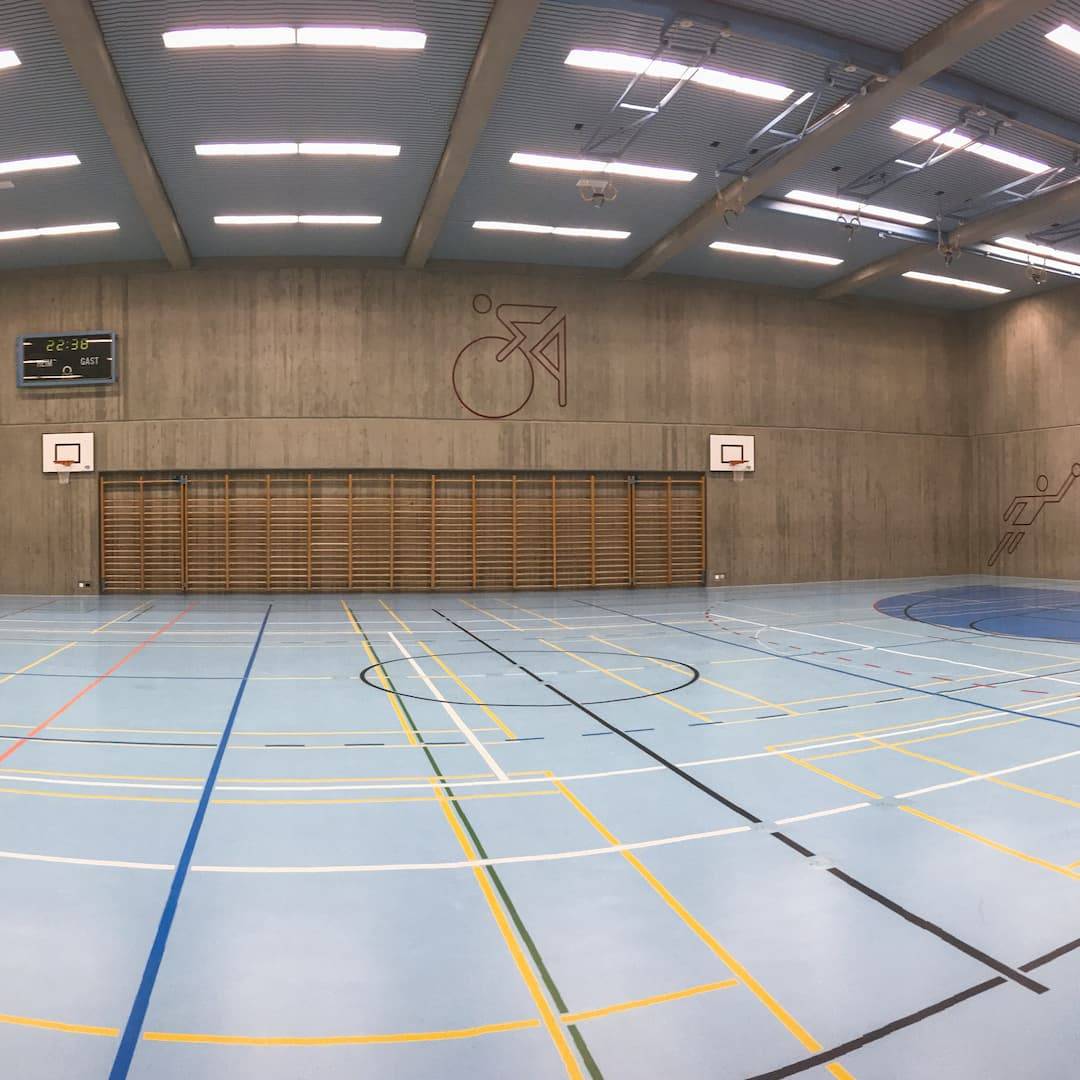
Colour is the part of a marking scheme most often decided badly, because it is chosen on a paint chart in an office rather than on the floor under the hall lights.
Most halls have been refitted with LED lighting in the last decade, and LEDs render colour very differently from the fluorescent tubes they replaced. Two shades that look clearly distinct on a sample card can merge almost completely under the actual lighting, which is how halls end up with markings nobody can follow.
So we bring samples and look at them in the room, with the lights on, before anything is ordered. It takes ten minutes and it prevents the most common complaint we hear about other contractors work.
The second consideration is the floor itself. A pale maple floor takes different colours from a mid tone vinyl or a dark polyurethane, and a scheme designed for one will not necessarily read on the other. Where a hall is being recoloured as well as remarked, the two decisions have to be made together.
Timber takes up moisture from the air and gives it back as the seasons change, and a hall near the coast sees wider swings than one inland. Boards widen in a damp autumn and shrink in a heated winter, so a floor that looks tight in October can show gaps by February.
That movement is normal and a well built floor allows for it. An expansion gap at the perimeter, ventilated skirtings and a sub floor that can breathe let the timber move without cupping or lifting in the centre.
Problems start when the gap has been filled, the vents have been blocked or a hall on the Swansea coast is left unheated for weeks and then warmed hard for an event. We check all of that at survey and we say plainly whether the movement you are seeing is seasonal or structural.
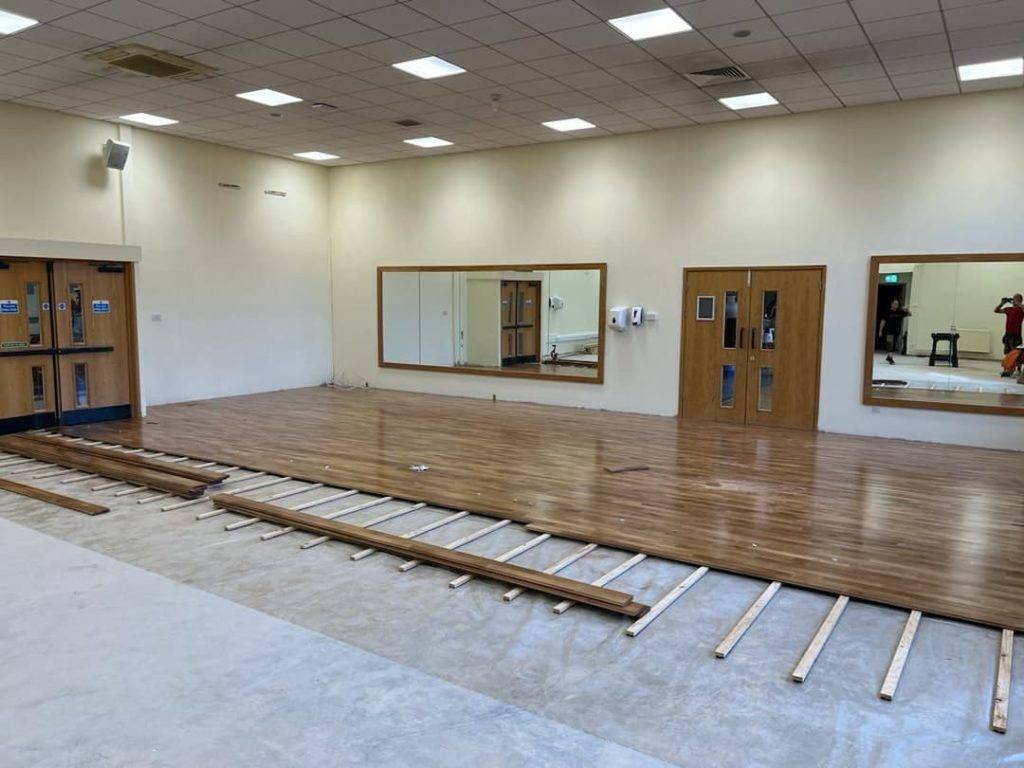
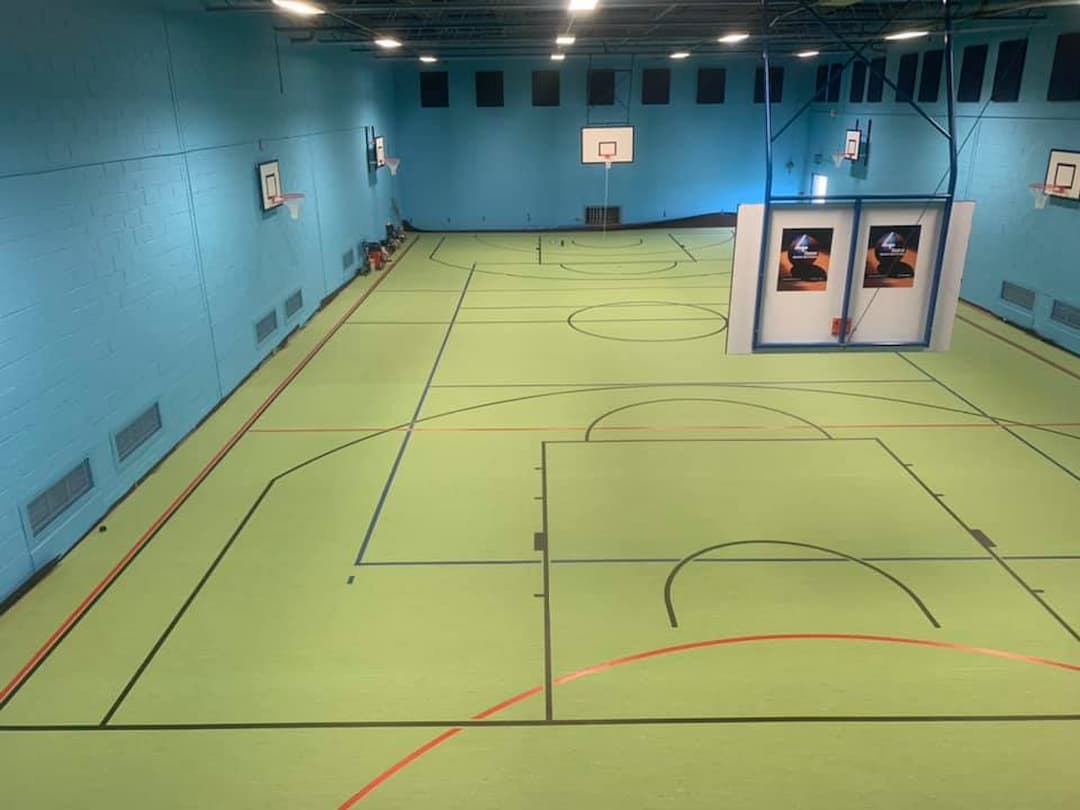
Many school and community halls built between the 1950s and the 1980s have Granwood floors. The blocks are made from wood flour and cement, pressed and laid in a herringbone or basket pattern into a bitumen bed. They are hard, dense and long lasting, but they cannot be sanded the way timber can.
Refurbishing Granwood means a mechanical clean back, repair of loose or broken blocks and a specialist epoxy or polyurethane coating that bonds to the composite. Done well, a tired grey floor comes back with fresh colour and clean markings.
One caution applies. Older bitumen adhesives can contain asbestos, so any block lifting is preceded by a check and, where needed, testing. We have worked on Granwood across Wales for decades and we know what to look for before anything is disturbed.
Swansea work comes to us from university sport, council leisure facilities, secondary school halls and a number of club and community buildings.
University and college facilities are busy year round, with summer conference and external hire filling what would otherwise be a shutdown, so the working windows are narrow and fixed. Those projects are planned months ahead and staffed to complete inside them.
Leisure centres follow, where booking income makes long closures expensive. Most of that work happens overnight, with the floor sealed at the end of a shift so it is walkable by opening time.
School and academy halls follow the fixed term calendar, and the recurring issue is halls that have gone a decade or more without a proper refinish.
Community and church halls make up the rest, and those old timber floors usually have plenty of depth left under the polish.
We are regularly in South Wales, so travel here is routine, and sequencing several projects into one trip brings the cost down for everybody involved.
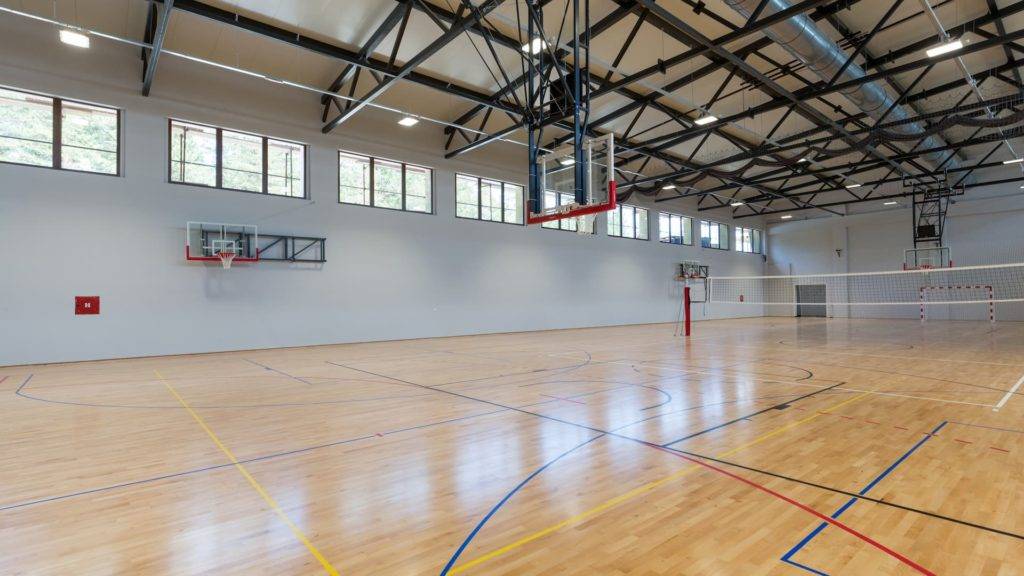
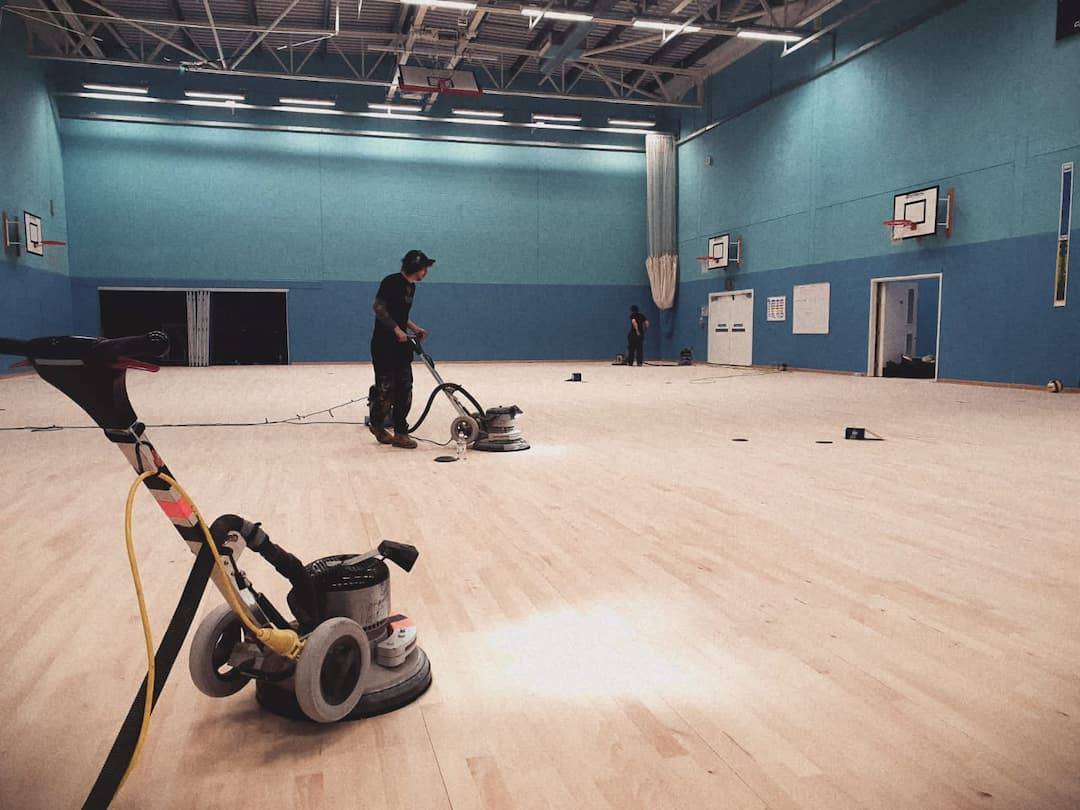
Swansea enquiries tend to fall into three recognisable groups.
University and college halls are heavily used and usually structurally sound, so the question is timing rather than diagnosis. Catching those on a screen and recoat cycle before the seal goes through preserves the boards and costs a fraction of a full refinish.
Leisure centre halls more often arrive with a specific complaint. Slipperiness is the most common, and the cause is nearly always polish build up or a seal worn smooth in the busiest routes.
School halls typically present with markings and wear together, because both become obvious at the same time. Doing them in a single holiday visit is considerably cheaper than treating them as separate jobs, and it is the moment to remove redundant sports lines that have accumulated over the years.
Rough dimensions, a few photographs in daylight showing the worst wear and the general condition, the age of the floor if known, and your ideal dates. That is enough for an indicative figure. We then survey in person before anything is fixed, so nothing is priced from guesswork.
Yes. Our site team hold current DBS certificates, and we issue a method statement and risk assessment for every project along with COSHH data for the products we use. Insurance certificates come with the quotation, so your compliance file is complete before we arrive.
Our sanding machines run on sealed extraction and we screen the hall doors, tape ventilation grilles and clean down at the end of every shift. Adjoining classrooms and corridors stay in use, and the hall is vacuumed and tack wiped before any coat goes down.
We stand behind the workmanship and the coating system as one package, because we apply both. If the seal lifts, peels or fails early through a fault in our work, we come back and put it right. Wear from use and damage from furniture are outside that, and we say so in writing.
Not if it is managed. Timber over heating needs the slab dried and commissioned before laying, a gradual warm up and a surface temperature that stays within the manufacturer limit. We take readings, advise on control settings and choose a system suited to the slab.
Yes. We lift, reset or replace socket boxes for netball, badminton and volleyball posts as part of a refurbishment and set new ones exactly to the court layout. Damaged or loose fittings are one of the most common trip hazards we find, so we check every one.
No. We work only for schools, colleges, leisure operators, clubs, councils and other organisations. Domestic timber floors are handled by our sister company, Ryan’s Restorations, and we are happy to pass an enquiry across so the right team looks at it.
A neutral pH cleaner diluted as the label states, applied with a well wrung flat mop or a scrubber drier on low water. No polish, no wax and no silicone based products, all of which build up, cause slips and have to be stripped off before the next recoat.
Book a free survey of your sports hall in Swansea and we will tell you plainly what the floor needs, what it will cost and when the work can happen. Call 01823 674562 or send us a message.