Imagine investing in a state-of-the-art sports facility only for athletes to suffer frequent injuries on your watch. The culprit? Inadequate slip resistance on the sports floors. Ensuring optimal slip resistance is part of the duty of care that operators owe under the Workplace (Health, Safety and Welfare) Regulations 1992 and the Occupiers’ Liability Act 1957, and a key factor in safeguarding athlete safety and enhancing performance. This article delves into the critical role slip resistance testing plays in maintaining both the safety and efficacy of sports environments. Read on to discover why prioritising slip resistance could be the game-changer your facility needs.
The Role of Slip Resistance in Sports Floor Safety
Slip resistance is a measure of a floor’s ability to prevent slips and falls, which is crucial for athlete safety and overall sports facility safety. This attribute ensures that sports floors offer sufficient traction, reducing the likelihood of accidents during high-intensity activities. Slip resistance is particularly vital in environments like gyms, sports halls, and stadiums, where both athletes and facility users depend on secure footing.
Courtship Flooring carries out pendulum slip testing on sports floors across the UK, with written reports to support your risk assessment.
Poor slip resistance significantly increases the risk of slips and falls, leading to potential injuries. For athletes, inadequate traction can result in reduced performance and confidence, as they cannot rely on the floor to support rapid movements and sudden changes in direction. Beyond performance, the safety of all facility users is compromised, with a higher likelihood of accidents that could lead to severe injuries. Thus, prioritising slip resistance is essential for creating a safe environment.
- Increased risk of slips and falls
- Potential for severe injuries
- Reduced athlete performance and confidence
- Higher liability for facility managers
- Negative impact on facility reputation
Ensuring optimal slip resistance offers multiple benefits. It enhances athlete performance by providing the necessary traction for safe and effective movements. Additionally, it reduces the risk of injuries, contributing to a safer sporting environment. For facility managers, maintaining high slip resistance mitigates liability risks and enhances the reputation of the facility, making it a preferred choice for athletes and users. Ultimately, optimal slip resistance is a cornerstone of sports floor safety, benefiting everyone involved.
Methods of Slip Resistance Testing
Evaluating slip resistance is crucial for ensuring the safety and performance of sports floors. Various testing methods offer insights into how well a floor can prevent slips and falls, thereby safeguarding athletes and facility users.
Pendulum Slip Resistance Test
The Pendulum Slip Resistance Test is the standard method in the UK, governed by BS 7976. This test uses a swinging pendulum with a rubber slider that simulates a foot’s interaction with the floor. By measuring the pendulum’s deceleration, this test quantifies the slip resistance of the surface.
The importance of the Pendulum Slip Resistance Test lies in its ability to provide consistent and reliable results. Testing in line with BS 7976 gives consistent, comparable results, helping facility managers spot and reduce the risk of slip-related injuries.
Laboratory Testing
Laboratory testing offers high accuracy and reliability in slip resistance measurement. Controlled environments in labs enable precise testing conditions, free from external variables that could affect results. This method typically involves using sophisticated equipment to simulate different conditions and measure slip resistance accurately.
The benefits of laboratory testing include its ability to provide detailed data on floor safety. Such information is invaluable for manufacturers and facility managers when selecting appropriate flooring materials and ensuring they meet safety standards.
Field Testing
Field testing assesses slip resistance in real-world conditions, making it an essential complement to laboratory testing. This method involves on-site evaluations where floors are tested under actual usage scenarios, accounting for factors like wear and tear, surface contamination, and environmental conditions.
Field testing’s necessity stems from its ability to provide a realistic assessment of a floor’s slip resistance. It helps identify potential hazards that might not be apparent in a controlled laboratory setting, thereby offering a comprehensive understanding of floor safety in everyday use.
Regulatory Standards for Slip Resistance
Recognised standards for slip resistance testing are vital for the safety of sports facilities. These standards provide a benchmark for evaluating the effectiveness of sports floors in preventing slips and falls. Adhering to these standards not only ensures a safe environment for athletes and facility users but also mitigates liability risks for facility managers.
One critical standard in the UK is BS 7976, which governs the Pendulum Slip Resistance Test. This standard provides guidelines on how to measure slip resistance accurately, ensuring consistency and reliability in results. No UK law requires a slip test, but testing to BS 7976 gives facility managers reliable evidence for their risk assessments and helps identify and mitigate potential slip hazards. International standards, such as those set by the ASTM and DIN, ensure uniformity in safety measures across different regions, making it easier for facilities to meet global safety expectations.
| Standard | Region | Purpose |
|---|---|---|
| BS 7976 | UK | Defines guidelines for measuring slip resistance using the Pendulum Test |
| ASTM E303 | USA | Standard test method for measuring slip resistance using the British Pendulum Tester |
| DIN 51130 | Germany | Specifies slip resistance testing methods for floor coverings |
Following these standards offers multiple benefits for sports facilities. It ensures that the floors meet the necessary safety criteria, thereby reducing the risk of slips and falls. This compliance also aids in risk management, as facility managers can demonstrate that they have taken appropriate measures to ensure safety. Furthermore, adherence to these standards enhances the facility’s reputation, making it a preferred choice for athletes and users. Overall, following regulatory standards is a proactive approach to maintaining a safe and reliable sporting environment.
The Impact of Slip Resistance on Athlete Performance
Slip resistance directly correlates with athlete performance by ensuring sufficient traction during sports activities. Athletes rely on stable footing to execute rapid movements, sudden stops, and changes in direction. Poor slip resistance can erode confidence and performance, as athletes may hesitate or modify their movements to avoid potential slips, thus reducing their effectiveness and increasing the risk of injury.
- Enhanced traction for better control and stability
- Increased confidence during high-intensity movements
- Reduced risk of slips and falls
- Better overall performance and safety
Ensuring proper slip resistance offers a competitive advantage by minimising injury risks and enhancing performance. Athletes can train and compete more effectively when they trust the floor’s traction, leading to improved outcomes. Furthermore, sports facilities that prioritise slip resistance gain a reputation for safety and quality, attracting more athletes and events, and thus maintaining a competitive edge in the sports industry.
Best Practices for Maintaining Slip-Resistant Sports Floors
Regular maintenance is indispensable for preserving the slip resistance of sports floors. Consistent upkeep ensures that the flooring remains safe and effective for athletes and facility users, reducing the risk of slips and falls.
Regular Cleaning
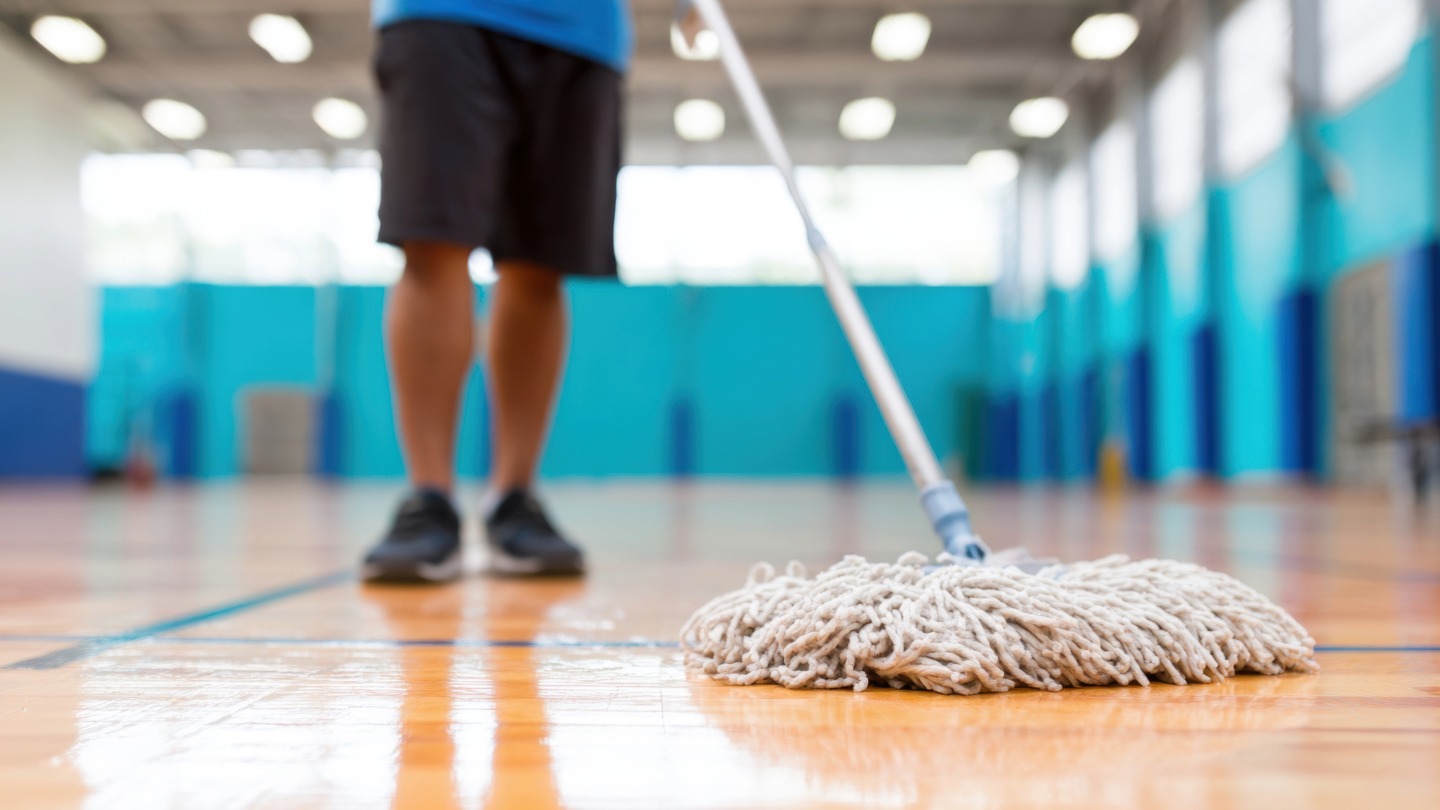
Regular cleaning is vital for maintaining slip resistance. Cleaning practices should be tailored to the specific flooring material to avoid damage and ensure effectiveness. For example, wooden floors may require gentle cleaning agents, while rubber floors might benefit from more robust cleaners. Consistent cleaning prevents the build-up of dirt, sweat, and other contaminants that can compromise the floor’s traction.
Addressing Wear and Tear
Identifying and addressing wear and tear promptly is crucial for preventing slip hazards. Routine inspections can help detect early signs of damage, such as cracks, dents, or uneven surfaces. Once identified, these issues should be repaired immediately to maintain the floor’s slip resistance. Regular sanding and sealing may be necessary for wooden floors, while rubber floors might need resurfacing or patching.
Slip Resistance Improvements
Enhancing slip resistance can be achieved through various methods. Applying anti-slip coatings or treatments is an effective way to improve traction. These treatments should be compatible with the flooring material and applied following the manufacturer’s guidelines. Additionally, using slip-resistant mats or coverings in high-traffic areas can provide extra protection and prolong the lifespan of the primary flooring.
By implementing these best practices, sports facilities can maintain high slip resistance, ensuring a safe environment for all users.
Final Words
In the action, slip resistance is vital for ensuring athlete safety and facility excellence. Testing methods, including the Pendulum Slip Resistance Test, laboratory, and field testing, provide accurate assessments. Recognised standards like BS 7976 support consistent testing and risk management. Additionally, optimal slip resistance enhances athlete performance, giving facilities a competitive edge.
Regular maintenance practices further sustain safety standards. The Importance of Slip Resistance Testing for Sports Floors cannot be overstated. Prioritising it creates safer, more effective sports environments.
FAQ
Why is slip resistance important?
Slip resistance is crucial for ensuring the safety of athletes and facility users. Floors with inadequate slip resistance significantly increase the risk of slips and falls, leading to potential injuries.
What is the test for floor slip resistance?
The primary test for floor slip resistance is the Pendulum Slip Resistance Test. This test measures the friction between a floor surface and a rubber slider, providing reliable data on the floor’s safety.
What are the slip resistance standards for floor tiles?
In the UK, slip resistance is usually measured with the pendulum test described in BS 7976. HSE guidance treats a Pendulum Test Value (PTV) of 36 or above as low slip potential, which helps reduce the risk of slip and fall incidents.
What two factors affect the slip resistance of a floor in use?
Two key factors affecting slip resistance are the type of flooring material and the surface condition. Both factors influence the level of friction between the floor and the user’s footwear.