
Flooring Professionals To The Leisure Industry
Courtship Flooring is a commercial sports flooring contractor working in Warwickshire and across the UK. We work on both long-established school halls and modern academy facilities, which demand quite different approaches.
Trading since 1987 and family-owned throughout, we handle indoor sports and commercial timber floors from first survey to long-term aftercare, with our own crew and equipment on site at every stage. Domestic and residential projects are the province of our sister company, Ryan’s Restorations.
Whatever the size of the building, work in Warwickshire follows the same survey-first approach as every sports hall flooring project we take on.
Overnight/Weekend Installations
Professional Cleaning Demonstrations
Squash Court Maintenance
Recommended Cleaning Products
Professional Pendulum Slip Testing
Deep Clean & Reseal Service
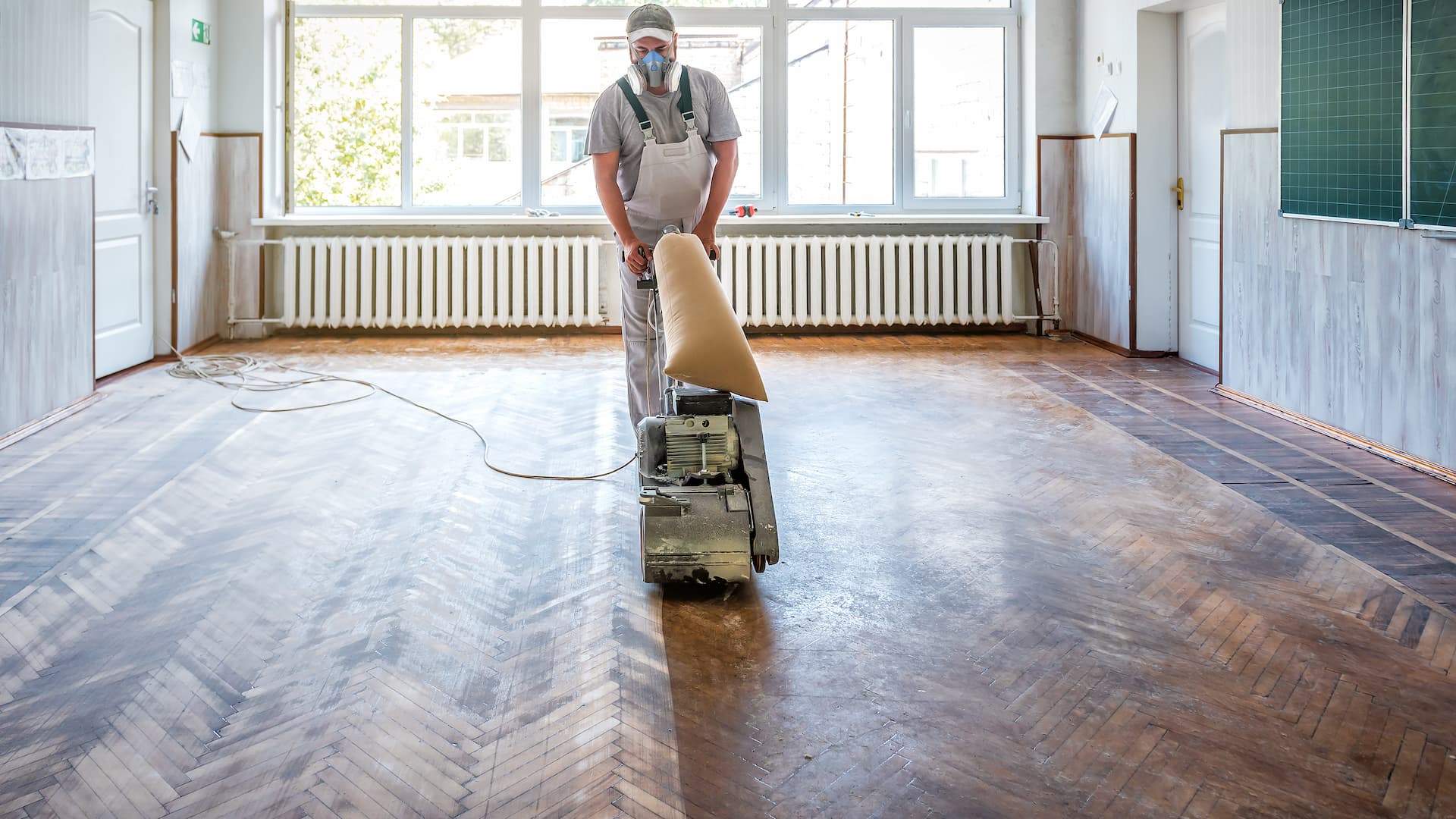
An older hall floor can usually meet modern expectations, provided it has not been over-sanded in the past. Age is rarely the limiting factor; previous treatment usually is.
We measure what remains, restore rather than replace where the timber is sound, and finish to a standard that satisfies current slip resistance and performance expectations. Where a floor cannot meet them we say so and explain what replacement would involve.
The cheapest floor to buy is frequently the most expensive to own. A budget system that cannot be refinished has to be replaced outright when it wears; a quality timber floor can be sanded and resealed repeatedly across decades.
We set out the realistic lifecycle cost of each option, including maintenance intervals and the number of refinishing cycles available, so the decision is made on total cost rather than the number at the bottom of the quote.
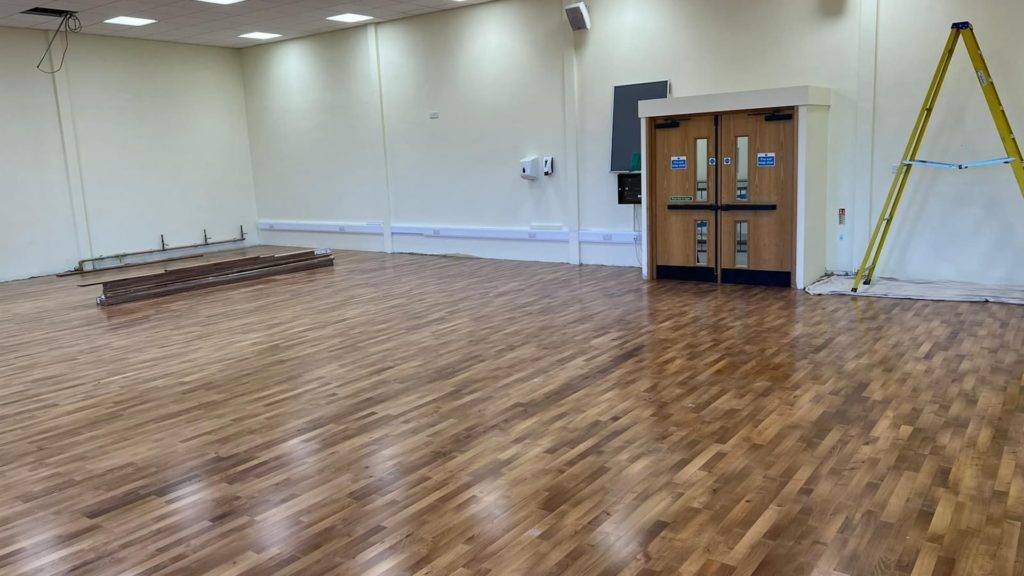
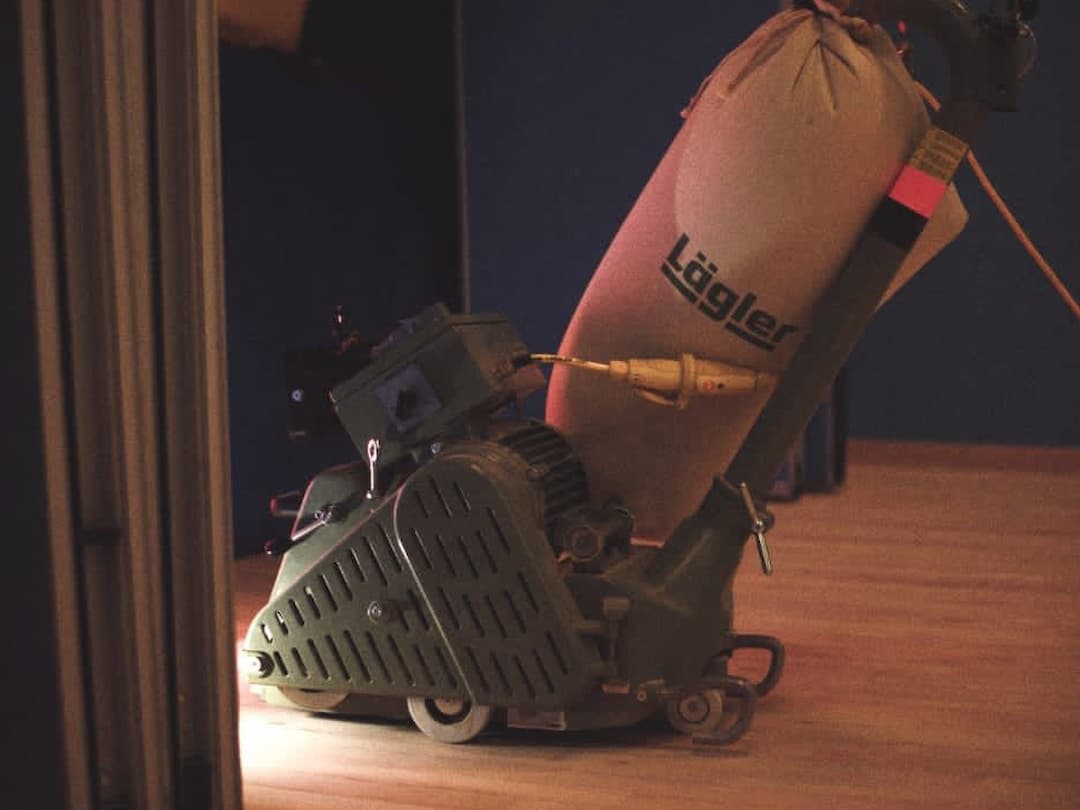
Restoring a floor rather than replacing it avoids a skip full of perfectly serviceable timber and the carbon embedded in its replacement. It is the single most sustainable option available in this trade, and it also happens to be the cheapest.
Where replacement is necessary we manage strip-out and disposal responsibly, and specify systems with realistic service lives rather than whichever product carries the best margin.
Not every floor we save sits in a sports centre. St Katherine’s had the kind of well-loved, well-worn hall floor that carries badminton one evening and a community event the next, and the committee wanted it rescued rather than replaced.
We restored it completely. The hall is now set for another few decades of everything it is asked to do.
~ Matthew Evans
An outstanding company to deal with and they couldn’t have been better to work with. St George’s Ascot now has a stunning new sports hall floor and we are delighted. From quote, support, delivery and after sales, the Team has been brilliant. Thank you. 
~ James Anderson







Squash court floors are a specialism within a specialism. The court is narrow, the walls take as much of the game as the floor does, and the floor has to be dead flat, unsealed and pale enough for the ball to read against it. Most of the rules that apply to a sports hall do not apply here.
Squash timber is sanded but not sealed with a conventional lacquer, because a glossy floor is dangerous under a squash shoe. Instead it is left bare or treated with a matt court finish that gives grip without sheen. Board fixings must sit below the surface, the service boxes and half court line are set out to the governing body layout, and the whole floor is checked for level before the walls are repainted.
Warwickshire clubs and schools with courts that have gone dark and slippery are usually a sand and remark away from playing well again.
Underfloor heating and timber sports floors can live together, but only when the system was designed for the pairing and is run within limits. New build halls in Warwickshire increasingly arrive with heating in the slab, and the floor specification has to respond to it.
Timber tolerates a surface temperature of around 27 degrees and no more. Push past that, or bring the system up too fast in autumn, and the boards dry, shrink and open at every joint. So the heating is commissioned slowly over days, the floor build up is chosen for low thermal resistance, and the timber species and board width are picked for stability. Engineered boards and narrower strip both move less than wide solid oak.
Where a heated slab already exists, we take readings across a full heating cycle before laying anything, because the floor will only ever be as stable as the temperature beneath it.
Water is the reason most timber sports floors fail early, and it rarely announces itself. A slab that looks dry can be giving off moisture steadily for years, and by the time boards cup or lift the damage is done.
So we test before anything is laid or sealed. Surface readings alone are not enough. We use in situ probes to measure relative humidity within the slab, take readings at several points and depths, and put the numbers in the survey report. The threshold for laying timber is strict, and we do not talk our way round it.
Where the slab is wet or the damp proof membrane is missing, as in many older Warwickshire school halls built on solid ground floors, a surface applied moisture barrier goes down before the floor system. Where readings are fine, we say so, because an unnecessary barrier is money spent on nothing.
Warwickshire gives us a mix of independent and grammar school sport, academy trust estates, leisure facilities and a substantial rural stock.
Independent and grammar school halls tend to be maintained on a proper cycle and come to us for preventative screen and recoat work, which is the cheapest way to run a sports floor and the reason those floors last decades.
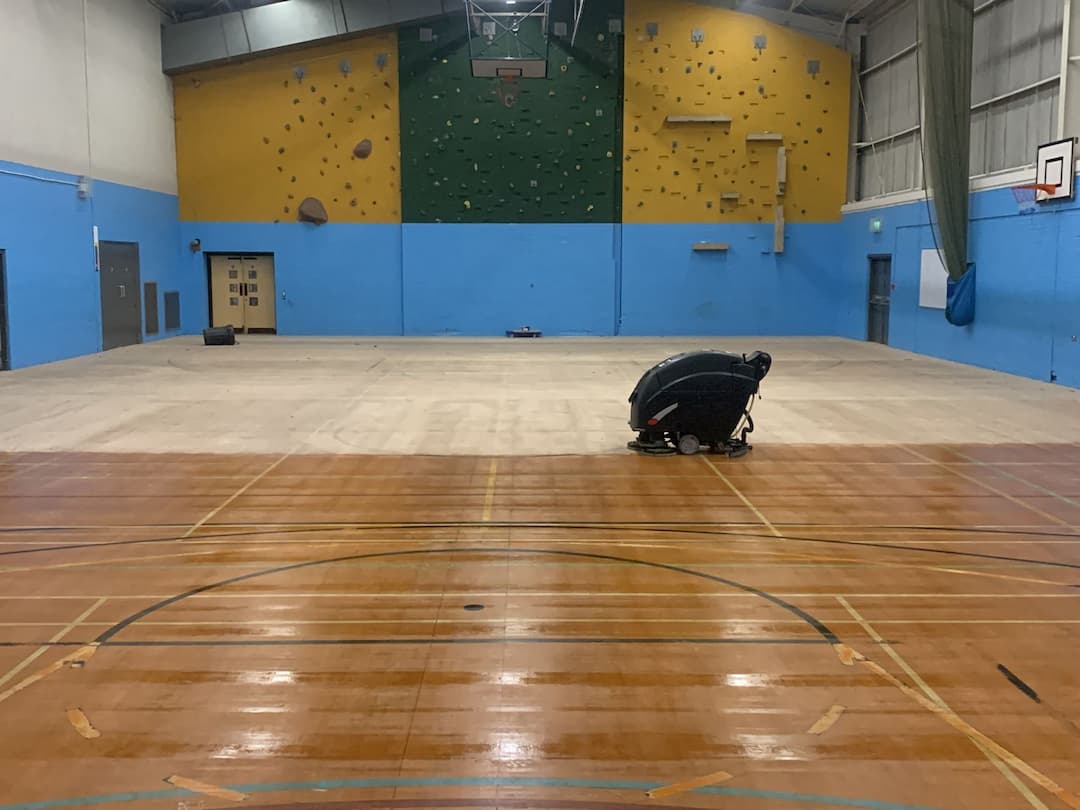
Academy and state school halls are the larger group by number and more often arrive overdue, with the finish worn through in the traffic lanes and markings that have drifted across successive remarks.
We completed the refinish at Aston University nearby, and it is a fair illustration of how we handle a busy facility with no long shutdown: survey properly, plan to the window, staff it to finish inside, and hand back on the agreed date.
Village halls, church halls and club buildings make up the rest, and those old timber floors are usually in far better condition than they look under decades of polish.
Aston University is our closest comparable project for Warwickshire and the wider West Midlands, and it illustrates the constraint most facilities here recognise.
The sports hall had reached the point where the finish had worn through across the main traffic routes and the timber underneath was taking damage directly. The markings had faded to the point where several sports were difficult to officiate, and the hall was heavily booked by both the university and external hirers.
The complication was the programme. A university sports hall has no long summer shutdown, because conferences and external bookings fill the gap. We worked to a tightly defined window and staffed it accordingly.
The floor was sanded back to bare timber, damaged boards were cut out and replaced, and the hall was resealed with a two pack polyurethane. Markings were set out fresh from current governing body dimensions rather than copied, and several redundant sets were dropped. The floor handed back on the agreed date.
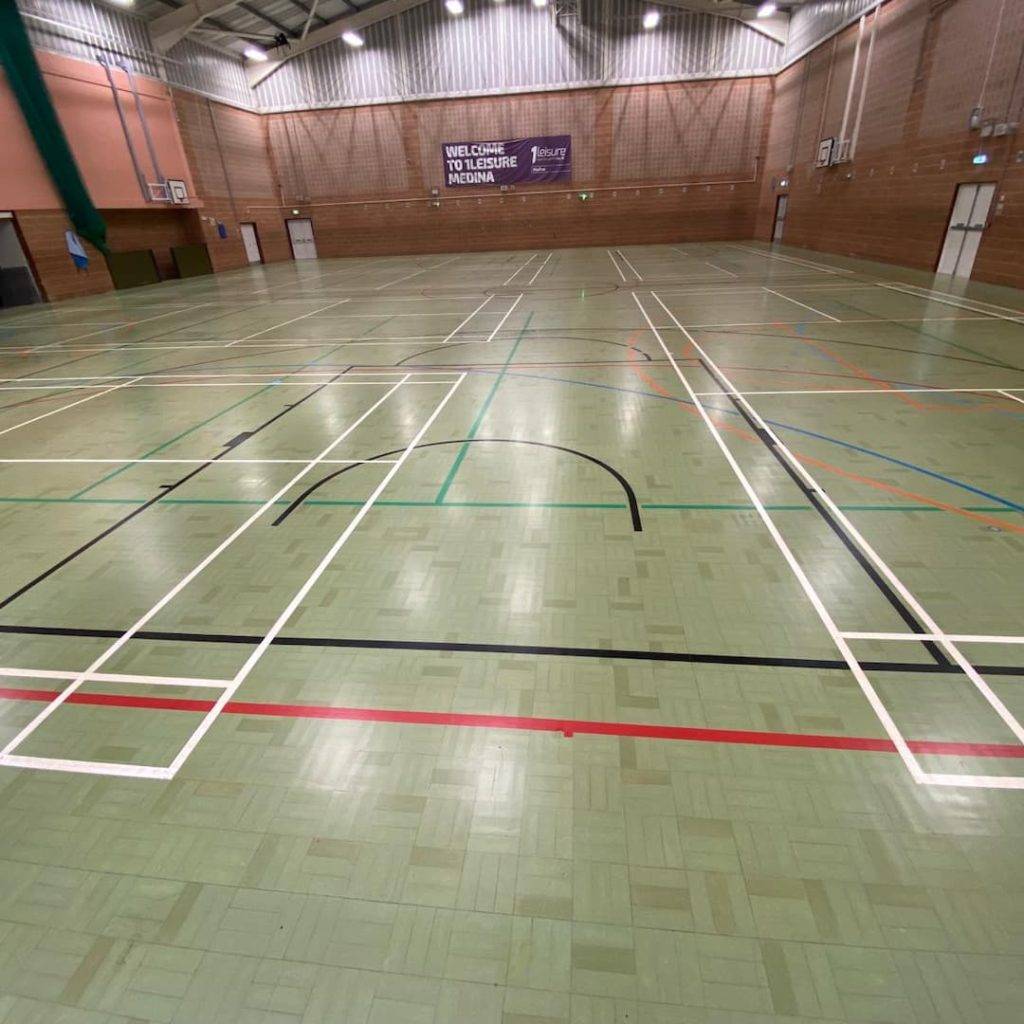
A basketball that bounces true at one end of a hall and dies at the other tells you something has changed beneath the surface. Ball bounce is a measured property under BS EN 14904, and it depends on the whole floor system, not the finish.
Dead spots have a short list of causes. A resilient pad that has perished and gone solid. A batten that has dropped away from the boards, leaving a void. A patch of subfloor that was never packed level. Occasionally a spill that has swollen the boards and then dried them into a hump. None of these is fixed by sanding and sealing, however good the new finish looks.
We locate the affected area on a grid at survey, lift the boards, correct the build up beneath and relay them. For a Warwickshire club playing competitive basketball or netball, that is the repair that matters.
Three things set the figure: the area of the floor, its condition, and the specification you choose for the finish and markings. We survey first, free of charge, and quote a fixed sum with every element listed, so a governing body or trust board can see what each part buys.
Yes, along with the rest of the West Midlands and far beyond. Because we run several jobs across the region each year, a Warwickshire hall can often be slotted alongside another nearby, and travel is priced inside the quotation from the start.
It is the European standard for indoor sports surfaces. It defines how shock absorption, vertical deformation, ball bounce, friction and surface finish are tested, and the values a floor should achieve. Specifying to it means the floor performs for sport as well as looking right.
We can give a budget range from clear photographs and rough dimensions, which is usually enough to plan a year ahead. A fixed price needs a site visit so we can take moisture readings and measure board depth, and that survey is free.
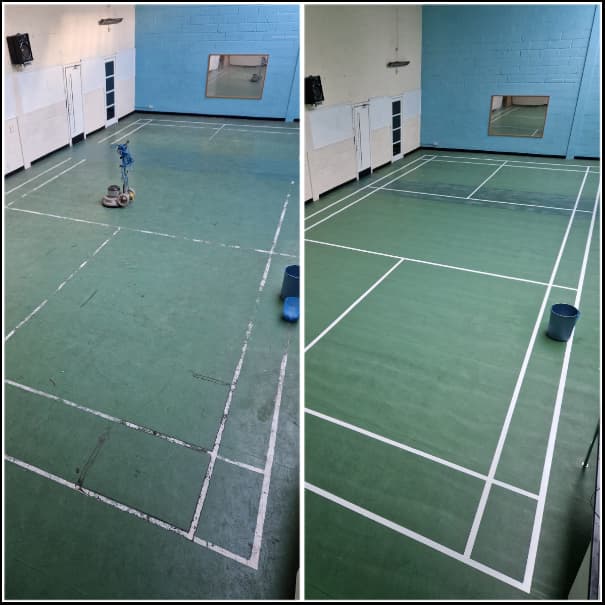
Yes. Synthetic sports surfaces can be deep cleaned, repaired, remarked and fully recoated, and a PU floor in a fresh colour with new lines looks like a new installation for a fraction of the cost. We survey them the same way as timber.
Usually a build up of polish or the wrong cleaning product, or a seal worn smooth along the busiest lanes. Both are fixable. A deep clean solves the first, a screen and recoat the second, and a pendulum test afterwards proves the floor is safe.
Yes. You receive a site specific risk assessment and method statement, COSHH sheets for the products we use, insurance certificates and DBS details for our team before the first day. Schools and trusts can file the pack ahead of any site induction.
Foot traffic after twenty four hours from the final coat. Trampolines, benches, mats and anything on wheels wait seventy two hours or more, because two pack polyurethane keeps hardening well after it feels dry. The exact times for the product used are on the handover sheet.
Arrange a free survey of your hall floor anywhere in Warwickshire. We take the readings, measure what is left in the boards, and give you a written price with a date to plan around. Call 01823 674562 or send us a message.