
Flooring Professionals To The Leisure Industry
Courtship Flooring is a commercial sports flooring contractor working in West Yorkshire and across the UK. We have completed both premium timber installations and full refurbishments across the county.
Since 1987 we have worked on indoor sports floors the length of the country and internationally. We remain family-run and deliberately specialist, covering installation through to long-term aftercare with our own team and machinery. We take no domestic work; Ryan’s Restorations covers that.
Before replacing a floor in West Yorkshire, it is worth asking whether a sports hall floor refurbishment would do the job; on sound timber it usually will.
Overnight/Weekend Installations
Professional Cleaning Demonstrations
Squash Court Maintenance
Recommended Cleaning Products
Professional Pendulum Slip Testing
Deep Clean & Reseal Service
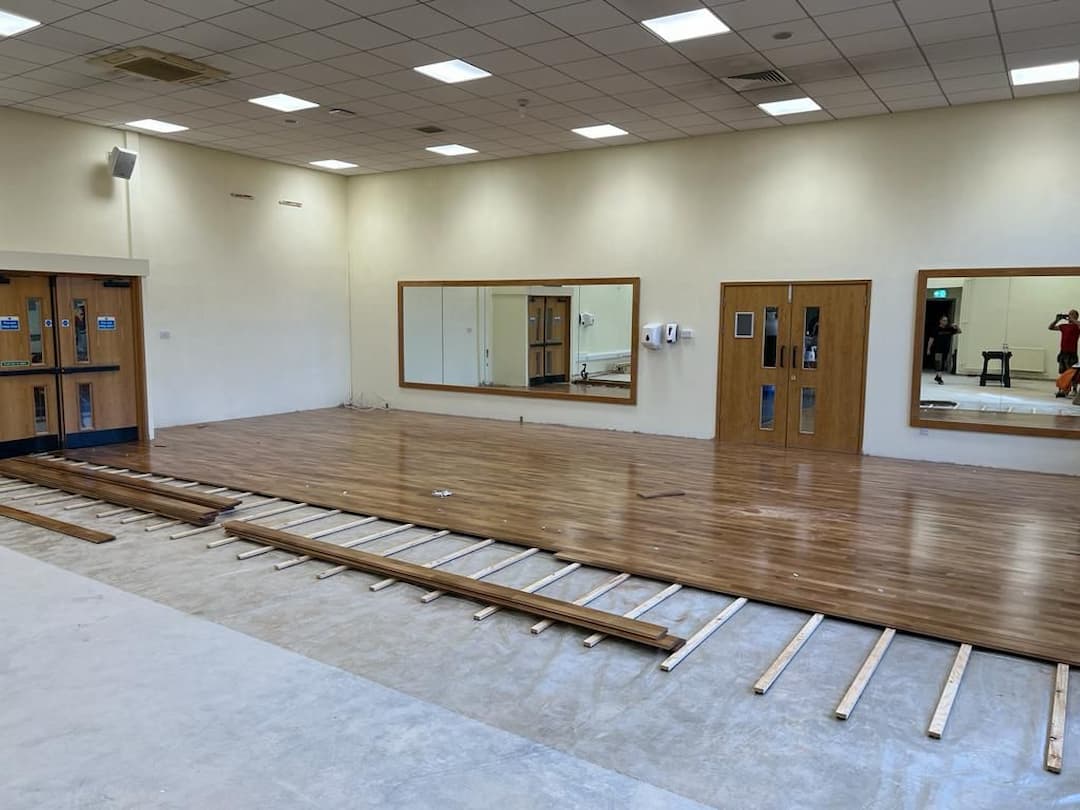
A new sports floor is far more than the surface you eventually see. The slab is tested for moisture and levelled where required, a barrier is installed if readings demand it, and the sprung sub-structure is built to the specification chosen for the sports involved.
Only then does the surface go down, followed by sealing, marking and a documented handover. The elements nobody ever sees determine whether the floor lasts a decade or four.
Solid timber offers the greatest number of refinishing cycles and the longest potential life. Engineered boards are more dimensionally stable in buildings with fluctuating humidity, and their wear layer still permits sanding, though fewer times.
Neither is universally better. In a well-controlled environment solid timber generally wins on longevity; in a building with poor humidity control engineered frequently outlasts it. We specify against the building rather than the price list.
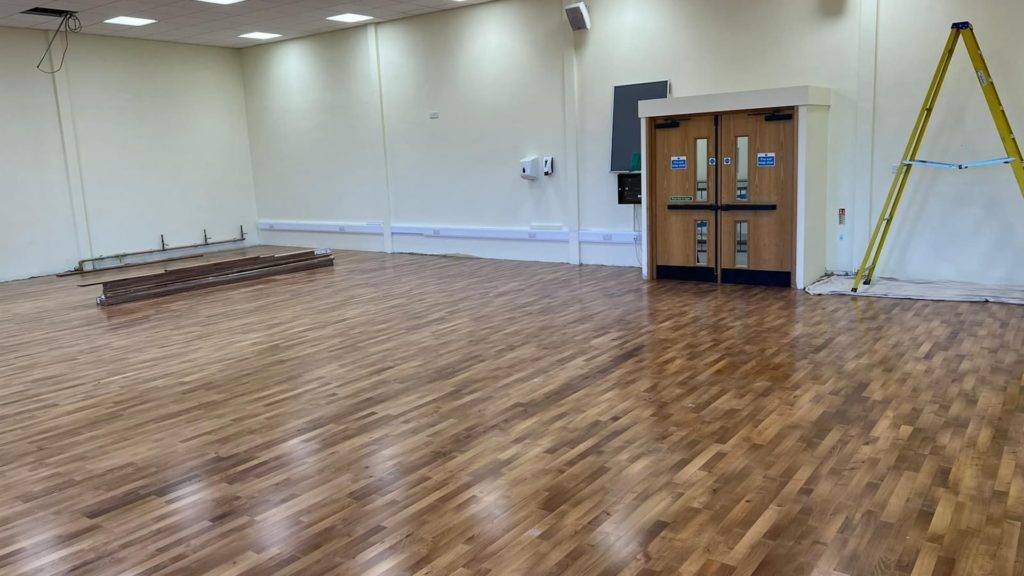
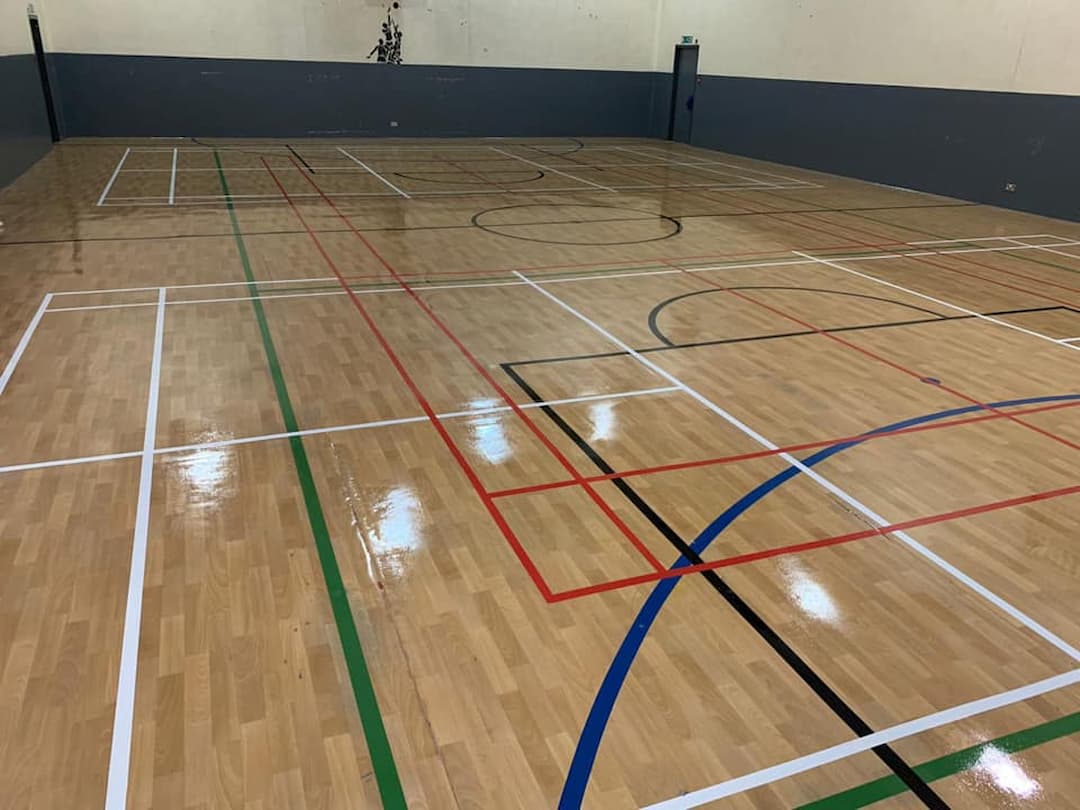
A floor should be handed over with more than a handshake: curing schedule, cleaning routine, recommended products, maintenance intervals and the warranty terms set out plainly.
Because we install every element ourselves the cover applies to the whole system rather than one component, and the same team returns for maintenance. That continuity is why most of our installation clients become long-term maintenance clients.
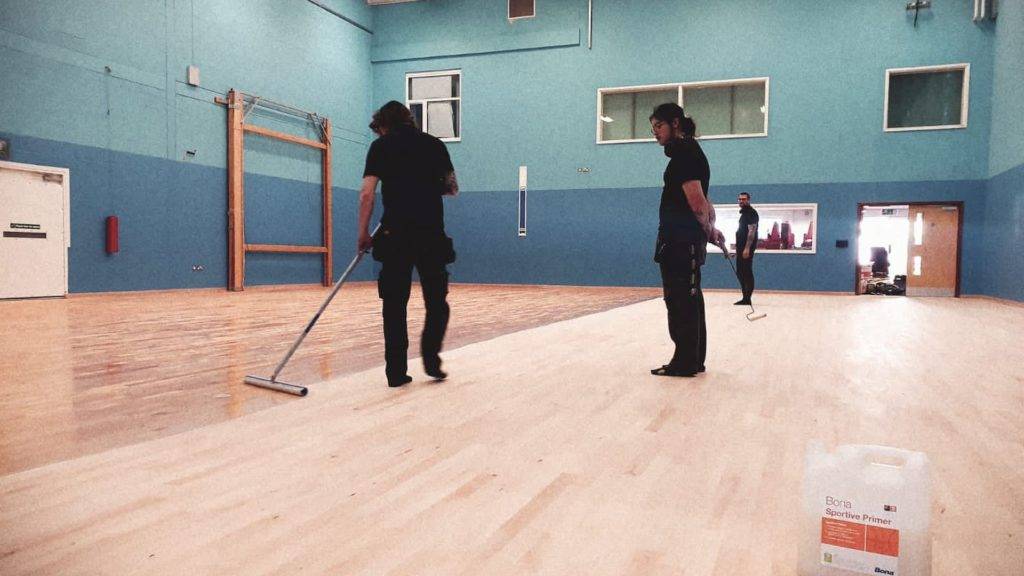
The sports hall floor at Treguib had given years of service and looked it. Our team took it back to clean timber, repaired the wear, then resealed and re-marked the full hall.
The result is a floor that plays and looks like new for a fraction of replacement cost, delivered a long way from our base and still on the date we promised.
~ Matthew Evans
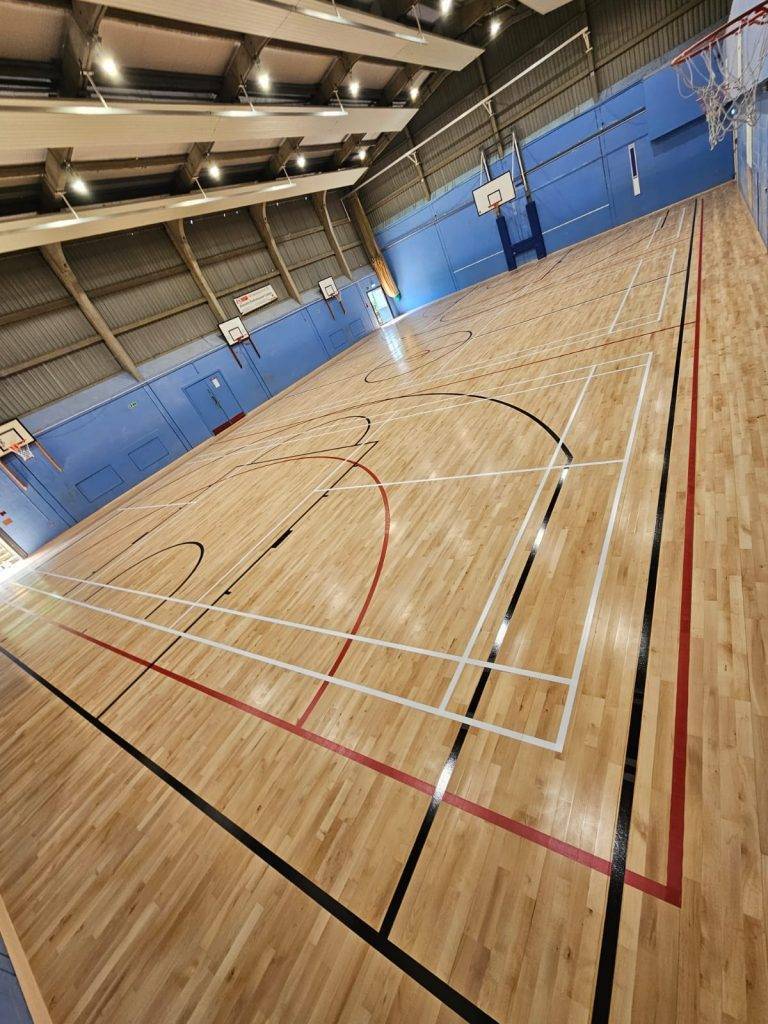
An outstanding company to deal with and they couldn’t have been better to work with. St George’s Ascot now has a stunning new sports hall floor and we are delighted. From quote, support, delivery and after sales, the Team has been brilliant. Thank you. 
~ James Anderson







A good many older halls across West Yorkshire turn out to be Granwood once we get down on our knees. It is a composite block of wood flour and cement pressed and laid in a bitumen bed, installed from the nineteen thirties on, and much of it is still sound.
Treated as timber it is destroyed. There is no grain and no wear layer to sand into, and a machine held in one place warms the bitumen and pulls it up through the joints. Beds from before the mid eighties may contain asbestos, so we test before anything is disturbed.
Restoration is a different trade from sanding: loose blocks rebedded, broken ones replaced, the surface prepared with the right abrasives and a modified epoxy coating applied with the markings sealed inside it. It costs a fraction of replacement, which would also mean lifting the bed.

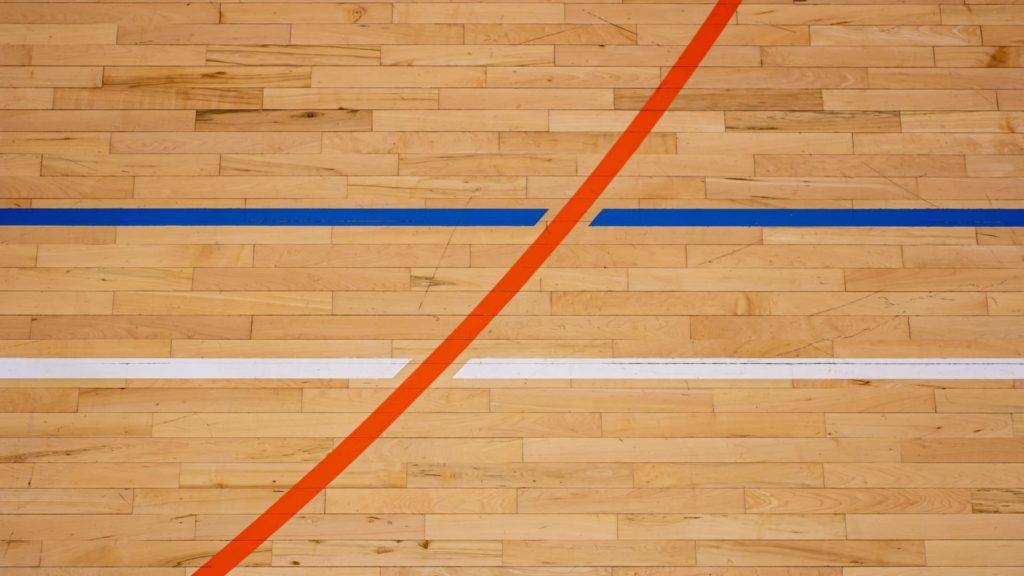
A pendulum slip test swings a weighted rubber slider across the floor to mimic a heel strike, and gives a pendulum test value that the Health and Safety Executive recognises as the reliable measure. It turns a feeling that the hall is slippery into a figure.
We test wet and dry at several points, because a floor is never uniform. The lanes, the goal areas and the centre third wear first, and an average across the hall hides the one patch that is dangerous. Results are reported point by point.
For an academy trust in West Yorkshire the dated certificate goes in the estates file and answers an insurer or a parent after a fall. Repeated each year it also shows how the seal is wearing, so a recoat is planned before the readings drop and not after.
What goes wrong with a sprung floor mostly happens out of sight. Pads lose their spring and turn hard, the softwood battens above them split around the nails, and moulded cradles crack with age. The symptom upstairs is a dead spot, a squeak or a board that dips under a heel.
We lift the boards locally, replace the failed components with matching parts, and refit the original timber so that once the floor is sanded the repair cannot be found. On older halls we also look for rot where a leak or over wet cleaning has soaked the battens.
Widespread failure across a whole system is a different conversation and we would tell you so. An isolated dead spot in a school hall is a few hours of work, priced as one element inside the wider job, and no reason at all to discuss replacement.
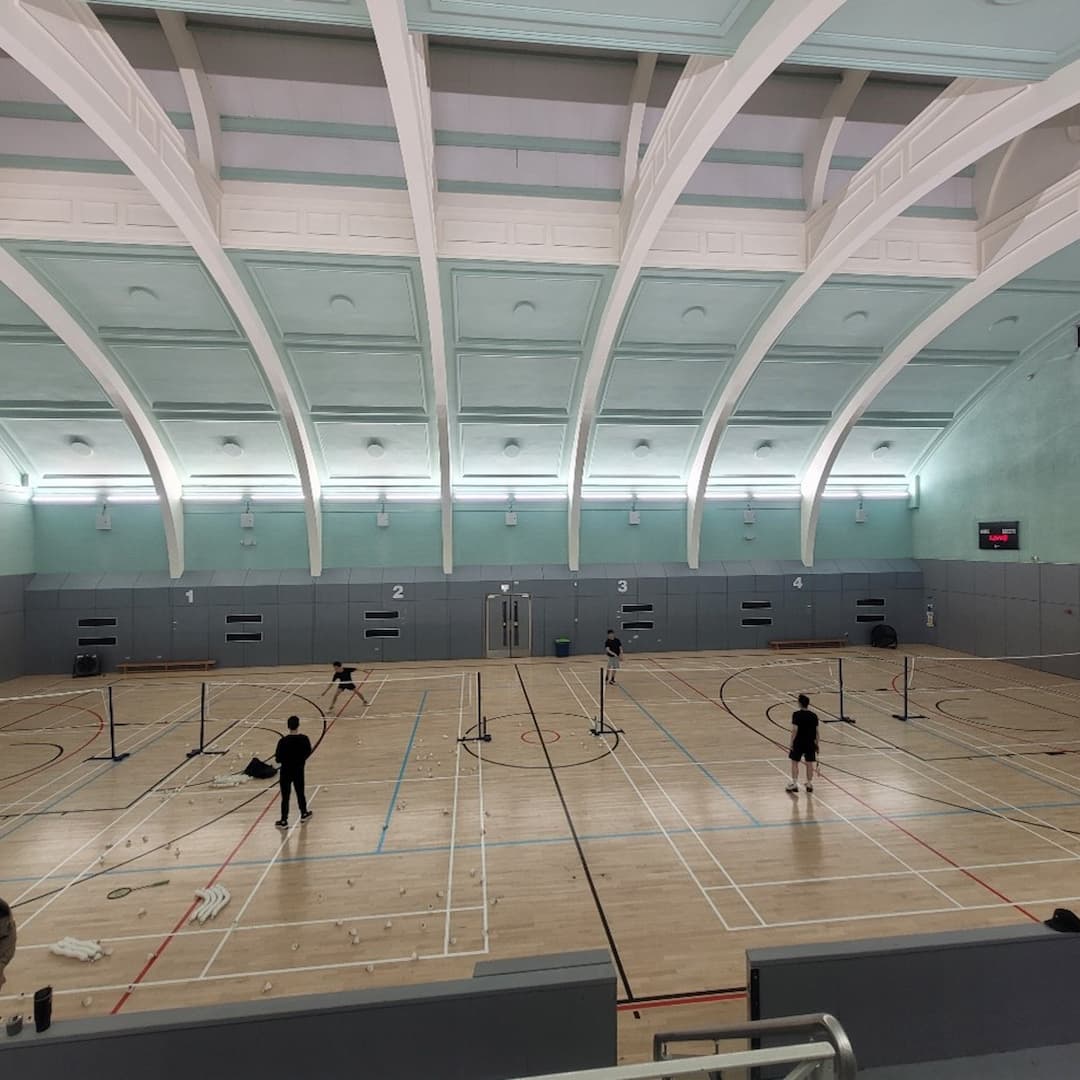
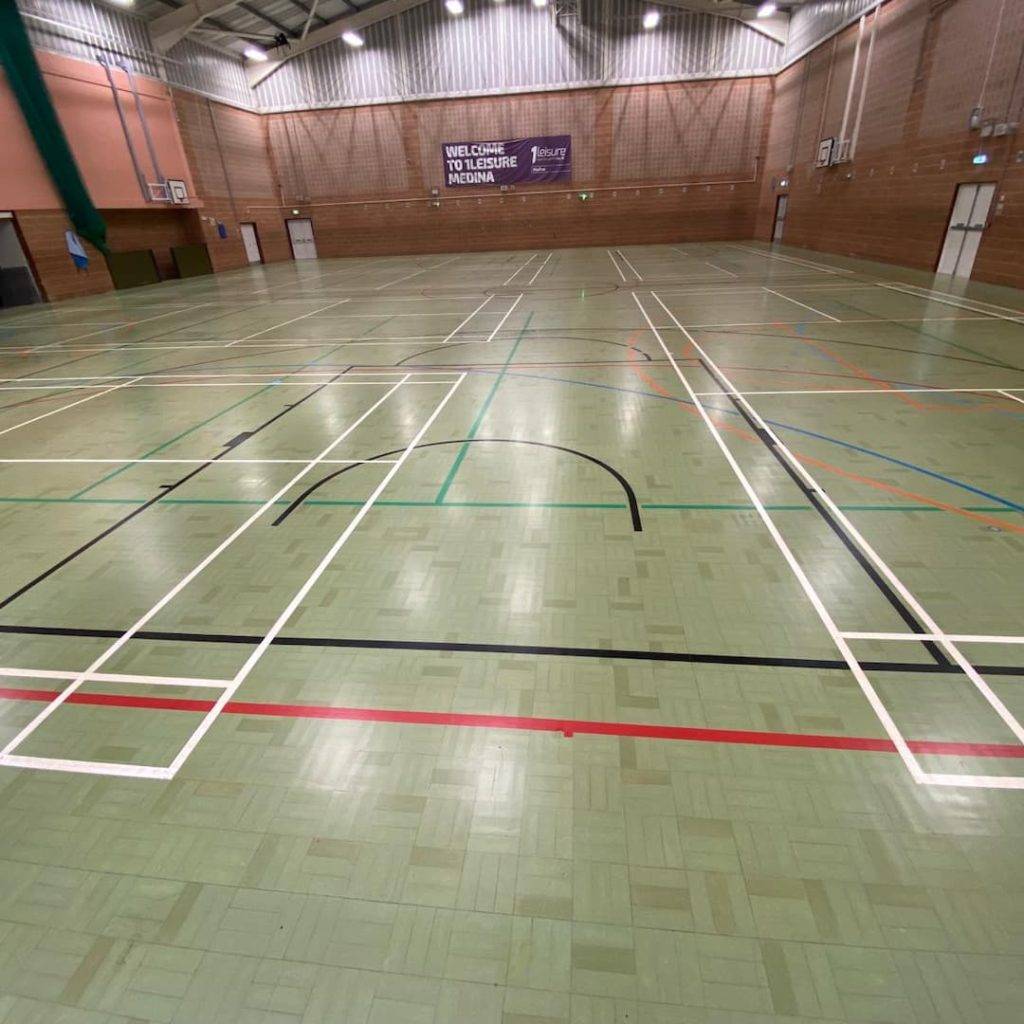
West Yorkshire brings us academy trust estates, university sport, council leisure facilities and a considerable amount of older building stock.
Academy work is the pattern we see most. We have completed projects at Harris Academy and at Hornbury Academy in Wakefield, and the constraints are consistent across them: halls in constant curriculum use, finishes that had gone well past their proper cycle, and fixed term dates that do not move.
Where a trust holds a dozen or more halls, surveying the whole estate and producing a costed priority order is far more useful than dealing with each as it becomes urgent, and it lets the spend phase across budget years.
University and college sport follows, with the narrow year round windows every campus has.
Leisure centres come next, where booking income means overnight working. The older halls across the region frequently turn out to be Granwood, which needs a specialist approach and is usually well worth restoring.
Both of the projects most relevant to West Yorkshire enquiries are in the county, and the constraints were identical.
Harris Academy and Hornbury Academy in Wakefield were halls in constant curriculum use with community lettings on top, where the floor had gone considerably longer than it should have between refinishes. In each case the seal had worn through where players actually run, dirt had begun working into open timber, and the markings had faded past the point of easy officiating.
Both were surveyed thoroughly first, which is what allowed a fixed price and a date that held. The floors were sanded back to bare timber, damaged boards were cut out and replaced with matching timber, and the halls were resealed with markings set out fresh from measured governing body dimensions. Redundant sports came off while the floors were open, at no extra cost, which made both halls noticeably clearer to use.
Each was handed back for the first day of term, because the programme was built to that date from the outset.
A sports hall spends part of every year as an exam room, a dining hall or a venue, and that is when the finish takes its worst punishment. Steel desk legs, stacked chairs and trestle tables score a two pack seal far faster than any sport played on it.
A purpose made protective covering laid before the furniture arrives takes that damage instead. It rolls out in an hour, lifts just as quickly and stores flat until the next sitting. The cost is a fraction of the recoat that unprotected exam use brings forward by years.
For events we advise on staging feet, on where a bar or a stall can stand, and on keeping tap water off the boards. Many West Yorkshire academies hire their halls out at weekends, and a covering regime protects the floor and the lettings income together.
Yes, and for leisure centres and universities we usually do. Sanding goes into the emptiest hours, the seal goes on at the end of the shift so the hall is walkable by opening, and equipment returns once the finish has hardened. We price it beside a daytime closure.
Roughly twenty four hours for light foot traffic and seventy two hours or more before equipment and full sport, with longer in a cold hall. We confirm the times for the actual product in writing and ask that the room stays locked until they have passed.
The summer break. A full sand, repairs, seal and markings for a typical hall takes one to two weeks plus curing, which sits comfortably inside six weeks. Recoats and relining fit half terms. Summer dates are taken by spring, so the earlier the conversation the better.
No. Every sander including the edging machines runs on sealed extraction, the hall is screened and taped, and any shared ventilation is isolated by agreement with your site team beforehand. Each shift ends with the area vacuumed down so nothing is carried into corridors.
Every time, in the boards and in the slab at several points. A seal over a damp floor fails however well it is applied, so high readings mean we find the cause, whether a slab without a membrane or a leak, and price the fix before any finish.
Yes, with laser and tape from the current figures, diagonals checked before paint. We do not trace existing lines, because copied courts drift with every remark and plenty of halls turn out to have a three point arc that is short or netball thirds of different lengths.
Method statements and risk assessments written for your building, COSHH sheets for each product, copies of public and employers liability insurance and DBS details for the crew on school sites. On a main contractor site we attend inductions and work to the site rules.
Yes. It sets out condition, photographs, moisture readings, remaining wear layer, the recommended work and firm costs, which is what Condition Improvement Fund and similar bids ask for. Trust estates teams use the report as their technical evidence and we can add a specification if required.
Book a free survey of your sports floor in West Yorkshire, for a new installation or a refurbishment. We measure the hall, check the structure and give you a fixed written price with a date that holds. Call 01823 674562 or send us a message.