
Flooring Professionals To The Leisure Industry
Courtship Flooring is a commercial sports flooring contractor working in Wiltshire and across the UK. The county borders our home patch, which means fast surveys, easy follow-ups and no travel loaded into the price.
We are specialists rather than generalists, which after nearly forty years means a depth of knowledge on sports and commercial timber floors that a general contractor cannot match. Every stage is completed in-house. We do not quote for domestic work; Ryan’s Restorations handles that side.
If you are comparing contractors, our sports hall flooring overview explains how we approach installation, refurbishment and aftercare in Wiltshire and nationwide.
Overnight/Weekend Installations
Professional Cleaning Demonstrations
Squash Court Maintenance
Recommended Cleaning Products
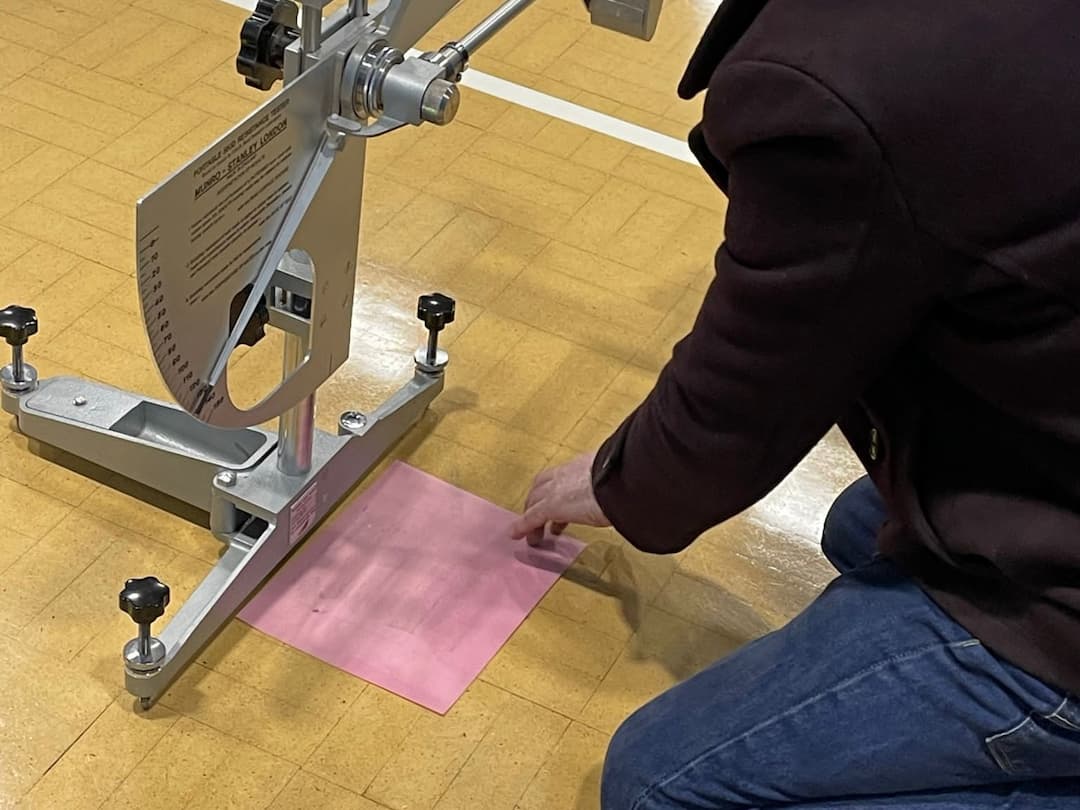
Professional Pendulum Slip Testing
Deep Clean & Reseal Service
Most flooring work is planned months ahead, but occasionally a floor becomes an immediate concern: a leak, sudden slipperiness, or damage that makes a hall unusable before an event.
Being close by means we can usually inspect within days, advise on whether the space is safe to use, and carry out temporary or permanent remedial work quickly. A pendulum slip test gives an objective answer where safety is in question.
Facilities running from early morning to late evening, every day, wear floors at a rate that surprises people. Seals break down faster, markings fade sooner, and the maintenance interval that suits a school hall is simply wrong.
We specify for actual usage hours: harder-wearing finishes, build-ups chosen for durability, and a maintenance schedule matched to the real timetable. It costs a little more initially and considerably less across the floor’s life.
Most of our work comes from facilities we have looked after before. That continuity matters practically: we know what is under the floor, what was done last time, which products were used and when the next intervention is due.
It removes the guesswork that makes a first visit more expensive, and it means recommendations are based on the floor’s actual history rather than a snapshot.
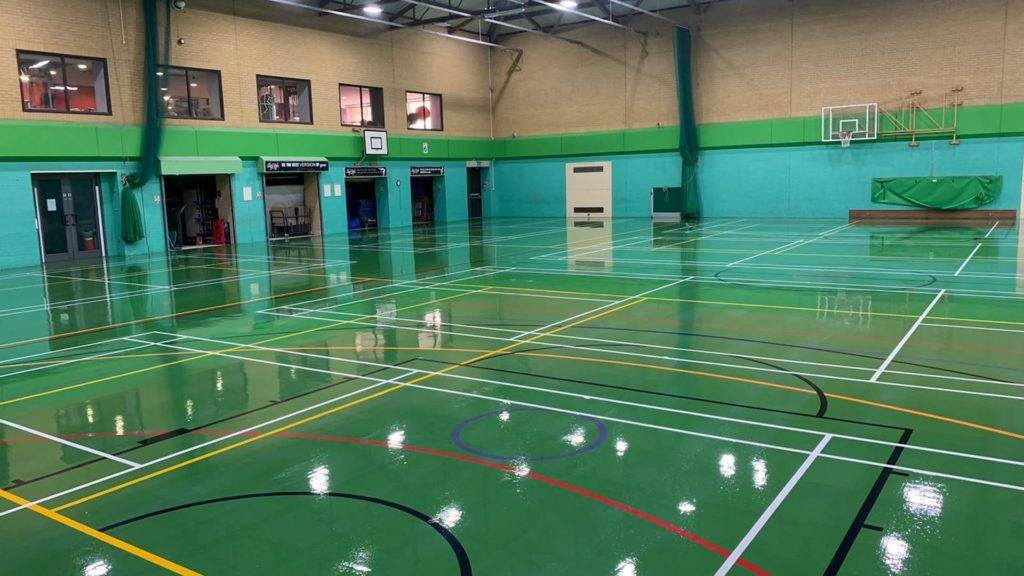
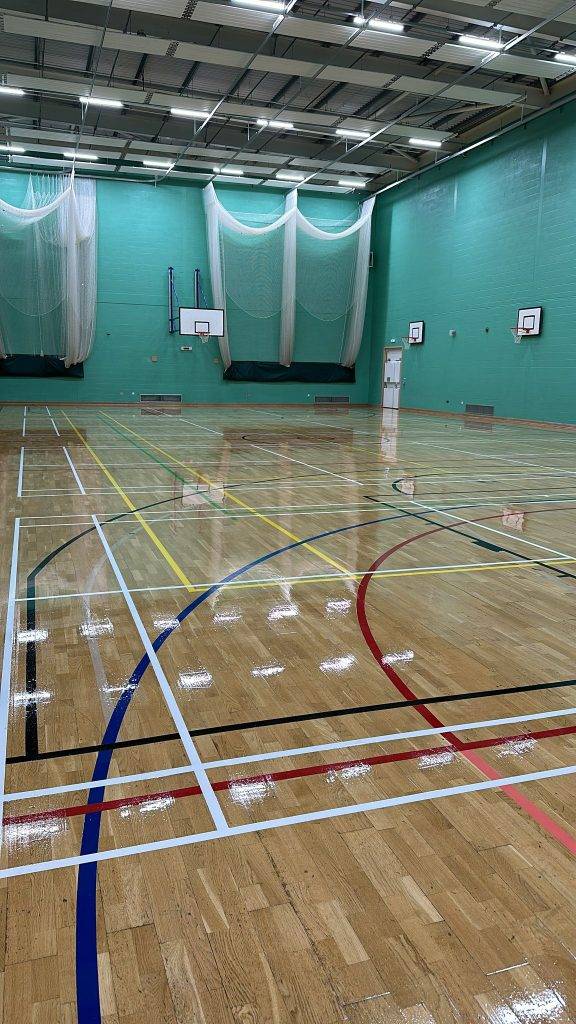
The sports hall floor at De Wint School had reached the end of its seal: grey through the middle, markings closer to guesswork than instruction, and a surface that felt slippery however often it was cleaned.
We sanded it back to clean timber, repaired what needed repairing, resealed and re-marked. The hall reopened with a deep, glossy finish that reads as newly installed, delivered inside a planned holiday window.
~ Matthew Evans
An outstanding company to deal with and they couldn’t have been better to work with. St George’s Ascot now has a stunning new sports hall floor and we are delighted. From quote, support, delivery and after sales, the Team has been brilliant. Thank you. 
~ James Anderson







A price given from a photograph is a guess, and a guess tends to grow once the old finish comes off. We visit first, and the visit is free.
We take moisture readings in the boards and, where the building gives any cause for doubt, in the slab below. We measure how much timber remains above the tongue, because that decides whether the floor has one refinish left in it or five. We lift a vent or an edge trim and look at the battens and pads underneath.
Then we record the finish, the state of the markings, the perimeter gap and anything unusual in the sockets and fittings. The whole thing takes under an hour for most Wiltshire halls, and because we are close by we can usually fit it in within a week or two. The quotation that follows is fixed and itemised.
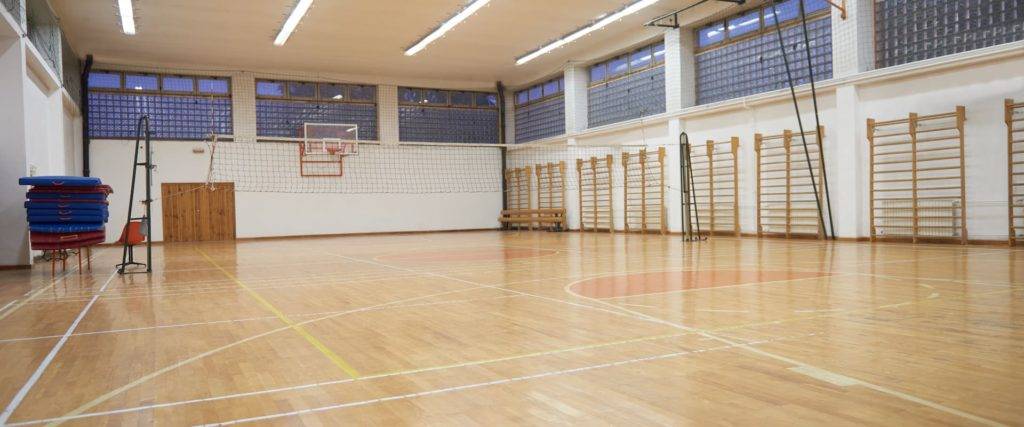

Timber sports floors differ mainly in what carries the boards. An area elastic system uses battens on resilient pads or cradles, so the floor deflects across a wide zone when a player lands. That is what ball sports want, and it is what BS EN 14904 measures for shock absorption, vertical deformation and ball rebound.
A point elastic system gives locally, directly under the foot, and suits fitness classes and dance better than basketball. Combined systems exist for halls with a mixed timetable, at a higher build height and cost.
On the boards themselves, solid strip in beech or maple carries a deep wear layer and will take many refinishes across its life. Engineered board over a stable core is more stable in a building with variable humidity, but the wear layer is thinner. We specify to the timetable of the hall and the height available at the doors.
A gym floor takes damage that a sports hall never sees. Dropped dumbbells dent timber, plate loaded machines dragged across boards leave gouges, and racks bolted down and later moved leave a line of filled holes. Sanding takes off a surface, but a deep dent remains a dent.
Chalk and sweat are the other problem. Where the seal has thinned they soak into open grain, and chalk in particular leaves a grey cast under the lifting area that no amount of cleaning will shift.
With the military and club gyms found across Wiltshire in mind, we usually recommend a harder two pack seal, an extra coat where the weights land, and a purpose made lifting platform or rubber tiles in the free weight zone, laid so they can be lifted for cleaning and do not bond to the lacquer.
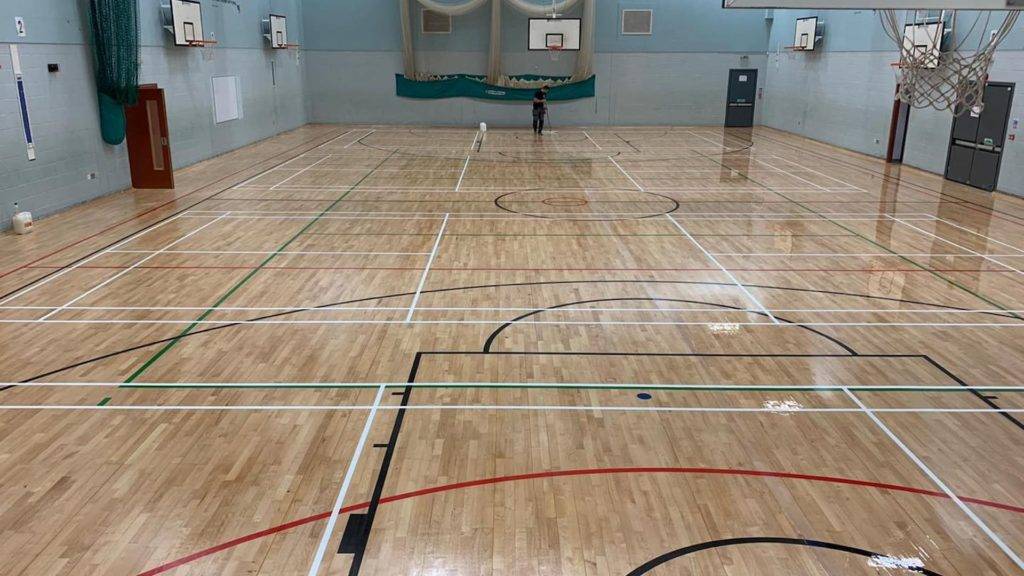
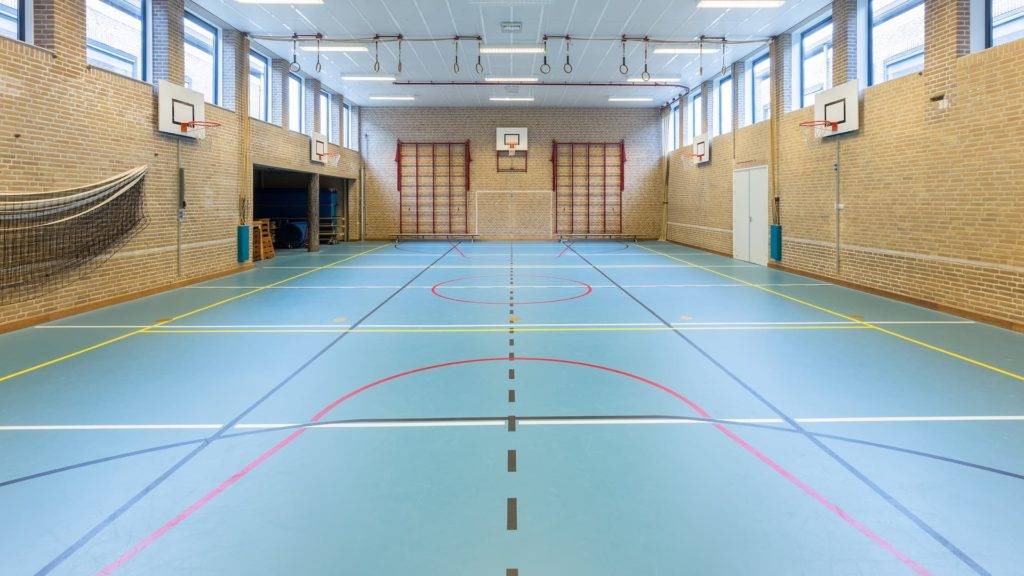
Wiltshire is close to our base, and the work divides between school sport, leisure facilities, military and club facilities and a large rural stock of village and church halls.
School and academy halls are the largest group. The recurring issue is halls that have gone well over a decade without a proper refinish, where the seal has worn through in the traffic lanes and dirt is now sitting in open timber. Left much longer, the staining goes deep enough that sanding will not fully remove it.
Leisure and community sports centres follow, where booking income means the work usually happens overnight or across an agreed quiet week.
Village halls and church halls make up a substantial share, and the county has a great many. We worked on St Katherine Hall, which is a good illustration of the type: a well loved, well worn floor carrying badminton one evening and a community event the next, restored rather than replaced and set for another few decades.
Being local, we can survey quickly and often fit smaller jobs around larger programmes.
St Katherine Hall is our closest comparable project for Wiltshire, and it is the one most local hall committees find useful.
It had the kind of well loved, well worn floor that carries badminton one evening and a community event the next. Decades of accumulated polish sat over the timber, and chair and table legs had scored the whole area from furniture going out and back several times a week.
The polish had to be removed chemically before any sanding could begin, because it clogs abrasives, and that is the step most often missed in cheaper quotations. Underneath was a floor with plenty of board depth left. It was sanded back, damaged boards were replaced, gaps were filled with resin mixed with the floor own sanding dust so the colour matched, and it was resealed with a finish chosen for mixed use rather than pure sport.
The hall is now set for another few decades of everything it is asked to do, at a fraction of what replacement would have cost.
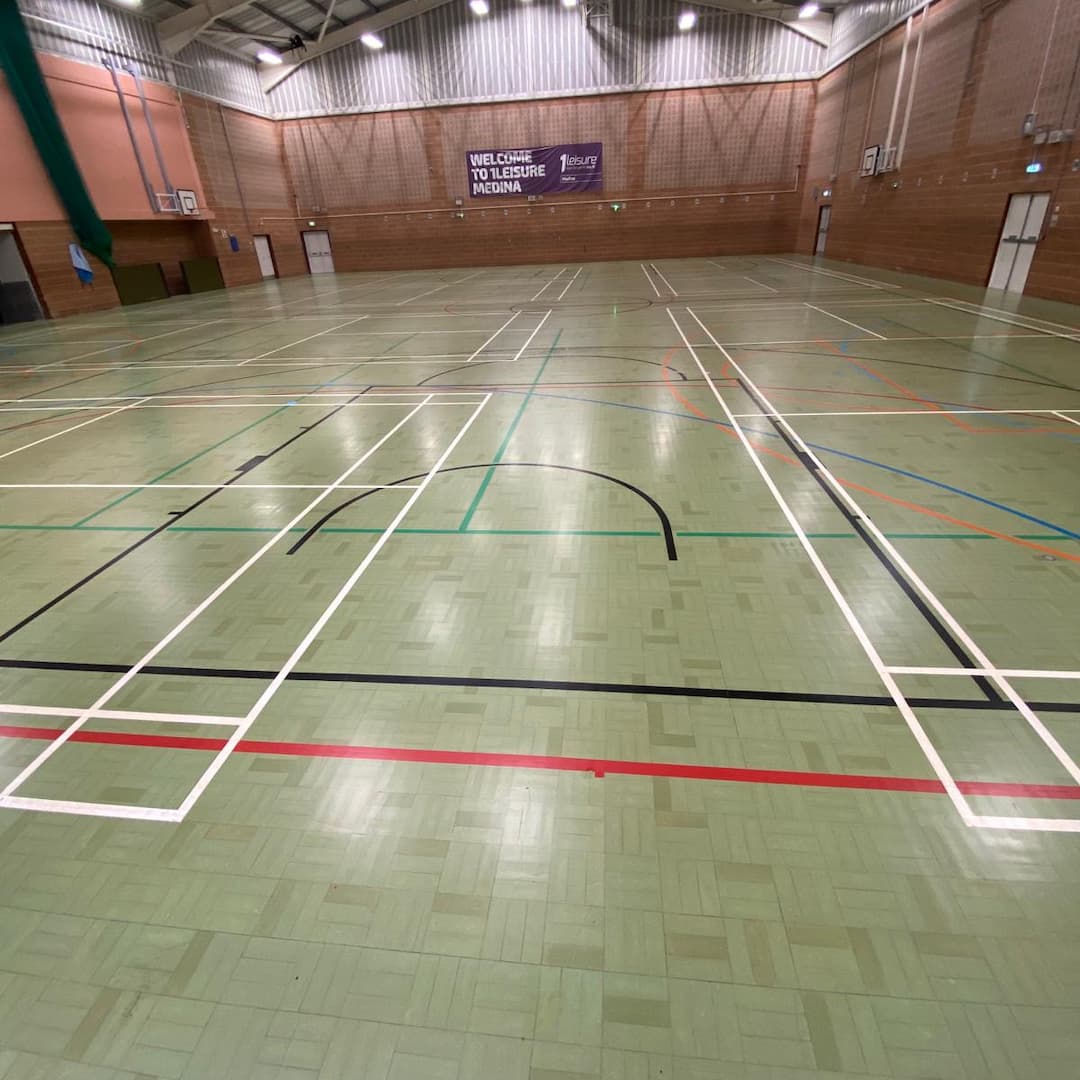
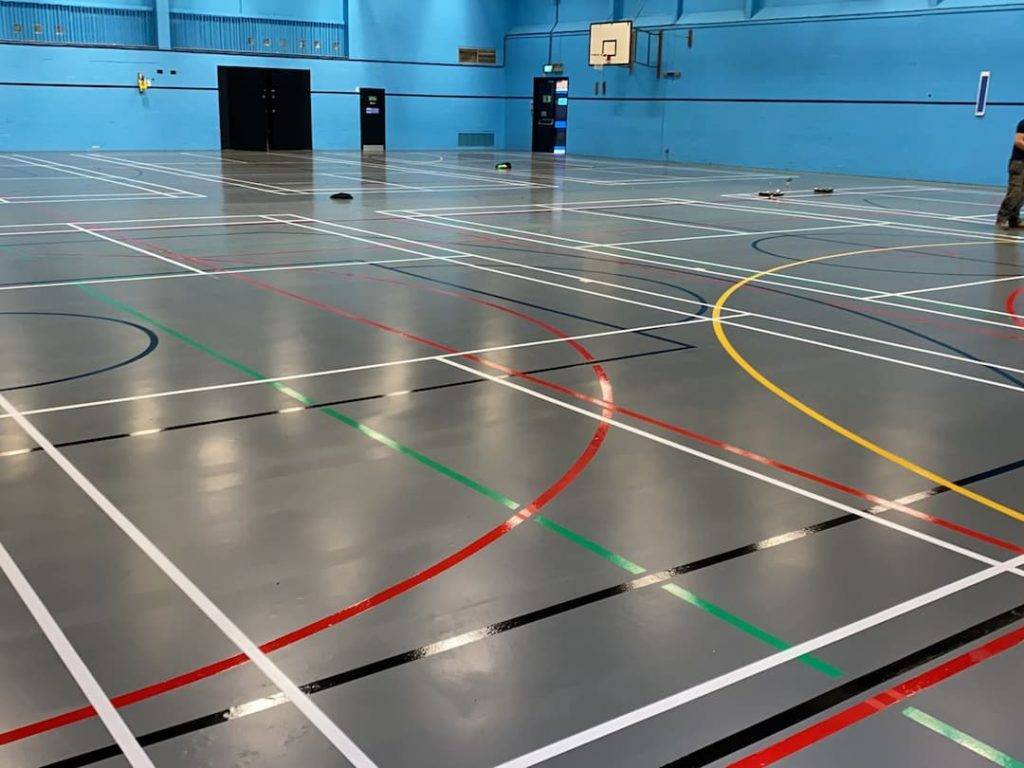
A leisure centre or busy community facility cannot always hand us a hall for a fortnight, and it does not have to. A good part of our work is done between the last booking of the night and the first of the morning.
The programme is built around your diary. Sanding, the noisiest and dustiest stage, is placed when the building is empty. Coats of seal go down at the end of a shift and are timed so the floor is walkable by opening. Larger halls are split so half stays bookable while the other half is worked on.
Weekend blocks suit halls with a heavy weekday timetable and a quiet Sunday. Either way the extra labour cost is stated in the quotation up front, and for most operators it is a small figure next to the hire income a closure would lose.
Almost always it can be restored. Granwood is a composite block set in a bitumen bed, so it is prepared carefully and coated with a modified epoxy system, never sanded like timber. New markings go on as part of the same job, at a fraction of replacement cost.
Usually two to three days including cure. The existing seal is lightly abraded, a fresh top coat is applied, and the floor takes foot traffic about 24 hours later. It is the cheapest way to restore grip and appearance while the seal is still intact.
Yes. We scale your artwork to the centre circle, show you the layout, and paint it between coats of seal so it lives under the lacquer and wears evenly with the floor. It costs least during a refinish.
Yes, before we arrive. Risk assessments and method statements are written for your building, COSHH sheets cover every product we use, and insurance certificates come with the quotation. Crew working on school sites hold enhanced DBS checks.
Either the expansion gap around the perimeter has closed, often because a skirting or threshold was fitted tight, or moisture is coming up through the slab. Both need diagnosing before any refinish, or the problem returns with the next damp spell.
The timber and blocks themselves are not the issue, but bitumen adhesive beds laid before the mid 1980s can contain it. We treat every bitumen bedded floor as suspect until a sample has been tested, and we plan the work so the bed is not disturbed.
Yes. We check the slab for level and moisture first, fit a damp mitigation membrane where readings call for it, and specify the system to the sports actually played and the height available at the doors. Strip out and disposal of the old floor are included.
We do, and doing both in one visit saves money. Stages are commonly a different construction from the hall and often in a worse state from scenery and stacked staging. A matt seal keeps stage lighting from bouncing back into the audience.
Book a free survey of your sports floor in Wiltshire. We are close by, so we can be on site quickly, tell you plainly what the floor needs and give you a fixed price and date. Call 01823 674562 or send a message.