
Flooring Professionals To The Leisure Industry
Courtship Flooring is a commercial sports flooring contractor working in Wrexham and across the UK. We cover north Wales and the border counties for schools, community facilities and clubs.
This is all we do, and we have been doing it since 1987. Installation, restoration, sanding, sealing, line marking, slip testing and maintenance for commercial and institutional buildings, delivered without subcontractors. Residential projects go to our sister company, Ryan’s Restorations.
Everything set out on our main sports hall flooring page is available to schools, leisure centres and clubs in Wrexham.
Overnight/Weekend Installations
Professional Cleaning Demonstrations
Squash Court Maintenance
Recommended Cleaning Products
Professional Pendulum Slip Testing
Deep Clean & Reseal Service
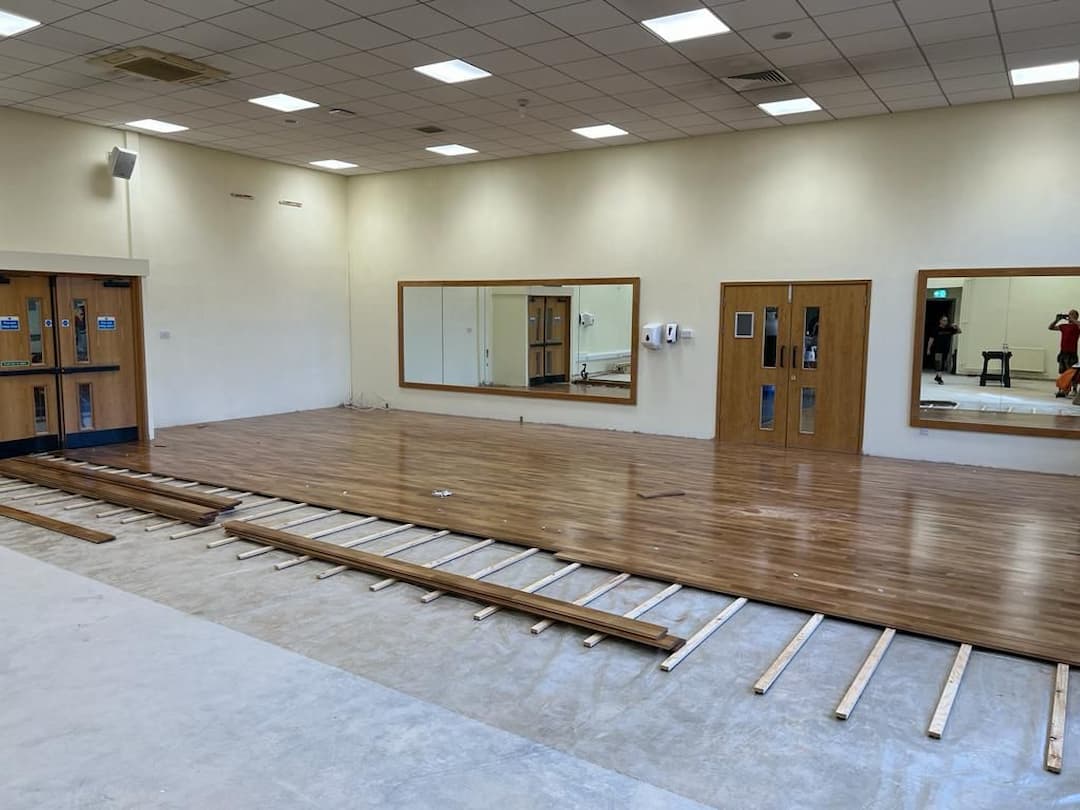
Many halls in the area were built decades ago, frequently over structures nobody documented. Assuming what lies beneath is how contractors end up back on site within the year.
We investigate instead: moisture readings, level checks and, where necessary, opening a small area to establish the actual build-up before quoting. It occasionally produces unwelcome findings, but before you have committed rather than afterwards.
Older buildings rarely provide a level substrate, and laying a sports floor over an uneven one produces dead spots, uneven wear and premature failure.
Levelling compounds, packing and structural correction are included where the survey shows they are required, itemised in the quotation rather than appearing later as a variation once work is under way.
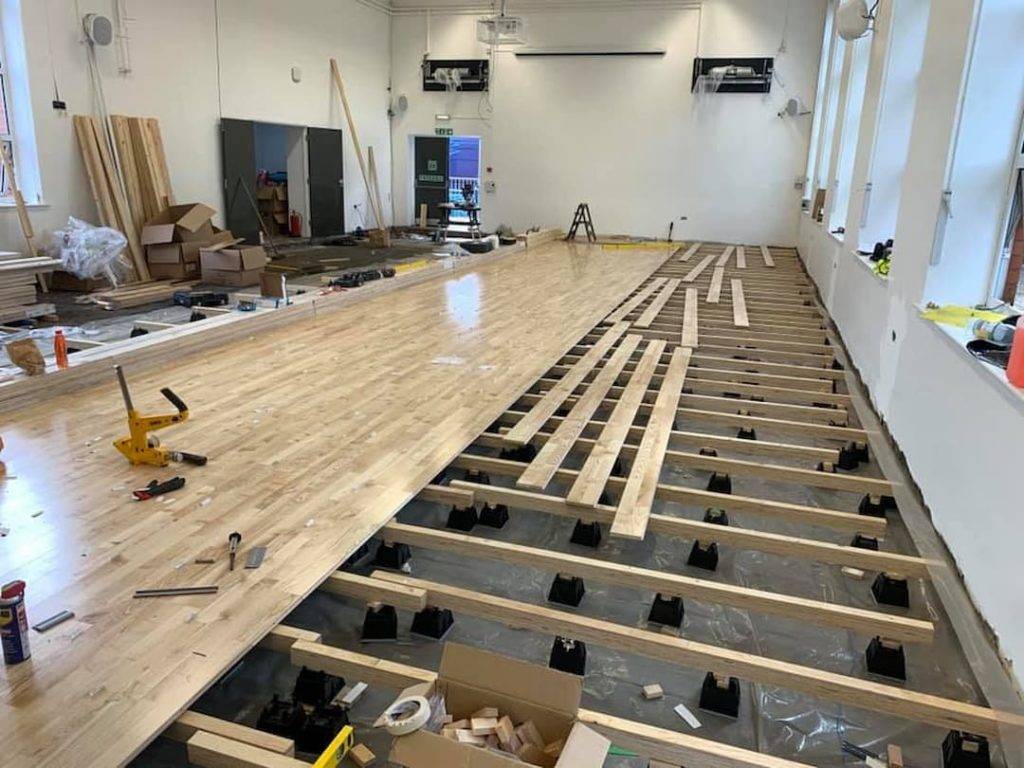

Installing into an existing building differs fundamentally from a new build. Access, available height, thresholds, existing services and the need to keep the rest of the building running all constrain what can be done.
We survey those constraints first and specify a system that works within them, including low-profile sprung construction where height is limited, so the result performs properly rather than being a compromise discovered on day one.
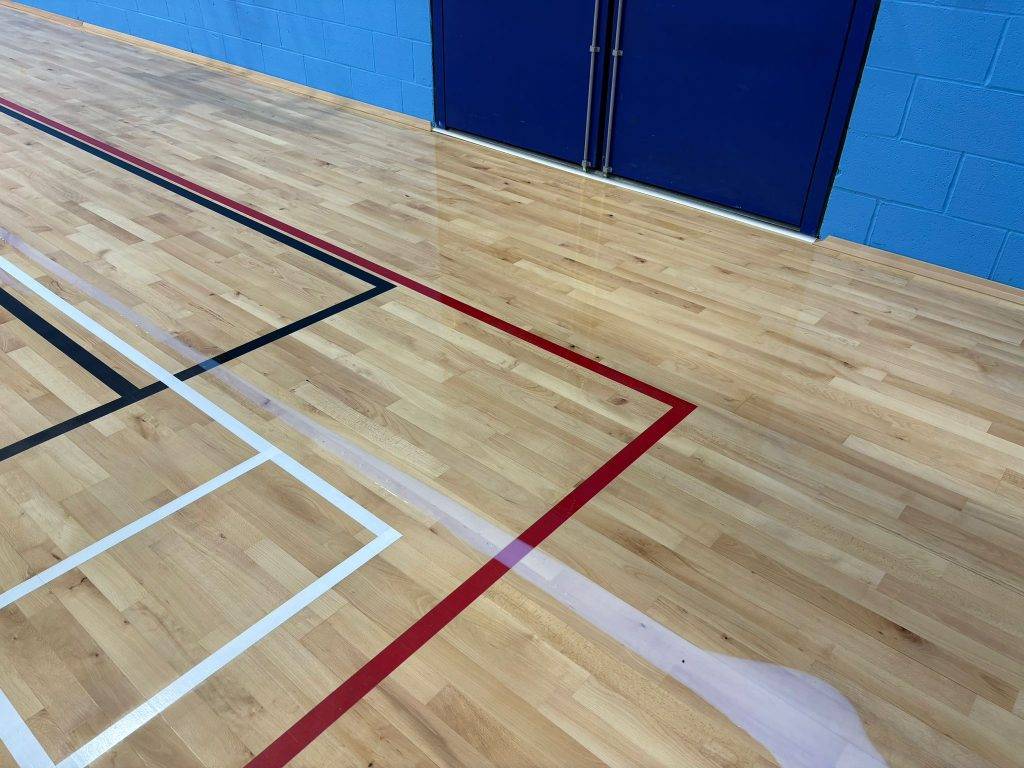
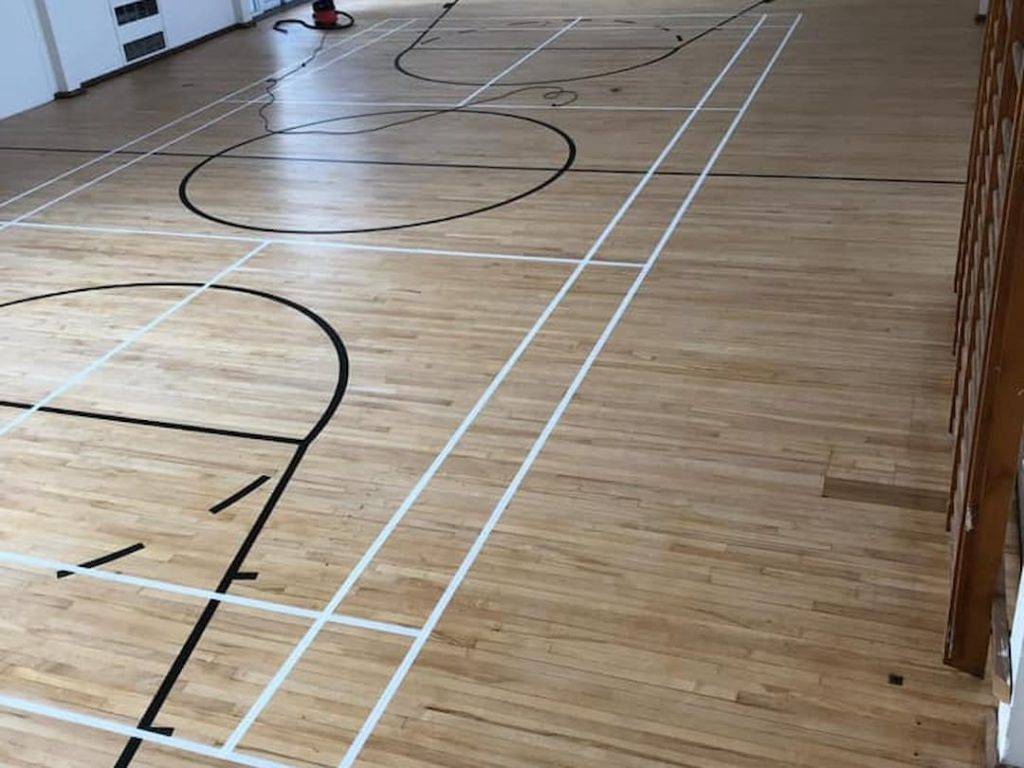
Our installation at Hornbury Academy shows the full process from bare sub-floor through to a finished, fully line-marked hall, delivered to a fixed programme while the school carried on around us.
For anyone weighing a new floor against another patch-up, it is a useful illustration of what the complete journey involves and what it produces.
~ Matthew Evans
An outstanding company to deal with and they couldn’t have been better to work with. St George’s Ascot now has a stunning new sports hall floor and we are delighted. From quote, support, delivery and after sales, the Team has been brilliant. Thank you. 
~ James Anderson







A great many floors we are asked to refinish do not actually need it. They need cleaning properly, and the difference in cost is substantial.
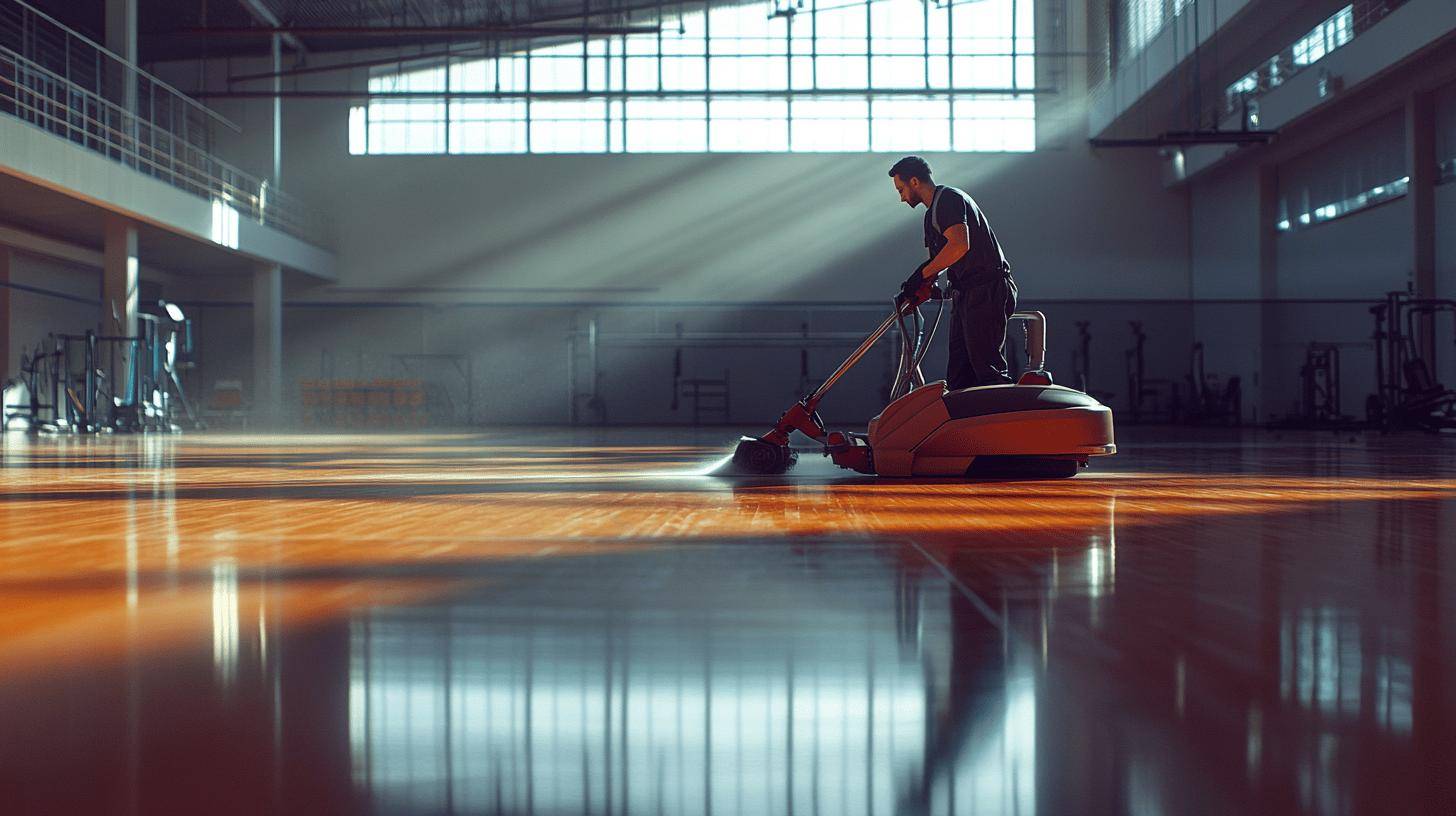
Over years of use, dirt, rubber and cleaning product residue build up on the surface of a seal rather than in the timber. The floor looks grey and tired, grip feels inconsistent, and the assumption is that the finish has worn out. Often it has not. A machine deep clean using the correct equipment and a product matched to the seal lifts that layer and reveals a finish underneath that is still sound.
We will tell you at survey which situation you are in, because there is no sense selling a refinish to a floor that needs a clean. The test is simple: if the seal is intact and the problem is appearance and grip, cleaning is worth trying first.
Deep cleaning also extends the interval between screen and recoat visits, which over the life of a floor saves real money and preserves board depth.

School halls in Wrexham and the border counties are in use every day of term, so the only realistic windows are half terms, Easter and the summer. A full refinish needs the longer summer break. A screen and recoat fits comfortably into a week in October or February.
We book summer work early because the slots go, and we confirm in writing the day the hall is handed back so the timetable for September can be set with confidence. Where exams are sitting in the hall, we work around the schedule and sequence noisy work away from the papers.
Academy trusts with several schools can run two or three halls in the same holiday with one team moving between them, which shares the travel cost and keeps every site to a known date.
When a hall is reported as slippery, opinions vary and memory is unreliable. A pendulum test replaces both with a number. The instrument swings a rubber slider across the surface and the reading is compared against the values the HSE and UK Slip Resistance Group use for pedestrian safety.
We test dry and wet, at the entrance, along the main traffic lanes and in the corners, and we record where each reading was taken. The pattern usually tells the story: a floor that passes in the corners and fails by the door has a cleaning or polish problem, not a flooring problem.
The certificate goes in your file for insurers, governors or a trust safety committee. If the results are poor we say what will fix them, and for many Wrexham halls that is a recoat or a change of cleaning product.
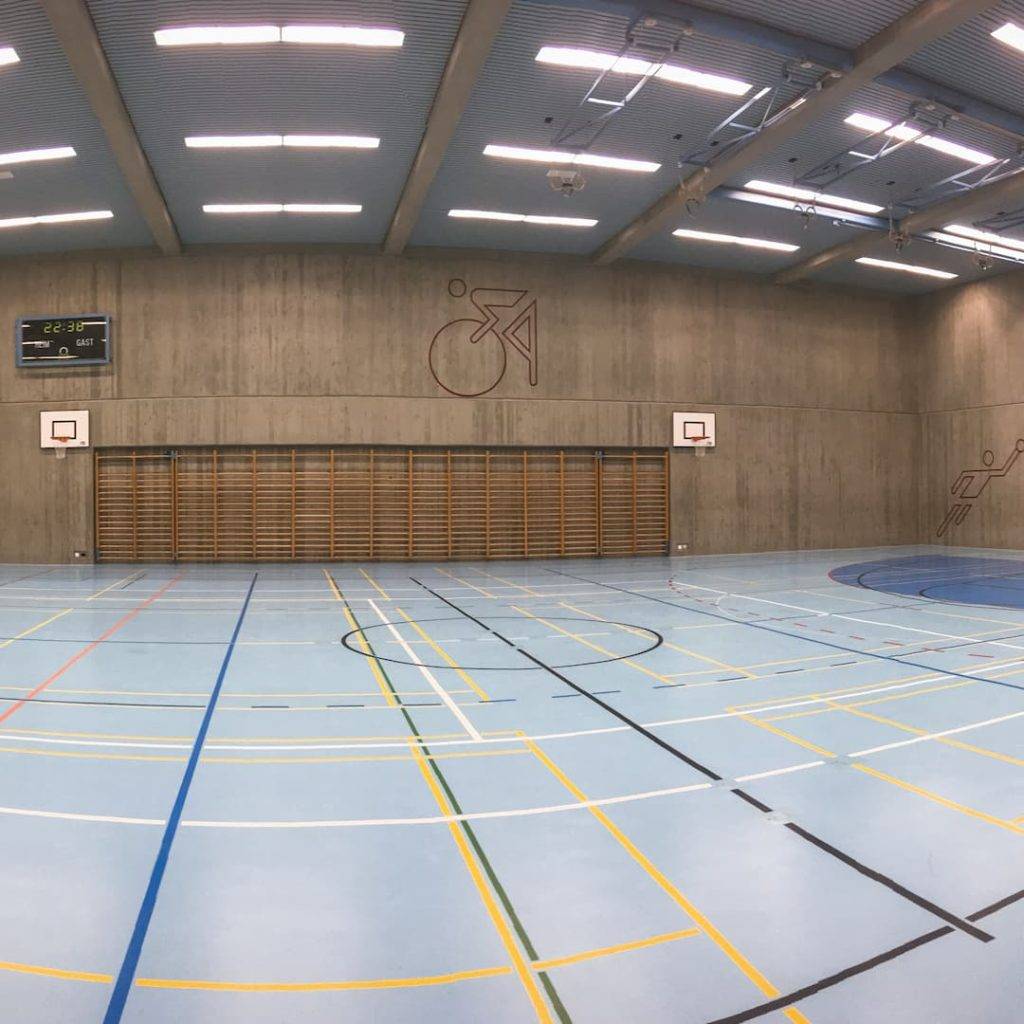
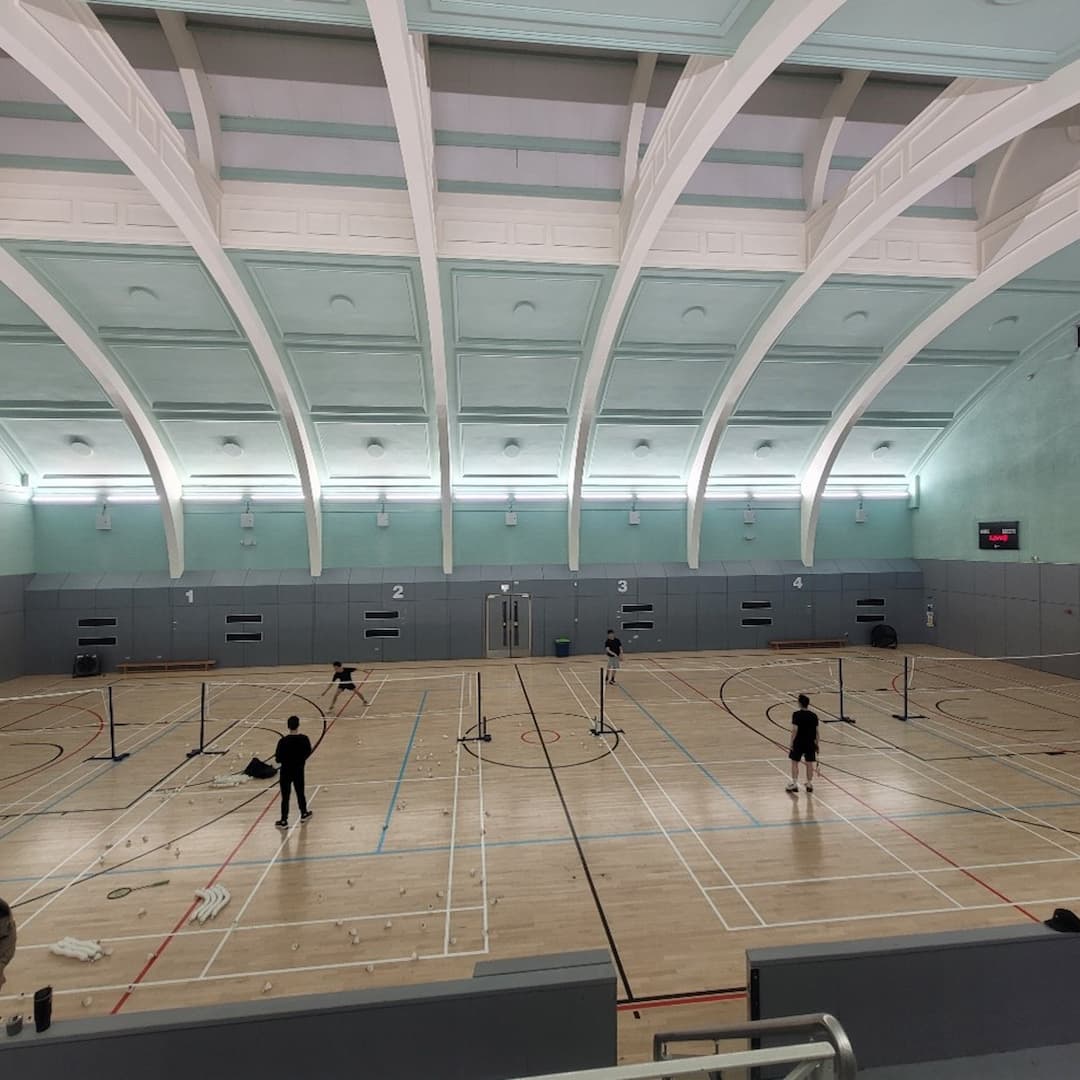
Clubs are a distinct kind of customer, because the money is usually the members money and the decision is made by a committee rather than a manager.
That changes how we quote. Every item is priced separately so a committee can see exactly what each part costs, weigh it, and defer anything that is not urgent. It also means we are happy to attend a meeting or provide a written specification for a funding application, because these decisions rarely rest with one person.
The work itself tends to follow a pattern. Club floors are heavily used but often better maintained than school halls, because somebody on the committee cares about them. The common issues are grip that has gone in the busiest areas, markings that have faded, and the accumulated damage from social use as well as sport.
Where a club runs squash courts alongside a hall, we can phase the work court by court so the facility never closes entirely.
Wrexham work comes to us from school sports halls, council leisure facilities, college sport and a number of club and community buildings.
School and academy halls are the largest group, and the recurring issue is halls that have gone a decade or more without a proper refinish. Once the seal has worn through in the traffic lanes, dirt sits in open timber and the staining eventually goes beyond what sanding will lift.
Leisure centre halls are usually the busiest floors in the area and the ones that benefit most from being kept on a sensible maintenance cycle. A screen and recoat before the seal fails costs a fraction of a full refinish.
Community and church halls follow, and those old timber floors are usually in far better condition than they look under the polish.
Because we travel to reach North Wales, projects here are planned as continuous blocks with everything brought with us. Sequencing several jobs into one trip brings the cost down for everybody involved, so it is worth mentioning if you know of another facility considering work.
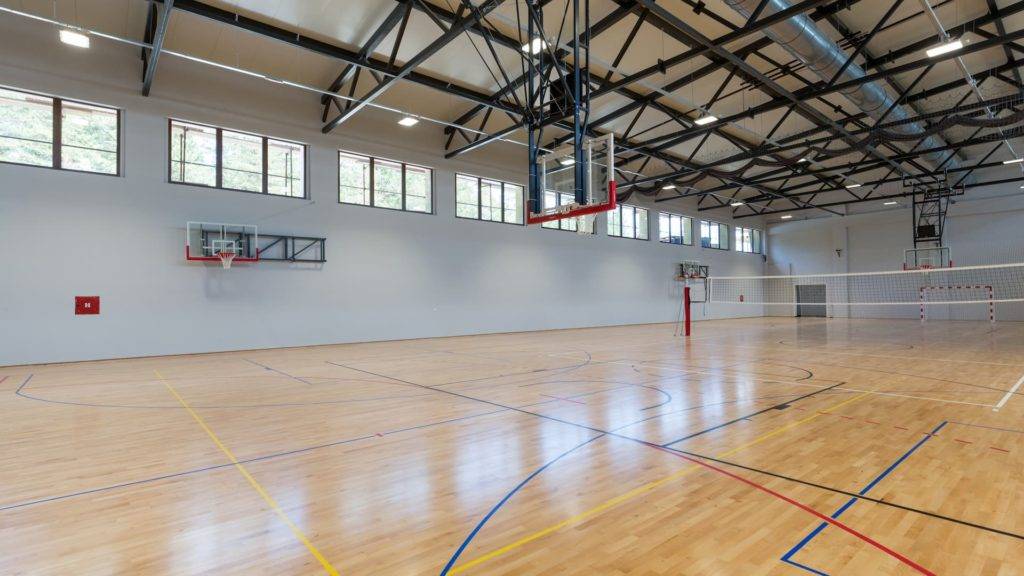
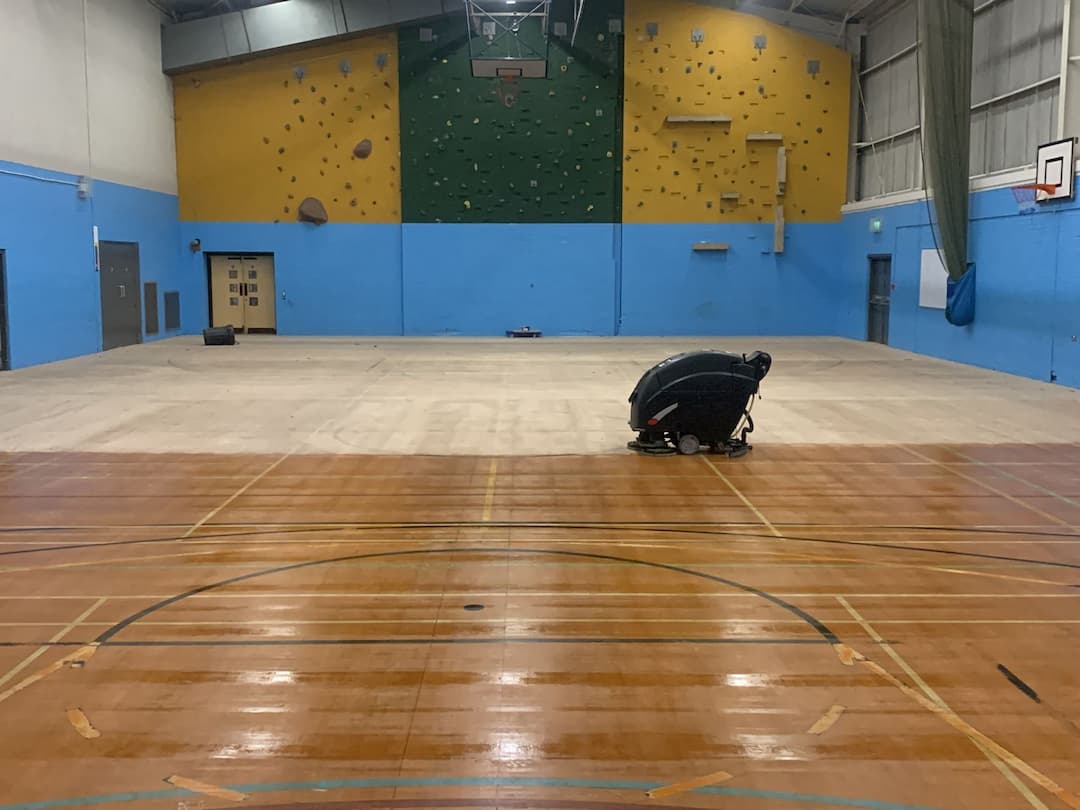
Wrexham enquiries tend to arrive in three forms.
The most common is a school hall where the seal has worn through in the traffic lanes and dirt has worked into open timber. Caught reasonably early those floors restore completely; left too long the staining goes deeper than sanding will reach.
The second is leisure centre halls that need putting on a maintenance cycle rather than rescuing. A screen and recoat every two to three years keeps a busy floor off the replacement list entirely and costs a fraction of a full refinish.
The third is community and church halls where decades of polish sit over a sound timber floor. That build up has to be removed chemically before sanding, because it clogs abrasives, and it is the item most often missed in quotations from contractors who do not do this work regularly.
A sports floor that feels dead in one area, bounces in another or creaks along a line is telling you about what lies beneath. The boards are usually fine. The batten has split, a foam pad has crushed flat or a cradle has come away from the slab.
Sanding the surface does nothing for that. We lift the boards locally, expose the structure, replace the failed components with matching parts and refit the boards so the repair disappears once the floor is sanded and sealed as one.
We check the age and type of the system at survey so the repair is priced with the right parts, and where a floor is generally sound we repair just the failed area. Replacing the whole structure is rarely needed and we say so when that is the case.
No. Every stage from survey to final coat is carried out by our own employed team using our own machinery. That is why one company stands behind the whole floor, and why the people on site are the same people who quoted for the work.
In most cases. Boards that have cupped, blackened or lifted are cut out and replaced with matching timber, the sub floor is dried and checked, and the whole area is sanded and sealed as one. The exception is a floor that has been wet for months, which may need a larger section rebuilt.
Use a purpose made protective covering laid over the whole area before the desks go in, with edges taped and no bare chair feet on the seal. Store it rolled and dry between uses. It costs far less than repairing the scoring that exam furniture leaves behind.
It can be restored. Granwood blocks cannot be sanded like timber, but they can be mechanically cleaned back, repaired where loose and finished with a specialist coating that brings back colour and grip. Removal is only needed where the bitumen bed has failed across a wide area.
Yes, with a soft pad, a neutral cleaner and the water set as low as the machine allows. The floor should be dry within seconds of the pass. Too much water, harsh chemicals or a polish additive will shorten the life of the seal and make the surface slippery.
Yes. We reproduce your artwork at the right scale for the centre circle or chosen area, paint it between coats of seal so it is protected by the finish, and match colours to your brand. It is cheapest to do while the floor is already open for a refinish.
Almost always because the timber has expanded and has nowhere to go. Expansion gaps at the walls have been filled, skirtings have been fixed tight or the ventilation has been blocked, and a damp spell has pushed the boards up. Restoring the gap and airflow usually lets the floor settle.
A two pack polyurethane seal in a satin sheen. It is the hardest wearing system available for timber, it gives reliable grip, it does not glare under LED lighting and it hides minor scuffs between recoats. We use it on the majority of the halls we refinish.
Book a free survey of your hall in Wrexham and we will tell you straight what the floor needs, what it will cost and how quickly it can be done. Call 01823 674562 or send us a message.