Keeping your indoor Multi-Use Games Area (MUGA) floor in tip-top shape is more than just making it look good. It’s all about safety, especially when people are running around playing sports. A slippery floor can lead to some nasty accidents. This guide is all about practical, everyday indoor MUGA floor maintenance to keep things safe and fun for everyone.
Key Takeaways
- Regular cleaning is your best mate for keeping an indoor MUGA floor safe. Think sweeping and mopping.
- Always do a quick look-over before games start. Spotting problems early stops accidents.
- Spills happen, but dealing with them fast stops them from becoming big, slippery issues.
- Sometimes you need a deeper clean to get rid of tough dirt that affects grip.
- Don’t forget about checking for wear and tear over time; it’s part of good indoor MUGA floor maintenance.
Keeping Your Indoor MUGA Floor Safe and Sound
Right then, let’s chat about keeping your indoor Multi-Use Games Area (MUGA) floor in tip-top shape. It might seem like just a floor, but for a busy sports hall, it’s actually a pretty big deal. A safe floor means happy players and fewer bumps and bruises. We’re talking about making sure everyone can run, jump, and play without worrying about taking an unexpected tumble. It’s all about making sure the surface is just right, all the time.
Why Non-Slip Matters for Indoor MUGAs
So, why all the fuss about non-slip? Well, imagine a basketball player making a sharp turn, or a badminton player lunging for a shot. If the floor is even a little bit slick, things can go wrong, fast. We’re not just talking about a bit of discomfort; we’re talking about potential injuries that can sideline players for weeks. A good grip stops those sudden slips and slides that can lead to sprains, strains, or worse. It’s the difference between a great game and a trip to the physio.
Understanding Different Floor Types
Now, not all indoor MUGA floors are created equal, are they? You’ve got a few main types kicking about, and each needs a slightly different approach to keep it grippy.
- Sprung Timber Floors: These are often found in older, more traditional sports halls. They feel a bit bouncy underfoot and are great for shock absorption. However, they can be prone to damage from moisture and need careful cleaning to avoid becoming slippery.
- Polyurethane (PU) or Vinyl Sheet Floors: These are really common now. They’re usually seamless, easy to clean, and can be made with excellent slip-resistant properties. The key here is maintaining that top layer.
- Resin-Bound or Resin-Encasement Floors: These are tough cookies, often used for more demanding sports. They offer great durability and can have specific textures added for grip. The main thing is keeping the texture clear of dirt.
Knowing what you’re working with is half the battle. It helps you figure out the best way to clean and look after it, so it stays safe for everyone using it. It’s not rocket science, but a bit of know-how goes a long way.
Daily Checks: The First Line of Defence
Right then, let’s talk about keeping your indoor MUGA floor in tip-top shape, starting with the absolute basics. You know, the quick checks you can do every single day. It might sound a bit much, but honestly, a few minutes each day can save you a heap of trouble later on. Think of it like giving your car a quick once-over before a long drive – you wouldn’t skip it, would you?
Quick Visual Inspections
This is the really simple bit. Just have a good look around the floor. Are there any obvious bits of rubbish lying about? Any strange marks or anything that looks out of place? It doesn’t take long, maybe just a minute or two. You’re basically just scanning for anything that shouldn’t be there. It’s amazing what you can spot if you just take a moment to look properly.
Spotting Potential Hazards
So, what are you actually looking for? Well, anything that could make someone slip, obviously. This includes:
- Loose debris like grit, dust, or bits of rubber from shoes.
- Spills, even small ones. Think water, drinks, or anything sticky.
- Any damage to the floor itself, like cracks or peeling sections.
- Things left behind by users, like sports equipment or bags.
It’s all about being a bit of a detective and spotting trouble before it happens. That slip factor is what we’re trying to avoid, after all.
Reporting Issues Promptly
Now, if you do spot something, don’t just walk away and forget about it. The key is to report it straight away. If it’s something simple you can fix yourself, like picking up a stray bit of rubbish, brilliant. But if it’s something bigger, like a spill that needs proper cleaning or a bit of damage, you need to let the right person know. This could be the facility manager, the caretaker, or whoever is in charge of floor maintenance. The sooner they know, the sooner it can be dealt with, and the safer everyone stays. It’s a team effort, really.
Routine Cleaning for Optimal Grip
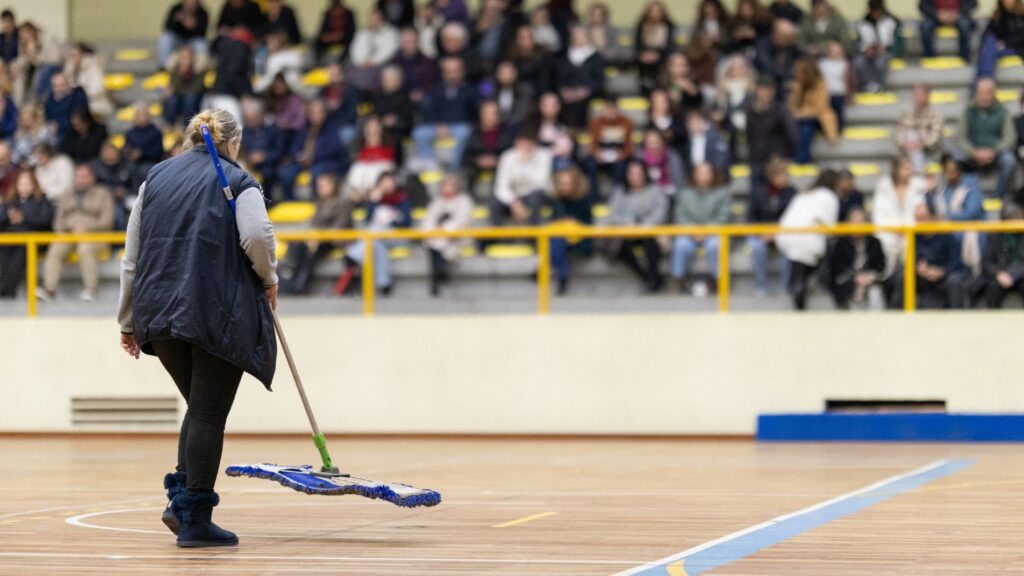
Right then, let’s talk about keeping that indoor MUGA floor looking good and, more importantly, keeping it safe. Daily checks are great, but they won’t do much if you’re not following up with a decent cleaning routine. This isn’t just about making the place look tidy; it’s about making sure the floor actually does its job – providing that much-needed grip.
Sweeping Up the Debris
First things first, you’ve got to get rid of the loose stuff. Think dust, bits of rubber from shoes, maybe even the odd stray crisp packet. A good sweep is your best mate here. You don’t want this gunk getting ground into the floor, making it slippery.
- Use a wide, soft-bristled broom for this. You want to cover a good area without scratching the surface.
- Sweep in sections, working your way around the court. Don’t just push it all into one corner; that’s just moving the problem.
- Pay attention to the edges and corners where dust bunnies love to hide.
Mopping Techniques That Work
Sweeping is just the start. To really get the grip back, you need to mop. But it’s not just about sloshing water around. The way you mop makes a difference.
- Use a clean mop head every time. A dirty mop just spreads the grime around, which is the opposite of what you want.
- Don’t over-wet the floor. You want it damp, not swimming. Too much water can actually make some surfaces more slippery, and it takes ages to dry.
- Work in a systematic way. Mop in straight lines, overlapping each stroke slightly. This way, you don’t miss any spots.
- Rinse the mop frequently in your cleaning solution, and if it gets really dirty, change the water and the mop head.
Choosing the Right Cleaning Products
This is where people sometimes go wrong. You can’t just grab any old cleaner from under the sink. You need something that’s designed for sports flooring, or at least something gentle.
- Avoid harsh chemicals. Things like bleach or strong degreasers can damage the floor’s surface and strip away its non-slip properties.
- Look for pH-neutral cleaners. These are much kinder to the floor.
- Always dilute according to the instructions. Using too much product won’t make it cleaner; it’ll just leave a residue that can make the floor sticky or slippery.
A good rule of thumb is to test any new cleaning product in an inconspicuous area first. You don’t want to find out it’s a bad choice after you’ve cleaned the whole court.
Keeping on top of this routine cleaning is honestly the easiest way to maintain good grip. It stops small issues from becoming big, slippery problems. It’s all about consistency, really.
Deep Cleaning: Tackling Stubborn Grime
Right, so daily mopping is great, but sometimes you hit a wall. You know, when the usual routine just isn’t cutting it anymore and the floor looks a bit… sad? That’s when it’s time to bring out the big guns for a proper deep clean. This isn’t about a quick wipe-down; it’s about getting into the nooks and crannies and really lifting out that ground-in dirt and grime that’s making your floor less grippy than it should be.
When to Bring Out the Big Guns
How do you know it’s time for a deep clean? Well, a few signs will tell you. If you’re noticing a dull film that mopping doesn’t shift, or if the floor just feels a bit sticky even after cleaning, that’s a big clue. You might also see build-up in the corners or around the edges of the court markings. Regular deep cleans, maybe once a quarter or even more often if the area gets a lot of use, will keep things in check. Don’t wait until it’s a real problem; a bit of proactive cleaning goes a long way.
Effective Deep Cleaning Methods
So, what actually works? For a proper deep clean, you’ll likely need more than just your standard mop and bucket. Think about using a floor scrubber machine if you have access to one. These machines use rotating brushes to agitate the surface and lift dirt more effectively. If you don’t have a machine, a good stiff-bristled deck brush can do wonders, but it’s a lot more elbow grease!
Here are a few things to consider:
- Use the right cleaner: You’ll want a dedicated floor cleaner that’s designed for your specific floor type. Avoid anything too harsh or anything that leaves a residue. Always dilute according to the manufacturer’s instructions – too much product can actually make things worse.
- Work in sections: Don’t try to tackle the whole floor at once. Break it down into manageable areas. This way, you can focus on each section properly and rinse it thoroughly before moving on.
- Rinse, rinse, rinse: This is super important. After you’ve scrubbed, you need to rinse the floor thoroughly with clean water to remove all traces of the cleaning solution and the loosened dirt. Any leftover cleaner will just attract more dirt and make the floor slippery.
Allowing Proper Drying Time
This is where a lot of people slip up (pun intended!). After you’ve done all that hard work cleaning, you absolutely must let the floor dry completely before anyone uses it. A damp floor is a dangerous floor.
Don’t be tempted to open up windows and doors to speed things up if it’s cold or damp outside, as this can actually cause condensation and make the drying process take even longer. Good ventilation is key, but sometimes it’s just a waiting game. Use fans if you have them to help circulate the air and speed up evaporation. Check the manufacturer’s guidelines for your specific flooring for recommended drying times.
Be patient. It might take a few hours, depending on the humidity and airflow. It’s better to wait a bit longer than to have someone take a tumble because the floor wasn’t fully dry. You can usually tell when it’s dry – it will look and feel completely dry, with no damp patches or shiny spots.
Dealing with Spills and Stains
Right then, let’s talk about the inevitable – spills and stains on your indoor MUGA floor. Accidents happen, whether it’s a dropped drink during a break or something a bit more colourful from a sports activity. The key here is speed. The quicker you deal with a spill, the less chance it has of becoming a stubborn stain or, worse, a slip hazard.
Immediate Spill Response
When a spill occurs, don’t just walk away and hope for the best. Get on it straight away. Here’s a quick rundown of what to do:
- Assess the spill: What is it? Water, juice, mud, something oily?
- Contain it: Stop it from spreading. Use absorbent cloths or paper towels.
- Absorb: Soak up as much of the liquid as possible. Keep dabbing, don’t just rub.
- Clean: Use the appropriate cleaning solution (more on that in a sec).
- Dry: Make sure the area is completely dry before anyone walks on it.
Removing Common Stains
Some things are trickier than others. For general grime and light stains, a good mop with a mild detergent usually does the trick. But what about those tougher marks?
- Muddy footprints: Let them dry first, then sweep or vacuum. If there’s a residue, a damp mop with a bit of floor cleaner should sort it.
- Scuff marks: These can often be buffed out with a clean, dry cloth or a specialised floor cleaner. Sometimes a tennis ball can work wonders – just rub the scuff mark with it.
- Sticky residues (like tape or chewing gum): This is a pain. Try gently scraping it off with a plastic scraper. For stubborn bits, a bit of white spirit on a cloth might help, but test it in an inconspicuous spot first to make sure it doesn’t damage the floor finish.
Preventing Future Slip-Ups
While dealing with spills is reactive, a bit of proactive thinking can save you a lot of hassle. Think about:
- Signage: Have ‘wet floor’ signs ready to go. Use them liberally when cleaning or if there’s a spill.
- Footwear: Encourage users to wipe their feet or change shoes if they’ve come from outside, especially if it’s wet or muddy.
- Regular cleaning schedule: Keeping the floor generally clean means spills are less likely to set in and become stains.
Dealing with spills isn’t just about making the floor look nice; it’s a safety issue. A wet patch or a sticky spot can lead to nasty falls, especially when people are running around. So, make sure everyone knows the drill for dealing with spills quickly and properly.
Remember, always check the manufacturer’s guidelines for your specific floor type. What works for one might not be ideal for another. If you’re ever unsure, it’s better to ask for advice than risk damaging the surface.
Long-Term Care for Your Indoor MUGA Floor
Right then, so we’ve covered the day-to-day stuff, but what about keeping your indoor MUGA floor in tip-top shape over the long haul? It’s not just about a quick sweep and mop, you know. Think of it like looking after a car – regular servicing keeps it running smoothly and stops little problems turning into big ones. Your MUGA floor is no different.
Regular Professional Inspections
Honestly, you can’t beat having a pro take a look every now and then. They’ve got the eyes for things you might miss, and they know what to look for. They can spot wear and tear that’s just starting, or check if the grip is still up to scratch. It’s a bit like a doctor’s check-up for your floor. They’ll usually give you a report too, which is handy for keeping records.
Addressing Wear and Tear
Over time, even the best floors will show signs of use. You might get scuff marks, small dents, or areas where the surface looks a bit dull. Don’t just ignore these! Little issues can get worse if left. For example, a small crack could let moisture in, which is a whole other headache. It’s usually best to get these bits sorted out pretty quickly. A good flooring specialist can advise on the best way to repair or refresh these areas.
Maintaining the Non-Slip Surface
This is the big one, isn’t it? The non-slip quality is what makes your MUGA safe. Over time, cleaning products, heavy use, and even UV light (if there are windows) can affect this. Sometimes, a specific treatment or coating might be needed to bring the grip back. It’s not always obvious when it’s fading, which is why those professional checks are so useful. They can measure the slip resistance and tell you if it’s still meeting the standards.
Don’t wait for a slip to happen before you think about the floor’s grip. Proactive care is always better than reactive fixes. It saves hassle, money, and most importantly, keeps everyone safe.
Here’s a rough idea of what you might expect from a professional check-up:
- Surface Integrity Check: Looking for cracks, delamination, or any damage.
- Cleanliness Assessment: Making sure there are no residues that reduce grip.
- Slip Resistance Testing: Using specialised equipment to measure the friction.
- Recommendations: Advice on cleaning, repairs, or treatments needed.
It might seem like a lot, but keeping your indoor MUGA floor safe and sound for years to come is totally worth the effort. A bit of regular attention goes a long way.
Keeping your indoor MUGA floor in top shape is super important for games to run smoothly. A little bit of care goes a long way in making sure it lasts for ages and stays safe for everyone playing. Want to know the best ways to look after your court? Visit our website for all the tips and tricks you need to keep your MUGA floor in prime condition.
So, What’s the Takeaway?
Right then, keeping your indoor MUGA floor grippy isn’t just about looking good, it’s about keeping everyone safe. We’ve chatted about how a bit of regular cleaning and the right products make a massive difference. Don’t leave it too long between checks, or you’ll end up with a slippery hazard on your hands. A quick sweep, a proper mop now and then, and checking for wear and tear – it’s not rocket science, is it? Stick to these simple steps, and your court will be ready for action, game after game. Happy playing!
Frequently Asked Questions
Why is it so important to keep the floor non-slippy?
Imagine playing a fast game like basketball or netball indoors. If the floor is slick, players could easily slide, fall, and get hurt. Keeping it non-slippy means everyone can play safely and have a much better time without worrying about unexpected tumbles.
How often should I be cleaning the floor?
You should give it a quick sweep every day to pick up loose bits like dust or small stones. A proper mop with the right cleaner should happen regularly too, maybe a few times a week depending on how much it’s used. Think of it like keeping your own room tidy – a little bit often is best!
What should I do if someone spills something?
Quick action is key! Grab a cloth or paper towels straight away and soak up as much of the spill as you can. Don’t just leave it there to dry and make the floor sticky or slippery. The faster you clean it, the less chance it has of causing a problem.
Are all floor cleaning products the same?
Not at all! Different floors need different care. You need to use cleaners that are designed for sports floors and won’t leave a greasy film behind, which can make things slippery. Always check the instructions or ask someone who knows what’s best for your specific floor type.
What if I notice the floor is getting worn out?
If you start seeing scuff marks, scratches, or the non-slip coating looks like it’s fading, it’s time to get it checked out. It’s like noticing a tyre on a bike is getting bald – it’s not safe anymore. Letting professionals have a look can fix it before it becomes a big hazard.
Can I just use any old mop and bucket?
While a mop and bucket are handy, it’s best to use ones that are clean and suitable for the job. Using a mop that’s already full of dirt will just spread it around. Sometimes, using a special floor scrubber machine for a deeper clean is even better, especially for busy areas.
![Building Regulations Part M: Ensuring Inclusive Access and Safety for UK Leisure Centre Flooring [2026]](https://courtshipflooring.co.uk/wp-content/uploads/2026/07/journalist2F1d57470c-6abc-4bc8-b346-513598794c392Fthumbnail.jpeg)