
Basketball exposes a worn floor faster than any other indoor sport. The ball has to rebound consistently across the whole court, the surface has to grip predictably under hard stops, and players notice the moment either stops being true.
Courtship Flooring sands and refinishes basketball courts across the UK for schools, universities, leisure trusts and clubs. We take the surface back to clean timber, correct the problems underneath rather than covering them, reseal for consistent response and re-mark the court to specification. Commercial and institutional facilities only.
Basketball courts are usually sanded as part of a full hall programme. See our sports hall floor sanding service for the complete process.
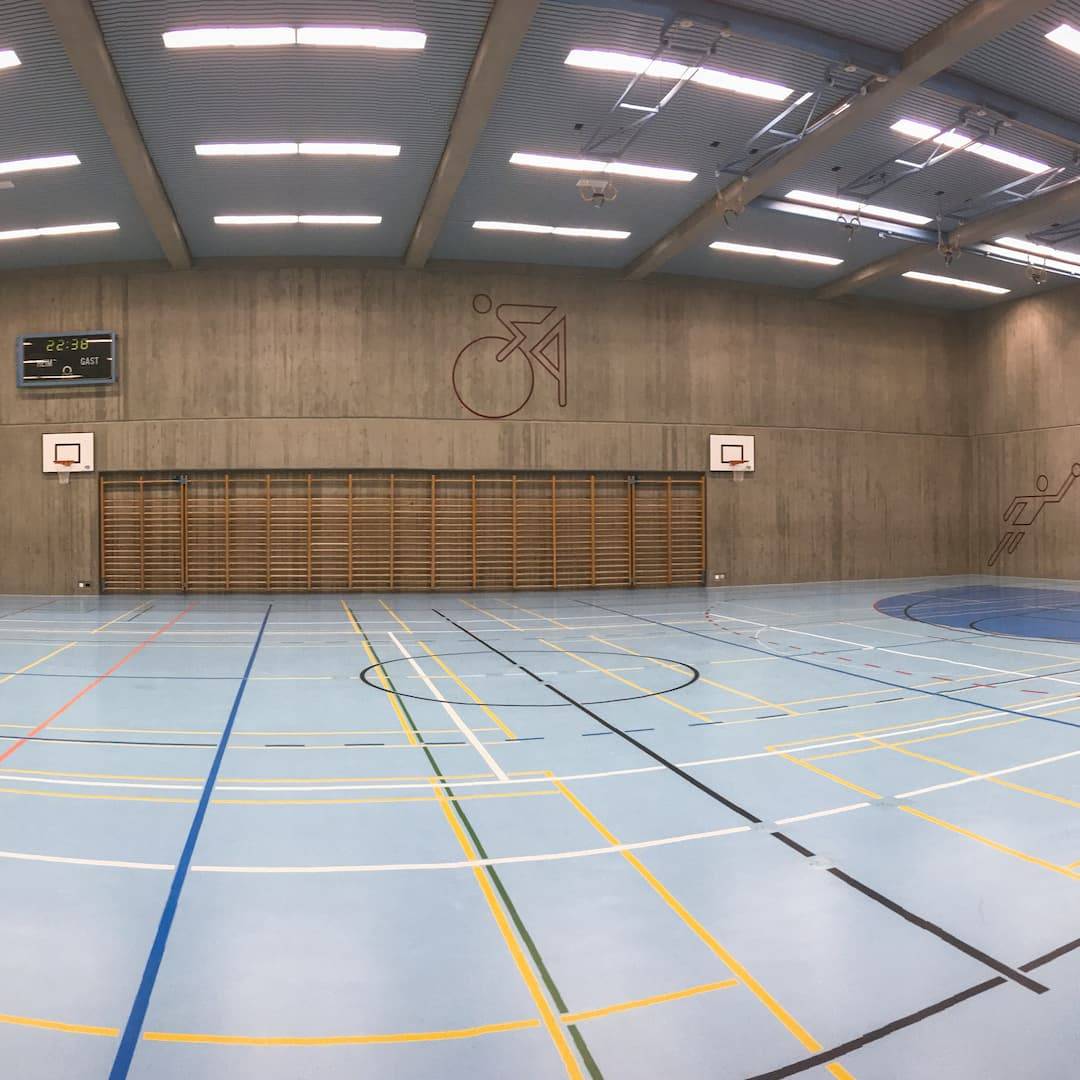
If the ball dies in one part of the court, refinishing the surface will not fix it. Dead spots mean the resilient layer beneath has failed there or a batten has lost contact, and the only real repair is to the build-up underneath.
We map them during survey by working across the court rather than glancing at it, then repair the structure before touching the surface. BS EN 14904 expects a ball to rebound to at least ninety per cent of its bounce on solid concrete, consistently across the whole area, and that consistency is a structural property rather than a cosmetic one.
Hard maple is the traditional basketball timber because it is dense, pale and extremely consistent, which is exactly why it rewards careful treatment. Every full sand removes board permanently, and a court machined too often runs out of floor long before it should.
So we measure remaining thickness first. Where the seal is worn but intact, a screen and recoat restores appearance and grip without touching the timber. A full sand is reserved for courts where the boards themselves are taking the wear.
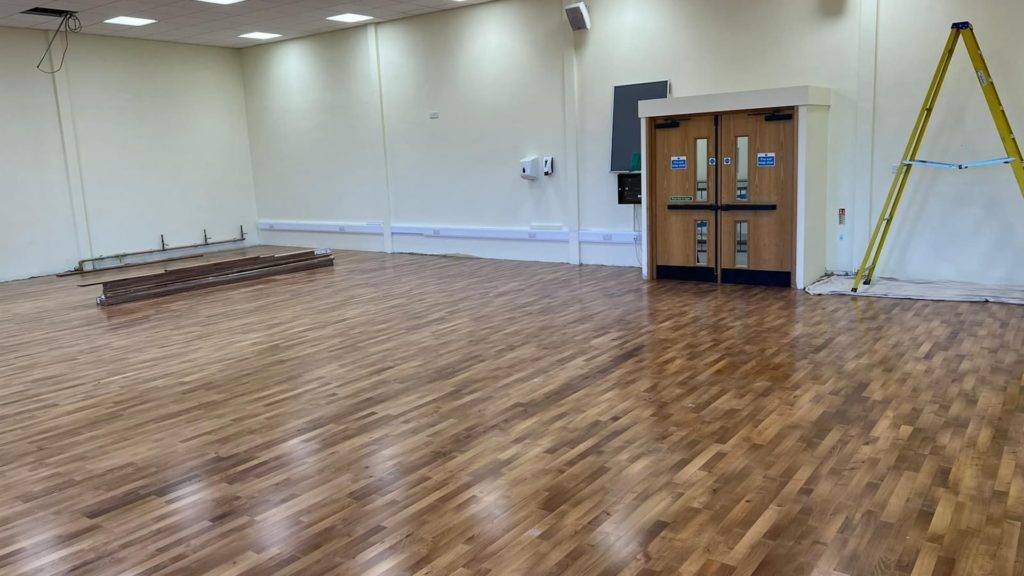
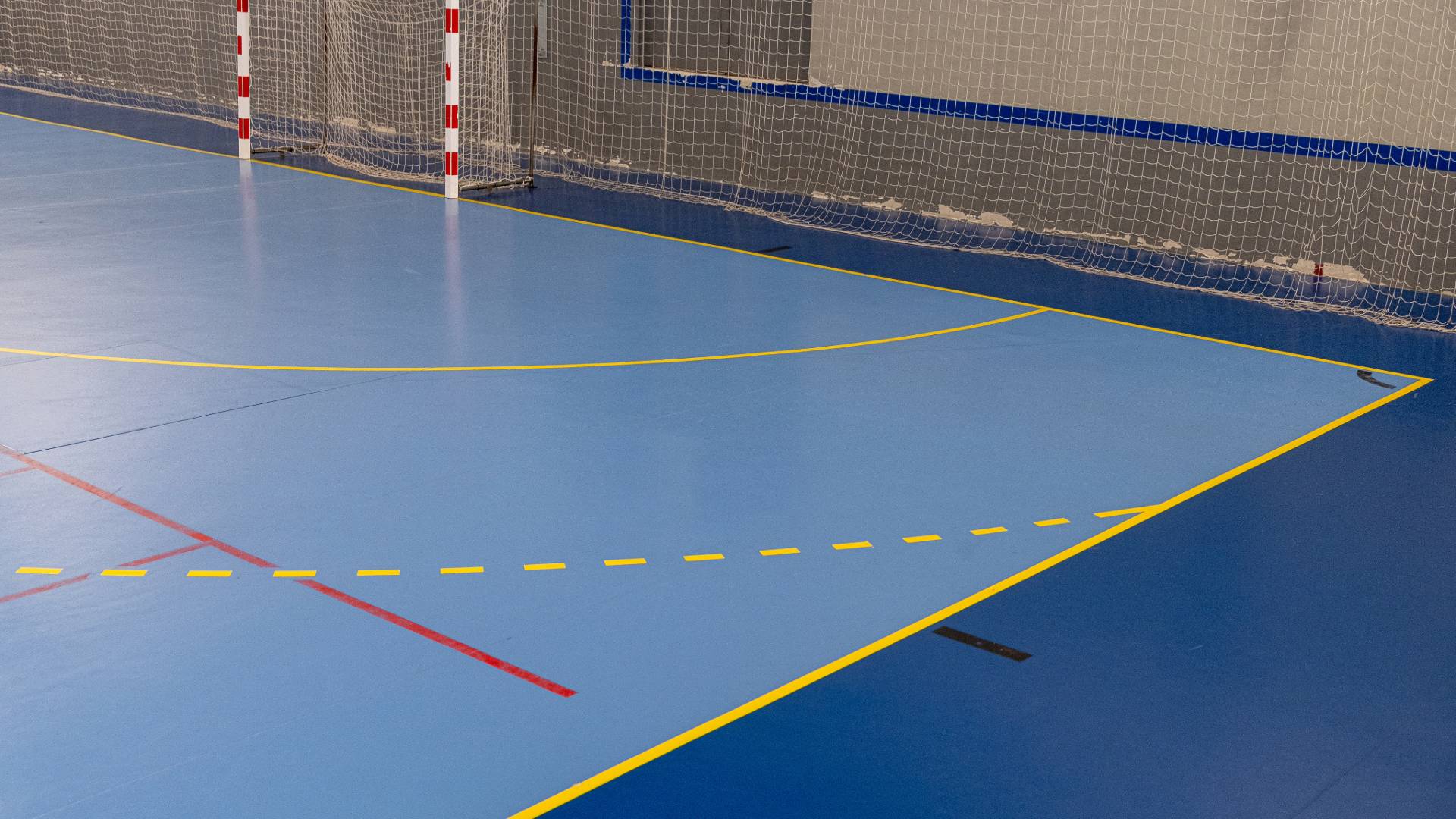
Refinishing is the natural moment to correct a court that has drifted out of specification, and a surprising number have. Three-point arcs, keys and centre circles all changed over the years, and a court marked to an old rulebook can be challenged in competitive play.
We re-mark to the current specification, plan the layout so the primary sport reads instantly against the other courts sharing the floor, and can seal a club or school badge in at centre court. Full detail is on our line marking page.
A properly refinished basketball court gives consistent ball rebound across every part of the playing area, friction that lets players stop and turn without the surface either sliding away or catching, and markings that read clearly at speed.
We can document the last of those objectively with a pendulum slip test on completion, which is worth having on file for schools and leisure operators carrying a duty of care.
Basketball puts a very particular load through a timber floor, and knowing where to look tells you a great deal about what a court needs.
The keys go first, always. Every rebound, every post move and every landing happens in the same two rectangles, and the finish in those areas can be worn through to bare timber while the rest of the court still looks respectable. The centre circle is the next casualty for the same reason.
Then there is the sole marking. Basketball shoes are designed to grip, and that grip leaves black scuffing across the whole playing surface. On a well sealed floor it cleans off. On a floor whose finish has gone thin, the rubber transfers into open grain and stops coming out, which is one of the main reasons courts start looking permanently grubby.
Underneath, the sprung system takes a pounding from repeated landings. Dead spots where the floor no longer responds usually mean a failed pad or a cracked batten rather than anything wrong with the boards, and sanding the surface will not touch the problem. We check the subfloor at survey precisely because refinishing a court with a failing structure underneath is money thrown away.
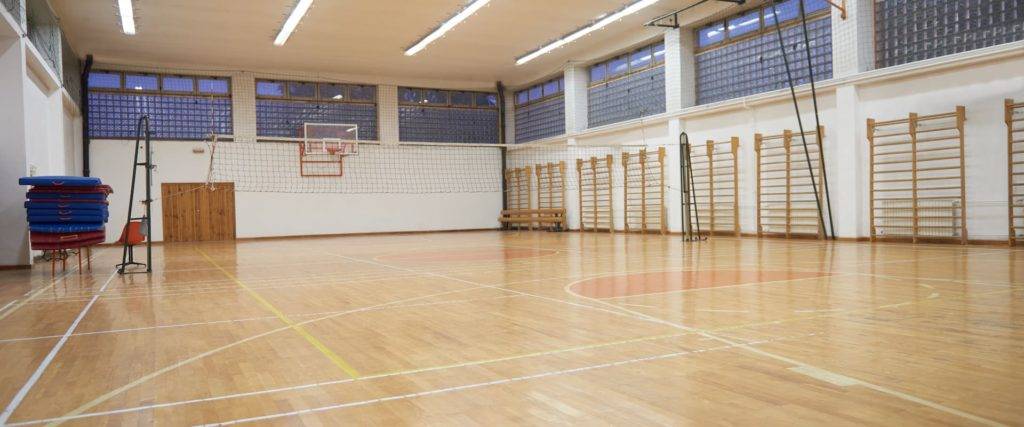
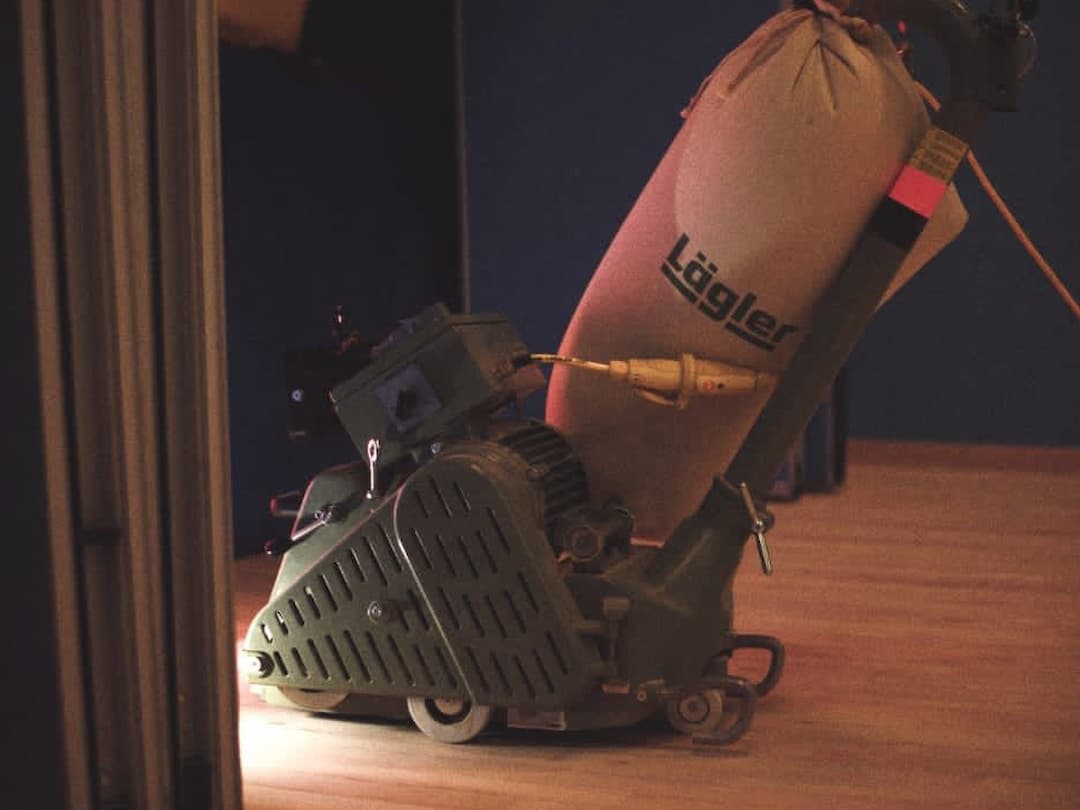
The aim of a full sand is to take the floor back to clean bare timber across its whole area, so the new finish goes onto a uniform surface rather than over the ghost of the old one.
We work in stages, starting with a coarse cut to remove the existing lacquer and the embedded marking, then progressively finer passes to bring the boards to an even, correctly open surface. Getting that final grade right matters more than people expect. Sand too fine and the timber is polished before sealing, which reduces the key for the seal and produces a court that plays slippery.
Board repairs happen at this stage. Splintered boards under the baskets, damage where posts or staging have been dragged, and any section that has cupped from a historic leak all get cut out and replaced, matching species and grain. Nail heads are punched below the surface so they never catch a machine or a player.
Edges and corners are done by hand. A court sanded only with the large machines leaves a visible border of old finish at the perimeter, and it is the fastest way to spot a job done cheaply.
Basketball needs a floor that grips reliably and consistently, because the game is played on hard stops and changes of direction. Too little grip and players cannot trust the surface. Too much and the shoe binds, which is its own injury risk.
We specify two pack polyurethane seal systems for basketball courts, applied in multiple coats with the markings sandwiched between them. Two pack holds its slip resistance far longer than a single pack under heavy use, and it stands up to the scrubber driers that leisure centres actually run.
Sheen is a real decision. A high gloss court photographs beautifully and shows every scuff by the end of the first week, as well as producing glare under modern LED lighting that players do notice. Most of the courts we finish end up satin, which keeps the look sharp and stays looking that way.
On completion we can carry out pendulum slip resistance testing so you have documented evidence that the court sits in the expected range. For clubs playing in leagues with facility requirements, that certificate is worth having before somebody asks for it.
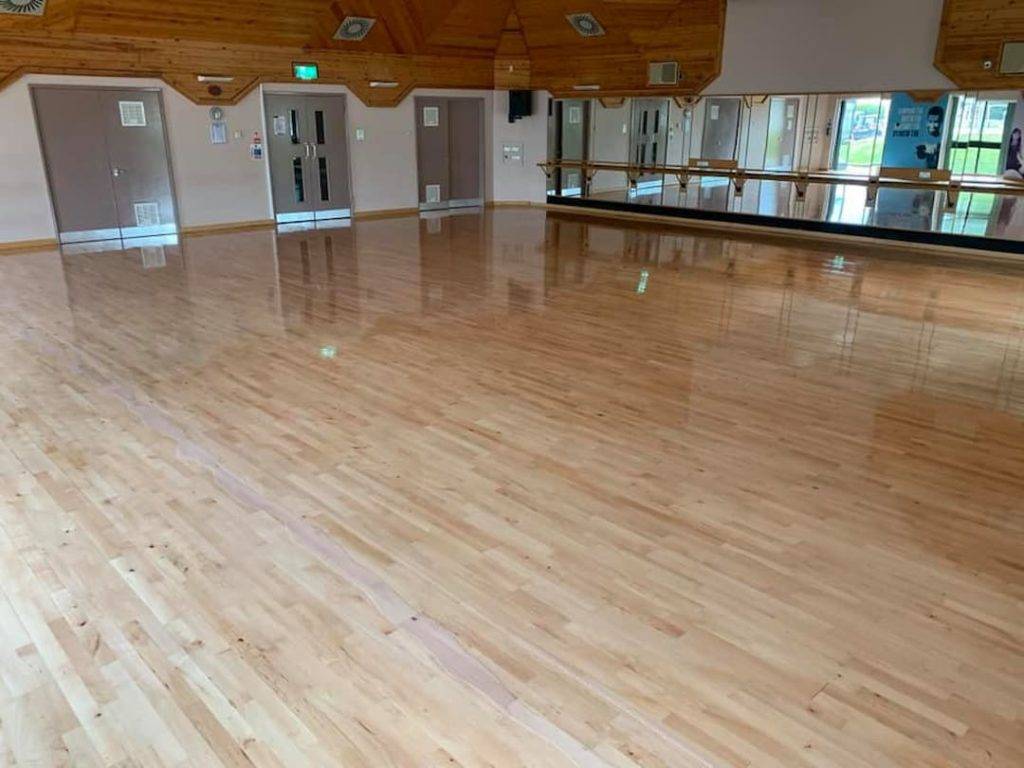
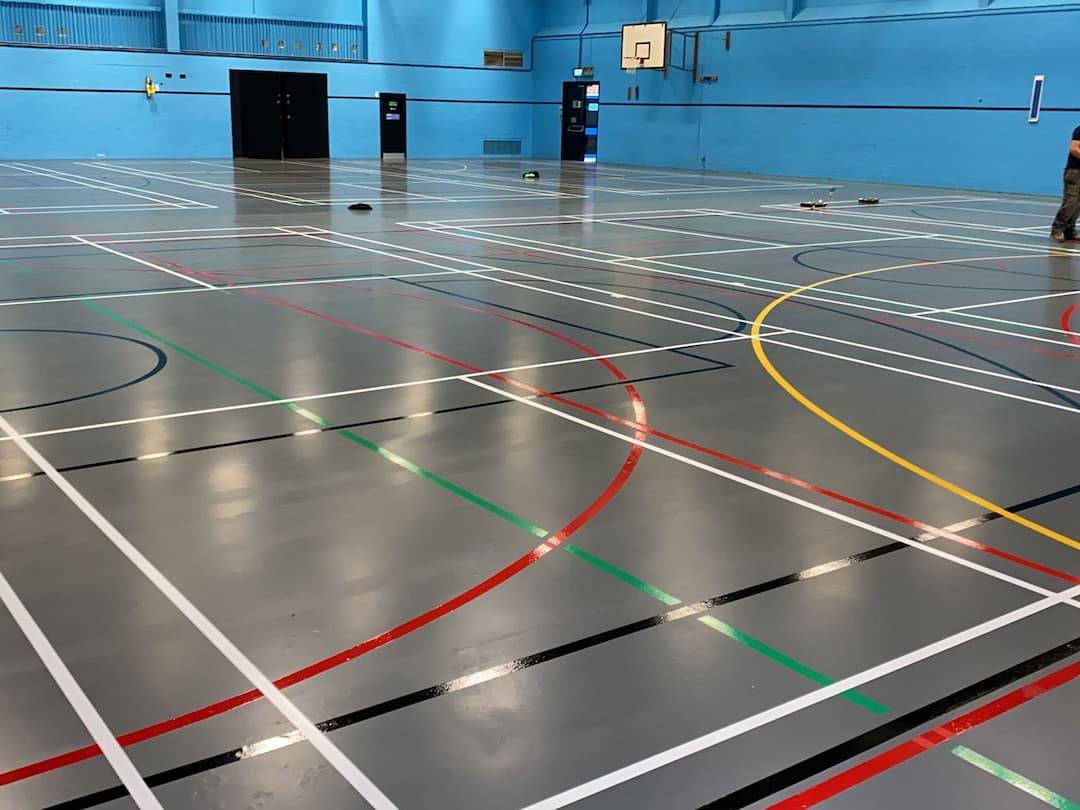
A full sand is the ideal moment to put the court markings right, because everything comes off with the old finish and you start from a clean floor.
We set out from current FIBA dimensions rather than copying what was there, which is how a surprising number of courts end up with the old trapezoid key or a three point arc taken from American television. The court is checked end to end for symmetry before any paint is applied.
Markings go down between coats of seal so they finish under the final lacquer. In the key, which takes more punishment than anywhere else on the floor, that is the difference between markings that last the life of the finish and markings that start lifting within a season.
This is also the moment for a coloured key or a centre circle logo. Both are applied in the same way, sealed in rather than sitting on the surface, and both are far cheaper done now than as a separate visit later. Artwork comes from your own files and we will show you a layout before it goes down.
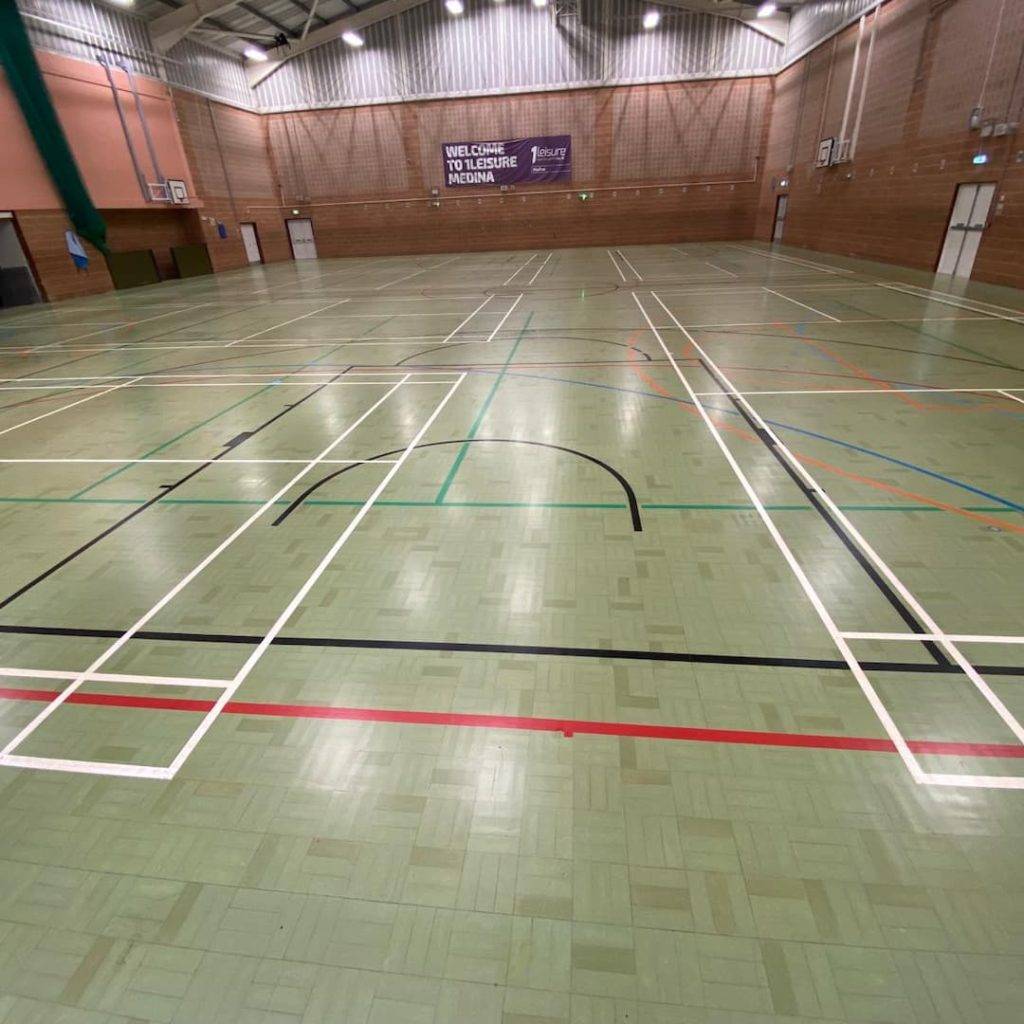
A single basketball court is usually a five to eight working day job from first machine to final coat, and the size of the hall it sits in matters more than the court itself, since we sand the whole floor rather than a rectangle in the middle of it.
What moves the price is condition rather than area. Board repairs, dealing with a failed subfloor and removing years of accumulated markings all add. A court that simply needs taking back and resealing is straightforward and priced accordingly.
Where the finish is worn but not gone, a screen and recoat is a genuine alternative at a fraction of the cost, and we will say so if that is what your court needs. Full sands carried out too often shorten the life of the boards, and a court refinished every three years will run out of timber long before one on a sensible cycle.
We work school holidays, weekends and overnight, and we give you the date the court comes back in writing before we start rather than treating it as an estimate.
No, and any contractor who says otherwise is selling you the wrong job. Dead spots come from the structure beneath the boards, so the repair belongs there. We locate them at survey and fix the build-up before refinishing the surface.
A full sand roughly every eight to twelve years, with a screen and recoat every two to three years in between. Sanding more frequently removes maple that never comes back and shortens the life of the court.
Yes, and refinishing is the ideal moment. Old lines come off during sanding and the court is re-marked to the current rulebook, with the multi-sport layout planned so the primary court reads clearly.
Yes, that is most of what we do, alongside leisure trusts and clubs. Work is planned into holidays or quiet periods with a fixed reopening date agreed in writing.
Usually five to eight working days including cure time, depending on the size of the hall, how much board repair is needed and how many coats the seal system requires.
Surface scuffing comes off completely with sanding. Rubber that has transferred into open grain on a floor whose seal had worn through may leave a faint shadow, and we will tell you at survey what to expect.
Satin, in almost every case. Gloss shows scuffing immediately and produces glare under LED lighting. Satin keeps its appearance far longer and is what most facilities settle on once they have seen both.
Yes, and a full sand is the right moment. We set out from current FIBA dimensions rather than copying the existing lines, which is how old trapezoid keys and incorrect arcs get perpetuated.
Yes. Logos are painted from your own artwork between coats of seal so they wear at the same rate as the rest of the floor rather than scuffing off.
Tell us how the court is playing and we will tell you what it needs. Free survey, honest assessment, fixed price. Call 01823 674562.