
Flooring Professionals To The Leisure Industry
Courtship Flooring is a commercial sports flooring contractor working in Devon and across the UK. We cover the South West intensively, with much of the work involving buildings where moisture is the defining technical issue.
Nearly four decades of specialist work sits behind every project: installation, refurbishment, sanding and sealing, court marking, slip testing and planned maintenance, all delivered in-house. Our clients are institutions and operators rather than households, and private homes are handled by Ryan’s Restorations.
Devon is one of many areas covered by our national sports hall flooring service, with the same crews and the same standards wherever we work.
Overnight/Weekend Installations
Professional Cleaning Demonstrations
Squash Court Maintenance
Recommended Cleaning Products
Professional Pendulum Slip Testing
Deep Clean & Reseal Service
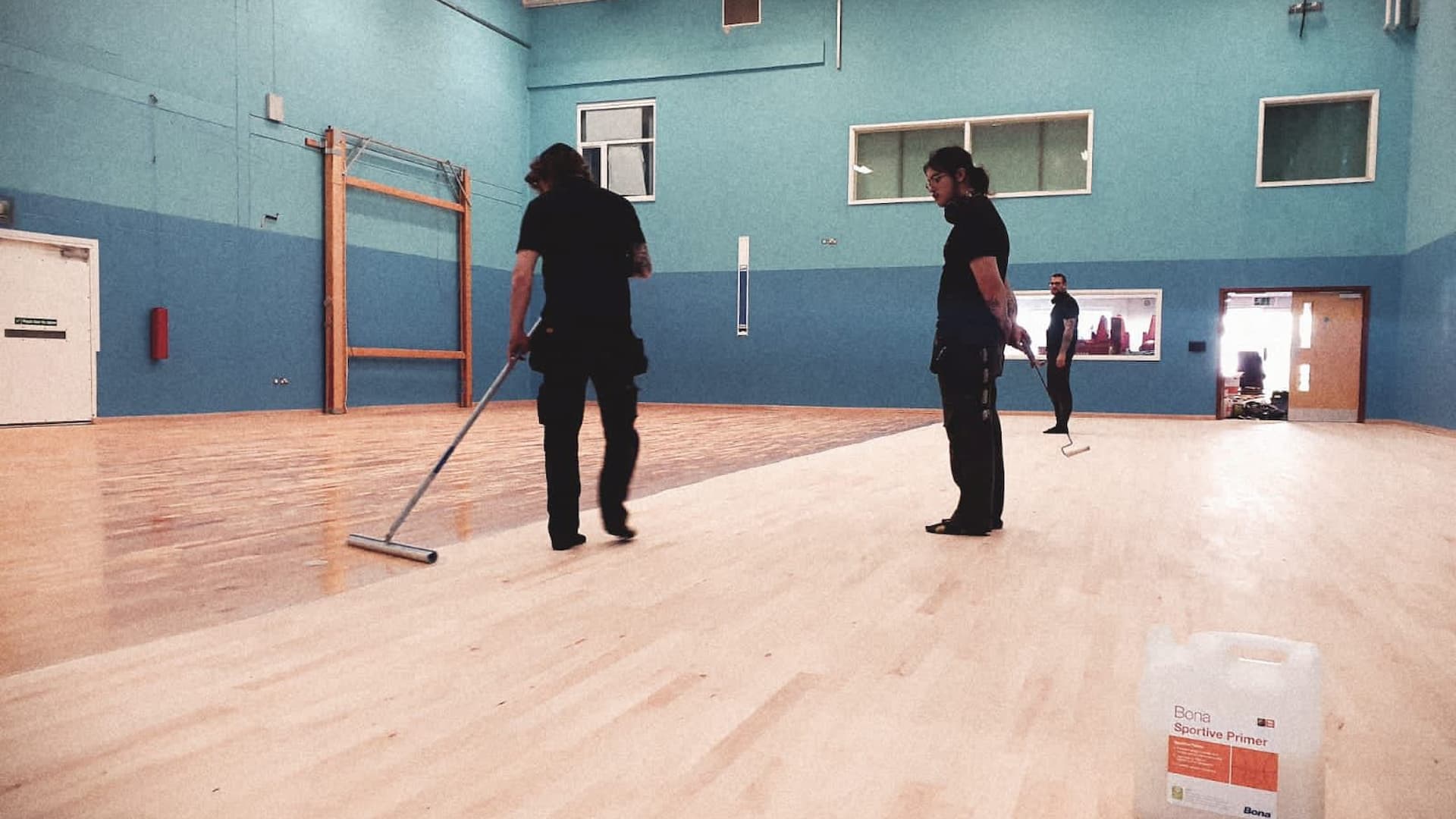
Where a slab lacks effective damp protection, vapour rises continuously into whatever is laid over it. Timber cups and lifts; adhesives release; synthetic surfaces blister. It is the single commonest cause of premature floor failure we encounter.
Liquid-applied and membrane barrier systems solve it properly, but only where the readings justify the cost. We measure first, specify accordingly, and provide the readings in writing so the decision is evidenced rather than assumed.
Suspended timber floors rely on airflow beneath them. Blocked or insufficient ventilation traps moisture in the void, and the floor above deteriorates from below while looking perfectly sound from above.
We check void ventilation as part of survey where the construction allows, and advise on clearing or improving it. Restoring a floor without addressing the ventilation that damaged it simply resets the clock.
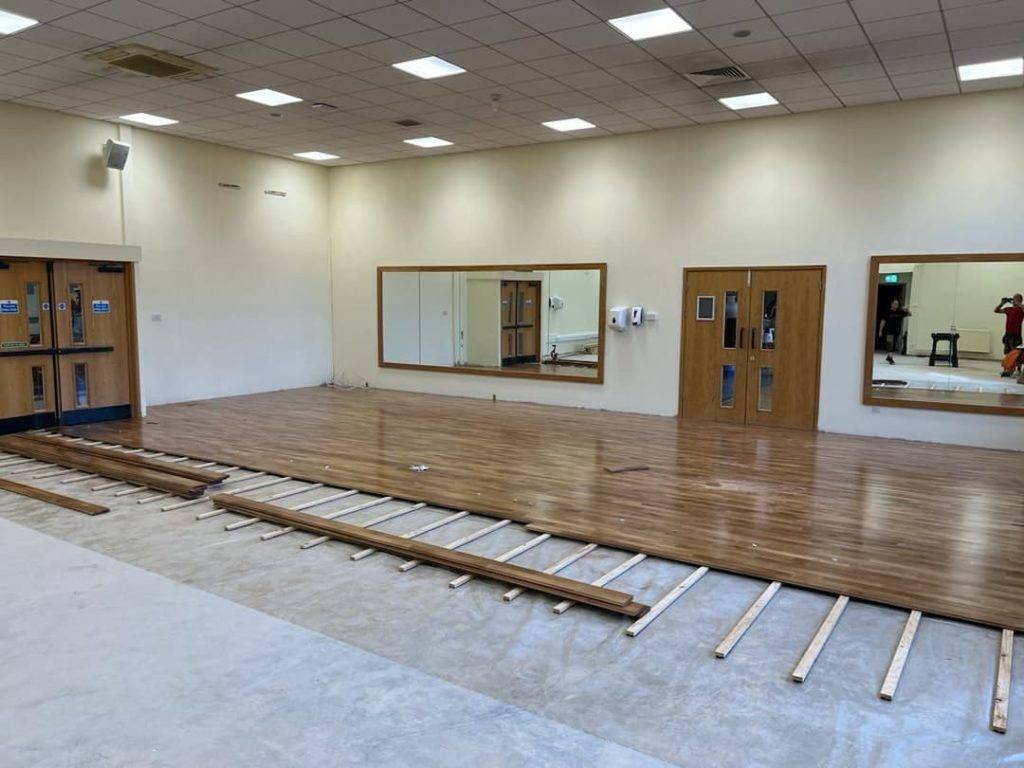
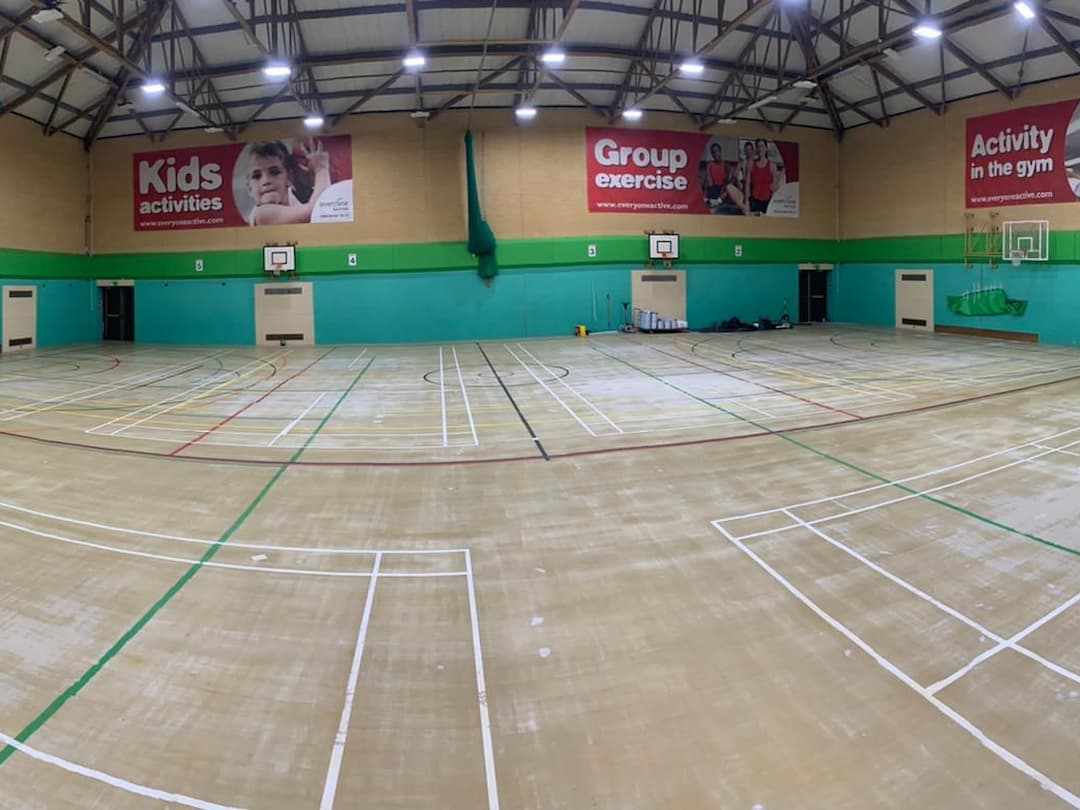
The early signs are subtle: boards cupping very slightly at the edges, a finish that will not hold in one area, or a faint musty smell in a closed hall. By the time boards are visibly lifting, the repair has become substantial.
An annual inspection with moisture readings catches it while a localised repair is still sufficient, which is a fraction of the cost of replacing a section of floor.
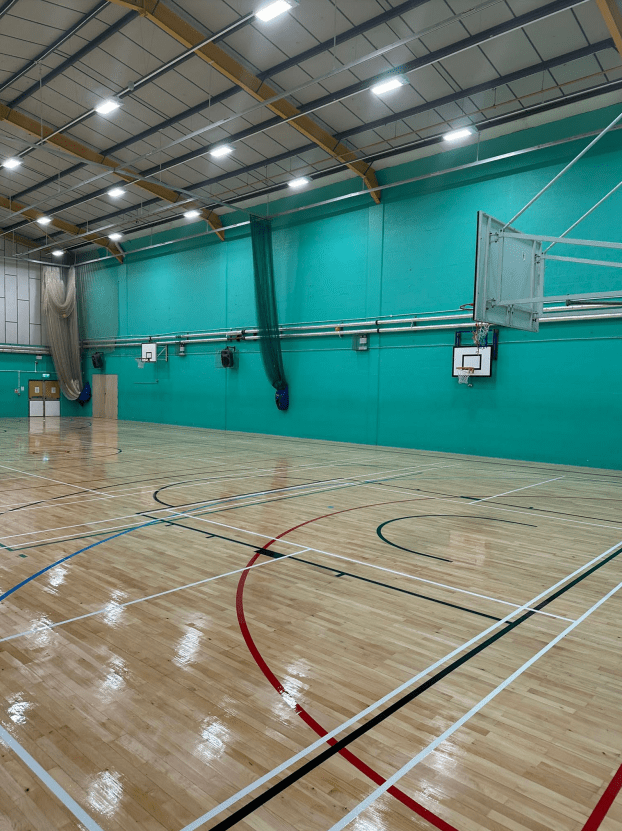
The main sports hall at Liskeard Leisure Centre had taken years of public sessions, club blocks and league nights. We delivered a complete programme of sanding, re-lining and resealing, returning the hall to service looking like a new installation.
It is a fair illustration of how we handle leisure work: one tight programme, agreed dates, and a centre back in action on schedule.
~ Matthew Evans
An outstanding company to deal with and they couldn’t have been better to work with. St George’s Ascot now has a stunning new sports hall floor and we are delighted. From quote, support, delivery and after sales, the Team has been brilliant. Thank you. 
~ James Anderson







A sports floor quotation from us is a list, not a number. Preparation, sanding, board repairs, sealing, line marking, slip testing and mobilisation are each priced on their own line so you can see what drives the total.
Area sets the base. Condition sets the preparation, which is where quotes from different contractors diverge most, because chemically stripping decades of polish or letting in thirty replacement boards takes time that a cheap price has not allowed for. Specification sets the rest: the number of coats, the seal system, the sports to be marked.
Because everything is measured at a free survey, the figure is fixed and does not grow once the old finish comes off. If money is tight, an itemised quotation shows exactly which element to defer. For Devon halls a long way from our base, travel is a stated line in the same list, not a surprise at the end.
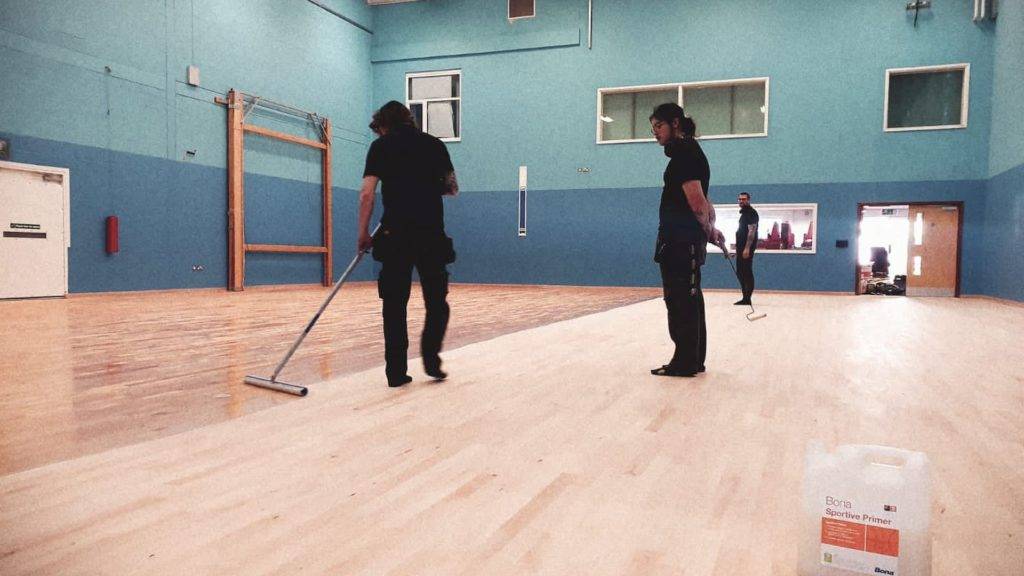

The people who survey your floor are the people who sand it, seal it and hand it back. We employ our crew directly and own every machine on site, and that is a practical arrangement rather than a slogan.
It means what was agreed at the survey is what happens on the job, because nothing is passed down a chain of subcontractors who never saw the building. It means we set the programme and hold the date, because we are not waiting on anyone else’s availability. And it means the standard on the final day matches the first.
It matters most on the specialist work. Granwood restoration, parquet repair, sprung system repairs and pendulum testing are learned over years, not picked up for one job. Many of our crew have been with the company a long time, which is why we can look at a Devon village hall floor and know what is under it.
The greenest sports floor is the one already in the building. A timber floor that is sanded and resealed every ten years keeps decades of embodied carbon in place, while replacement sends tonnes of timber, battens and bitumen to landfill and brings new material across the country.
A full sand takes off a millimetre or so of timber. A solid strip floor holds enough above the tongue for several such cycles, so a hall laid in the 1970s can still be serving in the 2040s with the right care. That is a better return than any new product offers.
The same logic runs through the smaller decisions. Screen and recoat when the seal is intact instead of sanding. Repair boards locally instead of lifting a section. Use two pack polyurethane seals with a long service life so the cycle stretches. For estates writing carbon targets into their plans, refinishing rather than replacing is the easy win.
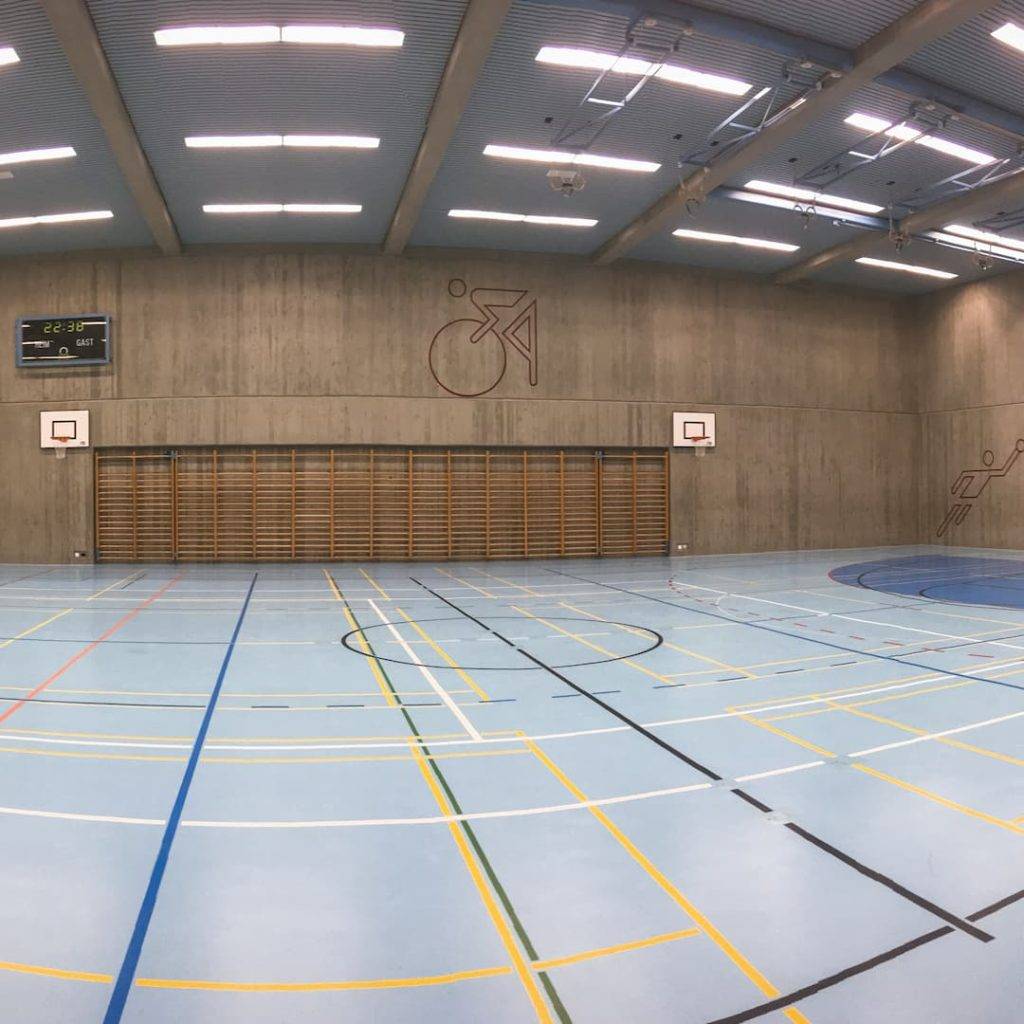

The hall is a sports floor for most of the year and something else for the rest: exam room in the summer term, polling station, craft fair, prize giving with two hundred stacked chairs. Furniture does more damage in a week than sport does in a term.
Purpose made protective covering, either interlocking tiles or heavy duty roll, laid before the desks arrive, keeps chair feet and table legs off the seal. It is not expensive against the cost of a refinish brought forward by three years.
We advise on what suits the way your hall is used, how much to buy, where to store it and how to lay it without trapping grit beneath. Across Devon’s schools and community halls the exam season leaves a distinctive pattern of scratches, and it is one of the few kinds of wear that costs nothing to prevent.
Devon brings us a broad spread of work, from leisure centre sports halls and secondary school facilities through to university sport and a very large number of community buildings.
Leisure centre halls tend to be the busiest floors in the county, and the priority for an operator is always keeping the building trading. Most of that work happens overnight or across an agreed quiet period, sealed at the end of a shift so the floor is walkable by opening time.
School and academy halls follow, with the fixed term dates that govern every school job. Summer slots book up early, and schools that ring in June are usually looking at the following year.
The third group is the rural stock: village halls, church halls and club buildings, of which the county has an enormous number. Those old timber floors are frequently in far better condition than they appear, and restoring rather than replacing them is both cheaper and better.
We plan work in the far south west as continuous blocks and bring everything with us, so the programme is thought through in advance rather than improvised on site.
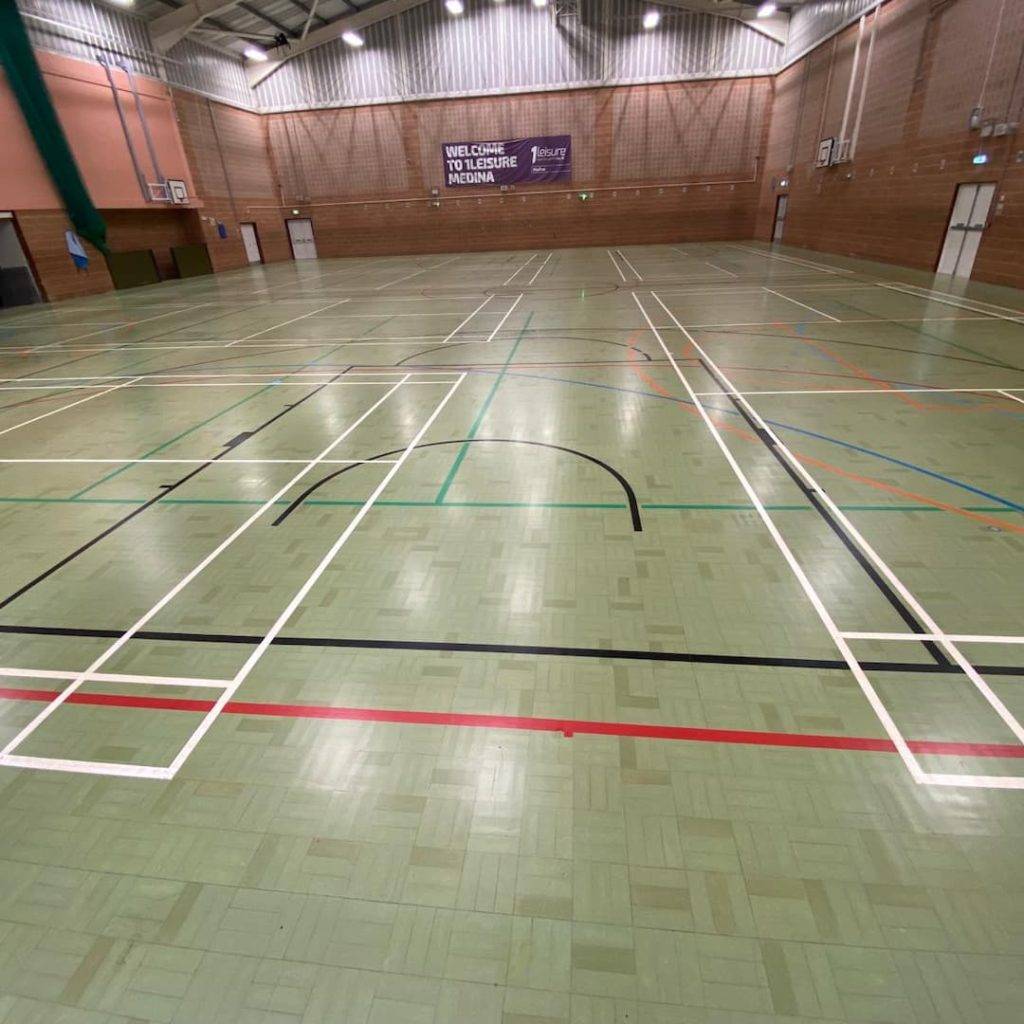
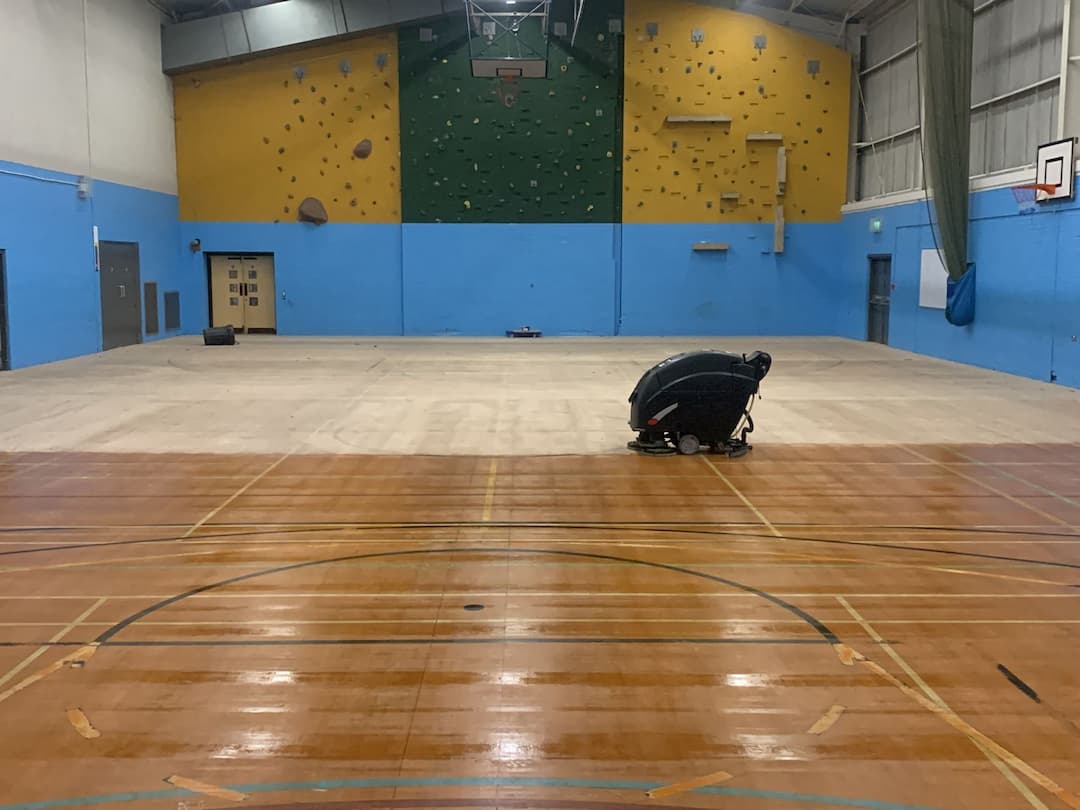
Devon enquiries have a fairly distinct character, shaped by the mix of coastal leisure facilities, rural schools and a very large number of community buildings.
Moisture comes up more here than in most regions. Older buildings, solid floors and limited damp proofing mean we take readings as a genuine diagnostic step rather than a formality. Sealing over a floor that is still giving off moisture guarantees the finish will fail, and it is one of the few mistakes in this trade that cannot be recovered cheaply.
The second recurring issue is halls that are simply overdue. A village hall or school hall that has gone twenty years without a refinish usually still has plenty of board depth left, and the transformation is dramatic, but the staining in the traffic lanes may not fully lift.
The third is leisure centre floors that need catching on a cycle rather than a rescue. A screen and recoat every two to three years keeps those off the replacement list entirely.
Players notice a dead spot before anyone else does. The ball comes up short in one patch, a landing feels harder than it should, or a board creaks along one line. All of it points below the surface.
Under the boards, pads compress and perish, battens crack where equipment has been dragged, and cradles work loose as fixings corrode. Each failure leaves an area that no longer springs back with the rest of the floor. Ball rebound, which BS EN 14904 sets at a minimum of 90 per cent of the bounce on concrete, drops in exactly that patch.
Sanding changes nothing here. We lift boards locally, replace the failed components with matching parts, refit the boards and carry on with the refinish. A handful of these repairs during a sand and seal is often what separates a hall that looks new from one that plays new.
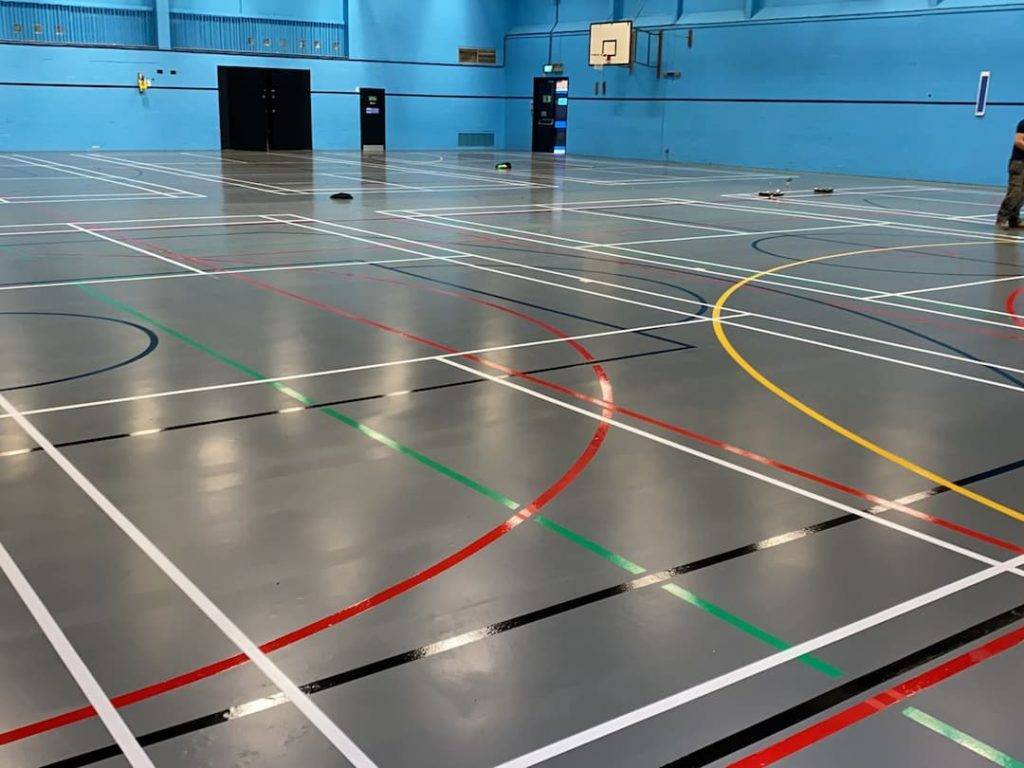
Yes. Granwood blocks are a wood flour and cement composite in a bitumen bed and must never be sanded like timber. We prepare the surface carefully and apply a modified epoxy coating with new markings, which returns an even, bright floor for far less than replacement.
Light foot traffic after roughly 24 hours, and equipment, posts and trolleys after 72 hours or more. A cold hall needs longer. We put the exact times for the seal used in writing and recommend the doors stay locked until then.
Yes. We scale your artwork, show you the layout, and paint it between coats of seal so it sits under the final lacquer and wears evenly with the floor. Doing it during a refinish is far cheaper than a separate visit.
We survey early, order materials ahead, staff the job to finish inside the dates and treat cure time as working days in the programme. The reopening date is confirmed in writing before we start. Summer slots fill early, so book in the winter term.
If the seal is worn but still intact across the whole floor, yes, and it takes a few days. If the lacquer has worn through to bare timber in the busy lanes, a full sand is needed. We tell you which at the survey.
Yes. A full sand removes old markings completely, which is the moment to drop any sports nobody plays and set the rest out from governing body dimensions. Where a full sand is not needed, we can sometimes seal over old lines instead.
The boards and blocks are not the concern, but bitumen adhesive beds laid before the mid 1980s can contain it. We treat every bitumen bedded floor as suspect until a sample has been tested and keep the bed undisturbed.
Site specific risk assessments and method statements before we start, COSHH data for every product, insurance certificates with the quotation, and an enhanced DBS check for every member of the crew. We sign in and follow your safeguarding arrangements.
Book a free survey of your sports floor anywhere in Devon. We take the readings, measure the timber and give you a fixed written price with a date that holds. Call 01823 674562 or send us a message.