
Flooring Professionals To The Leisure Industry
Courtship Flooring is a commercial sports flooring contractor working in Hampshire and across the UK. We work across the county on installation, refurbishment and the recurring maintenance that keeps both worthwhile.
Established in 1987 and still family-run, we install, refurbish, sand, seal, mark and maintain indoor sports floors for schools, academies, colleges, universities, leisure trusts, local authorities and clubs. Every stage is carried out by our own team. We do not undertake domestic work; that is handled by our sister company Ryan’s Restorations.
Projects in Hampshire are carried out by the same in-house team that delivers all of our sports hall flooring work across the UK.
Overnight/Weekend Installations
Professional Cleaning Demonstrations
Squash Court Maintenance
Recommended Cleaning Products
Professional Pendulum Slip Testing
Deep Clean & Reseal Service
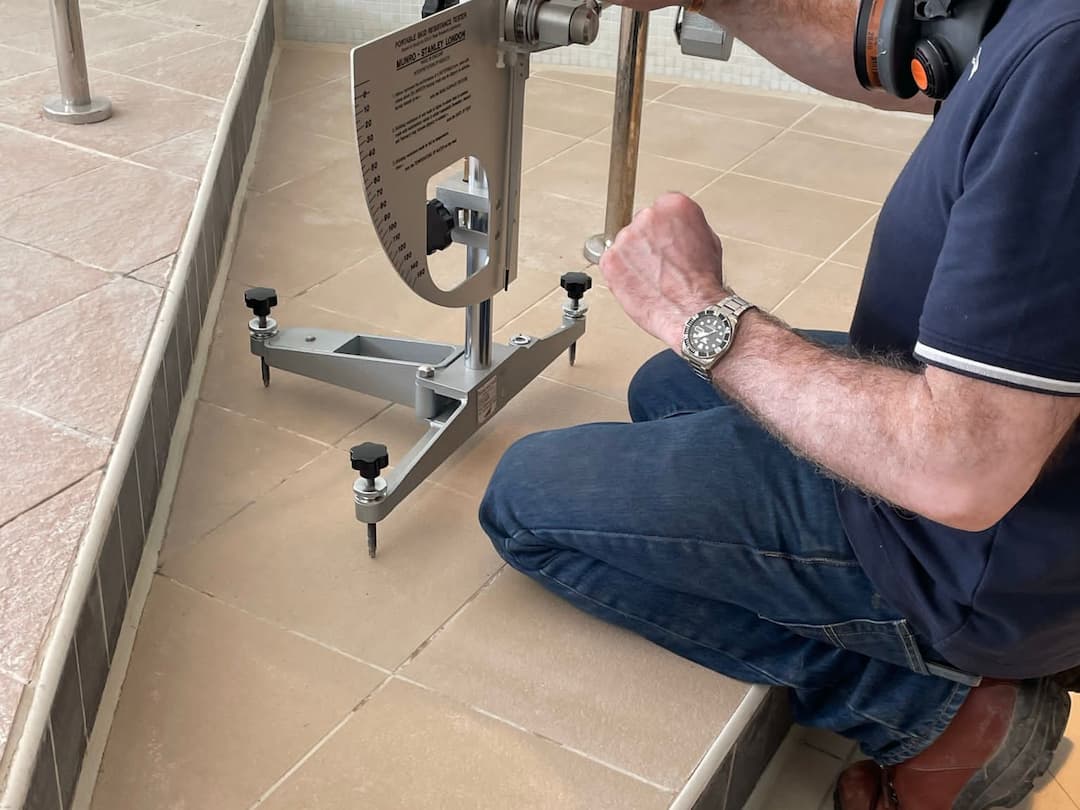
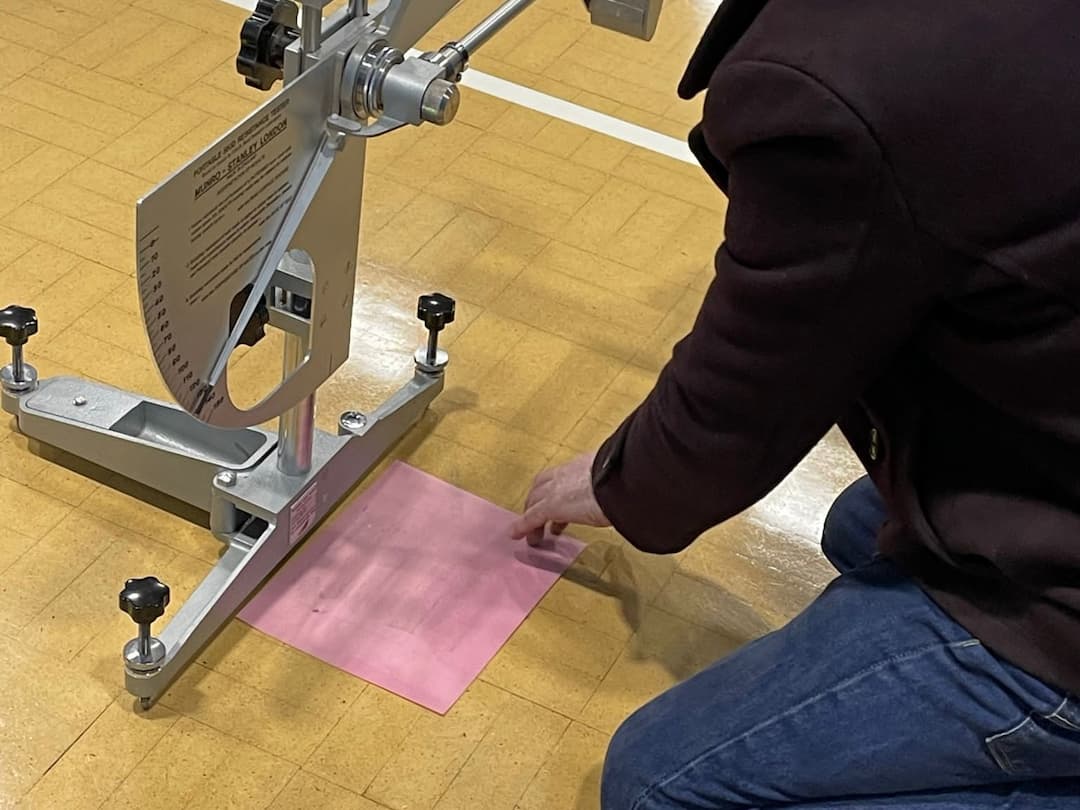
A pendulum test measures how much a rubber slider is slowed as it sweeps across the floor, producing a Pendulum Test Value. A PTV of 36 or above indicates low slip potential; below that, the risk rises sharply.
Testing to BS 7976-2 is what the HSE recognises and what an insurer or investigation will reference. We record values across multiple positions in both wet and dry conditions and provide a written report, because a single reading in one corner proves very little.
A low reading rarely means the floor is worn out. By far the commonest cause is cleaning residue: over-strength product, incorrect dilution or the wrong pH leaves a film that reduces friction across the whole surface.
That is good news, because a deep clean costs a fraction of a refurbishment. Where the seal itself has broken down, a recoat restores the surface. Testing before and after tells you objectively which of the two you were dealing with.
Anyone responsible for a public or educational facility carries a duty of care, and evidence matters more than assurance if something goes wrong. An annual test creates a documented record showing the surface was monitored and acted upon.
Booked alongside a deep clean and condition inspection in a single visit, it costs very little and keeps the file current rather than assembled retrospectively under pressure.
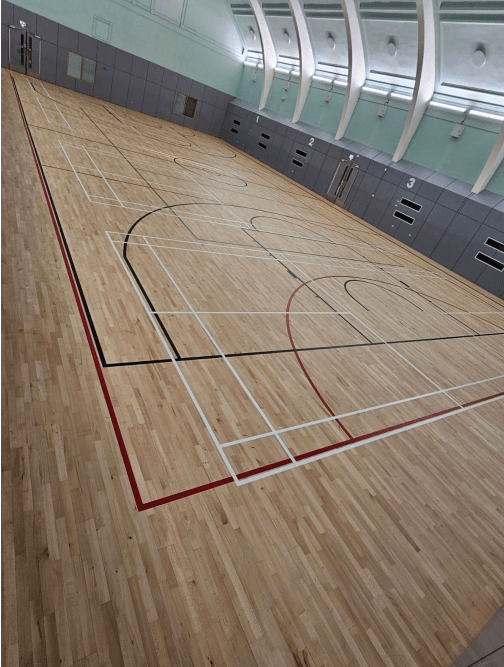
Years of heavy use had left the sports hall floor at Aston University dull, patchy and worn along every busy lane. Our team sanded it back to bare timber, made good the damage, then rebuilt the finish with a durable seal and a full set of new markings, working around a demanding academic timetable.
The before and after photographs show what a properly executed refurbishment delivers: a floor that looks and plays like new, for a fraction of replacement cost and without weeks of disruption.
~ Matthew Evans
An outstanding company to deal with and they couldn’t have been better to work with. St George’s Ascot now has a stunning new sports hall floor and we are delighted. From quote, support, delivery and after sales, the Team has been brilliant. Thank you. 
~ James Anderson







A tired looking floor does not always need taking back to bare timber, and knowing which treatment it needs is where the money is saved or wasted.
A screen and recoat abrades the existing seal lightly and applies a fresh top coat. It brings grip and sheen back, takes a few days, and costs a fraction of the alternative. It is the right call whenever the lacquer is worn but unbroken across the floor.
A full sand removes everything to bare board and rebuilds the finish from the first coat. It is needed once the seal has worn through in the traffic lanes and dirt is sitting in open grain, or when boards need replacing and markings need setting out again. Roughly every ten years is typical for a busy Hampshire hall, and every full sand spends timber that does not come back.
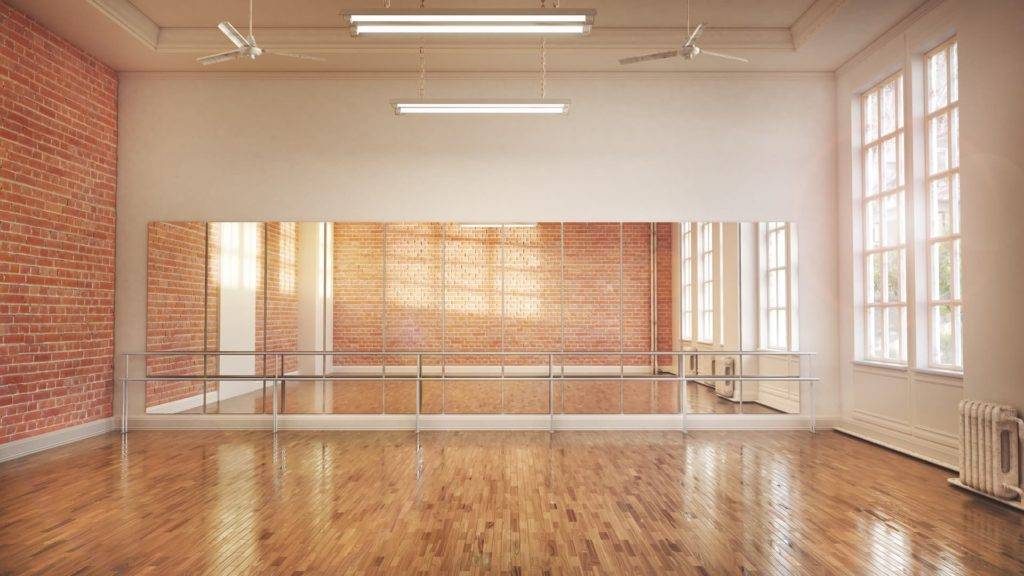
The boards are the part you see, but the system beneath them decides how the floor plays. A sprung, area elastic floor carries the boards on battens over resilient pads or cradles, so a landing is absorbed across a wide zone. That is the construction BS EN 14904 tests for shock absorption, deformation and ball rebound.
A point elastic build gives only where the load is applied and suits dance, fitness and mixed studio use. Combined systems layer the two and cost more in height and money.
Above the structure, solid strip beech or maple carries a deep wear layer that will take many refinishes. Engineered board is more stable where humidity swings but has less timber to sand. The perimeter matters as much as any of it: a ventilated expansion gap around the hall is what lets the floor move without lifting in the middle.
University sports halls are never quiet. Term brings teaching, club training and league nights. The summer brings conferences, residential courses and external hire that often earn more than term time use. The long shutdown a school relies on simply does not exist.
So the window is short and fixed, and we plan to it. Survey early, agree the programme in writing, order materials ahead, staff the job to finish inside the dates and build the cure time into the schedule as working days.
A campus estate also tends to hold several floors built decades apart: a main hall, studios, squash courts, a fitness suite. Hampshire’s universities are typical in that respect. A condition survey across all of them, then a phased programme that takes each space out of use at its own quietest point, is far cheaper than dealing with each floor as it fails.
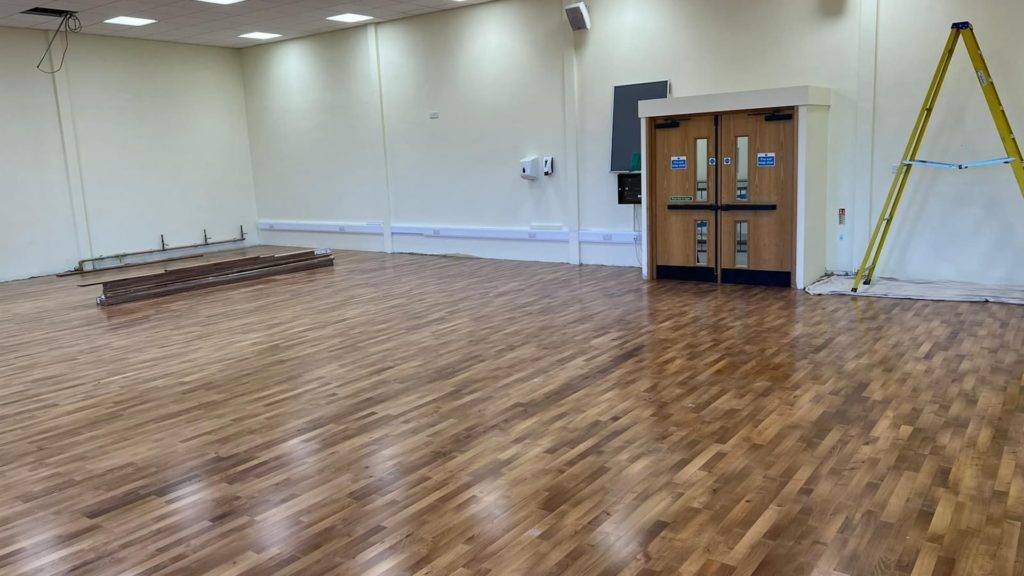

More sports floors are ended by water than by wear. It comes up through a slab that never had an effective membrane, in through a roof or a radiator, or out of the air in a building that swings between damp and dry.
We take readings in the boards and the slab before quoting, because sealing over a damp floor guarantees the finish will fail and the cost of finding out afterwards is a second job. Cupped boards with raised edges usually point to moisture from below. A floor doming in the middle usually means it has expanded with nowhere to go.
Where a slab is giving off moisture and a new floor is planned, a liquid applied or sheet damp proof barrier goes down first. Where the cause is a leak, we tell you to fix the building before we touch the floor. In older coastal Hampshire buildings, that check is never skipped.
Hampshire is one of the areas we work in most, and it gives us the full range: school and academy sport, leisure operator facilities, university sport, clubs and community halls.
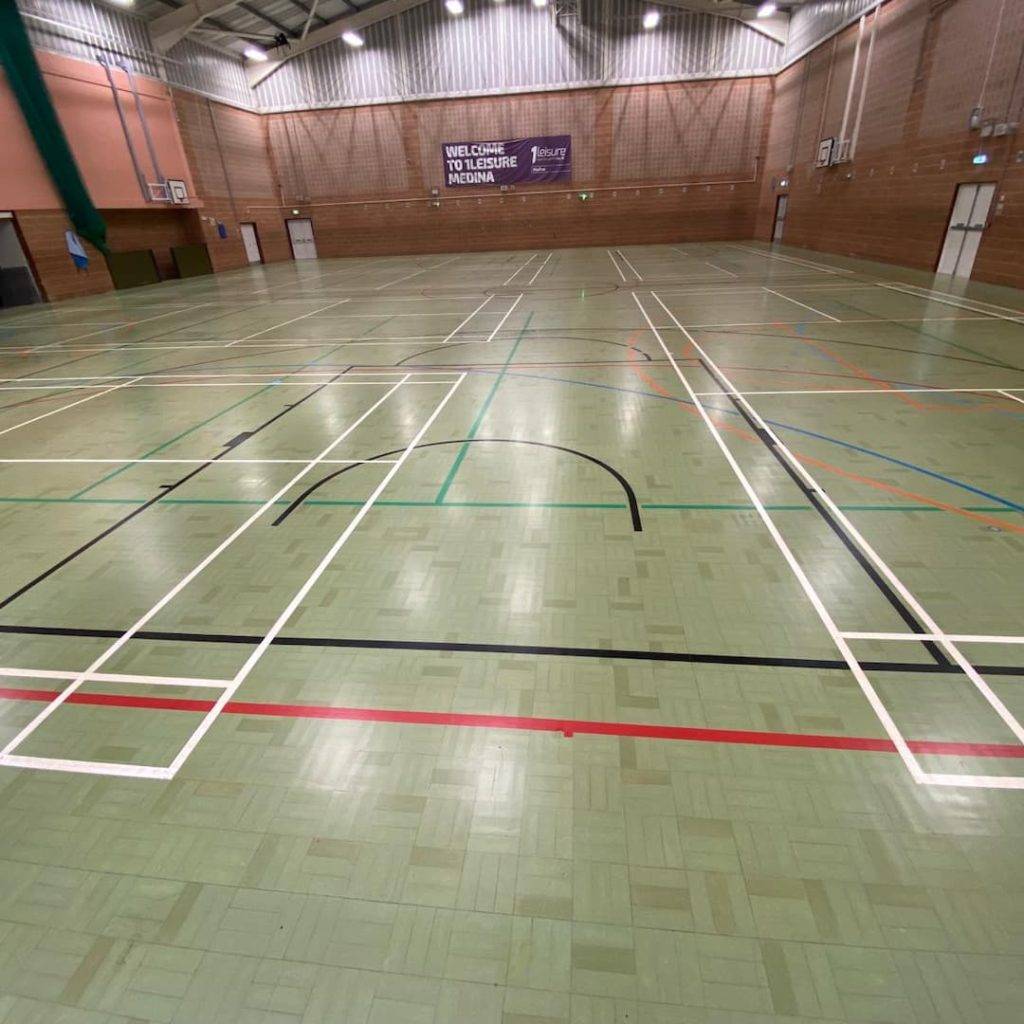
Leisure centre work is a substantial part of it. We completed the refinish at Medina Leisure Centre, and that project illustrates the type well: a heavily booked sports hall, an operator who could not afford to lose the income, and a programme built around the centre timetable rather than ours. Dust control mattered particularly there, because leisure buildings share air handling between spaces and members notice immediately.
School and academy halls follow, with the fixed term dates that govern every school job, and summer slots that book up a long way ahead.
Independent school sport, squash courts and club facilities make up much of the rest. Squash in particular needs a matt high grip specification rather than a general sports lacquer.
Because this is close to our base we can survey quickly and often fit smaller jobs around larger programmes, which helps on both cost and timing.
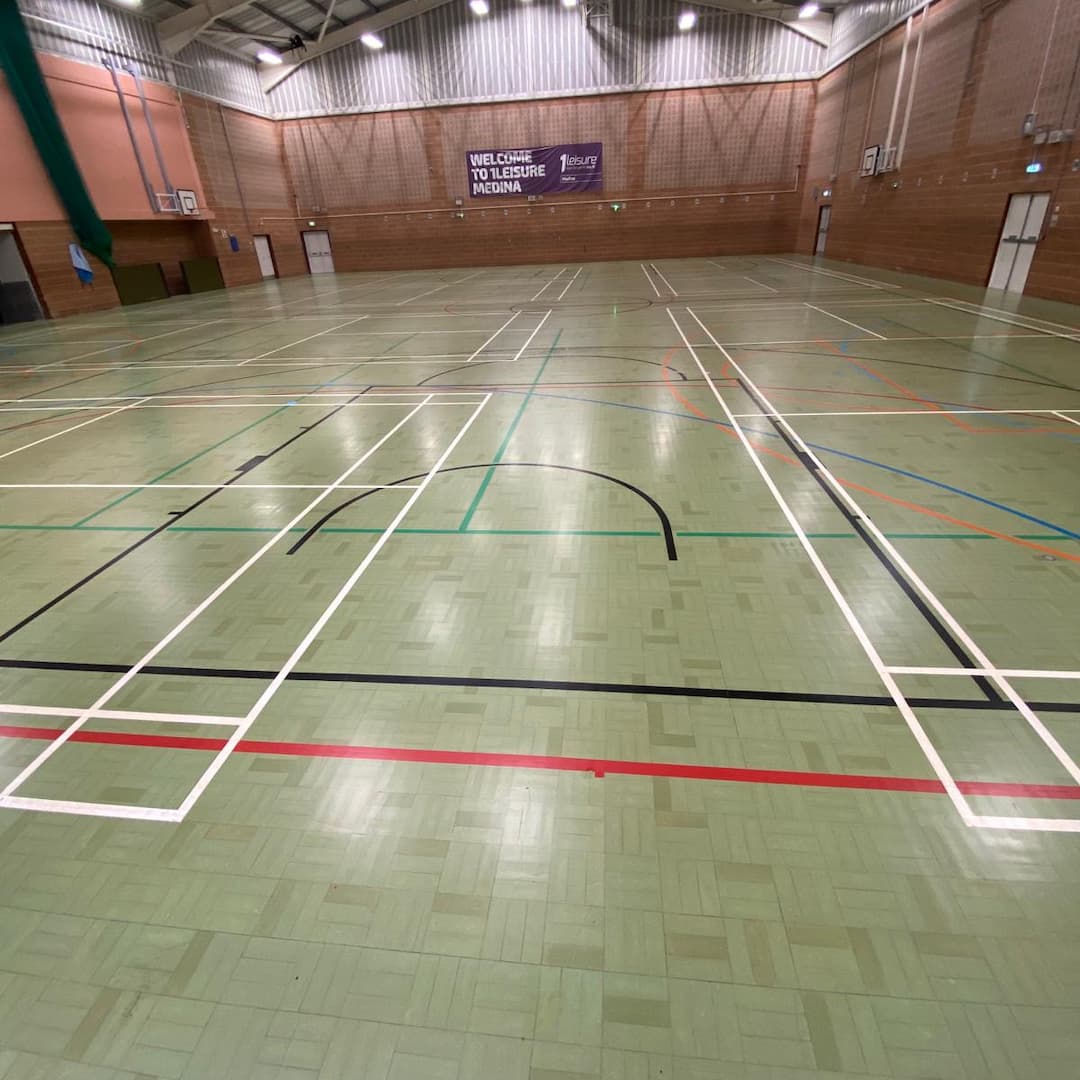
Hampshire is one of our busiest areas and the enquiries cover the full range, but three come up repeatedly.
Leisure operators call about programme as much as condition. The floor needs doing, the centre cannot afford a fortnight closed, and the question is how to fit the work around a booking diary. The answer is usually overnight working, sealed at the end of a shift so the hall is walkable by opening.
Schools call about markings and wear together, because both become obvious at the same time. Doing them in one visit during a holiday is considerably cheaper than treating them as separate jobs.
Clubs and squash facilities call about grip. A court or hall that has gone slick through the busiest area needs the right matt high grip system, and it is a safety matter rather than a preference.
Being local, we can usually get to a survey quickly, which helps when something has become urgent.
Nearly every school hall has a stage at one end, and it is usually in a worse state than the floor below it. Scenery, staging blocks, stacked chairs and lighting stands are dragged across it several times a year, and it rarely gets cleaned the way the hall does.
A stage is often a different timber and a different construction, sometimes hollow beneath for resonance, so it is sanded with more care and finished differently. A matt or dead matt seal stops stage lighting reflecting into the audience and hides the scuffing that productions leave. Some venues want a surface that can be painted for a show, which changes the specification.
We recommend doing the stage in the same visit as the hall. One mobilisation costs less than two, the finish matches, and the part of the room that needed it most gets done.
Yes. Granwood is a composite block set in bitumen and cannot be sanded like timber. We prepare it carefully and apply a modified epoxy coating system with fresh markings, which brings a dull block floor back to a bright, even surface for far less than replacing it.
Light foot traffic after around 24 hours and equipment after 72 hours or more, depending on the seal and the temperature of the room. We confirm the times in writing and suggest the hall stays locked until they pass.
Yes. Logos, coloured keys and zones are painted between coats of seal from your own artwork, so they sit under the final lacquer and wear at the same rate as the floor. It costs least while the floor is open for refinishing.
Yes. The quotation is itemised, so a bursar or estates manager can take the sanding and sealing in one year and the stage or relining in the next. Our survey report ranks each item by urgency so nothing unsafe is deferred.
Regularly. We sand and seal between the last session and the first, place the noisiest work when the building is empty and time the final coat so the hall is walkable by opening. The additional labour cost is stated in the quotation.
Site specific risk assessments and method statements before we start, COSHH data for every product, insurance certificates with the quotation, and enhanced DBS checks for every member of the crew. We sign in and work within your safeguarding arrangements.
A typical single court hall takes one to two weeks from the first machine to the final coat, plus cure time. Bigger halls and those needing board repairs take longer. You get a day by day programme with the quotation.
The boards and blocks are not the concern, but bitumen adhesive beds laid before the mid 1980s can contain asbestos. We treat any bitumen bedded floor as suspect until a sample is tested, and plan the work so the bed is left undisturbed.
Book a free survey of your sports floor in Hampshire. We visit, measure and take readings, then give you a plain written assessment with a fixed price and a date we can hold. Call 01823 674562 or send us a message.