
Flooring Professionals To The Leisure Industry
Courtship Flooring is a commercial sports flooring contractor working in the Highlands and across the UK. Work here is planned as a concentrated residency, with everything surveyed, agreed and priced before we travel.
Established in 1987 and still family-run, we install, refurbish, sand, seal, mark and maintain indoor sports floors for schools, academies, colleges, universities, leisure trusts, local authorities and clubs. Every stage is carried out by our own team. We do not undertake domestic work; that is handled by our sister company Ryan’s Restorations.
Overnight/Weekend Installations
Professional Cleaning Demonstrations
Squash Court Maintenance
Recommended Cleaning Products
Professional Pendulum Slip Testing
Deep Clean & Reseal Service

Remote facilities are routinely told a job is not worth a contractor’s time. We disagree, and our record across Cornwall, Cumbria and the north of Scotland demonstrates it.
The method is simply thorough preparation: full material schedules, contingency stock, power and access confirmed in advance, and the entire programme completed in one visit. Nothing is left waiting on a second trip.
Where a community has one substantial building, its floor takes everything: sport, ceilidhs, meetings, performances and occasionally emergency use. No single surface excels at all of that.
We specify for the real pattern of use, recommend protective covering for non-sporting events, and give honest advice on where the compromise sits rather than claiming there is not one.
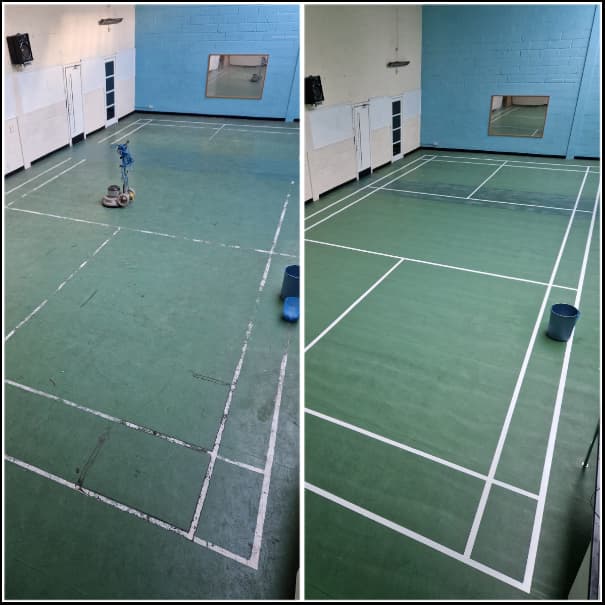
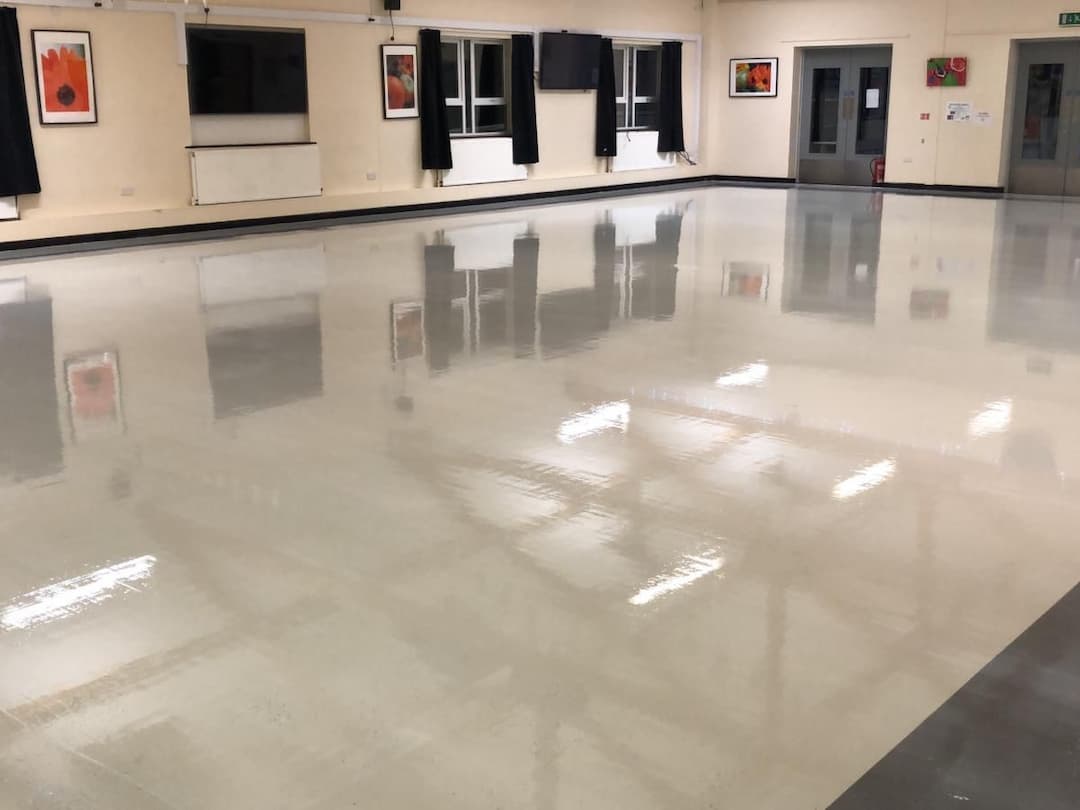
Where a crew is on site anyway, everything worth doing should be done. Deep cleaning, condition inspection, repairs, relining and slip testing can all be completed alongside the main work at marginal extra cost.
We suggest that combination openly, and where neighbouring facilities book together the mobilisation is shared and everybody pays less.
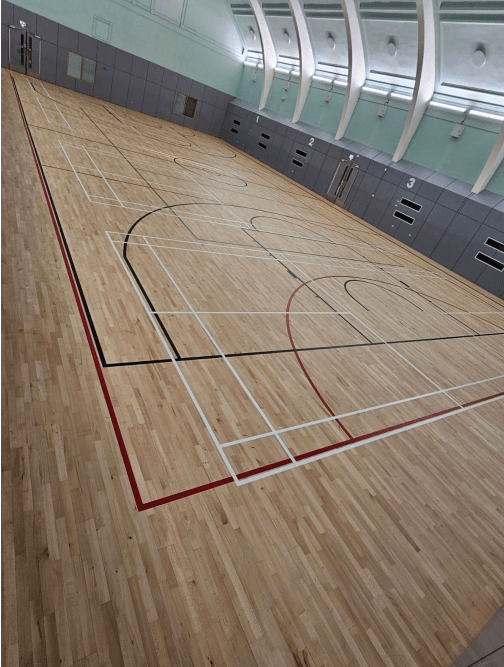
Years of heavy use had left the sports hall floor at Aston University dull, patchy and worn along every busy lane. Our team sanded it back to bare timber, made good the damage, then rebuilt the finish with a durable seal and a full set of new markings, working around a demanding academic timetable.
The before and after photographs show what a properly executed refurbishment delivers: a floor that looks and plays like new, for a fraction of replacement cost and without weeks of disruption.
~ Matthew Evans
An outstanding company to deal with and they couldn’t have been better to work with. St George’s Ascot now has a stunning new sports hall floor and we are delighted. From quote, support, delivery and after sales, the Team has been brilliant. Thank you. 
~ James Anderson







The floor with the smallest footprint is the one already in the building. Replacing a timber sports hall floor means felling, milling and transporting a new one, then sending the old boards to landfill. Refinishing the existing floor avoids all of it.
A well built sprung floor takes five or six full sands across its life and any number of recoats in between, so the same timber can serve a Highland school for half a century. In a region where every delivery covers a long distance, keeping what is there is also the practical option.
The coatings have moved on as well. Modern water based two pack seals carry far less solvent than the finishes of twenty years ago, which is better for our crew and for the building. Where a floor does have to go, timber is renewable and sound boards can often be recovered for reuse.
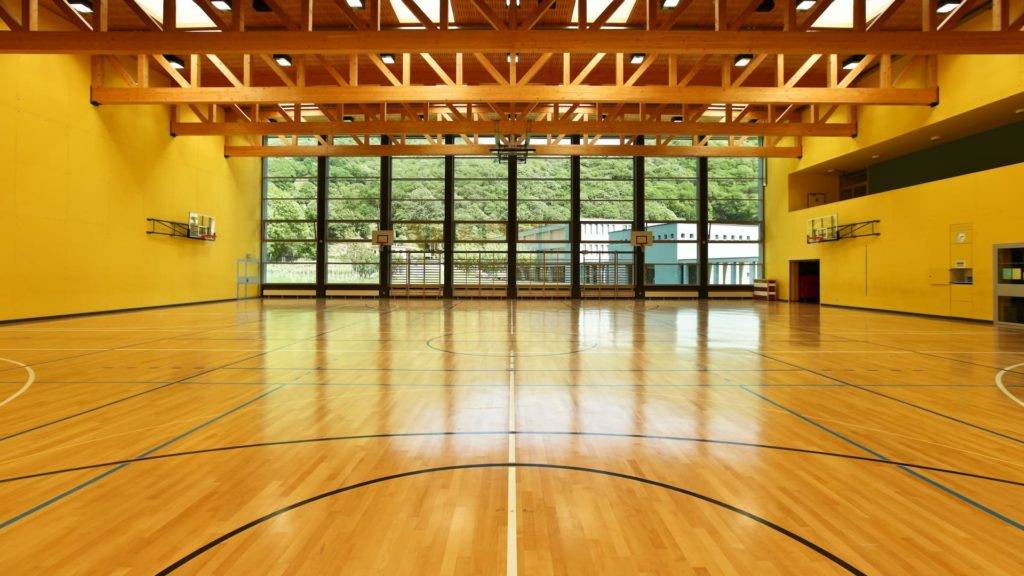

In the Highlands we may not pass a hall again for two or three years, so the routine the caretaker follows matters more than anywhere else. The sheet we leave at handover fits on one page.
Dry mop every day the hall is used, to lift grit before it acts as sandpaper. Damp mop with a neutral cleaner made for sealed sports floors, pick the water up and let it dry. Wipe spills as they happen. Keep the entrance mats clean, because a saturated mat sheds as much grit as it catches.
What to leave alone is shorter still. No polish, no wax, no spray restorer, nothing that promises a shine. Those products build up, make the surface slippery and have to be stripped off chemically. If a scrubber drier is used, we set it up with your staff before we leave so the water is recovered and not left standing.
The board on top of a sprung system is a decision in its own right. Solid strip, usually maple, beech or oak, is one piece of timber with a deep wear layer above the tongue. It takes many full sands and it is what most halls built before the 1990s are laid with.
Engineered board has a thinner layer of hardwood bonded to a stable core. It moves less with humidity, which is useful in a building that stands cold and empty for weeks, and it can be installed faster. The trade off is a shallower wear layer, so it has fewer sands in it and the recoat cycle has to be kept to.
For a Highland hall the choice usually comes down to how the building is heated and how often we can realistically return. We set out both options with their expected life so you can weigh them.
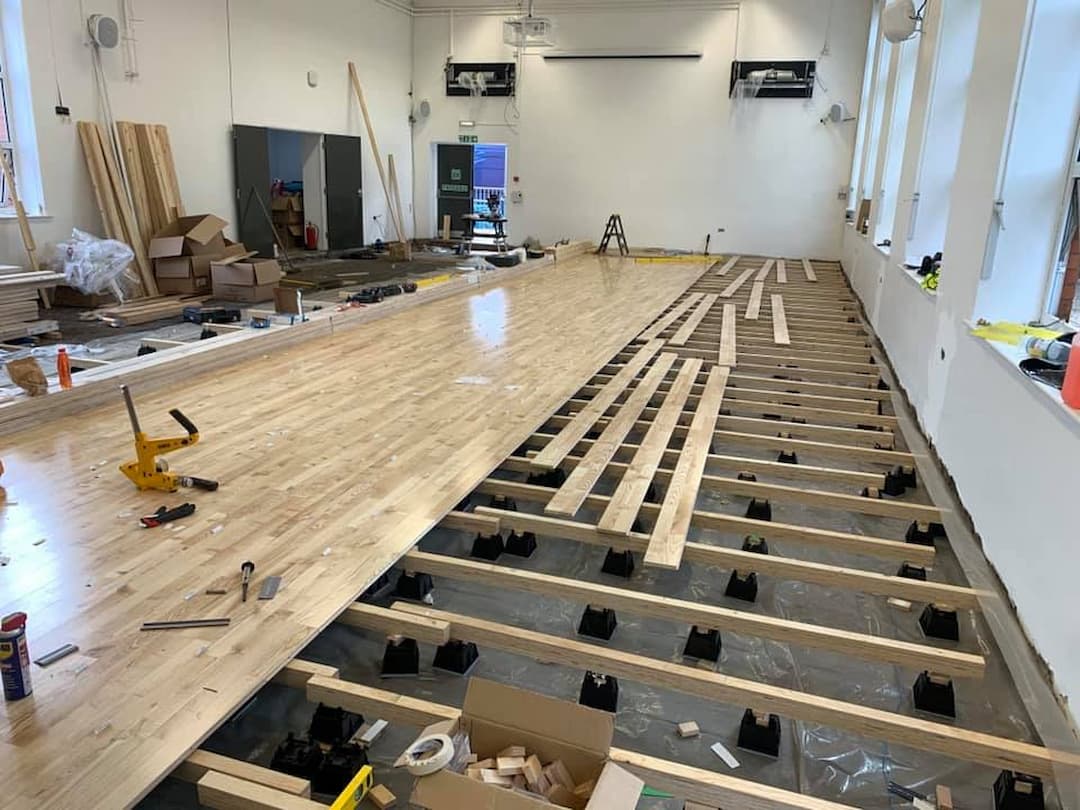
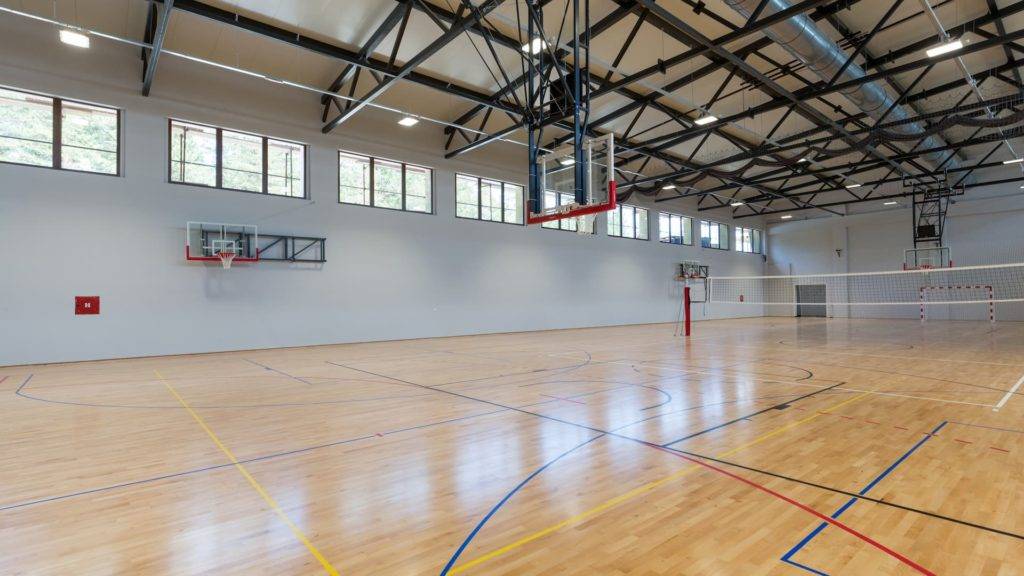
Highland work reaches us from school sports halls, community leisure facilities and a large number of village and club buildings, and the planning matters more here than almost anywhere.
Journeys within the region take considerably longer than the map suggests, so we programme this work as continuous blocks and bring everything we need with us: machinery, abrasives, coatings and spares. Nothing can be collected in the afternoon, which means the job has to be thought through completely before we set off. In practice that makes remote projects more tightly planned than local ones, not less.
School halls are the largest group, and in many communities the school hall is the only substantial indoor sports space, so it takes curriculum sport, club training and community use on the same floor.
Community and village halls follow, and those old timber floors usually have far more life left than anyone expects.
Where several facilities in a region are considering work, sequencing them into one trip makes a genuine difference to cost. It is always worth mentioning if you know of another.
Highland enquiries have a particular character, because the halls here do more work than their timetables suggest and get looked at less often.
The most common situation is a school hall that has gone fifteen or twenty years without a proper refinish, largely because nobody local does this work and it has never been easy to arrange. Those floors usually have plenty of board depth left and restore dramatically, though staining in the traffic lanes may not fully lift after that long.
The second is community halls serving a wide area, where the damage is fine scoring from chairs and tables under decades of polish rather than concentrated sports wear.
The third is moisture, which matters more in buildings that are unheated for long periods and then used intensively. We take readings as a genuine diagnostic step, because a finish applied over a damp floor will fail whatever else is done correctly.
Sequencing several halls into one trip makes all of this considerably more affordable.

Yes. Netball and badminton sockets that have worked loose or corroded are lifted, the timber around them made good and new fittings set flush before the floor is sanded and sealed. Doing it in the same visit avoids a second journey north, so list any that move at survey.
Every two to three years in a busy hall, because baselines and service areas wear before anything else. Lines applied between coats of seal last as long as the finish, so booking the reline with a screen and recoat keeps the floor and the markings on the same cycle.
Almost always. Granwood blocks are a dense wood and cement composite that outlast timber, and a grey, patchy floor usually needs only preparation and a fresh epoxy coating with new markings. We test the bitumen bed beneath for asbestos first and leave it undisturbed wherever we can.
Yes, before we set off. Job specific risk assessments and method statements, COSHH data for each product, insurance certificates and enhanced DBS details for the crew go to the school office in advance. On site we sign in daily and keep to the agreed working area.
Yes. We scale your artwork, agree a layout drawing and paint the crest between coats of seal so it wears with the floor instead of scuffing off the top. It costs very little during a refinish and considerably more as a separate trip, so decide before we travel.
Walk on it in clean shoes after 24 hours. Sport, benches, mats and equipment wait 72 hours or more. A cold hall cures more slowly, so keep the heating on at a low steady level for the first week. We write the dates into the handover note.
No. Our machines run on sealed vacuum extraction, the hall is screened and the doors and vents are taped before the first pass. The hall itself is dusty while we are in it. Corridors and classrooms around it carry on as normal, and we agree the isolation plan with your caretaker.
The sub-structure under that area has lost its spring: a perished pad, a cracked batten or a cradle that has dropped. Resealing the top does nothing for it. We lift the boards locally, replace the failed parts and re-lay the timber before the refinish, and we bring spares with us.
Book a free survey of your hall floor anywhere in the Highlands. We will tell you what it needs, quote a fixed price and plan the whole job for one visit. Call 01823 674562 or send us a message.