
Flooring Professionals To The Leisure Industry
Courtship Flooring is a commercial sports flooring contractor working in Lancashire and across the UK. A good deal of our work involves older and converted buildings where what lies beneath the floor is undocumented.
This is all we do, and we have been doing it since 1987. Installation, restoration, sanding, sealing, line marking, slip testing and maintenance for commercial and institutional buildings, delivered without subcontractors. Residential projects go to our sister company, Ryan’s Restorations.
Everything set out on our main sports hall flooring page is available to schools, leisure centres and clubs in Lancashire.
Overnight/Weekend Installations
Professional Cleaning Demonstrations
Squash Court Maintenance
Recommended Cleaning Products
Professional Pendulum Slip Testing
Deep Clean & Reseal Service
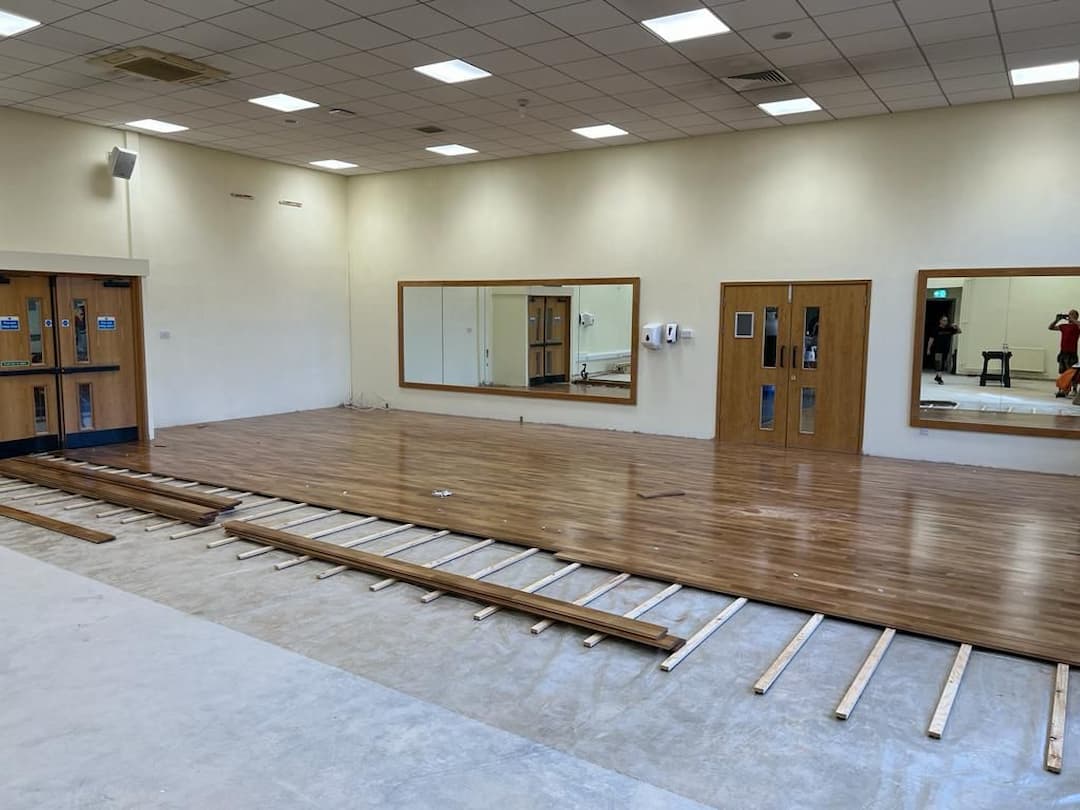
Converted mills, church halls and older civic buildings frequently have floors laid over structures nobody documented. Assuming what is underneath is how contractors end up back on site six months later.
We investigate rather than assume: moisture readings, level surveys and, where necessary, opening up a small area to establish the actual build-up before quoting. It occasionally produces unwelcome news, but it produces it before you have committed rather than afterwards.
Older buildings rarely offer a level substrate, and laying a sports floor over an uneven one produces dead spots, uneven wear and, in extreme cases, a failed installation.
Levelling compounds, packing and sub-floor correction are all part of the work where the survey shows they are needed. They are itemised in the quotation rather than appearing as a variation once work is under way.
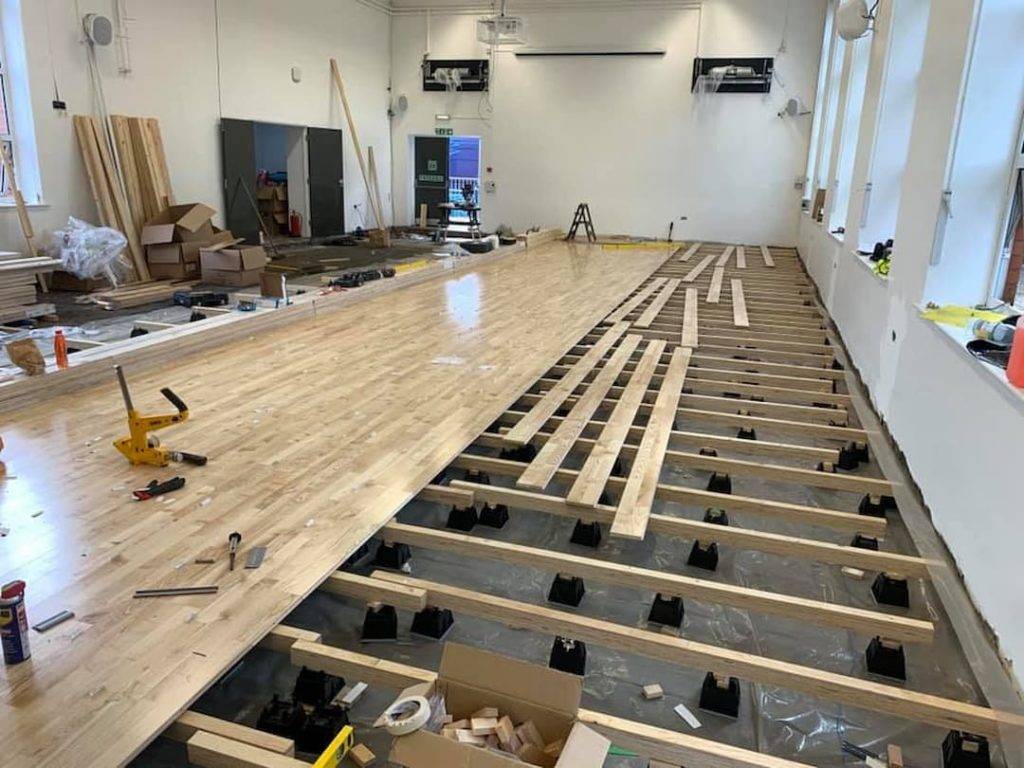

Fitting a new floor into an existing building is a different exercise from a new build. Access, height, thresholds, existing services and the need to keep the rest of the building operating all constrain what is possible.
We survey those constraints first and specify a system that fits them, including low-profile sprung construction where height is tight. The result performs properly rather than being a compromise discovered on the first day.
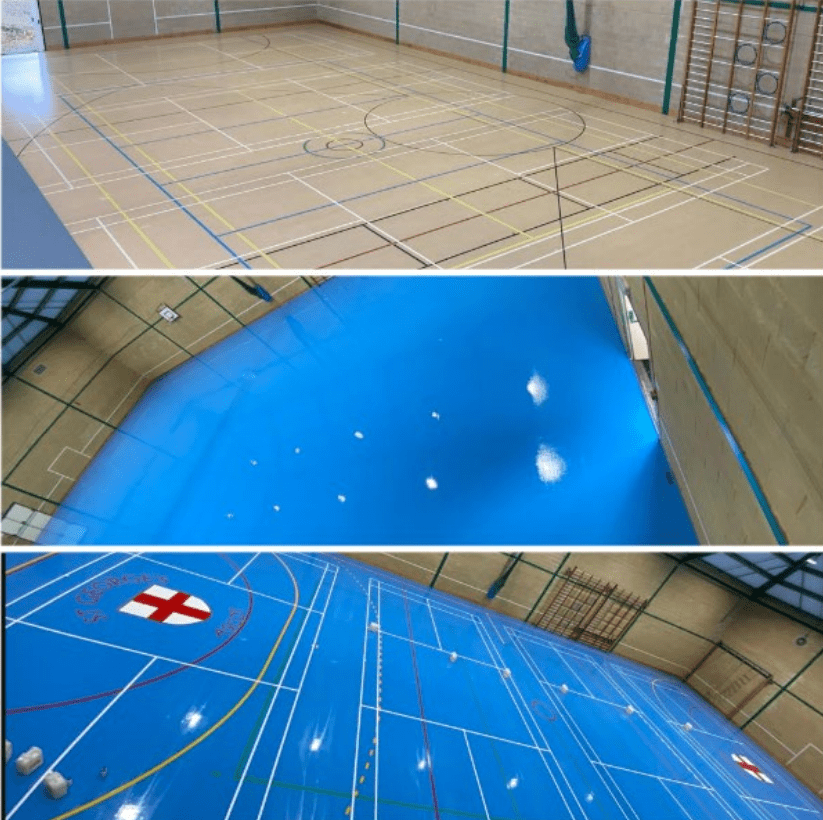
Our installation at Hornbury Academy shows the full process from bare sub-floor through to a finished, fully line-marked hall, delivered to a fixed programme while the school carried on around us.
For anyone weighing a new floor against another patch-up, it is a useful illustration of what the complete journey involves and what it produces.
~ Matthew Evans
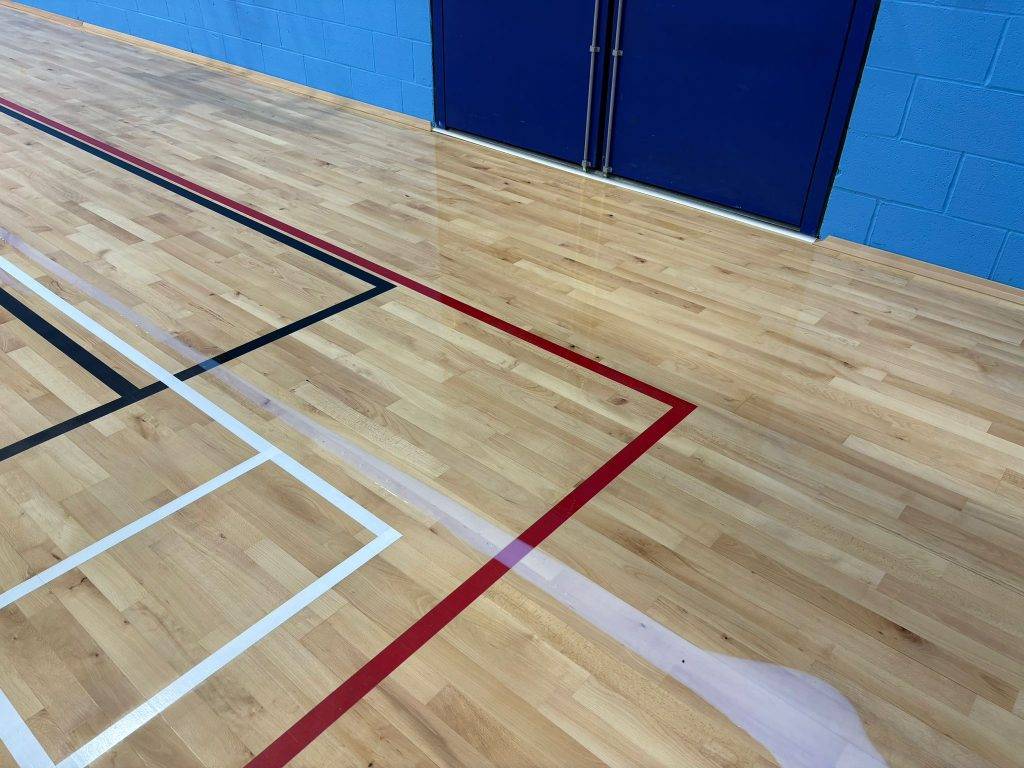
An outstanding company to deal with and they couldn’t have been better to work with. St George’s Ascot now has a stunning new sports hall floor and we are delighted. From quote, support, delivery and after sales, the Team has been brilliant. Thank you. 
~ James Anderson







Not every hall wants timber. A community sports centre in a Lancashire mill town that hosts five a side, roller events, parties and a market on the same floor is often better served by a synthetic surface, and we install and refurbish all three main types.
Sports vinyl comes as a cushioned sheet with a wear layer, quick to lay, easy to clean and tolerant of furniture. Linoleum is a natural product of linseed oil, cork and jute, hard wearing and repairable, though it needs a dry slab and a careful seal. Polyurethane is applied as a liquid over a rubber base to form a jointless, point elastic floor that can be recoloured and remarked in place years later.
All three meet BS EN 14904 when the right system is chosen, and the choice comes down to the sports played, the furniture moved, and how much the room floods with grit from outside.
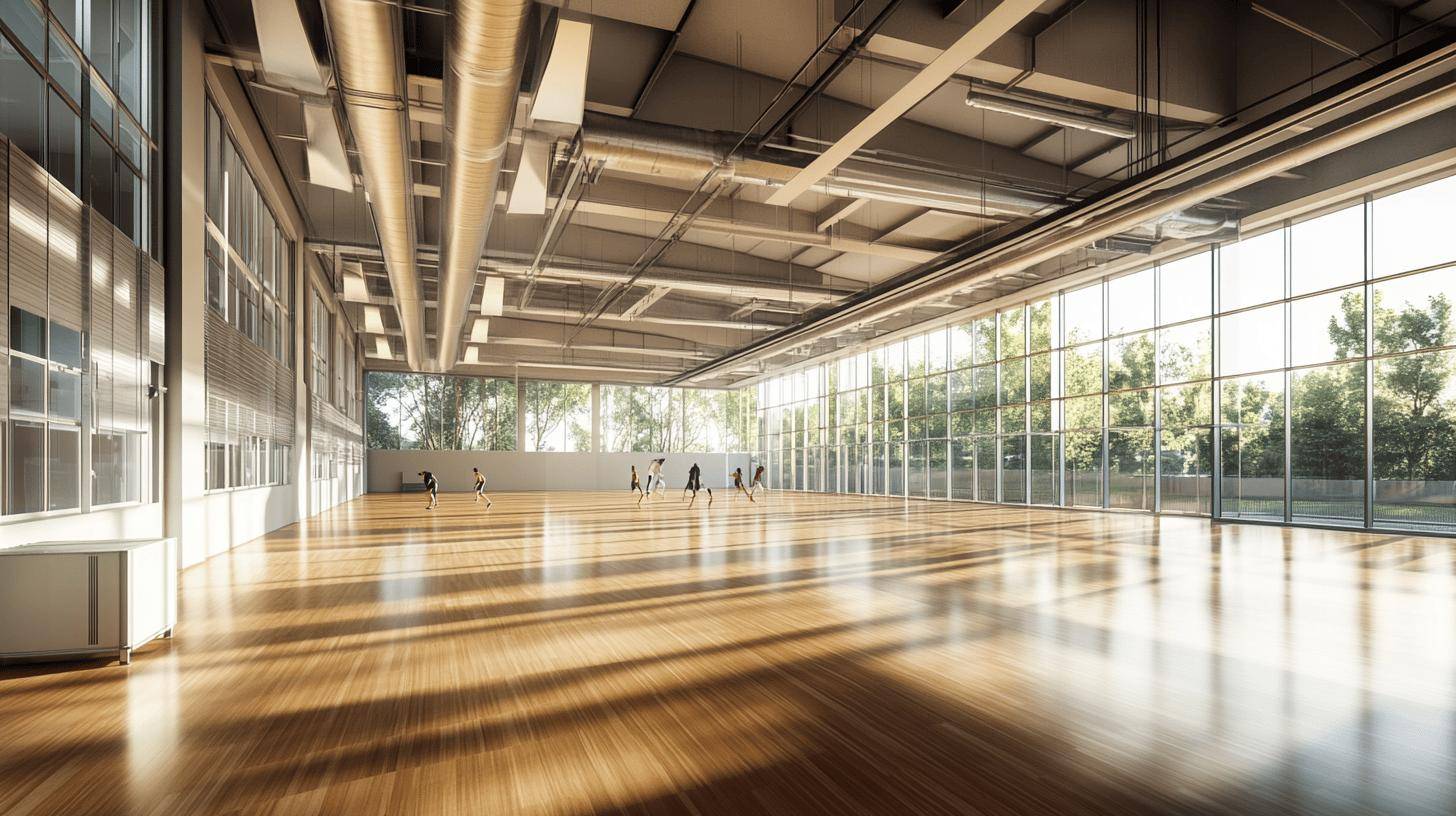
For a leisure operator a closed sports hall is a hole in the income line, and it stays a hole whether the floor is being sanded or simply waiting to cure. So the programme for a Lancashire leisure centre is built backwards from the bookings, not forwards from our diary.
We look at the timetable with the centre manager, find the quietest run of days, and work in shifts around it. Sanding and repairs run overnight, the seal goes on at the end of each shift so the floor is walkable by opening time, and the heavy cure sits across a weekend or a bank holiday. Where a hall can be divided, one half stays bookable while the other is worked.
It costs a little more in labour than a straight closure, and it almost always costs the centre far less overall.
Ask what wears out a sports floor and most people say sport. It is grit. Sand, stone dust and road salt walked in from car parks cut into a seal like fine abrasive, and the first four or five metres inside the door go through a finish years before the centre of the hall.
The cure is dull but effective. A run of proper barrier matting at every entrance, long enough for several strides, recessed so it cannot be kicked aside. A cleaning routine that removes grit daily instead of pushing it around. Where an outside door opens straight onto the hall, a lobby or a second mat.
On wet Lancashire days the volume of grit doubles, so when we hand a floor back we walk the entrances with your site team and say what the matting needs to be. It is the cheapest way to double the life of the finish.
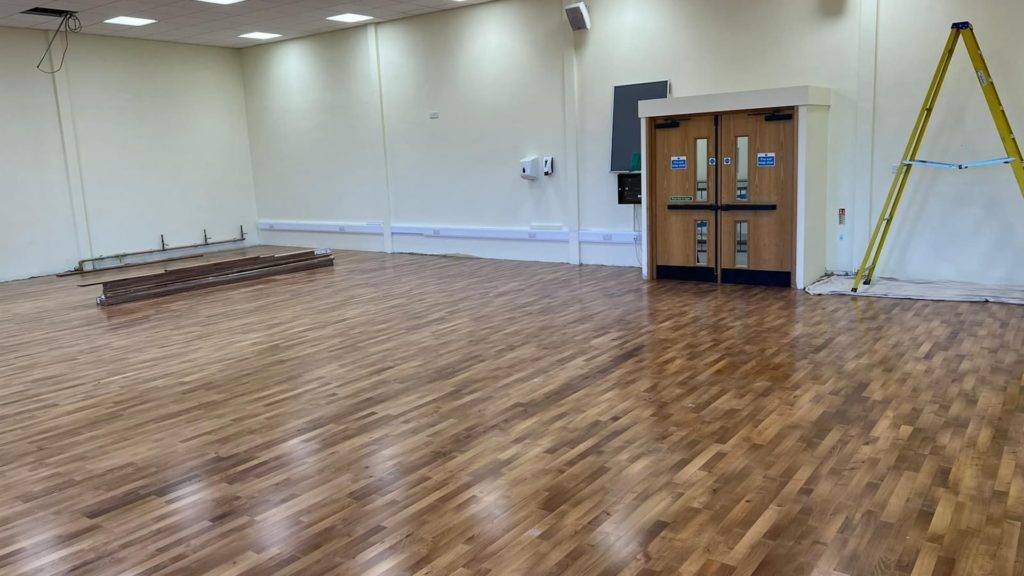

Converted mills, civic halls and older schools across Lancashire often have parquet or woodblock floors, laid in herringbone or basket weave on a bitumen bed, and they are worth keeping.
The usual faults are blocks that have lifted where the bitumen has dried and lost its grip, blocks that have gone missing near doorways, and areas that have swollen after a leak. We lift loose blocks, clean off the old adhesive, and rebed them in a modern flexible adhesive. Missing blocks are replaced with reclaimed timber of the same species and size so the pattern reads unbroken. Older bitumen may contain asbestos, so it is tested before any block is disturbed.
Once the repairs are in, the whole floor is sanded flat and sealed as one surface, and a hall that looked past saving usually looks like the day it was laid.
Lancashire gives us a broad mix, with academy trust estates, council leisure facilities, university and college sport and a large number of community buildings.
Academy work is the pattern we see most. A trust holding a dozen schools has a dozen sports halls of widely differing ages and conditions, usually with no single record of what state they are in. Surveying the whole estate and producing a costed priority order turns that into a phased programme rather than a run of emergencies.
We completed work at Harris Academy in the wider region, and the constraints were typical: a hall in constant curriculum use, a finish that had gone too long, and a fixed date to be back for the first day of term.
Leisure centre work follows, where the priority is keeping the doors open, and school and community halls make up the rest.
A good proportion of the older stock here is Granwood or mid century timber, and both are frequently written off unnecessarily. A survey usually finds a floor worth restoring.
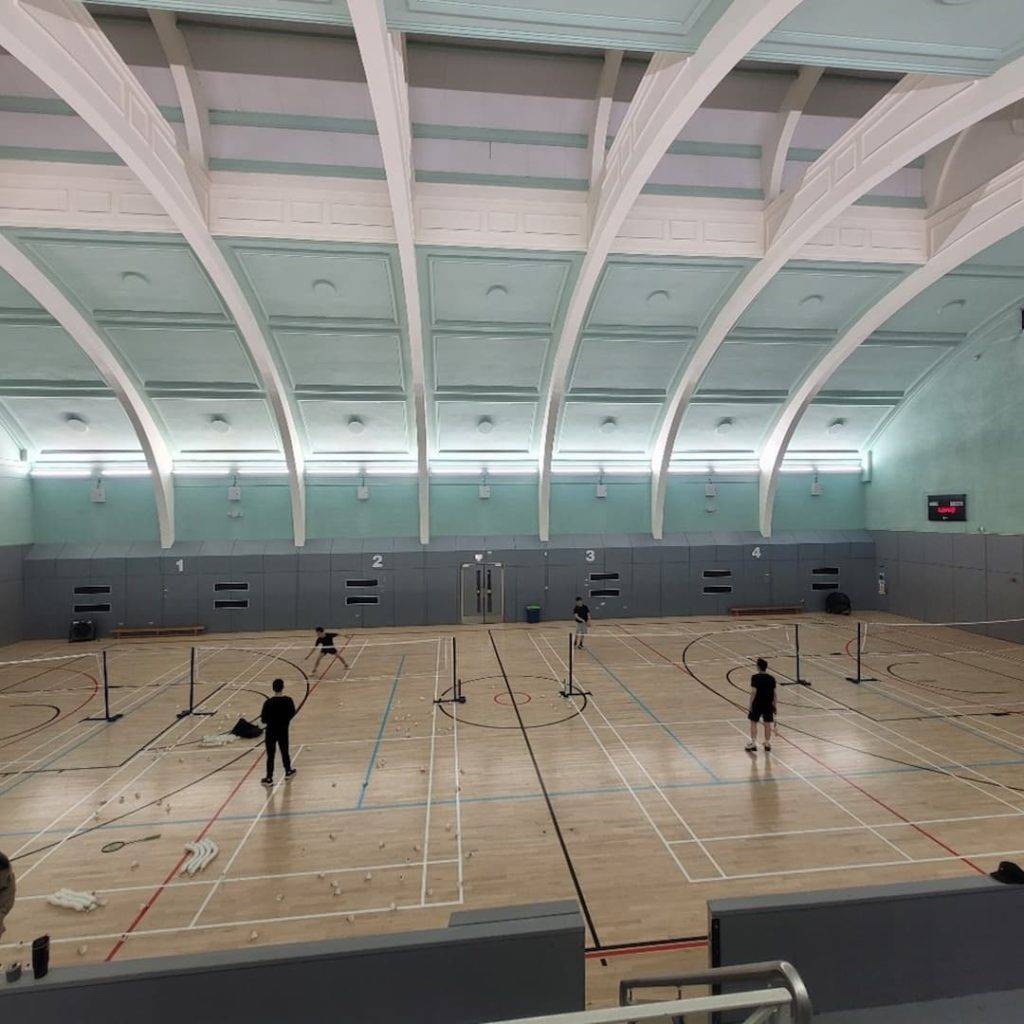
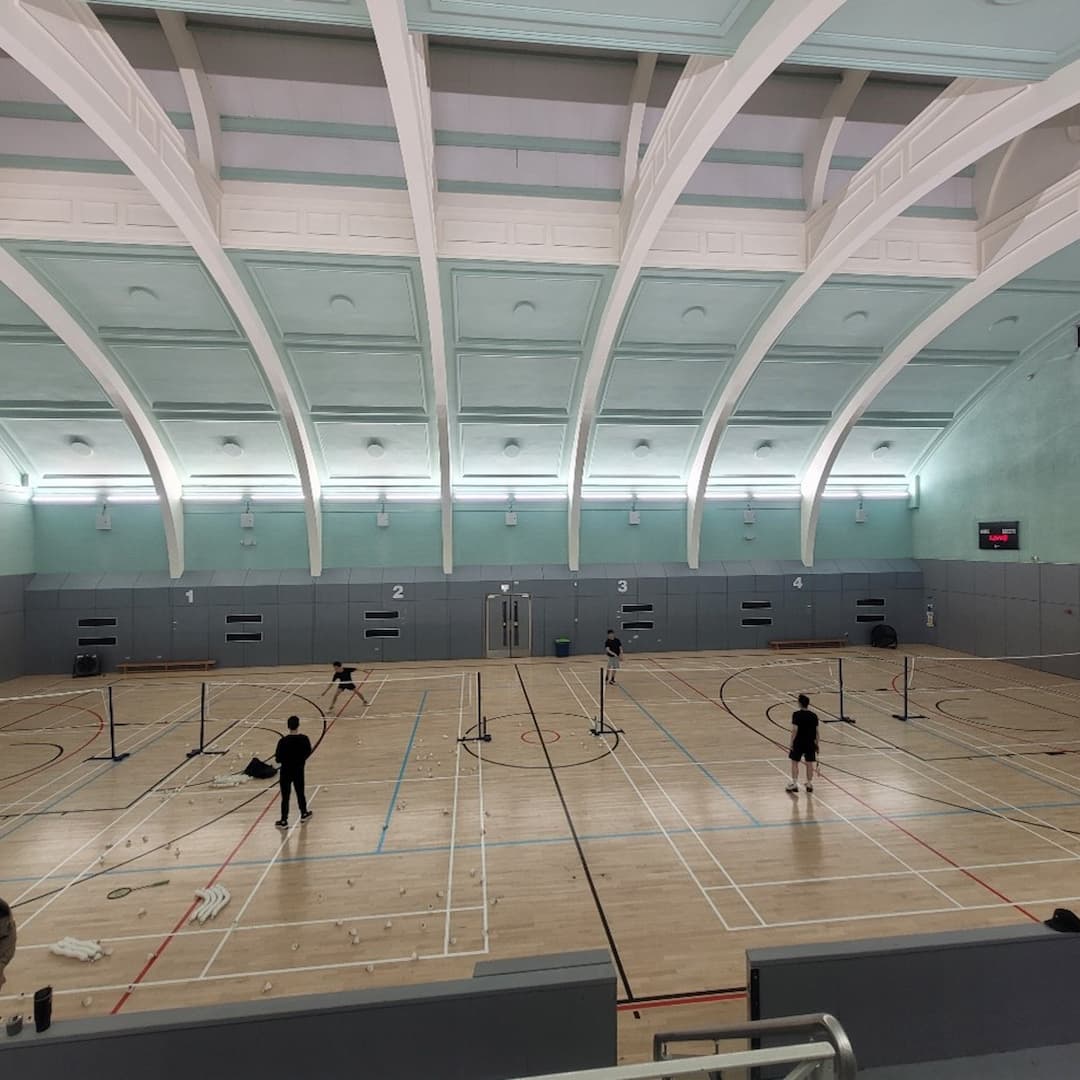
Harris Academy is the project we point to most often for Lancashire and the wider north west, because the constraints are the ones almost every school here faces.
The hall was in constant curriculum use with community lettings on top, and the floor had gone considerably longer than it should have between refinishes. The seal had worn through where the traffic actually runs, and the markings had faded past the point of easy officiating.
We surveyed properly first, which meant nothing unexpected appeared once the old finish came off. The floor was sanded back to bare timber, damaged boards were cut out and replaced with matching timber, and the hall was resealed with the markings set out fresh from measured governing body dimensions rather than traced from the originals. Redundant sports lines came off while the floor was open, at no extra cost.
The hall was handed back on the agreed date, because the date was planned to rather than hoped for.
A hall used for six or seven sports needs its lines organised, not just applied. The rule we work to is that the sport played most gets the strongest colour, and every other set recedes in turn, so a player or a referee can find their court without hunting for it.
Convention helps but does not decide. Badminton is usually white or yellow, basketball black, netball blue, volleyball green, and five a side red or orange, but what matters is the contrast against the base floor and against each other, checked under your own lights. LED fittings shift some shades badly, and two colours that separate on a chart can merge in the hall.
On a Lancashire leisure centre floor with league fixtures, we also confirm with the operator which sets are still played, because taking off a dead set clears the floor more than any new colour.
Less than most people expect, because restoring the existing floor is usually the answer and a full sand and reseal costs a small fraction of a new installation. We survey free, quote a fixed figure with each element listed, and add nothing later without your written agreement.
Yes, from the coast to the Pennine towns and beyond into neighbouring counties. Each job is planned so we arrive with every machine and material needed and finish inside one agreed window, with travel priced into the quotation from the start.
No. The people who survey your hall are the people who sand, seal and mark it, and the same team comes back for maintenance. It keeps the programme under our control and means one warranty covers the whole floor system.
Usually, once the source is fixed. Swollen or stained boards are cut out and matching timber is let in, then the whole floor is sanded and sealed as one surface so the repair disappears. Where a slab is still wet we test and wait, because sealing damp timber fails.
Lay a breathable protective covering over the whole playing area before the desks go in and lift it as soon as they come out. Chair and desk legs score a seal badly in a fortnight, and the covering costs far less than sanding out the damage.
It can if the system is run too hot or brought up too quickly, which dries the boards, opens gaps and can split them. Surface temperature must be limited, the system commissioned gradually, and the timber chosen for use over heating. Engineered boards cope better.
Yes, and we recommend doing the stage in the same visit. Stage timber is usually in worse condition than the hall, with paint, tape residue and screw holes to deal with, and one mobilisation costs far less than two while giving a matching finish.
Light foot traffic around twenty four hours after the final coat, and seventy two hours or more before equipment, staging and anything wheeled goes back, because two pack polyurethane keeps hardening after it feels dry. We confirm exact times for the product used.
Book a free survey of your hall floor anywhere in Lancashire. We find out what is under the boards before we price, then give you a written figure and a date you can hold us to. Call 01823 674562 or send us a message.