
Flooring Professionals To The Leisure Industry
Courtship Flooring is a commercial sports flooring contractor working in Northern Ireland and across the UK. We plan projects here as complete residencies with everything agreed and priced before travelling.
Trading since 1987 and family-owned throughout, we handle indoor sports and commercial timber floors from first survey to long-term aftercare, with our own crew and equipment on site at every stage. Domestic and residential projects are the province of our sister company, Ryan’s Restorations.
Whatever the size of the building, work in Northern Ireland follows the same survey-first approach as every sports hall flooring project we take on.
Overnight/Weekend Installations
Professional Cleaning Demonstrations
Squash Court Maintenance
Recommended Cleaning Products
Professional Pendulum Slip Testing
Deep Clean & Reseal Service
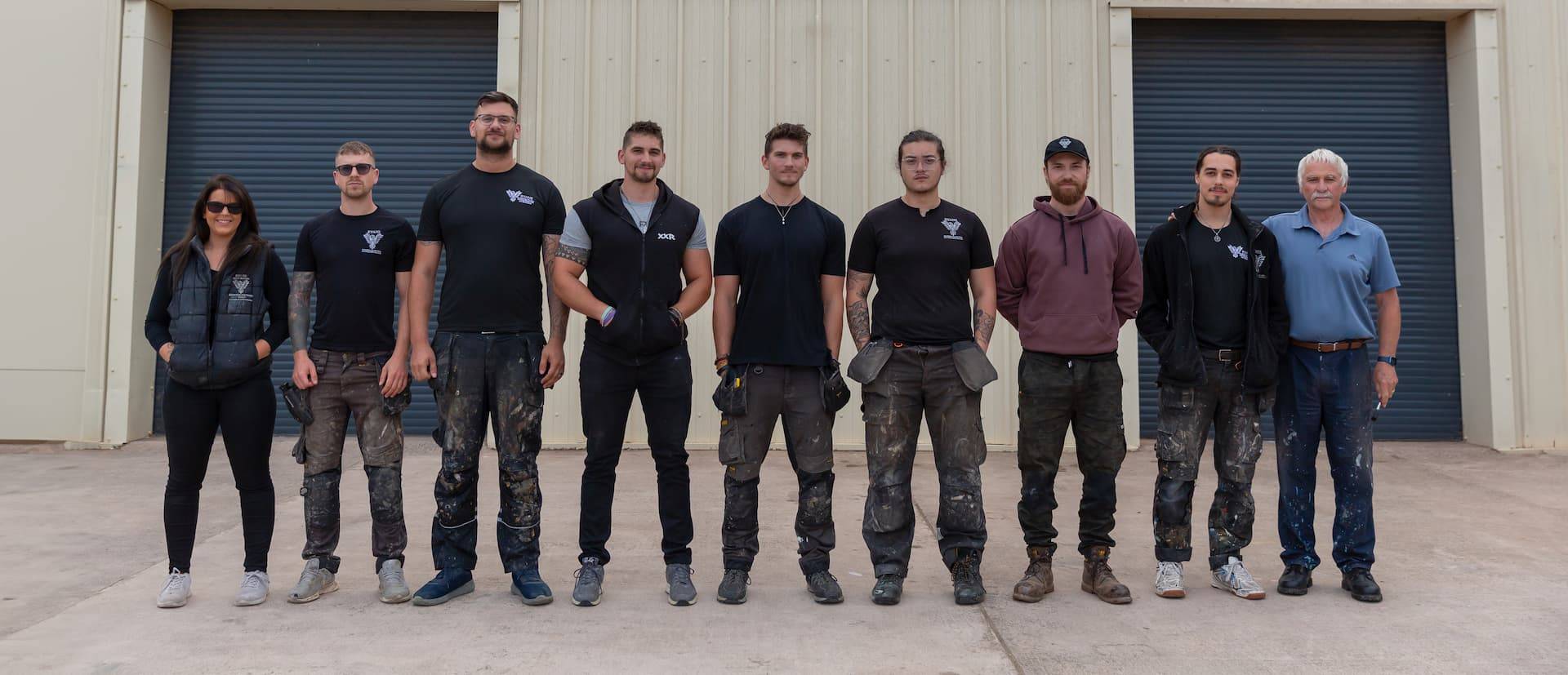
Nearly four decades of specialist work on indoor sports and commercial timber floors, our own machinery and crew, and no subcontracting at any stage. That combination is what allows one warranty to cover the whole system.
It also means the person who surveys your building has personally worked on floors like it, which is why our quotations tend to hold and our programmes tend not to slip.
If it is a commercial wooden floor, we can almost certainly restore it: sports halls, gymnasiums, school and church halls, stage floors, squash courts and parquet.
Timber is the only sports surface that can be renewed repeatedly rather than replaced, and a full sand and seal costs a fraction of a new installation. Where a floor has reached the end, we say so with the measurements to support it.
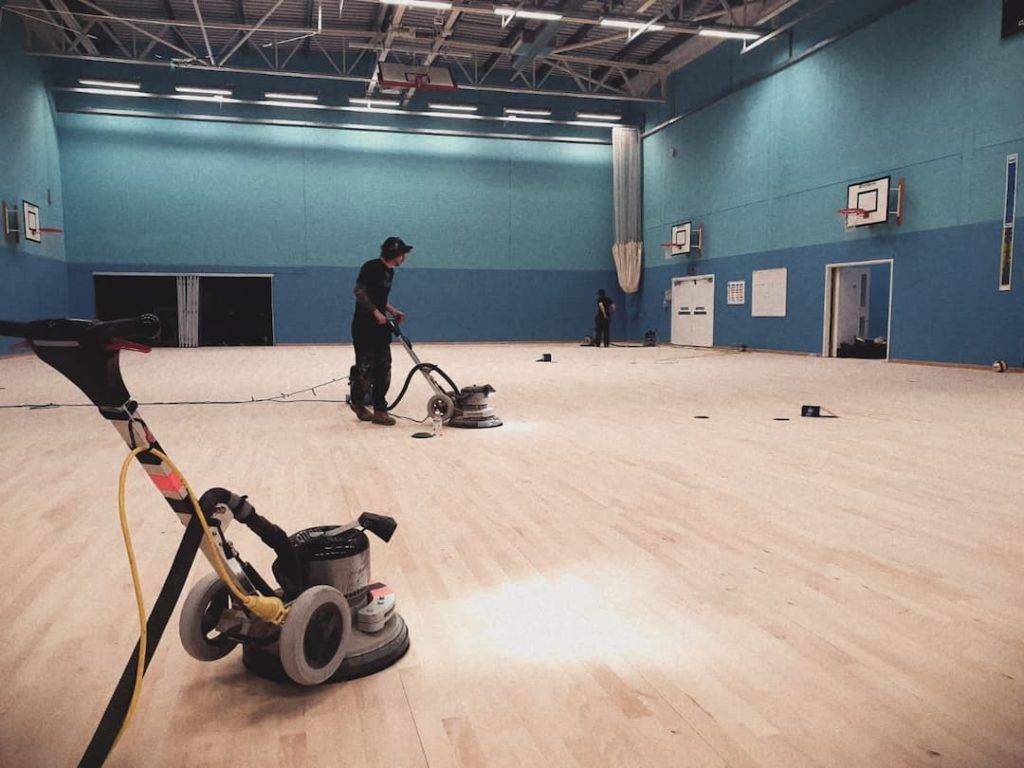
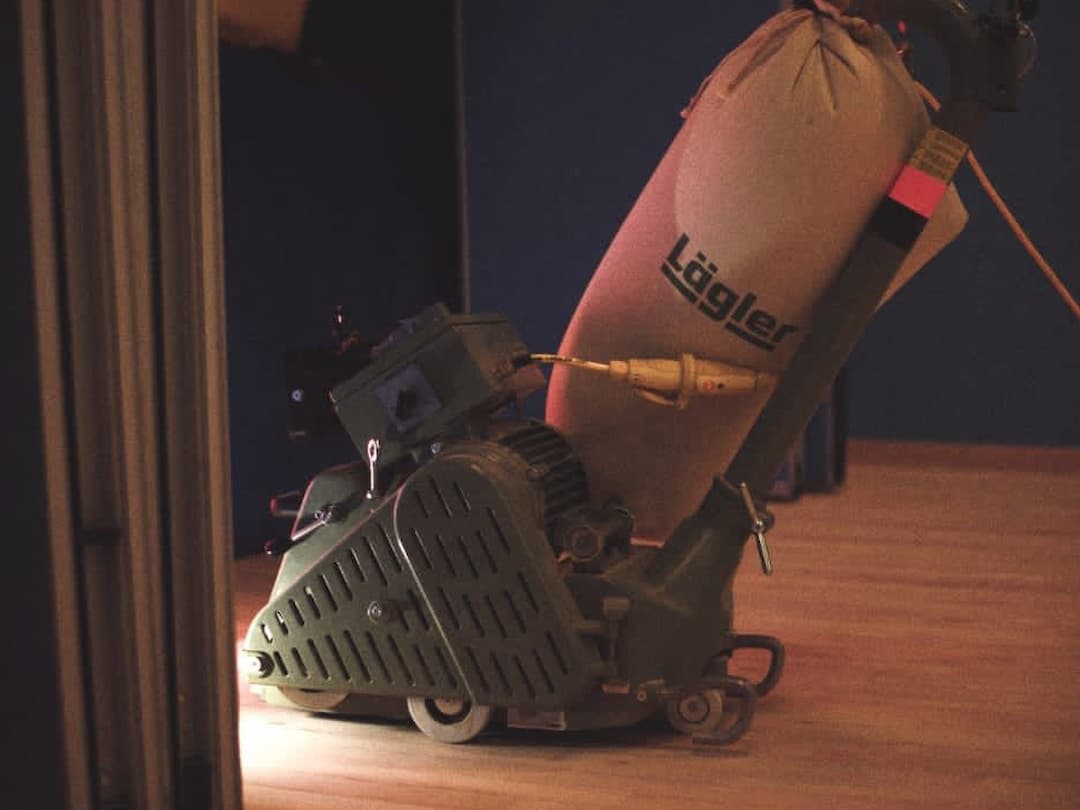
Larger projects and grouped work justify the logistics comfortably; a single small repair rarely does. We will tell you which category your project falls into rather than quoting for something that does not make sense.
Where several facilities coordinate, the mobilisation is shared and the economics improve considerably for everyone involved.
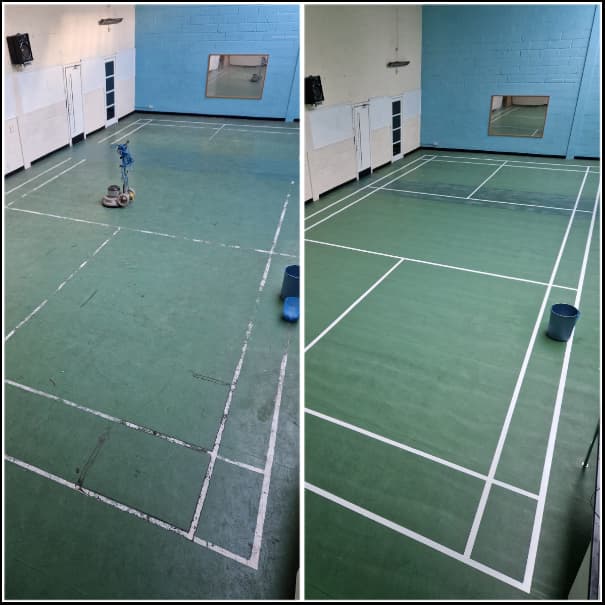
Not every floor we save sits in a sports centre. St Katherine’s had the kind of well-loved, well-worn hall floor that carries badminton one evening and a community event the next, and the committee wanted it rescued rather than replaced.
We restored it completely. The hall is now set for another few decades of everything it is asked to do.
~ Matthew Evans
An outstanding company to deal with and they couldn’t have been better to work with. St George’s Ascot now has a stunning new sports hall floor and we are delighted. From quote, support, delivery and after sales, the Team has been brilliant. Thank you. 
~ James Anderson







Badminton is the sport most sensitive to the floor beneath it. A court is 13.4 by 6.1 metres for doubles, with the singles lines inside and a service line 1.98 metres from the net, and players judge the lines at speed from low angles, so the paint has to be crisp and the colour clear against the surface.
Badminton also punishes a hard floor. The lunges and short sprints load the knees and ankles, and a sprung or point elastic surface makes a measurable difference to comfort over a session.
Many club and leisure halls across Northern Ireland run four or more courts side by side, so the run off between them and the position of the net posts and sockets are checked before marking. Where badminton leads the hall, it takes the boldest colour and the other sports fit around it.
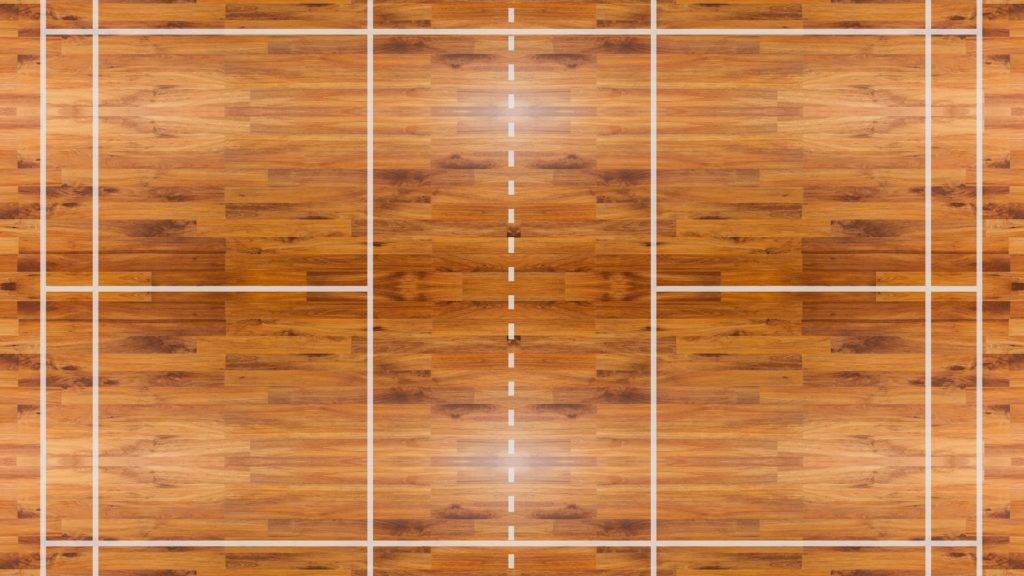
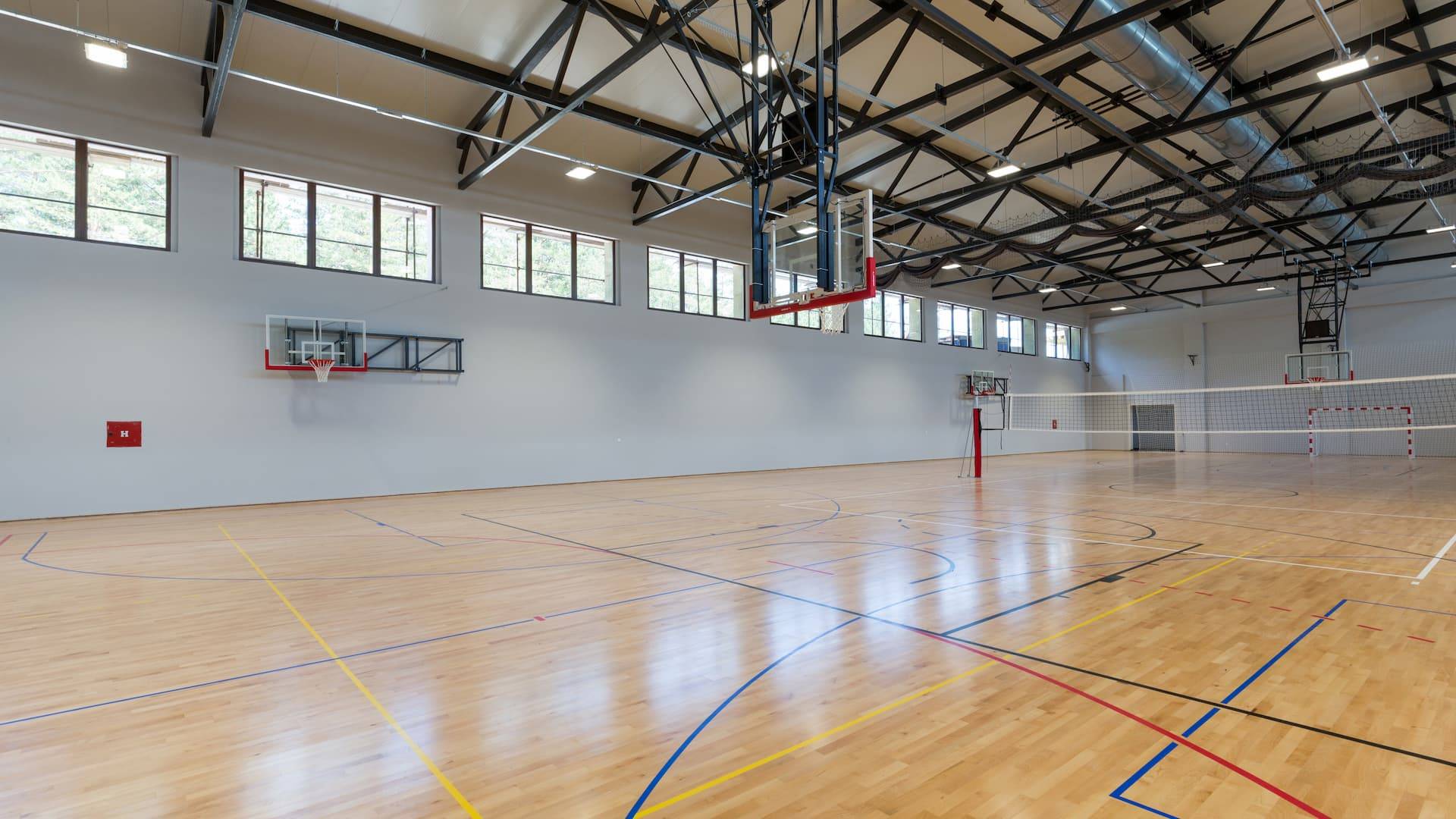
Northern Ireland has a great many church halls, Orange halls and community halls with timber floors that have been used hard for generations and have never been refinished. They usually look far worse than they are. Under the polish and the chair scoring is sound timber with plenty of depth.
The polish build up is the first job. It has to come off chemically before sanding, or it clogs every abrasive on the machine. Then the floor is sanded flat, loose boards are fixed, gaps are filled where sensible and a two pack seal is applied.
The result is a floor that takes badminton on Tuesday, a dinner on Friday and a jumble sale on Saturday, and the committee gets an itemised quotation so it can decide what to include.
A fitness suite is not a sports hall and the floor should not be specified as if it were. Cardio machines need a firm, level, easily cleaned surface. A free weight area needs a rubber floor thick enough to take dropped plates without transmitting the shock to the slab or the rooms beneath.
The mistake we see across leisure facilities in Northern Ireland is a single surface across the whole suite, which is either too soft under the treadmills or too thin under the racks. We zone the room instead, with the right rubber thickness under weights and a sealed or resilient surface elsewhere.
Where a suite has been built into a former sports hall, the timber can be protected under the rubber and recovered later if the room changes use again.
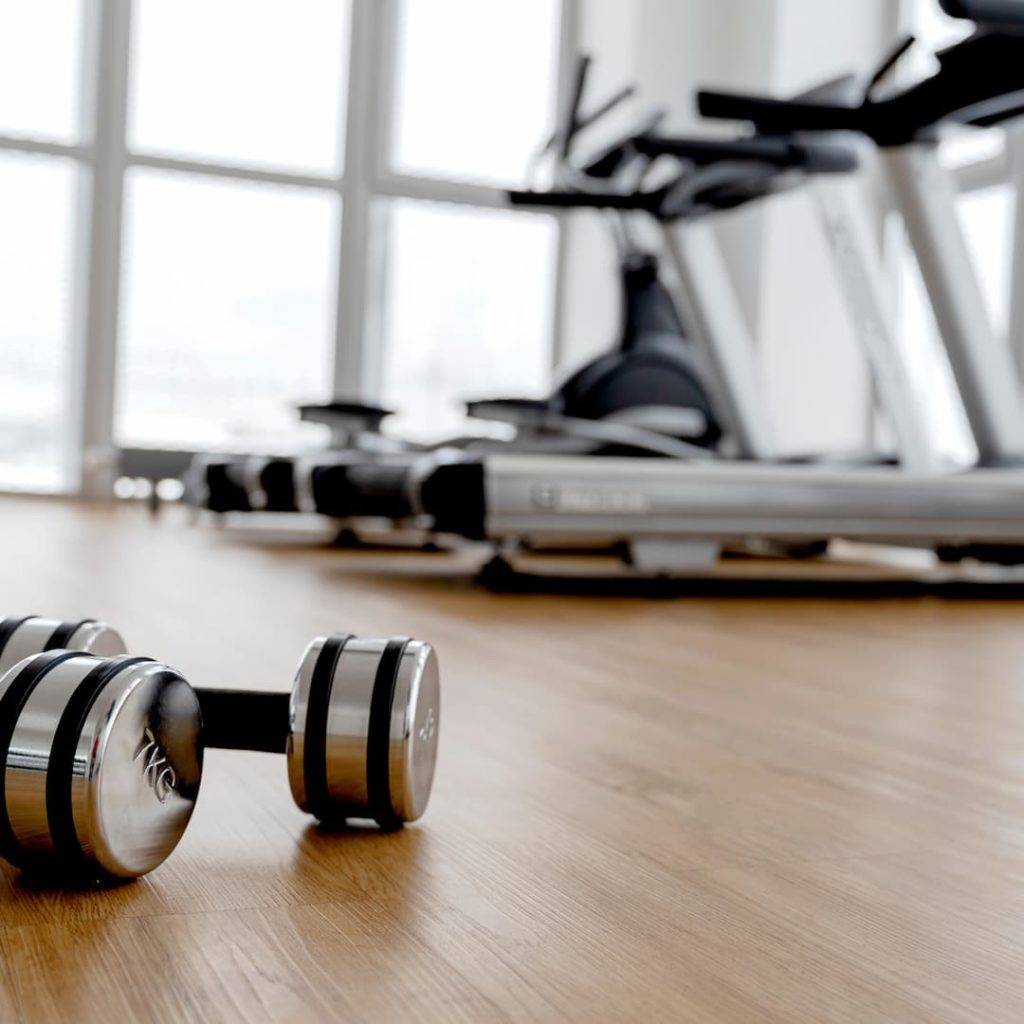
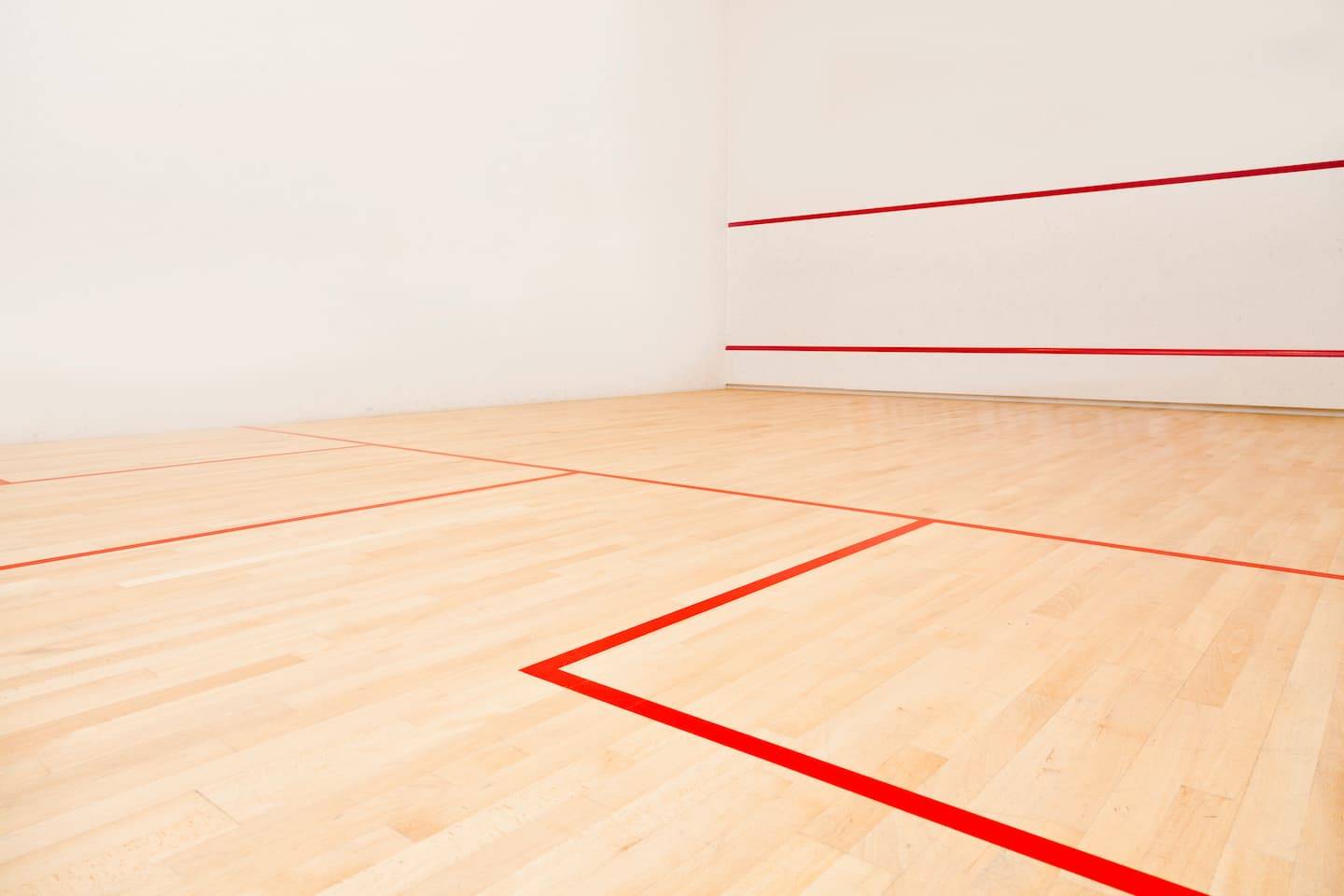
Not every indoor sports surface we are asked about is a conventional sports hall, and the smaller spaces have their own requirements.
Indoor training rooms, cricket nets, golf simulator bays and small multi use areas all sit somewhere between a sports floor and a commercial floor, and the specification depends almost entirely on what actually happens in them. A cricket net area takes hard impact in a very small zone. A simulator bay needs a surface that will take a swing without marking. A general training room needs resilience and grip without necessarily needing ball response.
The mistake we see most is specifying these rooms as though they were miniature sports halls, which is usually more floor than the space needs and occasionally less durable than it requires.
We will ask what the room is used for and specify to that, including whether a resilient surface, a coated system or a straightforward timber refinish is the sensible answer.
Work in Northern Ireland comes to us from schools, university and further education sport, leisure facilities and club buildings, and the difference from a mainland project is the planning rather than the work.
Because a crossing is involved we programme these jobs as continuous blocks, with machinery, abrasives, coatings and spares all travelling with the team. We carry more spare than we would on a local job, because nothing can be collected the same afternoon. That makes the programme tighter and the dates more reliable, since everything has to be resolved in advance.
School sports halls are the largest group, with the fixed term dates that govern every school project. University and further education facilities follow, with the narrow year round windows that campus sport always has.
Leisure centres are the third group, where keeping the building trading generally means overnight working.
Sequencing matters here more than almost anywhere. Two or three projects booked into one trip brings the cost down for all of them, so it is always worth mentioning if you know of another facility considering work.
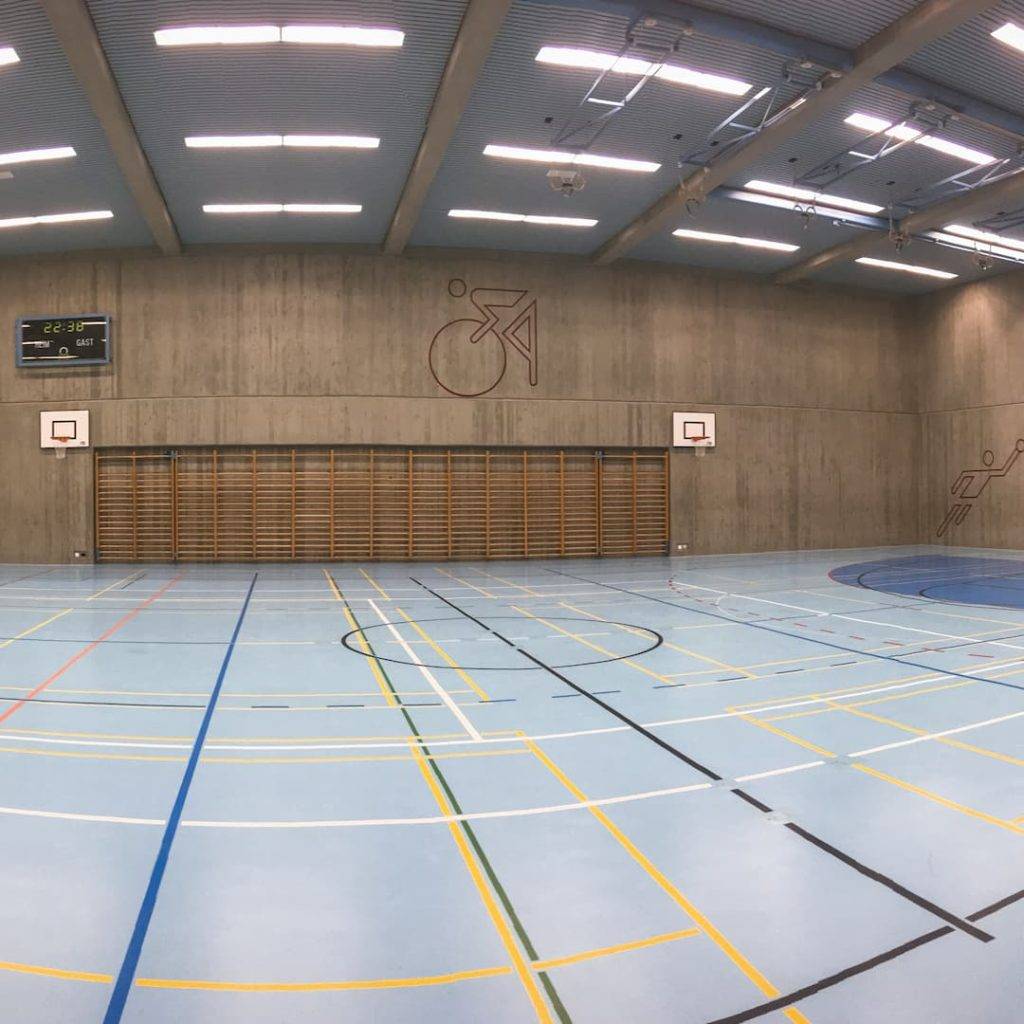
The enquiries we take from Northern Ireland tend to fall into three recognisable groups.
The most common is a school hall that has gone a long time without a proper refinish, partly because arranging specialist work has never been straightforward. Those floors usually have plenty of board depth left, though staining in the traffic lanes may not fully lift after that long.
The second is halls that have been recoated repeatedly rather than refinished. Coat over coat eventually clouds and peels, and the only real answer is to take the floor back properly and rebuild the finish.
The third is markings, where courts copied from previous sets have drifted from correct dimensions. We set out from measured governing body figures rather than from the paint already on the floor.
Because we plan these as continuous blocks with everything brought with us, sequencing several facilities into one trip makes a real difference to cost.
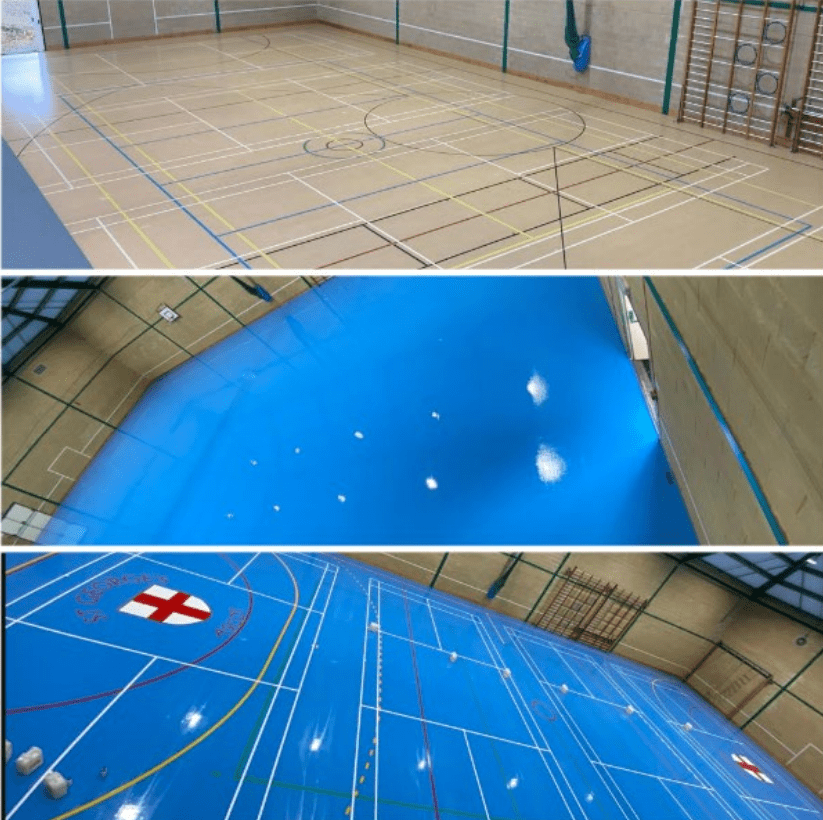
A synthetic sports floor that looks tired is not always at the end of its life. Point elastic vinyl and poured polyurethane surfaces can be deep cleaned, repaired and recoated in a new colour with fresh markings, provided the material underneath is sound and firmly bonded.
The process is a thorough clean to remove polish and residue, a light abrasion to give the new coat a key, repairs to any splits or lifted seams, then a coloured polyurethane finish applied across the whole area with the courts set out within it.
For a leisure hall in Northern Ireland that has faded and greyed in the traffic lanes, recolouring gives the room a new appearance for a fraction of the cost of replacement, and it can be done in a much shorter closure.
Yes. We have delivered sports floor projects internationally and treat any job involving a crossing the same way: fully surveyed, priced and programmed before we travel, with machinery, materials and spares moving with the team as one continuous block.
Yes. We provide a written specification, a condition report with photographs and an itemised quotation in the format funders and governing bodies expect. Where an application asks for options, we set out the repair, refurbish and replace routes with a cost against each.
Our machines run on sealed extraction, the hall is isolated with sheeting and taped grilles, shared air handling is blanked and the space is vacuumed at the end of each shift. Classrooms and offices next to the hall stay in use throughout the work.
An area elastic floor, usually timber on battens and pads, flexes across a wide area when loaded and suits competitive sport and ball response. A point elastic floor, usually foam backed vinyl or poured polyurethane, deflects only under the foot and suits mixed use and easy cleaning.
No. Our clients are schools, colleges, churches, leisure operators, clubs and councils. Domestic timber floors are the work of our sister company, Ryan’s Restorations, and we are glad to pass an enquiry across to them.
Yes. A site specific risk assessment and method statement, COSHH sheets for each coating, public and employer liability certificates and DBS certificates for the team are issued with the order. Contractor induction forms from a trust or council are completed on request.
The structure beneath the boards has failed at those points: a foam pad has crushed, a batten has split or a cradle has parted from the slab. The surface is fine. We lift the boards over the affected area, replace the parts and refit the boards flush before sealing.
Yes. Your artwork is scaled to the centre circle or chosen area, painted between coats of seal so the finish protects it and matched to your colours. It costs least during a refinish, and it wears at the same rate as the floor around it.
Book a free survey anywhere in Northern Ireland and we will tell you plainly what the floor needs, what the whole programme costs including travel, and the dates we can commit to. Call 01823 674562 or send us a message.