
Flooring Professionals To The Leisure Industry
Courtship Flooring is a commercial sports flooring contractor working in Somerset and across the UK. Our workshop and yard are here, which means surveys within days, follow-up visits that are never a production, and no travel loaded into the quotation.
Established in 1987 and still family-run, we install, refurbish, sand, seal, mark and maintain indoor sports floors for schools, academies, colleges, universities, leisure trusts, local authorities and clubs. Every stage is carried out by our own team. We do not undertake domestic work; that is handled by our sister company Ryan’s Restorations.
Projects in Somerset are carried out by the same in-house team that delivers all of our sports hall flooring work across the UK.
Overnight/Weekend Installations
Professional Cleaning Demonstrations
Squash Court Maintenance
Recommended Cleaning Products
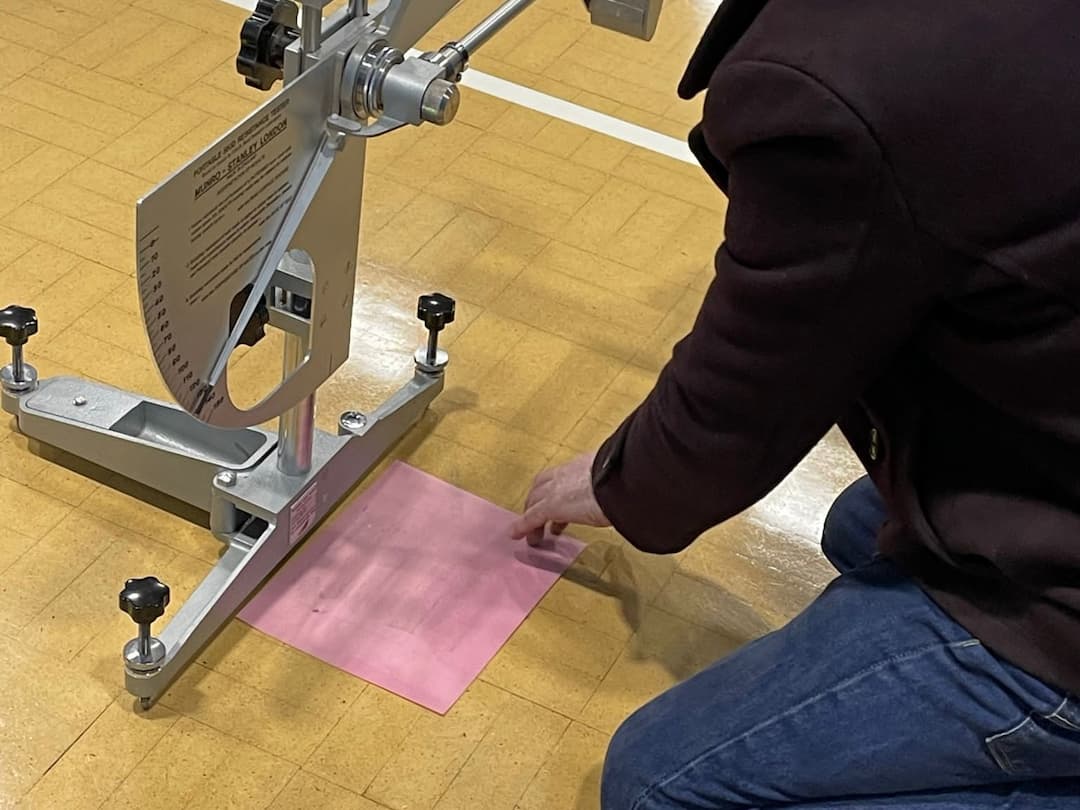
Professional Pendulum Slip Testing
Deep Clean & Reseal Service
Our surveys generate evidence rather than opinions. We take moisture readings in and beneath the floor, assess board condition and the depth remaining for future sanding, check the sub-floor for movement and dead spots, and compare markings against current specifications.
You receive a written report ranking what needs attention now, what can reasonably wait and what needs only maintenance, with firm costs against each line. It is written to be usable as budget evidence, and it is yours to keep whether or not we do the work.
A surprising number of floors we are asked to quote for refurbishment need nothing more than a proper deep clean. Embedded residue and grime dull a surface and reduce grip, and no amount of routine mopping shifts it.
Machine deep cleaning starts from £2 per square metre and frequently restores both appearance and friction without touching the seal. Where it is all that is required, that is what we will tell you, even though the bigger job would pay us better.
Not every visit is a full refurbishment. Localised damage, a lifting board, a water-affected section or a worn patch by an entrance can usually be repaired in isolation, provided the timber is matched properly by species and grade so the repair disappears into the finish.
Because repairs are done in-house rather than subcontracted, small jobs are worth our while and get the same care as large ones.
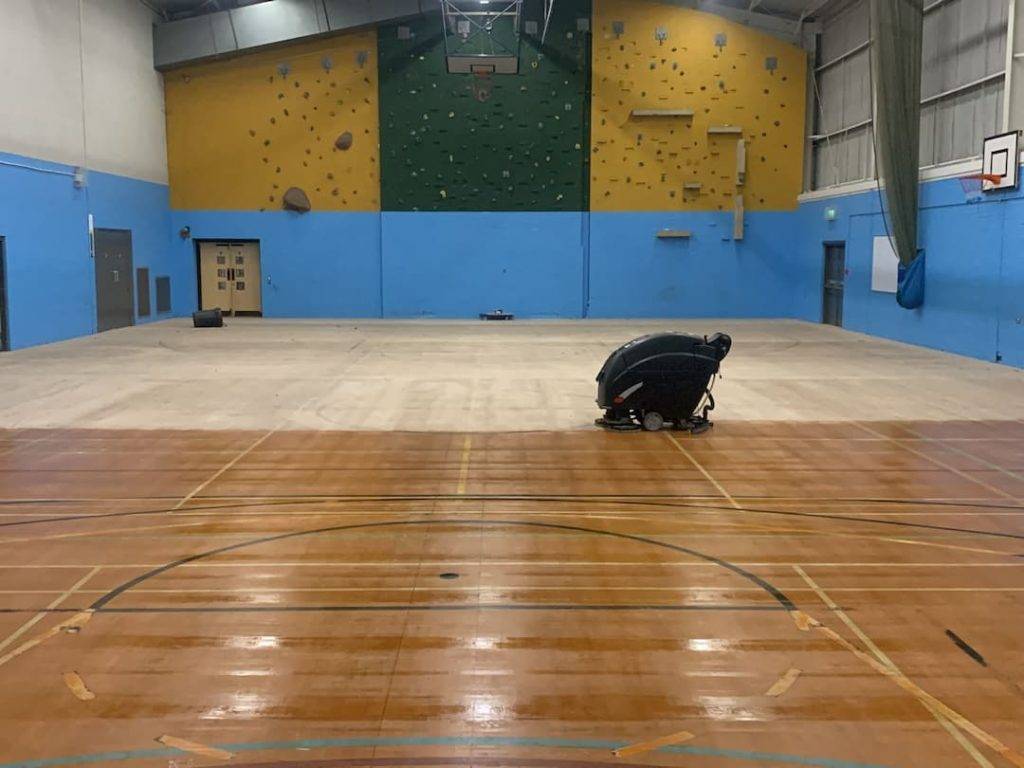
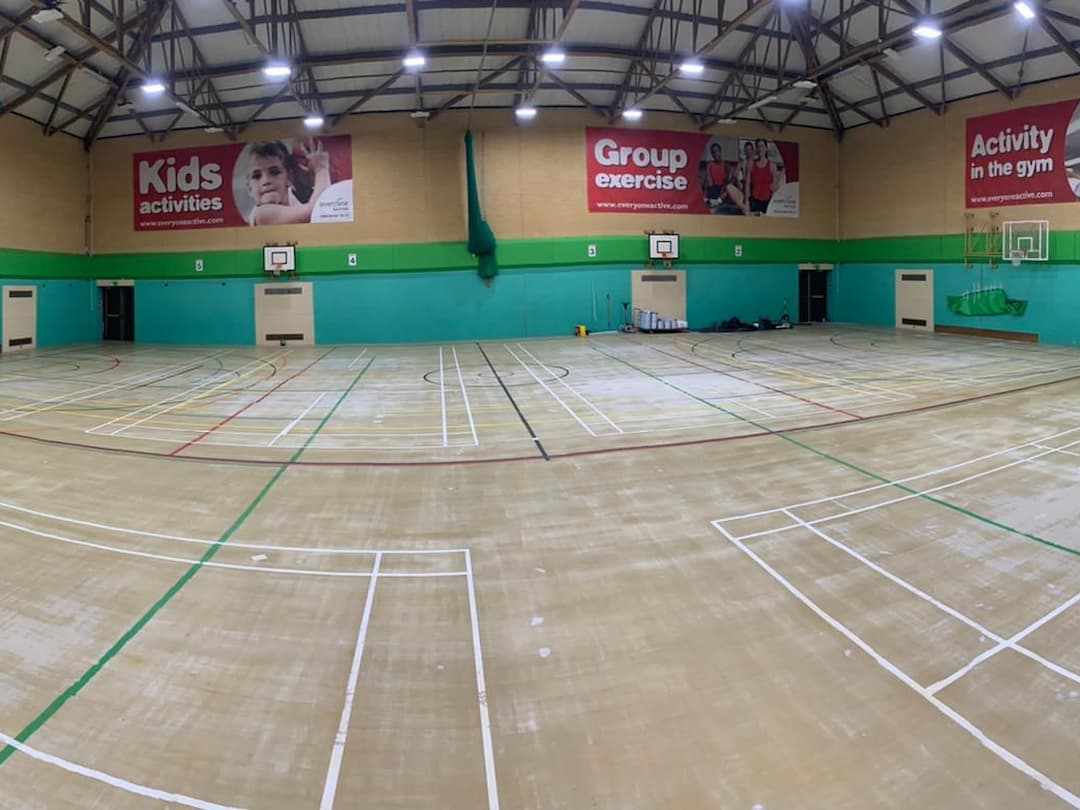
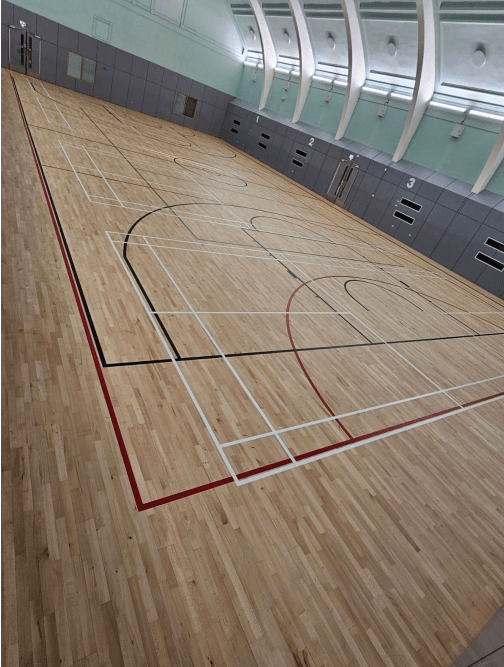
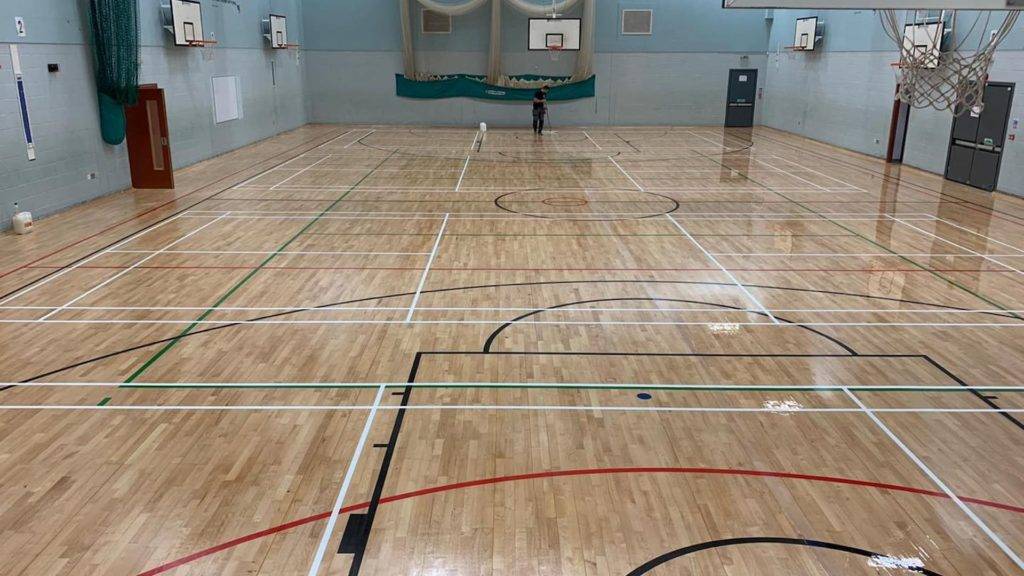
Years of heavy use had left the sports hall floor at Aston University dull, patchy and worn along every busy lane. Our team sanded it back to bare timber, made good the damage, then rebuilt the finish with a durable seal and a full set of new markings, working around a demanding academic timetable.
The before and after photographs show what a properly executed refurbishment delivers: a floor that looks and plays like new, for a fraction of replacement cost and without weeks of disruption.
~ Matthew Evans
An outstanding company to deal with and they couldn’t have been better to work with. St George’s Ascot now has a stunning new sports hall floor and we are delighted. From quote, support, delivery and after sales, the Team has been brilliant. Thank you. 
~ James Anderson







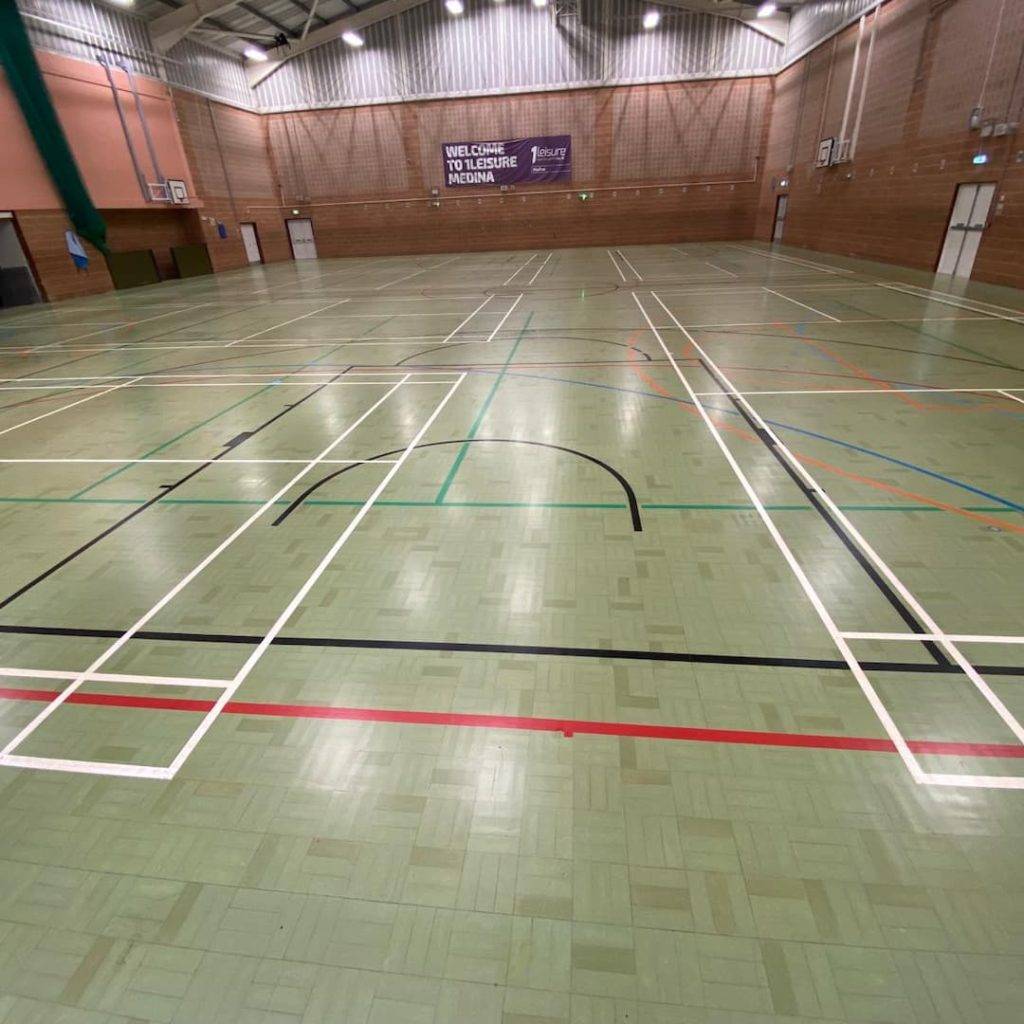
Somerset has its share of school and village halls built between the 1930s and 1970s, and a good many of them have Granwood floors under the polish. Granwood is a composite block of wood flour and cement pressed under heat, laid in a herringbone or basket pattern into a bitumen bed.
It is tougher than timber but it does not behave like timber. There is no grain and no deep wear layer to sand into, so a contractor who runs a belt sander over it takes off block that cannot be replaced and drags bitumen up through the joints as the machine warms it.
We prepare the surface with fine abrasives, re-bed loose blocks, replace broken ones and coat with an epoxy system made for composite substrates, with the markings sealed within it. Because some pre 1980s bitumen beds contain asbestos, we test before any block is lifted.
The hardest constraint in this trade is rarely technical. It is a building that has to keep functioning while we work in it.
Where a hall cannot be taken out of use for a fortnight, there are three practical routes. The first is splitting the floor and working in halves, keeping part of the space available while we sand and seal the other. It adds a little to the cost and a couple of days to the programme, and it keeps the doors open.
The second is overnight working, sealing at the end of a shift so the floor is walkable by opening and heavy equipment goes back once the finish has hardened properly.
The third is scaling the work down. A screen and recoat over a long weekend restores grip and appearance without the full closure, and for a floor whose seal is worn but intact it may be all that is needed anyway.
We will price whichever routes are viable so you can weigh disruption against cost rather than being told there is only one option.
A sports floor is a system, not a surface. What sits under the boards decides how the floor behaves when a player lands, and BS EN 14904 is the standard that sets out how that behaviour is measured: shock absorption, vertical deformation, ball rebound and friction.
Area elastic floors, the traditional sprung timber construction on battens, cradles or resilient pads, flex over a wide zone and spread the load, which suits basketball, netball and badminton. Point elastic floors, usually vinyl or polyurethane over a foam layer, give only under the foot and suit multi use and gym spaces. Combined systems put a point elastic layer over a sprung base for the best of both.
For a school hall in Somerset that hosts everything from PE to a Saturday market, we specify the build up against the sports played, the ceiling height available and the traffic the room will carry.
Somerset is where Courtship Flooring is based, and it is the county we know better than any other. That has practical advantages for the facilities here.
We can survey quickly, often within days rather than weeks. We can fit smaller jobs around larger programmes elsewhere, which helps on both cost and timing. And where something goes wrong with a floor unexpectedly, whether that is a leak, a failed board or a hall that has suddenly become slippery, we can get somebody there quickly rather than scheduling it for a fortnight hence.
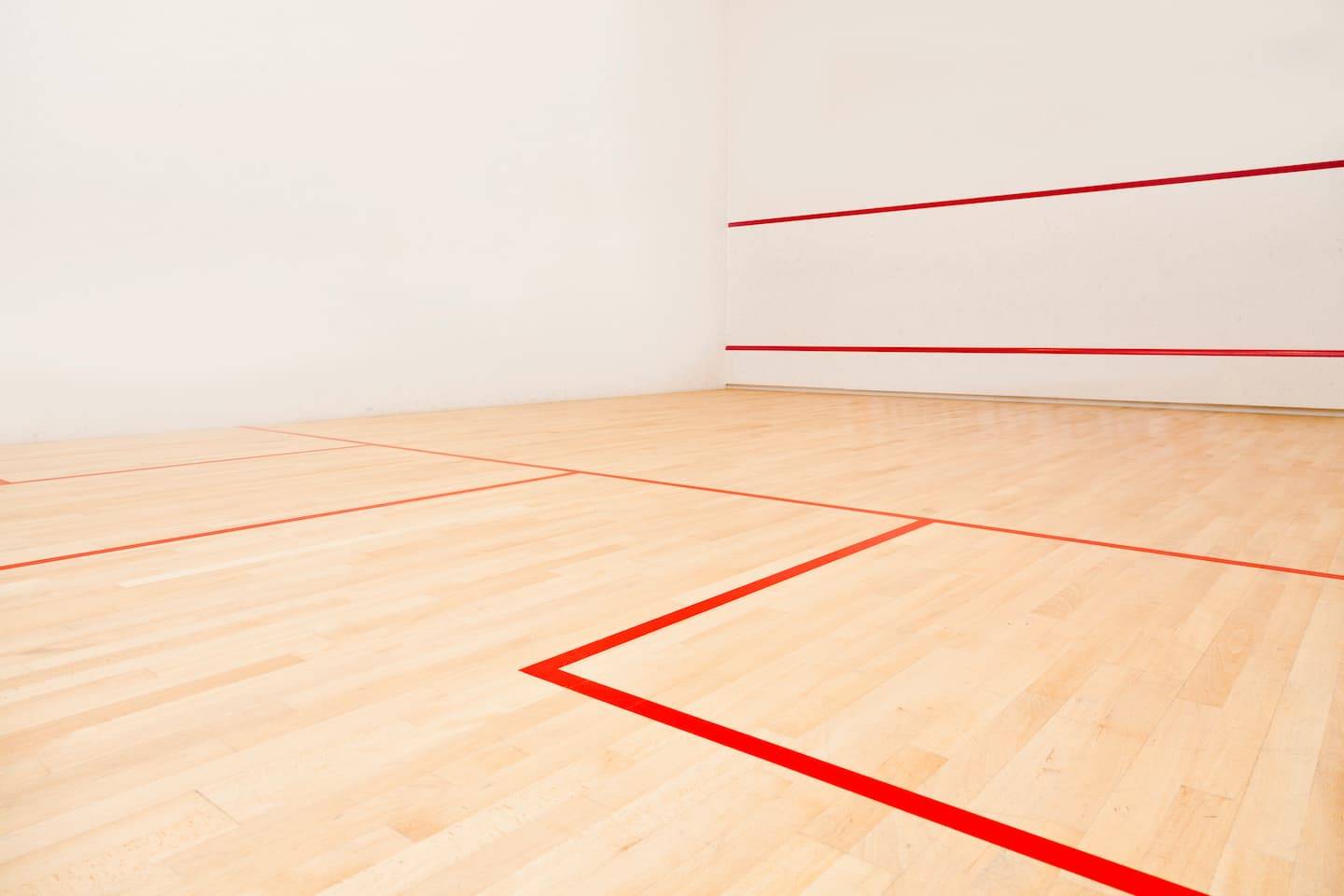
The work itself covers the full range. School and academy sports halls, leisure centres and community sports facilities, independent school sport, squash courts, village halls and church halls. The county has a large number of older community buildings whose timber floors are usually in far better condition than they look under decades of polish.
Being local also means a good deal of this work comes by recommendation, from one school business manager or hall committee to another, which is the way we would rather grow.
Being based here, we see the full range of Somerset enquiries, and three recur more than any others.
The first is urgent. A leak, a failed board, a hall that has suddenly become slippery before an inspection. Because we are local we can usually get somebody there quickly rather than scheduling it a fortnight out, and that responsiveness is the main practical advantage of using a contractor based in the county.
The second is schools planning ahead, wanting a summer slot booked and a written specification they can put in front of a business manager. Those conversations are best had in January rather than June.
The third is community halls with old timber floors under decades of polish, scored by chairs and tables. Those restore beautifully, and a great deal of that work comes to us by recommendation from one committee to the next.

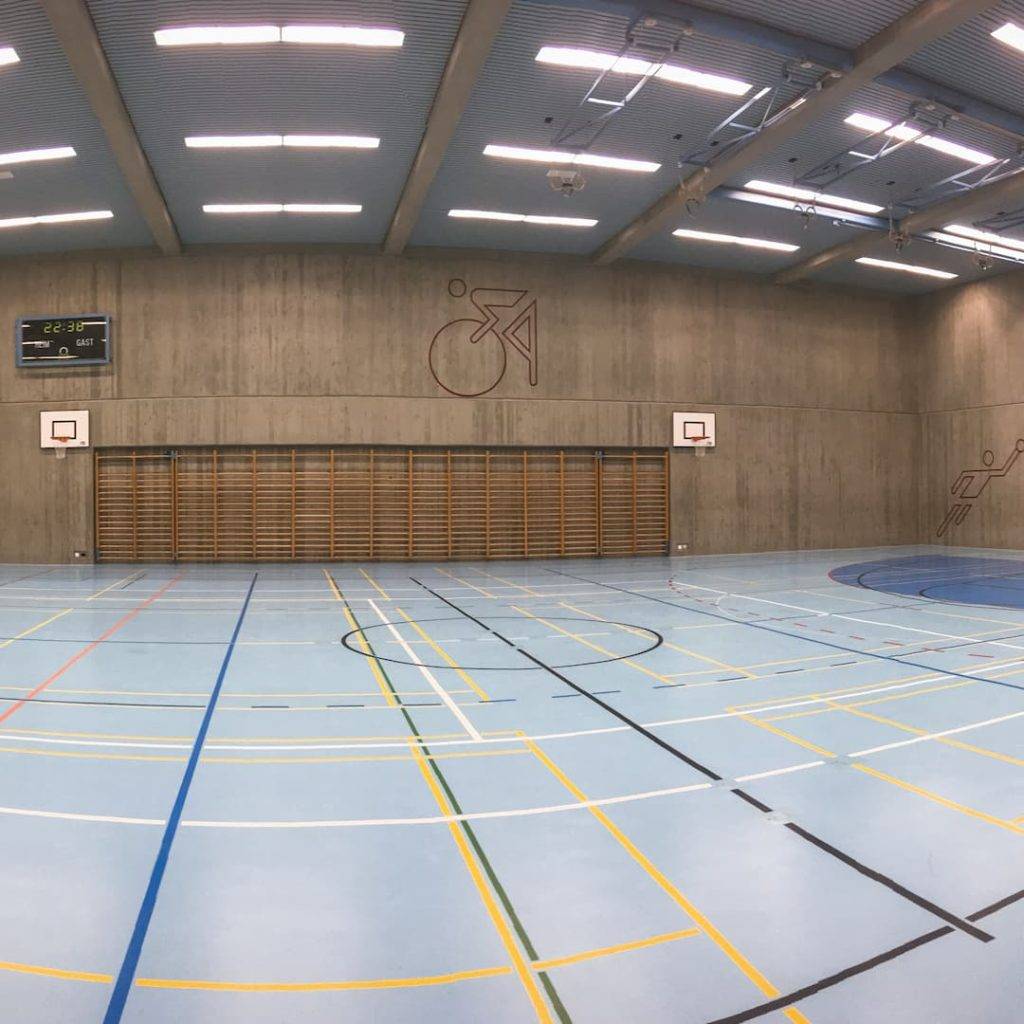
A guarantee is only worth anything if one company is responsible for all of it. When the boards come from one supplier, the seal from another and the labour from a subcontractor, every fault becomes an argument about whose problem it is.
We survey, prepare, sand, seal, mark and test with our own team, so our guarantee covers the whole job: the preparation, the adhesion of the seal, the repairs and the markings. If something we did fails, we come back and put it right, and being based in Somerset means that visit happens quickly.
The guarantee assumes the floor is cared for as we set out at handover: neutral cleaner, no polish, matting at the doors and a recoat when the wear lanes start to show. We put the terms in writing before you commit, not afterwards.
Less than facilities usually expect, because there is no travel in the price and a refurbishment is a fraction of replacement. The survey is free and the quotation is fixed and itemised, so you can see what sanding, repairs, sealing and marking each cost and defer any element if you need to.
Anywhere in the UK, and we have completed projects abroad. Being based in the county means Somerset sites get the quickest response, but the same team, machinery and standard travel to every job, with the mobilisation shown openly in the quotation.
Yes. The survey report is written with funding applications in mind, with photographs, readings, a clear statement of the defect and firm costs against a specification. Bursars and business managers use it as the evidence base for CIF and similar bids, and we can add detail if the assessor asks.
Yes, before the start date and written for your building. Method statements and risk assessments cover the actual programme, COSHH data is supplied for every product, and DBS certificates and insurance documents are sent to the site manager along with the team’s names and the site rules we will follow.
A few photographs of the whole hall and any specific damage, the rough size or the number of badminton courts, what you know of the floor’s age and history, and the dates when the room could close. From that we can usually tell you the likely route before the survey.
Between one and two weeks from the first machine to the room being handed back, depending on size and repairs. That includes 24 hours of cure before light foot traffic and 72 hours before equipment goes back. A screen and recoat needs only a long weekend.
No. Even though we are based locally, our work is limited to commercial and institutional buildings: schools, colleges, leisure centres, clubs, church and village halls. Domestic timber floors are looked after by our sister company Ryan’s Restorations, who can be contacted directly.
By the spring term at the latest. Summer slots in Somerset fill early because every school wants the same six weeks, and a survey done in January or February gives time to fix the specification, order materials and confirm dates before the hall is cleared in July.
Book a free survey of your floor in Somerset and, because we are based here, we can usually visit within days and tell you what it needs and what it will cost. Call 01823 674562 or send us a message.