
The village hall is the hardest-working building in most communities. One floor takes badminton on Monday, a playgroup on Tuesday, a funeral tea on Wednesday and a barn dance on Saturday, usually on a budget that leaves no room for waste.
Courtship Flooring restores and installs community hall floors across the UK. We are used to committees, grant funding timescales and the need for a straight answer about what can wait, and we treat a village hall with the same care as a university sports centre.
Where a hall needs a sports surface only part of the time, our portable sports flooring service supplies floors that are laid for sport and lifted for other uses.
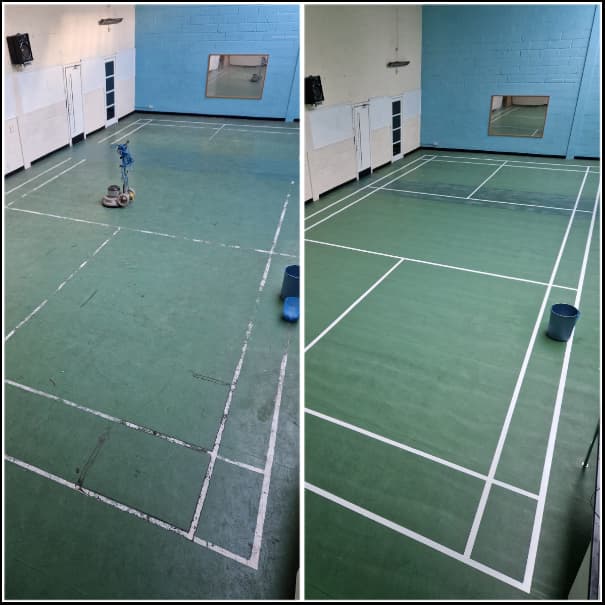
Community hall floors are damaged less by activity than by furniture. Stacked chairs, trestle tables, staging and trolleys cause the dents and scuffs; the badminton is the easy part. A floor specified purely for sport will disappoint within a year.
We choose finishes tough enough for furniture while still providing the grip and shock absorption that activity needs, and advise on protective covering for event use. Planning for the real timetable at specification stage saves repeating the same repairs every couple of years.
Committees are frequently told a floor needs replacing when it does not. Where the boards are sound and depth remains above the tongue, sanding and resealing costs a fraction of a new floor and takes days rather than weeks.
We will always price the cheapest option that genuinely works, and say plainly when a deep clean is all that is required. Where replacement really is necessary, the survey report gives you the evidence and the figures a funding application will need.
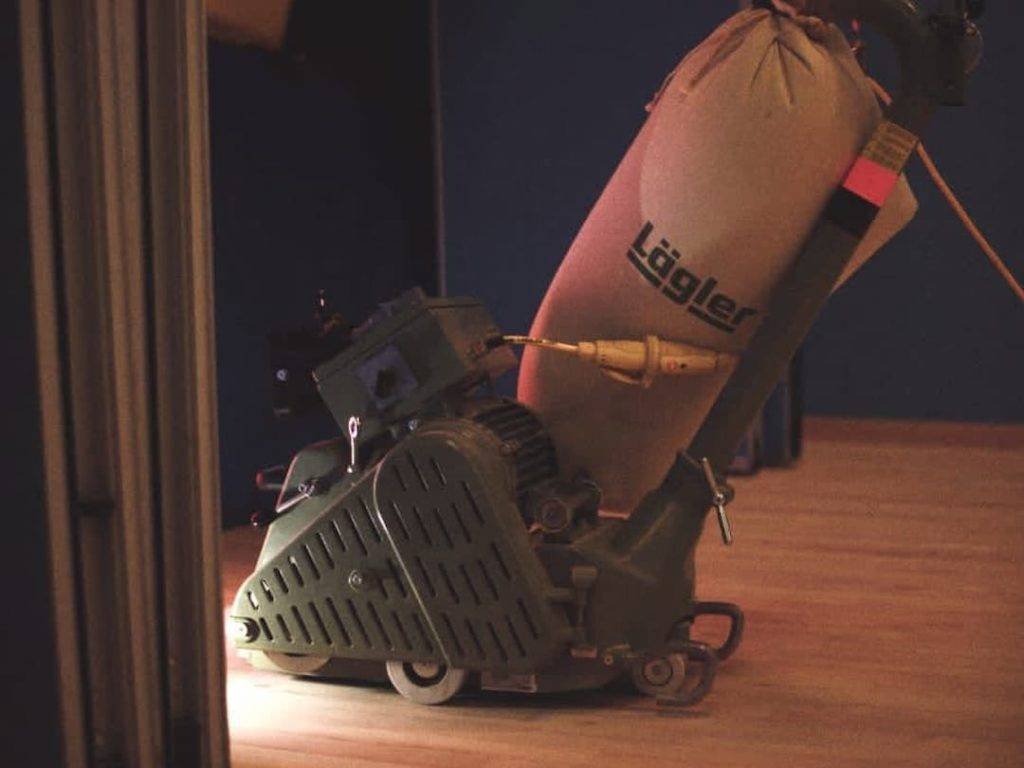
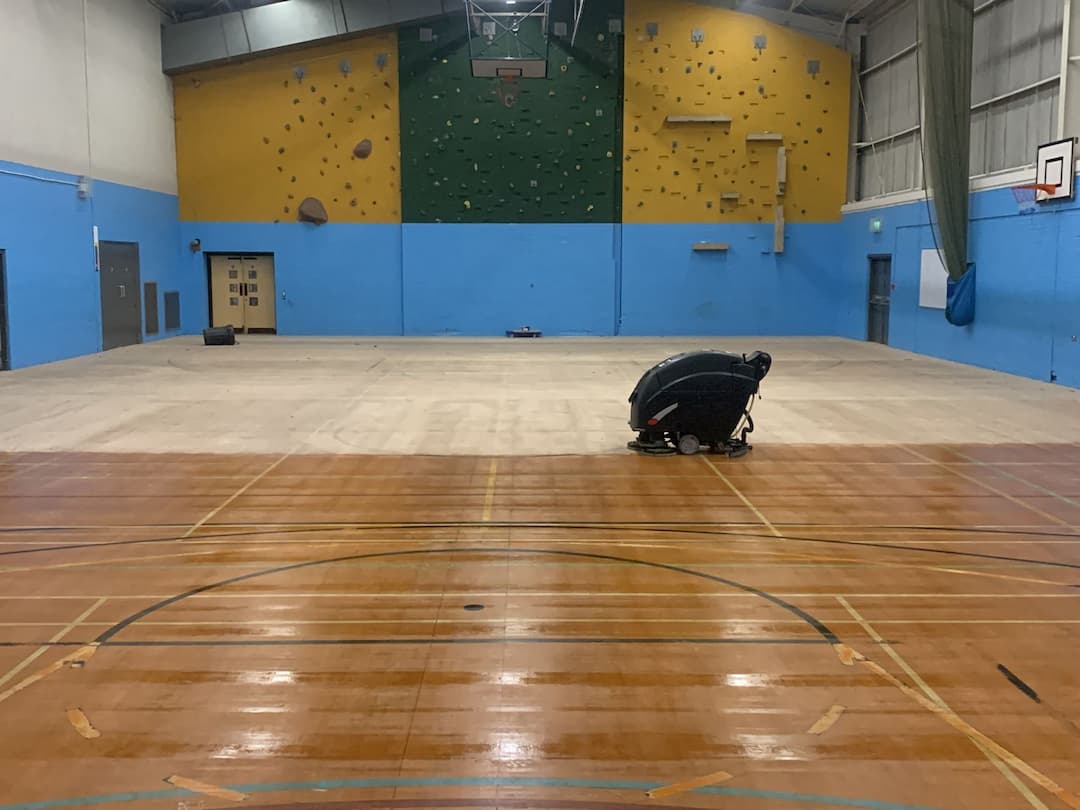
A community hall that closes loses income and goodwill at the same time. We plan work into genuinely quiet weeks, agree the reopening date in writing before starting, and where possible phase the job so part of the space stays available.
A single hall is typically four to five days including sanding, repairs, sealing and curing, and we tell you exactly when furniture and equipment can go back on the floor.
Most community hall floors are cleaned by volunteers rather than professionals, which is fine provided the routine is right. Over-strength product and the wrong pH leave a residue that dulls the surface and makes it slippery, and that is the single commonest problem we are called back to.
We run a cleaning demonstration for whoever looks after the hall, recommend products that suit the floor and the local water, and offer maintenance visits at sensible intervals.
A village or community hall has a harder brief than almost any other building we work in, because it has to accommodate every activity a village can think of and it has to do it on a committee budget.
In a typical week the same floor takes a toddler group, a badminton club, a parish council meeting, a fitness class, a jumble sale and a party with a hundred and fifty people on it. Tables and chairs come out and go back several times. The floor is expected to be safe for sport, comfortable for dancing, easy to clean after a buffet and smart enough for a wedding reception.
No single specification is perfect for all of that, but there is a right answer, and it is usually a well restored timber floor with a correctly chosen finish. Timber handles the mixture better than any synthetic, it can be refinished repeatedly rather than replaced, and it is the surface people actually want to dance on.
Where the existing floor is beyond restoring, we will talk through the alternatives honestly, including what each one will cost you to maintain over the next twenty years rather than just to install.
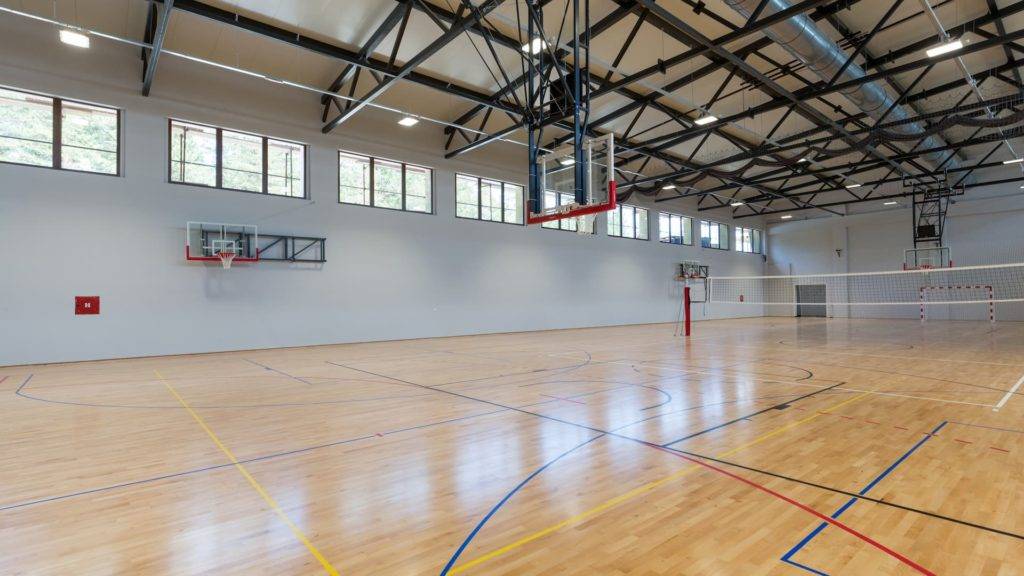
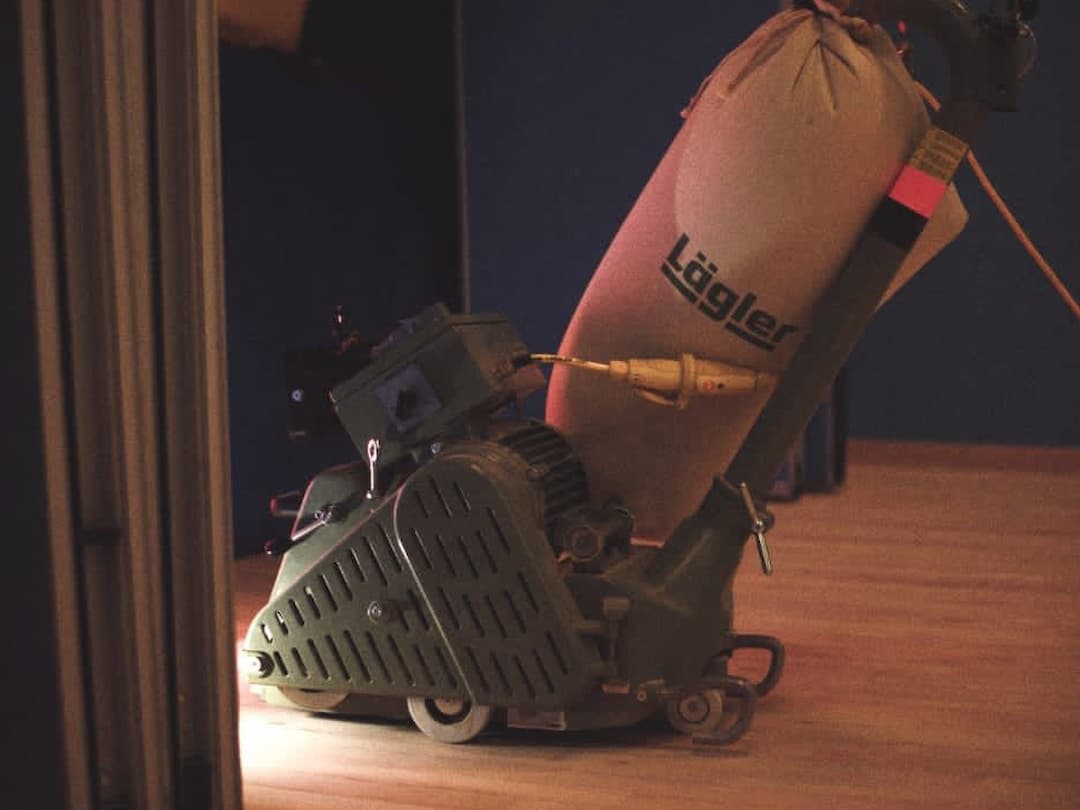
Most community halls we visit have a timber floor that is tired rather than finished, and restoring it is dramatically cheaper than replacing it.
The usual condition is decades of accumulated polish and sealer, worn through in the middle, with scoring from chair legs across the whole area and a few damaged boards where something heavy has been dropped. That is a straightforward restoration.
We sand back through the old coatings to bare timber, which is often the point at which a committee sees the floor properly for the first time in thirty years. Damaged boards are cut out and replaced, gaps are filled with resin mixed with the floor own sanding dust so the colour matches, and nail heads are punched below the surface.
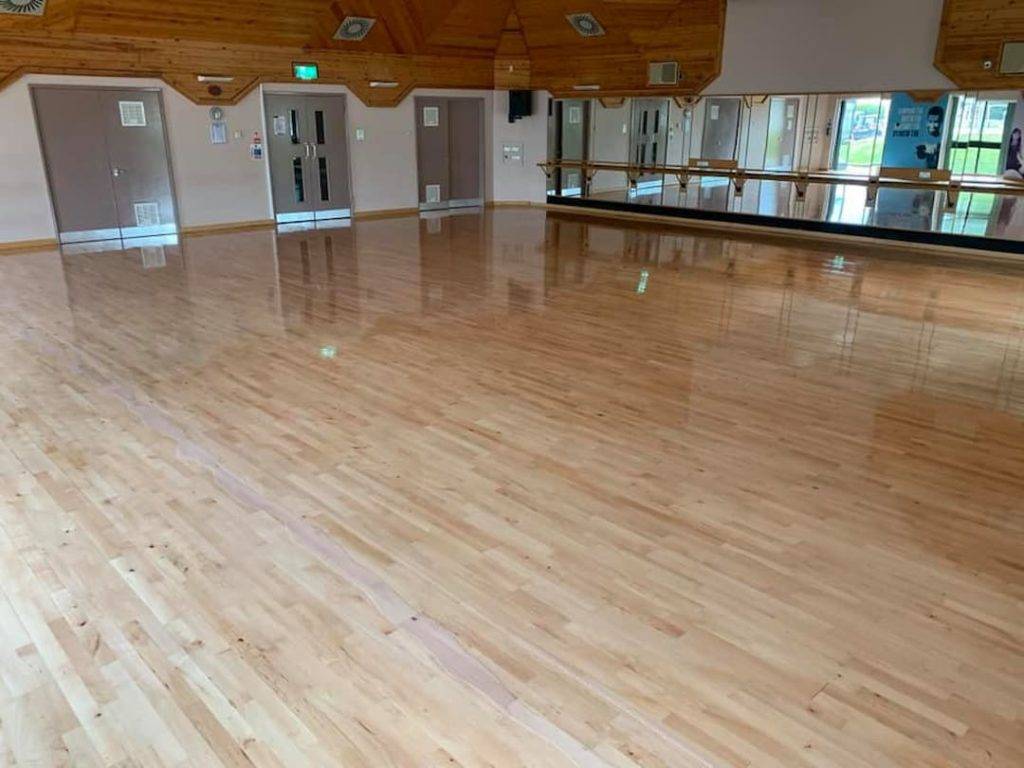
Then it is sealed with a finish chosen for mixed use, and any badminton or short mat bowls markings go back down under the final coat. The transformation is usually the single most visible improvement a hall committee can make, and it costs a fraction of what people assume.
The finish decision matters more in a community hall than almost anywhere, because the hall has to be safe for badminton on Tuesday and comfortable for a ceilidh on Saturday.
We specify a two pack polyurethane for these halls. It is tough enough for stacking chairs, tables and trolleys, it cleans easily after functions, and it holds a slip resistance that works for sport without being sticky underfoot for dancing.
Satin is almost always the right sheen. It hides the scuffing a busy hall collects, it does not glare under the LED lighting most halls have been refitted with, and it looks smart in photographs, which matters when the hall is being hired out for weddings and parties.
The other conversation worth having is about markings. Many village halls carry badminton lines and nothing else, which is usually correct. Some carry short mat bowls or junior court markings that nobody has used in twenty years, and taking those off makes the hall look considerably better for no extra cost while the floor is open.
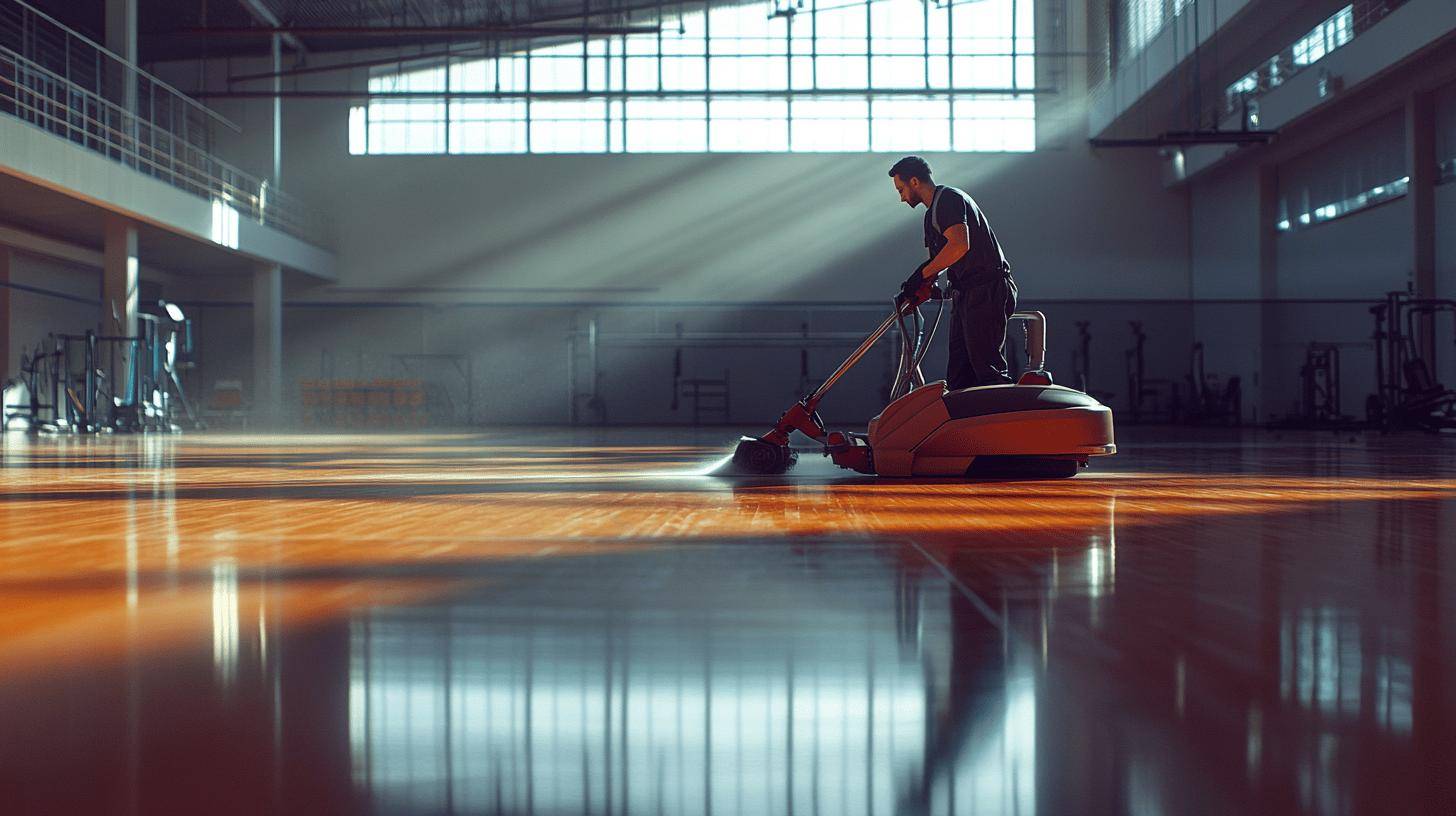
Community halls are usually funded by hire income, fundraising and grants, and the way a job is priced needs to work with that rather than against it.
We quote by element rather than as one number. Sanding, board repairs, sealing, markings and stage restoration are separately priced, so a committee can see exactly what each part costs and decide what to do now and what to leave until next year. That also makes a quotation far easier to put in front of a grant funder, because they can see what they are funding.
Timing usually revolves around the booking diary. Most halls can find a quiet fortnight somewhere in the year, often in January or during the summer, and a full restoration of a typical hall fits into one to two weeks. Where there genuinely is no clear window, a screen and recoat over a long weekend restores the surface without the full closure.
We are happy to attend a committee meeting or provide a written specification for a funding application, because these decisions usually need more than one person to agree them.
A community hall floor that is looked after will go a decade or more between restorations. One that is not can be tired again in three years, and the difference is almost entirely down to a few practical habits.
Chair and table glides are the first and biggest. Fitting proper feet to every stacking chair and folding table eliminates the scoring that causes most of the damage in these halls. It is cheap, it takes an afternoon, and it is the single best thing a committee can do.
A written condition of hire is the second. Most damage in community halls comes from hirers dragging furniture, using tape on the floor or wheeling equipment in without protection. A short paragraph in the hire agreement, and a supply of protection sheets, prevents most of it.
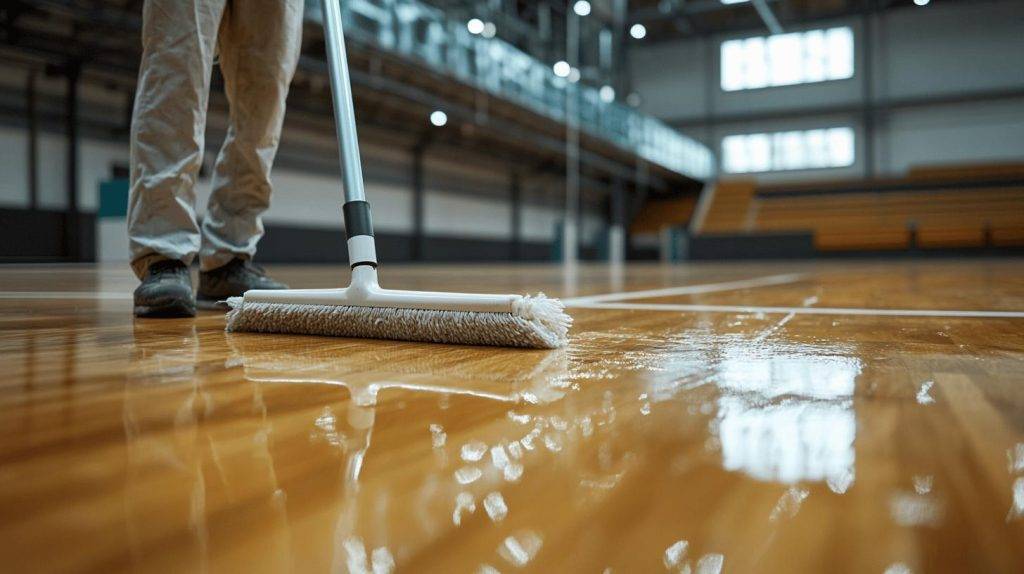
Cleaning is the third. Dust mop before and after use to lift grit, damp mop with a neutral cleaner for sealed timber, and keep polish well away. Polish on a hall floor builds up, goes slippery and eventually has to be stripped off chemically at real cost.
No. Community halls are some of our longest-standing clients and no floor is too small. We plan rural visits so everything is completed in one trip rather than several.
Yes. The survey report sets out the condition, the recommended work and firm costs in a form designed to support funding bids, and we are happy to provide additional specification detail if an application requires it.
A finish tough enough for chairs, tables and staging rather than one optimised purely for sport, plus protective covering for event days. Furniture causes far more damage than activity in a multi-use hall.
With the correct product and routine, which we will demonstrate to whoever cleans the hall. Most slippery-floor complaints come from cleaning residue rather than a worn seal, and that is entirely avoidable.
Usually yes. It handles mixed use better than any synthetic, it can be refinished repeatedly instead of replaced, and it is the surface people prefer for dancing and for badminton alike.
Yes, though the polish has to be removed chemically before sanding or it clogs the abrasives. It is a routine part of the job on older community halls and we allow for it in the quotation.
A full restoration takes one to two weeks with the hall closed. Where there is no clear window, a screen and recoat over a long weekend restores the surface with far less downtime.
Yes. We provide itemised written specifications and quotations broken down by element, which is what most funders want to see, and we are happy to attend a committee meeting.
Only the ones that get used. Many halls carry markings for activities that stopped years ago, and removing them while the floor is open costs nothing and makes the hall look considerably better.
Proper glides on all chairs and tables, protection sheets available for events, and a short clause in the hire agreement about dragging furniture and using tape on the floor.
Send photographs or book a free survey and we will tell you honestly what your hall floor needs, including if the answer is nothing yet. Call 01823 674562.