
Indoor cricket flooring has two jobs that pull against each other. Practice lanes need a surface that gives a hard ball a true, repeatable bounce and gives bowlers firm footing through the run-up, yet in most UK sports halls the same floor must also suit badminton, netball and basketball for the rest of the week.
Courtship Flooring installs, refurbishes and line marks sports hall floors used for nets, from shared school halls with roll-out mats to dedicated lanes at clubs and academies, and advises on surfaces, creases and floor protection. Commercial and institutional facilities only.
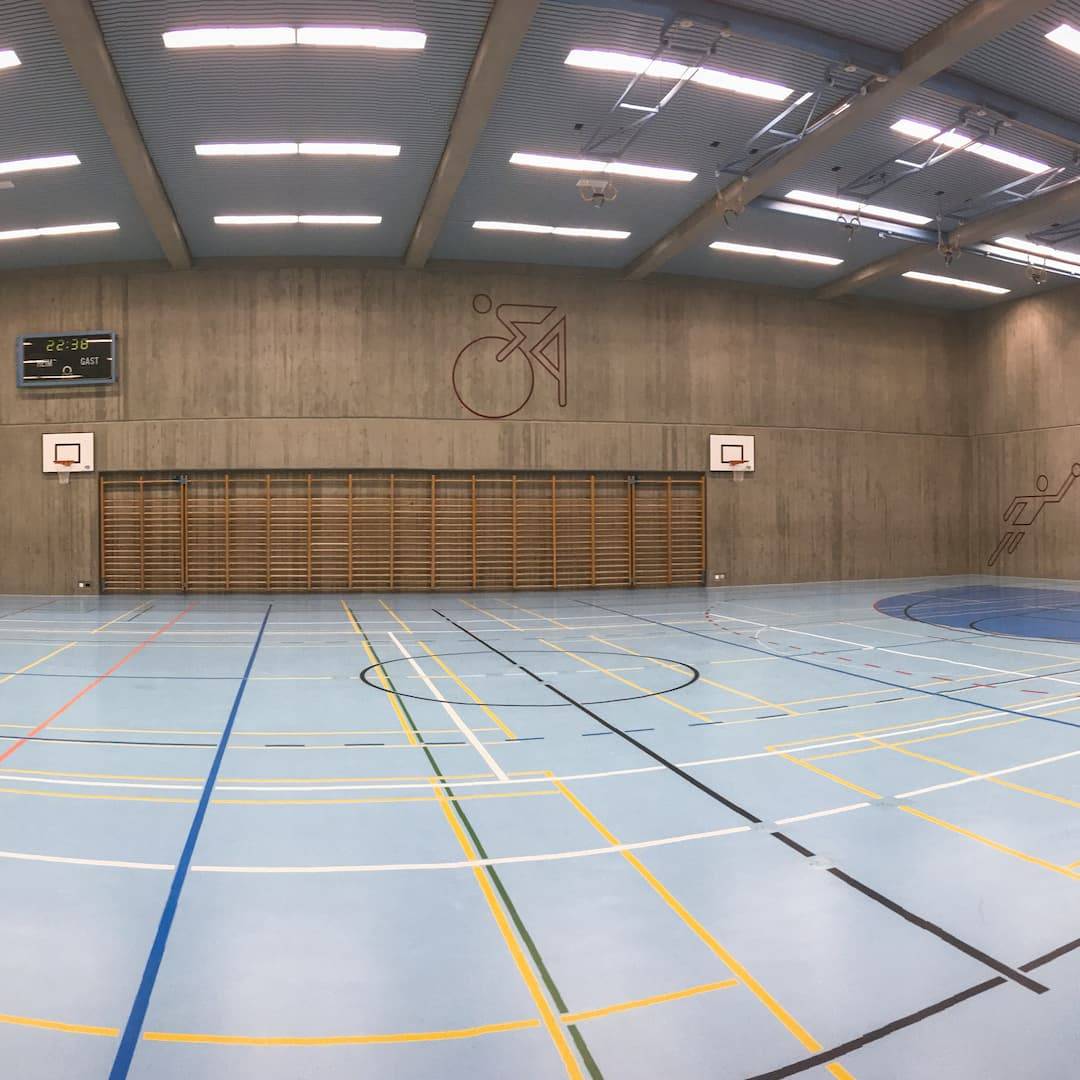
Most school and leisure centre nets run in a multi-sport hall. Batting and bowling mats are unrolled along each lane, and everything is packed away before the next booking. ECB guidance accepts that a properly designed multi-purpose hall, built to suit the other sports it hosts, should be adequate for cricket without further modification. Adding nets to an existing hall is mostly a question of mats, netting and lighting, and often needs no change to the floor, provided the surface is flat, sound and free of dead spots.
Clubs, academies and county set-ups that run nets most days often move to a cricket-first hall. The surface can then be built in zones, with different underlays beneath the batting and bowling ends, and the crease markings can be permanent. ECB guidance for cricket-specific indoor centres suggests four to six lanes, and also recommends designing them with other sports in mind, because a dedicated centre is expensive to run on cricket bookings alone. That shapes the floor specification, since badminton or fitness classes may end up sharing the surface.
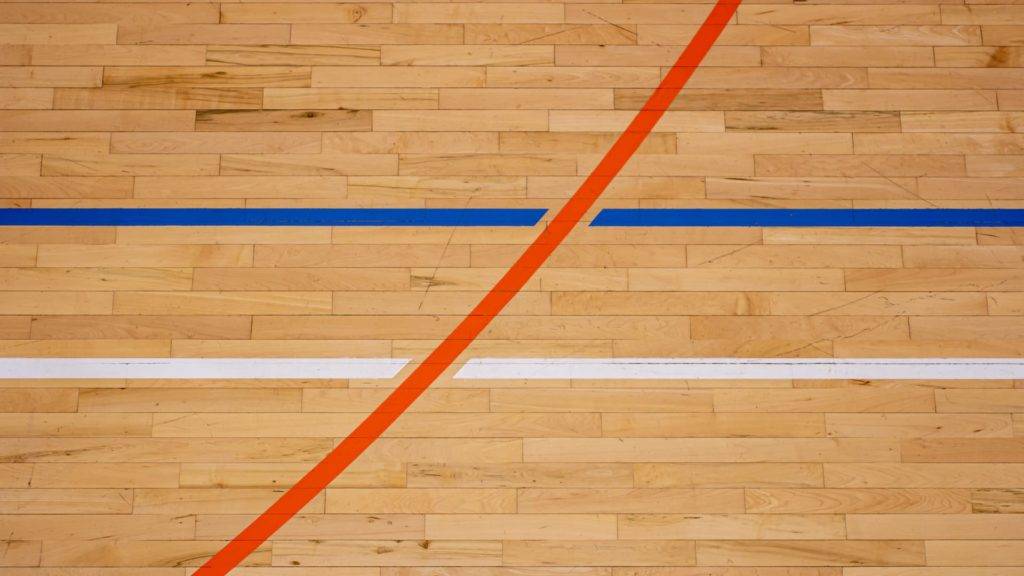
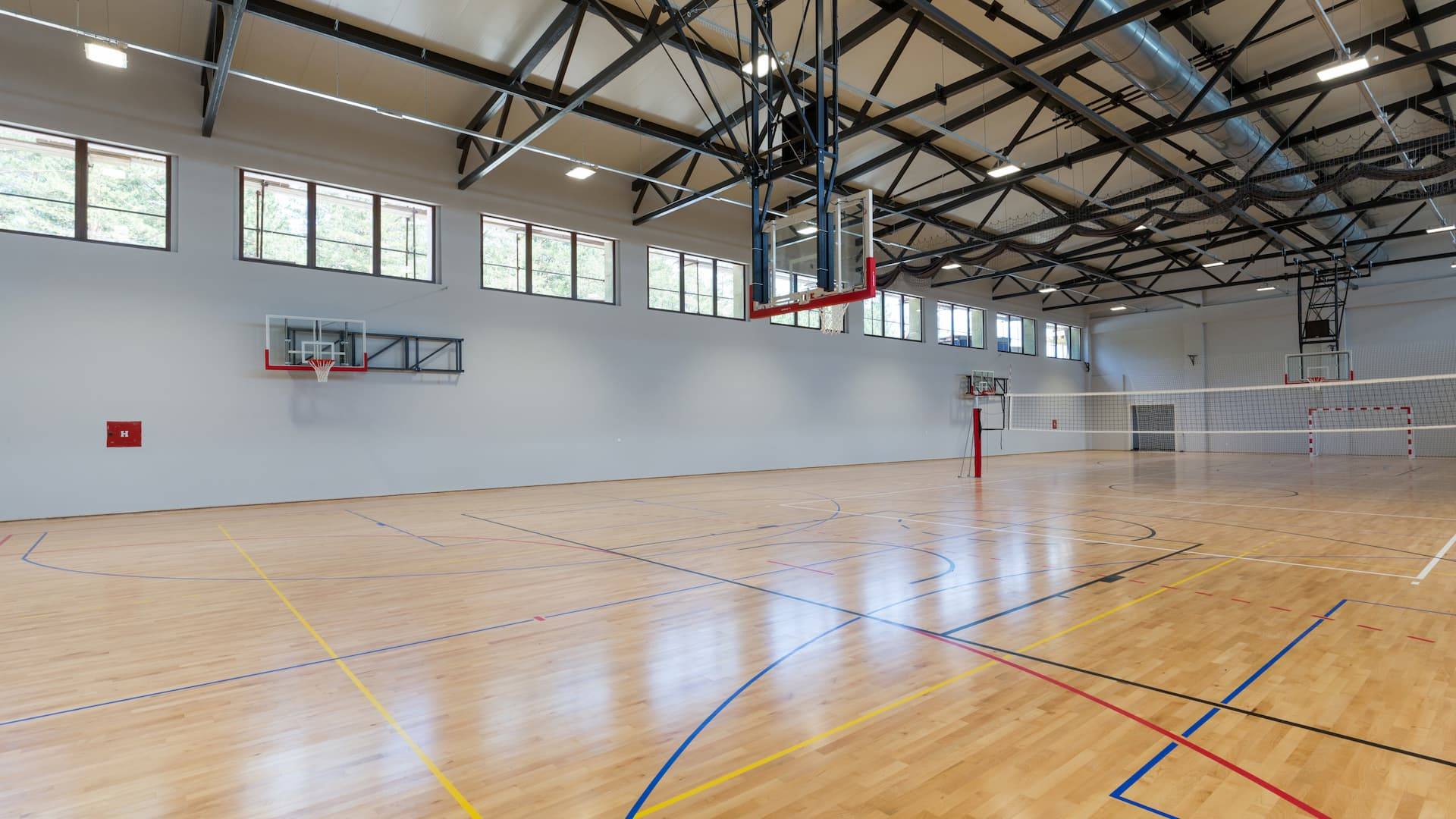
The six-a-side indoor game, with leagues loosely affiliated to the ECB and a national indoor cup at the top level, is played in multi-purpose halls with the walls in play. ECB guidance allows a full-length pitch to be marked in the centre of a multi-sport floor, or supplied as a roll-out match pitch of around 30 m by 2 m, depending on hall size. Halls taking league fixtures need to think about the whole floor, not just the lanes, because fielders chase, dive and slide across all of it.
ECB guidance advises settling at the outset whether cricket is the main sport or one of several, because it changes both the space and the budget. For the floor, that decision fixes the hall length, the surface type, whether the batting and bowling ends are zoned and whether creases are permanent. Our sports hall flooring installation team can work from your lane layout, so the floor and the cricket fit-out are designed together from the first drawing.
MCC Law 6 sets the pitch at 22 yards, or 20.12 m, between the bowling creases. The ECB’s guidance note for indoor sports halls with cricket provision (TS3) adds space behind the stumps and a run-up, giving an optimum internal hall length of 33.62 m. It accepts a shorter hall down to 31.2 m, with every metre lost taken off the run-up end.
Each lane is 3.6 m wide, with at least 1 m between the outer netting and the walls. The batting-end surface measures 11.22 m by 2 m, running 10 m in front of the popping crease, with 1.5 m behind the stumps. The bowling-end surface is 10 m by 2 m: 6 m behind the bowling crease and 4 m in front.
Sport England now recommends 34.5 m by 20 m for a four-court hall, up from 33 m by 18 m. A hall built to the newer size clears the ECB optimum. One built to the older length sits between the ECB minimum and optimum, which works but shortens the run-up.
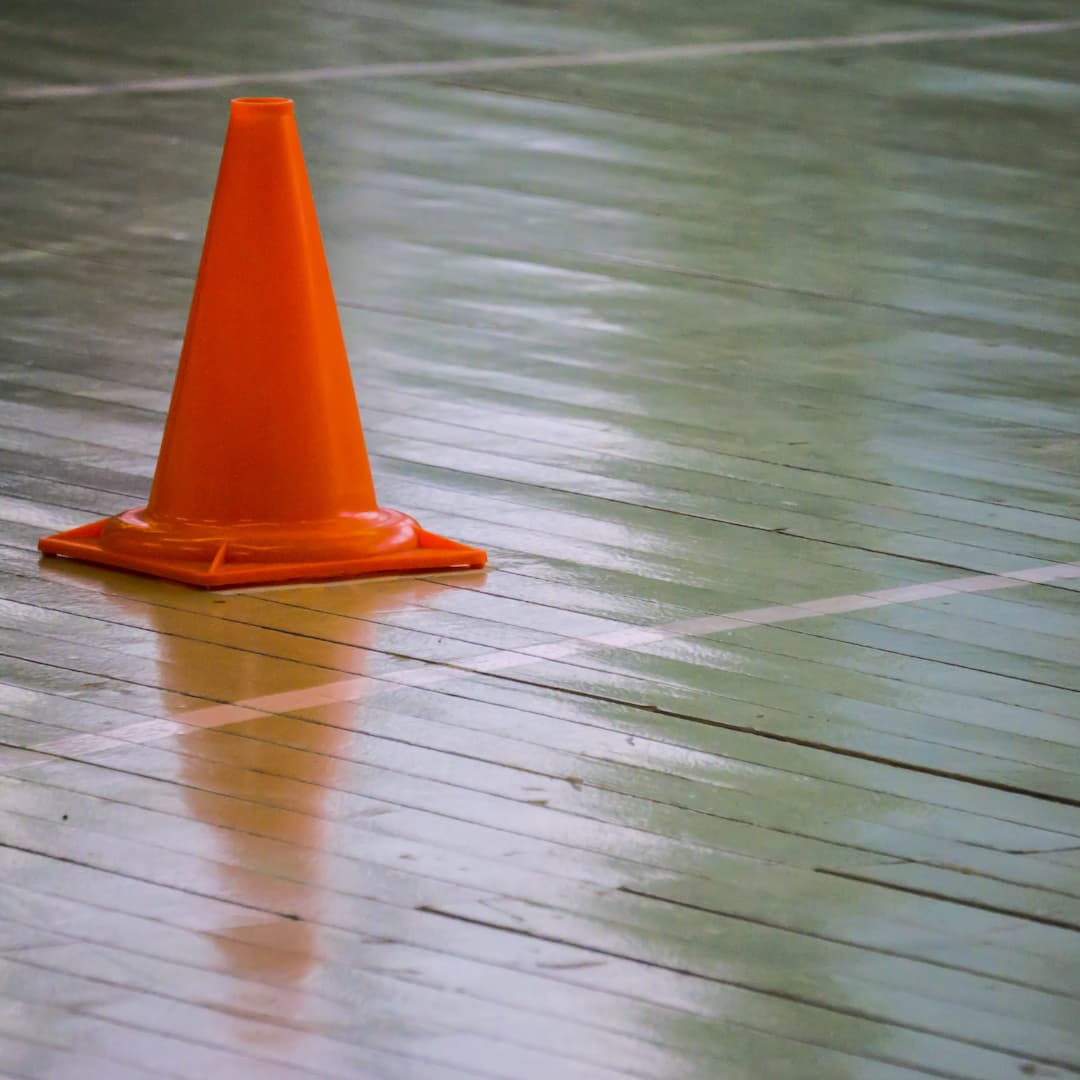
How a cricket ball comes off the floor depends on the whole build-up: the top layer, whatever sits beneath it and the friction of the finish. BS EN 14904, the standard most hall floors are tested to, measures ball rebound with a basketball, so a compliant floor says little about how a cricket ball will bounce or skid.
Area-elastic wooden sports flooring spreads an impact across a wide panel, which suits players and court sports. In ECB comments on one council hall scheme, only point-elastic vinyl floors were said to be proven for technical cricket training, and even those needed matting over them. The ECB held training to a higher standard than indoor matches, and the design team kept sprung timber with mats for recreational play.
Many vinyl and PU sports flooring systems are point elastic, and a seamless poured PU finish removes joints from the pitching area. For cricket-specific centres, ECB guidance describes polymer sheeting or carpet on a concrete screed, noting that sheeting generally wears better. No standard pace test exists, so ask for results on the exact combination you intend to buy.
On a shared floor the mats do most of the cricket work. ECB guidance asks for mats that are firm with no significant cushioning, and warns that a cushioned mat over a resilient sub-floor can seriously affect ball bounce. It also notes that a mat suited to one hall may not perform on another, so a mat that plays well on vinyl over concrete can behave differently on a sprung timber floor.
For permanent surfaces, the ECB’s TS3 guidance sets targets. A cricket ball dropped from 2 m should rebound between 240 and 520 mm on club and educational surfaces, with every test position within 50 mm of the mean. The batting end should exceed 100 gravities on a Clegg impact hammer, and force reduction at the bowling end should fall between 25 and 55 per cent. Surface regularity should be within 2 mm under a 0.3 m straightedge and 6 mm under a 3 m straightedge.
A sprung floor with failed pads or battens develops dead spots, which show through mats as low, uneven bounce. Our sprung floor restoration work finds and corrects these before the mats go down.
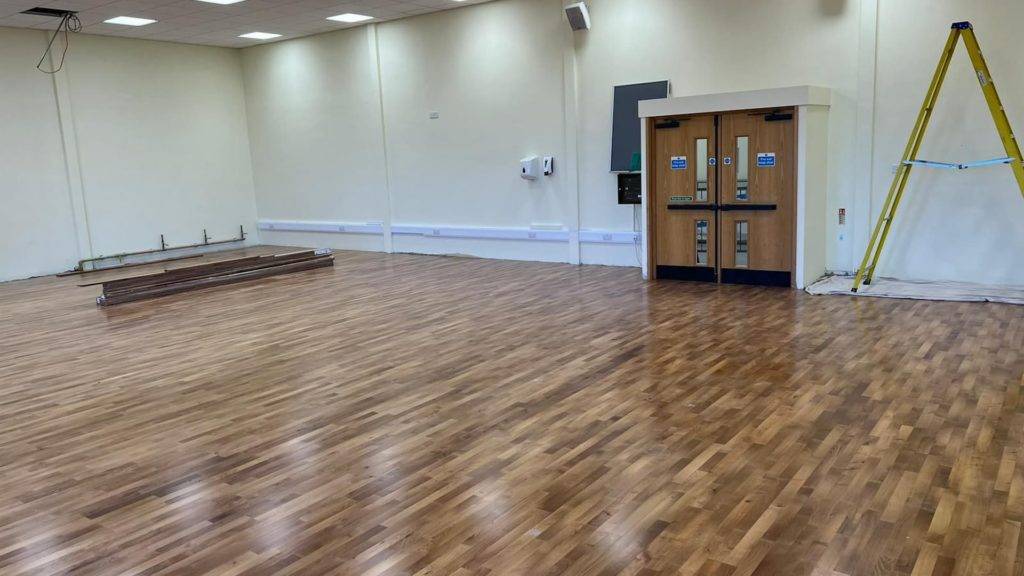
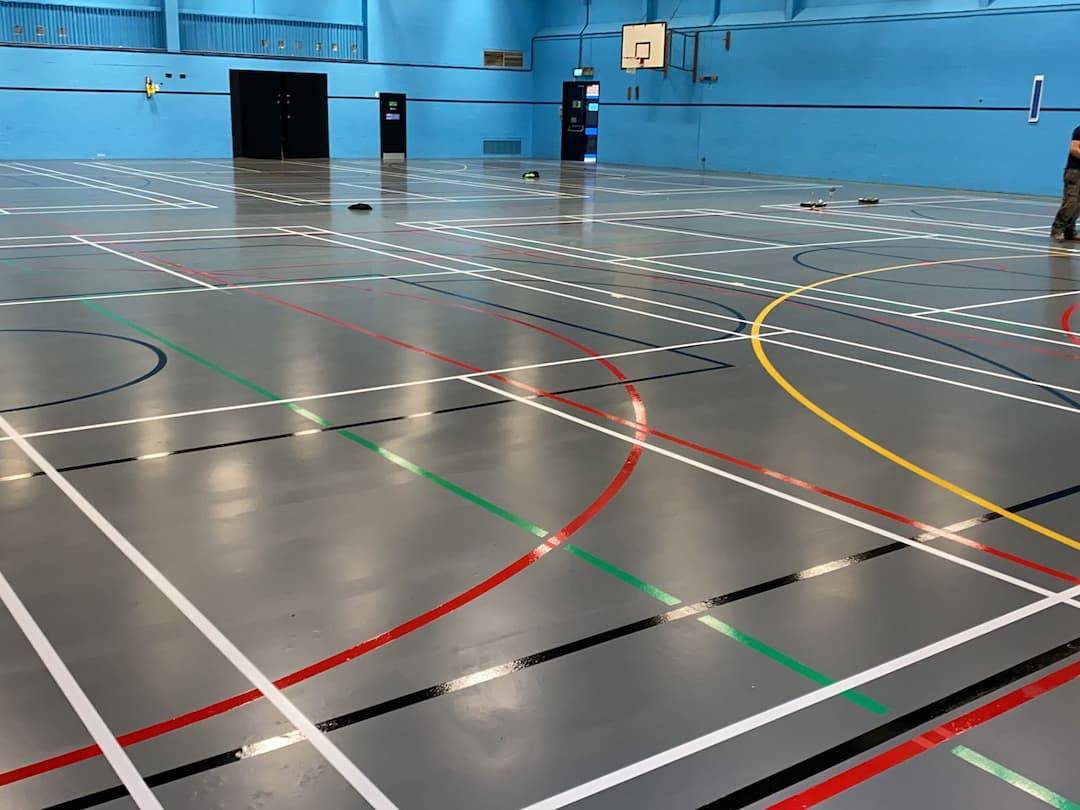
MCC Law 7 requires a bowling crease, a popping crease and two return creases at each end, marked by white lines. The bowling crease is 2.64 m long. The popping crease sits 1.22 m in front of it and must be marked for at least 1.83 m either side of the line through the middle stumps. The return creases run at right angles, 1.32 m either side of that line, and are marked from the popping crease to at least 2.44 m behind it.
The Law also fixes which edge of the paint counts: the back edge for the bowling and popping creases, and the inside edge for the return creases.
Those lengths clash with practice equipment. Law 6 allows a non-turf pitch as narrow as 1.83 m, so a 2 m mat is wide enough to play on, yet it cannot carry the full bowling or popping crease, and the return creases fall outside its edges. For nets that is normally accepted. Full-length creases for an indoor match pitch are best painted on the floor as part of sports hall line marking, set out against the existing court lines.
Cricket nets in sports halls usually hang from aluminium tracking at roof level, so they can be drawn back to the walls for other sports. ECB guidance asks for side netting with at least 0.3 m of slack lying on the floor, which weights it and stops it billowing into the next lane, and for netting that is fire retardant to BS 5867 Part 2. That drape runs across the finish every time the nets are drawn out and stowed, so nets should be walked into place, not dragged.
Existing floor sockets for volleyball or other post sports should sit clear of the mats, so a lid cannot lift under a bowler’s foot. If anyone proposes fixing equipment into the floor, check with your flooring contractor first, because a hole through a sprung floor can damage hidden battens or pads.
A four-court hall may already carry badminton, netball, basketball and volleyball markings, so keeping practice creases on the mats leaves the court lines readable. On timber, the seal also has to balance grip for a bowler’s delivery stride against controlled slide for a badminton lunge.
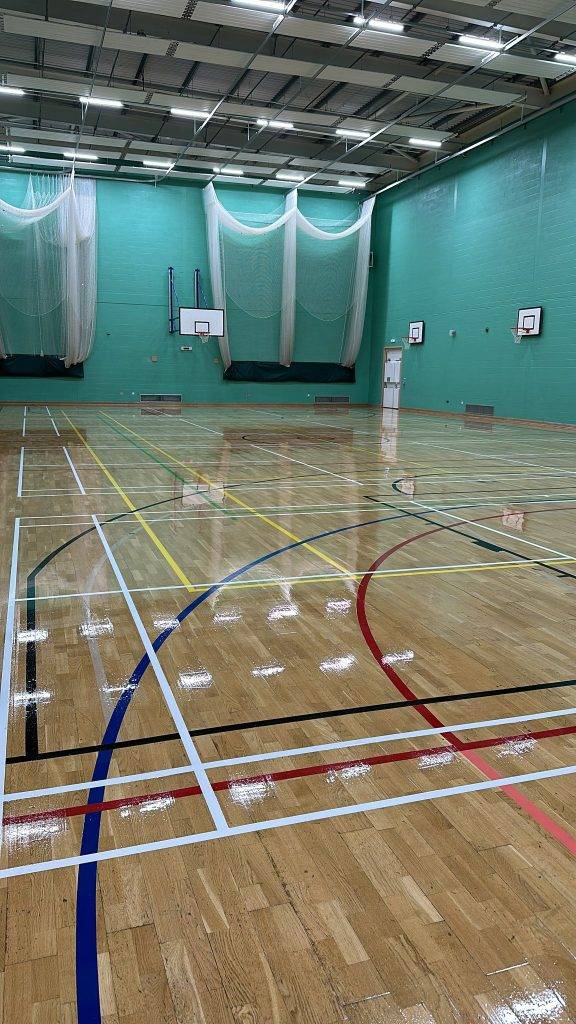
Metal spikes and studs do lasting damage to standard sports hall surfaces, scoring timber lacquer down to bare wood and puncturing vinyl and PU. Some indoor cricket schools require studded footwear to be removed before entry, and halls hosting nets should do the same: rubber-soled cricket shoes or clean trainers only, with entrance matting to catch grit from outdoor squares.
Wear in a shared hall gathers in predictable places: the start of the run-up beyond the bowling mat, the bowler’s front-foot landing and the strip of bare floor between the mats, just under 5 m long on the ECB layout, which takes the follow-through. ECB guidance offers bowling-end mats or built-in shock pads running 3 m past the popping crease. Mats should be lifted on a roller or trolley, never dragged, since trapped grit acts like sandpaper.
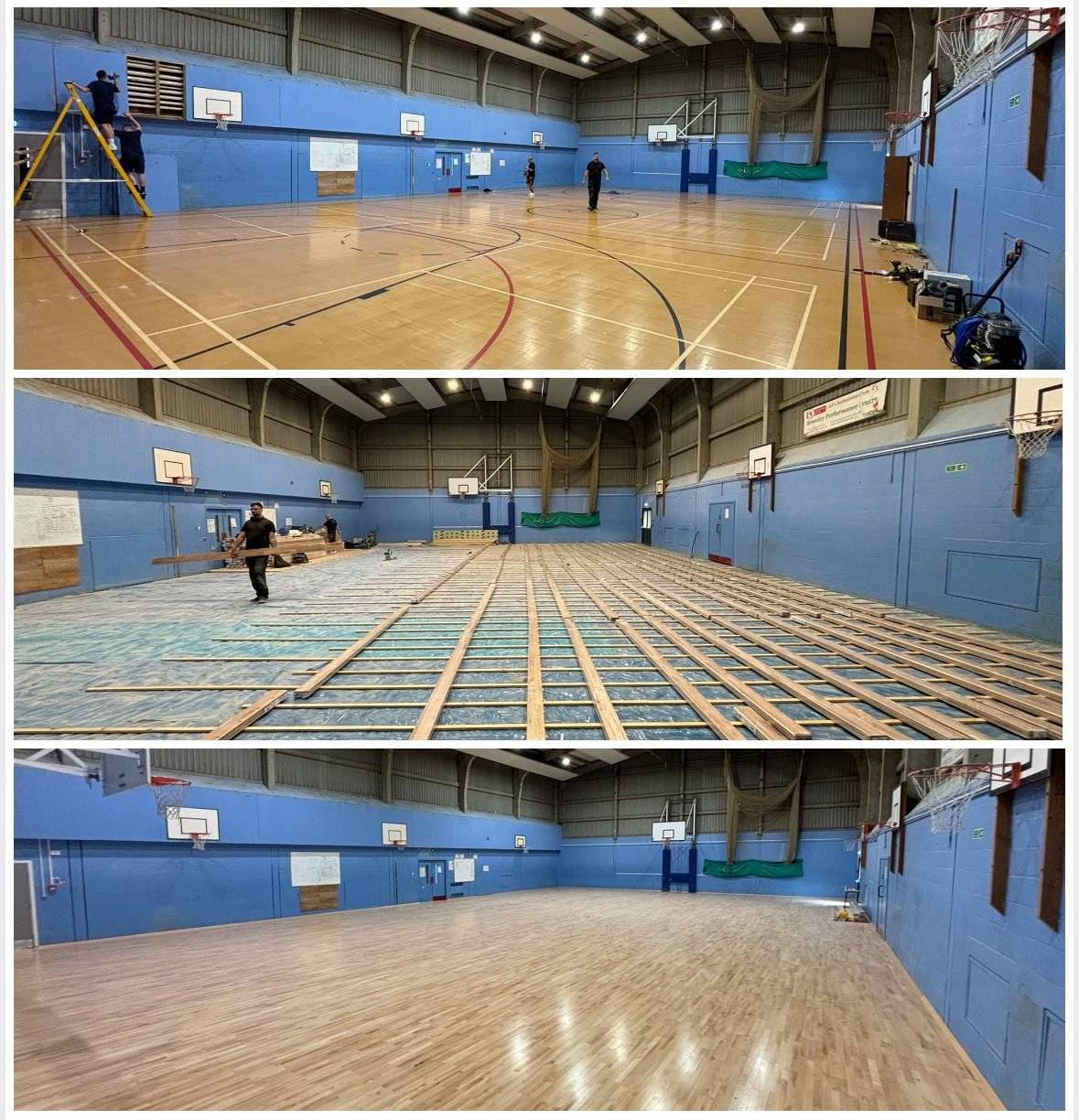
A timber floor used for nets follows the same cycle as any busy hall: regular deep cleans, a screen and recoat when the seal thins in the traffic lanes, and full sanding and sealing once wear reaches bare timber. Solid timber can be sanded many times, so a cricket-worn hall is rarely a write-off.
Indoor nets are busiest through winter and early spring, so floor work on a hall used for cricket fits best between the end of the indoor season and the autumn, which in schools usually means the summer holiday.
Our timings on comparable halls give a planning guide. A full sand, seal and reline of a gym of about 240 m² takes five to six working days. A four-court hall of about 550 m² takes nine to ten working days, which fits within a school summer break. A deep clean, abrade and reseal is a two-day job that can be completed over a weekend, so a pre-season refresh need not cost weekday bookings.
Deep cleaning starts from £4.50 per m². Other costs depend on the hall: the floor type and condition, any sub-floor repairs uncovered in the run-up zones, the number of courts and creases to be marked, and access, so each hall is priced individually. Pricing cricket creases with the court lines means both can be marked in one visit under one seal coat, avoiding a second closure later in the year.
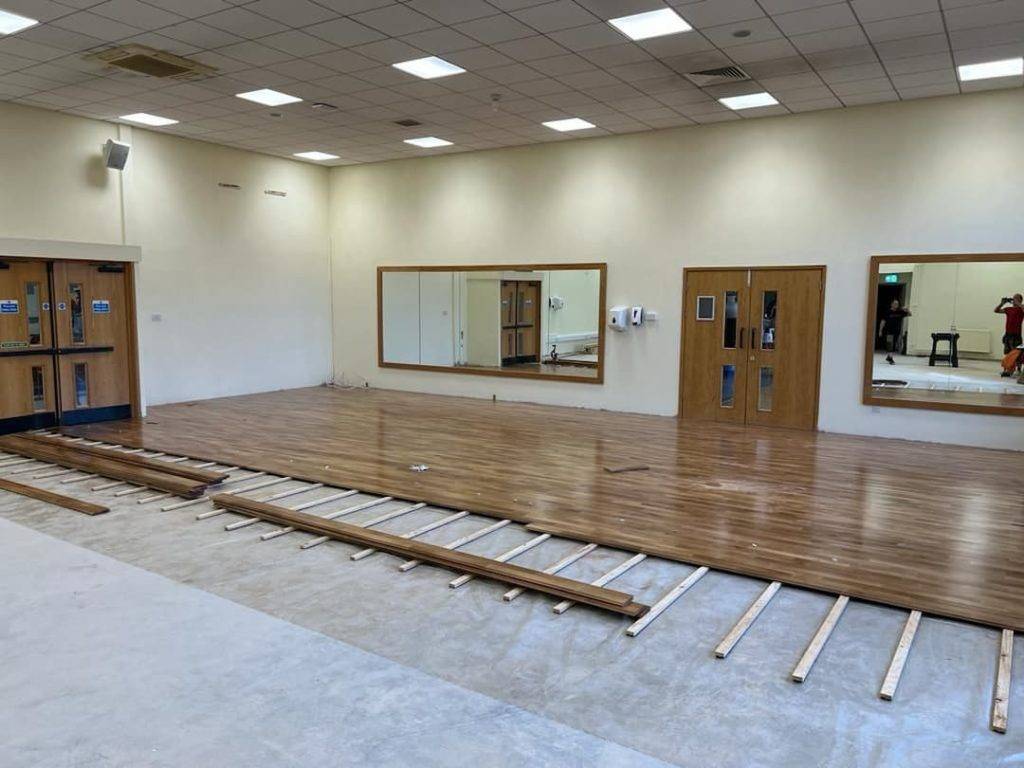
Courtship Flooring has been installing and refurbishing sports floors since 1987, and our own teams carry out every job, with nothing subcontracted. On any indoor cricket flooring job, the work starts with a site visit focused on where the nets sit: run-up wear, landing-zone damage, tape residue, dead spots and the condition of existing lines.
We then agree the scope with you. On a shared hall that might be a refurbishment with creases added to the line plan. On a new build it means fixing the lane positions, the line plan and any zoned surfaces with your design team before work starts. We install timber, vinyl, PU and lino systems, including sprung sub-floors, and work with Junckers and Boen timber.
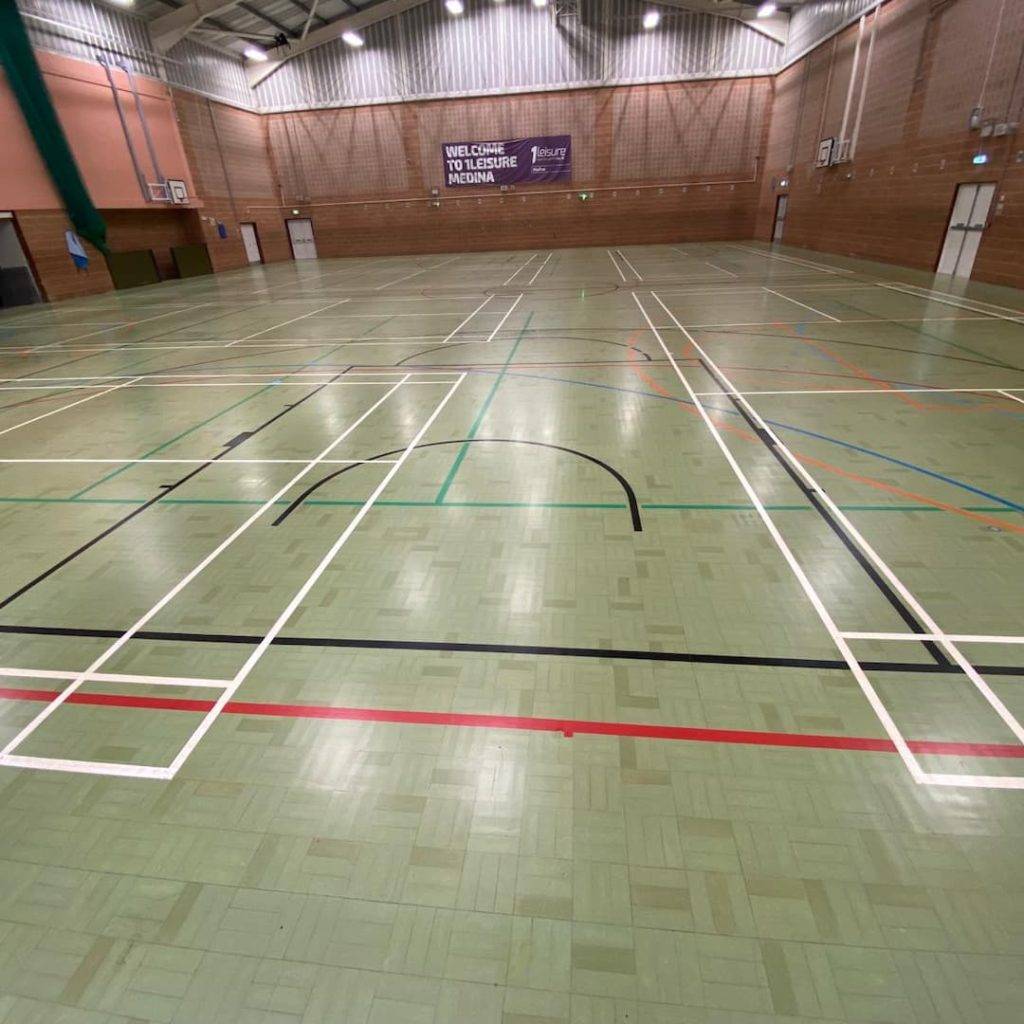
Our projects include a Junckers solid maple installation at Surrey Sports Park, a new Junckers floor at Harris Academy in Wakefield and a full sand, reline and reseal at Liskeard Leisure Centre in Cornwall. After handover we can set up sports hall floor maintenance timed around your nets season, so the floor is cleaned and checked before the lanes go back up.
Yes. The ECB has published facility guidance notes for indoor sports halls with cricket provision and for cricket-specific indoor centres, covering lane layout, netting, lighting and surface performance. They are guidance, not regulations, and the ECB asks clubs planning an indoor project to contact its facilities team.
ECB guidance suggests double-sided tape or another fixing unless the mat is heavy enough to stay put. Test any tape on a small area first, because some adhesives lift lacquer from timber or leave residue on vinyl when peeled off. A low-tack tape, removed at the end of each session, is the safer choice.
Usually, yes. On a sound timber floor the line positions are lightly abraded, painted and sealed over, so the creases wear at the same rate as the court lines. If a screen and recoat is due soon, adding the creases at that visit costs less than a separate trip.
There is no legal requirement to slip test a sports floor, but the run-up and delivery stride are where a bowler most needs dependable grip, and wear concentrates there. A pendulum slip test to BS 7976-2 across the run-up zones gives you a measured record before the season starts and after any recoat.
Yes. On timber, damaged boards can be cut out and replaced, then sanded and sealed to blend with the surrounding floor. Vinyl and PU can usually be repaired locally, although an exact colour match on an older floor is not always possible. We check the sub-floor beneath before the area is closed up.
Netting, tracking, blinkers and roll-out mats come from specialist cricket equipment suppliers. Our work is the floor itself: installation, refurbishment, repairs and line marking. Where a netting contractor is also on site, we agree the order of works so towers and access equipment stay off a fresh seal while it cures.
That depends on the seal system and the hall temperature. Light foot traffic is usually possible well before the finish has fully cured, but tape, heavy mats and trailing netting are best kept off until full cure. We give you the date for your floor at handover.
On timber, sealed-in lines come out completely when the floor is next sanded back to bare wood. Until then they can only be painted over in a colour close to the floor, which tends to remain visible. On vinyl and PU, clean removal is harder, so agree the line plan carefully at the outset.
Very likely. Courtship Flooring is based in Wellington, Somerset, and our teams work across the UK and internationally for schools, colleges, universities, leisure centres, sports clubs, academy trusts and local authorities. Tell us where the hall is and how the lanes are used, and we will arrange a site visit.
Send us your hall size, floor type and lane layout, and we will advise on the surface, creases and protection.