
Netball asks more of a floor than almost any court sport. Players land from height on a single foot, pivot hard and stop dead, so the surface underneath has to absorb shock, grip predictably and give consistent ball bounce, all at once. Courtship Flooring installs and refurbishes netball court flooring for schools, clubs and leisure centres across the UK, and we have been doing it since 1987.
We fit timber, polyurethane and vinyl netball surfaces as part of our sports hall installations, refurbish existing courts back to competition condition, and provide precise netball court line marking to current England Netball specifications. Nothing is subcontracted, and every court can be slip tested on handover.
Netball usually shares the hall with other sports, and our futsal court flooring and indoor volleyball court flooring pages show how those courts are set out alongside it.
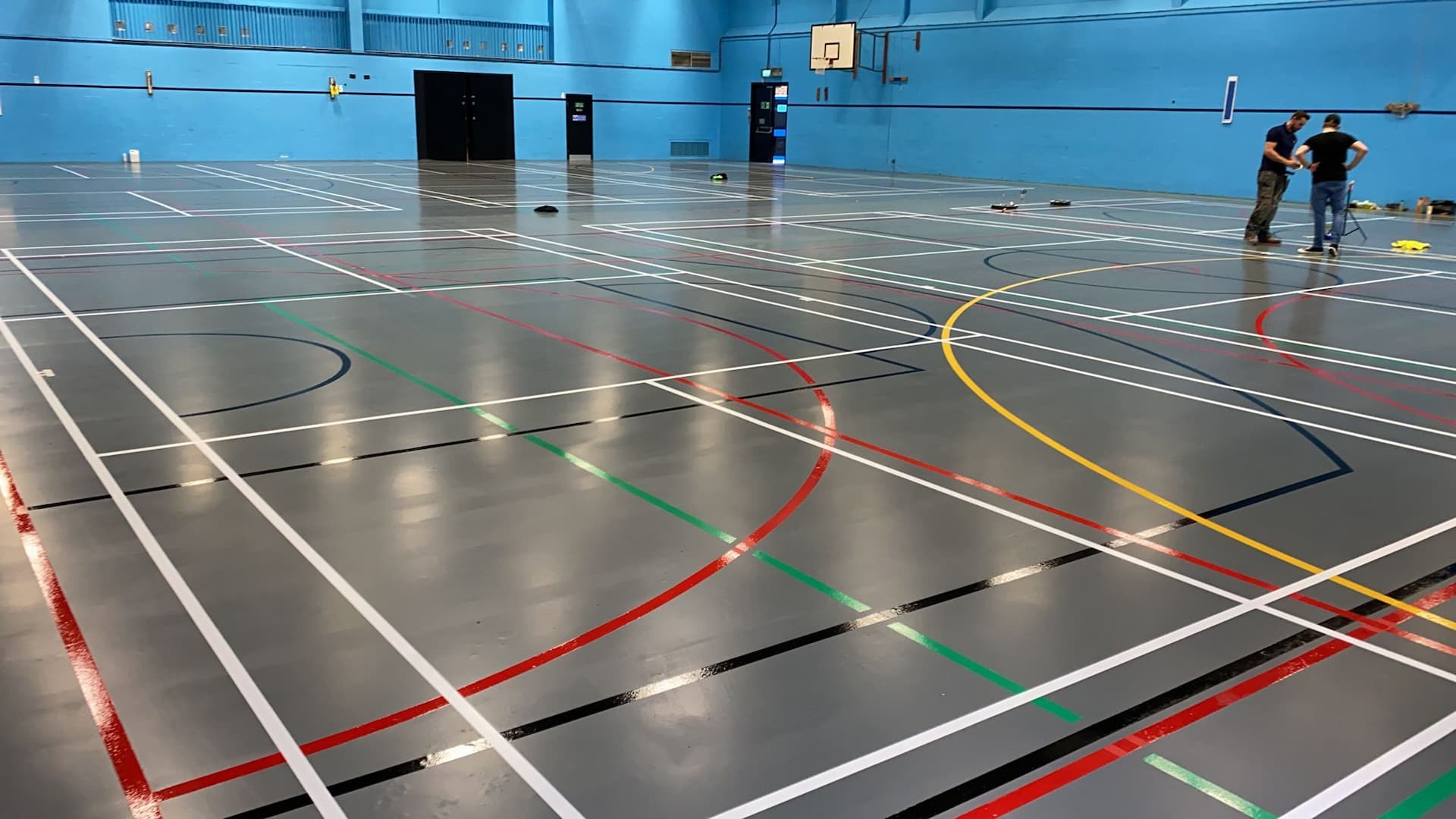
There is no single right answer for netball, only the right answer for your hall. Sprung timber gives the classic feel and the best longevity, refurbishable again and again over decades. Polyurethane suits busy multi-use halls where netball shares the space with futsal and fitness classes. Vinyl systems offer excellent value for schools and community courts.
Whatever the surface, shock absorption is the non-negotiable: netball’s one-footed landings send enormous force through ankles and knees, and a compliant surface to BS EN 14904 takes a meaningful share of that impact out of the player. We will assess your hall, your players and your budget, then recommend honestly.
Netball markings go wrong more often than any other court sport. Court dimensions and line specifications have moved on over the years, and a surprising number of UK school courts are still marked to outdated layouts, an issue we examined in our guide to netball court line marking regulations for UK schools.
We mark every court to the current England Netball specification, in colours chosen to stand out clearly from the basketball and badminton lines sharing the hall, and we seal the lines so they last as long as the finish around them.
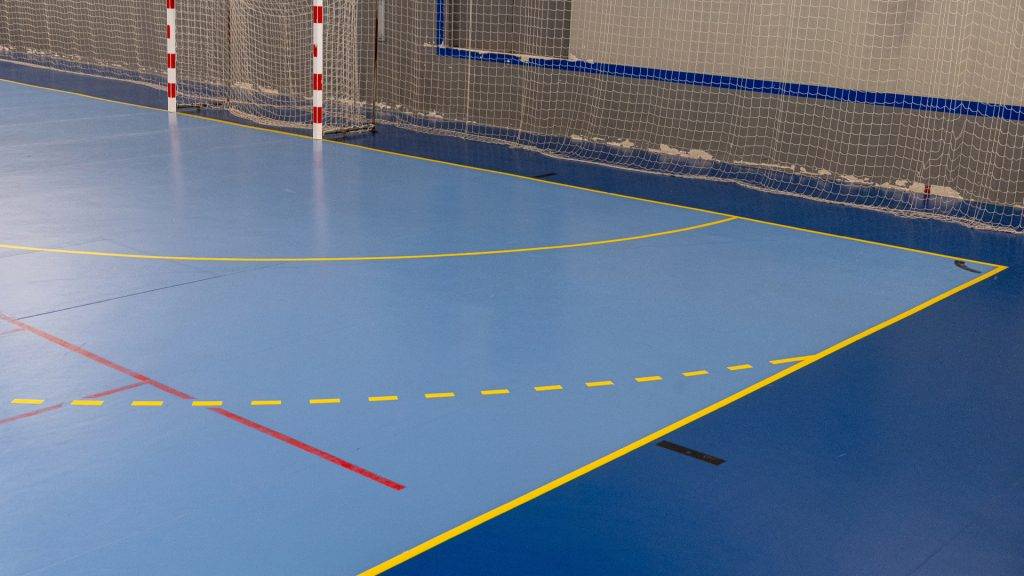
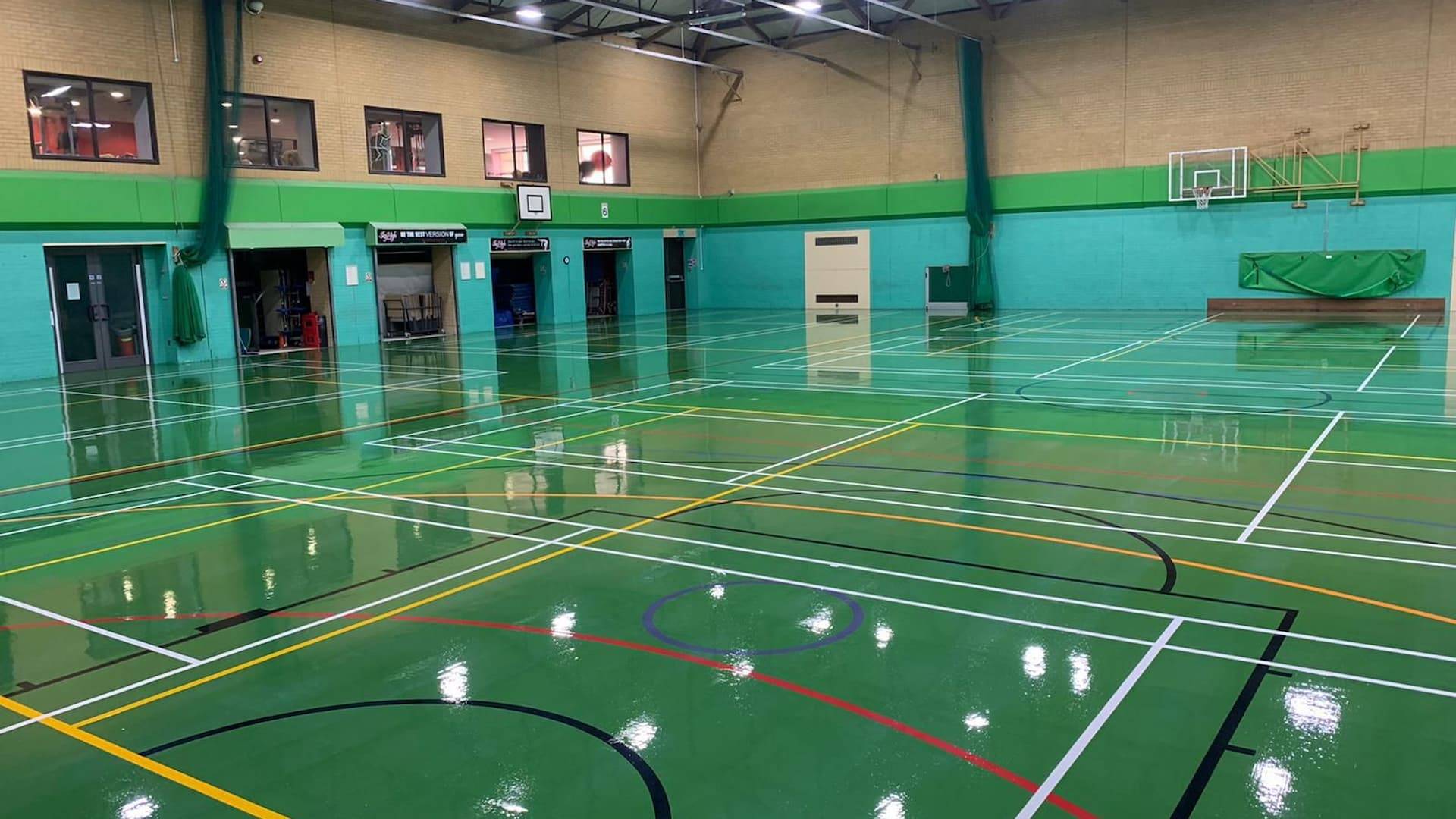
Most netball courts live in multi-use halls, and the flooring decision belongs to the whole timetable, not one sport. We help schools weigh netball against everything else the hall hosts, and our work on netball surface choices for leisure centres shows how the trade-offs play out in real facilities.
For clubs and academies chasing performance, we can also advise on court-specific detail: run-off zones, contrast between court and surround, and the surface consistency that lets players trust their footing at full stretch.
If your existing netball court has faded lines, dead spots or a slippery surface, refurbishment beats replacement in almost every case. We sand timber courts back to clean boards, reseal with a finish matched to the traffic, and re-mark to current regulations, typically inside a week and often during the school holidays. The transformation is dramatic and the cost is a fraction of a new floor.
Netball is played on hard stops. The footwork rule means players land, plant and pivot rather than running through the ball, and that puts a very specific set of demands on the surface.
Grip has to be reliable and predictable. A player receiving in the goal circle needs to stop dead and know the floor will hold, and a surface that is even slightly polished through the centre is a genuine injury risk rather than an inconvenience.
Shock absorption matters more in netball than in most hall sports, because of the repeated landing on a single foot. An area elastic timber floor over a sprung structure deals with that well, spreading the load and reducing what goes through the joint. Playing regular netball on a floor laid directly to concrete is hard on ankles and knees, and coaches notice it long before facilities managers do.
Ball response is the third element. Netball involves less bounce than basketball, but a dead floor still changes how the game plays, and dead spots are quickly obvious to anyone using the court seriously.
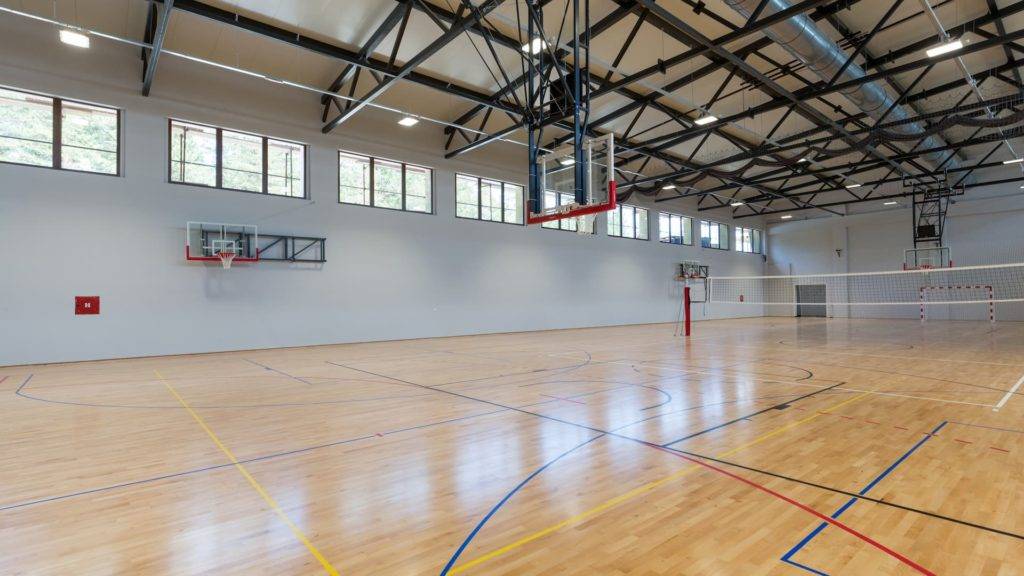
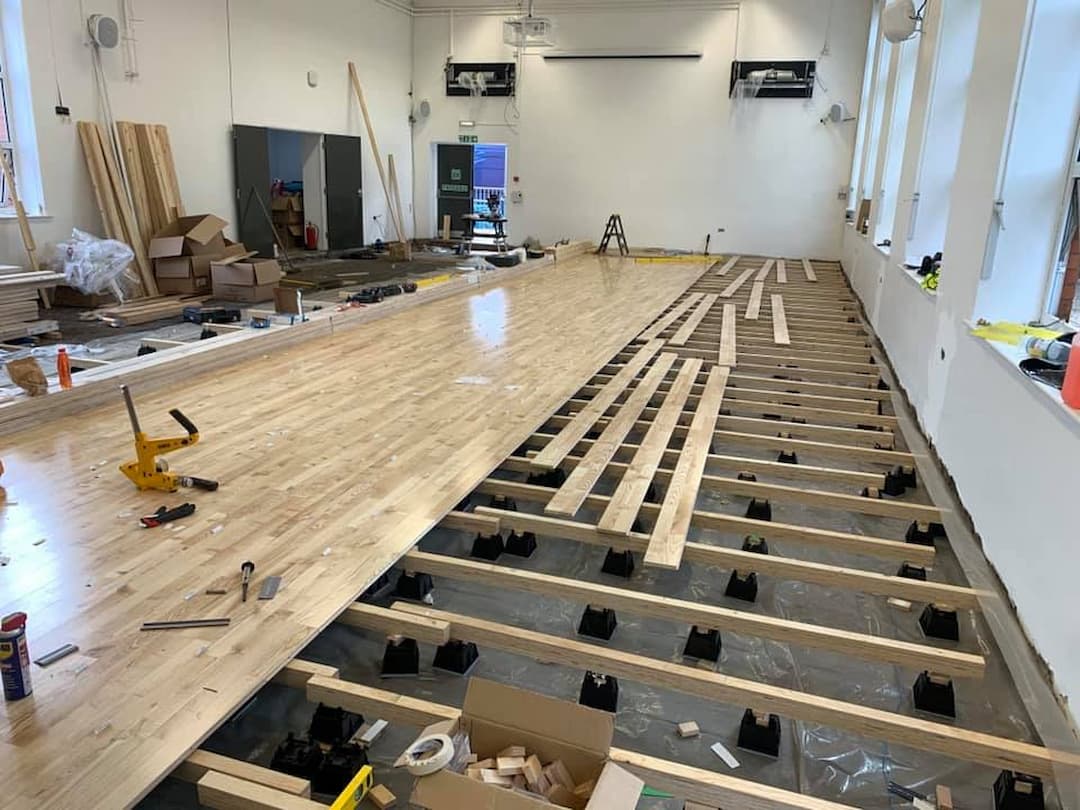
Three surface types account for almost all indoor netball played in this country, and each has a legitimate case.
Sprung timber is the traditional and generally the best answer for a multi sport hall where netball is a major activity. It gives the area elastic response the sport wants, it can be refinished repeatedly across decades, and it is what most players prefer underfoot. It is the highest initial cost and the lowest cost over thirty years.
Point elastic vinyl and polyurethane systems are common in leisure centres and newer school halls. They are more forgiving underfoot in a localised way, they need no refinishing, and they suit halls with a very mixed timetable. They have a finite life and are replaced rather than restored when it ends.
Combined systems, where a resilient surface sits over a sprung structure, give both and are specified where netball is played at a serious level alongside other sports.
Which is right depends on the timetable, the budget and how long you intend to keep the building. We will talk through all three rather than steering you to one.
A full netball court is 30.5 by 15.25 metres divided into three equal thirds, with a 0.9 metre centre circle and goal circles of 4.9 metre radius. England Netball asks for 3.05 metres of clear run off around the court for competitive play.
Very few school halls can deliver that, and it is worth being clear about the implications before a fixture is booked. A court marked tight to the walls is unsafe, because netball players regularly run out of court chasing a ball.
Where the hall cannot take a full court we mark a proportionally reduced court with correct geometry, or lay out for high five or a junior format, which is what many schools actually play. Both are far better than compressing a senior court into a space that cannot hold it.
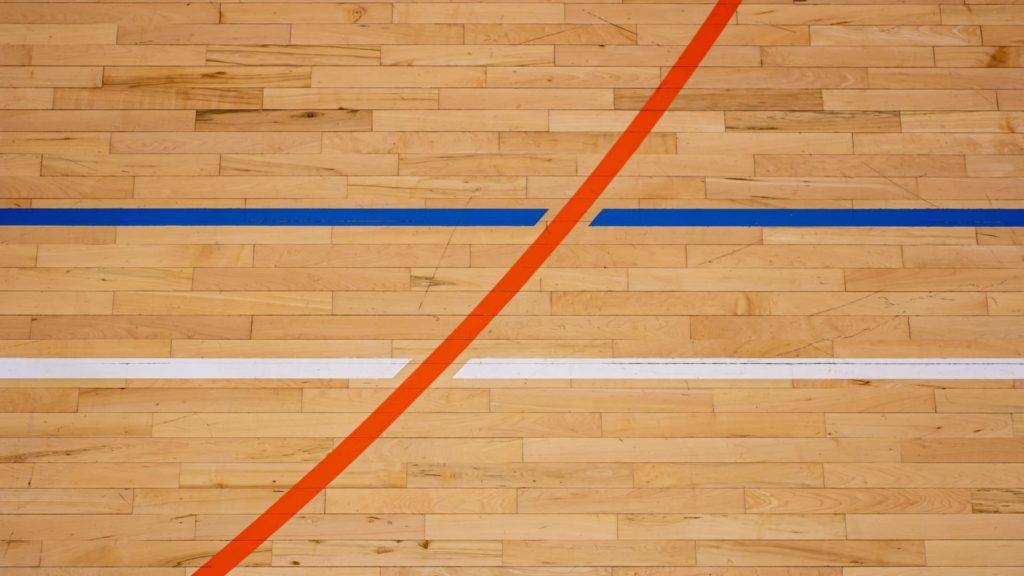
Line width is a real specification point rather than a detail. England Netball calls for 50 millimetre lines, and because the lines are part of the area they enclose, marking them thin genuinely changes the game. We set out from measured dimensions rather than copying existing markings, which have often drifted across successive remarks.
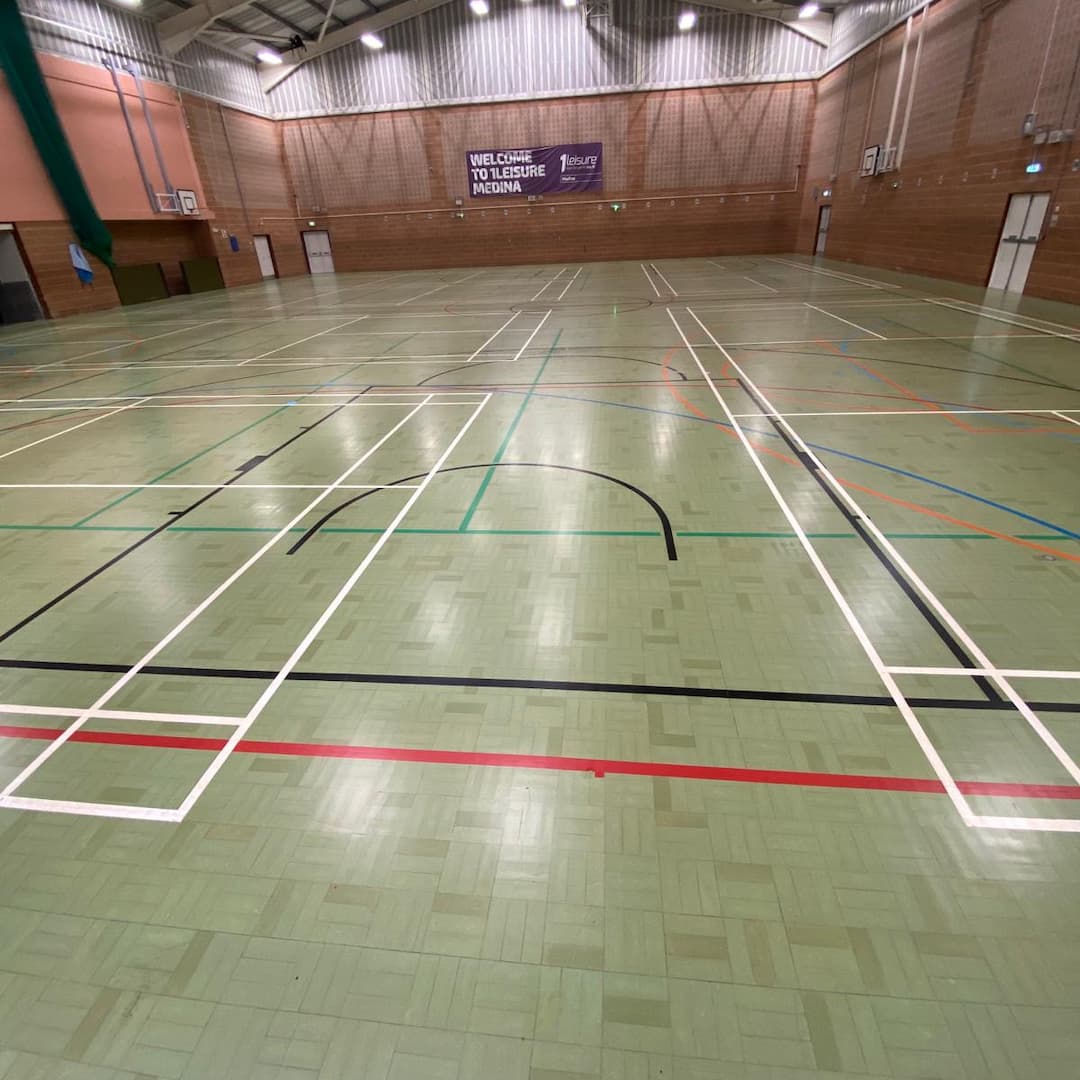
A new floor is a significant investment and the groundwork decides whether it performs.
We survey the slab first, checking levels and testing for moisture. Moisture from below is the most common cause of premature failure in a new sports floor, and where readings are high we install a mitigation membrane rather than hoping. Levels outside tolerance are corrected before anything is laid, because a sprung floor will telegraph every dip in the slab beneath it.
System selection follows the actual timetable. A hall running curriculum netball plus club hire plus five other sports needs a robust, refinishable surface. A dedicated netball facility can be specified more precisely.
Timber needs conditioning in the building before it is laid, and that stage cannot be compressed without risking movement later. We build it into the programme and give you a handover date that accounts for it. Markings go down within the finishing sequence so they sit beneath the seal, and we can pendulum slip test on completion so the certificate is on file from day one.
Netball courts fail in the centre third and the goal circles first, and a small amount of routine attention keeps them out of trouble.
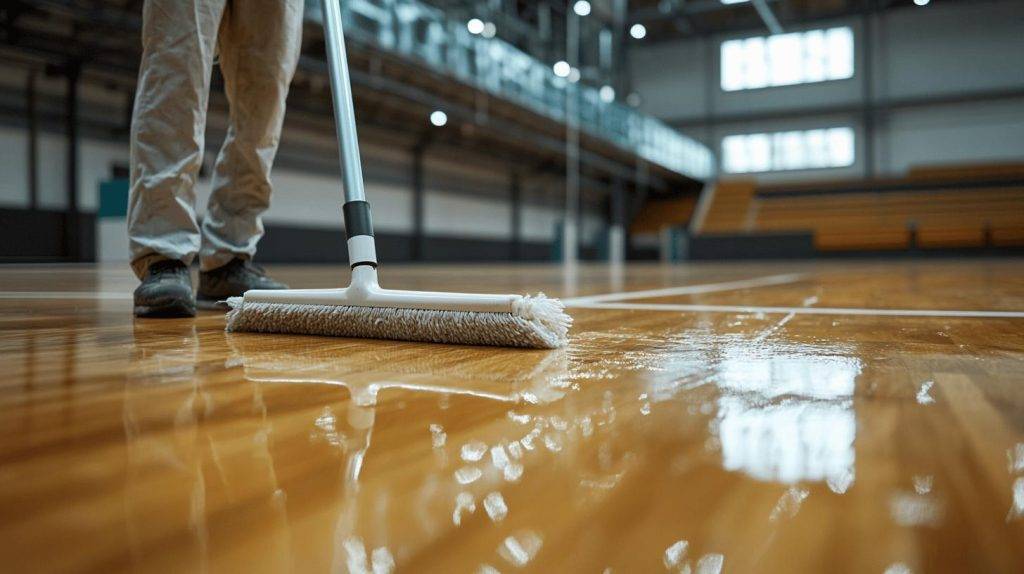
Grit is the enemy. Walked in from car parks and corridors, it acts as an abrasive under every pivot and is what polishes a floor smooth through the busiest areas. Dust mopping before play, and a decent mat run at the entrances, does more good than anything else available.
Cleaning products matter. A neutral cleaner intended for sealed sports timber is correct. Anything that promises shine will build up, reduce grip and eventually need stripping off chemically, and it is the most common cause of the slippery courts we are called to.
On timber, a screen and recoat every two to three years restores grip before the seal wears through, which keeps the floor on a full sand cycle of a decade rather than every few years. On vinyl and PU, periodic deep cleaning and resealing does the equivalent job.
An annual inspection catches dead spots, loose boards and worn markings while they are still small problems.
Sprung timber for performance and longevity, polyurethane for busy multi-use halls, vinyl for value. The right answer depends on everything else your hall hosts, which is why we assess the full timetable before recommending. All three can meet BS EN 14904 when specified properly.
Yes, and it is one of the most common jobs we do. Many UK school courts still carry outdated layouts, and re-marking to the current England Netball specification can usually be done alongside a reseal, or as a standalone visit for a sound floor.
Re-marking an existing sound court is the least expensive route, a sand, reseal and re-mark sits in the middle, and a new surface is priced per square metre by system. We survey free of charge and give you honest figures for each option.
England Netball asks for 3.05 metres of clear space around the court for competitive play. Few school halls achieve it, and a court marked tight to the walls is unsafe.
It can be, but it is hard on ankles and knees because of the repeated single foot landings. A sprung or resilient system is strongly preferable where netball is played regularly.
Almost always polish or the wrong cleaning product building up, or a seal that has been worn smooth in the centre third. Both are fixable, and both should be dealt with before somebody is injured.
Fifty millimetres. Because the lines count as part of the area they enclose, marking them narrower genuinely changes where players can stand.
Several weeks for a full hall, including time for timber to condition in the building before laying. That stage cannot be rushed without risking movement afterwards.
Tell us about your hall and your netball programme, and we will give you a straight recommendation with honest prices. Call 01823 674562 for free advice or a quotation anywhere in the UK.