
Flooring Professionals To The Leisure Industry
Courtship Flooring is a commercial sports flooring contractor working in Tyne and Wear and across the UK. A concentration of universities, leisure trusts and clubs across a compact area makes programmed work efficient here.
Founded in 1987 and still run by the same family, we specialise in commercial sports and timber flooring: new installations, full refurbishments, sanding and resealing, court markings, pendulum testing and maintenance contracts. Domestic enquiries are passed to Ryan’s Restorations.
Our sports hall floor refurbishment work in Tyne & Wear covers timber, Granwood, vinyl and PU, each with the method that suits the surface.
Overnight/Weekend Installations
Professional Cleaning Demonstrations
Squash Court Maintenance
Recommended Cleaning Products
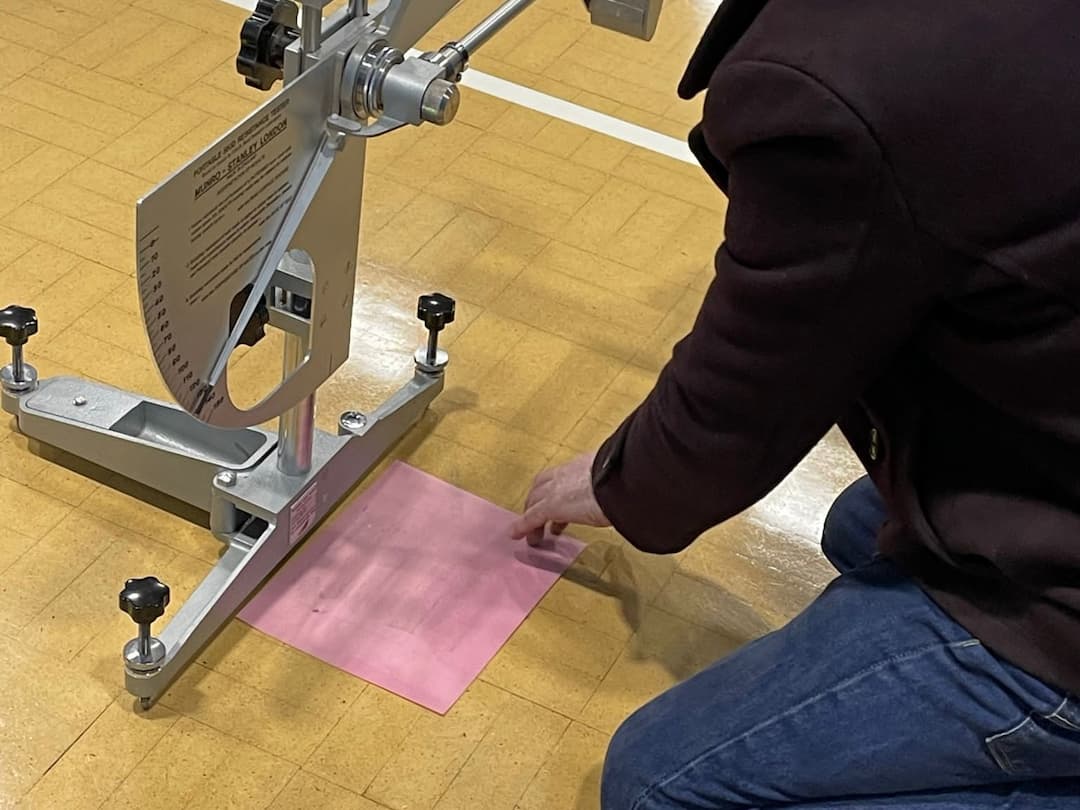
Professional Pendulum Slip Testing
Deep Clean & Reseal Service
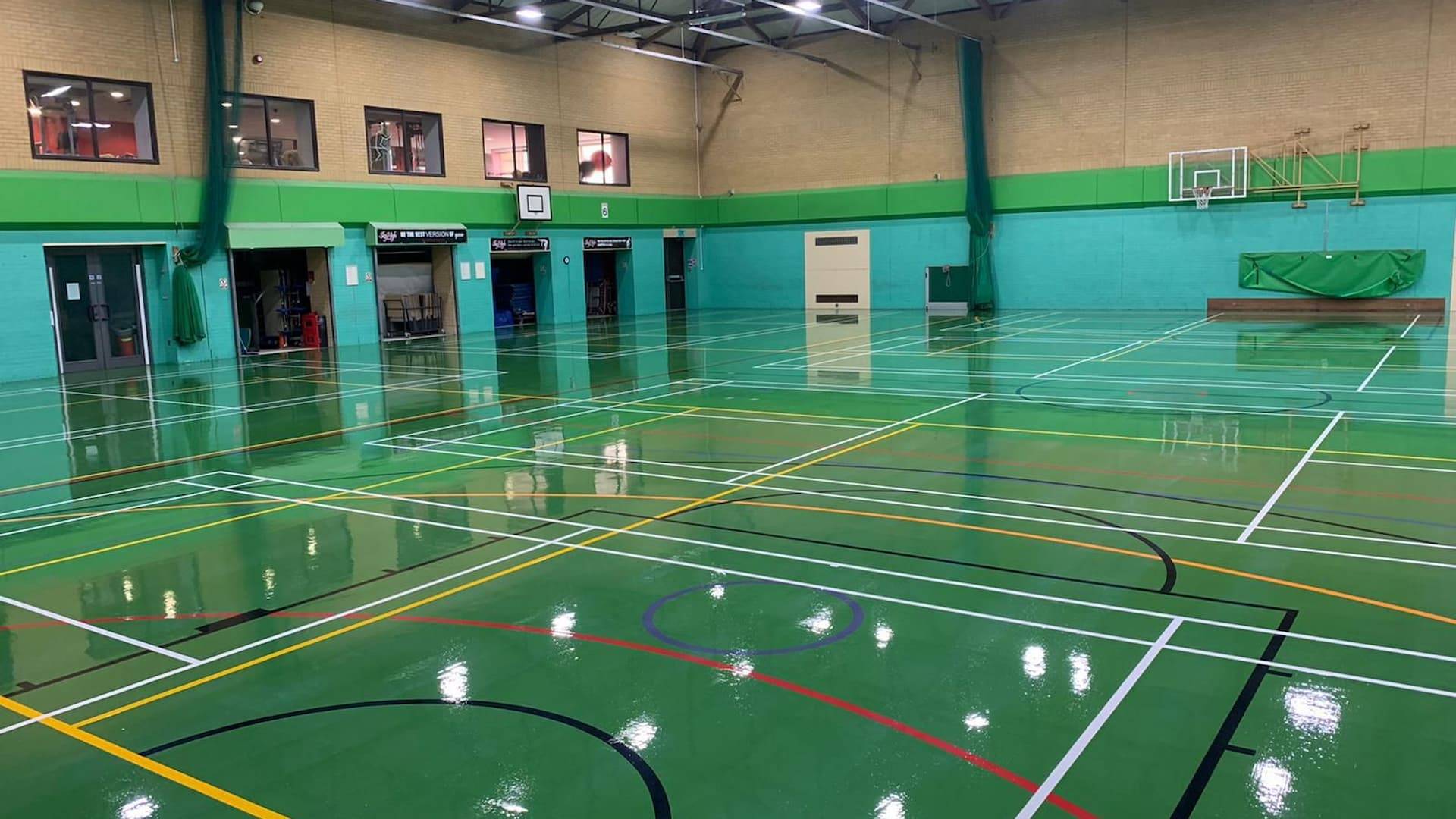
A busy public sports hall sees a volume and variety of use no school hall matches, and its floor ages accordingly. Seals break down faster, markings fade sooner, and the maintenance interval that suits an education setting is simply wrong.
We specify against actual usage hours rather than building type: harder-wearing finishes, build-ups chosen for durability, and maintenance scheduled to the real timetable.
Closing a leisure hall for a week is rarely acceptable, so most work in this sector is phased. A floor can be divided into sections with one area worked while the rest stays in use, or taken overnight across a series of shifts.
Both need careful planning around curing times, and both cost slightly more than a straight closure. They almost always cost less than the bookings a closure would lose.
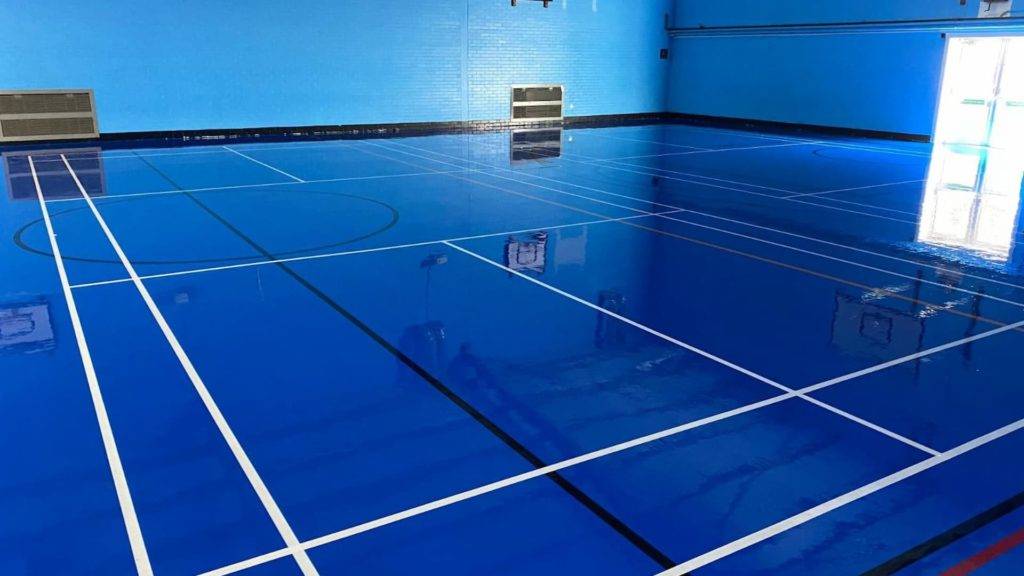
Operators running several centres frequently cannot say when each floor was last treated or what was used. That makes every decision harder than it needs to be and every quotation less accurate.
We maintain records of what was done, when and with which products, and provide them as part of a maintenance arrangement. It removes guesswork from future work and gives incoming staff a starting point.
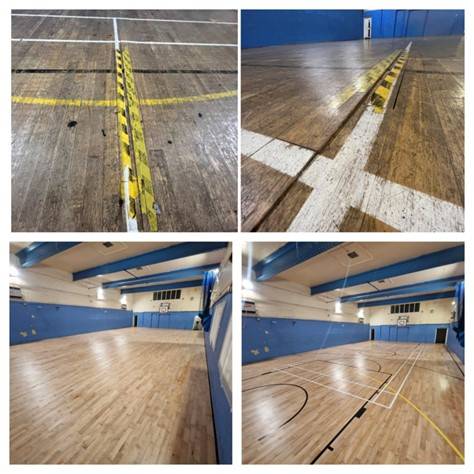
The gymnasium at The Bradfield Club had served generations and its floor wore every year of it. We sanded the original timber back to life, made the repairs it needed, then resealed and re-marked the space.
Community facilities work to tight budgets and cannot lose their halls for long, so the programme was planned accordingly and finished on the date agreed.
~ Matthew Evans
An outstanding company to deal with and they couldn’t have been better to work with. St George’s Ascot now has a stunning new sports hall floor and we are delighted. From quote, support, delivery and after sales, the Team has been brilliant. Thank you. 
~ James Anderson







Every stage of a project in Tyne and Wear is carried out by people employed by us, using sanding machines, extraction units and application equipment we own and maintain. There is no labour agency, no hired plant and no specialist subcontractor for the markings or the testing.
That matters for reasons beyond pride. The surveyor who looked at your floor is the person who briefs the team and usually leads it. Nothing is lost between the quotation and the work. If a problem appears once the old finish comes off, the decision is made on site by somebody with authority to make it.
It also means one guarantee covers the whole system: the repairs, the sanding, the seal, the lines and the socket fittings. You do not end up with three firms pointing at each other when something is questioned two years later.

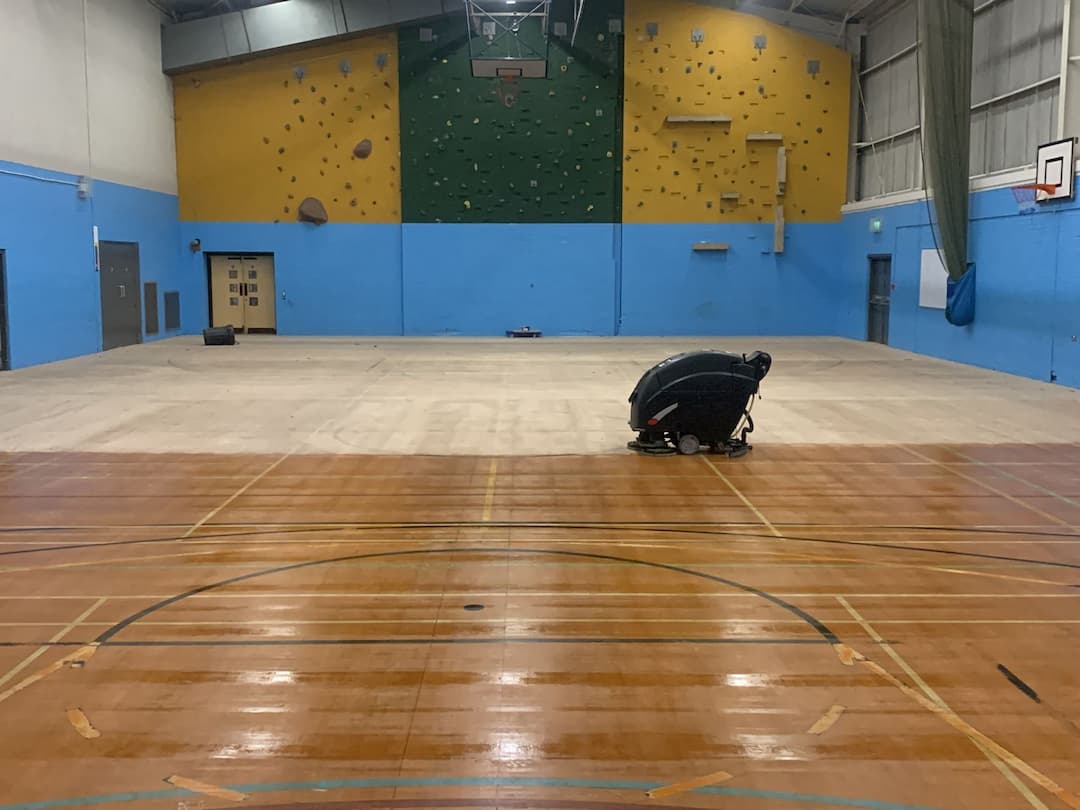
Timber is the right surface for most sports halls, but it is not the right surface for every room, and leisure operators across Tyne and Wear run plenty of spaces where a synthetic floor makes more sense.
Sports vinyl is a point elastic system, a wear layer over a foam backing, and it suits multi purpose rooms, studios and halls where wet shoes, spillages and heavy trolley traffic would punish timber. Cast polyurethane gives a similar performance with no seams and takes coloured zones and logos well. Linoleum is still found in older halls and can be maintained rather than replaced.
These floors are not maintenance free. They need a periodic deep clean to lift embedded residue, a fresh seal or recoat when the grip fades, and remarking when the lines wear. A tired PU floor recoated in a new colour with fresh lines looks like a new installation.
The fastest way to wear out a sports floor is to let grit reach it. Every particle carried in on a trainer acts as an abrasive under thousands of footfalls a day, and in a busy centre in Tyne and Wear the traffic lanes from the door to the courts lose their seal years before the rest of the hall.
Entrance matting is the answer, and most halls have too little of it. A run of at least several paces of proper barrier matting at every entrance, cleaned regularly so it can still hold dirt, removes most of the problem before it starts. Where changing rooms open straight onto the hall, a mat at that door is as important as the one at the main entrance.
Inside the hall, a daily dry mop finishes the job. We look at the entrances at survey, because they explain the wear pattern we find on the floor.


The last two days of a floor project decide how it is remembered, so we treat handover as part of the work rather than the end of it.
Once the final coat is down the room is signed and, where necessary, locked. Footprints in a curing seal do not polish out, and equipment put back a day early leaves permanent marks. This is the single most common cause of a job needing touching up and it is entirely preventable.
When the cure time is complete we return the room to use ourselves rather than leaving it to the site team. Socket covers go back at the correct level, fittings are refitted, and the equipment comes back in an order that does not drag across fresh finish.
You then receive the handover pack: product data sheets, cure times in writing, aftercare guidance, photographs of the completed work and, where requested, the pendulum slip resistance certificate. It goes into the facilities file as a complete record.
Tyne and Wear brings us university and college sport, council leisure facilities and a substantial number of school and academy sports halls.
University facilities run year round, with summer conference and external use filling what would be a shutdown elsewhere, so the working windows are narrow, fixed and planned well in advance.
Academy and school halls are the largest group by number. Many are from the nineteen sixties and seventies with sprung timber floors that are structurally sound but have gone too long between refinishes. A proper survey usually finds considerably more life left in them than the school has been told, and restoration is almost always better value than replacement.
Leisure centres follow, where the priority is keeping the building trading and most of the work is done overnight.
The older school and church halls in the region frequently have Granwood floors, which need a specialist approach rather than timber sanding. Most of the Granwood we are asked to look at is well worth restoring.
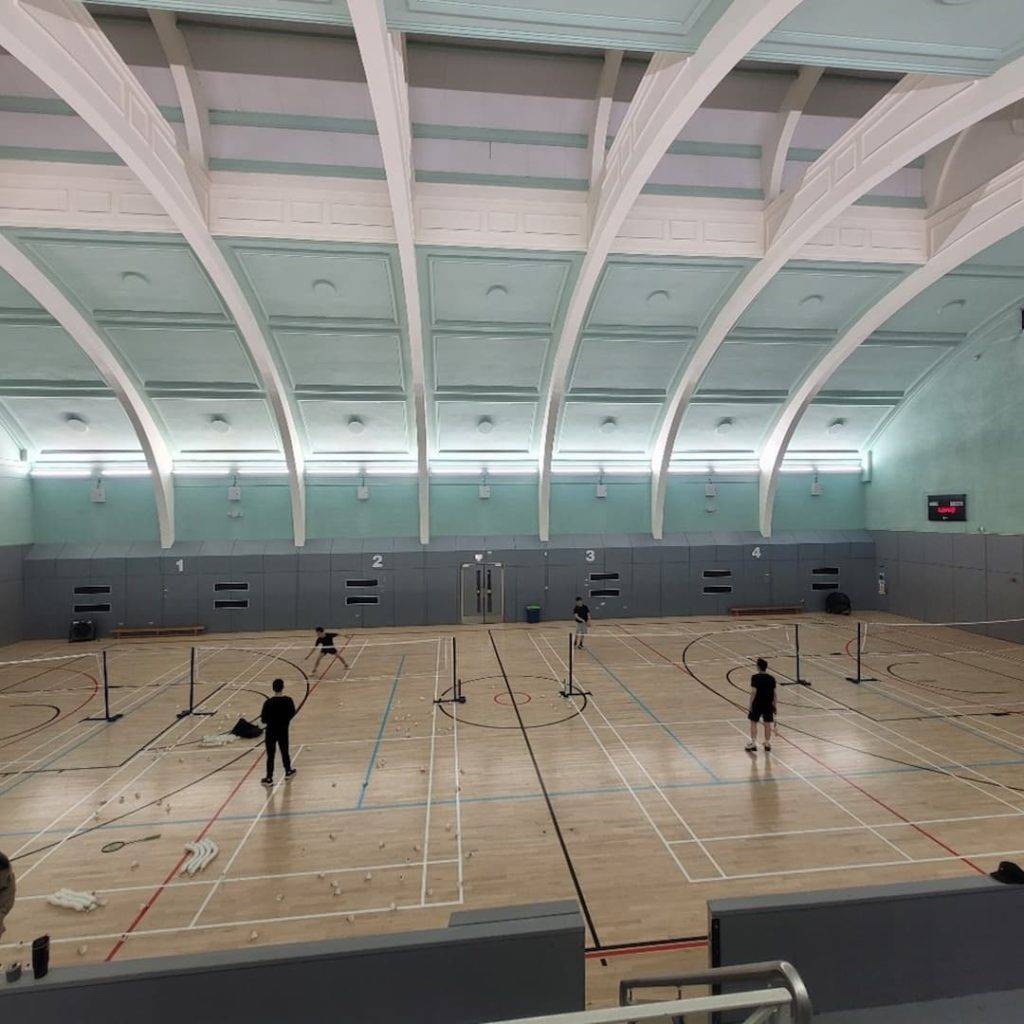
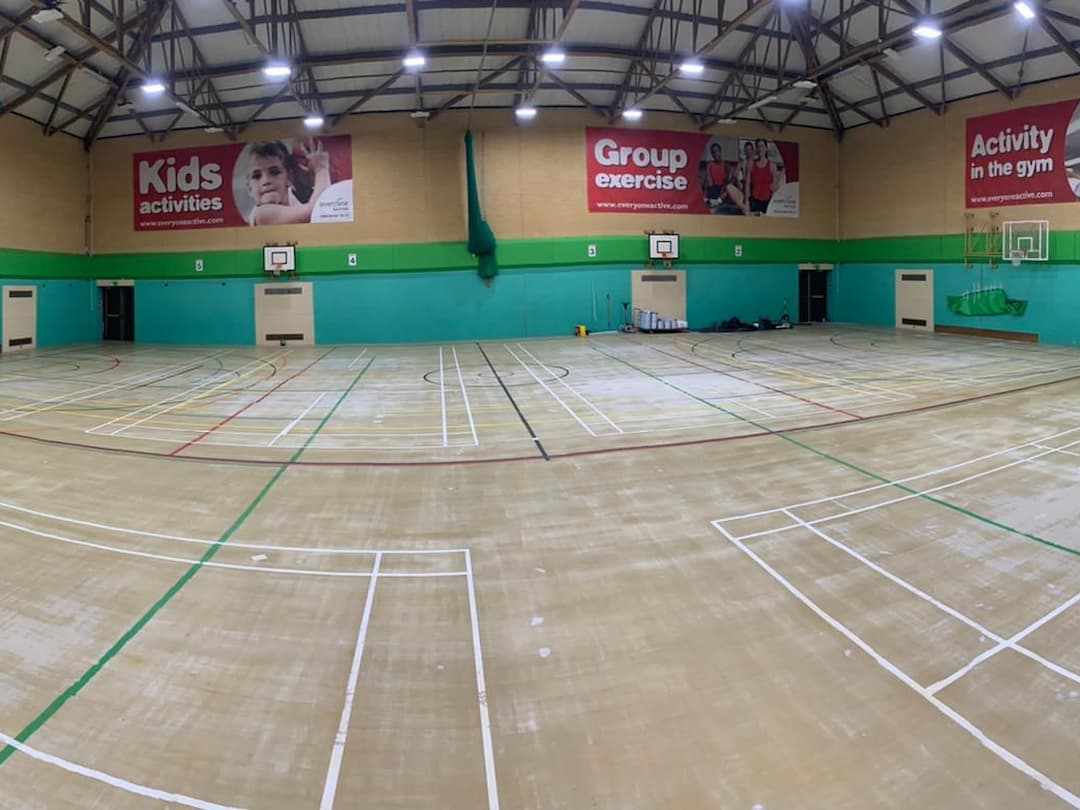
Enquiries across Tyne and Wear reflect a building stock weighted towards post war schools and older community buildings.
The most frequent is a sprung floor that has lost its response in patches. Dead spots mean a failed pad, cracked batten or tired cradle beneath the boards, and refinishing the surface will not change how that area feels. The repair is local rather than wholesale.
The second is Granwood, which appears regularly here and is often condemned when it should not be. Sound blocks and an intact bed mean restoration is viable, at a fraction of the cost of a replacement that would also involve lifting a bitumen bed.
The third is floors that have been coated repeatedly without ever being taken back. Those layers eventually cloud, peel at the edges and lift in sheets, and another coat over the top simply postpones the problem.
Yes. Squash court floors are sanded and left unsealed or lightly finished to the governing body requirement, because a lacquered court is dangerously slippery. We also repair boards, reset the tin and reapply the court lines. The work is usually programmed alongside the main hall to share the visit.
Site specific risk assessments and method statements, COSHH data for every product, public and employers liability certificates, DBS details for the operatives attending and a written programme. For framework and tender work we supply quality procedures and safeguarding policies in whatever format your procurement team needs.
Not sensibly. Dropped plates and dumbbells dent and split timber and break the seal. Free weights zones want a thick rubber tile or roll, and where a fitness suite shares a hall we install the rubber over the timber with a proper edge detail so it can be lifted later.
Yes, particularly for a leisure operator. A pendulum test gives a recorded value at several points across the hall and a certificate for the file. If a claim is ever made, documented evidence that the floor was within range when tested is far stronger than an opinion.
Yes. Logos, centre circle graphics and coloured key areas are applied within the seal system so they wear with the floor rather than sitting on top of it. We advise on colours under your lighting first, because a bold graphic that competes with the court lines does more harm than good.
Moisture rising from a concrete base is the commonest reason timber floors cup, lift and rot from below. We take moisture readings at survey and, where a floor is being replaced, install a damp proof membrane or surface barrier before any battens go down. Sealing over a wet slab guarantees failure.
As early as possible, ideally the previous autumn. Campus halls in Tyne and Wear fill their summers with conferences and sports camps, so the free window is often only two or three weeks. Surveying early lets us order materials, staff the job and hold the dates for you.
Yes. We itemise quotations by element, so a floor can have its structural repairs and full sand this year and its relining or slip testing next year, or two halls can be scheduled a year apart. We will say which elements cannot safely wait and which can.
Across the north east we also cover Newcastle, Northumberland, County Durham and North Yorkshire. See all areas we cover.
Arrange a free survey of your sports hall in Tyne and Wear and we will tell you plainly what it needs, what it will cost and when it can be done around your bookings. Call 01823 674562 or send us a message.