
Flooring Professionals To The Leisure Industry
Courtship Flooring is a commercial sports flooring contractor working in Leeds and across the UK. We are frequently specified here for premium timber installations, including full Junckers solid-beech systems of the kind fitted in elite competition venues.
We are specialists rather than generalists, which after nearly forty years means a depth of knowledge on sports and commercial timber floors that a general contractor cannot match. Every stage is completed in-house. We do not quote for domestic work; Ryan’s Restorations handles that side.
Overnight/Weekend Installations
Professional Cleaning Demonstrations
Squash Court Maintenance
Recommended Cleaning Products
Professional Pendulum Slip Testing
Deep Clean & Reseal Service

Junckers, Boen and Havwoods sit at the top of the sports timber market, and the difference is not marketing. Solid beech and maple systems offer greater dimensional stability, more consistent grain and considerably more depth for future refinishing than budget alternatives.
That last point is where the economics turn. A premium floor can be sanded and resealed several times more than a thin-wear-layer product, so the cost per year of service is frequently lower despite the higher installation price. We fit the full range and will show you the lifecycle numbers rather than just the quote.
The build-up beneath the boards decides how a floor performs. A cradle system suspends the floor on resilient pads for high shock absorption, suited to serious sport. A sports batten construction is the dependable all-rounder for school and community halls. Pad and board is shallower where height is limited. A duo batten system doubles up for greater resilience and consistency.
We specify against the sports, the level of play and the height available, and explain the trade-off in plain terms rather than product language.
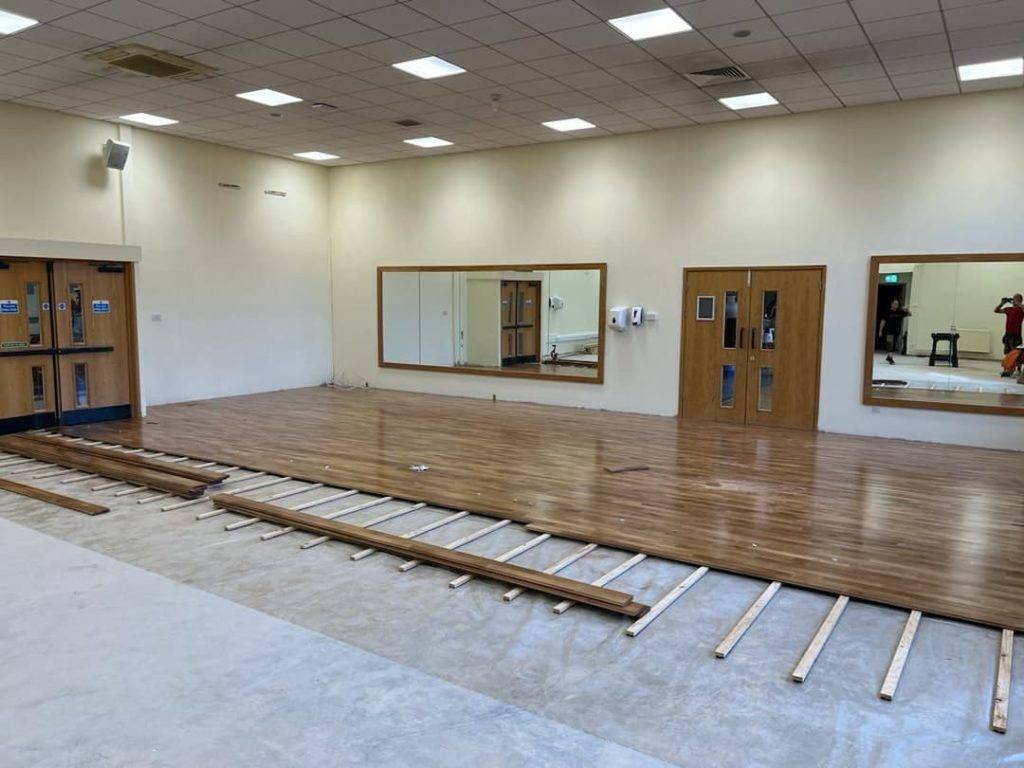
Warranties in this trade are frequently less useful than they appear, because the surface manufacturer covers the surface, the installer covers the installation, and any dispute falls into the gap between them.
Because we carry out every element ourselves, from sub-floor preparation through to the final coat, the cover applies to the whole system rather than one component. We set out exactly what is included, and for how long, before you commit rather than in the small print afterwards.
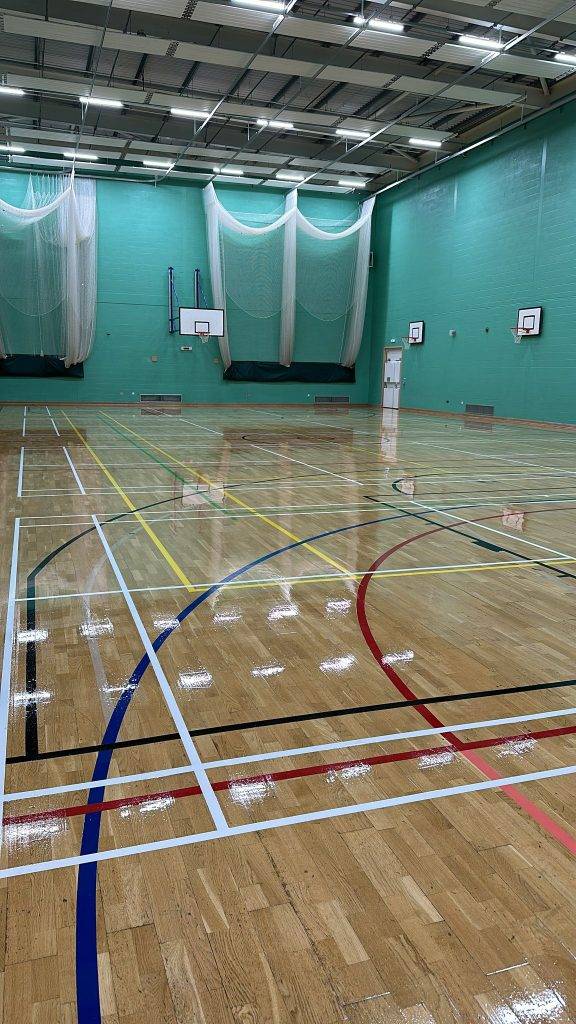
The sports hall floor at De Wint School had reached the end of its seal: grey through the middle, markings closer to guesswork than instruction, and a surface that felt slippery however often it was cleaned.
We sanded it back to clean timber, repaired what needed repairing, resealed and re-marked. The hall reopened with a deep, glossy finish that reads as newly installed, delivered inside a planned holiday window.
~ Matthew Evans
An outstanding company to deal with and they couldn’t have been better to work with. St George’s Ascot now has a stunning new sports hall floor and we are delighted. From quote, support, delivery and after sales, the Team has been brilliant. Thank you. 
~ James Anderson







A new timber sports floor in Leeds represents a significant capital spend, and the cheapest way to protect it is a maintenance cycle agreed at handover and then kept to. Most floors that fail early were never maintained badly; they were simply not maintained at all until the seal had gone.
The cycle we recommend is simple. A professional deep clean each year to lift the residue that daily mopping leaves behind. A screen and recoat every two to three years, timed before the wear lanes break through to bare timber. A full sand only when the finish can no longer be rescued, which on a well kept floor is roughly every ten years.
We keep a record for each floor with dates, products and readings, so an estates team knows where every hall sits in its cycle and can put the next intervention into the budget a year ahead.
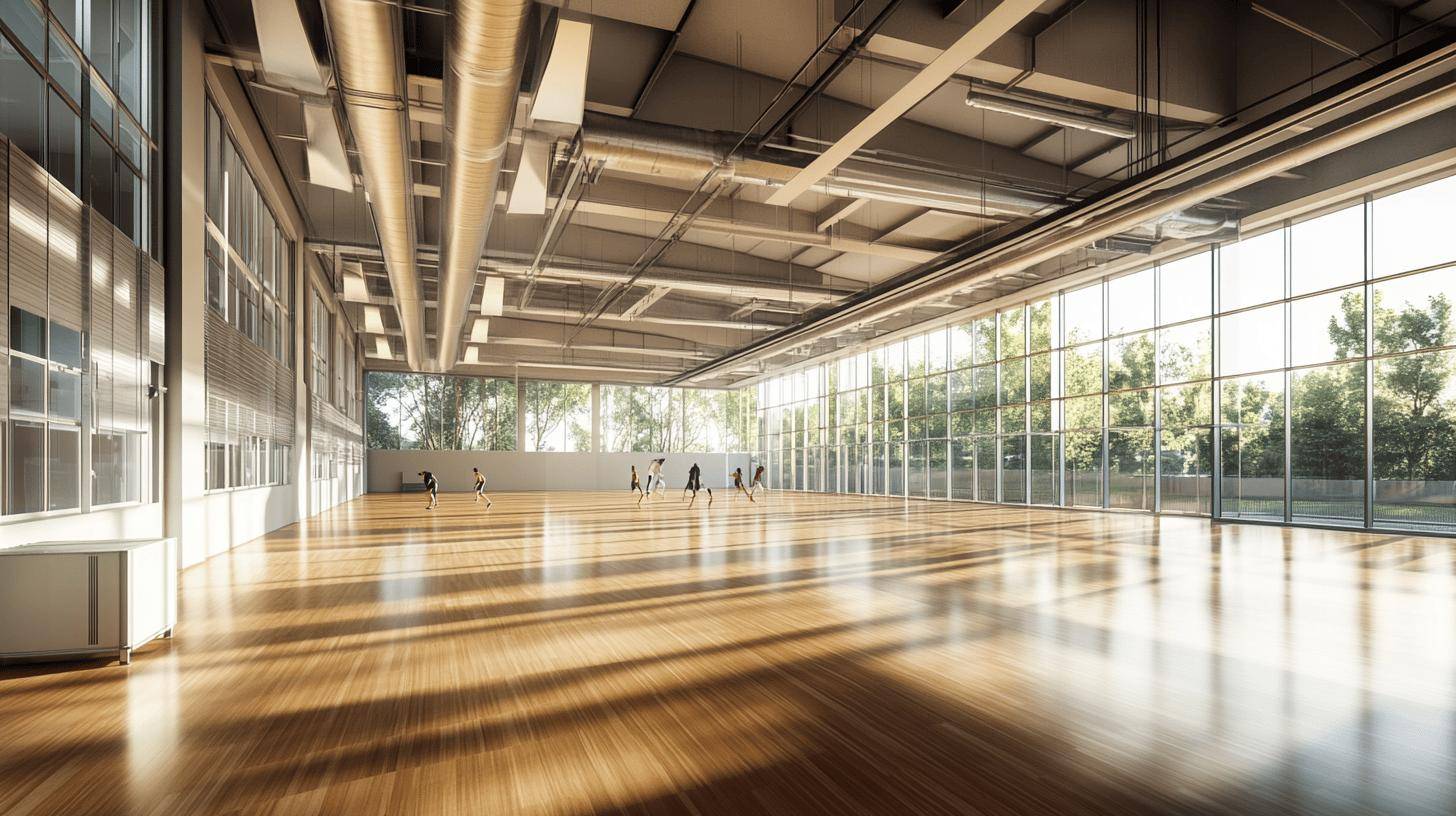
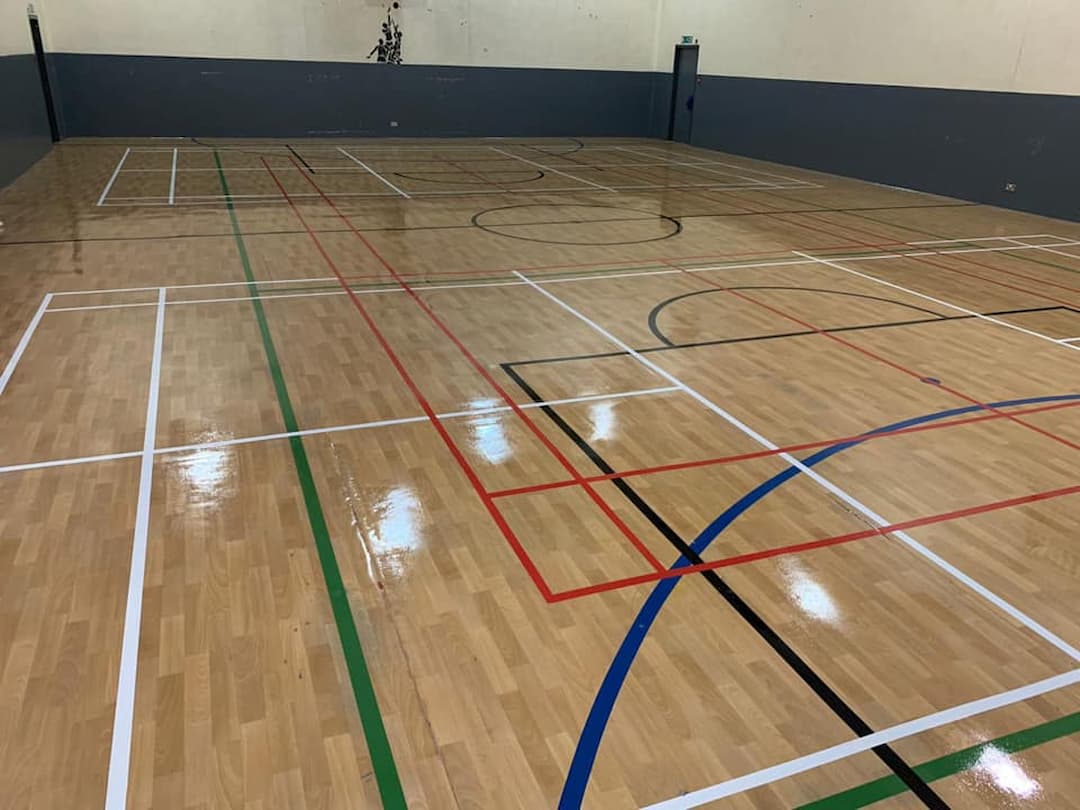
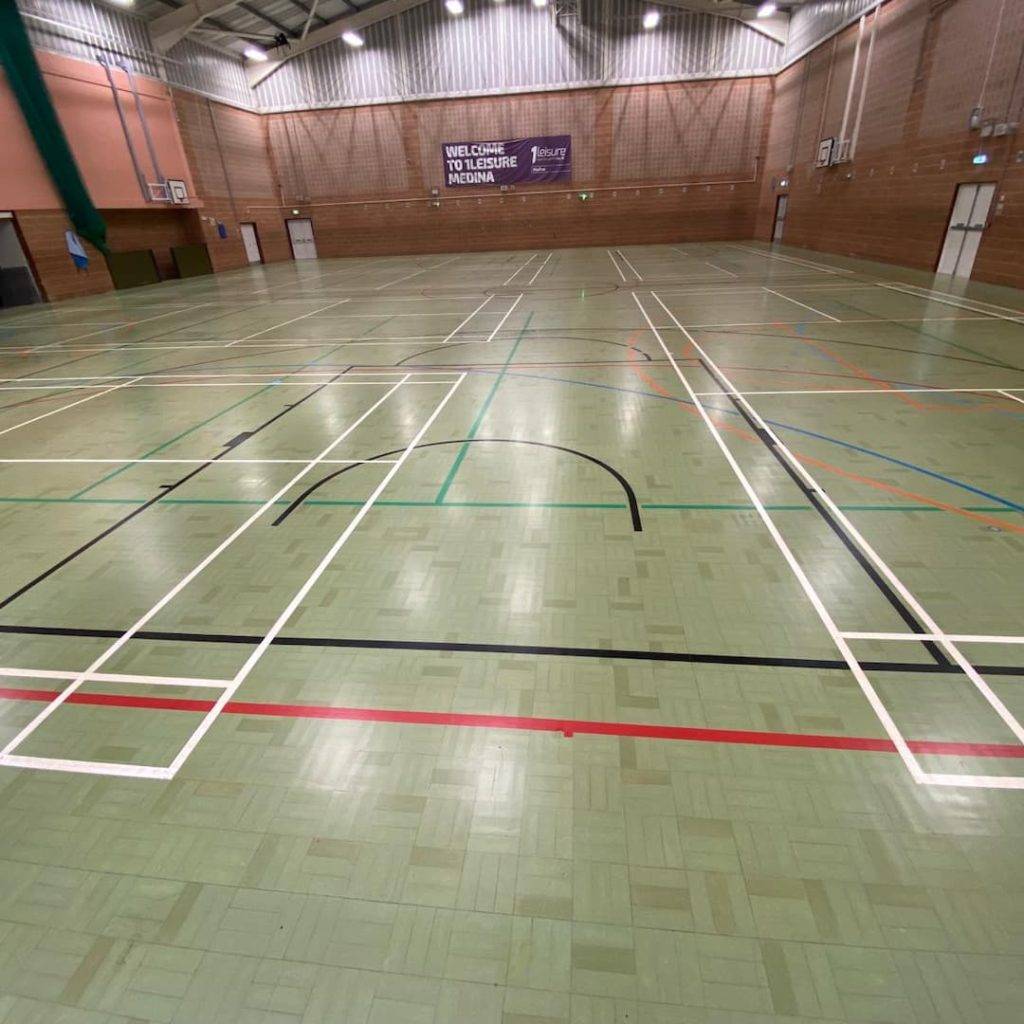
A hall shared by netball, basketball, badminton, volleyball and five a side can carry more than a hundred lines, and if the colours are chosen carelessly nobody can find their court. The order matters as much as the accuracy.
Convention gives the primary sport the strongest colour and the full line width, with secondary sports in progressively lighter or narrower lines beneath it. Badminton is usually white, basketball black or red, netball yellow or blue, but we set the hierarchy against what your hall actually hosts, which for many Leeds schools means netball first and everything else behind it.
Old lines are removed during the sand, the new layout is set out from governing body dimensions and agreed on a drawing, and the paint goes down between coats of seal so it cannot be scuffed off. Getting rid of markings for sports nobody plays is often the biggest single improvement.
For a leisure trust the real cost of a floor refurbishment is not our invoice. It is the fortnight of cancelled block bookings, the badminton league that moves to another centre and the members who notice the hall is shut and drift.
So we plan around income, not convenience. The programme is built from your booking data: which sessions cannot move, which can be shifted to a studio, and which nights are quiet enough to give us the room. Work is then phased so the hall closes for the shortest possible run of days, often overnight with the floor walkable by opening.
A leisure centre in Leeds running a full public and club timetable can usually keep trading through a screen and recoat and lose only a few days for a full sand. We put the closure dates in writing so you can tell your customers before we arrive.
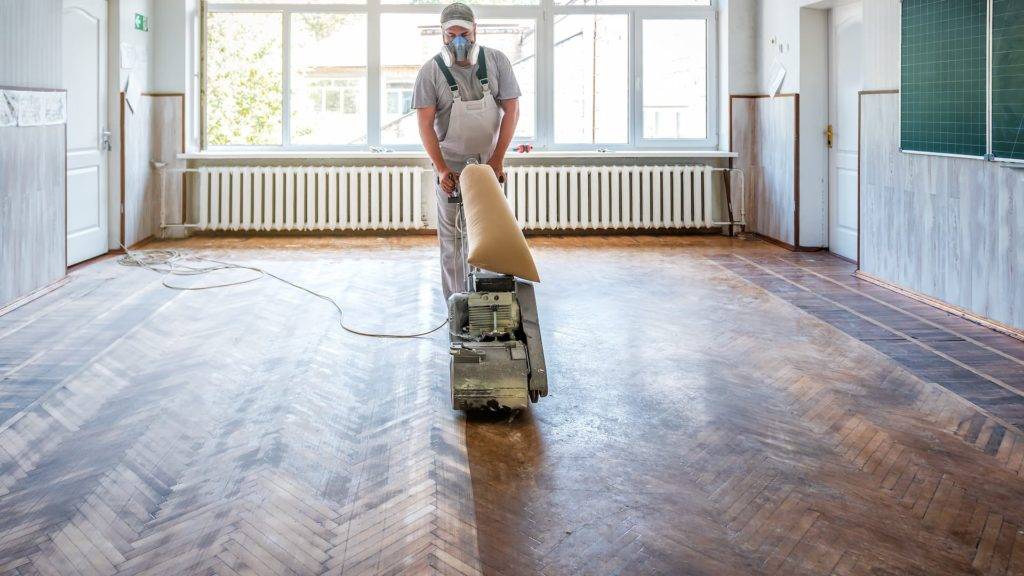

The finish we leave behind is only as good as the cleaning that follows it. A sports floor is damaged more often by the wrong product than by sport, and it happens slowly enough that nobody connects the cause with the effect.
The regime is simple. Dry dust mop daily to lift grit before it is ground in. Damp mop or scrubber dryer with a neutral pH cleaner at the diluted rate on the label, using as little water as the job allows. No polish, no wax, no bleach, no steam and no oil based products of any kind, because they either soften the seal or leave a film that turns the floor into a skating rink.
We hand over a written cleaning sheet and will brief your cleaning contractor in person if that helps, because a five minute conversation with the person holding the mop saves a great deal of trouble later.
Leeds gives us a substantial mix of university sport, academy trust estates and city leisure facilities, across building stock spanning more than a century.
University and college facilities are busy year round, with summer conference and external hire filling what would be a shutdown elsewhere. The working windows are narrow and fixed, so those projects are planned months ahead and staffed to complete inside them rather than stretched across a longer period.
Academy and school halls are the largest group by number. We have completed work at Harris Academy and at Hornbury Academy in Wakefield nearby, and the pattern is consistent: halls in constant use, finishes long overdue, and fixed term dates that do not move.
Leisure centres follow, where booking income means overnight working is usually the only practical route.
The older halls in the region often turn out to be Granwood, particularly in schools and church buildings. It needs a specialist approach rather than timber sanding, and most of the floors we are told are finished are nothing of the kind.
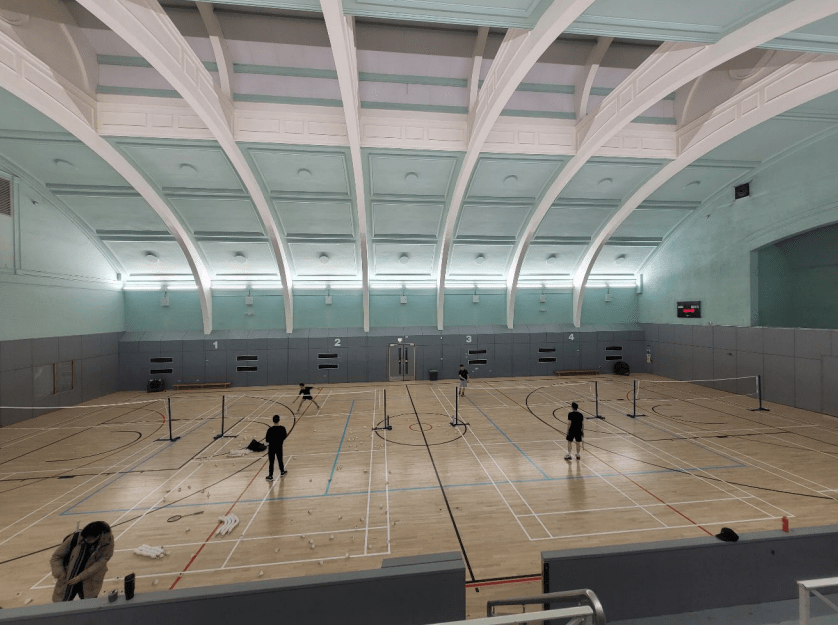
Leeds enquiries reflect a building stock that ranges from Victorian school halls to modern university sports centres.
The most frequent is an academy hall where the finish has worn through in the traffic lanes and the markings have faded to the point where officiating is difficult. Those are straightforward refinishes when the boards still have depth, and a survey usually finds more life left than the school expects.
The second is Granwood, which appears regularly in the older school and church halls across the city. It is frequently condemned when it should not be. The blocks are usually sound and restoration costs a fraction of a replacement that would also involve lifting a bitumen bed.
The third is university facilities where the constraint is the window rather than the floor. Those projects are solved by surveying early, ordering ahead and staffing to finish inside the time available.
There is no fixed rate because every floor arrives in a different state. We survey free of charge, then price the minimum work that will give you a sound floor alongside the fuller option, each itemised, so you can compare them side by side and choose what suits the budget.
Yes. We cover the whole of Yorkshire and the north of England from one base, with travel included in the quotation. Sites that are further away are planned as one continuous visit so the job is finished in a single stretch rather than left waiting for a return.
Yes. Every survey produces a written report with photographs, moisture readings, remaining board depth and a recommended specification with firm costs. Heads of estates and bursars use it as the evidence for a budget request, and it stays valid if the work is deferred to a later window.
Yes. Risk assessments and method statements are written for your building, not copied from a template, and they arrive before the start date along with COSHH sheets, insurance certificates and DBS details for every member of the team who will be on site.
In the boards or blocks, no. In the bitumen adhesive beneath some floors laid before the mid 1980s, possibly. We treat every bitumen bedded floor as suspect until a sample has been tested, and we do not lift a block until the result is back.
No. We work only for schools, academies, universities, leisure operators, clubs and public bodies. Domestic timber floors are handled by our sister company Ryan’s Restorations, who have the right equipment and finishes for houses and can be contacted directly.
It depends on the board thickness and how much has already gone. A solid strip floor will generally take six to eight full sands across its life; an engineered board takes far fewer. We measure the depth left above the tongue at survey and tell you where you stand.
Yes. Studios usually want a sprung floor with a matt or semi matt finish, and drama spaces are often painted black, which needs a different product from a sports seal. We specify for the use of the room and can do it alongside the main hall.
Across Yorkshire and the north east we also cover Sheffield, North Yorkshire, Newcastle, County Durham and Northumberland. See all areas we cover.
Book a free survey of your floor in Leeds and we will tell you plainly what it needs, what it will cost and when we can do it around your timetable. Call 01823 674562 or send us a message.