
The cheapest sports floor you will ever own is the one you already have, looked after properly. Courtship Flooring provides sports hall floor maintenance and aftercare across the UK: deep cleaning from £2 per square metre, a deep clean with two protective seal coats at £12 per square metre, screen and recoat, re-lining and pendulum slip testing, all from the family firm that has cared for these floors since 1987.
Whether a hall has lost its grip and shine or its lines have faded, we will tell you plainly what it needs, and when the answer is a full sports hall floor refurbishment, we will say that too. Damage such as lifted or water-stained boards is handled by our sports hall floor repairs service. Cleaning demonstrations and recommended products for your own site team are part of the service.
A maintained floor is a safer floor. Workplace floors must not be so slippery or uneven that they put people at risk, under the Workplace (Health, Safety and Welfare) Regulations 1992, and operators owe visitors a duty of care under the Occupiers’ Liability Act 1957. No law sets a particular cleaning schedule or slip test, but a documented maintenance programme is how most facilities show they are managing the risk.
We provide method statements and risk assessments on request, use products approved by the floor and lacquer manufacturers, and carry out slip resistance testing to BS 7976-2, the pendulum method the Health and Safety Executive prefers. The systems we install are tested to BS EN 14904, and regular maintenance keeps grip and appearance close to the standard the floor was designed for.
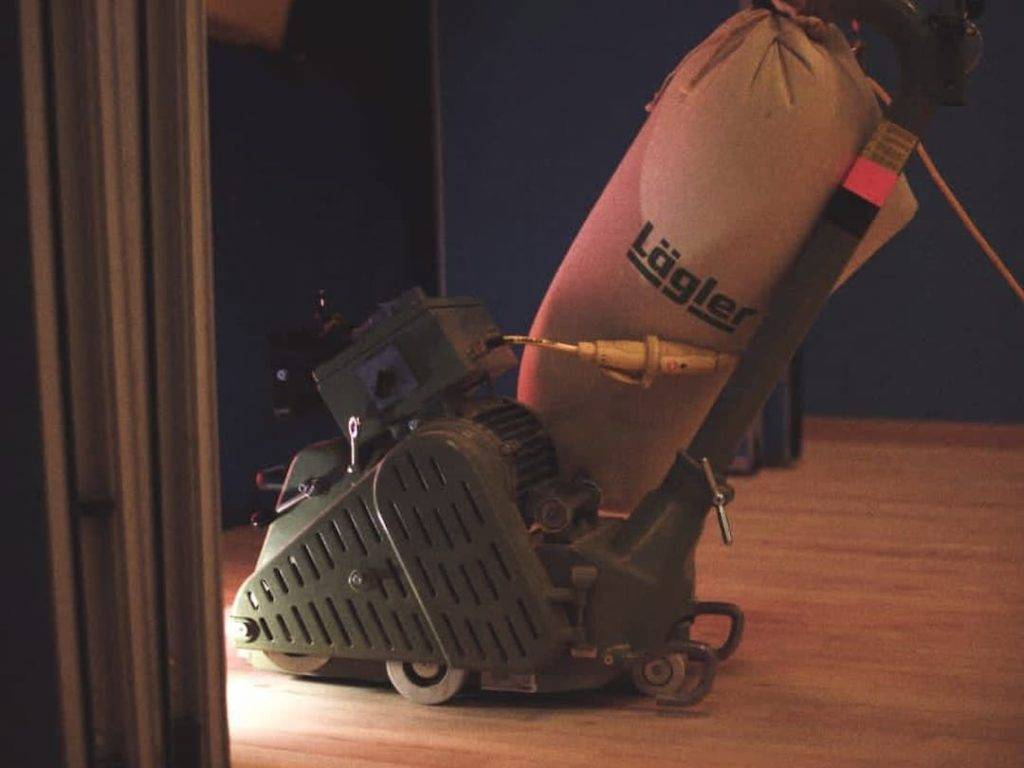
To ensure that our clients and the public remain safe whilst we undertake indoor sports floor maintenance, we have invested in a new breed of cyclone double extraction dust control units. These machines eliminate any migration of dust to the surrounding areas.
Small defects are best dealt with while we are on site: a lifted edge on a vinyl weld, a dent filled before it catches a shoe, a loose threshold strip. We point them out during the visit and, where they are minor, fix them at the same time. Anything larger, such as water-damaged or lifting boards, dead spots or failed welds across a wider area, is covered by our sports hall floor repairs service so it can be surveyed and quoted properly.
A screen and recoat is the backbone of any maintenance programme. The floor is deep cleaned, lightly abraded to key the existing lacquer, and given fresh coats of sports seal in gloss or matt. Grip comes back, the finish looks new, and the wood underneath is not touched. Most halls need a recoat every 18 months to three years depending on how hard they are used, and recoating on time is what lets a timber floor go a decade or more between full sands.
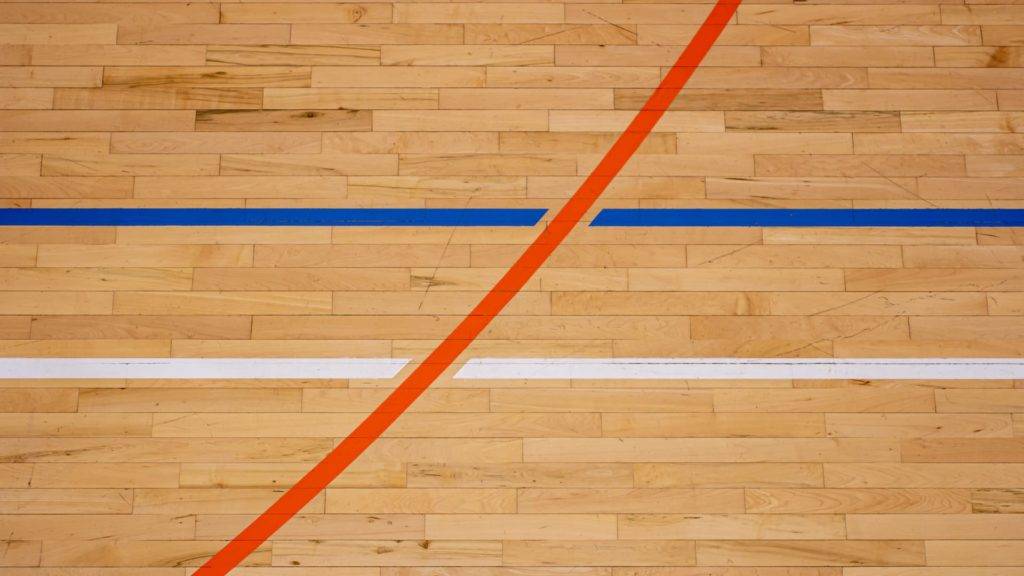
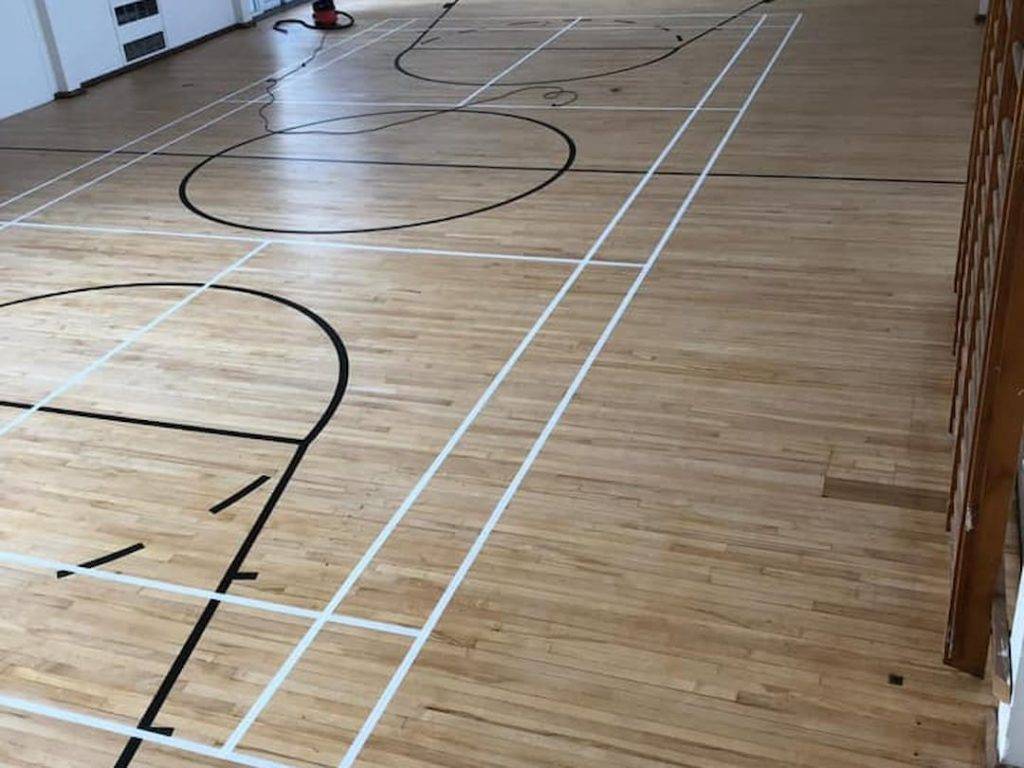
Court lines wear faster than the floor around them, especially at baselines, service lines and the centre circle. Because the lines sit under the lacquer, a recoat is the natural moment to touch them up, and a full sand and seal is the moment to renew them completely.
When we re-line, we check every court against current governing body dimensions, not just the paint that is already there, because layouts drift with each repaint. Colours are agreed in advance so the main sport reads clearly and the others sit quietly behind it. Where the floor is in good order but the lines have faded or the sports have changed, our sports hall repainting and relining service covers the lines on their own, and our sports hall line marking page explains how multi-sport schemes are planned.
With our powerful degreasers and cleaning aids, we can keep your floors in pristine condition, prolonging their life. Regular deep cleans are necessary to keep traction at a suitable level. As well as deep cleans, we can also offer a deep clean and resealing option: a deep clean starts from £2 per square metre, and a deep clean with two protective seal coats is £12 per square metre. Resealing your sports floor is the best way to keep it protected for longer. Our high-quality sports lacquer is the perfect solution for increasing traction levels and giving the floor a new look. Further to this, we can also add back your line markings, making them more vivid.
A good programme splits the work between your site team and ours. Your cleaners keep grit and residue off the surface day to day; we carry out the periodic work that needs specialist machines and products, and we check the floor while we are there.
We agree the frequencies with you based on how many hours the hall is used, what footwear comes onto it and what else it hosts, from exams to community events.
A slippery sports floor is the most common complaint we hear, and the instinct is almost always wrong. Facilities clean harder, use stronger product, and make it worse, because the problem is usually the residue left behind rather than dirt on top.
Over-strength detergent, the wrong pH, or hard water leaves a film that reduces grip. Stripping that residue with a proper deep clean normally restores the surface without touching the seal. Where the lacquer itself has worn through, a recoat is the answer. A pendulum slip test before and after tells you objectively which it was, which is worth having on file either way.
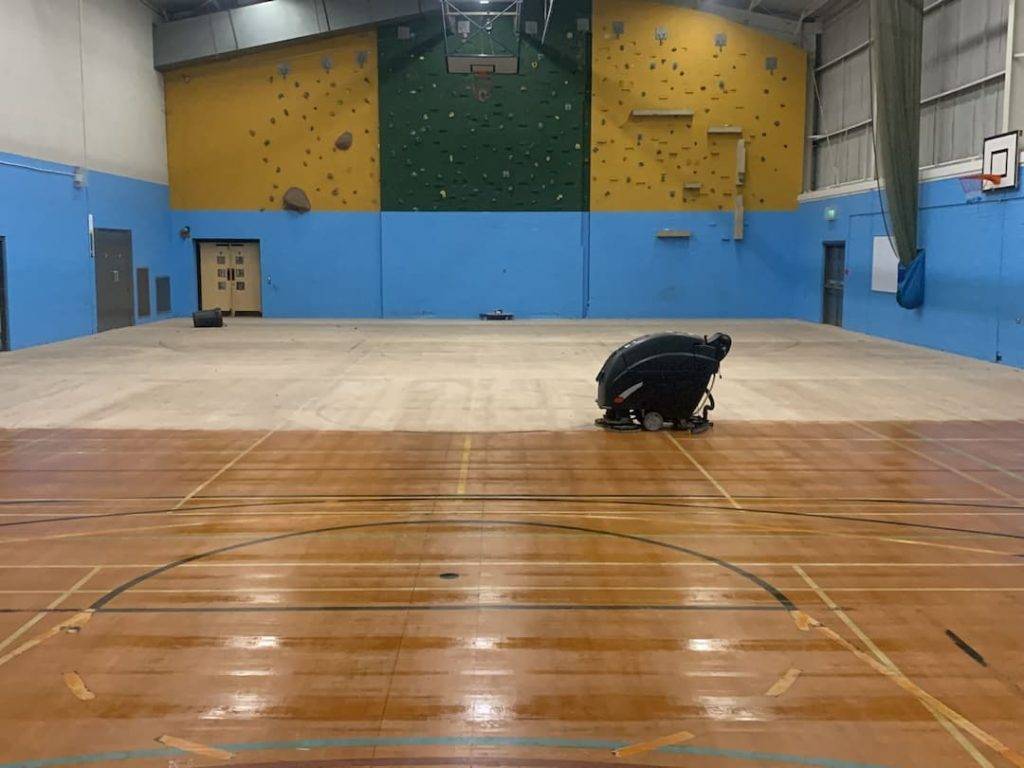
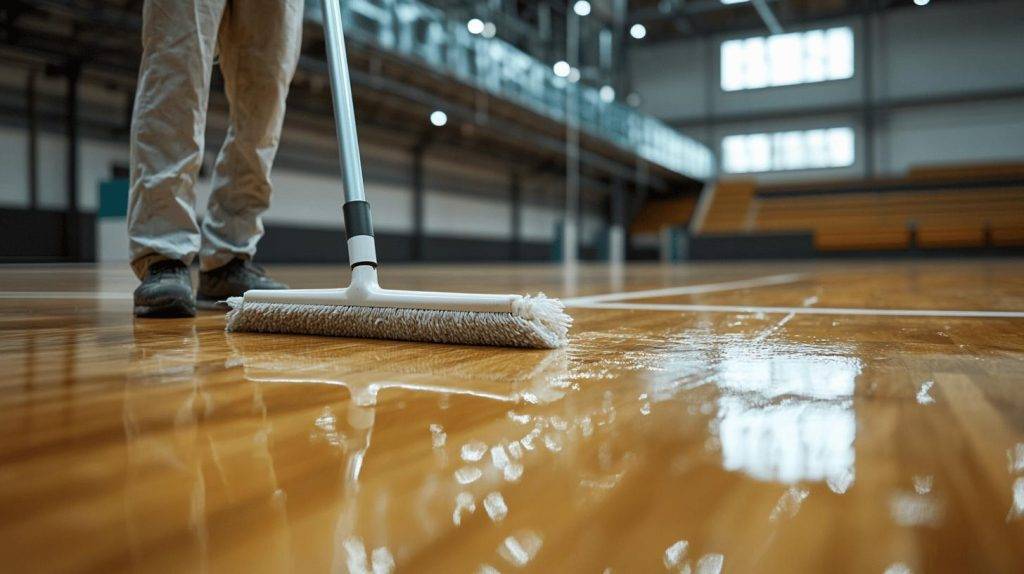
Most of what happens to a floor between our visits is down to daily cleaning, so we leave every site team with clear instructions. The essentials are simple: remove grit before it is ground in, use as little water as possible on timber, and use a cleaner made for sports floors at the dilution on the label.
The common mistakes are just as simple. General-purpose detergents and polishes leave a film that makes the surface slippery and, in time, sticky. Wet mopping pushes water into joints and board ends. Abrasive pads on a scrubber-drier wear through the lacquer in the traffic lanes. Entrance matting, a rule against outdoor shoes on court and a quick dry clean after every busy session do more to protect the floor than any product.
The economics here are not subtle. A hall deep cleaned properly and recoated on schedule will go a decade between full sands. The same hall left until it looks bad will need machines back in half that time, and every full sand spends board that never comes back.
Our plans cover deep cleaning from £2 per square metre, recoating at the right moment, repairs, re-lining, slip testing and an annual condition check. Just as importantly we run a cleaning demonstration for your own site team and recommend products that suit your floor and your local water, because most of the work between our visits is theirs, not ours.
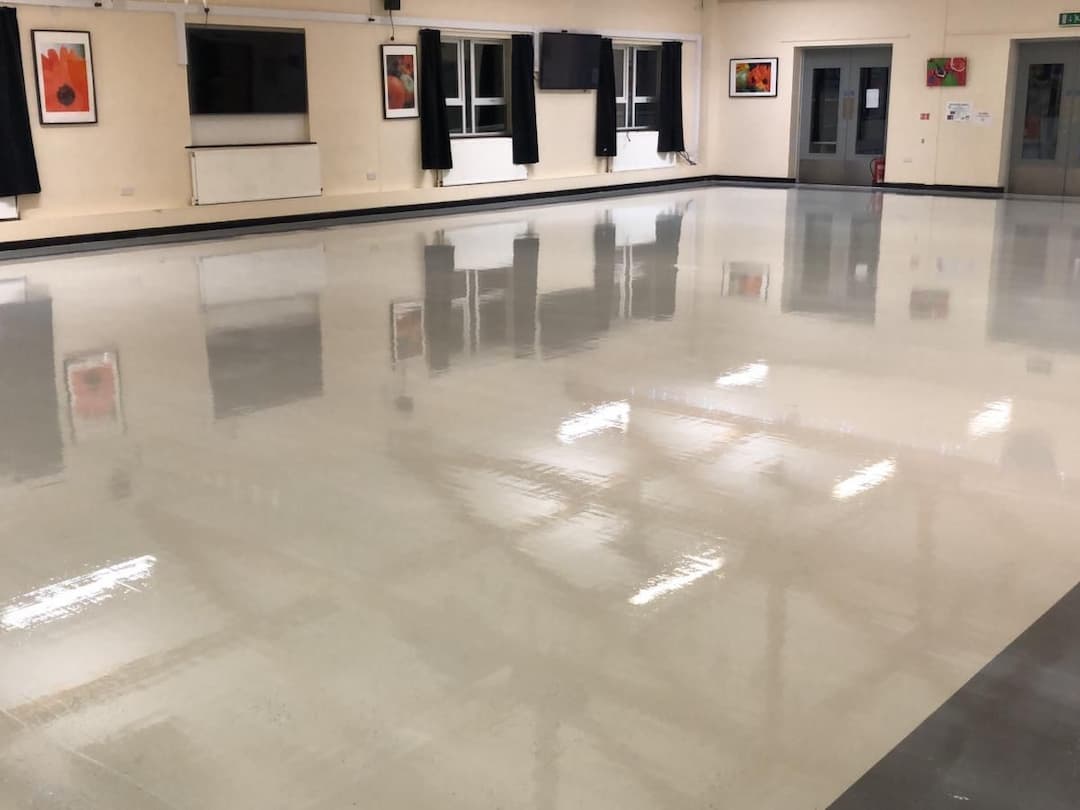
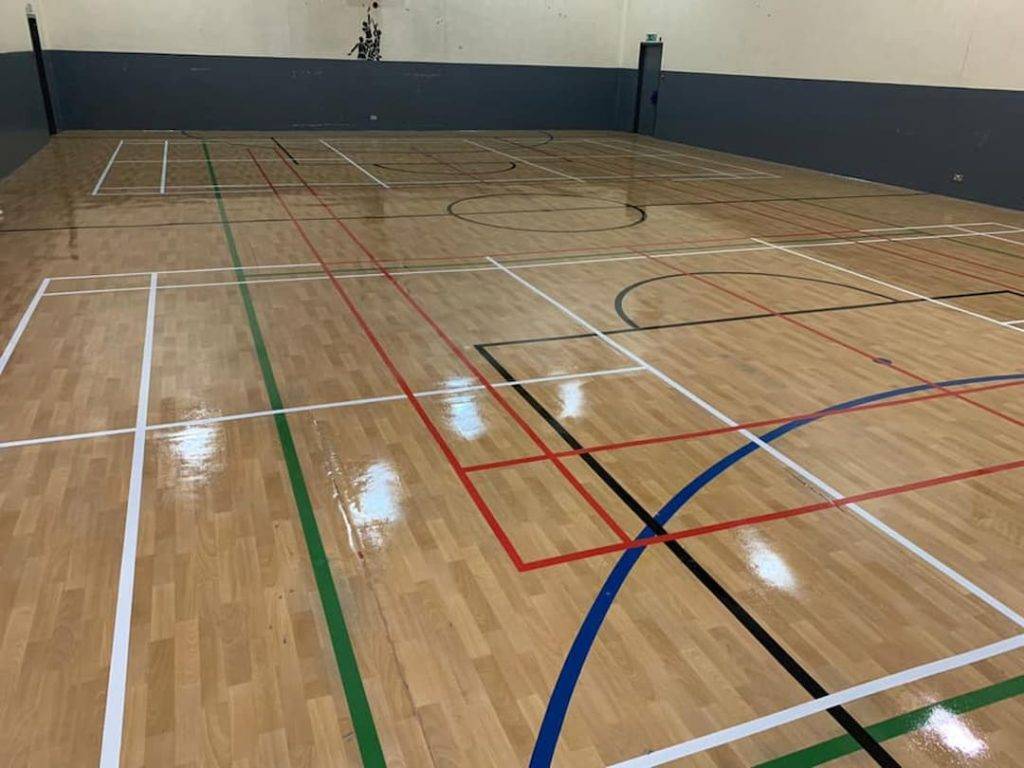
How long a sports floor lasts depends far more on how it is looked after than on what it cost to install. The floors that last longest have a few things in common:
Watch for the signs that a floor needs more than cleaning: grey, dull traffic lanes, lines that are hard to see, a surface that feels slippery within a day of being cleaned, and boards that sound hollow or move underfoot. Any of these is a reason to book a floor inspection before it becomes a repair.
Not every sports floor is timber, and the maintenance regime has to match the surface. Vinyl and polyurethane floors cannot be sanded, so their protection comes from the factory finish or a site-applied seal. They need regular deep cleaning and, as the finish wears, a recoat with a compatible PU sealer; the wrong product can fail to bond and start to peel.
Granwood and other composite block floors need a different approach again. Sanding destroys them, so they are cleaned with products that will not attack the blocks and periodically recoated with a specialist system. Our Granwood floor restoration page explains the full process when a floor has gone beyond routine care.
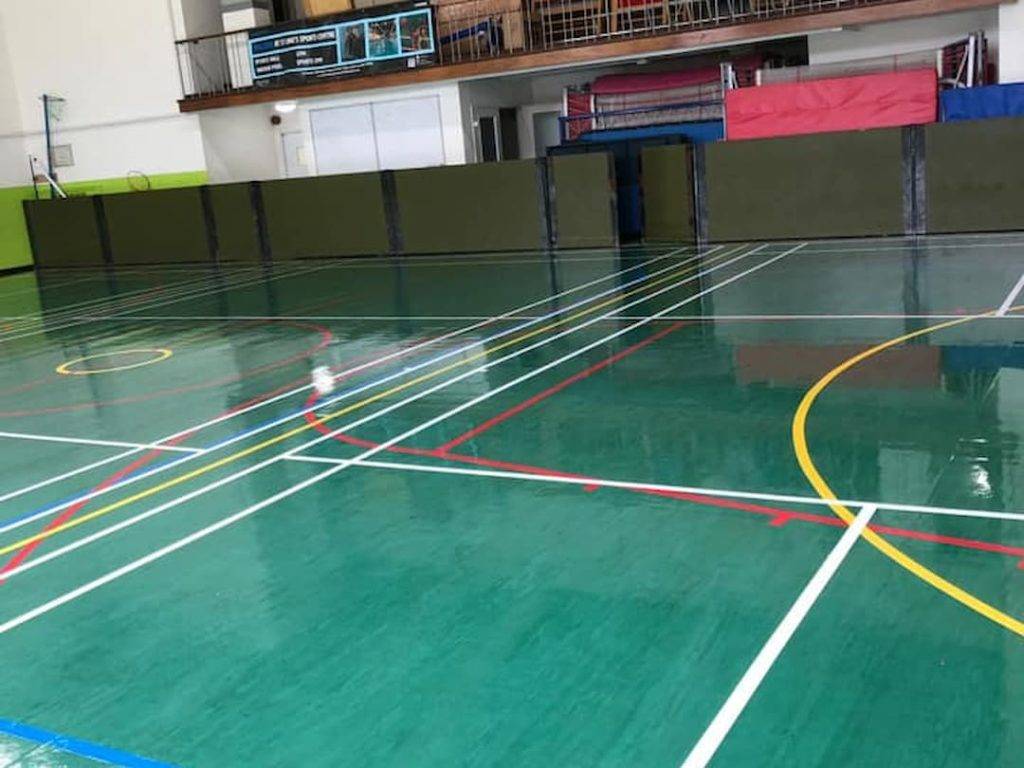
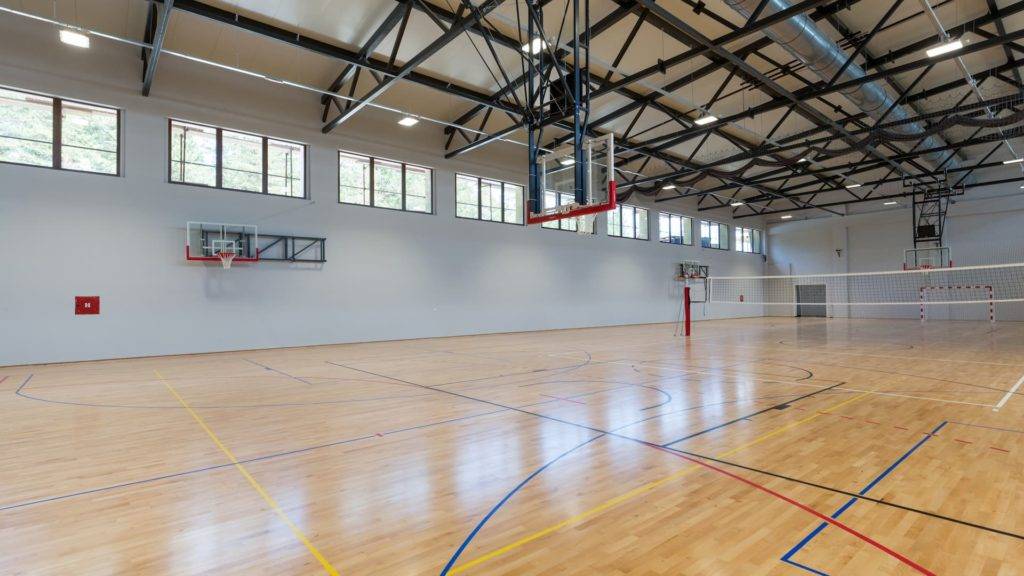
Exams, assemblies and events often do more damage to a sports floor than sport does: chair and desk feet cut through the lacquer, staging dents the boards and spilt drinks lift the seal. Fit soft caps to furniture, spread heavy loads and lift covers as soon as each event ends. Our sports hall floor protection service supplies covers and load-spreading boards sized to your hall, and we repair and recoat after a busy exam or events season.
Floor and lacquer warranties usually come with conditions: approved cleaning products, periodic maintenance and, in some cases, evidence that it has been done. A claim can fail simply because nobody can show the floor was looked after.
After every maintenance visit we leave a written record of what was done and which products were used, which makes budgeting predictable and keeps the paperwork in order. If you are not sure what your warranty requires, send us the documents and we will build the programme around them.
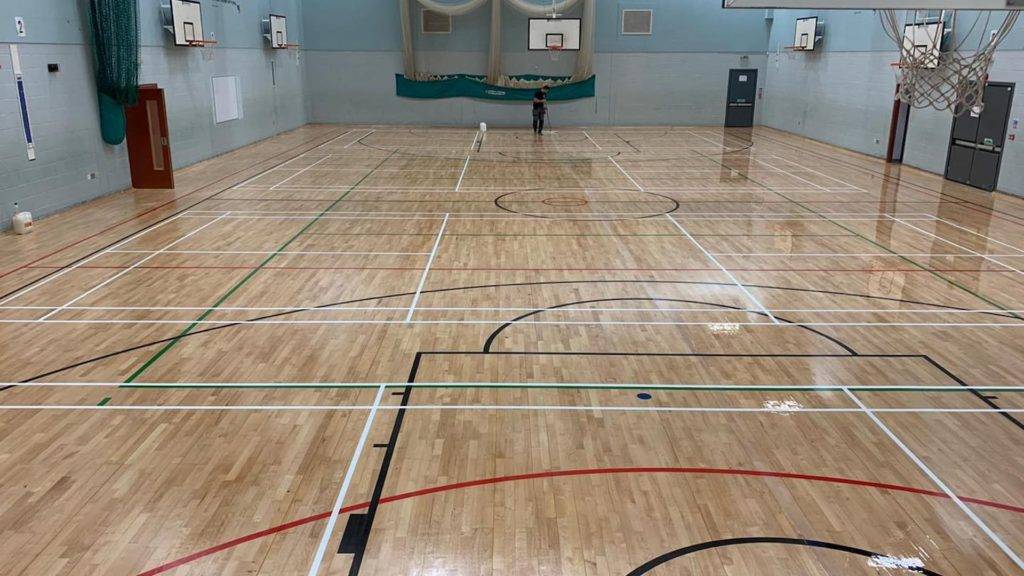
Once or twice a year suits most school and leisure halls, and more often where the floor is used every day or hosts regular events. A floor that turns slippery or dull between visits is usually carrying residue from daily cleaning, which a deep clean will strip.
Use a pH-neutral cleaner made for sports floors, at the dilution on the label, and check it is approved by the manufacturer of your floor or lacquer. Avoid general-purpose detergents, polishes and anything that leaves a shine, because they reduce grip. We recommend specific products during our cleaning demonstration.
Yes. A deep clean, abrade and reseal is a two-day job that can be done over a weekend at no extra cost, and smaller visits can often be done overnight so the hall is ready for the next morning’s bookings.
Deep cleaning starts from £2 per square metre, depending on the condition of the floor, and a deep clean with two protective seal coats is £12 per square metre. Recoats, re-lining and slip testing are priced from a survey, and a planned programme means the costs are known in advance.
Yes. We maintain timber, vinyl, PU, lino and Granwood floors whoever installed them, and we will identify your floor and its finish free of charge if you are unsure what it is.
Yes. Academy trusts, leisure operators and local authorities can put several halls on one programme with a single point of contact and consistent reporting. See our multi-site and framework contracts page.
Usually because the cleaner is too strong, the wrong type or not rinsed away, and hard water makes it worse. The residue dries as a film that first reduces grip and then picks up dirt. A deep clean strips it, and switching to a sports floor cleaner at the correct dilution stops it coming back.
Find the cause first. Most slippery sports floors are caused by residue from the wrong cleaner or too strong a dilution, by dust and grit from outdoor shoes, or by lacquer that has worn through. A deep clean and a change of cleaning product fixes residue, entrance matting and a footwear rule deal with grit, and a screen and recoat restores a worn finish. A pendulum slip test before and after shows which it was.
It depends on the surface and the care. A timber floor that is recoated on schedule can go a decade or more between full sands and, because it can be sanded several times, can last for decades. Vinyl and PU floors last until the wear layer is worn through, which regular deep cleaning and recoating delays. In every case, maintenance is the biggest factor.
Looking after a floor properly is far cheaper than rescuing one. See multi-site and framework contracts for estates with several halls, sanding and resealing when a screen and recoat is no longer enough, and the areas we cover for your area.
Our sports hall inspection service gives you a written condition report to plan the programme from.
If you require sports hall floor maintenance in your local area, give our specialist sports flooring company a call.