
Table tennis flooring has a tighter brief than most hall surfaces. Players make short, explosive sideways pushes, a small matt ball has to stand out against its background, and the table must stay perfectly steady. The floor needs controlled grip, real resilience and a darker, low-sheen finish that does not throw light back at the players.
Courtship Flooring installs, refurbishes and maintains floors for table tennis clubs, schools, colleges and leisure centres, from dedicated club rooms to shared halls that host league nights. We are a family firm founded in 1987 in Wellington, Somerset, and our own teams carry out every job. Commercial and institutional facilities only.
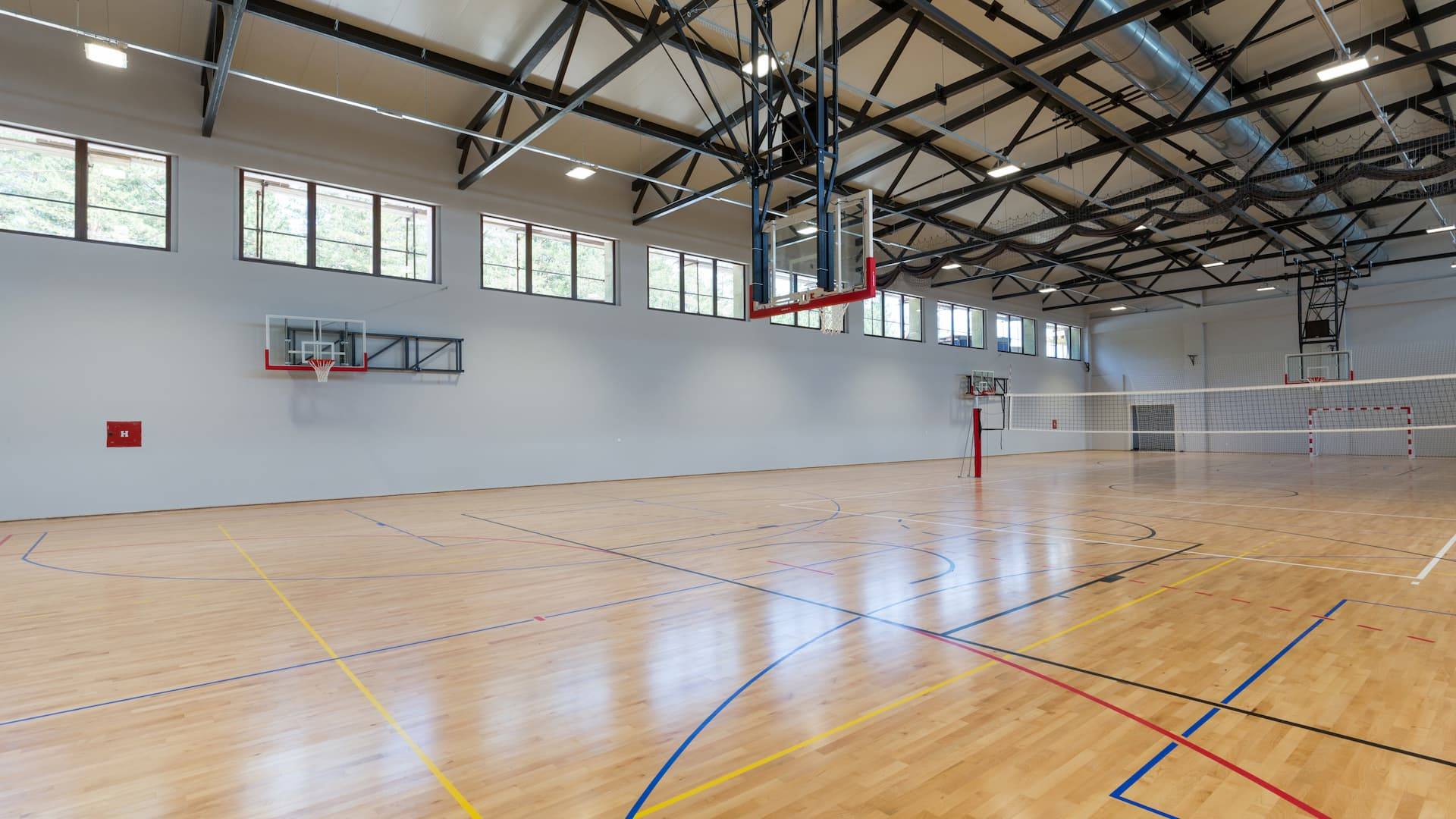
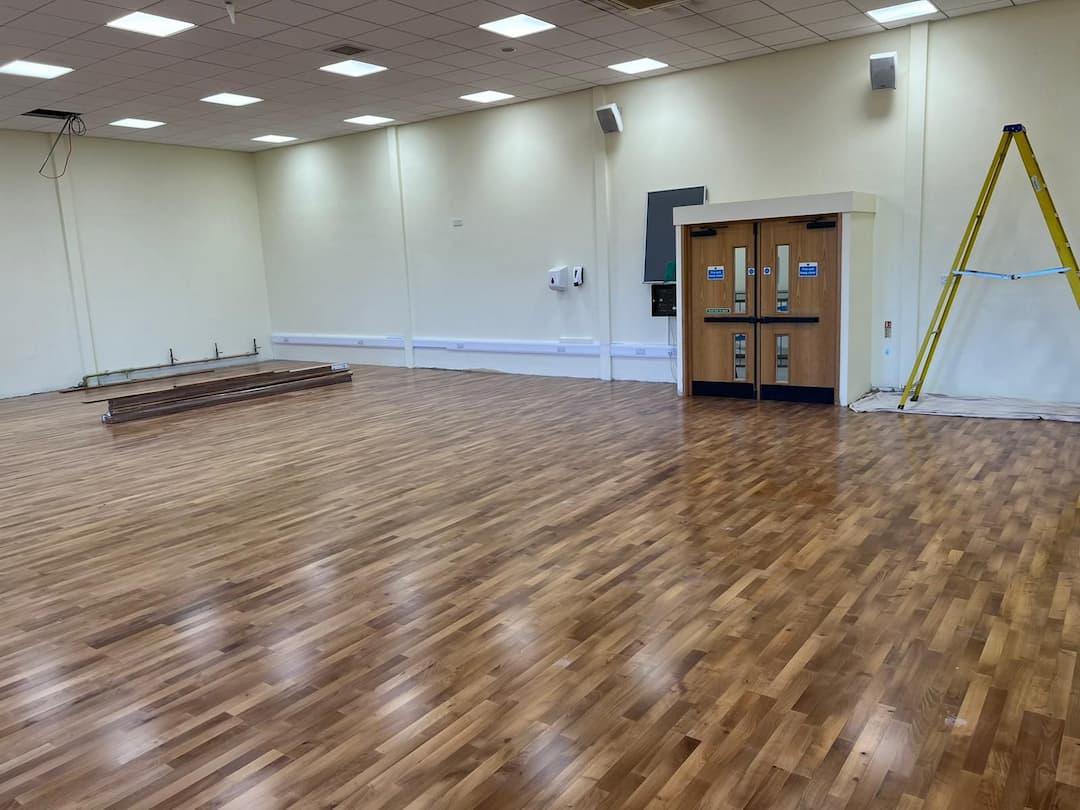
Clubs moving into their own premises, often a former neighbourhood centre or church hall taken on through a community asset transfer, can specify a floor purely for table tennis. The surface can be a deeper colour than a multi-sport hall would accept, the finish fully matt and the layout planned around fixed table positions. Converted buildings often come with bare screed, quarry tiles or tired parquet, none of which gives players consistent grip or protection. We assess the base, deal with moisture and levels, then install the system that suits the room and the budget.
In schools, table tennis is one activity among many. Tables come out for PE lessons and after-school clubs, then fold away so the hall can return to badminton, netball or exams. Because the floor has to serve every user, table tennis needs are usually met through the finish, the lighting and the care routine, not a change of surface. For schools and academy trusts we keep the existing floor safe and even, plan refurbishment around every user group and work in the holidays so no teaching time is lost.
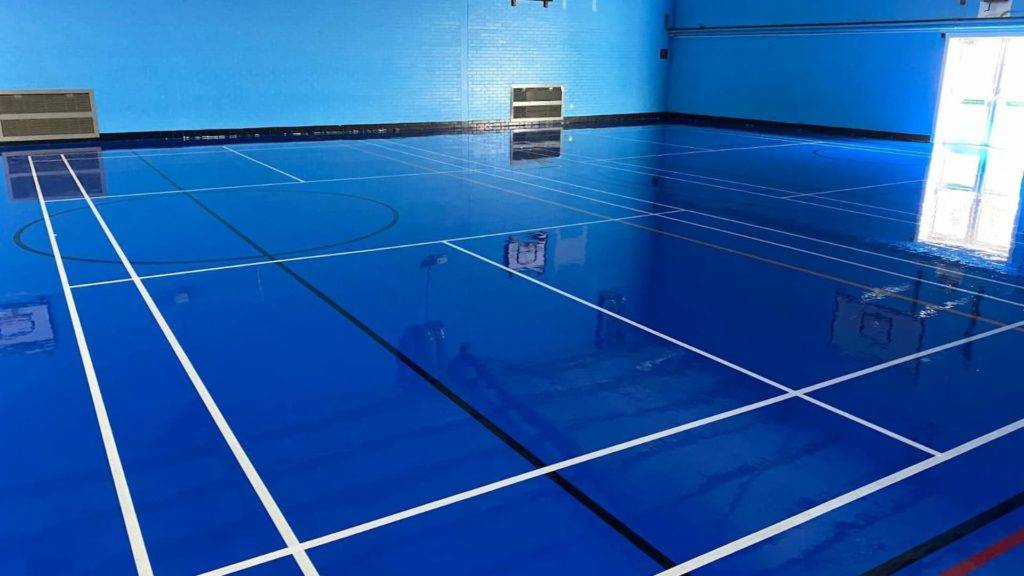
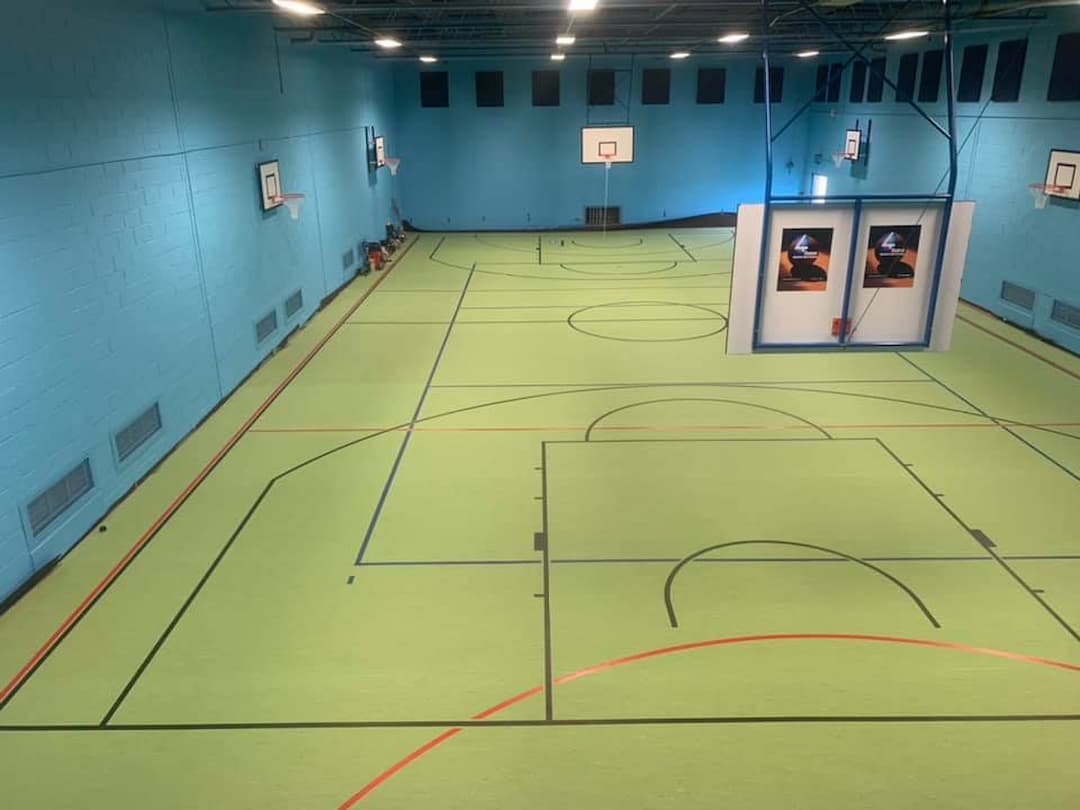
Leisure centres and university halls often carry table tennis on regular bookings, from league fixtures to coaching blocks and tournaments hired by local clubs. Here the floor is part of what is being sold, and a hirer who finds it slippery, glaring or uneven will look elsewhere. A hall that wants to host graded competition also has to show it meets the playing conditions, and the floor is among the most visible of them. We keep these floors bookable through planned maintenance, with written reports operators can share with hirers.
The ITTF regulations for international competitions treat the flooring as part of each playing area, alongside the table, surrounds and umpires’ furniture. The floor must not be light-coloured, brightly reflecting or slippery, and it must be resilient. At World, Olympic and Paralympic title competitions it has to be wood, or a brand and type of rollable synthetic material authorised by the ITTF. These rules target elite events, but they are the clearest published benchmark for any hall planning competitive play.
The table is 2.74 m long and 1.525 m wide, with its playing surface 76 cm above the floor, but each table claims far more floor than that. ITTF regulations set a minimum playing space of 14 m by 7 m, with 5 m of clear height, for international competition. Table Tennis England’s playing grades scale this down for domestic use: 8 m by 4 m with 3 m clear height at Grade 1, 10 m by 5 m at Grade 3, and 12 m by 6 m with 4 m clear height at Grade 4. Grade 5 matches the international figure.
These areas are measured between the surrounds, with a one metre aisle wherever a playing area runs alongside a wall and spectator space on top. Table Tennis England’s model design brief fits four Grade 3 tables into a minimum area of 22 m by 12 m. The whole playing area must perform evenly, not only the patch under the table, so floor sockets, access covers, thresholds and board joints inside it should be checked before table positions are fixed.
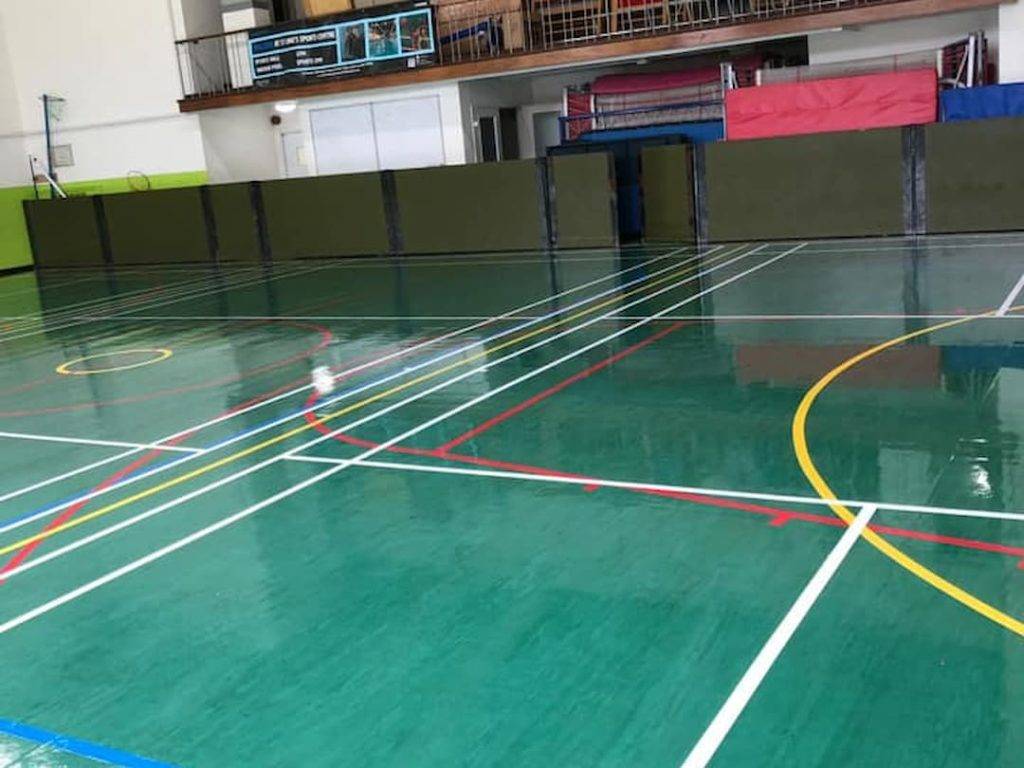
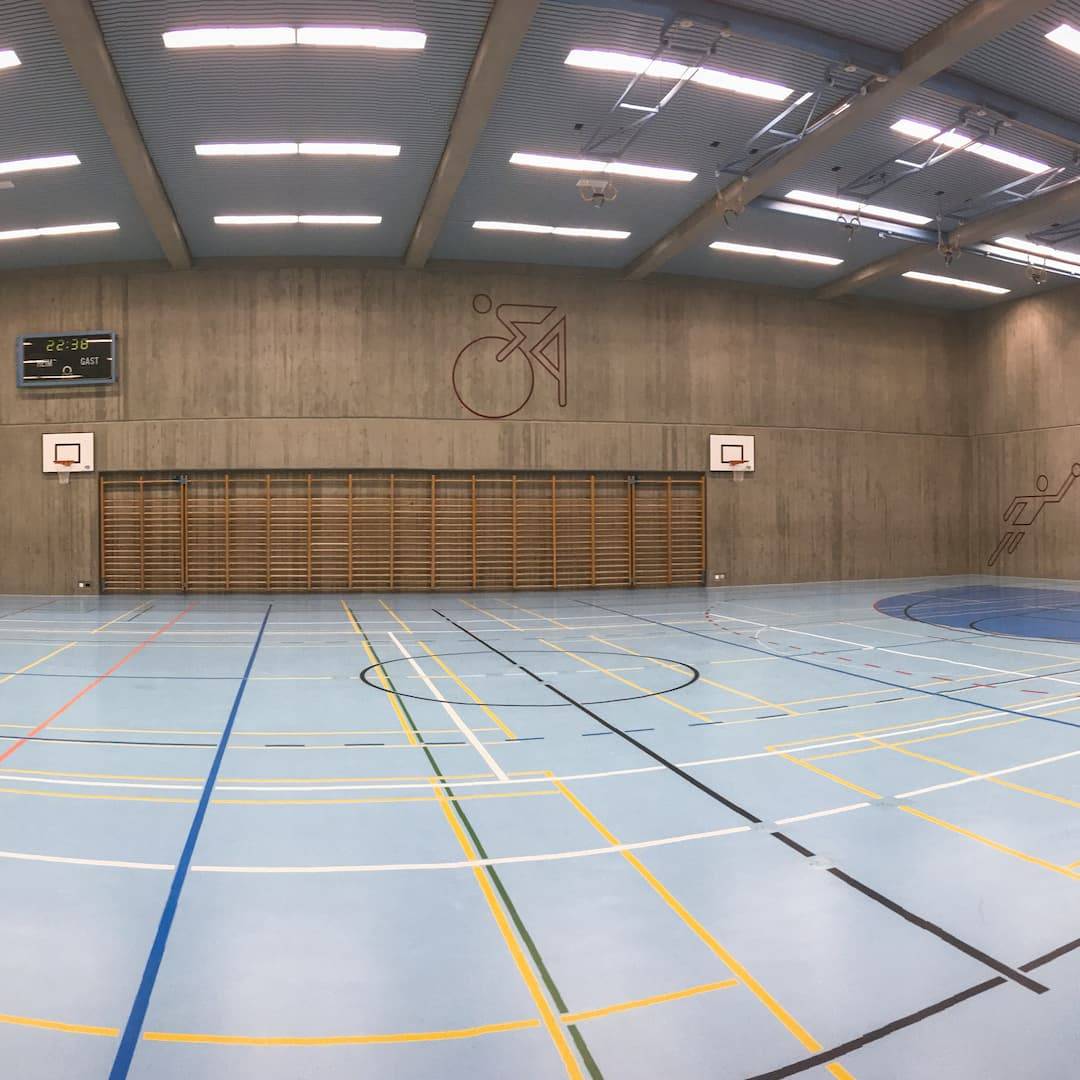
Timber is the usual choice for halls that carry several sports. Solid and engineered hardwood floors from manufacturers such as Junckers and Boen suit halls where table tennis shares time with court sports, as our wooden sports flooring page explains. The issue for table tennis is colour. Maple and beech are pale, and Sport England’s guidance on floors for indoor sports quotes a light reflectance range of 20 to 30 per cent for specialist table tennis floors, against 40 to 50 per cent for general sports halls.
Sheet vinyl gives a dedicated club the widest colour choice. Sport England’s table tennis facility notes recommend a synthetic sports sheet in red, green or blue on a semi-sprung sub-floor, with darker strip timber as the alternative. PU is poured as a jointless surface that can be recoated as it wears, and sports lino is a hard-wearing natural option. Our vinyl and PU sports flooring page covers all three. The deciding factors are whether the room is dedicated or shared, the state of the base and how much colour freedom the other users will accept.
Rallies are played on the table, not off the floor, so ball rebound matters far less than in basketball or netball. What matters is footwork: players rarely jump, but they push off and stop sideways hundreds of times a session. For table tennis in multi-sports halls, Sport England’s floors guidance prefers area elastic or combined elastic floors under BS EN 14904, and does not recommend point elastic or mixed elastic floors. It also highlights vertical deformation, because a floor that dips too far under a player’s foot can unsettle the table. Our sprung floors page explains how these systems are built and restored.
Grip has to be balanced. Too little and a player slides past the ball, too much and a foot snags on a recovery step. BS EN 14904 sets a friction range of 80 to 110, but grip changes in service as finishes wear and dust builds up. Pendulum slip testing to BS 7976-2 gives a measured pendulum test value, with 36 and above classed as low slip potential under HSE and UK Slip Resistance Group guidance.
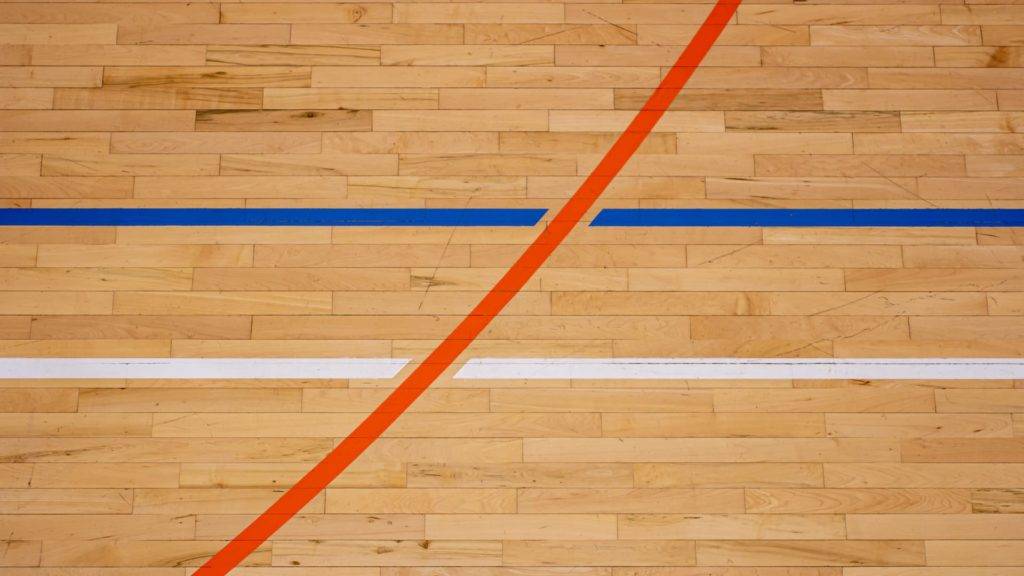
The ball is 40 mm across, white or orange and matt, and players read its spin in a fraction of a second. Anything bright behind or below it makes that harder. ITTF regulations call for a generally dark background with no bright light sources or daylight from uncovered windows, and Sport England’s sports hall design guidance lists table tennis among the sports where daylight in the hall is strongly discouraged. Glossy lacquers mirror each light fitting as a bright patch on the floor, often where a player looks when tracking a low ball, which is why Sport England’s floors guidance prefers a matt finish.
A darker, matt floor reflects less light back into the room, so the lighting must be adequate and even. Table Tennis England’s grades call for 300 lux at Grade 1, 500 lux at Grades 2 to 4 and 1,500 lux at Grade 5. ITTF regulations for international events require at least 1,000 lux over the playing surface, the same level at every table in use, and light sources at least 5 m above the floor. Surrounds about 75 cm high, all in the same dark colour, complete the playing area.
A great deal of table tennis takes place in halls that belong to other sports for the rest of the week. When a venue with a pale timber floor hosts a tournament, a common answer is a roll-out synthetic surface laid over the permanent floor for the event and lifted afterwards. Purpose-made table tennis sheets are thin, often red, and supplied in long rolls cut to suit each playing area.
Sport England’s floors guidance gives two practical warnings. Portable sports flooring and roll-down surfaces are heavier and bulkier than the names suggest, so storage, handling and the labour to lay and lift them need planning. The combined build-up must also be stable and perform to the same standard as the permanent floor. The floor underneath therefore has to be flat, sound and clean, with no lifting boards, proud fixings or debris to show through the sheet. Agree any taping method in advance, so it does not pull at the seal or line paint when it comes up. A sports hall inspection before the event confirms whether the floor is fit to take an overlay.


Table tennis creates its own wear pattern. Play concentrates in a band behind each end of the table, where players push off and pivot, so that is where the seal wears and grip changes first. Dust is the daily enemy, because a fine film cuts grip quickly, so dust-mop before every session with a mop suited to the surface. Sport England warns that inappropriate cleaning products can dramatically alter the playing characteristics of factory finishes, and polishes can leave residues that add shine and change grip.
Periodic work keeps the floor performing. Our sports hall floor maintenance service covers deep cleaning from £4.50 per m² and screen and recoat, where the existing seal is abraded and a fresh coat applied without sanding to bare timber. Once the seal has worn through, or the timber is marked and damaged, sanding and sealing back to bare wood restores the surface. That is the moment to choose a low-sheen sports seal that cuts glare. A well-kept hardwood floor can be sanded several times over its life, which is why timber lasts so long in busy halls.
Prices depend on floor area, condition, access and the finish specified, so we quote each hall individually after a survey. Programme times from our own projects give a realistic guide for planning. A full sand, seal and reline of a gym of around 240 m² takes 5 to 6 working days. A four-court hall of around 550 m² takes 9 to 10 working days. A deep clean, abrade and reseal is a two-day job that can be completed over a weekend, which suits a club or leisure centre that cannot close for a week.
For table tennis users, timing is often a bigger issue than cost. A club with a single room has no fallback venue, so a closure means cancelled sessions and rearranged home fixtures. Major work usually fits the quieter period between seasons. Plan a reseal well ahead, confirm dates with us early and give your league or hirers notice before the fixture list is published. Shorter weekend work can then be fitted around the season as the floor needs it.
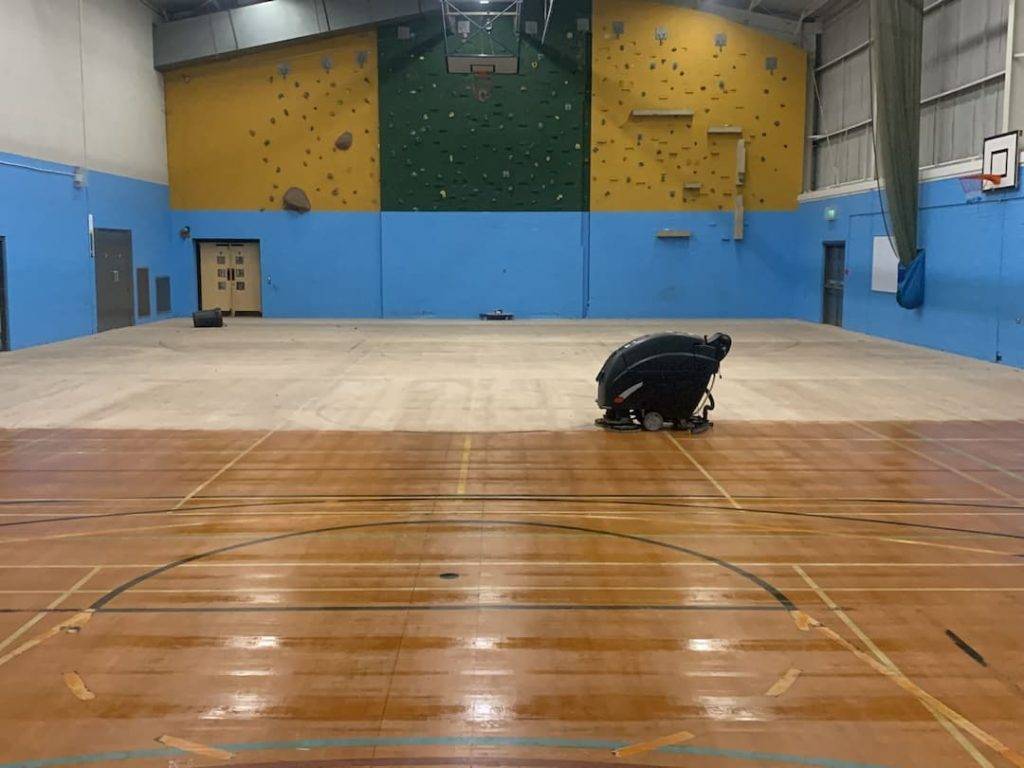
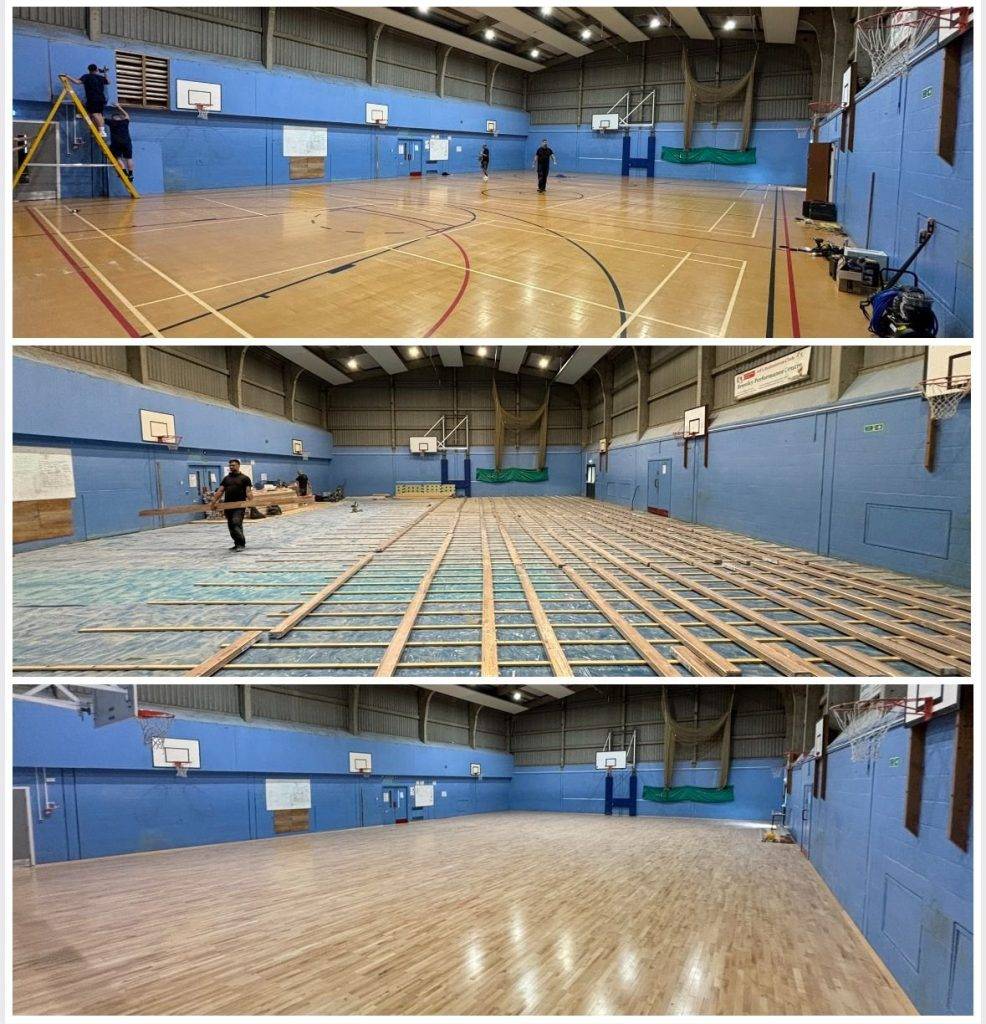
Every project starts with a survey visit to the hall. We look at the surface, sub-floor, moisture, levels, lighting and how the room is used across the week, then confirm whether the floor needs maintenance, refurbishment or replacement. Our written proposal sets out the recommended system, finish and programme, including where tables, surrounds and stored equipment will go while we work.
Our own teams carry out the work, with nothing subcontracted, so the firm that surveys the hall is the firm that sands, seals or installs it. We protect adjoining areas, control dust and keep your nominated site contact updated as the job progresses. At handover we explain the cleaning routine for the finish applied, and slip testing can be carried out so you have a record before tables go back out.
Projects include a Junckers solid maple installation at Surrey Sports Park, a new Junckers floor at Harris Academy, Wakefield, a full sand, reline and reseal at Liskeard Leisure Centre in Cornwall, and a hall at Aston University, Birmingham, refurbished to a like-new finish.
Neither makes a good long-term surface. Concrete and tiles give no shock absorption, which is hard on ankles, knees and backs across a season of lateral pushes. Tiles can also be glossy and slippery. A sound screed can usually take a sports sheet or a sprung timber system once moisture and levels have been checked.
No. That rule applies to World, Olympic and Paralympic title competitions. Local and county leagues set their own venue requirements, so check the league handbook before investing. A sound, matt and well-maintained timber or sports vinyl floor, with adequate space and lighting around each table, suits most domestic league and club play.
It depends on the seal system, the hall temperature and the number of coats, and the manufacturer’s curing guidance always comes first. We give you a return-to-use date in writing and advise on light use before full play. While the finish hardens fully, tables and surrounds should be wheeled or lifted into place, never dragged.
They can. Folding competition tables are heavy and run on castors, so grit in a wheel or a seized castor can score a seal or dent softer timber. Keep wheels clean, check them each term and store tables on a protected area. Surrounds with missing or damaged feet can mark a floor too.
Table tennis uses no floor lines, as the surrounds define the playing area. In shared halls, badminton and netball lines will cross table tennis areas, which is fine provided the paint is flat, sound and not glossy. Lifted or ridged paint can catch a foot, and our sports hall line marking service can reline courts when needed.
Yes. Granwood composite floors are found in many older school and community halls, and Sport England’s table tennis facility notes name composite flooring as an alternative surface. Granwood cannot be sanded like timber, so restoration involves deep cleaning, repairing damaged blocks and a modified epoxy coating system to give a firm, even surface. We carried out a Granwood restoration at St George’s, Ascot.
ITTF regulations permit rigid flooring at wheelchair events, and players in chairs generally find a firm surface easier to move on. A hard-wearing timber, vinyl or PU floor works well if it is level, with flush thresholds and no open joints. Allow wide, clear access to each table.
Timber takes up and releases moisture from the air, so it expands and shrinks with conditions in the hall. Perimeter expansion gaps allow for this, and a heated, ventilated room keeps movement within limits. Sport England’s table tennis facility notes suggest heating to 16 to 18°C. Sudden heating after long unheated spells can open gaps or cup boards.
Send the approximate floor area, the current surface and its age, photographs of the whole floor and any damage, and how the room is used across the week. Mention planned competitions, known damp or sub-floor issues, and the dates the hall is free.
Book a site survey and receive a written proposal for your club, school or leisure centre table tennis floor.