
Sports hall floor protection matters most when the hall stops being used for sport. Exam desks, assembly chairs, graduation staging, catering trolleys, concert rigs and access towers load the surface in ways it was never designed for, and the damage often appears weeks later as dents, scratched lacquer, cupped boards or a finish that feels slippery.
Courtship Flooring supplies protective covering and load-spreading boards sized to your hall, shows your team how to use them, and inspects, repairs and recoats floors after heavy-use periods, with pendulum slip testing so the hall returns to sport in good order. Commercial and institutional facilities only.
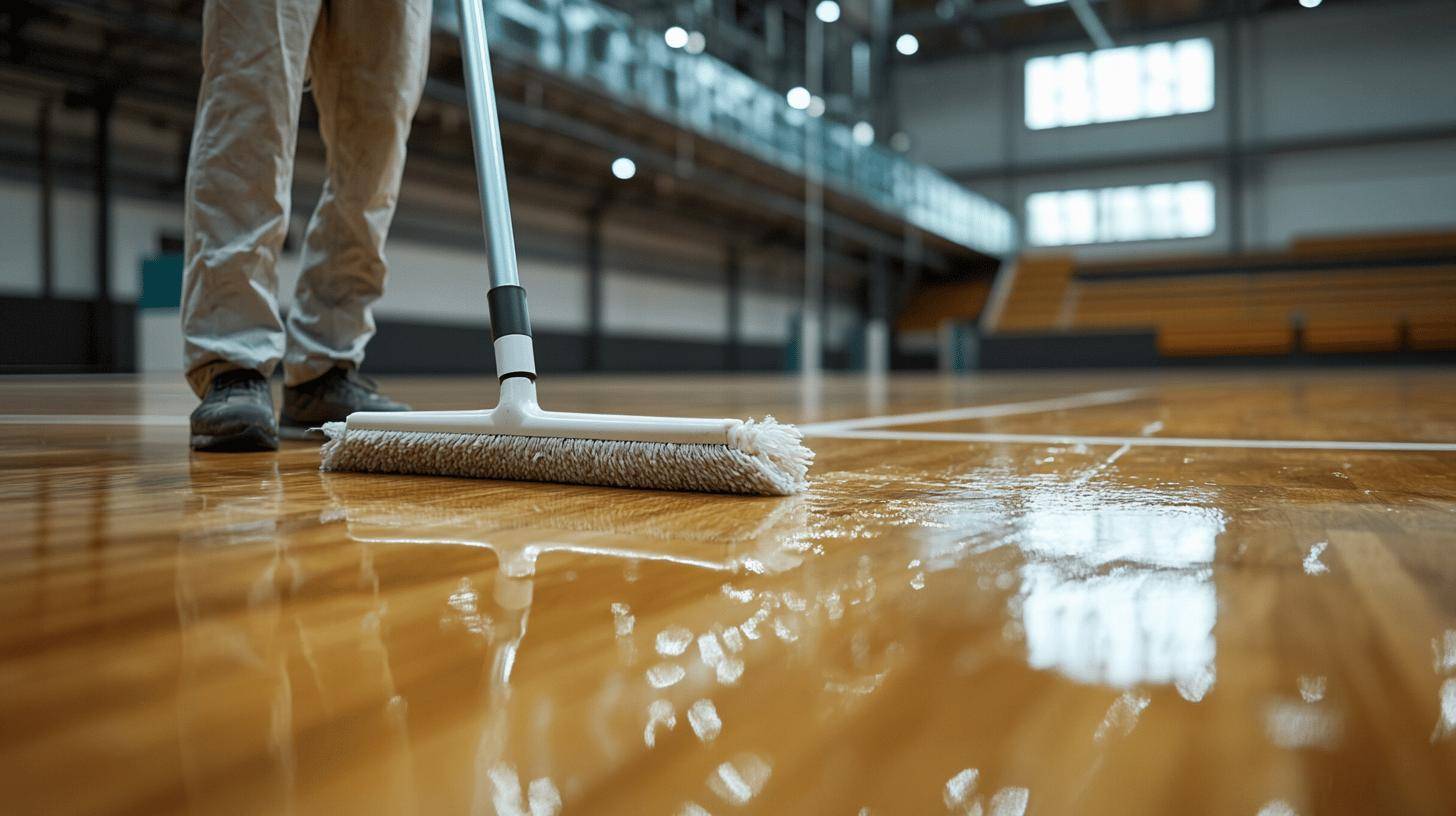
Much of the damage after exams and assemblies comes from furniture. Steel-framed chairs and desks rely on small plastic ferrules, and once one splits or falls off, the bare tube edge scores the lacquer every time the chair moves. Check every chair and desk before it enters the hall, replace missing or worn caps, and favour broad, flat feet that spread weight. Felt glides slide well but hold grit, so change them regularly. Stacking trolleys need soft, non-marking wheels and should never cross an uncovered floor fully loaded.
Protection changes how people move across the hall. Vinyl covers can turn slick when wet shoes come in from the car park, joins between tiles can lift into trip edges, and the line where a cover stops and bare lacquer begins catches people out. Put full-width entrance matting at every public door, check joins and edges before the doors open, and mop spills straight away. People in smooth-soled shoes are most at risk at that transition, so keep it away from main walking routes and fire exits.
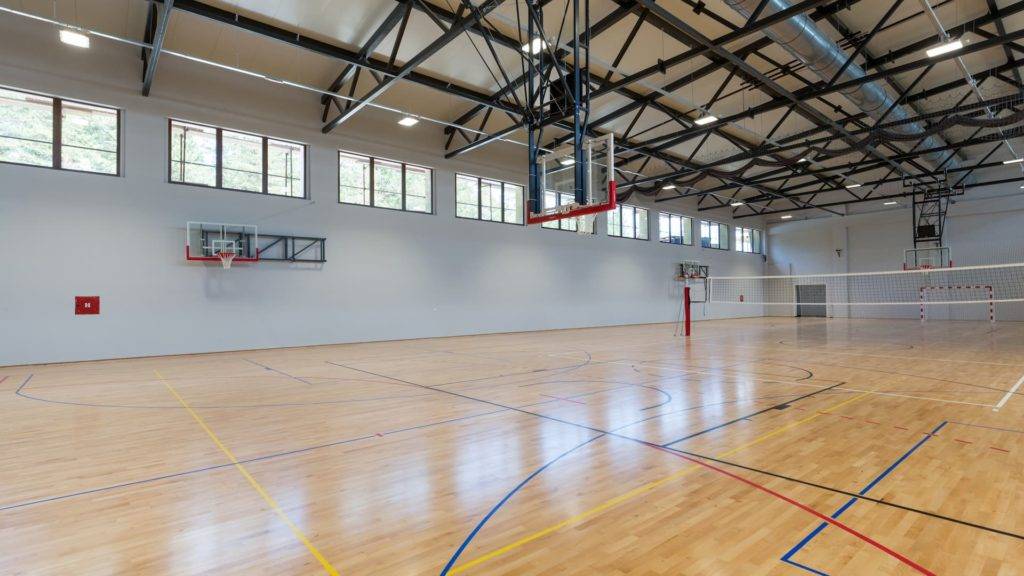
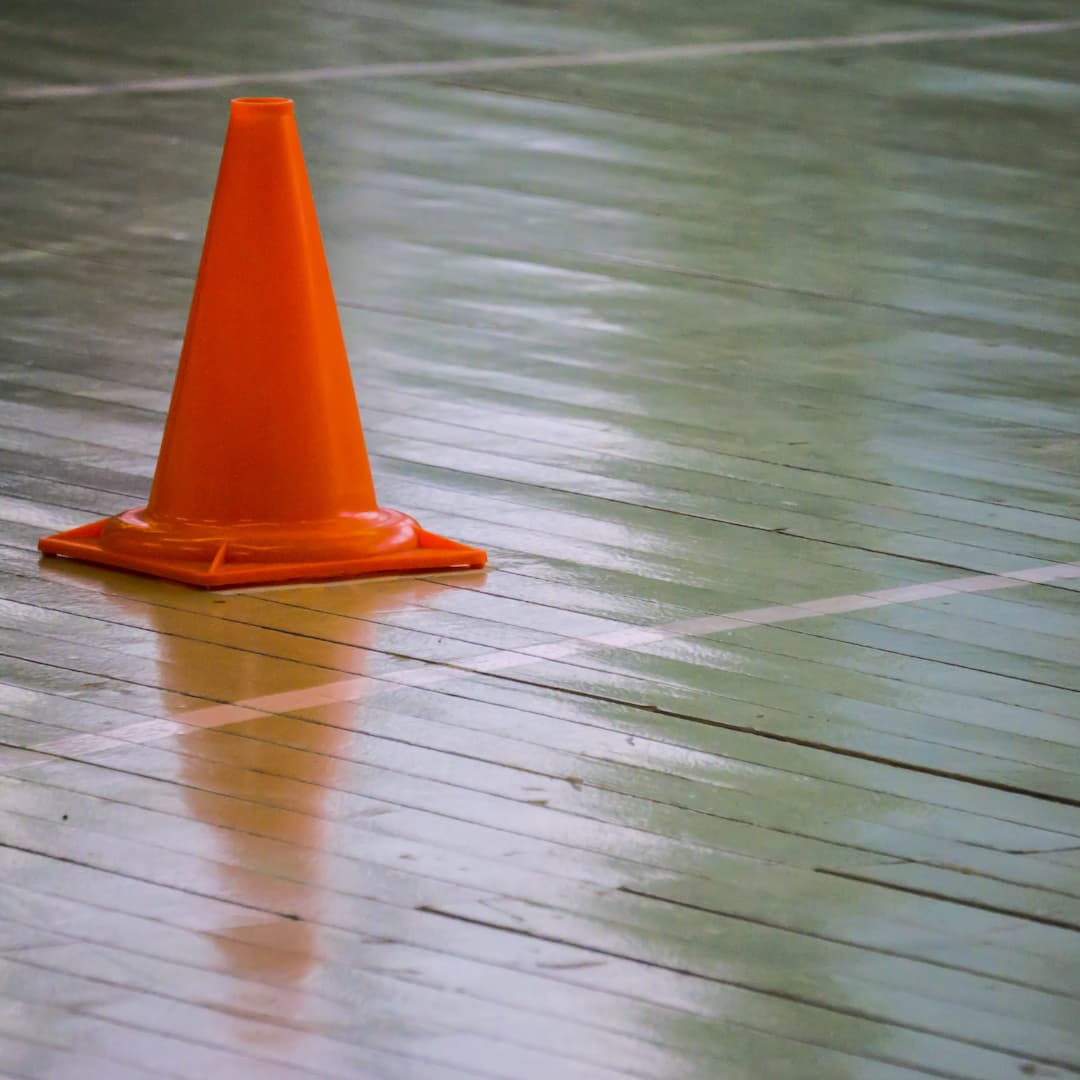
Covers stored badly will damage the floor the next time they are used. Rolls left in a corner of the hall pick up grit that is later dragged across the lacquer, and tiles stacked unevenly develop curled edges that will not lie flat. Keep rolls on a dedicated rack or reel and tiles on purpose-made trolleys, brush the face of each piece as it comes up, and store everything somewhere dry and away from heaters. If the hall uses a fixed exam layout, label rolls by position so seams fall in the same place each time.
When a caterer, staging company or outside hirer uses the hall, any damage is far easier to resolve if you know what the floor looked like beforehand. A walk-round with photographs of the playing area, existing dents, lacquer wear and line condition gives you that baseline. A sports hall inspection does the same job formally, covering the surface, finish and markings, so new damage found after the event can be identified, attributed and priced with confidence.
Indoor sports surfaces are assessed against BS EN 14904, which covers properties such as shock absorption, ball rebound, sliding behaviour, resistance to indentation and behaviour under a rolling load. In test reports to that standard, the rolling load check uses a wheel carrying 1,500 N, roughly 150 kg, and the separate indentation test allows less than 0.5 mm of residual impression. Those figures describe a floor designed for sports shoes, bouncing balls and wheeled sports equipment. They say nothing about a staging deck resting on a few small feet for a week, or a scissor lift turning on the spot.
The protective finish is also thin. Lacquer on timber, or the factory coating on vinyl, is a fine surface layer, and once grit, hard heels or steel chair legs cut through it, the material underneath wears quickly and absorbs dirt and moisture. The sportscotland design note for school sports halls makes the point at planning stage: designers should consider non-sporting school and community uses and make sure chairs and other equipment will not damage the floor. Protection keeps that intention alive long after handover.
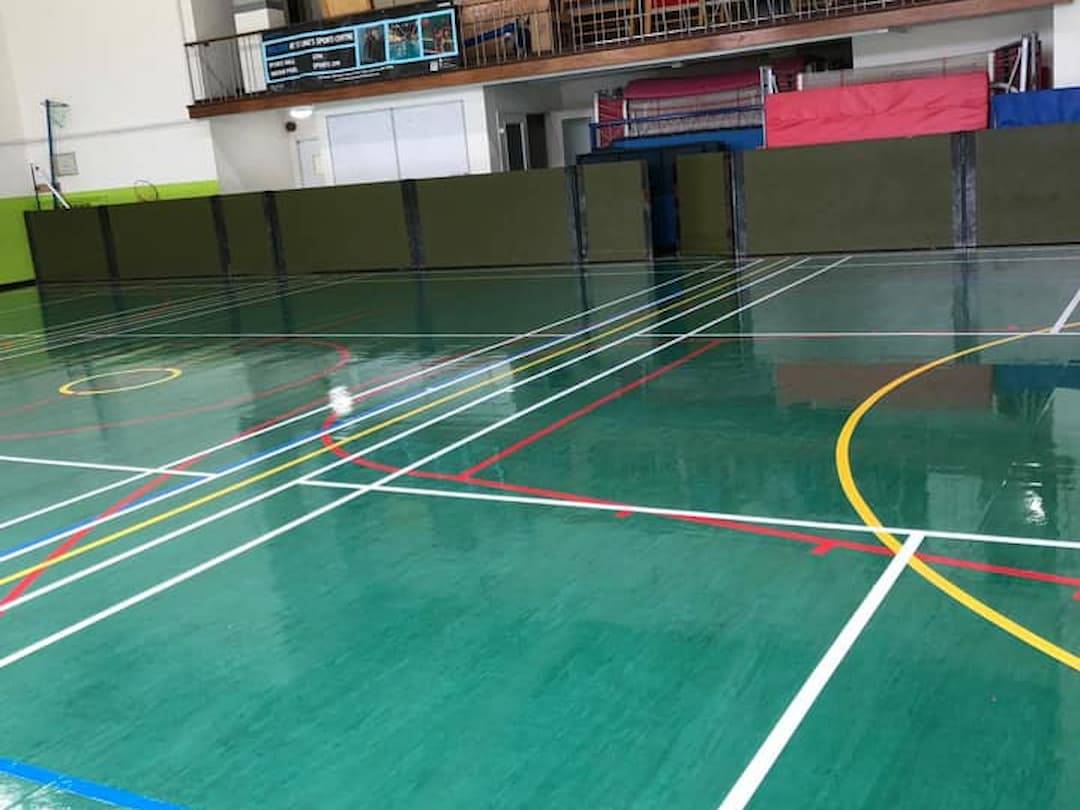
Three types of sports hall floor covering suit most halls, and many sites need a combination. Traditional canvas druggets are still seen at exam time, but they are thin and give little protection from chair legs. Heavy-duty roll-out covers, usually vinyl or a coated textile, are laid across the hall in long strips. They suit large areas and heavy foot traffic, store compactly and are quick to lay once staff know the layout, although each strip needs two people and a clean floor.
Interlocking or large-format protection tiles, not to be confused with a portable sports floor that players use, are heavier per piece but can be laid and lifted in sections, so a stage end or catering area can be covered for a smaller event without covering the whole hall.
Neither rolls nor tiles spread a concentrated load very far. For staging feet, seating wheels, access towers and catering equipment, rigid load-spreading boards such as plywood or purpose-made panels go under the load. We match the system to your floor and the events it hosts, checking the indentation and slip performance of the top surface, the weight of each piece for manual handling, and that the backing will not mark or react with lacquered timber, vinyl or PU.
Concentrated and moving loads cause the most expensive damage, especially on timber laid over a sprung or semi-sprung sub-floor. A sprung floor is meant to deflect under an athlete’s landing and recover. A staging leg, a loaded tower scaffold or a mobile platform’s outriggers press on one small area for hours or days, and can push the floor beyond what its battens and pads were designed for.
Guidance from a leading hardwood sports floor manufacturer is clear: spread point loads with pressure-distributing plywood or metal plates placed flat side down, use thick plywood under heavy rolling loads, never run hard nylon or metal wheels directly on the surface, and take the floor system manufacturer’s advice before bringing in scaffold towers or scissor lifts.
Retractable and mobile seating needs particular care. Perished or flattened wheels leave tracks and dents along the same lines every time the seating is pulled out, and seating suppliers can add extra wheels or runner boards to reduce the load each wheel carries. Where battens or pads are already damaged, even a normal load can find the weak spot, so it pays to understand how sprung floors are built before a heavy event.
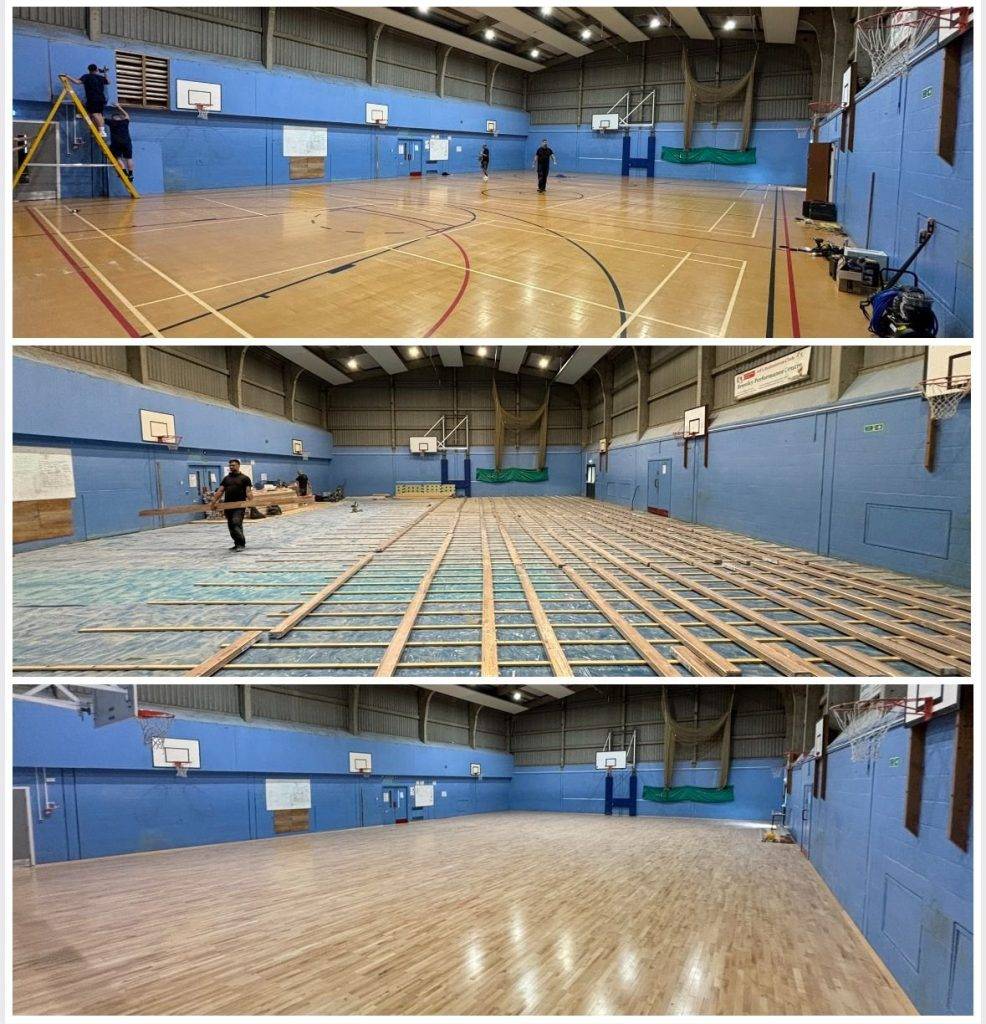
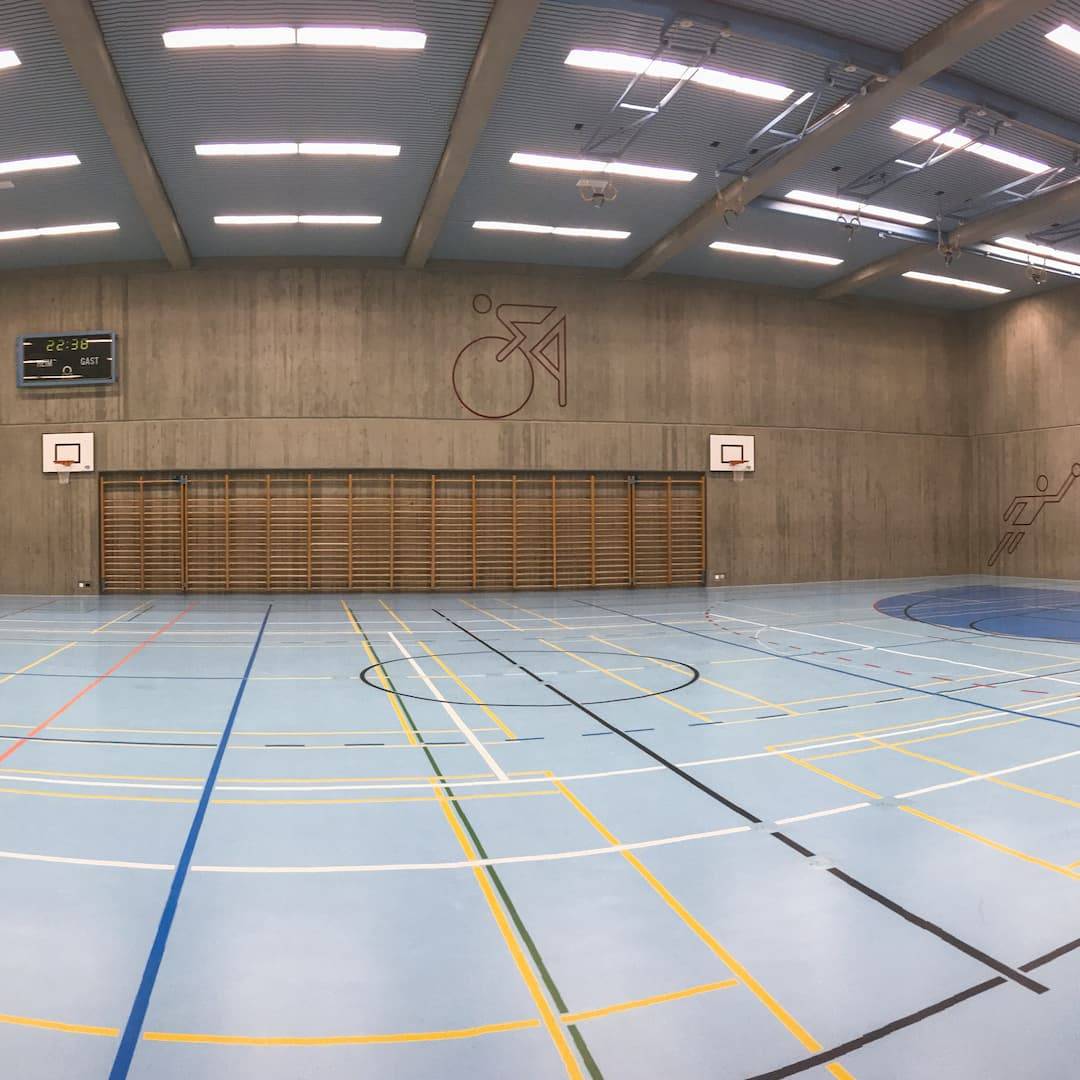
How protection goes down decides whether it helps. Start with a dry-mopped floor, because grit left under a cover is ground into the finish by every footstep above it. Lay covers flat with no creases or ridges: a crease under a desk leg concentrates the load into a line that can dent timber. Avoid any covering with printing on the underside, which can transfer onto lacquer.
Never tape a cover to the sports surface. Adhesive tape on a lacquered or coated floor can lift the finish or leave residue when it is pulled off, so join seams with tape made for the cover and keep it on the cover alone.
Plan the layout around the event. In an exam hall, set rows so desk legs sit on the body of a roll and not on a joint. Staging should stand on boards that extend well beyond its feet. Fit tapered edges or ramps where wheelchairs and trolleys cross onto the cover. When the event ends, lift from the far end towards the door, and never slide stacks of tiles across the bare floor.
Each type of event stresses the floor differently, so one standard set-up rarely suits a hall used for everything. Exams mean the longest exposure: rows of desks and chairs stay in fixed positions for weeks, covers remain down longer than for any other use, and the floor beneath is out of sight. Assemblies and graduations bring large numbers of people in outdoor shoes, often in wet weather, plus staging at one end. Catering brings hot equipment, liquids, grease and wheeled trolleys. Concerts and dances combine heels, drinks and heavy audio equipment.
A practical approach is to agree a protection standard for each use with whoever books the hall, including caterers and outside hirers, and write it into the booking terms. Sport should resume only once covers are fully lifted and the floor has been swept, never on a partly covered court. Where community clubs use the hall in the evenings during exam season, the exam layout usually stays in place, so agree an alternative venue or a reduced programme with them well before the dates are fixed.
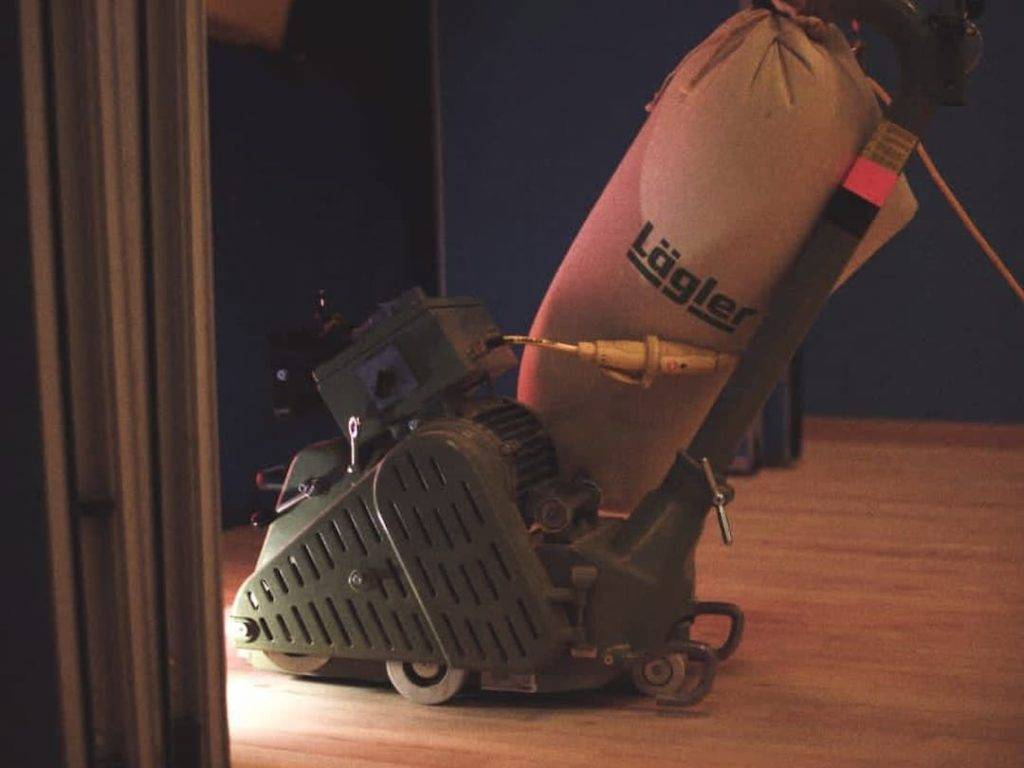
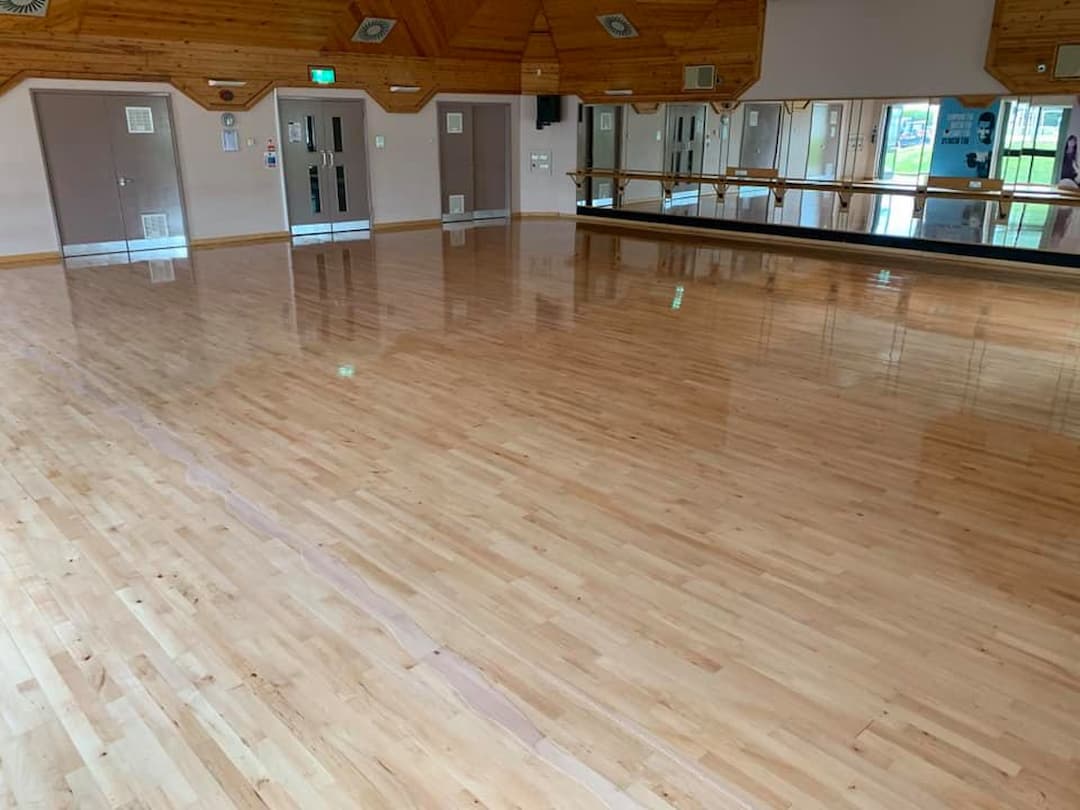
Timber sports floors move with the moisture in the air, and covering them interrupts that exchange. One hardwood manufacturer’s maintenance guidance recommends keeping the hall at a relative humidity of 35 to 65 per cent and an air temperature of 16 to 22°C, and warns against leaving polythene or similar sheeting down for long periods.
Moisture becomes trapped when a cover is laid over a floor that has just been wet-cleaned, when spills seep through seams, or when the hall is shut up with the heating off and condensation forms. The results include swelling, cupping, a cloudy finish and staining at board joints. Only lay covers on a dry floor, keep ventilation and heating running while they are down, and lift a few sections each week during a long exam series to check underneath. Where the hall has underfloor heating, use the thinnest breathable protection that will do the job.
Vinyl and PU floors are less sensitive to humidity, but water held at seams and perimeters can still attack adhesives and edges. Good control here, with regular sports hall floor maintenance, extends the life of the finish.
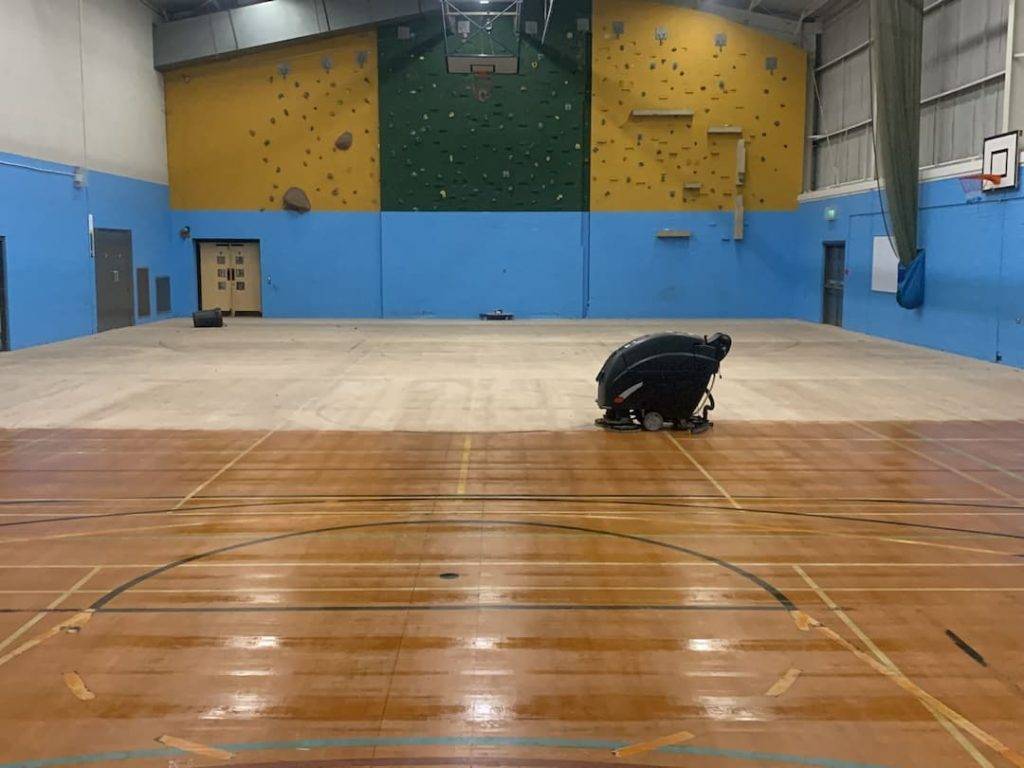
When protection has failed or was never used, the repair depends on how deep the damage goes. Scuffs, heel marks and light scratches confined to the lacquer can often be dealt with by a deep clean, abrade and reseal. That is a 2-day job Courtship can complete over a weekend, and deep cleaning starts from £4.50 per m².
Dents, gouges, water-stained or lifted boards and wear that has cut through to bare timber need sports hall floor repairs followed by sanding and sealing, either locally or across the whole floor, then relining. As a guide, a full sand, seal and reline of a gym of around 240 m² takes 5 to 6 working days, and a four-court hall of around 550 m² takes 9 to 10.
Timing matters. Booking repairs straight after the exam series or summer events deals with damage while the hall is quiet. Synthetic floors are assessed differently: localised damage to sheet vinyl can often be cut out and patched, while a dulled vinyl or PU coating may need a screen and recoat.
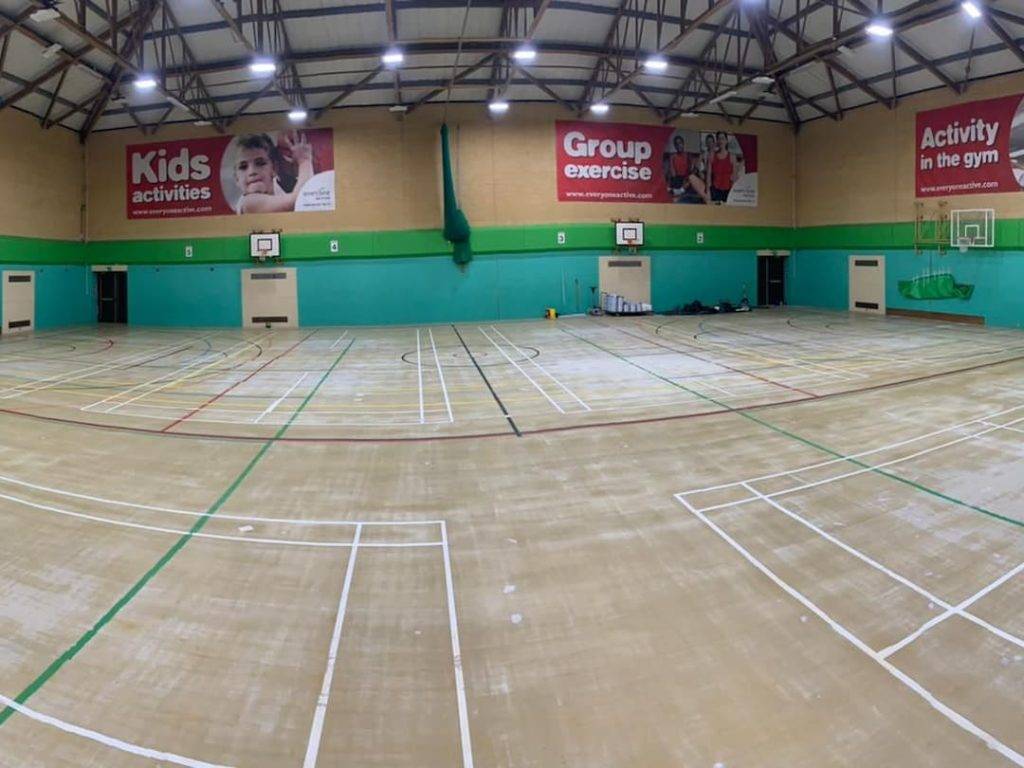
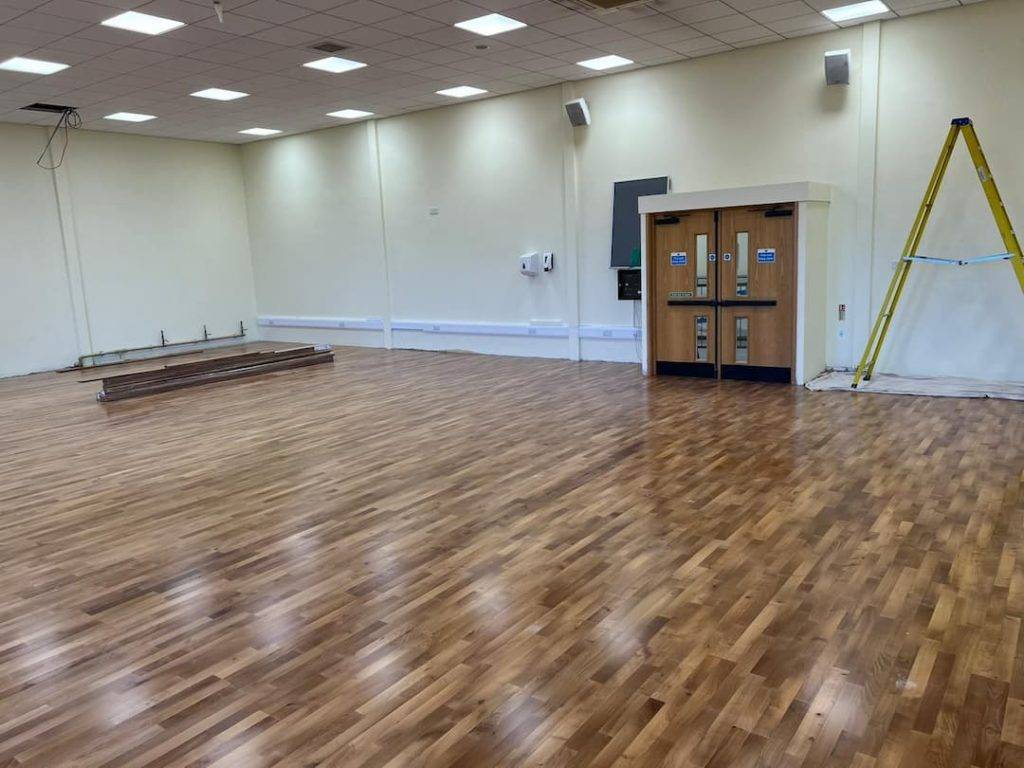
Courtship Flooring has worked on sports floors since 1987 and is still family-run from Wellington, Somerset, with its own teams carrying out the work and nothing subcontracted. We supply protection systems sized to your hall and the layouts it hosts, and our experience of what damages sports floors is most useful at three further points.
Before a heavy-use period, we can flag loose boards, soft areas and worn lacquer, and advise where staging, seating runs and catering stations are best placed to avoid them. After the covers lift, the same team can assess new damage, separate normal wear from event damage, and recommend whether a clean and recoat, a local repair or a full refurbishment is the proportionate answer. Where grip is in question, pendulum slip testing to BS 7976-2 gives a measured result.
Repair and refurbishment then follow on the same programme. Completed projects show the range: the hall at Aston University, Birmingham, was refurbished to a like-new finish, Liskeard Leisure Centre in Cornwall received a full sand, reline and reseal, and De Wint School in Lincoln had its sports hall refurbished. Courtship works across the UK and internationally for schools, colleges, universities, leisure centres, sports clubs and local authorities.
Carpet-faced tiles absorb noise during exams and look more finished at dinners and graduations. Vinyl wipes clean after spills and suits catering and messy events. Many halls keep both: tiles for exams and formal occasions, vinyl for food areas, sized to the hall’s largest regular layout.
Yes. Synthetic surfaces, especially foam-backed vinyl, can be indented or marked by tables, chairs and heavy equipment, and seating wheels can leave permanent tracking marks. Our page on vinyl and PU sports flooring explains how these surfaces are built and why their top layer needs care.
Decorating, lighting replacement and mechanical work bring ladders, paint and dropped tools into the hall. Breathable sheet materials such as hardboard or plywood are the usual choice over the work area and the routes trades use. Ask contractors to cover floor protection in their method statement before they start.
No. A fresh lacquer or coating needs to cure fully before it carries furniture or covers, because an uncured finish is softer and easier to mark. Curing time varies by product, so ask your contractor. If refurbishment is planned before exams, leave enough time between completion and the first desk going down.
Lift the affected area straight away, soak up the liquid and let the floor dry fully with ventilation and gentle heat before relaying anything. Never cover a damp patch to hide it. Note the location, and if boards later swell or stain at the joints, have the area inspected before the hall returns to competitive use.
Ideally the same small, trained team each time, usually site or caretaking staff. Large tiles and full rolls are heavy, so plan two-person lifts under your manual handling assessment. Outside hirers and caterers should not lay or lift protection unsupervised, because rushed set-up and clear-down is when covers get dragged and furniture slides off the edges. When we supply a system, we show your team how to lay, join and lift it safely.
Not always wall to wall. Measure the areas that will carry furniture, staging, catering and the main walking routes from each door, then add boards for every staging leg and seating wheel. Include a margin around each layout so furniture never sits on the edge of a cover.
It is worth doing if the surface feels different underfoot or before competitive fixtures resume. The pendulum can test the floor dry and wet, which shows how it behaves if water is tracked in. UK Slip Resistance Group guidance treats a pendulum test value of 36 or above as low slip potential.
Often, yes. Lines scuffed or lifted by tape, covers or furniture can be repainted locally and sealed if the surrounding finish is sound. Where the lacquer around them is worn through, a fuller recoat lasts longer. Our repainting and relining service covers both approaches.
It depends on how much of the hall needs covering, the type of system, whether boards are needed under staging and seating, and the trolleys or racks to store it. We measure the areas each layout uses and quote for the protection that suits your events, so you only pay for what the hall needs.
Ask us about protection for your next exam season or event, or arrange repairs and recoating once the covers come up.